Understanding Wholesale Jewelry Pricing and How It Works
When people see a ring that costs $6 wholesale and retails for $59, they often assume the numbers are random. They’re not. Wholesale jewelry pricing is built on a clear supply chain, cost structure, and margin targets at each step.
Let me walk you through how it really works, from raw metal to retail shelf.
The Wholesale Jewelry Supply Chain Explained
Key Players in the Jewelry Supply Chain
In most cases, your jewelry passes through several hands before it reaches your customer:
| Stage | Who They Are | What They Do | Typical Margin (On Their Cost) |
|---|---|---|---|
| 1 | Raw material suppliers | Sell metal, stones, findings, chains | 5–15% |
| 2 | Jewelry factories | Turn raw materials into finished jewelry | 15–40% |
| 3 | Trading companies / agents | Source from factories, handle communication & logistics | 10–30% |
| 4 | Wholesalers / importers | Buy bulk, stock locally, resell to retailers | 20–60% |
| 5 | Retailers / brands | Sell to final customer online or offline | 2x–5x (100–400%) |
Sometimes some of these steps are combined. For example, I run a factory that also sells factory-direct to brands, so we skip the trading company and wholesaler layer for many clients.
How Value Is Added From Metal to Finished Piece
Every step adds a specific type of value and cost:
- Raw material suppliers
- Provide certified gold, silver, brass, stainless steel
- Provide gemstones, CZ, lab-created stones
- Control metal purity, stone quality, and consistency
- Factories
- Convert material into designs you can actually sell
- Add:
- Design & engineering (CAD, sampling, molds)
- Production (casting, polishing, stone setting, plating, QC)
- Compliance (nickel-free, lead-free, REACH, etc.)
- Take on production risk (defects, remakes, delays)
- Agents / trading companies
- Bridge language, culture, and negotiation
- Help source multiple categories from different factories
- Handle consolidation, inspection, and shipments
- Wholesalers
- Keep stock so you can buy small quantities with fast delivery
- Take on inventory risk
- Offer assortment from many factories
- Retailers / brands
- Add branding, marketing, and customer experience
- Cover returns, shipping, packaging, influencers, ads
- Turn a generic piece into a desirable product story
Every extra layer adds some value and another margin on top.
Typical Profit Margin Ranges at Each Stage
These are realistic ranges for fashion jewelry (gold plated, 925 silver, stainless steel) in 2025:
| Stage | Typical Margin Range |
|---|---|
| Raw material supplier | 5–15% |
| Jewelry factory | 15–40% |
| Agent / trading company | 10–30% |
| Wholesaler / importer | 20–60% |
| Retail brand / retailer | 100–400% (2x–5x) |
So a ring that costs the factory $3 to make might land at:
- Factory sells to trading company at $3.80–$4.20
- Trading company sells to importer at $5–$6
- Importer sells to retailer at $7–$10
- Retailer sells to customer at $29–$79, depending on the brand
This is why understanding where you buy in the chain matters so much.
How Supply Chain Structure Affects Your Final Wholesale Cost
Your final price per piece depends heavily on how many layers you go through.
Example: Same 925 silver ring, same factory, different paths
| Path | Who You Buy From | Estimated Cost (Per Piece, Ex-Factory Country) |
|---|---|---|
| A | Factory-direct | $3.00–$3.50 |
| B | Trading company | $3.80–$4.50 |
| C | Overseas wholesaler | $4.50–$6.00 |
| D | Local distributor | $6.00–$8.50 |
All four buyers might be sourcing from the exact same workshop in Dongguan. The only difference is how many steps are between you and that workshop.
The more layers:
- The higher your unit price
- The lower your risk and workload
- The more support you typically get (stock, faster shipping, smaller MOQs)
There’s no “perfect” path. It depends on your volume, budget, and experience.
Factory Direct vs Agents and Trading Companies
Here’s a quick comparison from what I see daily as a factory owner.
Buying Factory Direct (from a Dongguan Jewelry Factory)
Pros:
- Lowest possible unit cost (if you meet MOQs)
- Direct access to technical details (materials, plating, molds)
- Faster feedback loop on quality issues and new designs
- Better long-term pricing once trust is built
Cons:
- Higher MOQs (often 100–300 pcs per style)
- You must manage design briefs, specs, and QC more closely
- Requires clear communication and some sourcing experience
- Usually fewer ready-stock items, more made-to-order
Best for you if:
- You’re building a brand with repeat orders
- You can plan larger buys or consolidated collections
- You care about custom development and stable pricing
Buying Through Agents or Trading Companies
Pros:
- They can source from multiple factories for you
- Easier for new buyers with no factory relationships
- Help solve language, culture, and payment issues
- Sometimes can offer smaller MOQs by grouping orders
Cons:
- You pay 10–30% more vs true factory-direct pricing
- Less transparency on real factory cost structure
- Harder to solve technical problems without talking to factory
- They may steer you to factories that suit their margin, not your goals
Best for you if:
- You’re new to jewelry sourcing
- You don’t have time to deal with factory communication
- You need multiple categories quickly from one contact
When It Makes Sense to Work With a Wholesaler Instead of a Factory
Sometimes the smartest move is to skip factories completely and buy from a wholesaler or importer in your own country or region.
Work with a wholesaler when:
- You want small quantities:
- 5–20 pcs per style
- Mixed assortments instead of big runs
- You need fast delivery:
- Ship from local warehouse, not overseas
- Can restock in days, not weeks
- You’re just testing the market:
- Still figuring out your style, price point, and audience
- Don’t want to commit to molds, MOQs, or long lead times
- You value simplicity:
- One invoice, local returns, simple communication
- Less paperwork, no import headaches
Trade-off:
You will pay more per piece, but you save on:
- Risk (no big stock commitment)
- Time (no sampling, mold development, or long back-and-forth)
- Complexity (no import, customs, or international payments)
Quick Which Path Fits You?
| Your Situation | Best Source | Why |
|---|---|---|
| New store, small budget, want to test styles | Local wholesaler / online wholesaler | Small MOQs, fast stock, low risk |
| Growing brand, stable sales, planning collections | Factory-direct (Dongguan / China / other hubs) | Best pricing, custom options, long-term partnership |
| No sourcing experience, need multiple categories fast | Agent / trading company | Hand-holding, consolidation, easier communication |
If you understand who is adding what and how much margin they usually take, you can immediately see whether a quote is reasonable, overpriced, or too cheap to be safe. That’s the real power of understanding how wholesale jewelry pricing works.
Core Factors That Shape Wholesale Jewelry Pricing
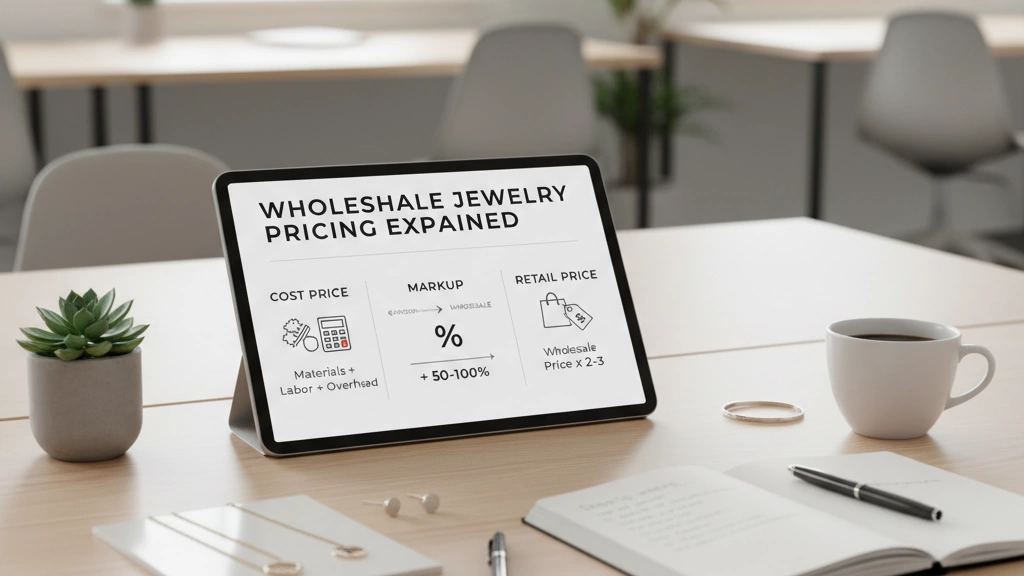
When you understand how wholesale jewelry pricing really works, it stops feeling like guesswork. At factory level, the price per piece is mostly a formula made from a few clear inputs: materials, labor, plating/finishing, overhead, and profit. Once you can read those numbers, you can quickly tell if a quote is fair or inflated.
Why Wholesale Jewelry Pricing Is Mostly Formula
For most factory-direct jewelry pricing (especially in hubs like Dongguan, China), the factory will build your unit price from:
- Material cost (metal + stones + findings)
- Labor cost (casting, polishing, setting, assembly, QC)
- Plating & finishing (gold plating, rhodium, e-coating, etc.)
- Overhead (machines, rent, admin, wastage)
- Factory profit margin
In simple form:
Factory Unit Price = (Material + Labor + Plating + Overhead) × (1 + Profit Margin)
Because material is often 60–80% of the total, changes in metal type (925 silver vs stainless steel), plating thickness, or stone choice will move the price more than almost anything else. That’s why a clear wholesale jewelry cost breakdown is so important.
How Each Cost Component Stacks Into the Factory Price
Here’s how factories usually layer the numbers:
- Materials
- Base metal: 925 silver, brass, stainless steel, or gold
- Stones: CZ, lab-created gemstones, natural stones
- Findings: chains, clasps, jump rings, posts, backs
- Labor
- Casting or cutting
- Polishing and cleaning
- Stone setting (prong, bezel, micro-pavé, etc.)
- Assembly and soldering
- Quality control and final inspection
- Plating & Finishing
- Gold plating thickness (flash vs 1–3 microns)
- Rhodium plating for silver
- E-coating / anti-tarnish for fashion and waterproof jewelry
- Overhead
- Factory operating costs
- Loss and scrap allowance
- Tool wear, electricity, admin
- Profit
- Usually a fixed percentage on top of all calculated cost
When you ask for a transparent jewelry manufacturer pricing structure, this is exactly what you want them to show you.
How to Read a Factory Quotation or Cost Sheet
A good factory quotation (open cost sheet) for wholesale jewelry will be simple and numeric, not vague. Look for something like:
- Material
- 925 silver: 2.5g × $0.80/g = $2.00
- CZ stones: 10 pcs × $0.02 = $0.20
- Labor
- Casting + polishing: $0.40
- Stone setting: $0.30
- Assembly & QC: $0.20
- Plating
- 18K gold plating 1 micron: $0.25
- E-coating: $0.05
- Overhead & Profit
- Overhead: $0.20
- Factory profit: $0.40
Total factory direct jewelry pricing: $4.00 per piece (for a certain MOQ)
When you get a quote, check:
- Is material cost clearly separated from labor?
- Is plating listed with thickness (microns), not just “18K gold plated”?
- Are mold fees, setup, or sampling listed as one-time charges, not per unit?
- Does the price change by MOQ (50 vs 300 pcs)? It should.
If a supplier refuses to share a cost breakdown or keeps everything in one “all in” line, it’s harder to know if the wholesale jewelry price per piece is reasonable.
Common Pricing Models Factories Use
Most factories use one of these jewelry pricing models for orders:
- Cost-plus pricing
- They calculate total cost (material + labor + plating + overhead)
- Then add a fixed margin, e.g., 15–40% factory profit.
- Tiered MOQ pricing
- Unit price depends on volume:
- 50 pcs: higher unit price
- 200 pcs: medium price
- 500+ pcs: lowest price
- This is standard for Dongguan jewelry factory prices and other major hubs.
- Unit price depends on volume:
- Weight-based pricing (for metal-heavy pieces)
- Price = (Metal price per gram × weight) + fixed labor and plating
- Common for solid silver or gold jewelry, where material dominates cost.
- All-in style price for fashion jewelry
- Especially for stainless steel or brass jewelry, some factories quote a simple “per piece” number that already includes material, labor, and plating.
- You still want to ask what plating thickness and material grade are behind that price.
If you are sourcing waterproof jewelry materials or thick-plated stainless steel pieces, clarify whether the quote covers PVD coating or just basic electroplating. Factories like ours share this clearly in the offer, similar to how we break down durability options on our waterproof jewelry materials guide.
How to Use This As a Buyer
To keep your wholesale jewelry cost breakdown under control:
- Always request a detailed cost sheet: material, labor, plating, profit.
- Compare suppliers using the same specs (metal type, plating thickness, stone grade).
- Don’t chase the lowest quote blindly—check if they reduced plating, weight, or stone quality to get there.
- Use a simple Excel sheet to log each supplier’s factory direct jewelry pricing, plating details, and MOQs so you’re comparing apples to apples.
Once you see pricing as a formula, it becomes much easier to:
- Negotiate smartly (change metal, weight, or plating to hit a target price).
- Spot overpriced quotes.
- Build fair and sustainable wholesale jewelry pricing for your brand.
Material Costs in Wholesale Jewelry Pricing
When you look at a wholesale jewelry cost breakdown, material is usually the biggest slice. In most factory-direct jewelry pricing, material accounts for around 60–80% of the factory price. That’s why, if you understand materials, you understand how wholesale jewelry pricing works.
Why Material Is 60–80% of the Factory Price
In a typical open cost sheet from a Dongguan jewelry factory, you’ll see costs split like this:
- 60–80% – Materials (metal + stones + plating)
- 10–20% – Labor & processing (casting, polishing, stone setting, QC)
- 5–15% – Overhead & profit
Metal and stones are real commodities. Their price is not guesswork; it’s formula-based and tied to the market. If your design is heavy, uses a lot of stones, or uses expensive metals, your wholesale jewelry price per piece will jump fast.
How Daily Metal Prices Impact Your Quote
Factories watch daily metal market prices (gold, silver, brass, stainless steel) in real time. When you request a quote:
- They estimate weight per piece (e.g., 2.5 g silver ring, 8 g brass bracelet).
- They multiply by the current raw metal rate + wastage rate.
- That becomes the base material cost.
Key points:
- Quotes for gold and silver are often valid only for a short time if the market is volatile.
- The same design can be re-quoted higher or lower a month later, purely because of metal price swings.
- For large orders, a small change in metal price can change the total order cost by hundreds or thousands of dollars.
Price Differences: Gold vs 925 Silver vs Stainless vs Brass vs Alloy
Here’s a practical way to think about base metals in 2025 wholesale pricing (rough relative cost for similar designs):
- Solid Gold (10K / 14K / 18K)
- Highest cost by far.
- Even small, minimalist pieces carry a high wholesale jewelry cost because gold is so dense and expensive.
- Gold Vermeil (thick gold plating on 925 silver)
- Cheaper than solid gold, more expensive than standard gold plated brass or stainless.
- Great balance between perceived value and cost; more on this in our detailed gold vermeil vs gold plated price comparison.
- 925 Sterling Silver
- Mid–high cost, but much cheaper than gold.
- Ideal if you want “real precious metal” positioning without solid gold pricing.
- Stainless Steel
- Much cheaper than silver; strong, “waterproof”, great for everyday wear.
- Popular for stainless steel jewelry wholesale rates that stay low even for chunky designs.
- Brass / Zinc Alloy
- Similar or cheaper than stainless, depending on design and plating thickness.
- Very flexible for fashion jewelry, but plating needs to be done well.
As a rough rule for the same design and plating:
- Stainless / Brass base: 1x
- 925 Silver base: 2–3x
- Gold vermeil: 3–5x
- Solid gold: 10x+ and beyond
Natural Gemstones vs Lab-Created Stones
Stones can quietly double your cost if you’re not careful.
- Natural gemstones
- Higher cost, especially for clearer, well-cut stones.
- Color and clarity vary, and consistency is harder at big MOQs.
- Good for premium or fine jewelry lines with higher retail markups.
- Lab-created gemstones
- More affordable and consistent in color/clarity.
- Great for fashion brands that want “real stone” marketing but need tight wholesale jewelry price targets.
- Often 30–70% cheaper than equivalent natural stones in similar sizes.
If your brand is more trend-driven than luxury, lab-created gemstone jewelry cost usually makes more sense.
Cubic Zirconia (CZ) Quality Grades and Price Impact
CZ is one of the most common stones in China jewelry wholesale pricing. It’s graded (not always officially, but practically) like this:
- A grade CZ
- Basic quality, decent sparkle, minor flaws.
- Lowest cost, often used in very low-priced wholesale jewelry.
- AAAA–AAAAA grade CZ
- High brilliance, excellent cutting, very clean.
- More expensive, but still much cheaper than natural diamonds or high-end gemstones.
Using AAAAA CZ instead of basic A can increase the stone cost by 20–100%, but the overall unit price may only go up by a small amount if the stones are small. For mid- to high-end branding, it’s usually worth paying for better CZ.
How Stone Size, Quantity, and Cut Change the Cost
Three stone factors drive your wholesale jewelry pricing:
- Size
- Larger stones use more material and need more secure settings.
- Price grows faster than size: a 6 mm stone is more than double the cost of a 3 mm stone.
- Quantity
- Micro-pavé designs with lots of tiny stones can be labor-heavy and cost more in both stones and setting work.
- Cut & Shape
- Simple round cuts are cheaper.
- Fancy cuts (emerald, marquise, pear, heart) usually cost more and are slower to set.
If you need to hit a specific jewelry wholesale price per piece, simplifying stone count and size is one of the easiest ways to get there without ruining the design.
Estimating Material Usage for Different Jewelry Types
Factories calculate material cost starting from estimated metal weight + stone layout. As a brand owner, you don’t need exact grams, but you should understand the direction:
- Rings
- Light minimalist 925 silver ring: ~1.5–2.5 g
- Chunky statement ring: 4–8 g or more
- Add cost for stones, especially if the top surface is full of small CZ.
- Earrings
- Simple wire/hoop designs: low metal weight, low cost, especially in stainless or brass.
- Big hoops or drop earrings: more weight plus stone cost.
- Remember: per pair cost = 2x the single-piece material.
- Necklaces & Pendants
- Pendant + chain both count.
- Chains can be surprisingly heavy if they’re thick or long.
- Using hollow chains or lighter link styles can cut metal weight and your factory direct jewelry pricing significantly.
- Bracelets & Bangles
- Often the heaviest category (especially solid bangles).
- Small differences in inner diameter or thickness can add grams quickly.
- For budget-sensitive lines, consider open bangles, hollow structures, or chain bracelets instead of solid cuffs.
If you want more control, ask your supplier for an open cost sheet showing:
- Estimated metal weight per piece
- Stone count and sizes
- Plating thickness and cost
This is the most transparent way to compare Dongguan jewelry factory prices and to see which design tweaks will actually bring your unit cost down. For a broader look at how factory-direct sourcing works and why material drives your final quote, I’ve broken it down further in this factory jewelry direct wholesale guide: factory jewelry direct wholesale pricing structure.
Labor, Crafting Methods, and Production Complexity
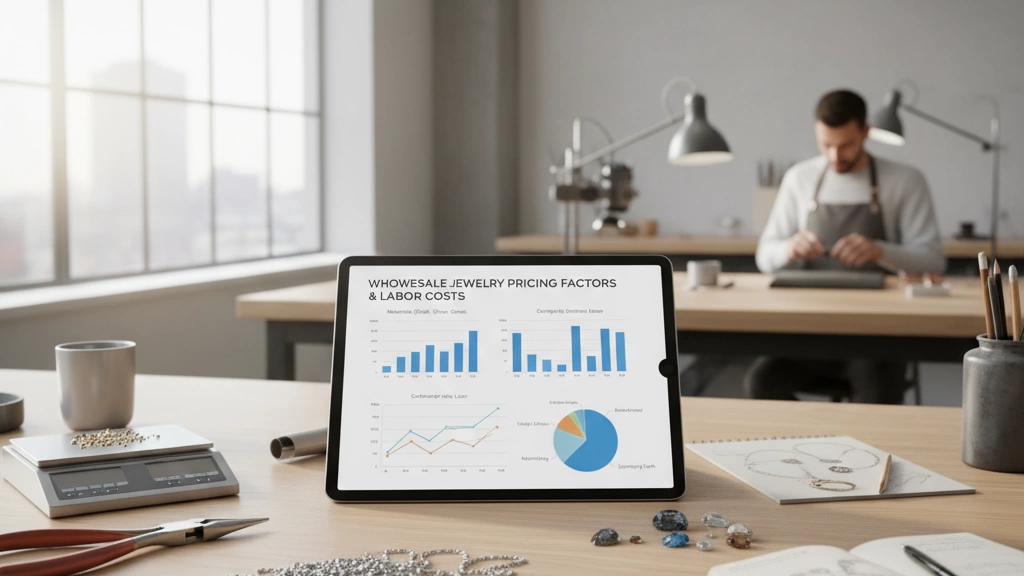
When you look at a wholesale jewelry cost breakdown, labor and production methods are the second-biggest driver after materials. At Dongguan HonHo Jewelry, we treat labor as a clear, structured cost – not a guess – so you can see exactly why one design costs more than another.
Handmade vs Machine-Made vs Semi-Handmade
In wholesale jewelry pricing, how the piece is made matters a lot:
- Machine-made jewelry
- Best for: simple bands, basic chains, classic hoop shapes.
- Pros: fast, stable quality, lowest labor cost per piece.
- Pricing impact: ideal when you want aggressive factory direct jewelry pricing and higher MOQs.
- Handmade jewelry
- Best for: unique textures, organic shapes, complex wire work, artisan-style pieces.
- Pros: high perceived value, “handcrafted” story, more flexible for small runs.
- Pricing impact: highest labor cost per unit; suits higher retail markups and premium brands.
- Semi-handmade jewelry
- Best for: most modern fashion jewelry – cast base with some hand-setting or hand-polishing.
- Pros: balance of efficiency and detail; good for custom branded designs and collections.
- Pricing impact: mid-range labor cost, but can be optimized with smart design and sensible MOQs.
If your target is competitive 925 silver wholesale price or stainless steel jewelry wholesale rates, you generally want machine-made or semi-handmade where possible.
How Intricate Designs and Micro-Pavé Increase Labor Cost
Complex designs eat labor hours, and that shows up directly in your wholesale jewelry price per piece. Key factors:
- Micro-pavé settings
- Dozens or hundreds of tiny stones.
- Each stone needs precise placement, leveling, and tightening.
- Labor cost can be 2–4x higher than a simple solitaire setting on the same metal weight.
- High stone count & tiny stones
- More holes to drill, more seats to cut, more stones to inspect.
- More time in quality control (QC) to check each stone.
- Complex shapes and layers
- Multi-layer pendants, double bands, articulated parts, hidden hinges.
- Extra polishing and assembly steps, more chance of defects, more rework.
If you’re building a micro-pavé collection, plan your retail markup accordingly. A “simple-looking” thin band with a full row of tiny CZ stones can actually cost more in labor than a plain, heavier band.
Stone Setting Styles and Labor Price
Different stone setting types come with different labor times and skill levels:
- Prong setting
- Common for solitaires and small center stones.
- Moderate difficulty; cost-effective when not overused.
- Good balance for factory direct jewelry pricing.
- Bezel setting
- Stone is fully surrounded by metal.
- More metal work and finishing; higher labor than simple prongs.
- Feels premium, good for higher-end 925 silver and gold plated jewelry wholesale cost.
- Channel setting
- Stones sit between two parallel metal walls.
- Requires precise cutting and alignment; more time than basic prong.
- Popular in bands and eternity rings – higher labor, but high perceived value.
- Wax / cast-in-place settings
- Some stones are set into the wax model before casting.
- Can reduce separate setting steps for certain designs.
- Needs skilled technicians and stable processes; good for volume runs.
- Micro-pavé
- Highest labor intensity for stone setting.
- Ideal for brands that can charge strong jewelry markup from factory to retail.
- Expect a clear premium on labor in any transparent jewelry manufacturer pricing sheet.
When you compare quotes, always look at stone count, setting style, and stone size – not just metal weight.
Each Labor Step Is Its Own Cost
In our Dongguan jewelry factory, we break labor down by production step so you can see what you’re really paying for:
- Casting – turning molten metal into your base shape.
- Polishing – rough polish, fine polish, and edge finishing.
- Stone setting – one of the most skilled and time-consuming steps.
- Assembly – soldering or connecting parts, attaching chains, clasps, and findings.
- Quality control (QC) – checking structure, stones, finish, and plating.
Each step adds minutes. Minutes add cost. A design that needs extra polishing between tiny details, or multiple assembly points, will always price higher at the factory level.
How Location and Labor Rates Affect Pricing
Labor rates vary a lot by region, and it’s a major reason Dongguan, China is a key global jewelry manufacturing hub.
- Dongguan has:
- Dense supply chain (casting houses, plating plants, stone suppliers).
- Skilled jewelry workers used to complex 925 silver, stainless steel, and gold plated pieces.
- Competitive labor costs compared to Western markets, with solid quality.
This is why Dongguan HonHo Jewelry can offer attractive China jewelry wholesale pricing while still delivering clean finishing and consistent quality – especially on more complex designs where labor time matters.
If you see a quote that is far below normal Dongguan jewelry factory prices for a very detailed style, you should be asking what corners are being cut.
When Simpler Designs Cut Your Per-Unit Cost
If you have a target wholesale jewelry price per piece, adjusting the design is often the quickest way to hit it. Simple design decisions can slash labor:
- Fewer stones and one main focal stone instead of a full pavé surface.
- Switch from micro-pavé to a clean bezel or prong setting.
- Avoid overly thin, fragile details that require extra polishing and rework.
- Reduce the number of moving parts, hinges, or separate components.
For example:
- A minimal 925 silver ring with a single bezel-set CZ might sit in a very competitive 2025 925 silver wholesale price range.
- The same ring with a micro-pavé halo and side stones could double the labor cost and push your factory direct price up significantly.
If you’re building a new collection and want to balance cost and design, we can help you tweak details – stone count, setting style, and structure – to hit a realistic price point without killing the look.
For brands leaning into durable, lower-labor designs, you can also explore our stainless jewelry wholesale options, which naturally offer lower labor and plating sensitivity than softer metals.
By understanding how labor, crafting methods, and production complexity drive cost, you can design smarter, negotiate better, and build collections that make sense for both your margins and your customers.
Plating, Finishing, and Surface Treatments in Wholesale Jewelry Pricing
When you’re trying to really understand wholesale jewelry pricing, plating and finishing are where a lot of hidden cost (and value) sits. If you sell gold plated, silver, or stainless pieces, this part matters more than most people think.
What “18K Gold Plated” Really Means in Pricing
“18K gold plated” only describes the gold color and purity of the plating layer, not the base metal or the thickness.
In pricing terms, you’re paying for:
- The base: brass, copper, 925 silver, stainless steel, or alloy
- The gold purity: 14K, 18K, 22K (18K is most common for fashion and demi-fine)
- The thickness of the gold layer: this is what really moves your cost
Two pieces both called “18K gold plated” can have very different prices and durability depending on how thick that layer is.
Plating Thickness Levels and Cost Differences
Plating thickness is usually measured in microns (μm). Rough guide:
- Flash plating (under 0.05 micron)
- Extremely thin, mostly for very cheap fashion jewelry
- Lowest cost, but wears off quickly
- Good only for trend pieces with short life cycles
- 0.1 micron gold plating
- A bit better than flash but still “light” plating
- Low cost, suitable for low-price online marketplaces
- Not ideal for daily-wear jewelry
- 1–3 microns gold plating (industry sweet spot)
- The most common range for good-quality fashion/demi-fine jewelry
- Costs more, but gives clearly better wear resistance
- Great for brands that want fewer complaints and returns
- 3–5 microns gold plating
- Premium level plating for higher-end fashion or demi-fine
- Significantly higher cost because gold usage jumps
- Good for pieces marketed as “long-lasting” or “luxury plated”
Cost impact:
Every jump in thickness increases:
- Gold consumption (biggest factor)
- Plating time and process cost
You might see 10–40% factory price difference between flash plating and 1–3 microns on the same design, depending on base metal and weight.
Gold Vermeil vs Gold Plated vs Solid Gold (Cost View)
From a cost perspective, here’s how these compare:
- Standard Gold Plated Jewelry
- Base: usually brass, copper, stainless steel, or alloy
- Plating: thin to medium (flash to 1–3 microns)
- Lowest material cost, flexible pricing for fast fashion and mid-tier brands
- Gold Vermeil (925 Silver Base + Thick Gold Plating)
- Base: always 925 silver
- Plating: usually at least 2.5 microns of gold
- Costs more than standard plating because:
- Silver is more expensive than brass/alloy
- Plating is thicker and more regulated
- Good middle ground between plated and solid gold for the global market
- Solid Gold Jewelry
- Base: 10K, 14K, 18K, etc., solid through and through
- Highest cost by far (metal alone usually dominates pricing)
- Not comparable to plated/vermeil; this is a totally different pricing level
If your brand targets value-conscious buyers, gold plated or vermeil can be a smart way to offer a “gold look” without solid-gold pricing. For solid gold hallmark standards, you can also check guides like what 585 means on jewelry on specialized resources such as Honho’s explanation of gold markings.
Rhodium Plating on Silver and Its Price Impact
Rhodium is a precious metal used mostly on:
- 925 silver jewelry (to prevent tarnish and keep it bright)
- Sometimes on white gold to enhance whiteness
From a cost angle:
- Rhodium itself is expensive, but the layer is very thin, so the added cost is moderate
- On a typical silver ring or pair of earrings, rhodium plating may add 5–15% to the factory price
- On heavier, larger silver pieces, the cost impact will be higher
If you sell silver jewelry and want:
- Less tarnish
- A brighter, more “luxury” finish
- Fewer after-sales cleaning/complaint issues
then rhodium plating is usually worth the extra cost.
E-Coating and Anti-Tarnish Treatments
E-coating (electrophoretic coating) and similar anti-tarnish treatments are clear protective layers used on:
- Gold plated brass or silver
- Bare silver
- Some stainless designs
They help:
- Slow down tarnish
- Reduce color change from sweat, perfume, and humidity
- Extend product life, especially in hot/humid climates
Cost wise:
- Often adds a small extra cost per piece, but protects your plating investment
- Especially useful for silver and plated brass intended for daily wear
If your brand promises “anti-tarnish jewelry” or “waterproof style” (within normal use), investing in better surface protection or working with specialized anti-tarnish jewelry manufacturers like those described in anti-tarnish manufacturing guides makes sense.
How Different Gold Colors Change Plating Costs
Gold color options affect both chemical bath and process:
- Yellow Gold
- Usually the baseline cost
- Most common plating option
- Rose Gold
- Slightly more complex alloy (gold + copper)
- Often similar price to yellow, sometimes slightly higher
- White Gold Color (on base metals)
- Often needs multiple layers (e.g., nickel barrier + color layer, or palladium/rhodium)
- On silver, white look may combine rhodium plating as well
- Can be more expensive than plain yellow or rose gold color due to extra steps/materials
If a supplier offers the same price for all three colors, usually they’ve averaged the cost. In reality, white/rhodium finishes tend to cost a bit more in production.
Why Better Finishing Raises Factory Price But Boosts Retail Value
Finishing is where cheap jewelry and brand-ready jewelry really diverge. Better finishing steps include:
- Extra polishing to remove scratches and sharp edges
- Cleaner, more even plating
- Rhodium or thicker gold layers
- E-coating/anti-tarnish protection
- Smoother solder joints and stronger connections
These add time, labor, and some material cost, so yes – your factory price will go up. But they also:
- Make your pieces feel more expensive in hand
- Reduce returns, complaints, and bad reviews
- Support higher retail price points and better margins
- Help you position your brand as “quality,” not just “cheap”
In real wholesale jewelry pricing, plating and finishing are not the place to always cut corners. For most global brands, it’s smarter to:
- Choose a slightly higher factory cost
- Get thicker, more reliable plating and protection
- Then recover that cost with higher perceived value at retail
Handled right, plating and finishing are one of the easiest ways to upgrade your line and still keep a strong margin structure.
Mold Fees, Tooling, and Design Complexity
If you want to really understand wholesale jewelry pricing and how it works, you have to know how mold fees and tooling shape your upfront cost.
What Is a Jewelry Mold Fee?
A jewelry mold fee is a one-time charge the factory takes to create the production mold for a new design.
You normally pay a mold fee when:
- You create a custom design (your own ring, pendant, charm, bangle, etc.)
- You change an existing design enough that a new mold is required (size, structure, stone layout)
- You move from pure hand-made sampling to stable mass production
In most Dongguan-style factories, this mold covers:
- Master model (hand-carved or 3D printed)
- Rubber/silicone or steel mold for casting or stamping
- Basic setup and test shots to make sure the piece casts correctly
Once the mold is made, the factory can reproduce that design consistently for years.
If you want to see how molds fit into the full production flow, I break it down step-by-step in our how we make jewelry guide.
How Mold Costs Are Calculated
Mold fees depend on size, complexity, and process. Typical ranges from China/Dongguan factories:
- Rings: about $40–$120 per mold
- Pendants & charms: about $50–$150 per mold
- Hoops & earrings (simple): about $40–$120 per mold
- Bangles & cuffs: about $80–$250 per mold (larger, more material)
- Very detailed / multi-part pieces: can go higher because there are several molds and a more complex setup
Factories look at:
- Metal type and thickness
- Design detail (engravings, filigree, stone layout)
- Number of parts (one-piece vs many tiny components)
- Expected order volume and repeat potential
Cheaper mold fees usually mean simpler designs or a factory that hopes to recover more money in the per-piece price.
Spreading Mold Fees Over Different MOQs
Mold fees are fixed, so your minimum order quantity (MOQ) has a huge impact on your effective per-unit cost.
Example: mold fee = $150 for a ring.
| Order Qty | Mold Cost per Piece | Comment |
|---|---|---|
| 50 pcs | $150 / 50 = $3.00 | Very high add-on per ring |
| 200 pcs | $150 / 200 = $0.75 | Acceptable for most brands |
| 500 pcs | $150 / 500 = $0.30 | Mold cost becomes almost negligible |
This is why small test orders often “feel expensive”: you’re loading a one-time cost into a tiny batch.
When I plan new styles, I always calculate mold amortization by MOQ before deciding if a design is commercially viable.
3D Design, CAD, and Sampling Costs
On top of the mold fee, you usually see several “tooling” related charges:
- 3D design / CAD drawing:
- For a simple ring or pendant: roughly $30–$80
- For complex, detailed pieces with many stones: $80–$150+
- 3D printing / master model: often included in the mold fee, or charged as an extra $20–$60
- Sample cost per piece:
- Often close to, or slightly higher than, the eventual wholesale price
- Sometimes partially or fully refunded after bulk order
These steps are where your design is translated from sketch to an actual physical sample. The more back-and-forth and revisions, the higher the upfront cost.
If you’re still searching for a partner who is transparent about CAD, sampling, and mold fees, this guide on how to find a jewelry manufacturer is a good starting point.
Why Complex Designs Cost More to Set Up
Complex and multi-part designs push mold and setup costs up because:
- Each separate component may need its own mold
- Alignment and assembly have to be tested and refined
- Stone-heavy pieces often require more trial casting to avoid defects
- Interchangeable or moving parts (hinges, clickers, chains) add extra tooling
Example:
A simple minimalist silver ring might need 1 mold.
A statement earring with front, back, hinge, and multiple stone settings might need 3–5 molds plus more detailed assembly setup.
This all shows up in your wholesale jewelry cost breakdown, even if the supplier doesn’t itemize every line.
Strategies To Reuse Molds and Save Money
To keep your factory-direct jewelry pricing lean, design smart so you reuse molds wherever possible:
- Create families of designs:
Use the same shank or band mold for multiple ring tops or stone layouts. - Reuse base components:
Same hoop or huggie base with different charms or stone colors. - Modular charm systems:
One charm mold used on necklaces, bracelets, and earrings. - Size variations from one mold:
Sometimes one mold can cover several close sizes or be adjusted with minimal extra tooling. - Plan collections, not single pieces:
If you know you’ll do 5–10 related styles, the factory can design molds with reuse in mind.
When you plan your collection with tooling in mind, you lower your real mold cost per SKU and get a much more sustainable wholesale price per piece.
Packaging, Branding, and Certificates in Wholesale Jewelry Pricing
When you really dig into Understanding Wholesale Jewelry Pricing and How It Works, packaging, branding, and certificates are small line items that quietly shift your profit. I treat them as strategic tools, not afterthoughts.
Basic vs Premium Packaging Cost Per Unit
Packaging is usually a small part of your wholesale jewelry cost breakdown, but it directly affects your brand image and retail price.
Typical 2025 cost ranges per piece (for normal MOQs):
- OPP / poly bags: about $0.01–$0.05
- Best for low-cost, high-volume styles or inner packing.
- Velvet / suede pouches: about $0.15–$0.60
- Good balance of perceived value and compact shipping.
- Standard jewelry boxes (no logo): about $0.30–$1.00
- Works for mid-range retail or gifting items.
- Custom printed boxes / premium sets: about $0.60–$2.50+
- Suited for higher ticket items, branded sets, and online unboxing.
For small brands, I often start with a solid mid-tier option (simple box or pouch) and upgrade as order volumes grow. If you’re just getting started, working with experienced jewelry manufacturers for small business can help keep packaging choices lean and realistic.
Logo Printing, Tags, and Barcodes
Branding details look small, but they still affect wholesale jewelry price per piece:
- Logo printing on boxes/pouches
- One-time printing plate / setup fee: usually $30–$100.
- Per-unit add-on: about $0.03–$0.20 depending on colors and complexity.
- Hang tags / backing cards
- Plain generic cards: $0.02–$0.06 per piece.
- Custom branded cards: $0.05–$0.20 per piece.
- Barcodes / stickers
- If the factory labels for you: usually $0.02–$0.05 per sticker.
- If you send ready-made labels, only extra labor is charged.
When we calculate how wholesale jewelry pricing works, I like to put packaging and branding as a separate block in the quote, so you can clearly decide what’s “nice to have” vs “must have.”
Hallmarks, 925 Stamps, and Compliance Marks
Metal marks and hallmarks don’t usually change your wholesale jewelry cost breakdown much, but you should know what you’re paying for:
- Basic metal stamps (e.g., 925, S925, brass, steel)
- Usually included in the standard manufacturing cost.
- Only adds cost if you need a special custom logo stamp.
- Maker’s mark / logo stamp
- One-time fee to make the stamp/tool.
- Then it becomes part of the regular production flow.
- Official hallmarks / assay office marks (in some countries)
- These can add per-batch or per-piece fees and require extra handling time.
- Not every market needs this, but some regions legally require it on precious metal jewelry.
Always confirm if stamping is included in the factory direct jewelry pricing or listed as an extra line item.
Nickel-Free, Lead-Free, and Safety Certification Costs
If you sell to the US, EU, UK, or large platforms, nickel-free jewelry certification cost and other safety tests matter:
- Nickel, lead, cadmium, and other heavy metal tests
- Typical lab fee: about $50–$200 per test per material / plating system.
- Often charged per style family or per material group, not per single SKU.
- Compliance reports (REACH, RoHS, CA Prop 65, etc.)
- Fewer tests if you keep materials simple (e.g., one plating system across many SKUs).
- More complex if you use mixed materials and many platings.
If you’re serious about “no green skin” and low-allergy jewelry, it’s worth understanding why some jewelry turns skin green and aligning your materials and tests with that goal. Certification cost is not just a regulatory box to tick; it’s part of your brand promise.
When Upgraded Packaging Actually Pays Off
Upgrading packaging and branding doesn’t always make sense. I only push it when it clearly improves perceived retail value or solves a practical problem:
Upgrade packaging when:
- You sell pieces above $39–$50 retail and want a “giftable” experience.
- You’re focused on online/DTC, where unboxing and social content matter.
- You are positioning as “premium” but your current packaging looks too cheap.
- Your customers often buy as gifts and expect a ready-to-give box or pouch.
Stay basic when:
- You’re testing new designs in small MOQs and need to keep costs tight.
- You sell budget or impulse items where price is the main driver.
- Retailers will repackage under their own branding anyway.
In the bigger picture of Understanding Wholesale Jewelry Pricing and How It Works, packaging, branding, and certificates are levers. Used right, they let you raise retail price, reduce returns, and stand out—without blowing up your unit cost.
MOQ and How Volume Changes Unit Price
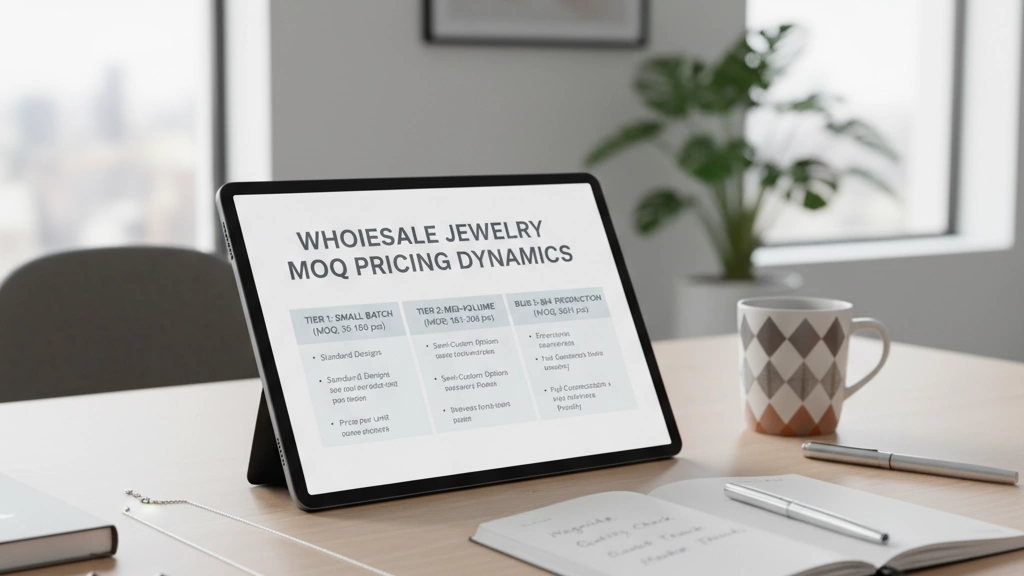
What MOQ really means in wholesale jewelry pricing
MOQ (minimum order quantity) is the smallest number of units a factory will produce per style in one batch.
It’s not random – it’s how we cover:
- Mold and tooling setup
- CAD and sampling time
- Machine preparation and line scheduling
- Basic admin and QC for each production run
If I run 30 pcs or 300 pcs of one ring, a lot of these setup costs are the same. That’s why your wholesale jewelry price per piece drops as quantity goes up.
Why most Dongguan factories prefer 100–300 pcs per style
At Dongguan HonHo Jewelry, and most serious Dongguan suppliers, the sweet spot for MOQ and pricing is usually 100–300 pcs per style because:
- Below 100 pcs: setup and mold cost per unit is too high
- 100–300 pcs: machines run efficiently, workers can stay on one style, and we can give better factory direct jewelry pricing
- 300+ pcs: you start unlocking even better unit costs, especially on plating and stone setting
This is why you’ll often see Dongguan jewelry factory prices structured in “price tiers” like 50 / 100 / 300 / 500 pcs.
How setup, mold, and labor spread over different MOQs
Think of your order as:
- Fixed costs (per style): mold fee, CAD, sampling, machine setup, worker training on that design
- Variable costs (per piece): metal, stones, plating, labor time per unit
When you order more units, the fixed costs per piece shrink. That’s the core of how wholesale jewelry pricing works.
Example fixed cost per style:
- Mold + CAD + setup: $120 total
How that looks per unit:
- 50 pcs: $120 / 50 = $2.40 just in fixed cost per ring
- 200 pcs: $120 / 200 = $0.60 per ring
- 500 pcs: $120 / 500 = $0.24 per ring
Same design, same mold – but totally different wholesale jewelry cost breakdown.
Example: 50 pcs vs 200 pcs vs 500 pcs of the same ring
Let’s use a simple 925 silver ring as an example (numbers are realistic, but for illustration):
Base costs per ring (material + labor + plating + profit, excluding fixed setup):
- Material + stones: $3.00
- Labor (casting, polishing, setting, QC): $1.20
- Plating (rhodium/gold): $0.60
- Factory profit: $0.70
- Base (before mold/setup): $5.50 per ring
Now add the fixed cost per unit at different MOQs:
| Qty (pcs) | Fixed cost per unit | Final factory price per piece |
|---|---|---|
| 50 pcs | $2.40 | $5.50 + $2.40 = $7.90 |
| 200 pcs | $0.60 | $5.50 + $0.60 = $6.10 |
| 500 pcs | $0.24 | $5.50 + $0.24 = $5.74 |
This is why jewelry MOQ and pricing are so tied together. The design didn’t change – only quantity did.
Why tiny test orders look “expensive”
Small test orders (10–30–50 pcs) often shock new buyers because:
- You pay full mold and setup cost, spread over very few units
- Material and plating might be bought in small, less efficient batches
- Factory still needs to schedule workers and machines like a normal run
So your wholesale jewelry price per piece on a tiny run will always look closer to “sample pricing” than real mass-production pricing.
It’s normal. It doesn’t mean the factory is overcharging – it means the order is too small to be efficient.
If you’re just starting, it can make sense to keep designs simple, use standard molds, or choose existing styles from a supplier’s catalog (for example, from a ready-made line like our wholesale fashion necklaces collection) so you skip or reduce mold and setup costs for test orders.
Smart ways to reach higher MOQs without overstocking
You don’t need to over-order a single design to get good China jewelry wholesale pricing. Instead, you can:
- Bundle similar designs
- Same band shape, different stones/finish
- Same hoop size, different charms
- One mold, multiple SKUs (color/stone variations)
- Share plating runs
- Group yellow gold plated, rose gold plated, and white/rhodium plated styles into one production to get better electroplating cost per unit.
- Order by “style family” instead of single SKU
- Example: 4 matching pieces (ring, pendant, bracelet, earrings) x 50 pcs each = 200 pcs total from one collection.
- Plan seasonal collections
- Place one larger, well-planned order per quarter instead of 10 tiny ones per month. That’s how brands keep a healthy margin while using factory direct jewelry pricing.
- Use existing molds when possible
- Ask the factory what can be done with current tooling to avoid a full mold fee on every style.
If you want to hit a certain target unit price, I can usually adjust design weight, stone count, or plating spec to help you reach that price at a realistic MOQ, instead of just cutting quality.
Understanding Wholesale Jewelry Pricing and Markups From Factory to Retail
Understanding how wholesale jewelry pricing works is key if you want healthy margins without overpaying. Let me walk you through how a typical piece moves from factory to retail and why a $3 ring can end up at $39–$79 on the shelf.
How the price moves through the supply chain
A simple, realistic jewelry markup from factory to retail often looks like this:
- Factory (Dongguan jewelry factory prices, for example)
- Cost to produce: materials + labor + plating + overhead
- Typical markup: 10–30% profit on top of pure cost
- Trading company / agent / wholesaler
- Adds sourcing, QC, consolidation, financing
- Typical markup: 20–60% depending on service and volume
- Importer / distributor
- Covers freight, duty, warehousing, local compliance
- Typical markup: 30–80%
- Retailer (online or offline)
- Pays for marketing, staff, returns, packaging, rent
- Typical markup: 2–3.5x on landed wholesale price
That’s how a $3 factory ring (ex‑works) can land at:
- Around $6–$10 wholesale after middlemen and logistics
- And $39–$79 retail using 2.5x–3.5x retail markups
This is a normal wholesale jewelry cost breakdown in most global markets.
Keystone, 2.5x, 3x and higher retail markups
Retailers usually follow simple formulas:
- Keystone (2x) – buy at $20, sell at $40
- 2.5x – buy at $20, sell at $50
- 3x–3.5x – common for fashion jewelry, especially gold plated or 925 silver
- 4x+ – small boutiques, high returns, or very high marketing spend
If you source with factory direct jewelry pricing, you often cut 40–60% off your landed wholesale cost because you skip one or more layers. Working directly with reliable low MOQ jewelry manufacturers can be a big advantage if you already know your market and don’t need hand‑holding (low MOQ jewelry manufacturers guide).
When paying a middleman is still worth it
Paying a trading company or agent can still make sense when:
- You’re new and need design advice, QC, and small MOQs
- You buy from several factories and need consolidation and logistics support
- You want one contact window instead of dealing with 5–10 suppliers
- You sell premium pieces and need stricter quality control than the average factory
The key is knowing the fair wholesale jewelry margins at each step. Once you understand the markup structure, you can decide when to go factory direct and when to use an agent to protect your time, quality, and brand.
Recognizing Overpriced or Misleading Wholesale Quotes

When you understand how wholesale jewelry pricing works, it gets much easier to spot bad deals and fake “bargains.” Here’s exactly what I look for before trusting a new factory or trading company.
Red Flags in Wholesale Jewelry Pricing Offers
Watch out for these common warning signs in wholesale jewelry cost breakdowns:
- No clear specs (no metal type, gram weight, plating thickness, or stone details).
- One-line pricing only – “Ring: $3.50” with zero breakdown.
- Huge price gaps compared with other serious suppliers for the same specs.
- “All-inclusive” prices but vague about plating, stones, or packaging.
- Constant price changes every time you ask a new question.
- No written quotation – only verbal or chat messages that keep shifting.
A professional manufacturer that works with global brands will normally present a structured quote, often using an open cost sheet like we use in our own transparent jewelry manufacturer pricing process.
How to Spot Fake “18K Gold Plated” or Flash Plating
“18K gold plated” can mean completely different things in practice. The price tells you a lot:
- Ultra-low price + “18K plated” usually = flash plating
- Plating thickness may be only 0.01–0.03 micron.
- Color fades in weeks with real wear.
- A real 0.3–1 micron plating will add a noticeable cost to each piece.
- Gold vermeil (thick gold over 925 silver) is always more expensive than standard brass-base plating. If the “vermeil” price looks like cheap alloy, something’s off.
- Ask directly:
- “What is the plating thickness in microns?”
- “Base metal? Brass, 925 silver, stainless steel, or alloy?”
- “How many layers and what process?”
If they can’t tell you the thickness in microns or send a basic electroplating spec, don’t trust the “18K gold plated jewelry wholesale cost” they’re quoting.
Hidden Mold Fees and Setup Charges
Mold fees and tooling are normal in custom jewelry, but they must be handled honestly:
- Mold fee is a one-time cost per design, not something you pay every reorder.
- Be careful with:
- “No mold fee” at the start, then a “design setup fee” added later.
- Mold cost included in unit price without telling you (harder to compare).
- Ask the supplier to clearly mark:
- Mold / tooling cost (one-time)
- Unit price (per piece)
For simple designs, mold fees should be reasonable and clearly listed – a good factory will explain how they calculate each custom jewelry mold fee instead of hiding it.
“Too Low to Be True” Wholesale Prices
If a quote is much cheaper than other serious suppliers, something is usually being cut:
- Thinner plating than they claim (flash plating instead of 0.3–1 micron).
- Lighter weight – less metal, hollow or super-thin pieces.
- Low-grade CZ or glass stones instead of better CZ or lab-created gemstones.
- Weak QC – more defects, tarnish, missing stones, rough finishing.
- No after-sales support – once shipped, you’re on your own.
Ask for clear specs and sample pieces before confirming a big order, especially for stainless steel jewelry wholesale rates and vermeil or heavy-plated items.
When Suppliers Refuse a Cost Breakdown
A professional jewelry factory does not have to give you every internal number, but they should be willing to give a basic cost breakdown:
- Material cost (metal + stones)
- Labor (casting / polishing / stone setting / assembly)
- Plating / finishing
- Packaging
- Profit / overhead
If a supplier refuses to break down material, labor, and plating costs at all, it often means:
- They don’t fully control production (pure trader with no factory).
- They don’t want you to see how high their margin is.
- They have no stable pricing model and just “guess” what you’ll accept.
We use open, transparent quotes for many clients because it builds trust and makes negotiation faster. You should expect similar clarity from any serious Dongguan jewelry factory.
Using Quality, Warranty, and Returns as a Reality Check
Quality and policy tell you a lot about the real cost structure behind a quote:
- Clear warranty (e.g., 3–6 months for plating and stones) usually means:
- The factory is confident in their plating thickness and craftsmanship.
- They’re not using the cheapest possible materials.
- Reasonable return policy for manufacturing defects shows:
- They plan for quality control.
- They know their defect rate is under control.
If a supplier offers no warranty, no returns, no responsibility, yet their price is “amazing,” they are passing all risk to you – and that often means lower-quality plating, cheaper stones, or rushed labor.
If you want to compare realistic quotes for gold plated or 925 silver pieces, look for suppliers who specify plating thickness, base metal, mold fee, and MOQ clearly. That’s exactly how we structure our own gold-plated jewelry manufacturing and pricing so buyers can see where every dollar goes.
Realistic 2025 Wholesale Jewelry Benchmarks
When I talk with new buyers about Understanding Wholesale Jewelry Pricing and How It Works, I always ground the conversation in real 2025 numbers. These benchmark ranges help you spot both overpriced quotes and “too good to be true” offers.
925 silver minimalist rings (2025 wholesale range)
For simple, lightweight 925 silver rings (think thin bands, small solitaire CZ, no heavy stones), typical ex-factory wholesale prices in 2025 look like this:
- Basic plain bands (no stones): about $2.00–$3.50 per piece
- Minimalist rings with 1–3 small CZ stones: about $3.50–$6.00 per piece
- More detailed but still “minimalist” styles: about $6.00–$9.00 per piece
These ranges assume:
- Genuine 925 silver, properly stamped (see this guide on what 925 Italy means on silver jewelry)
- Standard rhodium plating on silver
- Dongguan/China-level labor and material efficiency
If you’re seeing “925 silver minimalist rings” at $1.00 or less, it’s a red flag for fake alloy, underweight pieces, or ultra-thin plating.
Example wholesale jewelry cost breakdown: 1 silver ring
Here’s a realistic wholesale jewelry cost breakdown for a simple 925 silver ring with a small CZ, ex-factory in Dongguan:
- Material (silver + CZ): $1.20
- Labor (casting, polishing, setting, assembly, QC): $0.60
- Plating (rhodium): $0.20
- Overhead + wastage: $0.30
- Factory profit margin: $0.70–$1.20
Typical factory price per piece: about $3.00–$3.50
This is exactly how most serious factories calculate a transparent jewelry manufacturer pricing sheet – it’s formula-driven, not guesswork.
18K gold plated hoop earrings (2025 wholesale)
For brass or 925 silver base 18K gold plated hoop earrings, typical gold plated jewelry wholesale cost in 2025 is:
- Small, thin brass hoops (flash / 0.1 micron): $1.00–$2.20
- Medium hoops, thicker brass + 0.3–0.5 micron plating: $2.20–$4.00
- 925 silver hoops with 0.5–1 micron 18K plating: $4.00–$7.50
Thicker plating, like 1–3 microns (or vermeil-level on silver), will lift the price but cut down on returns. If you care about durability, it’s worth also understanding how gold plated jewelry behaves over time before you chase the very lowest quote.
Stainless steel waterproof jewelry wholesale rates
Stainless steel is where you get some of the most aggressive wholesale jewelry price per piece:
- Simple stainless steel rings/bands: $0.40–$1.20
- Hoop earrings, simple chains, basic pendants: $0.60–$1.80
- Heavier chains or designs with multiple parts: $1.80–$3.50
Why it’s cheaper than silver:
- Lower raw material cost than 925 silver
- No need for rhodium plating
- Often done with mass-production, machine-heavy processes
For global buyers working with Dongguan wholesale jewelry suppliers, stainless steel is usually the best starting point for low entry pricing and “waterproof” marketing.
How design size, weight, and stones move the price
All these 2025 benchmarks shift up or down based on three main design factors:
- Size & weight: More metal = higher material cost. A chunky ring can easily be 2–3x the material cost of a thin band.
- Stone count & size: 20 tiny CZ stones (micro-pavé) can add more labor than one big stone. Higher CZ quality grades also cost more.
- Construction complexity: Hinges, moving parts, multiple solder points, or multi-part castings all add labor steps and QC time.
A “minimalist” ring that jumps from 1 stone to 20 stones can push your unit price from $3.00–$4.00 up to $6.00–$9.00 very quickly, even with the same metal.
Using factory benchmark prices to compare suppliers
I use these Dongguan jewelry factory prices as a filter when I compare quotes from different suppliers:
- Step 1 – Group by category: 925 silver rings, gold plated hoops, stainless steel chains, etc.
- Step 2 – Check against benchmarks: If a quote is 30–50% above normal, I ask for a detailed open cost sheet.
- Step 3 – Question the outliers:
- Much lower than benchmark? I check weight, plating thickness, and base metal.
- Much higher than benchmark? I look for reasons: heavier pieces, thicker plating, better stones, or just extra margin.
- Step 4 – Compare value, not just price: If one supplier offers better plating, cleaner finishing, and reliable QC at only 10–15% more, that’s often the smarter long-term partner.
If you always anchor your negotiations to clear benchmark ranges like these, it becomes much easier to understand how wholesale jewelry pricing works and to decide when a quote is fair, inflated, or simply too risky.
Practical Tips to Lower Your Wholesale Jewelry Cost
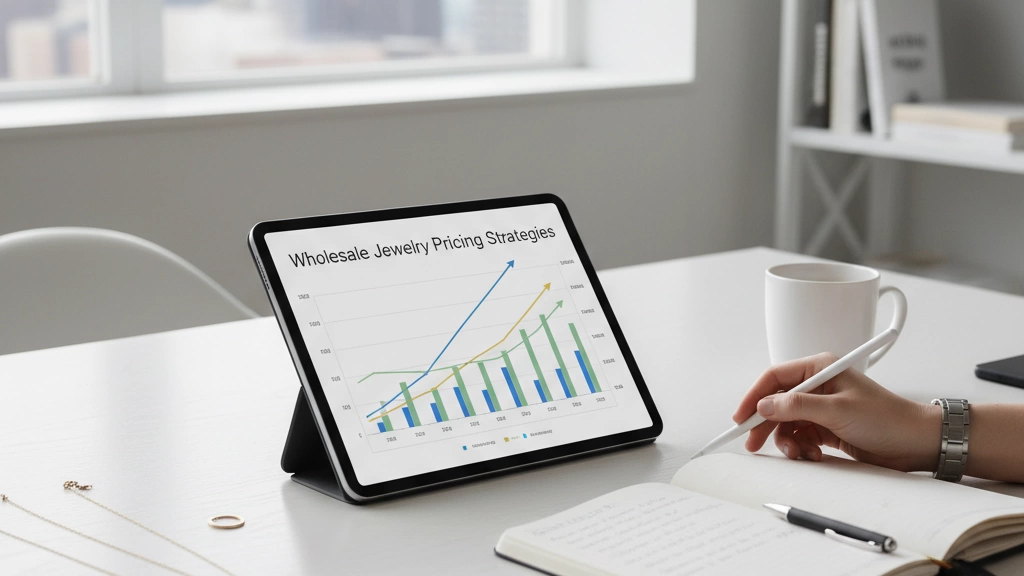
If you understand how wholesale jewelry pricing works, you can push your unit cost down without killing quality. Here’s exactly how I approach it.
Plan Orders in Sensible MOQ Blocks
Instead of random small orders, organize products into MOQ “blocks” that match how factories work.
- Aim for 100–300 pcs per style when possible – this is the sweet spot for many Dongguan jewelry factories.
- Group variations under one style:
- Same design, different sizes
- Same design, 2–3 color platings
- Lock in better wholesale jewelry price per piece by placing:
- 3–5 strong designs at higher MOQ
- Instead of 15 weak designs at tiny quantities
This reduces setup time per style and lets factories give you their real factory direct jewelry pricing.
Bundle Similar Designs to Share Mold & Setup Costs
Mold and setup fees add up fast. Use them smarter:
- Create design families:
- Ring + pendant + earrings with the same motif
- Same base shape, different stones
- Ask your supplier if one custom jewelry mold can be reused or slightly modified across SKUs.
- Focus on a few core shapes that can be tweaked rather than starting from zero each time.
This spreads mold and setup over more units and drops your effective wholesale jewelry cost breakdown per design.
Choose Thicker Plating Upfront
Ultra-thin “flash” gold plating looks cheap fast and leads to returns.
- For serious branded product, I usually choose:
- 0.3–0.5 micron for fashion pieces
- 1–2 microns for higher-ticket 18K gold plated jewelry
- Thicker plating:
- Lowers refund/complaint rates
- Lets you justify higher gold plated jewelry wholesale cost
- Supports stronger retail jewelry markup
Pay a bit more at the factory to avoid customer-service headaches and bad reviews later.
If you’re comparing plated vs filled vs solid gold, it’s worth checking detailed breakdowns like this guide on gold filled jewelry manufacturers in China to position your price point correctly.
Build Seasonal or Quarterly Stock (Not Constant Micro-Orders)
Micro-orders keep you “busy” but kill your margins.
- Plan seasonal drops (Spring/Summer, Fall/Winter) or quarterly buys.
- Consolidate designs into bigger, less frequent POs:
- Same shipping window
- Same plating colors
- Same stone types
- This helps you:
- Hit better MOQs
- Reduce per-unit production and logistics costs
- Negotiate stronger China jewelry wholesale pricing
It also gives you a clear calendar for collection launches and marketing.
Negotiate Using Open Cost Sheets
Stop negotiating blindly. Ask for a transparent factory cost breakdown:
- Material (metal + stones)
- Labor (casting, polishing, setting, assembly)
- Plating (type + micron thickness)
- Packaging
- Profit margin
Once you see the open cost sheet:
- Negotiate around material specs (weight, stone choice)
- Tweak plating thickness or surface treatments
- Simplify steps that add labor
Factories that are serious about long-term business and operate like leading China jewelry manufacturers usually don’t hide this structure.
Adjust Design to Hit a Target Unit Price
When a quote comes in too high, first adjust the design, not the factory.
You can lower cost by:
- Reducing weight:
- Thinner band, less bulky pendant
- Hollow structures instead of solid where possible
- Optimizing stones:
- Fewer stones or smaller sizes
- Switching from natural to lab-created gemstones or lower CZ grade
- Simplifying details:
- Less micro-pavé, fewer tiny settings
- Cleaner surfaces that are easier to polish
Tell your supplier your target price and let them suggest technical tweaks. This is how you keep the look and protect your margin.
Build Long-Term Relationships for Better Pricing
You’ll never get the best Dongguan jewelry factory prices if you jump from supplier to supplier every order.
To earn better pricing over time:
- Be consistent with reorders on winning styles
- Pay on time and keep communication clear
- Share basic sales feedback so they know what to expect long term
- Let factories plan capacity around your seasonal or quarterly orders
In return, good suppliers will:
- Offer better wholesale jewelry rates as volumes grow
- Prioritize your sampling and production slots
- Help you develop cost-effective designs faster
Treat your factory like a long-term partner, not a one-off vendor. That’s where the real savings and stable wholesale jewelry pricing come from.
Wholesale Jewelry Pricing FAQs
What is a fair wholesale markup for retailers selling jewelry?
For most jewelry retailers, a fair wholesale markup is:
- 2.2x–2.5x on mid-range fashion jewelry (stainless steel, brass, basic 925 silver)
- 2.5x–3x on premium 925 silver and higher-end gold plated pieces
- 3x–4x+ on fine jewelry (solid gold, natural gemstones)
Example:
If your wholesale jewelry cost per piece is $10, a normal retail price range is $25–$35 depending on your brand, traffic costs (ads), and return rates.
If you’re doing dropshipping or heavy paid ads, you usually need a higher markup to stay profitable.
How much should I mark up factory-direct jewelry in my store or online shop?
If you buy factory direct jewelry pricing from us in Dongguan, you cut out 1–2 layers of middlemen. That means:
- Many of our clients use:
- 2.5x–3x markup for online DTC brands
- 2x–2.5x markup for wholesale-to-boutique resellers
- 3x–4x markup on special collabs, limited drops, and solid gold
A simple way to set price:
- Start with:
Retail price = Factory price × 3 - Adjust based on:
- Return rate / warranty cost
- Branding level (basic vs premium)
- Channel (marketplace vs own site vs physical store)
If your pieces have better plating and long-lasting metals like stainless steel or quality 925 silver (see how long sterling silver lasts with proper care), you can safely justify higher markups.
Why is Dongguan such a major hub for global jewelry manufacturing?
Dongguan is a core jewelry manufacturing hub because:
- Complete supply chain in one city: raw materials, casting, stone setting, plating, packaging
- Mature skilled workforce for micro-pavé, stone setting, polishing, QC
- Competitive labor cost vs Western countries, with much higher capacity
- Fast lead times for both stainless steel and 925 silver jewelry
- Strong experience in OEM/ODM for global brands and influencers
For brands, that means better prices, more flexibility, and stable quality, especially when you work directly with Dongguan HonHo Jewelry instead of multiple intermediaries.
Real cost differences: gold plated vs gold filled vs solid gold
Here’s the basic cost reality:
- Gold plated jewelry
- Thin layer of gold over base metal (stainless steel, brass, or silver)
- Lowest material cost
- Great for fashion brands with lower price points
- Cost impact depends heavily on plating thickness and base metal
- Gold filled jewelry
- Much thicker gold layer bonded to base metal (often brass)
- 5–10x more gold than many plated pieces
- More expensive than standard plating but far cheaper than solid gold
- Better for mid-price, “lasting but not fine jewelry” positioning
- Solid gold jewelry (10K/14K/18K)
- The entire piece is gold alloy
- Material cost dominates the price
- Can be 20–50x the factory cost of a similar plated brass or stainless steel design
- Used for fine jewelry, heirloom, and luxury positioning
From a wholesale standpoint, if you want premium look on a budget, we usually recommend thick 18K gold plating on stainless steel or vermeil on 925 silver rather than jumping straight to solid gold.
How long does custom jewelry development usually take?
For a fresh custom design (not using our existing molds), typical timeline:
- 3–7 days – 3D design / CAD and revisions
- 7–15 days – master mold + first sample (plated + stones set)
- 15–30 days – mass production after sample approval
So in total, expect about 4–8 weeks from idea to bulk order, depending on:
- Design complexity
- Stone setting difficulty
- Plating type and color options
- Peak season vs off-season
If you choose from our existing designs and molds, you skip most of the development time and cost.
Κορυφαίοι 10 Κατασκευαστές Κοσμημάτων στην Κίνα για 2025 Διαλογή και Οδηγός
Η Κίνα ελέγχει περίπου το 70-80% της παγκόσμιας παραγωγής κοσμημάτων, συμπεριλαμβανομένων των εργαστηριακών λίθων (συνθετικά πετράδια) και των μεγάλων κέντρων
Top 13 French Jewelry Companies Known for Craftsmanship and Elegance
When it comes to French jewellery, the world immediately conjures images of effortless elegance, timeless craftsmanship, and a flair that only
Top 12 fashion jewelry companies in Mexico in 2025
Key Takeaways Mexico’s top fashion jewelry houses cover unique strengths, from Taxco silver purists to digital-native disruptors. Map suppliers to