

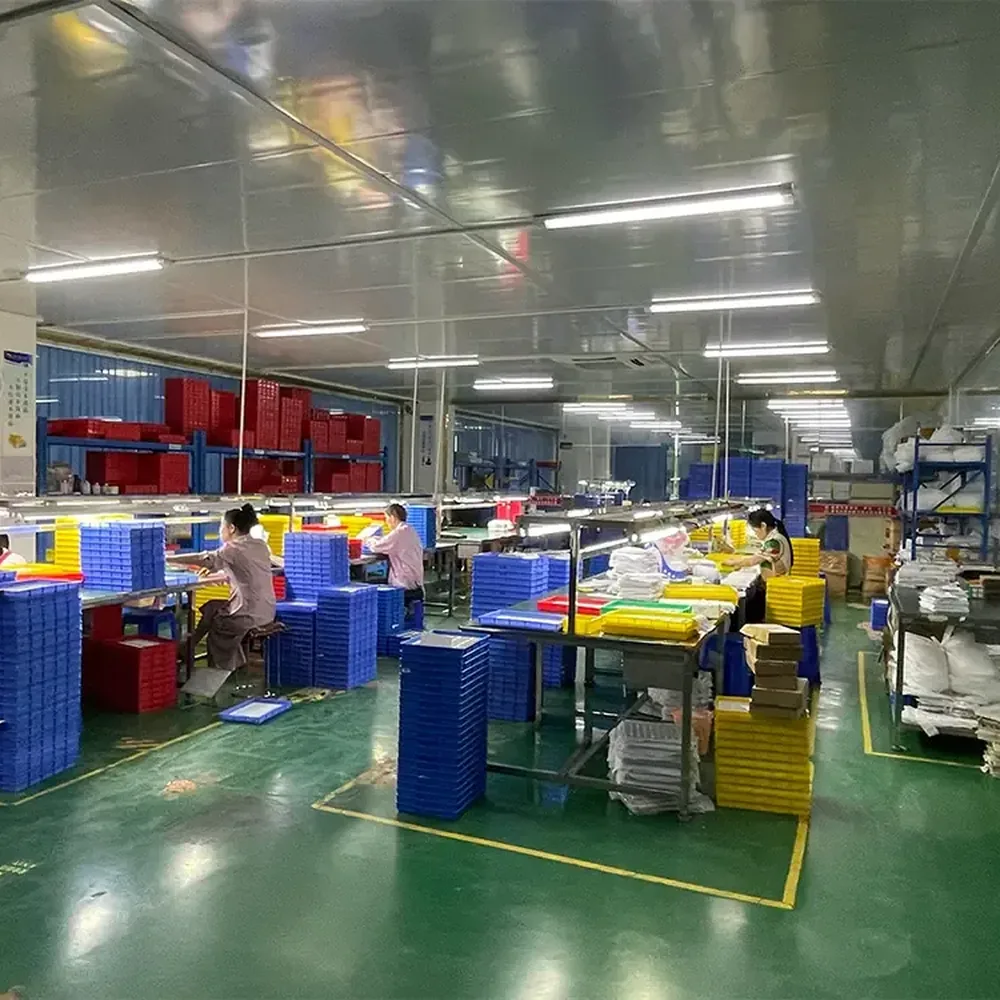
A jewellery manufacturer is useful when its processes match your design and it can reproduce an approved sample consistently. Start with the metal, construction, finish and order requirements. Then check who performs each operation, what evidence supports the proposed claims, and how changes will be approved.
| Project | Useful starting route | Question for the supplier |
|---|---|---|
| A design made to your drawing | OEM or custom development | Which dimensions and details need revision for manufacture? |
| An existing design with agreed changes | ODM or catalog development | Which changes create new tooling, samples or minimum quantities? |
| An assortment of existing products | Wholesale stock purchasing | Which variants are available and what are their current specifications? |
| A component for your own assembly | Findings or component production | How will it fit the mating parts and who approves the assembly? |
Suppliers use OEM and ODM in different ways. Define the actual deliverable, design rights and permitted changes in writing. An existing catalog shape does not necessarily mean zero development cost, and custom work does not mean every operation must be performed under one roof.
Take one proposed SKU through design, material sourcing, forming or casting, joining, stone setting if needed, finishing, inspection and packing. Ask which stages are in-house and which are subcontracted. Outsourcing is not by itself a quality defect; unexplained responsibility or uncontrolled substitutions are more useful warning signs.
For a cast ring, ask how the model becomes a pattern and then a finished metal sample. Formlabs’ jewelry production overview shows one digital casting workflow. It is background on a process, not evidence that a particular factory owns those machines or achieves the advertised results.
A material name, a coating color and a durability claim are different parts of the specification. Ask for the body alloy, separate findings and complete finish description. “PVD” identifies a process family; it does not automatically mean real gold, a particular thickness or waterproof performance. The plating specification guide lists the distinctions.
For skin-contact requirements, establish the destination market and intended use, then agree the relevant test scope. A general report for loose metal may not cover the finished necklace. The nickel-claim guide explains composition and release evidence. Do not convert a salt-spray duration into years of consumer wear without a validated relationship.
| Question | Relevant record | What it cannot establish alone |
|---|---|---|
| Who is responsible for the order? | Contracting entity, business details and named contact. | The quality of a particular production batch. |
| What material is supplied? | Component specification and appropriate material evidence. | The behavior of every substituted finding. |
| Does the product meet a stated requirement? | Applicable report identifying the tested sample and method. | A blanket guarantee covering all designs and markets. |
| How is quality managed? | Documented controls and any verified, in-scope management-system certification. | Automatic approval of every product. |
Verify certificate issuer, entity, scope and validity where a certification is relevant. A logo or a claimed “REACH certificate” should not replace an applicable product assessment.
Start the discussion with the feature most likely to determine success. That may be a thin engraved bar, a comfortable hollow hoop, a stone setting, a flexible plated chain or a clasp that needs to be operated one-handed. Ask the manufacturer to explain how it would make and inspect that feature. A portfolio of attractive but unrelated products is less useful than a relevant development sample.
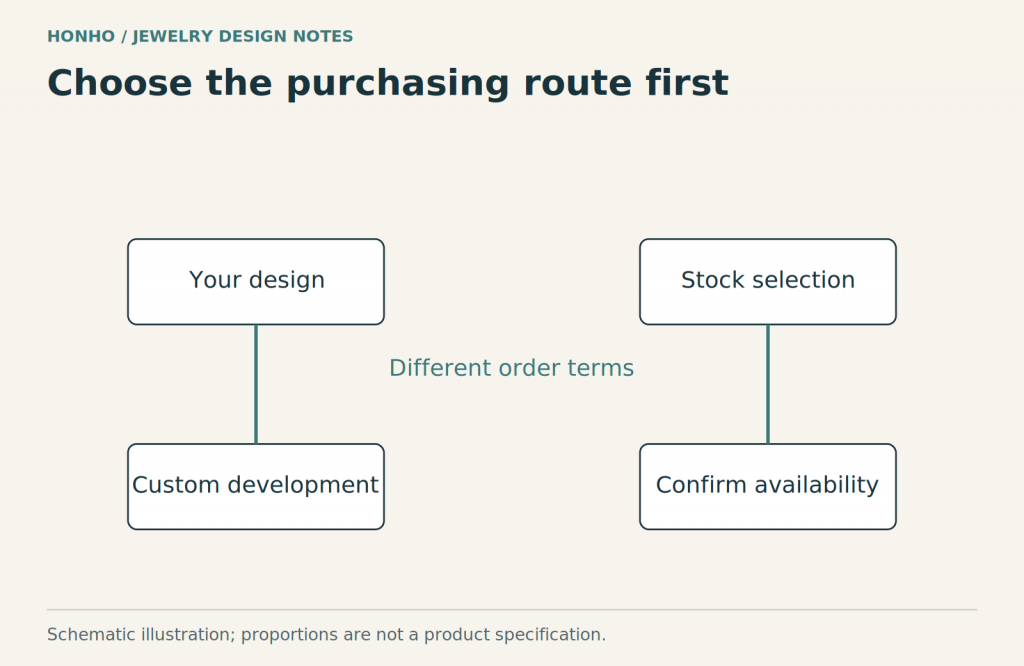
Compare the proposed route with the design’s priorities. If weight matters, discuss the section and assembly rather than asking only for a cheaper alloy. If a coating claim matters, identify the layer and evidence. If consistent reorders matter, ask how component references and approved revisions are retained.
| Requirement | Evidence to compare | Next decision |
|---|---|---|
| Design fit | Relevant samples and a route for your geometry | Approve feasibility or request a revision |
| Material and finish | Component list, finish proposal and applicable evidence | Resolve missing identities before product claims |
| Sample process | Scope, cost, revisions and acceptance record | Agree what the first sample must demonstrate |
| Production control | Inspection plan and change-approval responsibilities | Define how bulk pieces will match the sample |
| Commercial fit | Equivalent quotation and workable milestones | Compare total scope and unresolved assumptions |
Record missing information as a follow-up question. Avoid turning a polished website, a low MOQ or a low quote into a positive or negative score by itself. The useful conclusion is whether the supplier can satisfy your particular requirements and explain any trade-offs clearly.
State whether the manufacturer should reproduce the supplied geometry, improve it for production or develop a related design. A brand founder with STL files and physical samples asks specifically for original-design manufacturing rather than catalog products. That distinction belongs at the beginning of the inquiry.
Identify the file units, revision, intended metal and finished dimensions. Explain which details must remain and which can change. A closed, printable mesh does not by itself settle casting access, joining, setting, weight or the dimensions after finishing. Ask the manufacturer to list the proposed changes and return an identifiable revision for approval.
Keep a physical handmade sample as a reference for the features it actually establishes: perhaps texture, scale or feel. Note any feature that should be different in production. Without that distinction, an accidental asymmetry or rough edge can be mistaken for part of the design.
Stuller’s casting overview on YouTube and its published transcript show why a model, wax pattern and cast part are different stages. Use the overview to frame a factory discussion; it does not verify HonHo’s equipment or your proposed alloy’s processing conditions.
A stock sample can show the supplied product’s finish, fastening action and packing. It cannot prove that a new thin section, stone setting or assembly will work. Ask for a representative development sample when your design adds a feature the stock item does not contain.
For HonHo, identify whether you want to evaluate available stock, commission a feasibility sample or approve a finished production reference. Ask the quote to name the deliverable and what remains unresolved after that stage. This avoids paying for a visual prototype while expecting a fully finished, tested product.
Send a dimensioned brief and assess a finished sample. Compare fit, weight, color, surface details, settings and closure operation. Record acceptable cosmetic variation with photographs and identify critical dimensions on the drawing. A sample approval should name the revision, components and finish; “looks good” leaves too much open.
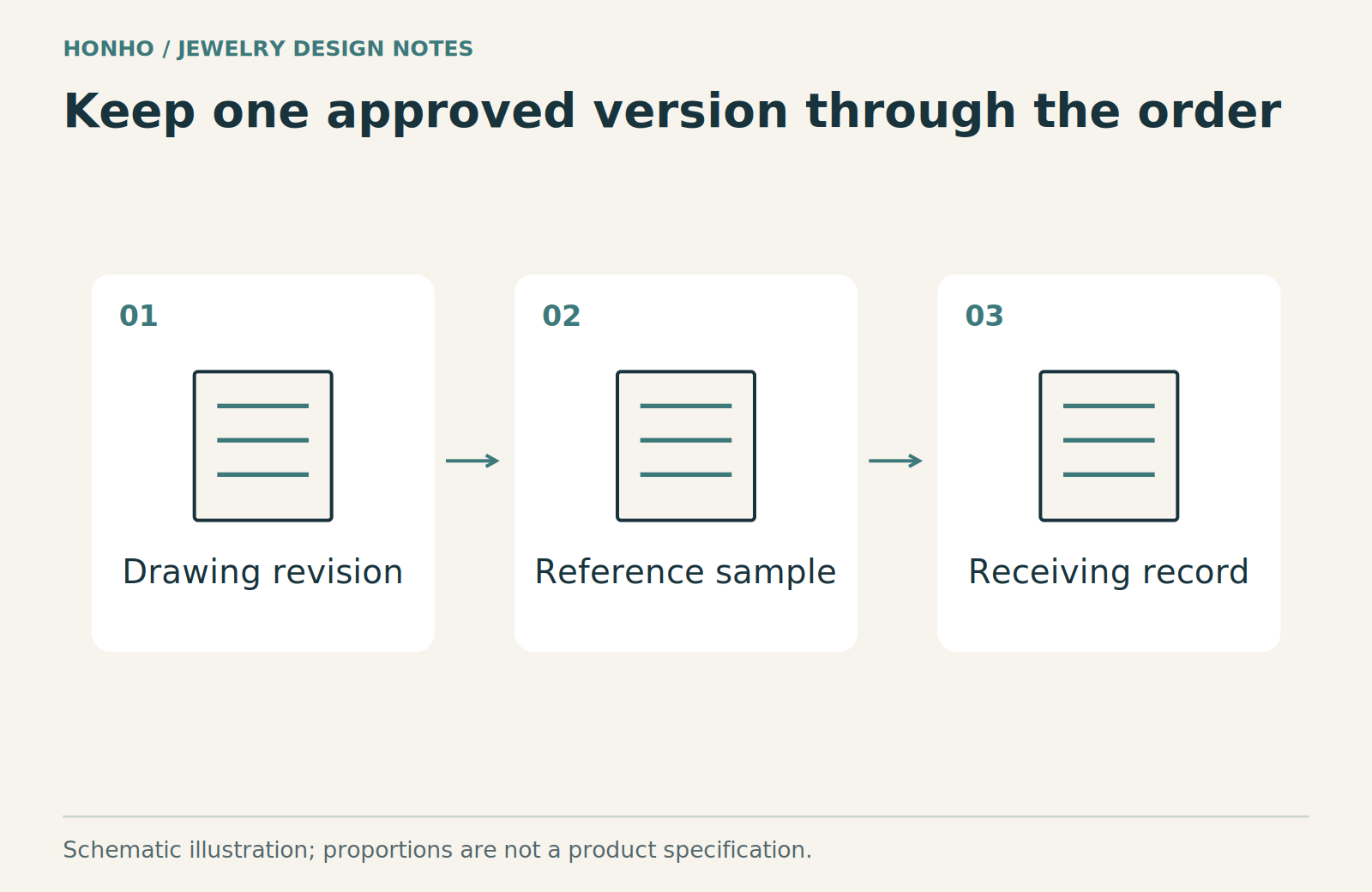
Ask how the approved sample will be retained and how production will be inspected against it. If a coating, post or subcontractor changes, agree who reviews the impact before use. A first sample is evidence about that sample; production controls establish how later pieces will be compared with it.
Record minimum quantities by style, size and color; sample and tooling charges; packaging; inspection; and delivery terms. Agree when the schedule starts and how revisions affect it. There is no useful universal MOQ or turnaround table for every metal and design. Use the custom jewelry RFQ checklist to request comparable quotations.
For overseas supplier verification, the China manufacturer checklist adds identity, remote-review and handover controls. If an existing assortment fits the project, HonHo Jewelry Wholesale offers a separate place to review listed products and their current terms.
For custom development, the current starting quantities are 50 pieces per stainless steel style, 30 pieces per ring size for stainless steel rings, and 30 pieces per 925 sterling silver style. Brass and special constructions require a project-specific quantity confirmation. Give the color and size breakdown so the quotation can describe the actual order.
For stainless steel rings, the current mold basis is US$100 for the main mold and US$50 for each additional size mold. Sample cost and other development work should be listed separately where applicable. A collection with several sizes or constructions needs a breakdown rather than one unexplained tooling total.
Ready-stock purchasing is a separate route: self-service wholesale website orders have no per-style MOQ and a US$100 minimum order value; the sales-assisted PDF catalog route starts at five pieces per style and US$300 per order. Ask sales for the latest catalog or use the wholesale link above. Changes to available designs can require a custom quotation.
HonHo’s current sample planning is 15–20 days at the earliest, with an outer planning window of one month; bulk production is planned at 25–35 days. The quotation should define the start milestone, day basis and effect of revisions. An accepted expedited project can produce an initial metal blank as quickly as three days with an additional charge, but finishing and sample approval remain separate stages.
Provide the required arrival date and destination. Ask for design approval, sample, bulk completion and transport to be shown separately. If a deadline is tight, identify the decision that must be made first and the stage that can realistically be expedited.
A useful opening inquiry can be concise while still being specific: the product and material, a dimensioned sketch or CAD file, finish reference, quantities by variant, destination market and the main design concern. Add any material, coating or test claim you intend to put on the product page. Ask the manufacturer to identify missing information before treating an estimate as a final production quote.
For HonHo, the discussion can include stainless steel PVD or appropriate wet-electroplating routes for brass and silver where relevant to the design. If a Thailand production option is proposed, confirm its actual role and project scope. Company capabilities should lead to a defined production plan, with the specific site, materials and evidence applicable to the order.
After the sample is approved, retain the specification and reference for the reorder. Compare actual delivery, defects, communication and correction against the agreed terms. Those records let a brand decide whether to expand the relationship based on its own project results.
Send HonHo your first-project brief, including a representative drawing, materials, finish, quantities and intended market. Specify whether you need custom development or an available ready-stock selection. Contact HonHo with these details.
Updated October 18, 2026.
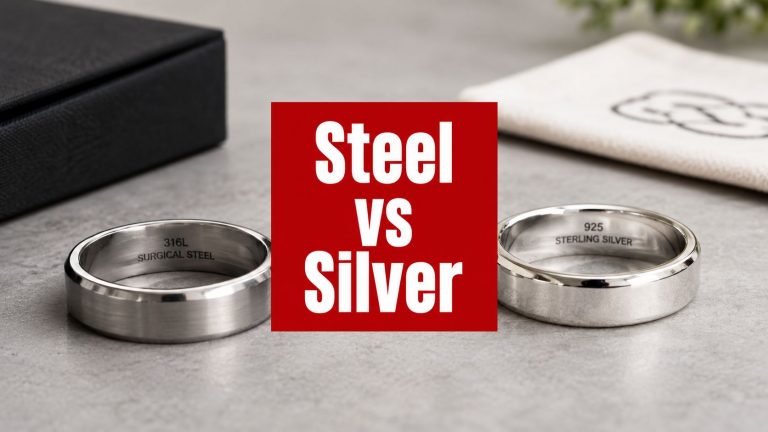
You’re pricing a new collection, and the sample tray is already split down the middle. The 316L surgical steel pieces look cleaner on cost and daily wear, the
You probably have a launch already in motion, a supplier sample on your desk, and one uncomfortable question underneath it all, will this gold color still look clean
If you are developing the ring itself, compare ring fabrication, casting and CAD methods before approving the shank dimensions and manufacturing route. You’re refining a ring design, the