In the morning you don a beautiful new set of earrings. By the evening, your earlobes are red, itchy and (quite literally) begging for relief. Sound familiar? If it is, you’re most likely dealing with a nickel allergy — and the fix can be as simple as switching to nickel free jewelry.
This guide tells you all there is to know — what nickel free really means, which metals are truly safe, the legal limits on nickel in jewelry, how to detect fakes and how to maintain your pieces. By the time you finish reading, you’ll be able to shop with total confidence and never wake up itchy ever again.
Quick Fact: An estimated 15 to 18 percent of North Americans are allergic to nickel, according to the American Academy of Dermatology. That’s about 1 in every 5 people — making nickel allergy among the most common skin sensitivities on the planet.
1. What Is Nickel Free Jewelry?
Nickel free jewelry is either jewelry that has been crafted without the intentional addition of nickel to the metal alloy, or — more technically defined — a jewelry item that leaches nickel in an amount beneath the threshold neccessary to provoke an allergic response.
Nickel (atomic symbol: Ni, atomic number: 28) is a silver-white metal that is very helpful for jewelers. It strengthens placing softer metals like gold, adds brightness and whiteness to silver alloys, and drastically reduces production costs. The benefits of nickel help to explain why it made its way into such a huge proportion of the world’s fashion jewelry.
The downside? In a large subset of people, the body’s immune system recognizes nickel ions as harmful. When nickel diffuses from jewelry into the skin — a process initiated by sweat, body temperature and friction — the immune system initiates an inflammatory response. The outcome is contact dermatitis: redness, itchiness, bumps, dryness and blistering in extreme cases.
Jewelry without nickel gets rid of that trigger. By selecting metals that are completely nickel-free or have a very low nickel release rate, you can wear beautiful jewelry every day without fear of skin reactions!
2. Nickel Free vs. Hypoallergenic: What’s the Real Difference
These two terms are so frequently used together in jewelry that most shoppers assume they have the same meaning. They don’t — and knowing the difference could save your skin.
What “Hypoallergenic” Actually Means
“Hypoallergenic” is a commercial term that technically means “less likely to cause an allergic reaction.” That label in the United States has no legal definition, no government standard and requires no testing. A piece of jewelry may be labeled hypoallergenic even if nickel is present — provided the manufacturer thinks it’s unlikely to trigger a reaction in most people.
What “Nickel Free” Actually Means
“Nickel free” is a more specific — and in many markets legally regulated — term. Under EU REACH regulation, a good labeled nickel free must pass laboratory testing that shows whether nickel has been released at or below the allowable limits. This adds real, measurable meaning to the term.”
Bottom Line: Always choose “nickel free” over the generalization of “hypoallergenic,” if you have a confirmed nickel allergy. Nickel free is a more stringent standard that can be tested.
3. Why Nickel Causes Skin Reactions
By understanding the science, it becomes a lot more clear about how to protect yourself. Here’s what’s really going on when jewelry irritates your skin:
- Nickel ions leach out. When sweat, body heat or friction touches a nickel-containing metal, microscopic nickel ions (Ni²⁺) dissolve from the surface and seep into the skin.
- Sensitization happens first. The first time, the immune system sees nickel and forms a “memory” of it as foreign invader. The first time you might not respond at all.
- Reaction on re-exposure. The next time nickel touches the skin, the immune system goes into overdrive, mounting a wholesale inflammatory response — producing the classic symptoms of redness, itching and rash within 12 to 48 hours.
- Once sensitized, always sensitized. Nickel allergy can usually not be cured and is a lifelong condition. But by wearing nickel free jewelry you completely take out your trigger.
⚠️ Did You Know? You can also develop a nickel allergy at any time, even if you’ve worn cheap jewelry for years without incidents. Long repeated exposures, at low levels, slowly sensitize the immune system — hence why many adults suddenly get a reaction in their 30s or 40s.
4. Nickel Free Jewelry: Safe Metals to Choose
And not all metals are safe for your skin. Here’s a breakdown of the metals that you can wear with confidence if you have a nickel allergy:
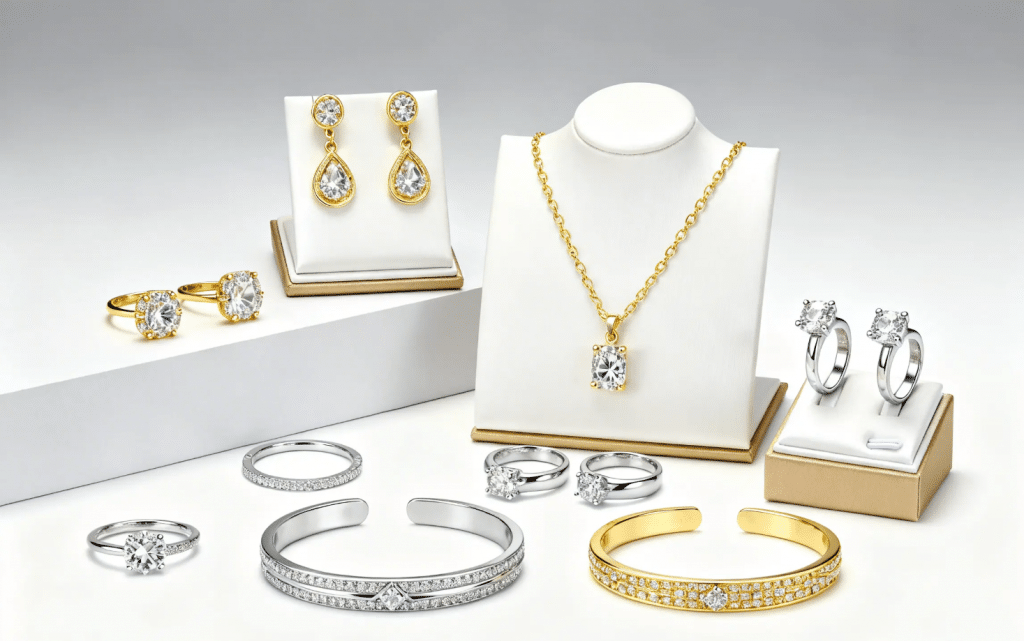
925 Sterling Silver
Sterling silver is an alloy of 92.5% pure silver and 7.5% copper. It is nickel-free by design and safe for most nickel allergic individuals. Search for the “925” hallmark stamp. Steer clear of anything claimed to be “nickel silver” or “German silver” — those are copper-nickel alloys with no actual silver.
18K+ Yellow Gold & Rose Gold
18-karat gold is 75 percent pure gold. The last 25% usually is alloyed with silver/copper up to yellow gold and copper for rose gold — neither of which has nickel. Up to 22K or 24K, for maximum purity — although these are soft and not recommended for everyday pieces (more decorative).
⚠️ White Gold Warning: The nickel used to add white color to standard white gold causes the metallurgic what is called tarnish. If you have a nickel allergy, avoid white gold unless your jeweler specifically tells you the alloy is palladium-alloyed and nickel-free.
Platinum
Pure platinum is naturally white and a very dense metal, so it is an alloy (95 percent pure platinum) mixed with other platinum-group metals (including ruthenium, iridium or palladium), none of which are known to produce nickel-type reactions. It’s the worldwide standard for those with extreme skin sensitivities, and the safest choice for things like engagement rings that you plan on wearing forever.
Titanium (Grade 23/ASTM F136)
Titanium itself is biocompatible, and used in surgical implants and aerospace components. Metal – if you choose for a metal option, jewelry-grade titanium (Grade 23 or the ASTM F136 specification) is totally nickel free and very light, but also exceptionally durable. Answered by professional piercers and recommended for new piercings It is more expensive than stainless steel, but less expensive than gold or platinum.
316L Surgical Stainless Steel
Here is where it gets interesting. Nickel is (roughly 10–14% by composition) a component of real 316L stainless steel. But the high chromium content creates a dense protective oxide layer which prevents nickel ions from leaching onto the skin. Independent biocompatibility studies conclude that 316L stainless steel releases nickel at levels below the EU safe limit of 0.5 μg/cm²/week, thus it’s not a health risk for most people sensitive to nickel. Genosses is the cheapest one and is commonly used for fashion or fine style jewelry.
Palladium
A naturally white nobel metal that belongs to the platinum family. Palladium is becoming more commonly used as a nickel-free alternative in white gold alloys and by itself in fine jewelry. It is naturally hypoallergenic, resists tarnishing and weighs less than platinum.
| Metal | Nickel Free? | Tarnish Resistant | Cost Level | Best For |
|---|---|---|---|---|
| 925 Sterling Silver | ✔ Yes | Moderate (polishable) | 💲 Budget-Friendly | Everyday earrings, necklaces, rings |
| 18K Yellow Gold | ✔ Yes | ✔ Excellent | 💲💲💲 Premium | Engagement rings, fine jewelry |
| Rose Gold (18K+) | ✔ Yes | ✔ Excellent | 💲💲💲 Premium | Fashion rings, pendants, bracelets |
| Platinum | ✔ Yes | ✔ Excellent | 💲💲💲💲 Luxury | Wedding bands, heirloom pieces |
| Titanium (Grade 23) | ✔ Yes | ✔ Excellent | 💲💲 Mid-Range | Earrings, piercings, minimalist pieces |
| 316L Stainless Steel | ✔ Effective (low release) | ✔ Excellent | 💲 Budget-Friendly | Fashion jewelry, everyday wear, wholesale |
| Palladium | ✔ Yes | ✔ Excellent | 💲💲💲 Premium | White gold substitute, fine jewelry |
| White Gold (standard) | ✘ Often Contains Nickel | ✔ Excellent | 💲💲💲 Premium | Caution — verify alloy composition |
| Brass | ✔ Typically Yes | ✘ Tarnishes easily | 💲 Budget | Check supplier — some alloys add nickel |
| Fashion Jewelry Alloy | ✘ Often Contains Nickel | ✘ Poor | 💲 Very Budget | Avoid for sensitive skin |
5. Metals to Avoid If You Have a Nickel Allergy
The following are the materials that most frequently trigger reactions in people with nickel sensitivity:
- Nickel silver / German silver — This is also an alloy and has 60% copper, 20% nickel, and 20% zinc in it despite sounding like a silver. No silver whatsoever. Source of nickel allergy reactions — the classic one.
- Low-karat gold (under 14K)—The lower the karat, the more alloy metal is included. Nickel is often used by manufacturers as an inexpensive hardener in 9K and 10K gold.
- Nickel-plated jewelry — Even a thick plating can wear off over time due to sweat, cleaning or just friction. Then, reactions take place when the nickel-containing base metal is exposed.
- Non-description fashion alloy / “zinc alloy” jewelry — Many inexpensive pieces of fashion jewelry use undisclosed compositions for the alloys which are often nickel based. You just cannot know what is in the metal without a material safety data sheet (MSDS) or test certificate.
- Regular stainless steel (200 or 400 series) — Not all stainless steel is the same. Grades of the 200 and 400 series release more nickel. Generally speaking, only 316L is safe for your skin.
6. Global Regulations: What Does the Law Actually Say?
This is a section in which most jewelry blogs are lacking. First the bad news: The regulatory landscape is fragmented, inconsistent and often misunderstood — particularly for brands that are sourcing from manufacturers and selling in multiple countries. Here is a clear breakdown:
EU — REACH Regulation (Annex XVII, Entry 27)
The EU has the strictest nickel requirements for jewelry in the world. As per the REACH chemical regulation, if you sell jewelry in the EU you need to pass these limits nickel released:
- Long term contact with skin (necklaces, rings, bracelets, watch cases): ≤ 0.5 μg/cm²/week
- Jewelry for pierced body sites (earrings, belly rings, nose rings): ≤ 0.2 μg/cm²/week
Laboratory testing according to the EN 1811:2023 standard has confirmed compliance. Jewelry imported to the E.U. will require documentation that establishes whether it meets these thresholds. Noncompliance can result in product bans, recalls and fines.
CPSC & Proposition 65 — United States
No federal nickel release standard for jewelry currently exists in the US. But California’s Proposition 65 law mandates that products with chemicals known to cause cancer or reproductive damage — including soluble nickel compounds — must have a warning label if sold in a California store. And while the Consumer Product Safety Commission (CPSC) also can take action on jewelry that has an unreasonable risk, specific nickel thresholds for adults have not been codified federally so far.
Other Key Markets
- Canada: Health Canada adheres to guidance similar to that of the E.U. in relation to children’s jewelry and promotes voluntary compliance regarding adult jewelry.
- Australia: Nickel release standards for jewellery sold to susceptible populations (eg. children, piercings) should be consistent with those of the EU, according to the ACCC.
- Administration in eu regulations, Chinese jewelry manufacturers Chinese export to the European Union need to have EN 1811:2023 test certificate Verified Dongguan & Shenzhen factories usually do REACH testing with well known 3rd party labs such as SGS, Intertek or Bureau Veritas.
B2B Buyers: Before placing an order for the EU market, always request your supplier to provide a nickel release test certificate (EN 1811:2023) of the product The document should be obtained from a reputable third-party testing laboratory — not from the manufacturer’s own, in-house lab.
7. How To Tell If You Are Buying Real Nickel Free Jewelry
Hypoallergenic or nickel free jewelry is out there in the world in abundance, and yet there’s no proof to support it. Here’s how to sift the real from the misleading:
Look for Hallmarks & Stamps
“925” — Solid sterling silver (nickel free by design)
“PT” or “Plat” — Platinum (of course nickel free)
“18K”, “750” — 18-karat gold (75 percent pure gold)
“316L” — Surgical-grade stainless steel
“Ti” or “ASTM F136” — Implant-grade titanium
Ask for Third-Party Certificates
REACH compliant EN 1811:2023 test certificates are available on request from reputable manufacturers and wholesale suppliers. A supplier who is unable to provide this documentation — that’s a major red flag.
Check with a Dimethylglyoxime (DMG) Nickel Test Kit
These easy, at-home test kits can be found at most pharmacies and online for less than $20. Free nickel for reaction with the reagent solution turns pink/red. Add it to the surface of jewelry, wait for 60 seconds. Positive (pink colour) test for the presence of nickel.
⚠️ Restriction of DMG Test Kits: Nickel examine kits can simply discover nickel on the floor. Plated jewelry can turn out to test negative at first — but when the coating wears off and the base metal is exposed, the risk of a reaction becomes real. For long-term wears, stick with solid metals rather than plated pieces — especially for earrings and rings.
Red Flags to Watch For
No metal composition listed, generic “hypoallergenic” claim
There is no hallmark or stamp on the jewelry
Very low price for “gold” or “silver” pieces (plated fashion alloy, typical)
Unspecific terms such as “alloy,” “zinc alloy,” or “white metal” without more detail
Manufacturer’s certificates of material tests not provided
🎬 Thing to Watch: “What Is NICKEL Free Jewelry? (YouTube)
Nickel release vs nickel content, the truth about hyper-allergenic labels, and a home DMG test kit explained by industry experts.
What Is NICKEL Free Jewelry? — YouTube” to find visual in-depth guides on how to identify safe jewelry.
8. Care Tips for Nickel Free Jewelry
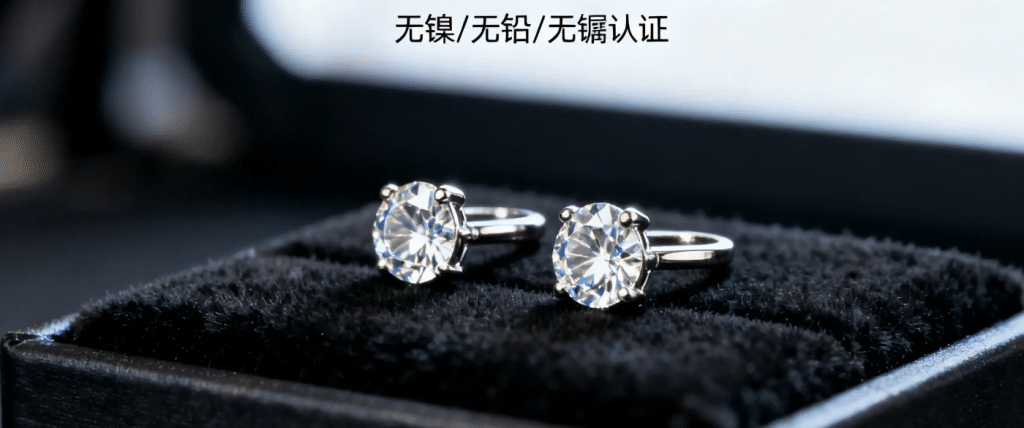
No matter how good the material is, it needs some simple care to keep looking great. Following are the key care habits for most common nickel free metals:
Sterling Silver
- Keep in an airtight bag or anti-tarnish fabric to inhibit oxidation.
- Take off before swimming, showering or putting on lotion — chlorine and chemicals speed tarnish.
- Use a gentle silver polishing cloth to bring back luster. Avoid abrasive materials.
- For persistent tarnish: briefly soak in warm water with a few drops of mild dish soap, then dry thoroughly.
Gold (18K+)
- After every wearing, wipe it down with a soft, lint-free cloth.
- To avoid scratches, store separately from other jewellery.
- The mirror finish can be restored with professional cleaning every twelve months.
Titanium & Stainless Steel
- These metals are very resistant to tarnishing, corrosion and scratching — very little upkeep is required.
- For intricate designs, clean weekly using warm water, mild soap, and a soft toothbrush.
- Make sure that it is completely dry before storage to avoid water spots.
Platinum
- The thing about platinum is that it doesn’t tarnish but does develop a patina (slight surface texture) over time — many wearers adore this appearance.
- Regular professional re-polishing every few years brings back the original high sheen.
- Use a soft pouch to avoid contact scratches.
9. Insider Insights: What Most Jewelry Guides Won’t Tell You
We scoured dozens of competitor pieces, as well industrial videos in order to cover some key points never addressed by nickel free jewelry guides. The following is the information that they’re genuinely hard to find:
The Difference Between Nickel Content and Nickel Release — Most Brands Confuse the Two
So something that most blogs get completely wrong: using a material’s total nickel content as a stand-in for its nickel release rate. Think of it like a tea bag. There’s a lot of tea in the bag, but how much flavor is released into your cup depends on time steeped, water temperature and the composition of the bag itself.
316L Weighs In Perfectly → 10–14% Of The Composition By Weight Is Nickel. But because chromium creates a corrosion-resistant passivation layer on the surface, the real rate of nickel release is negligible — far under EU safety limits. By contrast, a 9K gold piece containing just 0.5% nickel in the alloy could shed that nickel quickly because it has no high-gold protective cover.
It is nickel release, not nickel content, that is of concern. This is another reason why laboratory testing (EN 1811:2023) is so critical — it evaluates release, not content.
Plated Jewelry: The Time Bomb Problem
A large proportion of jewelry marketed as nickel free is plated with a nickel-free metal (gold, rhodium or silver) over a nickel-containing base metal. It just passes surface testing when first installed. But plate thickness matters enormously.
Fashion jewelry plating is 0.03–0.05 microns thick. A standard plate for high-end costume jewelry is 1–3 microns thick. At low thickness, and with daily wear, sweat & washing the plating wears through in weeks. If you make it through, the nickel-containing base metal lies directly on your skin.
If plating jewelry for sensitive skin customers, you always request the plating thickness specification provided by your supplier and look for a minimum of 1 micron or higher. Or, even better, find good-quality metal pieces.
Sweating and Jewelry Reactions: The Role of PH
Individual sweat chemistry matters. Those with more acidic sweat (lower skin pH) had higher release rates of nickel from the same piece of jewelry. Which is why two people can wear the same earrings but only one develops a reaction. Elements of stress, food intake, medications and hormones can all temporarily decrease skin pH and render previously tolerable jewelry reactive.
Kids and Nickel Sensitivity: Greater Risk, Less Understood
Nickel contact allergy affects about 15.6% of males and 35.8% of females under 18 in the United States, according to research published in Journal of the American Academy of Dermatology. The skin is thinner and more permeable in children, and nickel is absorbed at a quicker rate. For children’s jewellery, the EU piercings standard (≤0.2 μg/cm2/week) should apply to all jewellery in contact with skin for prolonged periods of time — not just piercings.
The Pregnancy Skin Sensitivity Effect
Pregnancy causes elevated estrogen levels, which can greatly change skin sensitivity and also how reactive the immune system is to metals. Women who previously wore fashion jewelry without any reaction may develop nickel reactions during or after pregnancy. This is a clinically well-documented phenomenon that few jewelry manuals make mention of. An additional precaution is wise and prudent, not an overreaction: Switch to nickel free jewelry while pregnant.
He’s allergic to “Nickel Free” Jewelry — The Hidden Allergens of Cobalt and Chromium
Even when nickel isn’t actually there, some people are sensitive to cobalt or chromium — two other metals found in alloys. Cobalt allergy has a prevalence of about 5–8% in sodium nancy and causes symptoms very similar to nickel allergy. If you are still reacting to confirmed nickel free jewelry, the offending metal may be cobalt or chromium. The safest bet in this case would be titanium or platinum, which contains neither.
Recommended Video: “Hypoallergenic Metals: A Quick Guide for Sensitive Skin” (YouTube — BriteCo)
Graduate Gemologist and Jewelry Expert explains which metals are actually safe, the science behind how metal reacts with skin, and what certified hypoallergenic means IRL.
YouTube, Search: “Hypoallergenic Metals Quick Guide BriteCo”
10. Wholesale Sourcing Guide: Where to Buy Nickel Free Jewelry in Bulk
Sourcing certified nickel free jewelry at scale Whether you are building a jewelry brand, running a retail store or sourcing for an e-commerce business, sourcing certified nickel free jewelry at scale requires a clear strategy. Here’s what you need to know:
What to Look for in a Nickel Free Jewelry Supplier
- Third-party REACH (EN 1811:2023) test certificates from accredited labs (Bureau Veritas, SGS, Intertek, TÜV).
- Complete material composition disclosure — base metal, plating metal, thickness of plating and any coatings.
- California Proposition 65 compliance paperwork if selling to US buyers
- MOQs and lead times that fit your inventory model.
- OEM/ODM capability available if you require custom design, private labeling or packaging.
Essential Questions to Ask Any Supplier
- We do not have an EN 1811:2023 nickel release test report for this item.
- Base metal?—plating thickness (microns)?
- “Is your product Prop 65 compliant?”
- “Do you also have lead free and cadmium free certifications?”
- “How do you maintain a rejection rate / quality control?”
Work with an Approved Nickel Free Jewelry Manufacturer
HonHo Jewelry is a Dongguan jewelry manufacturer specializing in making nickel free, lead free, and cadmium free jewelry for wholesale buyers. All products are accompanied by third-party REACH and Proposition 65 compliance documentation. Free Sample & Quote Request →
Wholesale Jewelry Categories Nickel Free
All the key jewelry categories should be found in a good nickel free wholesale catalog. Here at HonHo Jewelry, we offer the following nickel free jewelry:
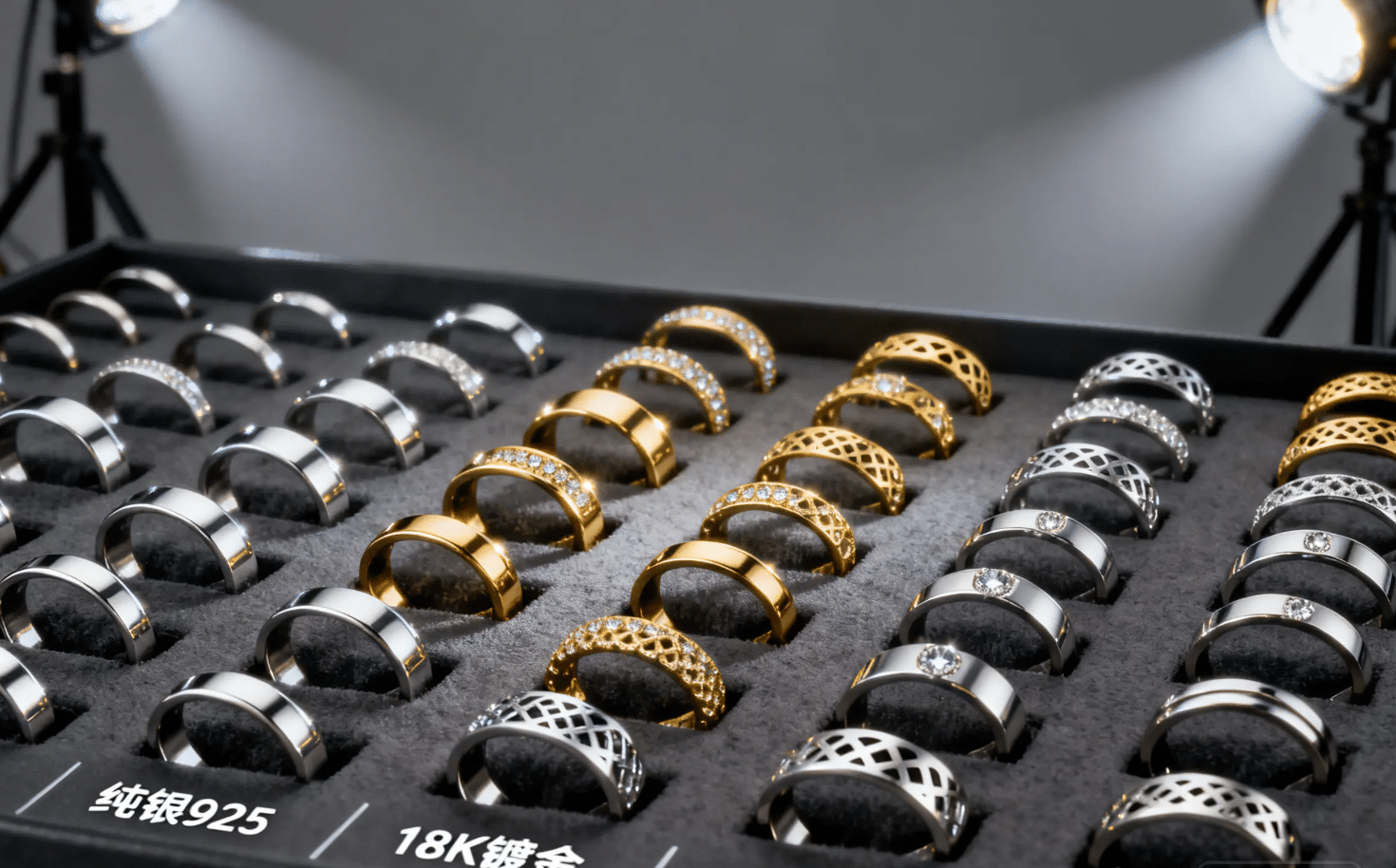
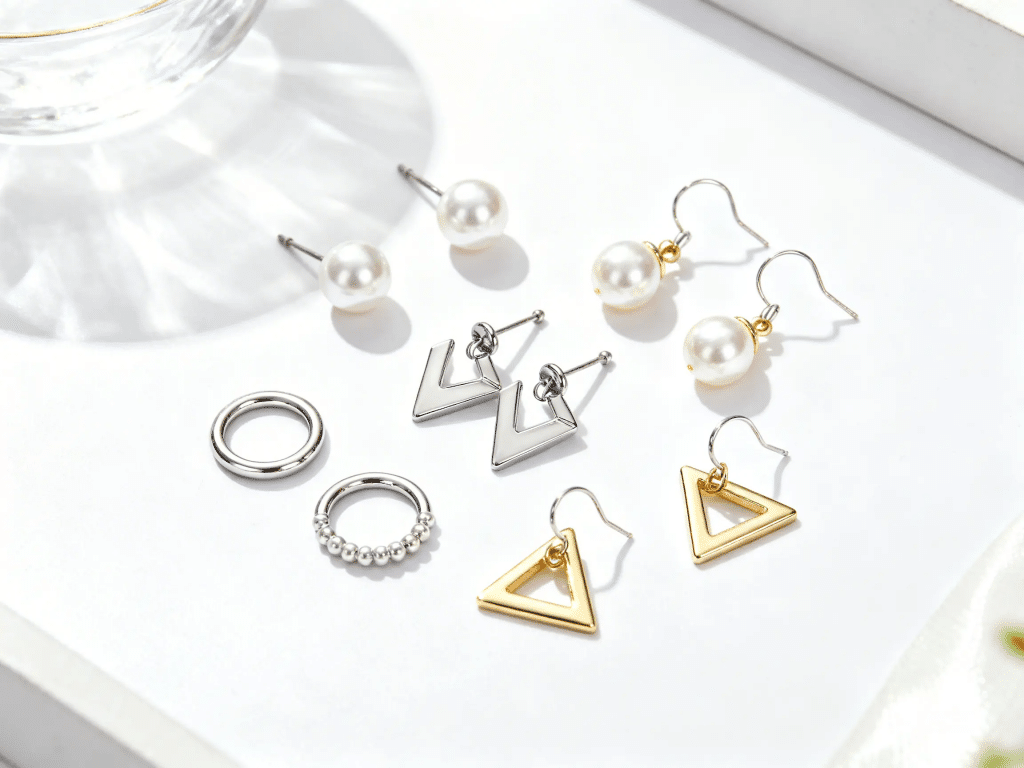
- Nickel free earrings in studs, hoops, drops, threaders and huggie styles made of 925 silver, 18K gold-plated & 316L stainless steel.
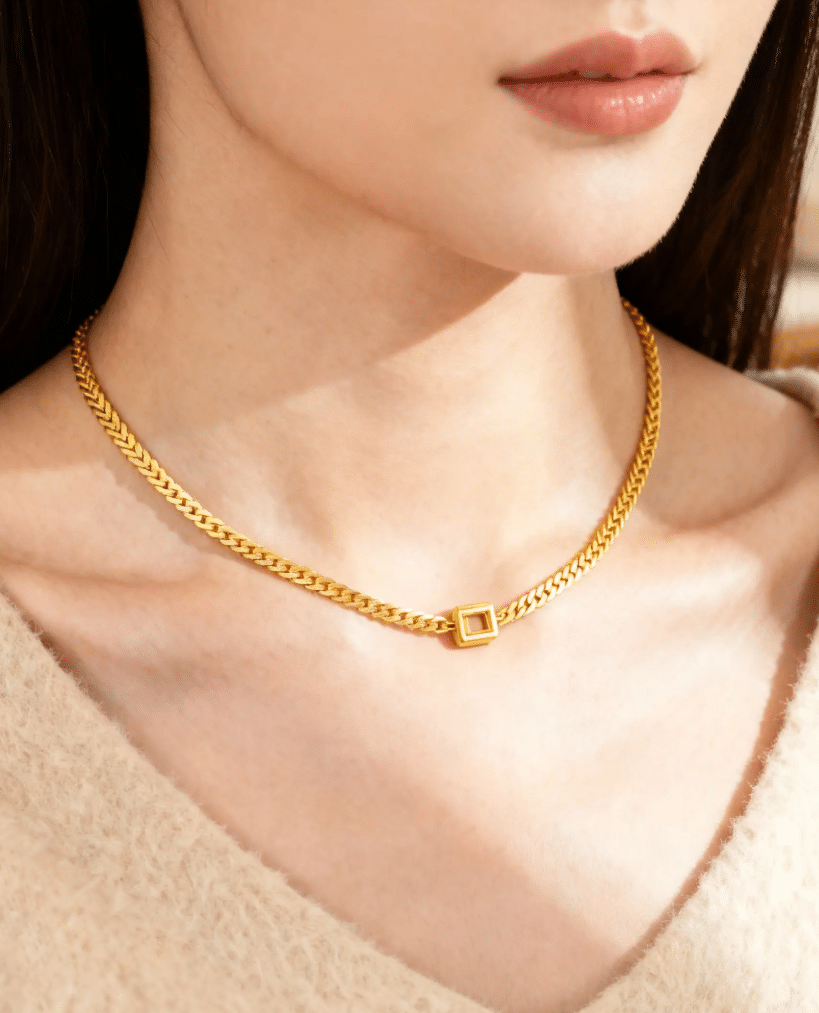
- Nickel free necklaces — chains, pendants, chokers and layering sets in a variety of metals.
- Nickel free rings – stud earrings, statement rings, plain bands in adjustable and fixed sizes.
- Nickel free bracelets — all occasions chain, cuff, bangle and charm styles.
- Private label — your design, your branding, our certified OEM manufacturing.
Nickel Free Jewelry – Frequently Asked Questions
Question 1: What is nickel free jewelry?
Nickel free jewelry is either made from metal alloy that contains no intentional nickel, or has a low enough nickel release rate to fall below regulated safety thresholds — like the EU REACH standard of ≤0.5 μg/cm²/week for submerged skin contact items. It is safest compared to other metals for someone with a known nickel allergy.
Q2: Are nickel free jewelry and hypoallergenic jewelry the same?
No. “Hypoallergenic” is an unregulated marketing term, so there’s no legal standard behind it in the United States. Nickel free is a concrete, testable claim not made by accident (also something international regulations can confirm — EU REACH). If you have expert-confirmed nickel allergy, you should always search for “nickel free,” not just “hypoallergenic.”
Q3: What type of metal is safe for a nickel sensitive skin?
Here is an exhaustive list of the safest ones: 925 sterling silver, gold (18–24K & yellow or rose), platinum, titanic (Grade 23 / ASTM F136), palladium and surgical stainless steel (316L). Do not buy white gold, fashion alloy metal or plated jewelry items containing unidentifiable base metals.
Q4: Will nickel free jewelry still irritate my skin?
Rarely, but yes — other metals such as cobalt and chromium can trigger nickel allergy-like reactions in sensitive individuals. If you still react to nickel-containing jewelry, you could try pure titanium or platinum, which contain neither cobalt nor chromium in appreciable amounts.
Q5: Does Nickel Free Jewelry Tarnish?
Nickel content has nothing to do with tarnish. Sterling silver (nickel free) will naturally stack oxidation through time. Solid gold does not tarnish, nor is platinum or titanium. Where it is stored — away from air and moisture — greatly slows tarnishing in sterling silver.
Q6: How can I check at home to see if my jewelry has nickel?
A dimethylglyoxime (DMG) nickel spot test kit from a pharmacy. Spotting the phenomenon on the metal: The shade of pink or red happens to tell that the metal is nickel. Note: Plated jewelry can test negative on the surface, but still have nickel underneath the coating.
Q7: Will nickel free jewelry turn your skin green?
The green skin discoloration is a reaction between copper — not nickel — and acids in skin. (sterling silver contains copper) may temporarily turn some people’s skin green. Titanium, platinum and pure gold do not stain green.
Q8: Where do I buy certified nickel free jewelry wholesale?
HonHo Jewelry Dongguan, China • Nickel Free, Lead Free & Cadmium Free for Wholesale Buyer’s and Private Label Brands All products have third party REACH and Proposition 65 compliant documentation. Visit honhojewelry. com and reach out to our team for a custom quote with free samples.
Q9: What is the nickel free jewelry standard according to EU REACH?
Under REACH Annex XVII, Entry 27 of the European Union (EU) [23]15 performance criteria stipulates no release of over 0.5 μg/cm2/week for items in prolonged skin contact and no more than 0.2 μg/cm2/week for pierced body items. Laboratory testing standard: EN 1811:2023
Q10: Is 316L Stainless Steel Truly Nickel Free?
316L stainless steel does contain nickel in its alloy (about 10–14%), but the chromium oxide layer that forms protects the nickel from leaching at significant rates onto skin. In clinical testing, 316L always releases nickel under EU safety levels and is safe for most people with nickel sensitivity. It is not “zero nickel” in structure, but nickel free enough for skin contact safety.
Final Thoughts
Having a nickel allergy doesn’t mean you have to live without beautiful jewelry. Once you see which metals are actually safe and what the labels mean, there is a whole new world of nickel free jewelry. From budget-friendly sterling silver earrings to gilded platinum bands, there is a skin-safe choice for every style, occasion and price point.
What You Will Learn In This Guide:
- Nickel free and hypoallergenic are not interchangeable terms — nickel free is the higher bar.
- Nickel content doesn’t matter; only nickel release does — which is why EN 1811:2023 testing certification matters.
- The safest daily metals you can find are 925 sterling silver, 18K+ gold, titanium and 316L stainless steel.
“For sensitive skin application, never go near plated jewelry with undisclosed base metals.
For wholesale buyers: you should always ask your supplier for third-party REACH test certificates.
HonHo Jewelry is a trustable partner for certified nickel free jewelry, if you are building a jewelry brand or sourcing for retail store. We customize according to your specifications, deliver complete compliance documentation and ship the world.
Want to Sourcing Your Certification From Nickel Free Jewelry?
Describe your needs — Metal type, style, MOQ, target market. In 48 hours we will send a customized catalog and free samples. HonHo Jewelry: Get a Free Quote →
Ready to Source Certified Nickel Free Jewelry?
Tell us your requirements — metal type, style, MOQ, and target market. We will send you a custom catalog and free samples within 48 hours.Get a Free Quote from HonHo Jewelry →
Top 15 Australian Jewellery Brands Worth Buying in 2026
Top 15 Australian Jewellery Brands Worth Buying in 2026 If you’ve been thinking of updating
How to Buy Jewelry Wholesale: Step-by-Step Guide 2026
Whether you’ve been thinking about launching a Jewelry Wholesale business — or you already have
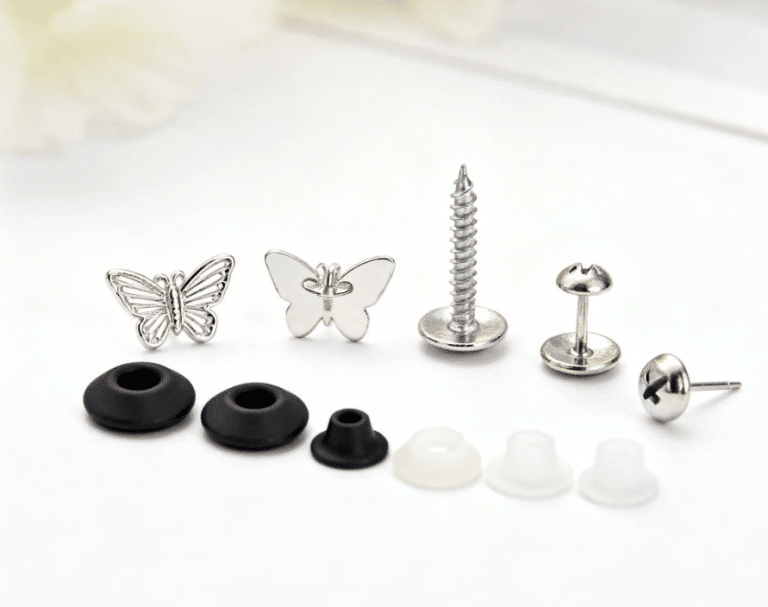
The Unseen Hero: Why Earring Backings Define Quality Jewelry
Every jewelry brand owner knows the sinking feeling. A customer calls, distraught. They’ve lost one