
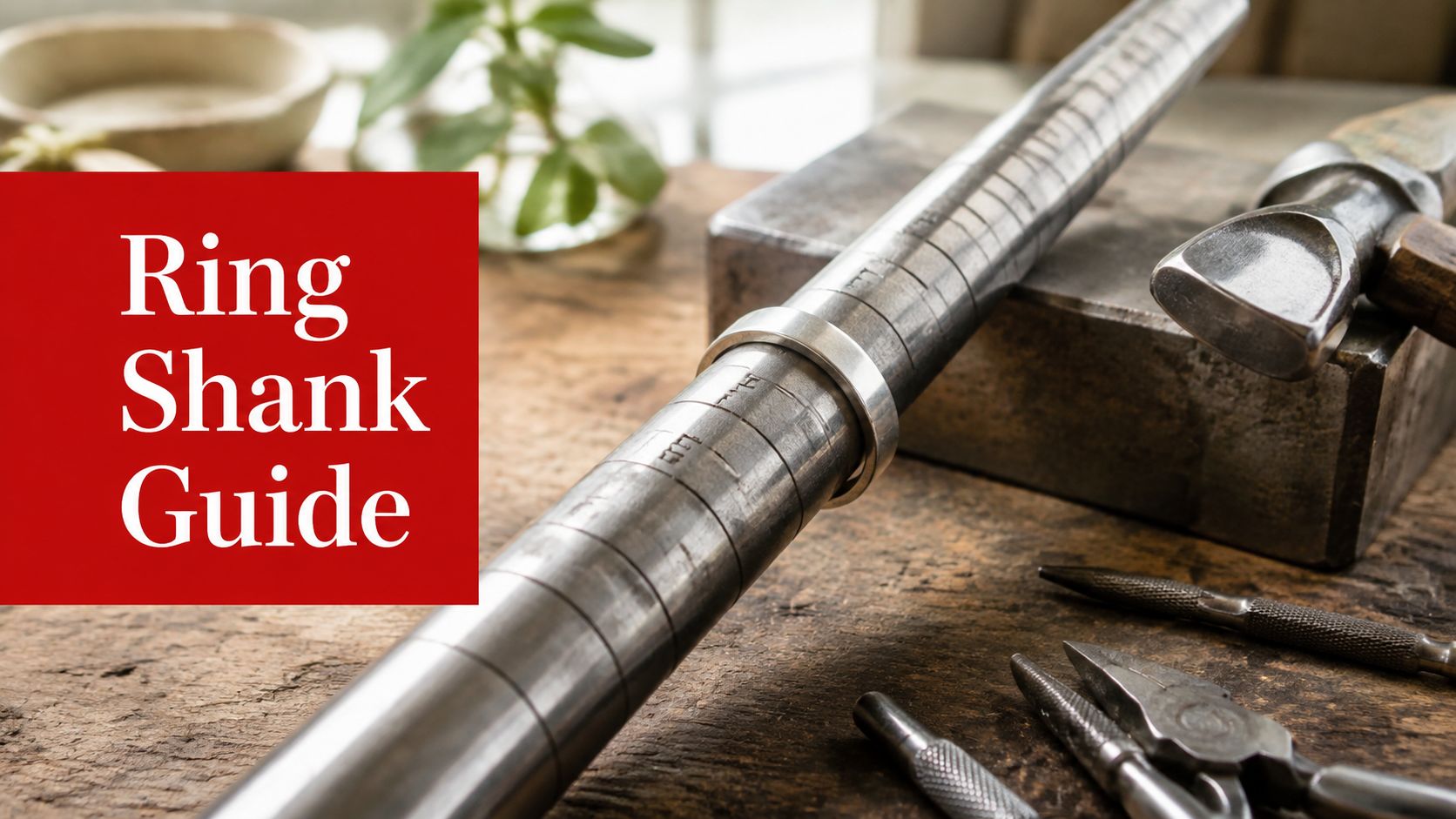
You’re refining a ring design, the stone looks right, the setting is approved, and the band still feels like a detail you can solve later. That’s where many good concepts start slipping in production. The shank is the part that decides how the ring wears, how it holds up, and how smoothly it can be made, resized, and delivered to a customer who expects it to feel right on day one.
For brand owners, buyers, and product teams working with OEM and ODM jewelry partners, what is a shank on a ring is not a glossary question only. It’s a design and manufacturing question with real cost and quality consequences. Get the shank right, and the ring usually fits better, supports the setting more reliably, and ages more predictably. Get it wrong, and you invite bending, discomfort, weak resizing options, and avoidable returns.
A ring can carry a strong head, clean stone work, and polished finishing, but if the shank is underbuilt, the whole piece feels compromised. In production, that is usually the first failure point I look for. Teams spend weeks on the decorative top, then leave the band as a generic line in the CAD file.
That approach causes trouble because the shank is the part that carries the ring on the finger. It is the structural band, and it directly affects fit, comfort, and load-bearing behavior according to technical jewelry terminology in the shank glossary. Industry guidance also notes that the shank’s shape influences load distribution, comfort, and resizing potential, which is why a wider or thicker shank can spread stress more evenly and lower breakage risk, while a narrow shank is more vulnerable to bending and cracking over time ring anatomy guide.
If you are launching wholesale jewelry or custom jewelry collections, the shank affects more than appearance. It changes how a piece feels in hand, how a customer experiences daily wear, and how much room your factory has for repairs or resizing later. That means the shank has a direct line to customer satisfaction and to the after-sale workload your team has to absorb.
A supplier can make a ring look polished on paper and still miss the part that determines wear performance. The shank needs enough substance to support the setting, hold shape through normal use, and stay within the cost target you set for the line. If the metal is too light, the ring may save material cost up front but create more problems after delivery, especially on styles that are worn every day. If the profile is too heavy, you may improve durability but add weight, sizing difficulty, and unnecessary material expense.
Treat the shank as a mechanical part first and a style choice second. That is the practical standard I use when reviewing a new spec with a brand partner. A strong ring design balances the top and the band, and that balance starts with a shank that can be produced cleanly, sized predictably, and finished without forcing the factory into avoidable compromises.
For brands working with a supplier, a good spec sheet matters. If you want a better product, start by understanding the base structure before you approve the sparkle. For a broader view of jewelry material categories, see what counts as fine jewelry.
A ring can have a strong head, a clean setting, and excellent stone selection, yet still fail in production if the shank is poorly planned. The shank is the band portion of the ring, the part that wraps the finger and connects to the head or setting. In manufacturing terms, it acts like the structural frame the rest of the ring is built on. If that frame is under-specified, the piece becomes harder to finish cleanly, harder to size later, and harder to trust in daily wear.

The shank does three jobs at once. It provides structural support for the setting, it affects wearer comfort because the inner contour sits against the finger all day, and it gives the ring its aesthetic foundation because the width, profile, and finish shape the look even when the center stone gets the attention.
That is why I treat shank geometry as a production decision, not just a style choice. A thicker or wider shank spreads stress over a larger area, which helps reduce the risk of breakage during wear, as noted in a ring anatomy guide. The same idea shows up in trade references that describe the shank as the band section whose width, thickness, and cross-section control how pressure is distributed around the finger and how securely the upper setting is supported Joseph Jewelry glossary.
The shank is also the part that stays in constant contact with the finger, so wear shows up there first. Over time, that can affect fit, surface finish, and how a customer judges the ring’s quality after regular use. For brands, that matters because a ring that looks fine at delivery can still create complaints later if the band is too light for the intended wear pattern.
OEM and ODM teams need to define the shank before sampling starts. A band that is too thin may look refined in CAD, but it gives the factory less room for clean casting, polishing, and resizing. A band that is proportioned properly supports the setting, stays more stable in hand, and gives the production team a clearer path from model to finished piece.
For ring development, I also tell brand partners to check the metal spec alongside the band design. If you are working in silver, for example, S925 jewelry basics helps explain the material choice that often sits behind the shank’s real-world durability.
A brand can approve a ring top and still run into trouble if the shank is under-specified. The band shape affects how the ring reads on the hand, how much metal the factory needs to work with, and how much room the production team has for casting, finishing, and future resizing. Industry references group shanks by geometry, including flat-edge, tapered, knife-edge, and split forms, and they note that a shank can be the full band on a plain ring or the lower structural section under a decorative top ring shank styles guide.

A straight shank keeps a uniform width all the way around. It is the cleanest option for many basic programs, and it usually gives the factory the fewest surprises during casting, polishing, and size adjustment.
A tapered shank starts wider at the bottom and narrows as it moves toward the setting. That can reduce visual bulk near the top while keeping more metal where the band carries the most load, which is useful when a brand wants a lighter look without making the ring feel fragile.
A knife-edge shank creates a sharper profile with a defined ridge. It can make a ring look crisp and modern, but the edge has to be modeled with care so the finished piece still wears comfortably and does not create extra finishing work for the manufacturer.
A split shank divides the band into two or more arms as it rises toward the head. This gives the ring a broader or more architectural look, and it also raises the stakes for CAD planning because each arm affects metal flow, symmetry, and the balance of the finished mounting.
The look of the shank and the mechanics of the shank are the same production decision.
That is where many new brands lose time and margin. If the shank style changes late, the factory may have to revise the model, rework the sample, or adjust the tooling path. A sourcing team that sets the structure early gives the OEM or ODM partner a clearer target and avoids small design choices turning into avoidable cost at the sample stage.
A practical brief should state whether the ring is a plain band, a decorative mounting, or a top-heavy design. Those three cases use different shank structures, and each one changes how the ring sits, how easily it can be resized, and how the final surface can be finished. For teams building a custom line, a disciplined jewelry CAD process helps lock those decisions before production drifts off course, and strong high-quality product visualizations help buyers judge proportion before metal is poured.
A good shank starts in CAD, not on the polishing wheel. The model has to define the cross-section, the inner contour, the transition into the shoulders, and the point where the decorative top begins. Technical guidance notes that when a ring has a distinct top design, the shank begins where that design ends, so the band has to transfer stress away from the head and shoulders to reduce localized wear, deformation, and prong stress over time Muau glossary.

Material choice affects the process. A ring shank in 925 sterling silver behaves differently from one in stainless steel or brass during forming, finishing, and plating. More complex geometries, like split or bypass forms, also demand tighter control in sampling because the band’s structure influences how the metal fills, cools, and finishes.
Manufacturing teams usually decide whether the piece should be cast, stamped, or formed from other fabrication methods based on the design, the metal, and the desired finish. A simple straight shank can be straightforward to produce, while a sculpted profile or twisted structure may need extra attention in mold preparation and post-cast cleanup. Good product visualizations help everyone see those transitions before metal is committed, which is especially useful when designers and sourcing teams are working across time zones.
Surface finishing is part of the shank story too. Mirror polish, brushed, satin, sandblasted, hammered, and selective plating all change how the ring feels and how visible wear will be over time. A finish that looks clean on a sample can behave differently once the band rubs against skin, bags, desks, and other jewelry in daily use.
In ring manufacturing, the shank is where quality control really shows. If the band is uneven, the customer feels it immediately. If the geometry is weak, the piece may look fine in photos and still fail under real wear.
For brands comparing development methods, a useful resource is this manufacturing guide for stainless steel jewelry durability.
A ring that fits well on day one still has to hold that fit after repeated wear, polishing, repairs, and customer resizing requests. The shank sets those limits from the start. Width, thickness, and cross-section determine how much room a jeweler has to work with later, and they also shape what your brand can promise in after-sale service.
A comfort-fit interior, a tapered band, or a split shank can make a ring feel better on the finger, but each one changes the way the metal behaves during resizing. Some designs can be opened or tightened with standard workshop methods. Others need more labor, more skill, or a clear warning that resizing may be restricted. For a brand working with an OEM or ODM partner, that difference affects return policy, repair cost, and how many service cases the factory should expect to handle.
Durability is not just about adding metal. It is about how the shank carries pressure, keeps its shape, and tolerates daily wear without distorting. A wider or thicker band usually gives more room for that, while a very slim profile leaves less material for a jeweler to recover if the ring is bent or scratched.
Style choices create trade-offs that show up later in service. Eternity bands, for example, can be difficult to resize because the stones or repeating detail often run all the way around the ring. A highly decorated shank can also limit how much the band can be altered without disturbing the design. If your collection includes those forms, the production brief should match your repair policy, or your team will end up selling a ring the service department cannot easily support.
QC for the shank is not only about how it looks in photos. It has to survive shipping, storage, try-ons, and the first months of wear. A band that holds its geometry in samples but arrives with warping, uneven walls, or plating wear is a service problem waiting to happen.
If the band changes shape early, customer trust changes with it.
That is why I look at the shank as part of the after-sale plan, not just the design. A brand that sells rings through wholesale or private label channels should ask the factory how it tests shape stability, how it handles repairs, and which shank styles are practical to resize later. For a related look at wear expectations in metal jewelry, review this guide to stainless steel jewelry lifespan considerations.
A tech pack should describe the shank with the same care you’d give the center setting. The manufacturer needs more than a sketch. It needs the exact structure, because the shank controls fit, comfort, and the way the ring is made.

Clear specs reduce sampling errors and avoid back-and-forth that slows down lead times. They also help your OEM or ODM partner suggest design improvements before the piece gets too expensive to revise. A good sourcing partner should be able to review those choices with you, not just execute them, which is why vetting matters, and this manufacturer selection guide is worth keeping close.
The best ring suppliers don’t wait for a bad sample to tell the story. They spot the weak shank early, adjust the geometry, and keep the design aligned with the way the ring will be worn.
If you’re developing a custom ring line and want a partner who understands how shank design affects production, durability, and wholesale consistency, visit HonHo Jewelry to discuss OEM and ODM options. The team can help you turn a concept into a manufacturable ring with the right CAD, finishing, and quality-control decisions from the start.
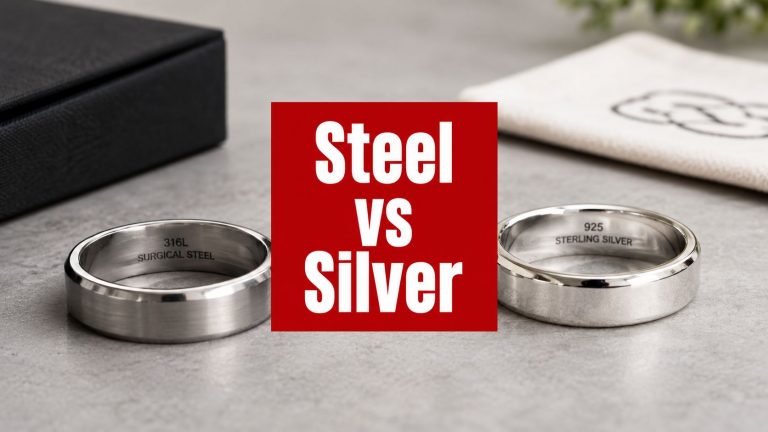
You’re pricing a new collection, and the sample tray is already split down the middle. The 316L surgical steel pieces look cleaner on cost and daily wear, the
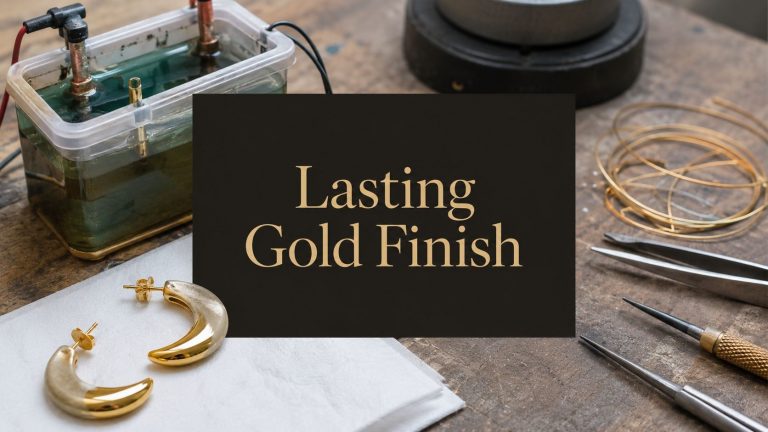
You probably have a launch already in motion, a supplier sample on your desk, and one uncomfortable question underneath it all, will this gold color still look clean
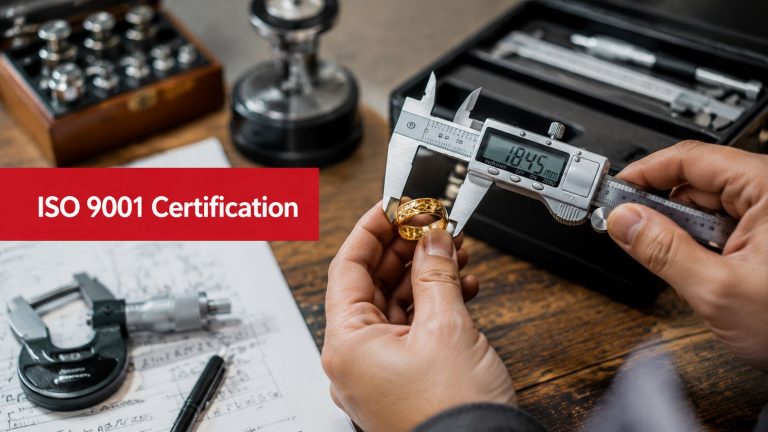
You’re comparing two factories and one sales rep keeps waving an ISO 9001 certificate like it settles everything. It doesn’t. The core question is simpler and more useful: