
1. Understand the Different Types of Wholesale Jewelry Suppliers
When you learn how to buy jewelry wholesale, your supplier type is what makes or breaks your profit. Before you think about designs or branding, you need to understand who you’re really buying from.
Manufacturers vs Trading Companies vs Middlemen
1. Direct Manufacturers (Jewelry Factories / Silver Jewelry Manufacturer)
These are the factories actually producing the jewelry.
Typical signs:
- Own workshop / machines / plating lines
- Clear MOQ (minimum order quantity) by style/material
- Can do OEM/ODM jewelry, custom name necklaces, private label jewelry wholesale
2. Trading Companies (Agents / Sourcing Offices)
They don’t produce; they coordinate between you and multiple factories.
Typical signs:
- Very wide product range, many styles
- More flexible on low MOQ jewelry supplier requests
- Sometimes hide factory details
3. Middlemen (Small Resellers / “Wholesalers” With No Stock)
They buy from factories or traders and resell to you, often on online wholesale jewelry marketplaces.
Typical signs:
- No clear company info, just WhatsApp/WeChat
- Often list “wholesale jewelry no minimum”
- Limited control over quality and lead time
Pros and Cons of Each Supplier Type
| Supplier Type | Main Pros | Main Cons | Best For |
|---|---|---|---|
| Manufacturer | Lowest unit price, direct control, stable quality | Higher MOQ, slower sample process, more formal communication | Brands serious about scaling, custom jewelry manufacturers |
| Trading Company | Easier communication, more styles, lower starting MOQs | Higher prices than factory, less transparency | Beginners, testing new niches, fashion jewelry in bulk |
| Middleman | Very low or no MOQ, fast ordering | Highest price, weak QC, more risk of cheap wholesale jewelry | Testing tiny quantities, short-term trends, side hustles |
Why Buying Factory Direct Is Usually Cheaper
When you buy from a factory direct jewelry supplier, you skip at least one layer of markup:
- Manufacturer → You (cheapest)
- Manufacturer → Trading company → You (more expensive)
- Manufacturer → Trading company → Middleman → You (most expensive)
Factory pricing matters, especially for:
- Stainless steel jewelry wholesale (waterproof, tarnish free, high volume)
- 925 silver jewelry wholesale (higher material cost, margins depend on grams & silver price)
- Gold plated jewelry wholesale (plating thickness and base material affect cost a lot)
That 10–30% you save per piece is exactly what turns a risky jewelry business into a profitable one.
How Supplier Type Impacts Your Profit Margins
Your landed cost per piece = product cost + packaging + shipping + duties.
Supplier type mainly hits product cost.
Example (simple numbers for clarity):
- Middleman: $5 bracelet → Sell at $20 → 75% margin
- Trading company: $3.80 bracelet → Sell at $20 → 81% margin
- Factory: $2.60 bracelet → Sell at $20 → 87% margin
On 500 pcs, that’s:
- Middleman profit: ~$7,500
- Factory profit: ~$8,700
Same design, same selling price. Only your supplier choice changed.
When to Choose a Manufacturer vs a Trading Company
You don’t always have to start with a factory. Here’s how I decide:
Choose a Manufacturer when:
- You want custom jewelry, private label, or OEM/ODM jewelry
- You’re ordering bulk jewelry for resale with stable designs (e.g., best-selling huggies, chain necklaces, name necklaces)
- You care about nickel free jewelry wholesale, tarnish free jewelry wholesale, or strict quality standards
- Your budget can handle MOQs (e.g., 100–300 pcs per style or per color)
Choose a Trading Company when:
- You’re a jewelry business beginner testing what sells
- You want more SKU variety (wholesale earrings, necklaces, rings, bridal sets) in smaller quantities
- You’re exploring trend jewelry 2026 and don’t want to overcommit
- You need help navigating jewelry suppliers in China (Yiwu, Guangzhou, Dongguan, etc.)
Rule of thumb:
Start flexible with a solid trading company to learn your market.
As soon as you know your winning styles, move those to a direct manufacturer to lower cost and lock in quality.
2. Decide What Kind of Wholesale Jewelry You Want to Sell
Before you start buying jewelry wholesale, get clear on who you want to sell to and what they can actually afford. Your jewelry type sets your price point, brand image, and profit margin.
Fashion vs Fine vs Demi‑Fine Jewelry
- Fashion jewelry wholesale
- Materials: stainless steel, brass, alloy, cubic zirconia, acrylic.
- Pros: low cost, trendy, high margins, great for TikTok / IG shops.
- Best for: students, young professionals, impulse buyers.
- Fine jewelry
- Materials: solid gold, natural diamonds, genuine gemstones.
- Pros: high ticket, luxury branding, long‑term value.
- Cons: high capital, slower turnover, stricter quality control.
- Best for: higher‑income customers, bridal, anniversaries.
- Demi‑fine jewelry
- Materials: 925 silver, heavy gold plating, gold vermeil.
- Sweet spot between fashion and fine – premium feel without a crazy price tag.
- Perfect for customers who want “real” metal but still care about budget.
Stainless Steel Jewelry Wholesale Options
Stainless steel is one of my go‑to materials for bulk jewelry for resale:
- Hypoallergenic, durable, waterproof.
- Great for tarnish free jewelry wholesale and everyday wear.
- Works well for chains, rings, bracelets, men’s and unisex styles.
- If you want stable quality, look at a focused stainless steel jewelry wholesale collection – it’s easier to build full collections from consistent base designs.
925 Silver Jewelry Wholesale Options
If your audience wants more “real” jewelry without going full gold:
- 925 silver jewelry wholesale is ideal for demi‑fine brands.
- Easy to market as “hypoallergenic” and “sensitive‑skin friendly.”
- Works for minimalist, bridal, and everyday elevated styles.
- You can source ready‑to‑sell lines from a specialized sterling silver jewelry manufacturer or a curated sterling silver wholesale jewelry range to keep quality and design consistent.
Gold Plated and Gold Filled Jewelry Wholesale
- Gold plated jewelry wholesale
- Cheaper, trendy, good for fast fashion and social‑media‑driven sales.
- Key: ask about micron thickness and base metal to avoid fast tarnish.
- Gold filled
- Thicker gold layer, more durable, higher price point.
- Works well if your customers want investment feel without full gold.
Custom and Private Label Jewelry Options
If you want to build a real brand instead of just reselling:
- Private label jewelry wholesale: use existing designs, add your logo, tags, and boxes.
- OEM / custom jewelry manufacturers: create custom shapes, name necklaces, and signature pieces unique to your brand.
- Great for building a recognizable look and charging higher markups.
Trending Jewelry Niches in 2026
Some strong trend jewelry 2026 niches to look at:
- Waterproof / sweat‑proof sets (gym, beach, travel).
- Nickel free jewelry wholesale for sensitive skin.
- Minimalist 925 silver and stacking rings.
- Custom name necklaces and initial jewelry.
- Bridal sets, bridesmaid gifts, and wedding party bundles.
- Men’s chains, signet rings, and earrings.
Match Jewelry Types to Your Target Customer
Ask yourself:
- Age + income level?
- Do they care more about price, trend, or material quality?
- Do they shop on TikTok, Etsy, or in local boutiques?
Simple mapping:
- TikTok + IG shoppers → stainless steel, gold plated, fashion jewelry in bulk.
- Etsy buyers → 925 silver, personalized, handmade‑style designs.
- Bridal & gift buyers → silver, gold filled, and demi‑fine sets.
- Men’s / urban market → chunky stainless steel, chains, rings.
How Product Choice Affects Pricing and Branding
- Fashion jewelry → lower price, high volume, fun branding, bold visuals.
- Demi‑fine (925, gold filled) → mid‑range pricing, “everyday luxury” vibe.
- Fine jewelry → premium pricing, trust‑focused branding, certifications.
Decide your core material (stainless, 925, plated, gold filled), then build 1–3 tight collections around it. That clarity makes sourcing easier, branding sharper, and your profit more predictable.
3. Set Your Budget and Wholesale Jewelry MOQ Expectations
What “minimum order quantity (MOQ)” really means
When you buy wholesale jewelry, MOQ (minimum order quantity) is the smallest amount a supplier will produce or sell per order or per style. It can be:
- Per style (e.g. 50 pcs of one necklace design)
- Per order total (e.g. $500 total value, mixed styles)
- Per color/size (e.g. 20 pcs per color)
Your job is to choose suppliers whose MOQs match your budget, storage space, and sales speed.
Typical jewelry MOQ ranges by material and style
Most wholesale jewelry suppliers set different MOQs by material:
- Stainless steel jewelry wholesale: 30–100 pcs per style is common
- 925 silver jewelry wholesale: 20–50 pcs per style (higher metal cost)
- Gold plated jewelry wholesale: 50–200 pcs per style (plating line setup cost)
- Custom name necklace manufacturer / OEM ODM jewelry: 50–200 pcs per design or a total order value requirement
For cheap wholesale jewelry (simple fashion jewelry in bulk), MOQs can be higher because their profits are made on volume.
How to start buying jewelry wholesale with a small budget
If your budget is tight, you can still buy bulk jewelry for resale — you just need to be selective:
- Focus on 1–3 core categories (e.g. hoops, simple chains, stackable rings)
- Work with a low MOQ jewelry supplier or wholesale jewelry no minimum platforms
- Choose fast-selling basics over super niche styles
- Start with test orders: 10–20 SKUs, small qty per SKU
Approximate realistic starting budgets (including product only, not shipping/duties):
| Model | Budget Range | Notes |
|---|---|---|
| Very lean test | $300–$500 | Limited SKUs, simple styles |
| Small but serious start | $800–$1,500 | Good variety + better pricing |
| Brand-focused launch | $2,000–$5,000 | Custom, branding, stronger margins |
When “wholesale jewelry no minimum” makes sense
“No MOQ” or online wholesale jewelry marketplace listings are great when:
- You’re testing new niches (e.g. trend jewelry 2026 styles)
- You sell on Etsy or Shopify and don’t want to overstock
- You’re validating a new target market or collection
But keep in mind:
- No MOQ = higher unit price
- Margins can be tighter than factory direct jewelry from a jewelry factory in Dongguan or Yiwu/Guangzhou
Use no-MOQ to test, then move to direct manufacturers once you know what sells.
Balancing SKU variety vs order volume
Your biggest early mistake will be buying too many different designs with too few pieces each. Better to:
- Pick fewer SKUs, higher qty per SKU for better prices and easier inventory management
- Build a cohesive collection (same metal color, similar style, same target customer)
- Add new SKUs gradually, based on real sales data
Think in collections, not random pieces: bridal, waterproof daily wear, minimalist, statement, etc.
How MOQs affect cash flow and risk
Every MOQ decision affects:
- Cash flow – Money locked in inventory instead of marketing
- Risk – If a style flops, you’re stuck with it
- Reorder speed – Higher starting order can reduce frequent reorders but increases upfront risk
Rules I follow:
- Never put more than 30–40% of your available cash into a single order when starting
- Keep at least 30% of budget for marketing, packaging, photography, and platform fees
- Use MOQs to negotiate: slightly higher quantity in exchange for better price or better plating quality
If you move into custom or enamel jewelry manufacturing, where tooling and design are involved, I use resources like this guide on jewelry CAD design for creativity and precision to plan designs carefully before committing to higher MOQs.
4. Where to Find Legit Wholesale Jewelry Suppliers in 2026
Best sites to buy wholesale jewelry online
If you want to buy wholesale jewelry online in 2026, start with platforms that are built for B2B:
- Alibaba / 1688 (for China) – huge selection, good for cheap wholesale jewelry and testing multiple factories.
- Global Sources, Made‑in‑China – more curated, better for serious buyers and factory direct jewelry.
- B2B marketplaces + niche supplier sites – many real manufacturers now sell directly through their own websites so you can skip extra middlemen. For example, our own factory‑direct jewelry manufacturing service lets you order stainless steel jewelry wholesale, 925 silver, and custom pieces straight from the source.
Always filter by:
- Years in business
- Transaction history
- Certifications and verified tags
- Response rate and reviews
Using B2B platforms to source bulk jewelry for resale
Use B2B platforms like Alibaba, Global Sources, Faire, and local B2B marketplaces to find:
- Fashion jewelry in bulk (earrings, necklaces, rings, bracelets)
- Nickel free / tarnish free / waterproof jewelry wholesale
- Private label jewelry wholesale with your logo, cards, and packaging
Search with long‑tail keywords:
- “stainless steel jewelry wholesale low MOQ”
- “925 silver jewelry manufacturer OEM ODM”
- “custom name necklace manufacturer”
Shortlist 5–10 suppliers, then:
- Check company profile + certifications
- Request catalogs or price lists
- Ask for MOQ, lead time, materials, and plating method (e.g. PVD, vermeil)
Finding jewelry suppliers in China and other countries
If you want competitive pricing and variety, China is still the core hub for bulk jewelry for resale:
- Yiwu jewelry wholesale market – massive variety, cheap fashion jewelry wholesale, low MOQs.
- Guangzhou and Dongguan – stronger for higher‑end fashion, stainless steel, and factory direct custom jewelry.
Outside China, look at:
- Turkey / Italy – silver and fine jewelry
- India / Thailand / Vietnam – gemstones, 925 silver jewelry wholesale, artisanal looks
- Local suppliers (US, EU, UK, etc.) – faster shipping, easier returns, higher prices but less risk
Search terms to use:
- “silver jewelry manufacturer Turkey”
- “waterproof jewelry wholesale Europe”
- “OEM ODM jewelry factory in Dongguan”
Jewelry trade shows and exhibitions
If you can travel, trade shows are still the fastest way to meet reliable jewelry suppliers:
- Hong Kong Jewellery & Gem Fair
- Canton Fair (Guangzhou) – huge variety, good for fashion jewelry wholesale and packaging
- IJT Japan, Vicenzaoro (Italy), JCK Las Vegas – more mid‑ to high‑end suppliers
At shows, focus on:
- Factories offering OEM/ODM and private label
- Vendors with strong wholesale jewelry catalogs and clear price lists
- Suppliers who can show real samples, not just photos
How to use Google to find hidden jewelry manufacturers
Most serious factories are not ranking for “cheap wholesale jewelry”. They rank for niche and B2B keywords. Try:
- “factory direct jewelry stainless steel OEM ODM”
- “private label jewelry wholesale manufacturer”
- “PVD plated waterproof jewelry factory”
Then:
- Look for a detailed “About” page with factory info
- Check if they show real workshop photos, machinery, and certificates
- See if they publish expert sourcing guides, like this step‑by‑step guide to buying jewelry from factories. That usually signals a real manufacturing team, not a random reseller.
Comparing online vs offline sourcing
Online sourcing (Alibaba, websites, B2B platforms):
- Pros: fast, global, easy to compare prices, low initial cost
- Cons: higher risk of middlemen, fake photos, quality gaps
Offline sourcing (trade shows, markets, factory visits):
- Pros: touch the products, see quality, build real relationships
- Cons: travel cost, time, and you might still need follow‑up online
Best move for most small brands:
- Start online to test styles and suppliers.
- Once a supplier proves themselves, invest in offline visits or trade shows when budget allows.
When to work with local vs overseas suppliers
Work with local suppliers when:
- You need fast delivery and small top‑ups
- You sell higher‑priced, story‑driven pieces and can absorb higher unit costs
- You want easier returns, no import headaches, and simpler communication
Work with overseas suppliers (especially China) when:
- You want low cost per piece and wide variety
- You’re building a brand around custom jewelry manufacturers, OEM/ODM, and private label
- You’re ready to deal with MOQs, shipping, and import duties to get better margins
In practice, a lot of successful brands run a hybrid setup:
- Overseas factories for core collections and custom designs
- Local or regional wholesalers for urgent re‑stock and trend testing.
5. How to Vet Wholesale Jewelry Suppliers and Avoid Scams
When you’re learning how to buy jewelry wholesale for resale, vetting suppliers is the step that protects your money and your brand. Here’s how I filter reliable jewelry suppliers from risky ones.
Step‑by‑step: How to find reliable jewelry suppliers
I use this simple flow:
- Shortlist suppliers
- From B2B marketplaces, Google, trade shows, or lists of wholesale jewelry suppliers.
- Check if they focus on your niche (e.g. fashion jewelry in bulk, stainless steel jewelry wholesale, 925 silver jewelry wholesale).
- Basic checks
- Company name, website, email domain (no free Gmail/Yahoo for a “factory”).
- Clear product range: do they look like a real factory direct jewelry source or a random mixed seller?
- Initial contact
- Ask for: catalog, price list, MOQ, materials, plating, lead time, payment terms.
- Real suppliers reply clearly, not with copy‑paste answers.
Check business licenses and company background
For overseas and especially jewelry suppliers in China:
- Ask for:
- Business license (with registration number, company name, address).
- VAT / tax number, export license (if applicable).
- Cross‑check:
- Company name and address on Google Maps, LinkedIn, local business registries.
- Years in business and any mention on industry blogs or B2B platforms.
- Match:
- License info must match their invoice, bank details, and website.
Verify real manufacturers vs trading companies
Knowing if you’re talking to a silver jewelry manufacturer or a trader affects price and control.
Ask direct questions:
- How many workers and production lines do you have?
- What’s your main material (e.g. stainless steel, 925 silver, gold plated jewelry wholesale)?
- Can you do OEM/ODM jewelry and custom molds?
What I look for:
- Manufacturers:
- Show workshop, plating lines, polishing, QC in photos/videos.
- Know process details (e.g. microns of plating, lead times by process).
- Traders/middlemen:
- Very wide, random product range.
- Can’t answer technical questions.
Working directly with a real factory matters a lot when you’re scaling private label jewelry wholesale or custom designs like a custom name necklace manufacturer.
Read reviews, ratings, and social proof
Before I place any bulk jewelry order:
- Check:
- Marketplace ratings and reviews (product and supplier level).
- Client photos and comments on tarnish free jewelry wholesale or waterproof jewelry wholesale claims.
- Case studies or brand logos on their site (not fake big brands).
- Search:
- “[Supplier name] + scam”
- “[Supplier name] + review”
If I see repeated complaints about quality, delays, or refund issues, I move on.
Request factory photos and video calls
I always ask for:
- Factory photos:
- Production area, plating room, polishing, packing line.
- Close‑ups of wholesale earrings, necklaces, rings being produced.
- Live video call (WeChat, Zoom, WhatsApp):
- Walkthrough of the workshop.
- Quick look at current orders / stock.
A real jewelry factory in Dongguan, Yiwu, or Guangzhou can show machines, workers, and ongoing production. If they refuse any visual proof, that’s a red flag.
If you want to see how a real catalog looks, check a structured wholesale fashion necklaces collection like on this necklace wholesale page or focused wholesale earrings for women ranges; serious suppliers usually organize their lines just as clearly.
Red flags when buying cheap wholesale jewelry
“Cheap wholesale jewelry” can be fine; too cheap is where trouble starts. I walk away when I see:
- Prices far below market, especially for 925 silver jewelry wholesale or vermeil.
- No business address or only a mobile number.
- Refusal to provide:
- License
- Factory photos/video
- References or test reports (nickel‑free, lead‑free).
- Overpromises:
- “No MOQ, any design, any material, fastest, cheapest” all at once.
- Constant pressure:
- “Pay today, special price ends now.”
For nickel free jewelry wholesale or anything worn daily, unknown alloys + super low prices = high risk of returns and complaints.
Safe communication and documentation practices
To protect yourself when you buy jewelry in bulk:
- Keep all communication in writing:
- Emails or chat logs with product specs, plating, materials, sizes, logos.
- Always confirm:
- Final PI (Proforma Invoice) with item codes, quantities, prices, minimum order quantity (MOQ), payment terms, production time.
- Use safe payment methods:
- PayPal (for samples), bank transfer to company account, trade assurance/escrow on B2B sites.
- Avoid sending money to personal accounts.
- Request:
- Packing list + commercial invoice that match your deal.
- Agreements on how they handle defects or re‑production.
If a supplier is solid, they won’t mind extra checking. Good reliable jewelry suppliers want long‑term business, not one‑time hits.
6. Request Samples Before Buying Jewelry Wholesale

Why jewelry samples are non‑negotiable
If you skip samples, you’re gambling with your money and your brand. Photos and videos never show:
- Real plating thickness and shine
- Actual weight and comfort on skin
- Stone setting quality and alignment
- How secure clasps and jump rings are
Always order samples before you buy jewelry in bulk, especially for fashion jewelry wholesale, stainless steel jewelry wholesale, and 925 silver jewelry wholesale.
How many samples to order per style
My basic rule when I buy wholesale jewelry for resale:
- New supplier, new style: 2–3 pieces per style (different colors/finishes)
- High‑risk items (stones, intricate chains): 3–5 pieces
- Evergreen basics (plain hoops, simple chains): 1–2 pieces is fine
This lets you test consistency – not just one “perfect” piece they cherry‑picked for you.
Typical sample costs and shipping fees
Most wholesale jewelry suppliers treat samples like small retail orders:
- Sample price: Usually 1–2x the future wholesale price
- Shipping:
- $25–$60 by DHL/UPS/FedEx for small boxes
- Some low MOQ jewelry suppliers will deduct sample costs from your first bulk order – always ask.
Paying a bit more upfront is normal. Focus on the total landed cost and quality, not just “cheap wholesale jewelry.”
What to inspect in jewelry samples
When the samples arrive, check them like a customer who’s picky and not polite:
- Weight & feel: Too light = cheap; too heavy = uncomfortable
- Edges: Any sharp points on earrings, pendants, or chains?
- Allergy risk: Ask clearly for nickel free jewelry wholesale if your market needs it
- Comfort test: Wear pieces for a few hours, not 5 minutes
If you’re new to components, a solid jewelry findings guide helps you know what to look at (clasps, jump rings, earring posts, etc.).
Testing plating, color, and tarnish resistance
For gold plated jewelry wholesale, waterproof jewelry wholesale, and tarnish free jewelry wholesale claims, do simple at‑home tests:
- Sweat test: Wear in hot weather / during a workout
- Water test: Brief contact with water and gentle soap (not long soaks)
- Wipe test: Rub with a soft white cloth to see if color comes off
- Color match: Compare different pieces in the same “gold tone” – shades should be consistent
Note how they look after 3–7 days of normal wear, not just out of the box.
Checking clasps, stones, chains, and finishing
Go component by component:
- Clasps & closures:
- Do lobster clasps open/close smoothly?
- Do huggies and hoops click firmly?
- Chains:
- No twisted, kinked, or weak links
- Soldered jump rings where it makes sense
- Stones & crystals:
- Are they straight, symmetrical, no glue overflow?
- Any stones loose if you tap them lightly?
- Finishing:
- No bubbles, pits, or rough plating
- Engraving and custom name necklaces: clean, centered, readable
These checks are critical if you plan to scale with wholesale earrings, necklaces, rings, and bridal sets.
How to compare samples from multiple suppliers
When you’re learning how to buy jewelry wholesale online, always compare:
- Line up all samples by category (e.g., all 925 silver chains, all gold plated hoops)
- Score each supplier 1–5 on:
- Plating/color consistency
- Hardware & stones
- Comfort & weight
- Communication & lead time
- Compare total landed cost per piece (sample + shipping ÷ quantity)
In the end, don’t just pick the cheapest bulk jewelry for resale. Choose the supplier who gives you the best balance of price, quality, and reliability – that’s how you build a jewelry business that lasts, not just a one‑shot cheap haul.
7. How to Negotiate Wholesale Jewelry Price, MOQ, and Payment Terms

How to negotiate jewelry wholesale prices confidently
When I negotiate with wholesale jewelry suppliers, I always do three things first:
- Know my target price range based on my retail pricing and margin goals.
- Research market prices on B2B platforms so I’m not guessing.
- Show that I’m a serious buyer (clear product list, estimated annual volume, brand positioning).
Keep your tone: polite, direct, and data‑based, not emotional. If a supplier feels you’re building a real brand and will reorder, they’ll usually move on price or terms.
What impacts unit price in jewelry manufacturing
Unit price isn’t random. It usually depends on:
- Material: stainless steel vs 925 silver vs brass vs solid gold
- Plating thickness (e.g. 0.03 μm flash vs 0.5–1 μm heavy plating)
- Stone type: glass, CZ, lab-grown, natural stones
- Complexity of design: hollow vs solid, stone setting, engraving, custom molds
- Order quantity: higher quantity = lower unit cost
- Finishing and QC level: stricter quality control adds cost
If you want cheaper pricing without killing quality, simplify design, choose more cost‑effective materials, or slightly reduce plating thickness (while still staying tarnish‑resistant; this matters a lot for gold plated jewelry durability).
Negotiating lower MOQs without killing the deal
Most suppliers are flexible on MOQ if they believe you’ll scale up. I usually:
- Keep the total order value the same, but split across more SKUs.
- Ask for a trial order MOQ (e.g. 30–50 pcs per style instead of 100+).
- Offer a clear reorder plan if the test order sells well.
- Accept a slightly higher unit price in exchange for a lower MOQ.
Position it as a “test run” for a long-term partnership, not a one‑off cheap order.
Common payment terms for wholesale jewelry orders
Typical payment terms I see with overseas jewelry manufacturers:
- 30% deposit + 70% balance before shipment (most common)
- 50% / 50% for small or customized orders
- Full payment upfront for very low MOQ or new buyers
- Net 15 / 30 / 60 only after trust is built, usually for big, repeat customers
Always get the proforma invoice (PI) with detailed specs, quantities, and payment terms before paying anything.
Safe payment methods for international suppliers
To keep things safe when you buy jewelry in bulk from overseas:
- Wise / bank transfer to the company account (never to a random personal account)
- PayPal for samples or small orders (higher fees but solid buyer protection)
- Alibaba Trade Assurance / B2B escrow if you source through those platforms
- Letter of Credit (L/C) only for large, ongoing volumes
Avoid Western Union or MoneyGram for first-time orders. If a supplier insists on that only, I walk away.
Sample email and chat scripts for negotiation
Price negotiation (email / chat):
Hi [Name],
Thanks for the detailed quote. For this model: [SKU / link / picture], my target price is $[X] FOB based on an initial order of [QTY] pcs with the possibility to reorder monthly if sales are strong.
Is there any room to adjust the unit price closer to this range, maybe by slightly changing material, plating thickness, or packaging? I’m happy to start with a paid sample order right away.
Let me know what’s realistic on your side.
MOQ negotiation (chat):
I’m just launching this collection and need to test more styles.
Can we do 50 pcs per style for the first order, as a trial, but keep the total order value around $[X]? If sales go well, I can increase to your standard MOQ on the second order.
Use simple, clear English. Avoid long stories. Suppliers appreciate direct numbers.
When to push for discounts vs better terms
I don’t always push for the lowest price. Sometimes it’s smarter to negotiate for:
- Better plating / material at the same price
- Lower MOQ so I can test more SKUs
- Free or cheaper branding / packaging
- Better payment terms on repeat orders (e.g. lower deposit)
- Faster production time or priority in busy seasons
My rule:
- New supplier → focus on quality, low risk, and MOQ.
- Proven supplier (good quality + on‑time orders) → then push for price and payment terms to improve margin over time.
8. How to Place Your First Wholesale Jewelry Order (Step by Step)

Once you’ve vetted your wholesale jewelry supplier and approved samples, lock in the first order properly. This is where mistakes get expensive, so take it slow and be exact.
Confirm Product Specs, Colors, and Sizes
Get everything in writing before you pay anything:
- Material: stainless steel, 925 silver, brass, gold plated, gold filled, etc.
- Plating & color: 18K gold, 14K gold, rose gold, silver, black; thickness (e.g. 0.3–1.0 μm).
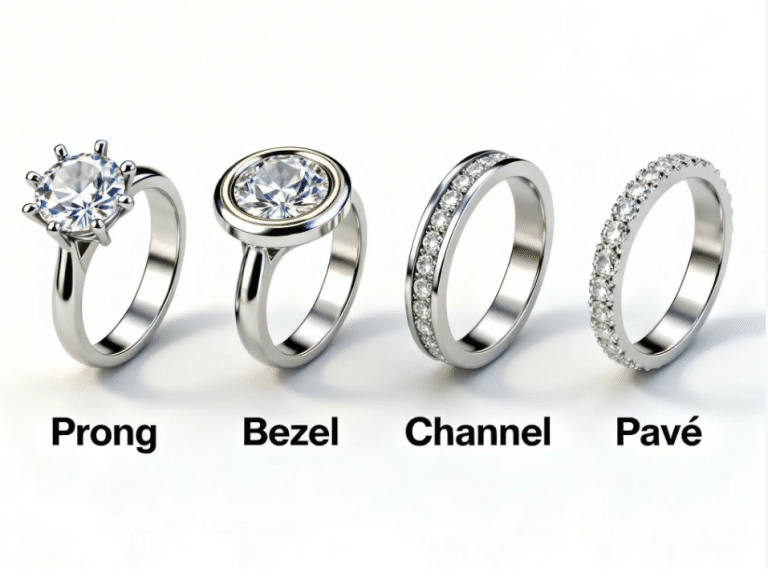
- Stones: type, size, color, setting style (prong, bezel, pave).
- Sizes: ring sizes, chain lengths, bracelet lengths, extender length.
- Finish: high polish, matte, brushed, hammered, textured.
- Standards: nickel free, lead free, tarnish‑resistant, waterproof.
Use photos with circles/arrows, style codes, and clear notes so there’s zero room for interpretation. If you’re ordering stainless steel chains or bracelets, send the exact sample photos or references (for example, from tested items like high‑quality stainless steel bracelets in bulk).
Finalize Order Quantities and SKUs
Break your bulk jewelry order down clearly:
- Assign a SKU or style code to each design.
- Confirm quantity per SKU and per size/color (e.g. 50 pcs gold, 30 pcs silver, ring sizes 6/7/8).
- Decide if you want backup stock for bestsellers or keep it lean to reduce risk.
Keep your first order tight but focused:
- 10–20 styles is enough to test.
- Order more units of “safe” pieces (simple hoops, chains, minimalist rings), fewer of risky/trendy ones.
Approve Quotation and Proforma Invoice
Ask your supplier for a proforma invoice (PI) that lists:
- Unit price and total price per SKU
- Packaging cost (if any)
- Logo engraving/branding cost (if any)
- Shipping method and shipping cost
- Payment terms and bank/paypal details
- Production lead time and Incoterms (usually EXW/FOB/CIF)
Check every line. If anything is missing or unclear, ask them to revise the PI. You only pay once the PI fully matches what you agreed.
Choose Packaging for Wholesale and Retail
Decide what you need at two levels:
- Wholesale / bulk packaging
- OPP bags, bubble bags, small cartons, master cartons
- Labeling (SKU stickers, barcodes, size labels)
- Retail packaging (customer‑facing)
- Jewelry cards, pouches, boxes, polishing cloths
- “Thank you” cards, care cards, size cards
You can start simple: clean jewelry cards + polybag is enough for most new brands. Add boxes later once cash flow is stable.
Add Branding, Tags, and Logo Packaging
Even for cheap wholesale jewelry, branding is non‑negotiable if you want to build a real brand:
- Logo engraving on tags, pendants, clasps, or inside rings
- Custom jewelry cards with your brand name, website, and social handle
- Branded pouches or boxes for higher‑ticket pieces (925 silver, bridal, demi‑fine)
- Care cards explaining how to avoid tarnish and store jewelry
Confirm the logo file format (usually AI, PDF, SVG) and always approve a digital mockup before production.
If you’re selling gold plated or gold dipped pieces, add a short care note and link to a clear guide (like a simple “does gold dipped jewelry tarnish” style explanation) so customers know what to expect and how to care for them.
Understand Production Timelines and Lead Time
Agree on realistic lead times before you pay:
- Stock items: usually 3–10 days
- Simple stainless steel jewelry wholesale orders: 15–25 days
- Custom molds, name necklaces, or complex 925 silver: 25–45 days
Ask your supplier to break it down:
- Production start date after deposit
- Estimated finish date
- Estimated ship‑out date
Build in buffer time if you’re planning a launch, holiday drop, or wedding/bridal collection.
Track and Manage Your First Bulk Jewelry Order
Once you pay the deposit and they start, manage it like a project:
- Ask for production updates at key points (materials ready, plating stage, quality check).
- Before shipping, request photos and short videos of finished pieces and packaging.
- Get the tracking number and shipping invoice as soon as it’s shipped.
- Track your landed cost per piece:
- (Product cost + packaging + branding + shipping + duties) ÷ total pieces.
Keep all chats, PIs, receipts, and photos organized in a single folder. This first order becomes your baseline template for every future wholesale jewelry order.
9. Shipping, Customs, and Importing Wholesale Jewelry
Shipping options for wholesale jewelry
When I buy wholesale jewelry in bulk, I usually choose between three options:
- Express courier (DHL / FedEx / UPS)
- Best for: small–medium cartons, urgent orders, high-value jewelry.
- Typical use: fashion jewelry in bulk, stainless steel jewelry wholesale, 925 silver jewelry wholesale samples and first orders.
- Air freight (airport to airport)
- Best for: medium–large shipments that are time-sensitive but not urgent.
- Requires: freight forwarder + customs broker on your side.
- Sea freight (LCL / FCL)
- Best for: big wholesale orders and repeat buying from jewelry suppliers in China.
- Cheapest per kg, but slow (25–45 days door-to-door in many countries).
DHL, FedEx and other express carriers: pros & cons
Pros (DHL / FedEx / UPS):
- Very fast (3–7 days in most markets)
- Online tracking and predictable delivery
- Good for high-value jewelry, gold plated jewelry wholesale, nickel free jewelry wholesale, tarnish free jewelry wholesale
Cons:
- Higher cost per kg than air/sea
- Import taxes and VAT get added at delivery
- Extra fees for remote areas or address changes
For first-time import jewelry from China, I usually start with DHL or FedEx. I pay more per kg, but I reduce risk, delays, and confusion.
Shipping cost and landed cost per piece
To know if cheap wholesale jewelry is really “cheap,” I always calculate the landed cost:
Landed cost per piece =
(Product cost + Shipping + Insurance + Duties + Local fees) ÷ Total pieces
Example:
- Product: $1.50 per piece
- Shipping (DHL): $150 for 300 pieces → $0.50 per piece
- Duties / VAT / fees: $90 total → $0.30 per piece
Real landed cost: $1.50 + $0.50 + $0.30 = $2.30 per piece
Only after this do I set my markup and wholesale jewelry pricing strategy. For a deeper breakdown of margin and markup, I follow the same logic as in this detailed guide to wholesale jewelry pricing and profit calculation.
Customs, duties, and import taxes on jewelry
Each country has its own rules, but the basics are similar:
- HS code (tariff code) defines the tax rate
- Fashion jewelry vs 925 silver vs plated vs fine jewelry all have different HS codes
- You may pay:
- Import duty (percentage of product value + shipping)
- VAT / GST
- Small handling fees from carrier or broker
I always ask the supplier or freight forwarder for the correct HS code and estimated duty rate before placing a big order.
Customs broker vs doing clearance yourself
You have two options:
- Use a customs broker / freight forwarder
- Good if you’re new or your shipment value is high
- They handle paperwork, speak with customs, and bill you one invoice
- Costs more, but saves time and mistakes
- Handle customs yourself
- Only makes sense for very small orders or when your local courier offers easy online clearance
- Risk: wrong HS code, missing paperwork, storage fees if something goes wrong
For my first serious bulk jewelry for resale, I always use a broker or forwarder. It’s part of my risk management.
Paperwork you need to import jewelry
For most shipments, I make sure I have:
- Commercial invoice (from supplier: shows items, value, HS codes, Incoterms)
- Packing list (cartons, weight, pieces, item codes)
- Air waybill / Bill of lading (from courier or forwarder)
- Certificates if needed:
- For silver/gold: sometimes a simple material statement or jewelry hallmarks details (I follow guidelines similar to those in this explanation of jewelry hallmarks and metal meaning)
- Nickel-free or lead-free declaration if required by your country
I always use the same company name and address everywhere to avoid flags at customs.
How to avoid delays and surprise charges
I keep it simple and disciplined:
- Agree Incoterms clearly (EXW, FOB, CIF, DAP, etc.) so I know who pays what
- Ask the supplier:
- “Which courier do you suggest for my country?”
- “Estimate total weight and carton size before shipping”
- Check import rules in my country for fashion jewelry wholesale and silver jewelry imports (nickel, lead, hallmark regulations, etc.)
- Don’t under-declare value to “save tax” – that’s how shipments get held or fined
- Pay duties and VAT quickly when DHL / FedEx contacts me
- Keep all invoices and receipts – I need them for accounting and, if I resell on Shopify, Etsy, or TikTok Shop, for compliance checks
When I treat shipping, customs, and importing like part of my core cost structure, it’s much easier to buy wholesale jewelry online, price correctly, and keep my profit safe.
10. Quality Control for Wholesale Jewelry Orders
Why quality control matters for wholesale jewelry
If you resell wholesale jewelry, quality control is non‑negotiable. One bad batch of tarnished chains or broken clasps can:
- Kill your reviews on Etsy, Shopify, or TikTok Shop
- Blow your return/refund rate through the roof
- Destroy trust in your brand, even if the price is good
Good QC protects your margins, your reputation, and your repeat customers. It’s cheaper to catch defects at the factory than to refund 30% of your orders later.
Set clear jewelry quality standards with your supplier
Before production starts, put your quality rules in writing. At minimum, define:
- Base material: stainless steel, 925 silver, brass, copper, etc.
- Plating: thickness (e.g. 0.3–1.0 μm), color (18k/14k/rose), and finish (polished, matte).
- Allergy safety: nickel free, lead free, cadmium free if you target EU/US.
- Tarnish resistance: what you expect for “tarnish free” or “waterproof” jewelry.
- Hardware: clasp type, jump ring thickness, chain size, stone setting style.
- Acceptable defects: small micro‑scratches vs. peeling plating, missing stones, open links.
Lock these into your PO, proforma invoice, or separate quality spec sheet. If you’re serious about long‑term branding, build standards around nickel‑free and tarnish‑resistant finishes and keep them consistent across collections. For reference, guides on things like how to clean gold plated jewelry help you understand how plating should behave in real life use (for example, see Honho’s practical tips in their piece on cleaning gold plated jewelry).
In‑house vs third‑party jewelry inspection
You’ve got three options for quality control on wholesale jewelry orders:
- Supplier self‑inspection (weakest)
- Factory checks their own work.
- OK only once trust is built and your defect rate is historically low.
- In‑house QC (you or your team)
- You inspect when the goods arrive in your country.
- Good for small orders, but if defects are high, it’s already too late and returns are on you.
- Third‑party inspection company (best for larger orders)
- Local inspectors go to the jewelry factory and check before shipment.
- They follow your checklist, test plating, check stones, count quantities.
- You pay a flat fee per inspection, but you avoid shipping defective bulk jewelry.
For medium and big orders from jewelry suppliers in China or other overseas markets, I strongly recommend at least pre‑shipment inspections by a third party, especially on new suppliers.
How to run pre‑shipment inspections on jewelry
For fashion jewelry wholesale, a simple but structured inspection process works best:
- Create a QC checklist
- SKU list with photos
- Specs: material, size, plating color, chain length, weight range
- What to check: plating, stones, clasps, engraving, logos, packaging
- Use sampling instead of checking 100%
- For small orders (<300 pcs): you can inspect all.
- For bigger orders: use sampling (see below) to save time and money.
- What inspectors actually do
- Visual check: scratches, dents, color differences, missing stones.
- Functional check: clasps open/close smoothly, chains don’t snap, hooks fit.
- Plating/tarnish check: basic sweat/wipe test, quick water test for “waterproof” jewelry.
- Packaging: correct cards, boxes, logo placement, barcode/label accuracy.
You can do a lighter version of this in‑house for smaller batches, but try to follow the same structure every time so results are consistent.
Sampling methods and defect levels (simple version)
You’ll hear terms like AQL from inspection companies. You don’t need to be an engineer; here’s the simple version:
- Sampling: Inspect a small portion of the batch (e.g. 80 pieces out of 1,000) that represents the whole order.
- Defect types:
- Critical – dangerous or illegal (wrong metal marked as silver, sharp edges). Must be 0.
- Major – visible issues buyers will complain about (peeling plating, missing stones, broken clasps).
- Minor – small cosmetic imperfections buyers may accept (micro‑scratches, tiny color variation).
You set acceptable defect levels, like:
- 0 critical
- 1–2 major defects per sample size
- A few minor defects allowed
If the inspection finds more than that, the order should be reworked or partly remade.
What to do when jewelry quality problems show up
Things will go wrong sometimes. Handle it fast and with proof:
- Document everything
- Clear close‑up photos and videos
- Count how many units are affected per SKU
- Separate critical vs major vs minor defects
- Contact your supplier with a calm, firm message
- Reference your original specs, drawings, and QC standards
- Attach photos/videos + a simple (e.g. “120/500 necklaces with peeling plating”)
- Ask for solutions, not drama
- Free remake for defective pieces
- Partial refund or credit against next order
- Rework at their cost if possible (e.g. re‑plating, re‑setting stones)
- Review your internal process
- Were your specs clear enough?
- Did you skip third‑party inspection to “save” money?
- Do you need tighter plating or material standards?
If problems are consistent and the supplier doesn’t improve, move on. Bad quality will cost you more than switching factories.
Build a long‑term quality plan with your jewelry suppliers
If you want to scale a serious jewelry brand, treat quality as a system:
- Standardize specs
- Same base metal, same plating thickness, same chain suppliers across SKUs where possible.
- Build a “brand standard” for waterproof, nickel‑free, or tarnish‑free jewelry wholesale and stick to it.
- Create quality feedback loops
- Share monthly defect/return data with your factory.
- Show real customer complaints and photos so they understand the end user.
- Do periodic audits
- Once a year, review your suppliers’ process: polishing, plating lines, stone setting, packing.
- If you can’t visit, ask for videos or third‑party factory audits. A good overview of jewelry manufacturer vetting like Honho’s guide on how to vet a jewelry manufacturer can help shape your checklist.
- Reward good performance
- Bigger or repeat orders when defect rates stay low.
- Longer‑term contracts or better forecast sharing so they can plan.
When you lock in tight quality control on your wholesale jewelry orders, everything downstream gets easier: fewer refunds, higher margins, better reviews, and a brand people actually trust.
11. How to Sell Wholesale Jewelry for Maximum Profit
Wholesale jewelry pricing strategies that work
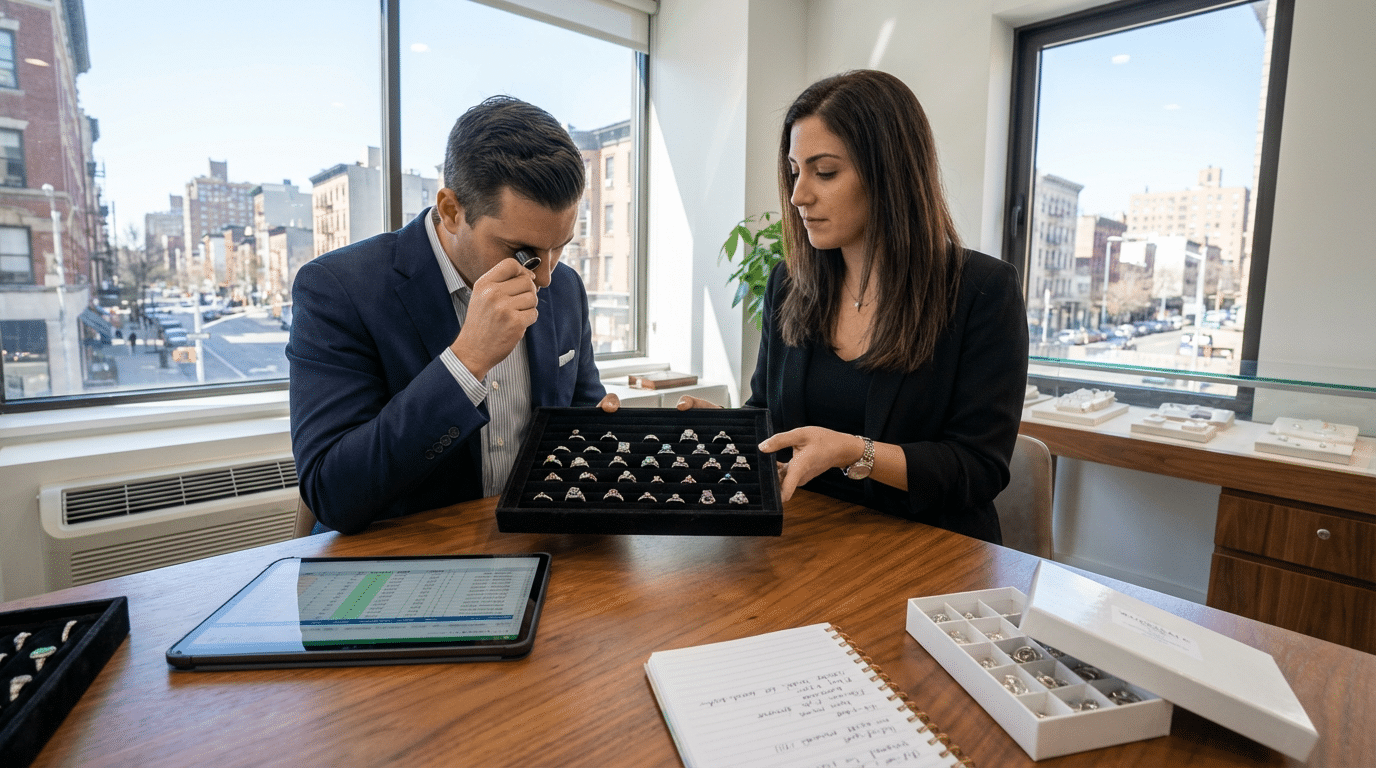
I always start from landed cost, then build up:
- Know your true cost per piece
Product + shipping + customs/duties + packaging + transaction fees ÷ total units. - Typical markups for wholesale jewelry
- Fashion / stainless steel jewelry wholesale: 3–5x landed cost
- 925 silver jewelry wholesale: 2.5–4x
- Gold plated jewelry wholesale / demi-fine: 3–6x
- Use tiered pricing:
- Retail price (DTC)
- Wholesale price (for boutiques buying bulk jewelry for resale)
- Volume discounts (e.g. 50+ units, 200+ units)
Price based on perceived value, not just cost. Waterproof / tarnish free jewelry wholesale, nickel free jewelry wholesale, and on‑trend designs can hold higher margins.
Calculating margins and break-even points
Keep it very simple:
- Gross margin % = (Selling price – Landed cost) ÷ Selling price × 100
- Break-even units = Total fixed costs ÷ Average profit per unit
Example:
- Landed cost = $4, retail price = $20 → profit $16 → margin 80%
- Monthly fixed costs (apps, ads, photos, packaging) = $800
- Break-even units = 800 ÷ 16 = 50 pieces
I track this per collection: earrings, necklaces, rings, custom name necklaces, bridal sets, etc.
Best places to sell jewelry online in 2026
I don’t depend on one channel. I spread risk:
- Shopify – best for building a real brand and owning your traffic.
- Etsy – still strong for custom, bridal, boho, and personalized fashion jewelry in bulk.
- TikTok Shop – great for impulse buys, trend jewelry 2026, low‑ticket fashion jewelry wholesale pieces.
- Instagram & Facebook Shop – solid for visual storytelling and retargeting.
- Wholesale/B2B platforms – to move volume to boutiques looking for cheap wholesale jewelry or low MOQ jewelry supplier options.
Selling wholesale jewelry on Shopify and Etsy
On Shopify I focus on:
- Clean collection structure:
“Waterproof jewelry”, “Nickel free”, “Bridal”, “Everyday essentials”, “Custom name”. - Upsells and bundles:
“Buy 3, get 20% off”, “Earring + necklace set”, “Bridesmaid bundle”.
On Etsy I focus on:
- SEO: use keywords like how to buy wholesale jewelry for resale, gold plated jewelry wholesale, 925 silver jewelry wholesale.
- Personalization: custom engraving, name necklaces, birthstones.
- Social proof: lots of reviews, video reviews, clear shipping policies.
Using TikTok, Instagram, and social media to sell
What works right now:
- Short, raw videos:
- Try‑on clips
- “Waterproof test” in the shower/sink
- “Day in the life” packing wholesale earrings, necklaces, rings
- Hooks that convert:
- “Tarnish free jewelry under $30”
- “How to buy jewelry in bulk and resell it”
- “Bridesmaid gifts for under $20”
- Add in‑video CTAs: “Shop link in bio”, “Comment ‘LINK’ and I’ll DM you”.
TikTok and Instagram Reels are perfect to show why your stainless steel or silver jewelry actually lasts – this matters a lot to buyers, as discussed in what stainless steel jewelry buyers really care about.
Product photography and listing optimization
Jewelry is tiny; photos sell it:
- Use macro shots for details and on‑body shots for scale.
- Show color options, clasp type, chain thickness, length.
- Use lifestyle photos for Instagram / TikTok and clean white background for listings.
- In titles and descriptions, naturally include terms like:
“waterproof jewelry wholesale”, “nickel free”, “hypoallergenic”, “import jewelry from China”, “factory direct jewelry”.
Strong photos + clear specs = fewer returns and higher conversion.
How to create collections that actually sell
I don’t launch random pieces; I build tight, themed collections:
- Everyday essentials – simple hoops, thin chains, stackable rings.
- Statement & trend jewelry 2026 – chunky chains, bold rings, Y2K, pearls.
- Bridal & occasion – wholesale bridal jewelry sets, bridesmaid gifts.
- Personalized – custom name necklace manufacturer pieces, birthstones, initials.
Each collection should:
- Target one clear customer (e.g. brides, students, office workers).
- Have good/better/best price tiers.
- Include built‑in bundles (set pricing instead of only single items).
When the sourcing is right and the story is clear, even bulk jewelry cheap can be sold at strong margins because you’re selling a look, not just a single piece.
12. Common Mistakes When Buying Jewelry Wholesale
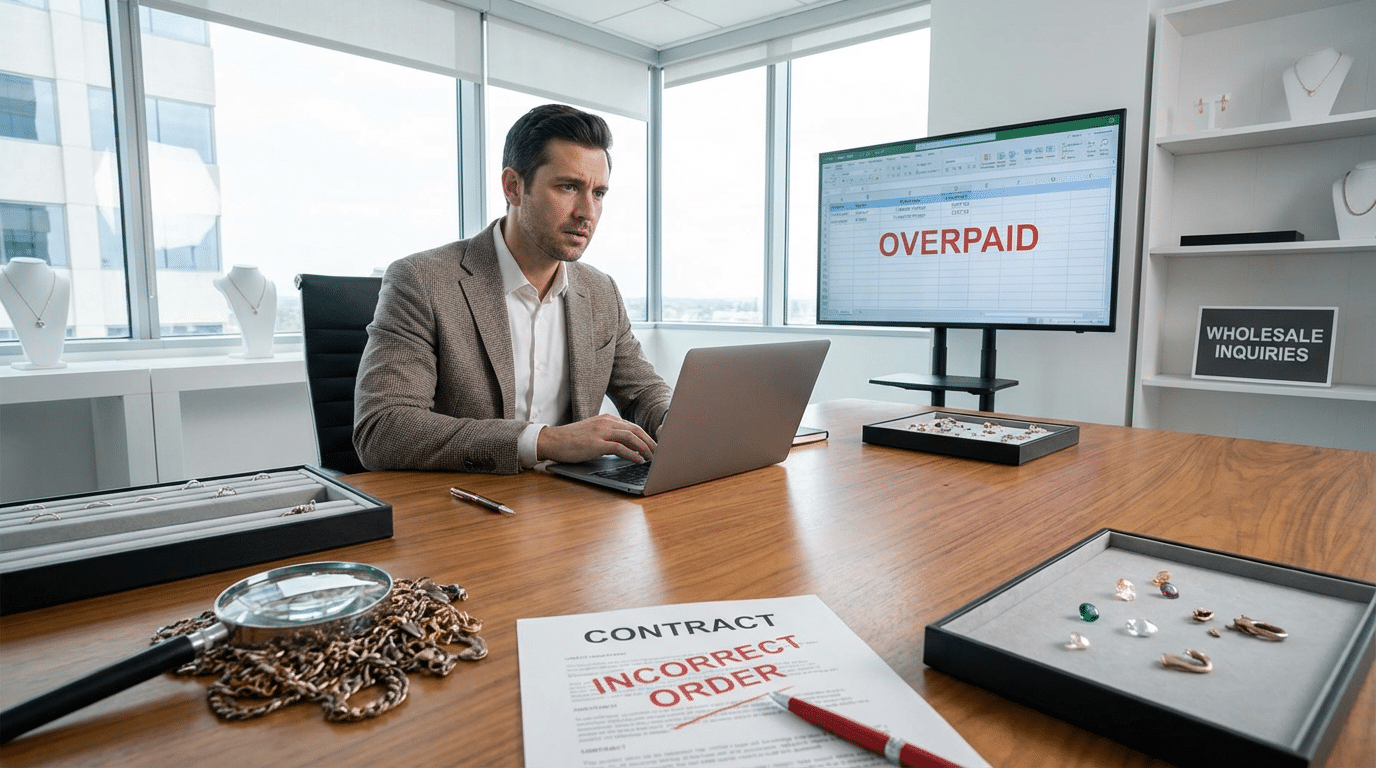
If you’re learning how to buy jewelry wholesale for resale, avoiding these rookie mistakes will save you a lot of cash and stress.
Overordering the Wrong Styles or Materials
Big mistake: locking cash into pieces your customers don’t want.
- Don’t order 300 units of a style you’ve never tested.
- Start small with fashion jewelry in bulk or a test run of stainless steel jewelry wholesale and 925 silver jewelry wholesale.
- Use data: test on TikTok / Instagram stories, check what people actually add to cart before scaling.
Chasing the Lowest Price and Ignoring Quality
“Cheap wholesale jewelry” can cost you more in refunds and bad reviews.
- Ultra‑low prices usually mean thin plating, weak clasps, stones falling out.
- Focus on tarnish free jewelry wholesale, nickel free jewelry wholesale, and waterproof options over rock‑bottom prices.
- Think long‑term brand reputation, not just short‑term margin.
Skipping Samples to “Save” Money
This is how beginners burn entire budgets.
- Always get samples before buying bulk jewelry for resale.
- Check weight, shine, plating thickness, stone setting, and comfort.
- Compare 2–3 suppliers for the same style before choosing.
Not Understanding MOQs and Total Costs
“Minimum order quantity jewelry” can destroy your cash flow if you don’t do the math.
- Look at total order cost: unit price + shipping + duties + packaging.
- Beware of high MOQ + low price = big risk if it doesn’t sell.
- A low MOQ jewelry supplier is better for beginners, even if unit price is slightly higher.
Ignoring Shipping, Duties, and Fees in Pricing
Many people price only product cost and forget everything else.
- Include:
- Product cost
- Shipping from supplier
- Import duties / taxes
- Packaging and labels
- Use a simple landed cost calculation per piece, then apply your wholesale jewelry pricing strategy and markup for jewelry resale.
Poor Communication With Suppliers
Misunderstandings lead to wrong color, wrong plating, wrong logo.
- Always confirm: material (e.g. 316L stainless, 925 silver), plating thickness, stones, sizes, logo method.
- Keep everything in writing: chats + proforma invoice.
- Ask for photos/videos during production if possible.
Weak Branding and Unclear Target Market
If you don’t know who you’re selling to, you’ll buy the wrong products.
- Decide: Are you selling gold plated jewelry wholesale for everyday wear, wholesale bridal jewelry sets, or trend jewelry 2026 for Gen Z?
- Your sourcing, price point, and style must match one clear customer.
- Build a consistent aesthetic across earrings, necklaces, rings, not random pieces.
How to Recover From Early Sourcing Mistakes
If you already messed up, you’re not alone. Here’s how to bounce back:
- Bundle slow movers into sets or “mystery bags” to clear stock.
- Offer small discounts to move inventory and free up cash.
- Analyze what actually sold and double down there.
- Tighten your process: samples first, small test orders, clearer specs, better QC.
If you want a deeper step‑by‑step on fixing sourcing issues and working better with factories, I break this down in my wholesale custom jewelry manufacturer guide, including how to brief suppliers properly and avoid repeat mistakes.
13. Working Directly With a Jewelry Manufacturer
Benefits of factory direct jewelry
When you work straight with a jewelry manufacturer instead of layers of middlemen, you get:
- Lower unit cost → better margins and more room for promo pricing
- Stable quality → same machines, same alloys, same plating thickness every time
- Faster communication → talk to the people who actually produce your pieces
- Real customization → custom molds, logo stamps, branded packaging
- Better scalability → easy to repeat and scale winning styles
If you want a quick overview of how factory-direct works in real life, I break down the basics in this factory jewelry direct wholesale guide.
OEM vs ODM jewelry (plain English)
In jewelry, these two terms matter a lot when you deal with factories:
| Term | Meaning | Best for |
|---|---|---|
| OEM (Original Equipment Manufacturer) | You bring your own design (or reference). Factory produces it under your brand. | Custom jewelry brands, private label, custom name necklaces, branded sets. |
| ODM (Original Design Manufacturer) | Factory already has designs. You pick from their catalog, maybe tweak plating, colors, stones, logo. | Beginners or small shops that want trend jewelry fast, with low design cost. |
Most brands use a mix of OEM + ODM: start with ODM to launch fast, then add OEM hero pieces once cash flow is stable.
For a deeper look at how I handle OEM/ODM jewelry projects, you can check my OEM jewelry development process.
Free catalogs and jewelry design support
Good custom jewelry manufacturers don’t just sell; they help you build a line.
You can usually get:
- Free digital catalogs with:
- Fashion jewelry in bulk (earrings, necklaces, rings, bracelets)
- Stainless steel, 925 silver, gold plated, waterproof, nickel free lines
- Trend suggestions:
- What’s selling now on TikTok / Etsy / Shopify
- Trend jewelry 2026 (chains, charms, initial jewelry, bridal sets)
- Basic design tweaks:
- Change chain style, stone color, charm size
- Add logo tag or custom back stamp
Ask for catalogs by material and niche:
“stainless steel jewelry wholesale”, “925 silver jewelry wholesale”, “tarnish free jewelry wholesale”, “wholesale bridal jewelry sets”, etc.
Set realistic expectations for custom jewelry
Custom = great branding, but don’t expect it to be instant or dirt cheap.
Be realistic about:
- MOQ (minimum order quantity jewelry)
- Stainless steel / brass: often 100–300 pcs per style
- 925 silver: usually higher cost and MOQs
- Mold & setup fees
- Custom name necklace manufacturer work usually needs molds or CNC/programming
- Timeline
- Sample: 10–20 days
- Mass production: 25–40 days (longer in peak season)
- Revisions
- Tiny tweaks are fine; full redesign is basically a new project
Rule: only go heavy on custom once you know your target customer and have some steady sales.
How to build a long‑term partnership with a factory
Factories treat you differently when they feel you’re long-term, not “one small test order and disappear”.
Do this from day one:
- Be clear and consistent
- Send clean spec sheets: size, material, plating color, stone type, packaging
- Use reference photos and clear notes
- Order in stages
- Start small, but reorder quickly if it sells
- Keep your bestsellers in production, don’t jump supplier every order
- Pay on time
- Nothing builds trust faster
- Share feedback with respect
- If there’s a problem, document with photos/video and talk solutions, not drama
Over time, this gets you:
- Better prices
- Priority in busy seasons
- Access to new designs earlier
- More flexible MOQs
When to move from traders to direct manufacturers
Trading companies and B2B marketplaces are fine when you’re just testing how to buy wholesale jewelry online. But you should consider going factory-direct when:
- Your monthly volume on a few SKUs is stable
- You need stronger branding (logo stamps, custom molds, OEM lines)
- You’re tired of slow answers and vague info about real materials or plating
- Your margin is getting squeezed and you need factory pricing to stay competitive
Pattern I see a lot:
- Start with an online wholesale jewelry marketplace or small traders (low risk)
- Validate your best sellers and channels (Etsy, Shopify, TikTok shop, local retail)
- Move your proven styles to a direct jewelry manufacturer for better pricing, quality control, and long-term growth.
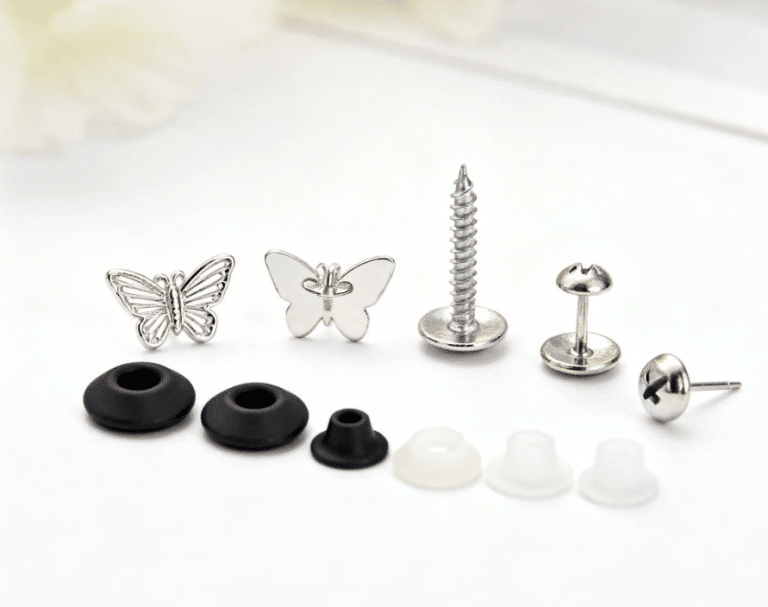
The Unseen Hero: Why Earring Backings Define Quality Jewelry
Every jewelry brand owner knows the sinking feeling. A customer calls, distraught. They’ve lost one
Choosing the Best Jewelry Stone Setting for Mass Production
Selecting the right jewelry stone setting is one of the most pivotal decisions for any
Best Jewelry Stone Setting for Mass Production | HonHo
Choosing the best jewelry stone setting Choosing the best jewelry stone setting is one of