

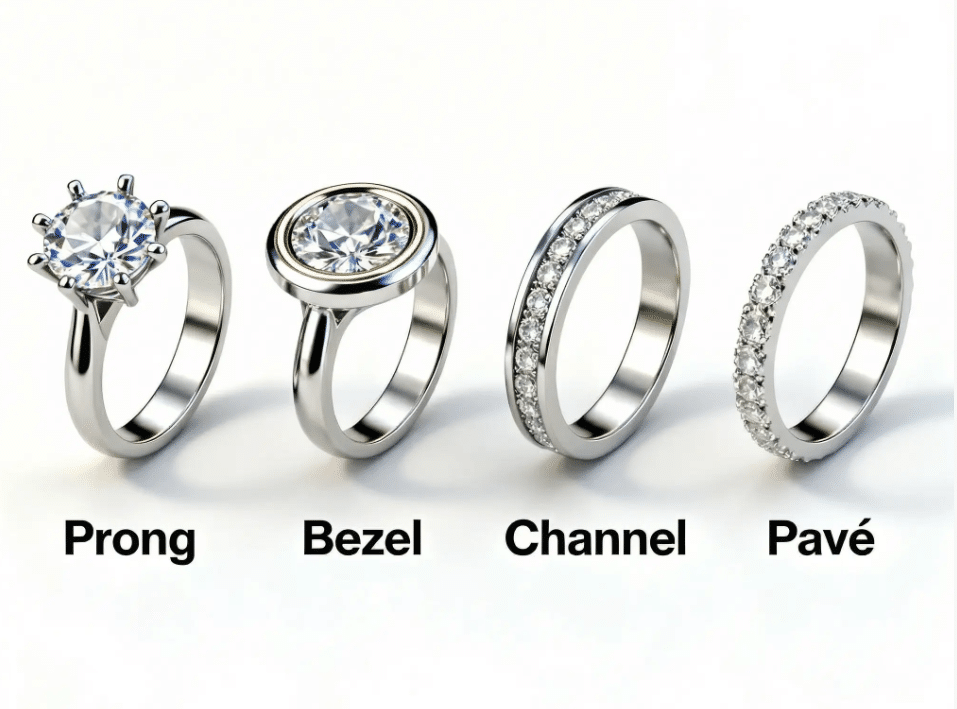
Choosing most jewelry stone setting is probably one of the most crucial decisions that any jewelry brand faces. It is so much more than aesthetics. If you run a mass production-oriented business, then this decision has a direct impact on your bottom line, production timeframes, product quality and brand name. A configuration that is gorgeous on a single custom item may turn into a cost and schedule nightmare for thousands.
But the key here is to bring manufacturing perspective and understand which one of these settings can scale up successfully. It’s about apportioning beauty to efficiency, and durability to cost. This guide is tailored for jewelry brands, designers and entrepreneurs who are looking to make informed scalable decisions. We will walk you through the manufacturing process behind choosing the best jewelry stone setting for your needs (not just in terms of beautiful design), but how to keep your pieces profitable and up to high quality standards every time round.
Time and labor count as part of the value in custom, one-off jewelry. Like anyone doing mass production, they’re costs to be managed. The stone setting technique you use for your jewelry is a key driver of these costs and can make or break your production workflow. Here’s why it’s so critical:
Production Speed: Some of the settings, like simple prongs on calibrated stones, can be done relatively quickly. Others, such as intricate pavé or bezel settings are much more time intensive and can create potential bottlenecks in your production line.
Cost Per Unit: Labor is a large percentage of the cost to make a piece of jewelry. A setting requiring hours of a skilled artisan’s time will have a minute cost far higher than one that can be automated or churned out in short order.
Labor Requirements & Scalability: Complex hand-setting techniques require advanced skills that few possess, making them a finite and sometimes rare resource. If you rely solely on these techniques, production scaling may be slow. Setting processes that are simpler or more automated scale up to meet large orders much easier.
Durability & Return Rates: Inadequate design or setting for mass-production can have loose stones. This leads to customer complaints, returns, and tarnished reputation for your brand when it comes to quality. A secure setting is non-negotiable.
Before learning advanced techniques, you need to know the fundamentals. While many guides describe these through the lens of a consumer, a manufacturer views them through the optics of efficiency, security and cost. Here’s a summary of the most popular jewelry stone setting styles.
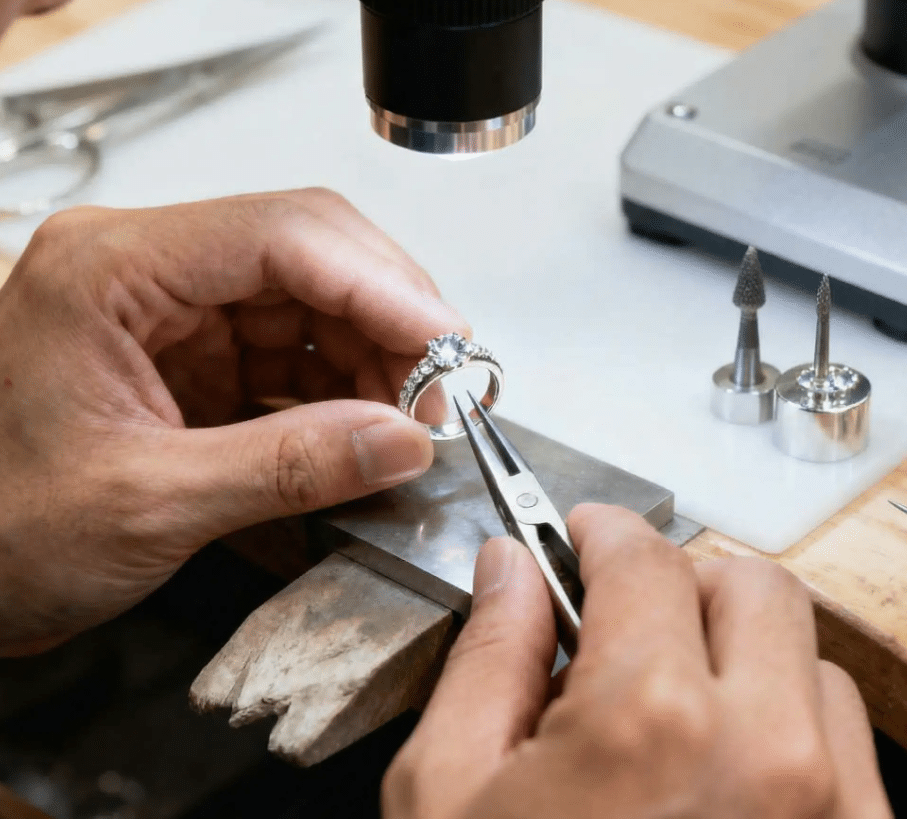
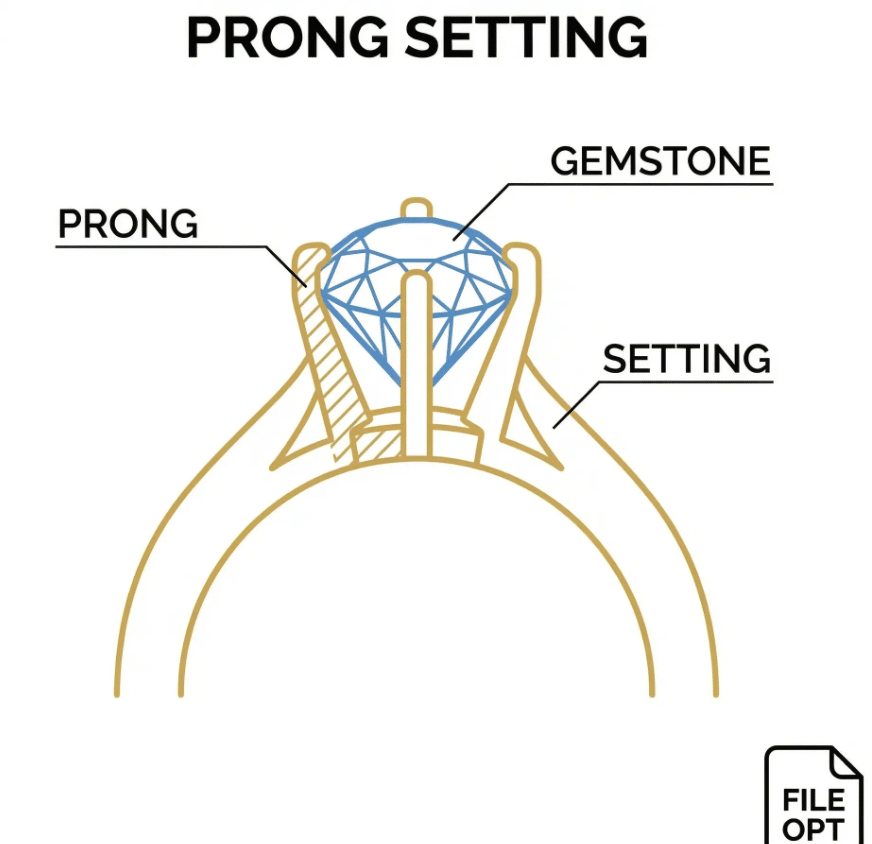
Small metal claws secure the gemstone in position, allowing maximum light exposure.
Pros for Mass Production: Quick to cast; requires less metal; a lovely setting for stones.
Cons for Mass Production: Labor intensive to set by hand; prongs may catch if not polished perfectly
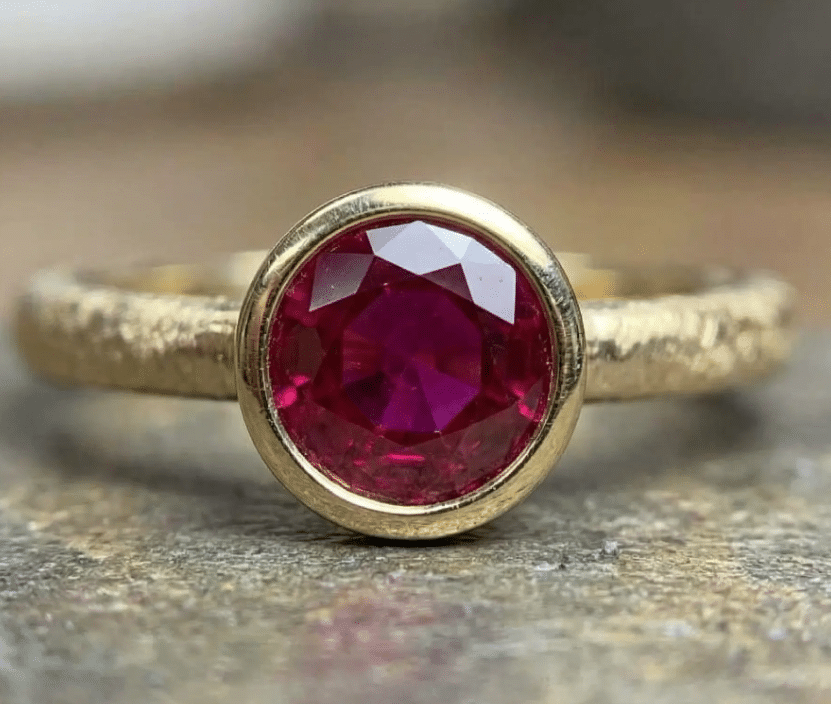
You can use a metal rim that is fully or half circle shaped — gives maximum protection for the stone.
Pros for Mass Production: Very secure and durable; contemporary, clean look; protects stone edges.
Cons for Mass Production: Labor-intensive; uses more metal; can conceal some of the stone’s size.
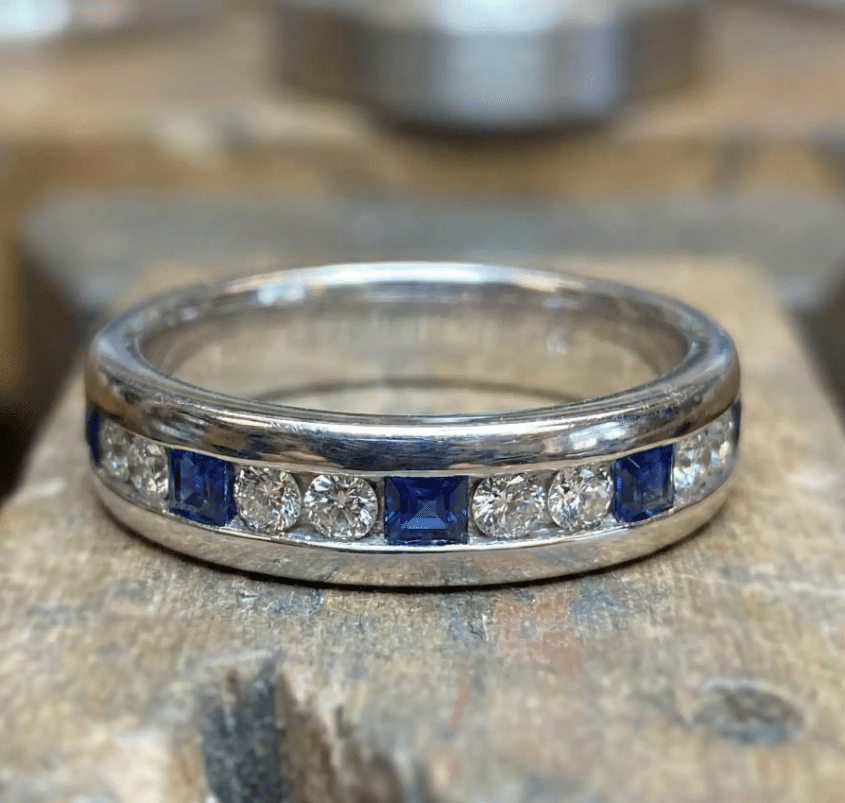
There are stones lined up along two parallel metal walls with gaps of metal in between.
Pros for Mass Production: Extremely secure and snagless; your stones form a continuous line.
Cons for Mass Production: Need perfectly calibrated stones and channels; Doesn’t forgive too much.
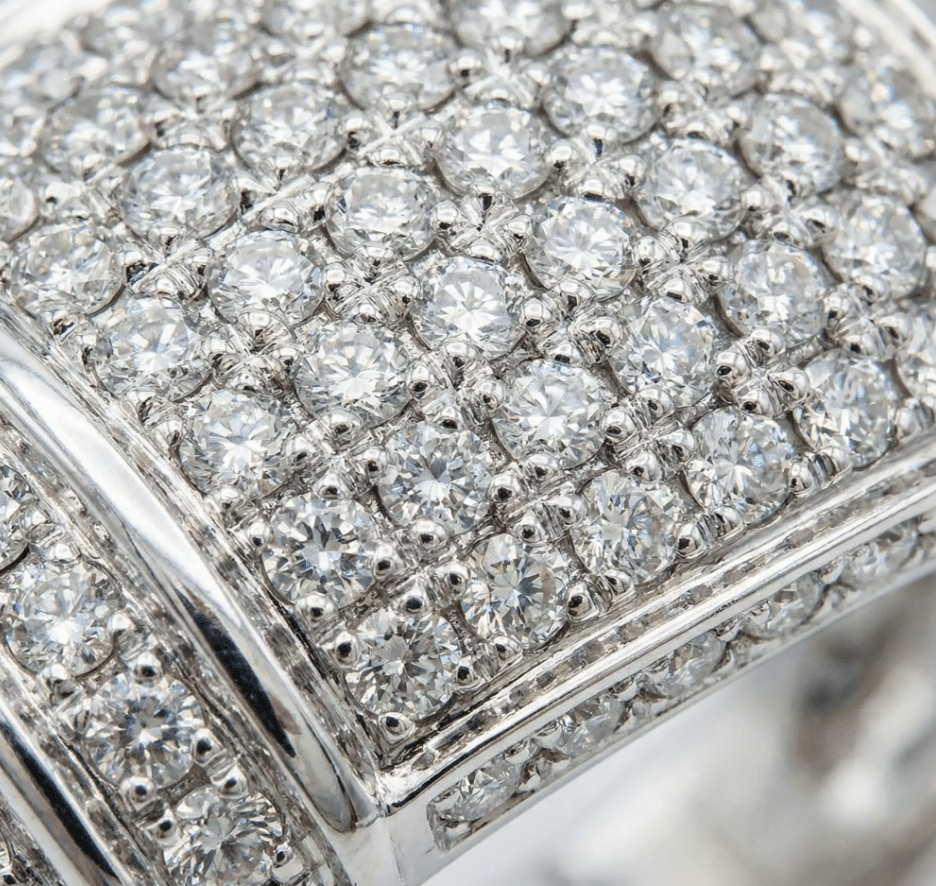
Small stones are arranged tightly where minuscule beads of metal hold them in place to form a “paved” surface.
Pros for Mass Production: Creates a bold, dazzling appearance; can make smaller stones look bigger.
Cons for Mass Production: Very labor intensive, also high skill and often not repairable.
When you’re making hundreds or thousands of pieces, slight differences in efficiency compound. Let’s evaluate these traditional architectures in the context of scalability.
Prong settings have their popularity for a reason. The “heads” or “baskets” that hold the stones can be cast as a part of the main piece, which shortens assembly time. A skilled setter can set stones fairly quickly for mass production in calibrated (uniformly sized) stones. In any case, the process remains manual. Prong setting requires uniformity in both castings and stones to be efficient. It strikes a nice balance between speed and beauty, making it reasonably suitable for many designs.
Bezel setting is one of the most secure but also one of the slowest manual methods from a production standpoint. Each bezel has to be shaped perfectly to the stone, and then the metal has to be gently pushed over the edge without hurting the gem itself. That takes special skill and can be time-consuming, increasing the cost per unit. It’s best saved for designs where durability is the hands-down top priority, or for premium lines where higher labor costs are acceptable.
Channel setting is designed for efficiency in linear designs like eternity bands and bracelets. Once the channel is cast perfectly and the stones are calibrated, a setter lays out the stones in an orderly sequence so they can set them quickly. In bar setting, a similar principle is applied but the stones are held between vertical bars instead. Getting the most value out of this method involves upfront costs on high precision custom jewelry manufacturing so that the castings are perfect and do not require adjusting by hand.
This is where contemporary manufacturing really differs from traditional elemental jewelry making. The most important technique to comprehend, for brands who require thousands of stone-set pieces efficiently produced, is wax setting, commonly referred to as “cast-in-place” setting.
While you typically set stones into a completed metal piece, with wax setting you set the gemstones straight into the wax model before the casting process. A wax model is poured into a flask, with the stones setting within. The wax simply melts out in the kiln, allowing the stones to be perfectly suspended in the investment mold. He then pours in molten metal, which flows around the stones and bonds them as it cools.
An automatic jewelry stone setting machine typically drives this process, placing thousands of stones per hour into wax molds with a degree of accuracy that is stunning. It is the engine behind many of the world’s largest fine jewelry brands, allowing them to create delicate, stone-heavy designs at an approachable price point.
There are a few technical rules that come with the magic of wax setting. Most important is whether a gem can withstand the high temperatures involved in casting. Molten gold, silver or stainless steel is extremely hot, and not all stones can withstand the heat.
The jewelry stone setting style has to correspond too. Flush, pavé and some channel styles are highly successful for wax setting because the wax can flow around the metal and further crush it down to secure stones. Tension and complex prong settings are not recommended for this process.
This means the debate between hand setting and machine-automated wax setting is not a matter of one being “better” than the other — it’s about using the right tool for the right job. Your strategic manufacturing partner will guide you on which method, or mix of methods, works best for your product line.
A hybrid approach is commonly used in many mass-produced pieces. For instance, a ring could have its small pavé accent stones cast in place while the larger—yet still delicate—center stone is set by hand after. This provides the best efficiency and quality.
List of questions from the brand owner or designer to discuss with a manufacturer:
Once you have your initial vision in place, it is a collaborative effort to narrow it down into an ideal design for the specific piece — this includes how many stones will be featured and what type of stone setting will work best. Your manufacturing partner isn’t just supposed to take your design and make it; they are meant to act as a consultant, advising you on how best to realize your vision at scale. A good partner (like HonHo Jewelry) has DFM knowledge.
From varietal plating to bespoke packaging, each and every element is shaped by these deciduous design and setting choices.
Selecting the right stone setting for mass production jewelry is tough, but you don’t have to figure it all out alone. HonHo Jewelry are powered with decades of craftsmanship on the hall and advanced technology, allows us to provide scalable high quality solutions for brands globally.
Our experts can assist on optimizing your designs minimizing cost and improving reliability. We can help you with all of these and more, so get in touch today for your free consultation. Send Your Inquiry Now
Wax setting is the cheapest method for designs with multiple small, durable stones like diamonds or CZ (cast-in-place) — it saves on labor through automation. On simpler designs with single stones, a standard prong setting is usually a good compromise between cost and speed.
Yes, though the setting method needs to match the stone’s durability. Stones such as diamons, sapphires and lab-grown gems are hard so they work well with efficient methods like wax setting. Softer or heat-sensitive stones such as emeralds, opals or pearls must be set following hand casting a piece of jewelry, which takes longer but is the only way to avoid damage.
Both involve placing small stones dense to one another. Micro-pavé is a more subtle version that uses even smaller stones (usually less than 1mm) and calls for the use of a microscope. It makes for a more uniform, diamond-studded surface but is more labor-intensive if done by hand. Either is a great option for wax setting in mass production.
The location plays an enormous role in price. The cost per unit goes up in labor-intensive environments like hand-set bezels or complicated pavé work. Automated wax setting dramatically cuts down on labor costs, hence also lowering the price of the final piece. The use of precious metal in the setting also contributes to the cost.
The bezel setting is widely thought of as the most secure, because it surrounds the stone’s edge with metal. So, it is perfect for everyday wear and for helping to protect softer gemstones. So-called channel settings are also extremely secure for the rows of stones.
Gemstone calibration refers to making sure every gemstone in a batch is exactly the same size, shape and cut. This is vital if the piece is being mass produced — especially true in channel and pavé settings, where this permits for uniformity across the setting. Otherwise, you’d have to set each piece up by hand — which is the opposite of mass production.
Absolutely. This is a widely used strategy known as a hybrid approach. A manufacturer could, for instance, use efficient wax setting for small accent stones on a ring’s band and then have a skilled artisan hand-set the ring’s large featured center stone. Reducing costs and maintaining quality.
Design for Manufacturability simply means designing a piece of jewelry with how it will be produced in mind. An experienced manufacturer might be able to offer suggestions for a few small changes in the design — perhaps narrowing or widening a prong, for instance, or varying the angle of a channel wall — that would make the piece much faster and cheaper (and longer lasting) to produce at scale, without sacrificing an author’s original vision.
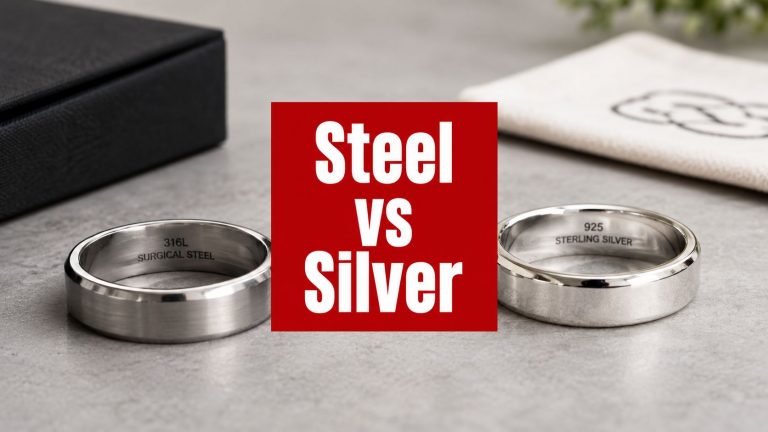
You’re pricing a new collection, and the sample tray is already split down the middle. The 316L surgical steel pieces look cleaner on cost and daily wear, the
You probably have a launch already in motion, a supplier sample on your desk, and one uncomfortable question underneath it all, will this gold color still look clean
If you are developing the ring itself, compare ring fabrication, casting and CAD methods before approving the shank dimensions and manufacturing route. You’re refining a ring design, the