
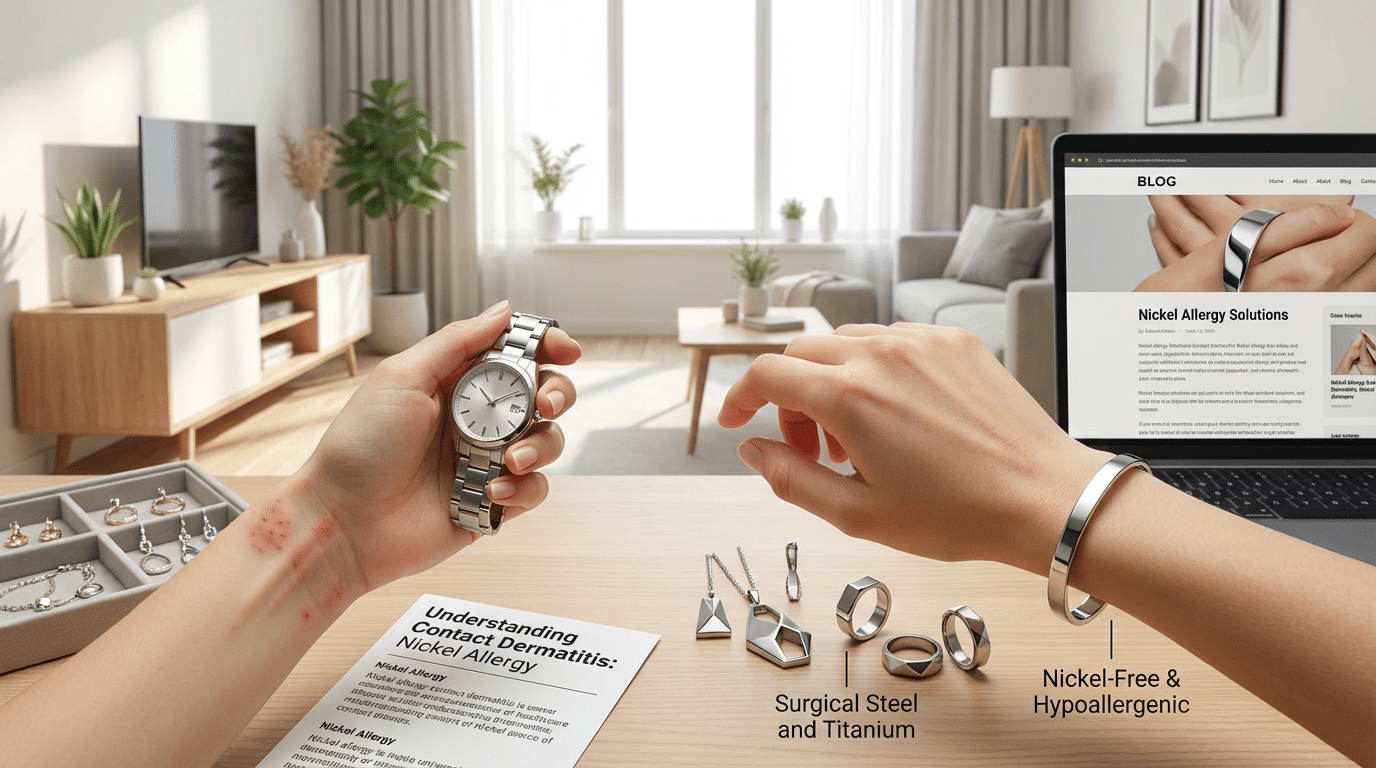
What Does “Nickel Free” Actually Mean?
If your ears burn, itch, or blister after wearing earrings, you already know: “nickel free” labels can be confusing and misleading. Let me break it down clearly so you actually know what you’re buying.
Legal “Nickel Free” Under EU Regulation (EC) No 1907/2006
Under the EU Nickel Directive / REACH regulation, jewelry that touches your skin must keep nickel release extremely low:
| Jewelry Area | Max Nickel Release (EU REACH) |
|---|---|
| Direct & prolonged skin contact | ≤ 0.5 µg/cm²/week |
| Pierced parts (posts, hooks, etc.) | ≤ 0.2 µg/cm²/week |
If a piece meets these limits, it is legally considered “nickel safe” or compliant in the EU, even if it contains nickel in the alloy.
So in real-life terms:
- Nickel free (legal sense) = nickel release is below strict limits
- Nickel free (marketing sense) = often just means “low nickel” or “nickel compliant,” not 0% nickel
Nickel Free vs Low Nickel vs Hypoallergenic
These terms are thrown around all the time. Here’s what they usually mean:
| Term | What It Usually Means | Reality Check for Sensitive Skin |
|---|---|---|
| Nickel free | Very low or no nickel release | May still contain nickel in the base alloy |
| Low nickel release | Designed to meet REACH limits | Often safe, but sensitive people can still react |
| Hypoallergenic jewelry | “Less likely to cause allergy” (no legal standard) | Totally unregulated; can still contain nickel |
Key point:
“Hypoallergenic” is a marketing word, not a guarantee. Always look for tested nickel release or REACH compliant jewelry, not just a buzzword on the tag.
Why Fast Fashion “Nickel Free” Jewelry Often Fails
Many people react to “nickel free” earrings and necklaces from big fast retailers. Here’s why:
- Cheap base metals
- Alloys often contain nickel to cut costs and increase hardness.
- Thin coatings or platings
- A thin layer of gold or “nickel free coating” wears off quickly.
- Once the coating breaks, raw nickel touches your skin.
- Batch inconsistency
- Different factories, different metal mixes, weak quality control.
- No real testing
- Many brands don’t run DMG nickel tests or XRF analysis, they just trust supplier claims.
If you have a nickel allergy, don’t rely on a vague label. You need:
- Verified nickel release testing
- Clear claims like “EU REACH compliant” or “nickel safe for piercings”
- Transparent material info: 316L surgical steel, titanium, platinum, 14K–18K nickel free gold, etc.
When I create nickel safe jewelry, I always anchor it to actual test results, not just pretty words on packaging. That’s the only way to give you real rash free, skin friendly jewelry you can trust.
Why Nickel Allergy Is So Common
Nickel allergy is everywhere because nickel is everywhere. That’s why nickel free jewelry and truly hypoallergenic jewelry matter so much if your skin reacts easily.
Everyday sources of nickel exposure
Most people don’t just get nickel from one place – it’s constant, low-level exposure from things you touch daily:
- Cheap fashion jewelry and watch cases
- Earring posts, belt buckles, bra hooks, zippers, and jean buttons
- Eyeglass frames, phone cases, keys, coins, and tools
- Laptop edges, headphones, and some kitchen utensils
If you’re getting rashes from jewelry, chances are your skin is also seeing nickel from these other sources, which keeps the allergy “switched on”.
Women vs men – and the piercing problem
Globally, women test positive for nickel allergy at much higher rates than men. The big reason: ear and body piercings.
- Fresh piercings + cheap metal = perfect setup for a lifelong allergy
- Using surgical steel earrings, titanium jewelry for sensitive skin, or 14K–18K nickel free gold jewelry in new piercings massively cuts the risk
- Men’s rates are rising too as more people wear piercings and fashion jewelry from fast retailers
This is exactly why I only push skin friendly jewelry materials for any piercing that goes through the skin.
How long nickel allergy symptoms take to show up
Nickel allergy is a delayed reaction (allergic contact dermatitis), not an instant one:
- First-time sensitization can take months or years of repeated contact
- Once you’re sensitized, reactions can flare in 6–48 hours after wearing nickel jewelry
- Symptoms: itching, redness, bumps, dry flaky skin, or blisters where the metal touches
Because of this delay, many people don’t connect their rash to their jewelry and keep wearing the same pieces, making the allergy worse over time.
If you’re not sure whether a piece is safe, simple tools like a DMG nickel test are worth keeping on hand, especially if you buy a lot of fashion jewelry or source from multiple suppliers.
Safest Materials for Nickel Free Jewelry

When you’ve got a nickel allergy, the metal choice is everything. Here’s what I actually trust and use for nickel free jewelry manufacturing.
Surgical Grade 316L Stainless Steel
316L (and 316LVM) is the standard for hypoallergenic jewelry and surgical steel earrings.
Pros
- Very low nickel release (REACH-compliant when properly made)
- Strong, scratch‑resistant, perfect for daily wear
- Affordable for large collections and wholesale
- Great base for long‑lasting PVD coatings
Cons
- Still contains nickel in the alloy (not ideal for ultra‑sensitive users)
- Cheap “316L” from unknown factories can fail EU nickel tests
For example, we use 316L for durable stainless steel bracelets with stable PVD finishes.
Titanium Jewelry for Sensitive Skin
Titanium is one of the best metals for nickel allergy when you pick the right grade.
- Grade 2 (commercial pure): great for earrings, necklaces, pendants
- Grade 5 (Ti‑6Al‑4V): stronger, often used in rings
- Implant grade (Ti6Al4V ELI / Grade 23): top tier for implant grade titanium rings and body jewelry
Why implant grade matters
- Ultra‑low impurities
- No nickel
- Designed for long‑term contact with human tissue
If a brand doesn’t clearly list the titanium grade, I treat it as a red flag.
Pure Precious Metals: 14K–18K Gold, Platinum, Argentium Silver
14K–18K Gold (Nickel Free Alloys)
- Ask for nickel free gold jewelry (often palladium‑based white gold)
- Yellow and rose gold are usually safer, but still check alloy details
- Good for nickel safe wedding rings and engagement rings
Platinum (PT900 / PT950)
- Naturally nickel free in most modern alloys
- Heavy, luxurious, extremely skin‑friendly
Argentium Silver
- A modern silver alloy with germanium instead of nickel
- Less tarnish, more skin friendly than standard sterling
Niobium, Tantalum, and Medical Plastics
These are my go‑tos for ultra‑sensitive customers.
- Niobium
- Naturally nickel free
- Can be anodized into colors with no coatings
- Great for rash free earrings and hooks
- Tantalum
- Dark, modern look
- Very inert and skin friendly
- Popular for men’s wedding bands
- Medical plastics (PTFE, biocompatible resins)
- Good for healing piercings and severe allergies
- Light, flexible, metal‑free
Comparison: Nickel Release, Price, Durability, Skin Safety
| Material | Nickel Release (EU) | Price Level | Durability | Skin Safety (Allergy‑Prone) |
|---|---|---|---|---|
| 316L Stainless Steel | Very low (if REACH compliant) | $ | High (scratch‑resistant) | Good to Very Good |
| Implant Grade Titanium | None | $$ | Very high | Excellent |
| 14K–18K Nickel Free Gold | None (if nickel free alloy) | $$$ | High | Excellent |
| Platinum (PT900/PT950) | None | $$$$ | Very high | Excellent |
| Argentium Silver | None | $$ | Medium | Very Good |
| Niobium | None | $$ | Medium–High | Excellent |
| Tantalum | None | $$$ | Very high | Excellent |
| Medical Plastics (PTFE, etc) | None | $ | Medium | Excellent (but not “luxury”) |
When we build skin friendly jewelry lines, I usually start with 316L for price/durability balance, then offer titanium, platinum, niobium, and custom 14K–18K alloys for customers who need zero‑tolerance, non allergic jewelry materials.
How to Spot Truly Nickel Safe Jewelry

Not all “nickel free jewelry” is actually safe for sensitive skin. Here’s how I vet pieces before they ever touch skin.
Look for Real Safety Certifications
When I call a piece nickel safe, I want third‑party proof. Check if the brand clearly states:
- REACH / EU Nickel Directive compliant – This is the gold standard in the EU for nickel release limits in jewelry.
- California Proposition 65 compliant – Shows the brand is paying attention to toxic metals and chemicals.
- OEKO‑TEX or similar textile certifications – Useful for watch straps, cords, and leather parts that touch skin.
If a brand manufactures in-house like we do, you should see these standards referenced clearly on the site, not hidden. For example, serious manufacturers often highlight compliance and material control on their main jewelry manufacturing pages, not just in fine print.
Testing Methods: DMG & XRF Matter
Real nickel safe jewelry is tested, not guessed:
- DMG nickel test kits
- Cheap, quick spot-check.
- The reagent turns pink if nickel is actively releasing to the surface.
- Good for testing suspect fashion jewelry at home.
- XRF (X‑ray fluorescence) analysis
- Lab or factory-level test we use in-house.
- Reads the metal composition without destroying the piece.
- Lets us confirm stainless steel grade, gold alloy content, and that no hidden nickel is in the mix.
If a “nickel free” brand has never heard of DMG or XRF, that’s a red flag.
Why “Hypoallergenic” Means Almost Nothing
The word “hypoallergenic jewelry” is marketing, not a legal guarantee:
- There is no single global standard for “hypoallergenic.”
- A piece can contain nickel, cobalt, or other irritants and still be sold under that label.
- Some “hypoallergenic” coatings wear off fast, exposing a cheap nickel-heavy base metal.
Unless the brand can tell you the exact metal grade (e.g., 316L surgical steel, Ti‑6Al‑4V ELI implant grade titanium, 950 platinum) and confirms nickel release limits, I don’t trust “hypoallergenic” alone.
Key Questions to Ask Any Jewelry Brand
Before you buy nickel allergy jewelry, ask them directly:
- What exact metal or alloy is this?
- Look for specific names: 316L surgical steel, implant grade titanium, 14K/18K nickel‑free gold, Argentium silver, niobium, etc.
- Is this REACH / EU nickel directive compliant?
- Ask if they test for nickel release, not just list “nickel free” on paper.
- How do you test your jewelry for nickel?
- Do they use DMG tests, XRF analysis, or accredited lab reports?
- Serious manufacturers often mention in-house testing and quality control on their main jewelry production pages.
- Is the base metal also nickel safe, or just the coating?
- If the piece is plated, ask what’s underneath and what happens when the plating wears.
- Can you provide documentation or material certificates?
- Many real factories can share material certificates or compliance statements on request.
If a brand can’t answer these in clear, simple language, I don’t call their pieces truly nickel safe.
Best Nickel Free Jewelry Types for Sensitive Skin

If your skin reacts easily, the metal choice matters more than the design. Here’s what I recommend for truly nickel safe jewelry.
Nickel free everyday earrings (studs, huggies, threaders)
For rash free earrings, stick to:
- Implant grade titanium (Ti-6Al-4V ELI / Grade 23) – top choice for sensitive ear piercings
- 316L / 316LVM surgical steel earrings – only from brands that are REACH compliant
- Niobium or tantalum – ultra skin friendly, great for long wear
- 14K–18K nickel free gold or platinum – from trusted manufacturers, not mystery “gold plated”
Go for small, smooth designs like studs, huggies, and threaders so they don’t tug or irritate the piercing channel.
Safe engagement and wedding ring metals
For nickel safe wedding rings and engagement rings that you wear 24/7, I’d rank metals like this:
- Platinum – hypoallergenic, dense, long lasting
- 18K palladium white gold or yellow/rose gold (nickel free alloys)
- Implant grade titanium rings – light, tough, budget friendly
- High quality 316L stainless steel – only if nickel release is tested and compliant
Avoid cheap “white gold” with unknown alloys and low-end fashion rings that hide nickel under thin plating.
Necklaces and pendants for nickel allergy
Most people react less on the neck than on ears, but if you already have nickel allergy jewelry reactions, keep it clean:
- 316L stainless steel chains from REACH compliant factories
- Titanium chains and pendants for ultra light, non allergic jewelry
- Argentium silver (low tarnish, more skin friendly than regular sterling)
- Solid 14K–18K gold with verified no-nickel alloy
If you’re buying wholesale fashion necklaces, only work with suppliers that can prove REACH or EU nickel directive compliance. For example, when I build collections or source wholesale fashion necklaces, nickel release testing is non‑negotiable.
Bracelets and bangles that won’t cause rashes
Wrists sweat and rub against desks, watches, and sleeves, so metals must be stable:
- 316L stainless steel bangles and cuffs – tough, low maintenance
- Titanium bracelets – super light and great for daily wear
- Nickel free gold bracelets – for people who react to almost everything else
- Medical grade silicone or coated medical plastics – if your skin is extremely reactive
If you like extras like magnetic bracelets, make sure the base metal is nickel safe and the plating is thick and tested; I make sure of this in my own magnetic bracelet collections.
Nickel safe watches and watch bands
Watch rashes usually come from cheap case backs, buckles, or mesh bands:
- Choose titanium watches or 316L stainless steel cases from reputable brands
- Swap bands to leather, nylon, silicone, or titanium if the original strap causes redness
- Make sure the case back and clasp are nickel safe – that’s what touches your skin all day
If you react easily, avoid “mystery metal” fashion watches and unbranded mesh straps with no nickel information at all.
Caring for Nickel Free Jewelry
Keeping nickel free jewelry in good shape is what keeps it skin safe long term. Even the best hypoallergenic jewelry can irritate skin if it’s dirty, damaged, or the coating is worn off.
Gentle Cleaning That Protects Coatings
For nickel free gold jewelry, surgical steel earrings, titanium jewelry, and plated pieces, I keep cleaning simple:
- Use mild soap + lukewarm water
- Soak for 2–3 minutes
- Gently wipe with a soft cloth or very soft brush
- Rinse well and pat dry completely
- Avoid harsh cleaners
- No alcohol, bleach, toothpaste, baking soda, or strong ultrasonic cleaners on plated or coated pieces
- Polish carefully
- Use a jewelry polishing cloth, not paper towels
- On gold plated items, go light to avoid thinning the layer – I follow similar care tips as with gold plated jewelry cleaning routines
Storage Tips to Prevent Oxidation & Irritation
Good storage keeps metals stable and kinder to sensitive skin:
- Store dry – never put jewelry away damp, especially around clasps and posts
- Use separate pouches or compartments to avoid scratches and rubbing off coatings
- Add anti-tarnish strips or silica gel in your jewelry box for silver and stainless steel
- Take jewelry off before swimming, heavy sweating, or using lotions and perfumes to reduce residue that can trap sweat and cause contact dermatitis
When to Re‑Test or Replace Jewelry
Even nickel safe jewelry should be checked over time, especially if you have a strong nickel allergy:
- Re-test with a DMG nickel test if:
- You notice new itching, redness, or rashes
- Plating looks worn, chipped, or the color has changed
- Replace or retire pieces when:
- Base metal is visible under plating
- Posts, backs, or inner ring surfaces feel rough or pitted
- Coatings have peeled or scratched through in high-contact spots (earring posts, ring undersides, clasp areas)
- For everyday pieces (studs, wedding rings, watches), I recommend re-checking them yearly if your skin is very reactive.
Take care of the finish, keep everything clean and dry, and quality nickel free jewelry will stay skin
Top Nickel Free Jewelry Brands and Manufacturers
Overview of Top Nickel Free Jewelry Brands in 2026
In 2026, the nickel free jewelry space is led by a mix of global consumer brands and specialist manufacturers. The leaders all have a few things in common:
- Transparent material specs (e.g., 316L surgical steel, implant‑grade titanium, 14K–18K nickel free gold)
- Clear EU REACH / EU Nickel Directive compliance
- Third‑party or in‑house testing (DMG, XRF, lab reports)
- Dedicated “nickel safe” or “hypoallergenic jewelry” lines for sensitive skin
Typical categories these brands focus on: rash free earrings, nickel safe wedding rings, titanium jewelry for sensitive skin, and everyday skin friendly jewelry for people with nickel allergy.
How to Compare Nickel Free Jewelry Brands (Safety, Style, Price)
When I compare brands, I keep it simple:
| Factor | What to Look For | Red Flags |
|---|---|---|
| Safety | REACH compliant, EU nickel directive claim, test reports, DMG / XRF testing | Only “hypoallergenic” with no details |
| Materials | 316L surgical steel, titanium, niobium, 14–18K nickel free gold | “Alloy” or “metal” with no breakdown |
| Style | Designs you’ll actually wear daily (studs, huggies, simple bands) | Overly trend‑only pieces that won’t get real use |
| Price | Fair markup vs. material + craftsmanship | Very cheap plated “nickel free” fashion jewelry |
| Transparency | Clear FAQs, material pages, customer support that answers specifics | Vague or copy‑paste answers about “anti‑allergy metal” |
If a brand can’t clearly answer “What exact alloy is this?” and “Is it compliant with the EU nickel limit?” I treat that as a no.
Why Dongguan HonHo Jewelry Stands Out
From a manufacturing point of view, Dongguan HonHo Jewelry is built for nickel compliant production, not just marketing:
- Focus on EU nickel directive and REACH compliant jewelry for export markets
- Clear nickel safe specs for 316L stainless steel, titanium, and 18K gold collections
- Strong OEM/ODM capability so brands can launch real hypoallergenic jewelry lines, not guesswork
You can see this in how we structure our stainless steel jewelry manufacturing processes to control alloy sourcing and finishing from day one:
we walk clients through material choices, surface treatment, and testing, as explained in our guide on professional stainless steel jewelry manufacturing.
In‑House XRF Testing and Quality Control
We don’t just trust supplier paperwork; we verify:
- In‑house XRF analysis of base metals and platings to screen for nickel, lead, and other restricted elements
- Batch‑based QC with retention samples for traceability
- Random DMG spot tests on high‑risk categories (earrings, body‑contact parts, earring posts, ring shanks)
- Full documentation for brand partners who need proof for EU and US regulations (REACH, Prop 65, etc.)
That means if you’re selling nickel allergy jewelry or hypoallergenic earrings, you have data backing your claims.
Custom 18K Gold, Titanium, and 316L Stainless Steel Collections
Our core nickel safe materials:
- 316L surgical steel earrings & jewelry
- High corrosion resistance
- Stable, low nickel release within EU limits
- Titanium jewelry for sensitive skin
- Lightweight, ideal for implant‑grade style rings and posts
- Great for nickel safe wedding rings and everyday wear
- Custom 18K nickel free gold jewelry
- Premium finish, suitable for engagement rings, bands, and fine pieces
We also support mixed collections (e.g., 18K gold plating on 316L bases) with clear cleaning and care guidance, similar to the approach in our guide on how to clean gold plated jewelry safely.
Direct Factory Pricing, No Middlemen
Because we run our own factory in Dongguan, we keep the chain short:
- Direct factory pricing for brands, wholesalers, and retailers
- Better control over MOQs, lead times, and customization
- Ability to invest more in testing and QC instead of middlemen margin
For global customers building serious nickel free jewelry lines, that means you get safer, consistent product at a price that still works at retail—without sacrificing skin safety or style.
Nickel Free Jewelry FAQ
Is all sterling silver actually nickel free?
No. Sterling silver is 92.5% silver, but the remaining 7.5% can be copper, zinc, or nickel. EU‑compliant and better quality brands usually use nickel‑free sterling silver or Argentium silver. If you’re nickel sensitive, always look for “nickel free” or “nickel-safe sterling” in writing, not just “925.”
Can nickel free jewelry still cause skin reactions?
Yes. “Nickel free” only solves the nickel problem. You can still react to:
- Copper or brass under thin plating
- High metal content in low‑quality alloys
- Harsh cleaning chemicals or sweat trapped under tight pieces
If your skin is very reactive, stick to implant grade titanium, niobium, medical plastic, or high‑karat gold from verified makers.
Is titanium better than surgical steel for sensitive skin?
Usually, yes.
- Implant grade titanium (e.g., Ti‑6Al‑4V ELI): no nickel, extremely low reaction rate, very light.
- Surgical steel (316L/316LVM): “low nickel release,” but still contains nickel in the alloy. Many people are fine; some nickel‑sensitives are not.
For strong nickel allergy, I always recommend implant grade titanium jewelry for sensitive skin over steel.
Does 14K gold ever contain nickel?
It can.
- Yellow 14K gold: often alloyed with copper/silver; may be low or no nickel.
- White 14K gold: frequently uses nickel to get the white color, then rhodium plated. Once plating wears off, reactions can start.
If you’re nickel allergic, look for “nickel‑free 14K gold” or choose 18K yellow gold, platinum, or palladium‑based white gold from a transparent brand.
How long do nickel free coatings usually last?
It depends on thickness and how you wear it:
- Light fashion plating: a few months with daily wear
- Thicker PVD or IP coatings on 316L steel or titanium: often 1–3+ years of daily use
- Rhodium plating on white gold: typically 6–24 months before needing a re‑plate
Avoid perfumes, pools, and rough scrubbing to extend coating life.
Where to get custom nickel free engagement rings?
Look for makers who offer:
- Implant grade titanium rings, platinum, 18K yellow gold, or palladium white gold
- Written nickel compliance and testing data
- Custom CAD design and stone setting
We design and manufacture custom nickel safe engagement rings in 18K gold, titanium, and 316L stainless steel with full material traceability through our own OEM jewelry manufacturing service.
Is Dongguan HonHo Jewelry really nickel free and how is it tested?
Yes. As a manufacturer, I take nickel compliance seriously:
- We design alloys and platings to be REACH‑compliant and low‑nickel release
- We use in‑house XRF testing for metal composition on every batch
- For critical pieces (earrings, body‑contact parts), we confirm with EU‑standard nickel release tests and spot‑check using DMG nickel test where appropriate
Because we run our own factory‑direct jewelry manufacturing with strict QC, we can control materials, testing, and pricing end‑to‑end, which is why our nickel free jewelry stays consistent and safe for global customers.
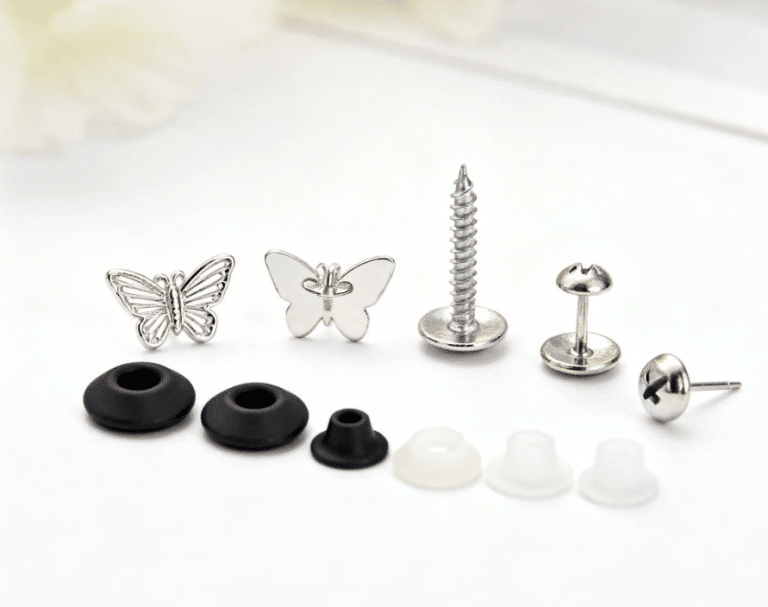
The Unseen Hero: Why Earring Backings Define Quality Jewelry
Every jewelry brand owner knows the sinking feeling. A customer calls, distraught. They’ve lost one
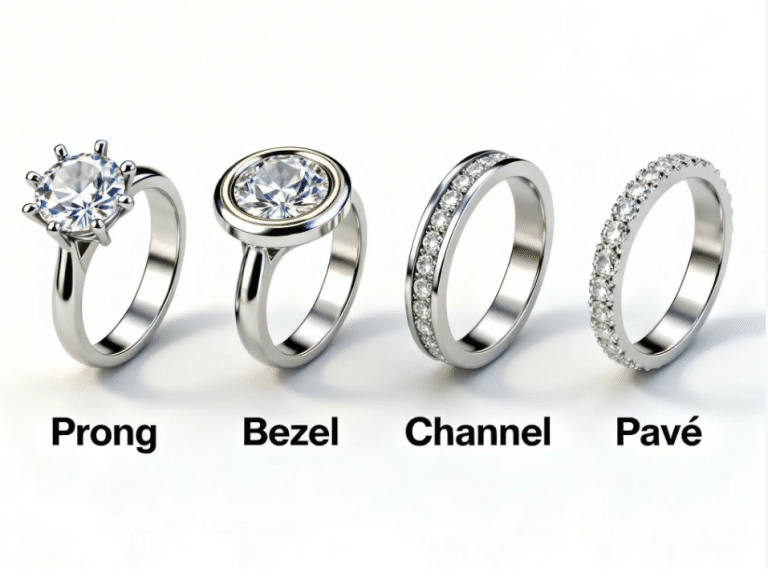
Choosing the Best Jewelry Stone Setting for Mass Production
Selecting the right jewelry stone setting is one of the most pivotal decisions for any
Best Jewelry Stone Setting for Mass Production | HonHo
Choosing the best jewelry stone setting Choosing the best jewelry stone setting is one of