What Is Gold Filled Jewelry?
Gold filled jewelry meaning
When I say gold filled jewelry, I’m talking about a base metal core that’s mechanically bonded with a thick layer of real gold.
It’s not a thin wash of color. It’s a permanent bond under heat and pressure.
- The gold layer is legally defined and controlled
- The gold content is high enough to be measured by weight, not just thickness
- When done right, it looks and wears like solid gold at a fraction of the price
Gold filled vs gold plated vs solid gold
You’ll see all three terms in the market, but they’re not equal:
- Gold filled
- Thick, pressure‑bonded gold layer
- At least 5% of total weight is gold
- Much more durable, better for daily wear
- Gold plated
- Very thin electroplated gold layer (often 0.1–0.5 μm)
- No minimum gold weight required
- Wears off faster, especially on rings and bracelets
- Solid gold
- Entire piece is gold alloy (e.g., 14K, 18K)
- Highest cost, best resale value
- Heavier and significantly more expensive than gold filled
Bottom line: Gold filled sits in the sweet spot: real gold surface, strong durability, mid-range cost.
How the gold layer is bonded
For true gold filled, the gold isn’t just “painted on”:
- Thick gold sheets or wire (usually 10K, 12K, or 14K) are layered over a base metal core
- The layers go through heat and high pressure in a rolling mill
- The result is a single bonded metal, then drawn, stamped, or cast into jewelry components
- Final pieces are cut, soldered, polished, and finished like traditional jewelry
This mechanical bonding is why gold filled outperforms most standard plating and PVD when it comes to long‑term wear.
Common gold filled standards
Most of the global market works with a few key standards:
- 1/20 14K GF
- Means 1/20 (5%) of the total weight is 14K gold
- Most common stamp you’ll see in the US and EU markets
- Other markings you may see:
- 1/20 12K GF
- 1/10 12K GF (10% gold by weight – higher gold content)
- GF after the karat mark (e.g., 14K GF)
For mainstream fashion and demi‑fine jewelry, 1/20 14K GF is the standard buyers expect.
Base metals used under gold filled
Under the gold layer, manufacturers usually use:
- Brass – most common, good strength, cost‑efficient
- Stainless steel – great for extra durability and “waterproof” marketing claims
- 925 sterling silver – for premium lines; gold over silver is sometimes called “vermeil-like”, but with gold filled specs
Choosing the right core matters for weight, feel, and how “premium” the piece feels in hand.
Key benefits for buyers
Why do brands and wholesalers keep coming back to gold filled?
- Durability:
- With proper care, it can last years of daily wear
- Handles sweat, lotions, and normal moisture better than thin plating
- Value:
- Real gold on the surface without solid‑gold pricing
- Perfect for affordable luxury and demi-fine positioning
- Hypoallergenic potential:
- The thick gold layer shields the base metal from skin contact
- When paired with nickel-free and lead-free cores, it works well for sensitive skin
How to read gold filled stamps and markings
You’ll see specific stamps on properly made gold filled jewelry:
- Common markings:
- 1/20 14K GF
- 1/20 12K GF
- 14KGF or 12KGF
- Sometimes with a brand logo or maker’s mark
How to interpret them:
- Fraction (1/20, 1/10):
- Tells you the minimum gold weight percentage
- Karat (10K, 12K, 14K):
- Tells you the gold alloy purity of the outer layer
- GF:
- Confirms it is gold filled, not just plated
If a supplier claims gold filled but can’t show clear stamps, documentation, or gold weight specs, treat that as a serious red flag.
Why Source Gold Filled Jewelry From China?

If you’re serious about scaling gold filled jewelry, China is usually where the numbers and the quality line up best.
Overview of China’s Gold Filled Jewelry Industry
China has built a full ecosystem around gold filled jewelry: raw material suppliers, chain factories, casting houses, stone setters, and packaging all in one supply chain. That’s why you can go from idea to mass production fast, even if you’re a small or mid-size brand.
The most active hubs are:
- Dongguan – strong for complete gold filled collections and OEM/ODM work
- Guangzhou Panyu – design-driven fashion jewelry, branding support
- Shenzhen – chain specialists, advanced finishing, export-focused
- Yiwu – huge selection and competitive pricing for volume buyers
Factories like our own Dongguan jewelry factory sit right in the middle of this ecosystem, which cuts both cost and lead time.
Cost Advantages & Technology
China’s edge comes from:
- Economies of scale – large production runs bring lower cost per piece
- Flexible MOQs – from small test orders to big retail programs
- Advanced finishing – CNC cutting, micro-setting, and modern PVD and vacuum deposition systems for stable gold color and better wear resistance (you can see how that works in our PVD jewelry guide)
You’re not just saving on labor; you’re buying into a mature, optimized production system.
Product Types China Is Strong At
Chinese gold filled jewelry suppliers are especially competitive on:
- Gold filled chains (cable, rope, figaro, paperclip, box, etc.)
- Earrings (hoops, huggies, studs, threaders)
- Bracelets & anklets (simple to layered)
- Necklaces (stacking sets, pendants, nameplates)
- Findings & components (clasps, jump rings, charms, extension chains)
If your line is built around 14K gold filled chains, stacking pieces, or findings, China is hard to beat on range and cost.
Common Sourcing Challenges
There are real challenges you need to manage:
- Gold filled vs gold plated confusion – some “GF” offers are just heavy plating
- Inconsistent specs – karat, gold layer thickness, and base metal not clearly defined
- Communication gaps – details lost if you don’t send clear, written requirements
- Quality swings between batches – if there’s no strict QC or testing
You deal with this by locking in specs in writing (karat, 1/20 GF standard, base metal, color), requesting test reports (lead-free, nickel-free), and using pre-shipment inspections for bigger orders.
How International Buyers Usually Work With Chinese Factories
Most global buyers follow a similar path:
- Shortlist suppliers via Alibaba, Global Sources, or direct websites
- Request catalogs + price lists, then narrow down to 2–3 factories
- Order samples to compare color, weight, finish, and allergy performance
- Confirm specs and packaging in a clear PO before mass production
- Use Trade Assurance or secure payment for early orders
- Scale up orders once quality is stable and communication is smooth
For serious brands, the next step is to move into OEM/ODM cooperation with one key partner factory that understands your style, target market, and quality bar. This is where Chinese gold filled manufacturers, especially in hubs like Dongguan, add the most long-term value.
How To Choose A Gold Filled Jewelry Manufacturer In China
When I pick a gold filled jewelry supplier in China, I treat it like choosing a long‑term business partner, not just a cheap factory.
1. Get clear on your business model first
Before you talk to any Chinese gold filled jewelry supplier, lock in:
- Who you sell to: Amazon / Shopify, boutiques, wholesalers, or brand retail
- What you sell: minimalist pieces, statement items, fine chains, findings, etc.
- Order style: small, frequent drops vs. big seasonal buys
- Price position: budget, mid-range, or premium “affordable luxury”
2. Set your technical specs (non‑negotiables)
Define your gold filled specs clearly in writing:
| Spec Type | Typical Options | What I Usually Specify |
|---|---|---|
| Karat | 10K / 12K / 14K GF / 18K tone | 1/20 14K GF (5% gold by weight) |
| Color tone | Yellow / rose / white | “US‑market 14K yellow” or “soft rose gold” |
| Gold layer | 1/20, 1/40, micron range (for PVD) | Minimum thickness in μm + testing method |
| Base metal | Brass / stainless steel / 925 | Nickel‑safe brass or 316L / 925 where needed |
Put these specs in your PI/contract so there’s no debate later.
3. Check capacity and realistic MOQs
Ask each Chinese gold filled factory:
- Monthly output for your product type (chains, earrings, bracelets)
- MOQ per style / per color / per size
- Ability to scale from test order → repeat orders without quality drop
For small brands, I prefer factories offering low MOQs per style with combined higher total order value.
4. Quality control and testing
Only work with manufacturers that can explain their QC in detail:
- Incoming material checks (base metal, gold alloy)
- In‑process checks (thickness, color, solder points, stone setting)
- Final inspection: plating thickness, pulling tests, polish, logo clarity
- Corrosion / sweat / salt spray tests for tarnish‑resistant jewelry
Ask for test reports and process photos or videos. If needed, bring in a third‑party inspector and set clear acceptance standards.
5. Certifications and compliance to demand
For US/EU markets, I always ask for:
- SGS or similar heavy metal tests
- Lead‑free / nickel‑free reports
- REACH and CA Prop 65 compliance for coatings and solder
- Any in‑house lab reports or long‑term partners for testing
Make sure certificates are recent and match the exact materials you’ll use.
6. OEM/ODM and sample development strength
If you want private label or custom pieces, check:
- ODM: existing collections you can brand with your logo
- OEM: ability to build from your CAD, sketch, or reference sample
- Sample lead time (usually 7–20 days) and sample fees / refund policy
- How they manage revisions: how many rounds included, timing, cost
I always send clear design briefs, reference photos, and size specs to speed things up.
7. Lead times and logistics
Confirm early:
- Normal production lead time (e.g., 20–35 days after deposit)
- Priority capacity for reorders
- Shipping options: express (DHL/UPS) vs. air cargo vs. sea
- Support for small, frequent shipments for e‑commerce sellers
Remember to factor in packing, labeling, and customs docs into your timing.
8. Communication and responsiveness
Strong communication is a big green flag:
- Clear written English, no vague answers
- Same contact person from inquiry to shipment
- Fast replies within 24 hours on weekdays
- Willingness to send photos/videos during production
If they’re slow or evasive before you pay, it won’t magically improve later.
9. Pricing structure and hidden costs
When I compare Chinese gold filled jewelry suppliers, I look beyond the unit price:
- Unit price by gold karat, thickness, and base metal
- Mold fees, logo stamps, engraving, packaging charges
- Extra costs for rush orders, small MOQs, or special colors
- Payment terms: deposit %, balance timing, currency
Always compare landed cost per piece (product + freight + duties + fees), not just ex‑factory price.
10. Red flags and deal breakers
I walk away fast if I see:
- “Gold filled” offers at gold plated prices with no test reports
- No clarity on base metal or gold layer spec
- Refusal to share certificates or factory photos
- Inconsistent answers from different salespeople
- Overpromising on lead time or quality to close the deal
When you do find a solid supplier, lock in clear specs and standards early. For example, I like to define expected quality levels in the same way I’d define standards for fine jewelry quality so there’s zero confusion when scaling orders.
Top 5 Gold Filled Jewelry Manufacturers in China
When I shortlist gold filled jewelry suppliers in China, I focus on real manufacturing strength, not just pretty photos. Every factory on this “Top
5” list is chosen using four hard filters:
- Verified manufacturing: in-house workshops, not just traders. I look for factory photos, on-site verification and production videos.
- Gold filled capability: experience with 1/20 14K GF, stable color, and clear understanding of gold filled vs gold plated.
- Export track record: proven exports to North America, Europe, and Australia with stable quality and consistent repeat orders.
- Compliance awareness: at least basic testing for lead-free, nickel-free, and ability to provide SGS/REACH/Prop 65 reports when needed.
If you need a deeper overview of how Chinese jewelry factories actually work, you can cross-check this list against my broader guide to top jewelry factories in China.
Quick Snapshot of the Top 5 Chinese Gold Filled Factories
Here’s a simple at-a-glance comparison to help you narrow down fast:
| # | Factory Type | Main Location | Core Strengths | Typical MOQ Range | Key Gold Filled Products |
|---|---|---|---|---|---|
| 1 | Large factory | Dongguan | Stable quality, strong OEM/ODM, export-focused | 100–300 pcs/sku | Chains, bracelets, earrings, pendants |
| 2 | Large factory | Guangzhou (Panyu) | Fashion-forward designs, branding support | 100–200 pcs/sku | Trendy necklaces, hoops, sets |
| 3 | Mid-size factory | Zhuhai | Fine chains, micro components | 200–500 meters / style | Cable chains, box chains, extender chains |
| 4 | Mid-size factory | Shenzhen | E-commerce friendly, fast sampling | 50–150 pcs/sku | Minimalist rings, stacking sets |
| 5 | Mid-size factory | Dongguan | Higher-end finish, tighter QC | 100–300 pcs/sku | Premium bracelets, statement pieces |
| 6–10 | Mix | Dongguan / Guangzhou / Shenzhen | Niche focus (findings, charms, layered sets) | 50–300 pcs/sku | Findings, charms, layered necklaces |
| 11–15 | Smaller studios | Yiwu / Qingdao / Guangzhou | Low MOQs, flexible customization | 20–100 pcs/sku | Small runs, test collections, custom gifts |
This mix lets you match your order size + product type + brand level to the right kind of partner, instead of forcing your business into a factory that doesn’t fit.
Small Studios vs. Large-Scale Gold Filled Factories
Both small studios and big factories in China can make solid gold filled pieces—but they suit very different buyers. I usually break it down like this:
Work with smaller studios when:
- You’re testing new designs or a new brand, and you don’t want to lock into high MOQs.
- You sell mostly on Amazon, Etsy, Shopify, and need:
- Short runs (20–100 pcs per style)
- Fast iterations and frequent design changes
- You care more about flexibility and communication than having the lowest unit cost.
- You want highly customized details: unique textures, odd shapes, very specific chain combinations.
Work with large-scale factories when:
- You already have validated products and need consistent repeat production.
- Your average orders are 500–10,000 pcs and you need tight delivery schedules.
- You’re building a real brand with long-term SKUs, not just quick trends.
- You need:
- Strong OEM/ODM support
- Detailed technical specs (gold layer thickness, color matching, mechanical testing)
- Systems for quality control, compliance testing, and packaging standards
For most global buyers, the smartest path is:
- Start with a flexible, mid-size supplier that offers OEM/ODM and moderate MOQs.
- Once your designs and demand stabilize, bring in larger factories for your winning SKUs and keep small studios for experimental or seasonal drops.
If you want to see how a typical OEM/ODM workflow looks from the manufacturer side, my detailed OEM jewelry manufacturing guide walks through sampling, customization, and scaling step by step.
Dongguan HonHo Jewelry – Gold Filled Manufacturer in China

Dongguan HonHo Jewelry is one of the more reliable gold filled jewelry manufacturers in China, with years of focus on 14K gold filled and waterproof fashion jewelry for global brands and online sellers.
Factory & Production in Dongguan
The factory is based in Dongguan, close to Guangzhou and Shenzhen, which makes material sourcing and export logistics smooth. Production is set up for both mass orders and flexible small-batch runs, with separate lines for gold filled chains, assembly, polishing, and quality checks. If you’re vetting suppliers, their own guide on how to vet a jewelry manufacturer is actually a good benchmark for what to expect.
Main Gold Filled Product Lines
HonHo focuses on wholesale and custom gold filled jewelry, mainly:
- Gold filled necklaces and layered chains
- Hoop earrings, huggies, and studs
- Bracelets, bangles, and anklets
- Charms, pendants, connectors, findings
These are built for “everyday wear” – think Amazon, Shopify, and boutique-style brands that need consistent repeatable SKUs.
Materials & Structure
Typical structures include:
- Base metals: stainless steel, brass, and 925 sterling silver
- Gold filled standards: usually 1/20 14K GF with a thicker bonded layer than standard plating
- Options for PVD or enhanced protective coatings on top for extra color stability
This gives you the look and feel of solid gold with a much lower cost and better durability than normal gold plated pieces.
Waterproof, Tarnish-Resistant, Hypoallergenic
HonHo’s positioning is “wear it every day”:
- Sweat-proof, water-resistant, and suitable for daily shower wear (with normal care)
- Tarnish-resistant finishes designed for long-term color retention
- Nickel-free and lead-free options for hypoallergenic gold filled jewelry, with testing available on request
Customization, OEM/ODM & Private Label
They’re set up for both OEM and ODM gold filled projects:
- Custom molds, logo tags, and packaging
- Support for brand concepts, mood boards, and reference samples
- Private label production for Amazon FBA, DTC brands, and subscription boxes
You can come in with a full tech pack, or just reference photos and target price – they’ll help engineer it to cost.
MOQs, Lead Times & Pricing
Typical ranges (can vary by design):
- MOQs: around 100–300 pcs per style/color for most gold filled pieces
- Samples: usually 10–20 days
- Mass production: about 25–35 days after sample approval
- Pricing: mid-range – more expensive than simple plating, but competitive for real gold filled, especially in bulk
Export Markets & Brand Support
HonHo exports mainly to North America, Europe, Oceania, and the Middle East. They’re used to:
- E-commerce-ready packaging and barcode/labeling
- Documentation for lead-free / nickel-free compliance
- Stable repeat production for winning SKUs and reorders
Best Buyer Fit for HonHo Jewelry
HonHo is a strong fit if you are:
- A small to mid-sized brand needing consistent quality and repeat orders
- An Amazon / Shopify seller looking for tarnish-resistant, waterproof gold filled jewelry
- A boutique or wholesaler that wants OEM/ODM support without huge MOQs
If you’re building a long-term line in 14K gold filled chains, hoops, bracelets, and minimalist sets, they’re one of the more practical Chinese gold filled factories to shortlist.
Other Leading Gold Filled Jewelry Manufacturers in China (2–5)
Guangzhou Baoyan Jewelry – Fashion-Forward Gold Filled Supplier
Guangzhou Baoyan Jewelry is based in Panyu, one of China’s core jewelry hubs. They focus on wholesale gold filled necklaces, earrings, bracelets and rings with strong fashion flavor.
Why I like working with Baoyan for gold filled:
- Big catalog of trend-led designs: stacking rings, layered chains, huggie hoops, charms.
- Good at branding support – custom logos, backing cards, gift boxes for private labels.
- Ideal for fast-fashion and DTC brands that need constant newness in 14K gold filled looks.
If your model is dropshipping or fast launch on Amazon / Shopify, Baoyan’s variety and quick sampling make it easy to test the market without overcommitting.
Zhuhai Kirin Jewelry – Precision Gold Filled Chain Specialist
Zhuhai Kirin Jewelry is known for high-precision gold filled chains and micro-details. Their strength is clean finishing and stable color across large runs.
Core advantages:
- Strong in gold filled chains, cable, box, snake, paperclip, and rolo styles.
- Uses advanced color-control and PVD/heat-bonding technology for consistent 14K/18K tones and long-term durability.
- Best for mid to large orders where you need tight tolerances and repeatable quality (wholesalers, importers, chain-focused brands).
They’re a good fit if chains are your main business and you care more about technical quality than ultra-low MOQs.
Lurree Jewelry – Minimalist & Trendy Gold Filled Designs
Lurree Jewelry works a lot with minimalist, dainty gold filled jewelry aimed at Western markets. Think skinny bands, bar necklaces, tiny charms, and stacking pieces.
What makes Lurree attractive for online sellers:
- Catalog is optimized for Amazon and Shopify bestsellers: simple SKUs, easy variations, clear photos.
- Offers custom packaging, barcodes, and carding, which saves time for FBA prep.
- MOQs are relatively friendly per style (often 50–100 pcs/color), and sample orders are straightforward and fast.
If you’re building an online brand around everyday, minimalist, tarnish-resistant gold filled jewelry, Lurree is very practical.
Baitong Jewelry – Mid- to Premium Gold Filled Manufacturer
Baitong Jewelry positions itself slightly higher, focusing on mid-range to premium gold filled pieces: more complex settings, CZ stones, engravable pendants, and heavier bracelets.
Why Baitong stands out:
- Strong quality control and compliance mindset: can provide test reports for lead-free, nickel-free, REACH, CA Prop 65 on request.
- Surfaces and solder points are generally cleaner, better for boutiques and branded retailers that charge higher price points.
- Good if you want gold filled that looks close to fine jewelry and you care about long-term brand reputation over the cheapest cost.
You’ll normally find and vet these suppliers via Alibaba, Global Sources, Made-in-China, or their own sites. When you move into more advanced processes like lost-wax casting or stainless-steel based gold looks, it’s worth studying how established manufacturers structure their jewelry manufacturing workflow to understand what’s realistic on lead time, tolerance and pricing.
How To Vet Chinese Gold Filled Jewelry Factories

If you’re serious about private label or wholesale gold filled jewelry in China, you’ve got to be ruthless with supplier vetting. Here’s how I do it step by step.
1. Start With The Right Platforms
I usually source gold filled jewelry suppliers in China from:
- Alibaba
- Global Sources
- Made-in-China
On each platform, I filter for:
- Gold / verified suppliers
- 3–5+ years in business
- On-site or third‑party factory verification
- Main products clearly showing gold filled, not only “gold plated”.
Cross-check this with their own website and any export market claims. If their profile says “USA/EU focus,” I expect to see compliance proof.
2. Read Supplier Profiles Like A Buyer, Not A Tourist
On each supplier profile, I always check:
- Years active and factory location (Dongguan, Guangzhou, Shenzhen, Yiwu, etc.)
- Main product categories (chains, earrings, bracelets, findings)
- Production capacity and monthly output
- Photos/videos of real workshops, not just showroom pictures
- Whether they mention gold filled standards (e.g. 1/20 14K GF) clearly
If they can’t explain gold filled vs gold plated or don’t know weight ratios, I move on. For a deeper technical view, I sometimes share content like this gold filled vs vermeil breakdown and see if they’re on the same page.
3. Request Catalogs, Certifications, And Process Proof
Before talking price, I ask for:
- PDF catalogs with:
- Base metal (brass / stainless / 925 silver)
- Gold standard (10K/14K/18K)
- Gold filled thickness or ratio
- Certifications:
- SGS or equivalent heavy metal tests
- Lead-free, nickel-free reports
- Any REACH / CA Prop 65 test reports for the US/EU market
- Process photos or short videos:
- Gold bonding process
- Polishing and QC steps
- Salt-spray or wear-testing setups (if they claim tarnish-resistant or “waterproof”)
If the supplier refuses to share any process visuals or testing docs, that’s a red flag.
4. Order Samples And Inspect Aggressively
I never skip samples, especially for 14K gold filled jewelry wholesale:
Check each sample for:
- Color consistency: front vs back, across different SKUs
- Stamping: clear “GF”, “1/20 14K GF”, “925 GF” if applicable
- Finish quality: edges, solder joints, clasps, chain connections
- Allergy response: have sensitive-skin testers wear pieces for a few days
- Water/sweat resistance test: quick shower test + wipe to see early discoloration
I measure dimensions and weights to see if they match the spec sheet. If they already cut corners on samples, mass production will be worse.
5. Use Third-Party Inspection Before Shipment
For larger orders, I always use third‑party inspection companies (in China) to:
- Count quantity
- Check random pieces from multiple cartons
- Verify stamps, plating quality, soldering, stones
- Confirm packaging and labeling (especially for Amazon/FBA)
You can define an AQL (Acceptable Quality Limit) and have inspectors follow a checklist you create.
6. Lock In Clear Specs And Packaging Requirements
Before any deposit:
- Write a detailed spec sheet:
- Base metal
- Karat and gold filled ratio
- Color tone (e.g. “warm yellow, close to 14K Italian”)
- Chain length, thickness, stone type, etc.
- Define tolerances:
- Length tolerance (e.g. ±3 mm)
- Weight range
- Color deviation tolerance (light/dark)
- Confirm packaging:
- Individual polybag / jewelry box / card backing
- Logo placement and printing method
- Outer carton labels for easy warehouse handling
Put all of this into PI/contract so you have something to point to if there’s a dispute.
7. Use Safe Payment And Trade Protection
For new Chinese gold filled jewelry factories, I stick to:
- Alibaba Trade Assurance
- PayPal (for samples)
- Letter of Credit or T/T with staggered payments for larger orders (e.g. 30% deposit, 70% after passed inspection)
I avoid paying 100% upfront and I never send funds to personal bank accounts. If a supplier is legit and used to working with global brands, they’ll understand this structure.
By staying disciplined with these steps, you massively reduce the risk of ending up with plated instead of real gold filled, inconsistent color, or pieces that tarnish in a month.
Working With OEM/ODM Gold Filled Jewelry Suppliers
OEM vs ODM in Gold Filled Jewelry
| Model | What it Means | When I Use It |
|---|---|---|
| OEM (Original Equipment Manufacturer) | Factory produces my designs with my specs, logo, and packaging. | I already have a brand style and clear product roadmap. |
| ODM (Original Design Manufacturer) | Factory offers ready-made designs that I can tweak and rebrand. | I want fast launch, lower design cost, and test market quickly. |
I usually mix both: ODM to launch fast, OEM to build long-term brand value.
Share Your Brand Vision Clearly
When I brief Chinese gold filled factories, I keep it simple and visual:
- Brand position: budget, mid-range, or premium “affordable luxury”
- Target audience: age, country, style (minimal, bold, Y2K, classic, etc.)
- Use cases: daily wear, beach-proof, gym-friendly, office, gifts
- Style references: Pinterest board, Instagram links, or bestselling ASINs
The clearer I am, the fewer costly revisions later.
What To Prepare Before Contacting Suppliers
Have these files ready before you message an OEM/ODM gold filled jewelry supplier:
- Design files: AI, PDF, CAD, or even clear hand sketches
- Reference samples: existing jewelry to copy/upgrade
- Specs sheet:
- Gold standard: 1/20 14K GF, 18K color, etc.
- Base metal: brass, 925 silver, stainless steel
- Plating color: yellow/rose/white, gloss vs matte
- Size, chain length, stone size, engraving, logo position
Sample Development & Typical Timelines
For most Chinese gold filled manufacturers I work with, the flow looks like this:
- Concept & quote: 2–4 days (confirm specs and pricing)
- CAD or drawing: 3–7 days (for custom shapes/logo)
- Master sample production: 7–15 days
- Refine & confirm: 3–7 days per revision round
Plan at least 3–5 weeks from idea to final approved sample, longer for complex pieces or full collections.
Managing Revisions Without Burning Time
To control costs and time:
- Bundle feedback into one clear list per round
- Use photos + red circles/arrows to point out changes
- Be specific: “thicker by 0.3 mm,” “shorter chain 2 cm,” “warmer 14K color”
- Agree up front how many free revision rounds are included
Locking In Long-Term Cooperation
Once I find a reliable gold filled jewelry factory, I formalize things:
- Contract: pricing rules, tolerances, delivery time, rework policy
- Exclusivity (optional): for unique designs or markets if volumes justify it
- NDA: to protect my designs, brand assets, and customer lists
- Quality addendums: gold layer thickness standard, nickel-free, lead-free, etc.
Use Trade Assurance or secure payment until trust is fully built.
Relationship Tips That Actually Work
Working with Chinese OEM/ODM gold filled suppliers is a long game. What helps me most:
- Start with smaller, focused orders and scale what sells
- Pay on time and give real sales feedback (what styles and colors move)
- Share your launch calendar so the factory can plan capacity
- Visit the factory or do video calls and process tours when possible
- Stay on top of trends together – I often review factory proposals against current 2026 jewelry trends and pick pieces to adapt to my brand
If I treat the factory like a partner instead of a vendor, they usually prioritize my orders, share better new designs, and help solve problems fast.
Gold Filled Jewelry Trends in 2026
Affordable Luxury & Everyday Gold Looks
In 2026, customers worldwide want “real gold look, everyday price”. Gold filled jewelry hits that sweet spot:
- Solid-looking shine without the solid-gold price tag
- Better durability than basic plating, ideal for daily wear
- Strong demand for 14K gold filled jewelry wholesale for mid‑market and premium brands
This is why gold filled jewelry suppliers in China are scaling up lines for everyday chains, hoops, and simple bracelets.
Minimalist, Stacking & Layered Designs
Design-wise, what sells now is clean and flexible:
- Minimalist pieces: thin bands, simple bar necklaces, tiny studs
- Stacking sets: ring stacks, ear stacks, bangle sets for mix‑and‑match
- Layered chains: 2–4 layer ready‑made sets with different chain sizes
- Personalized jewelry: initials, nameplates, zodiac, birthstones
Chinese OEM/ODM factories are strong at custom gold filled earrings manufacturers and layered chain sets, including custom logo and packaging for private label brands.
Waterproof & Sweat-Proof Gold Filled Jewelry
Buyers now look for “waterproof gold jewelry” they can wear 24/7:
- Shower, gym, beach-safe pieces
- Tougher color retention with PVD plated gold filled jewelry and good bonding
- Push for tarnish resistant gold filled jewelry that won’t turn green easily
Leading Chinese gold filled factories are combining thick gold-filled layers with advanced PVD/surface finishes to meet this.
Sustainable & Recycled Base Metals
Sustainability is no longer a bonus; it’s a request in every serious brief:
- More brands ask for recycled brass and recycled 925 silver
- Stricter controls on lead-free, nickel-free, cadmium-free content
- Growing interest in eco friendly gold filled jewelry production and cleaner plating chemistry
When you brief factories, be explicit about REACH, CA Prop 65, and heavy-metal limits to keep your brand future‑proof.
Hypoallergenic & Nickel-Free Demand
Skin sensitivity is a sales driver now:
- Customers search for hypoallergenic gold filled jewelry and “nickel-free”
- Stainless steel, brass, or silver cores with controlled nickel release
- Better polishing and sealing to reduce irritation
Nickel free gold filled jewelry China is a strong niche—factories can test and certify to EU and US standards.
How Chinese Factories Are Adapting
Top gold filled jewelry manufacturers in China are upgrading fast:
- Adding SGS-certified testing for nickel, lead, and tarnish resistance
- Investing in CNC chain machines and PVD lines for consistent color
- Offering small‑batch OEM gold filled bracelets China and custom sets for online sellers
- Building design teams focused on Western minimalist and stacking trends
If you want to dive deeper into materials and chain styles, guides on what S925 means on jewelry and types of chains are very useful when briefing suppliers.
What This Means for Small Brands & Online Sellers
For small brands, Amazon sellers, and Shopify stores, these trends are a big opportunity:
- You can launch affordable luxury lines with low to mid MOQs from Chinese gold filled factories
- Focus on a tight range: stacking rings, waterproof chains, simple hoops, and personalized pendants
- Use private label gold filled jewelry with custom engraving, logo tags, and branded packaging
- Push clear USPs in your listings:
- “Waterproof, sweat-proof”
- “Nickel-free & hypoallergenic”
- “14K gold filled, tarnish-resistant”
If you align your sourcing with these 2026 trends, you can charge premium prices while still delivering serious value to global customers.
Practical Sourcing Tips For Importers And Online Sellers

1. Estimate Your Landed Cost Per Piece
Always price from landed cost, not factory quote. For each SKU, add:
- FOB unit cost (ex‑works or FOB port)
- Freight (air or sea + local delivery, divided by total units)
- Duties & taxes (HS code rate × customs value)
- Broker / handling fees (spread over units)
- Packaging & branding (boxes, pouches, cards, inserts)
Put this in a simple sheet so you see true margin per piece before you commit to a wholesale or private label order.
2. Air Freight vs Sea Freight For Jewelry
Jewelry is light but high value, so both modes can work:
- Air freight / courier (DHL/UPS):
- Best for: test orders, urgent launches, small batches
- Higher cost per kg, but low risk and fast (5–10 days)
- Sea freight (LCL/FCL):
- Best for: stable, repeat orders and larger volumes
- Much cheaper per unit, but slow (25–45 days)
A common strategy: air for first launch / restocks, then sea once demand is proven.
3. Packaging, Branding & Unboxing
Online buyers judge your brand heavily by unboxing. At minimum:
- Branded jewelry card + pouch or box
- Bubble bag or small rigid mailer for protection
- Simple care card to reduce complaints (“avoid chemicals, wipe after wear”)
- Align with your brand: minimal, eco-friendly, or luxury feel
Ask your factory to assemble packaging (jewelry on card, into pouch/box) so you save time on fulfillment. When you define your standards, be clear about materials if you care about nickel-free or hypoallergenic positioning, and use resources like this detailed nickel-free jewelry guide to shape your brand promise.
4. Returns, Warranty & Quality Standards
Set quality rules before mass production:
- Plating / gold filled thickness tolerance
- Color tone (e.g. 14K light yellow vs 18K rich yellow)
- Stone setting strength, soldering, clasp function
- Scratch, tarnish and allergy complaints threshold
For DTC and marketplaces (Amazon, Shopify):
- Clear defect definitions with the factory
- A simple 90‑day or 6‑month warranty on normal wear
- Factory agreement on replacement or credit for confirmed defects
5. Common Sourcing Mistakes To Avoid
Avoid these pitfalls when buying gold filled jewelry from China:
- Chasing only lowest price → often means thin gold layer or just “heavy plated”
- Skipping samples and going straight to bulk
- No written specs (karat, base metal, thickness, stamp) in the PI and contract
- Paying 100% upfront without platform protection or clear terms
- Ignoring compliance (lead‑free, nickel‑free, REACH, CA Prop 65) for US/EU
If you’re new to importing, it’s worth following structured advice like this guide on how to buy jewelry wholesale and adapting it to your own market.
6. Scale From Test Order To Stable Production
Treat the first order as a live test, not a one-off:
- Start with a small, focused SKU set and a realistic MOQ.
- Track real data: defect rate, customer feedback, sell‑through speed.
- Share feedback with the factory and tweak specs (thickness, clasp, packaging).
- Move to rolling POs (e.g. monthly or quarterly) once repeatability is proven.
- Lock in a long‑term price + lead time framework in a simple supply agreement.
The goal is a supplier that delivers consistent quality, predictable timing, and clean communication so you can spend your time on brand, content, and sales—not firefighting production.
FAQs About Gold Filled Jewelry And Chinese Manufacturers
Gold filled vs gold plated: durability and value
- Gold filled has a thick, legally defined gold layer (usually 1/20 of total weight). It’s mechanically bonded, not just “dipped.”
- Gold plated is a micro-thin coating (often <0.5 microns) that wears off quickly.
- Result: gold filled looks and feels closer to solid gold, lasts years with daily wear, and holds much better resale value than standard plated pieces from China or anywhere else.
Typical MOQs for custom gold filled jewelry in China
From my experience working with Chinese gold filled factories, most realistic MOQs are:
- Simple items (chains, basic rings, studs): 100–300 pcs per style/color
- More complex designs (stone settings, multi-part bracelets): 50–100 pcs per style, but higher total order value
- Full OEM projects / private label: some factories want USD $2,000–$5,000 minimum per order
If you need lower MOQs, work with factories already set up for wholesale jewelry manufacturers that serve small brands and Amazon sellers, like those described here: wholesale jewelry production companies in China.
How long does gold filled jewelry last with daily wear?
- With normal daily wear, good-quality 1/20 14K gold filled can easily last 3–10+ years before you see serious fading.
- Lifespan depends on:
- Thickness of the gold layer
- Sweat/chemicals exposure (perfume, chlorine, lotions)
- How often it’s cleaned and stored properly
How to keep gold filled jewelry from tarnishing
To keep your tarnish resistant gold filled jewelry looking new:
- Take off before swimming, hot tubs, and heavy workouts
- Avoid direct contact with perfume, sunscreen, hairspray
- Wipe with a soft cloth after wearing (sweat and skin oils off)
- Store in dry pouches/boxes, not open in the bathroom
- Use mild soap + water only; avoid harsh jewelry cleaners and polishing cloths meant for raw metals
Best Chinese hubs for gold filled chains, earrings, bracelets
If you’re sourcing wholesale gold filled necklaces and bracelets from China, the main hubs are:
- Dongguan: strong in chains, bracelets, OEM/ODM for brands
- Guangzhou (Panyu): fashion-forward gold filled earrings, sets, trend pieces
- Shenzhen: higher-end chains, precision findings, tech-driven finishes
- Yiwu: bulk, lower-cost lines, simple gold filled designs
I usually recommend Dongguan and Panyu for stable quality and reasonable MOQs.
Is gold filled jewelry safe and hypoallergenic?
- Most nickel free gold filled jewelry is safe for the majority of people with metal sensitivities.
- The base metal (brass, copper, or 925 silver) is covered by a thick gold layer, so skin contact with the core metal is minimal.
- For very sensitive customers, confirm:
- Nickel-free certification (REACH, CA Prop 65, etc.)
- Base metal used (many brands prefer 925 silver or high-grade brass)
How to verify a Chinese factory really makes gold filled (not just plated)
To avoid “gold plated sold as gold filled,” I always do this:
- Ask for clear specs: “1/20 14K GF, 5% gold by weight” written on the PI and contract
- Request material test reports (SGS or equivalent) proving gold content and base metal
- Check stamps/markings: look for “1/20 14K GF”, “GF”, or similar on finished pieces
- Order pre-production samples and do destructive testing (cut open a piece to check the cross-section if needed)
- Use third-party inspection before shipment to confirm labeling and specs
If a supplier refuses to show test reports or won’t define the exact gold-filled standard, I walk away—there are plenty of transparent, SGS-tested gold filled jewelry exporters in China to work with.
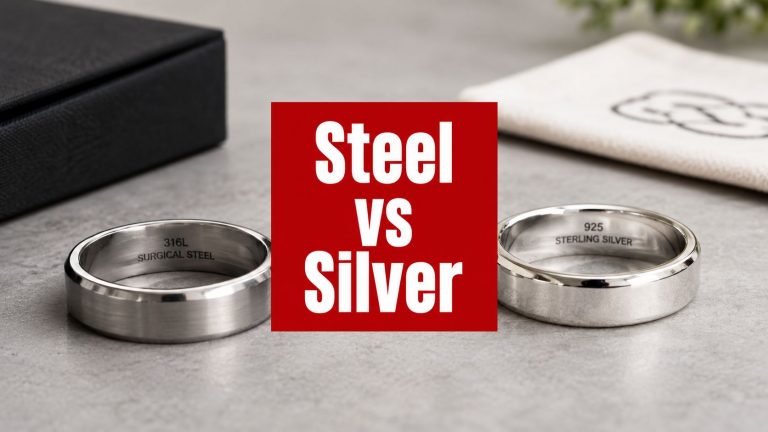
Surgical Steel vs Sterling Silver: Buyer Guide
You’re pricing a new collection, and the sample tray is already split down the middle.
How to Gold Plated Jewelry the Right Way for Lasting Color
You probably have a launch already in motion, a supplier sample on your desk, and
What Is a Shank on a Ring: Guide to Design & Durability
You’re refining a ring design, the stone looks right, the setting is approved, and the