
Share your design, material and quantities. Our team will help you plan samples and production.
JPG, PNG or PDF · up to 10 MB. Your details help us respond to this project inquiry.
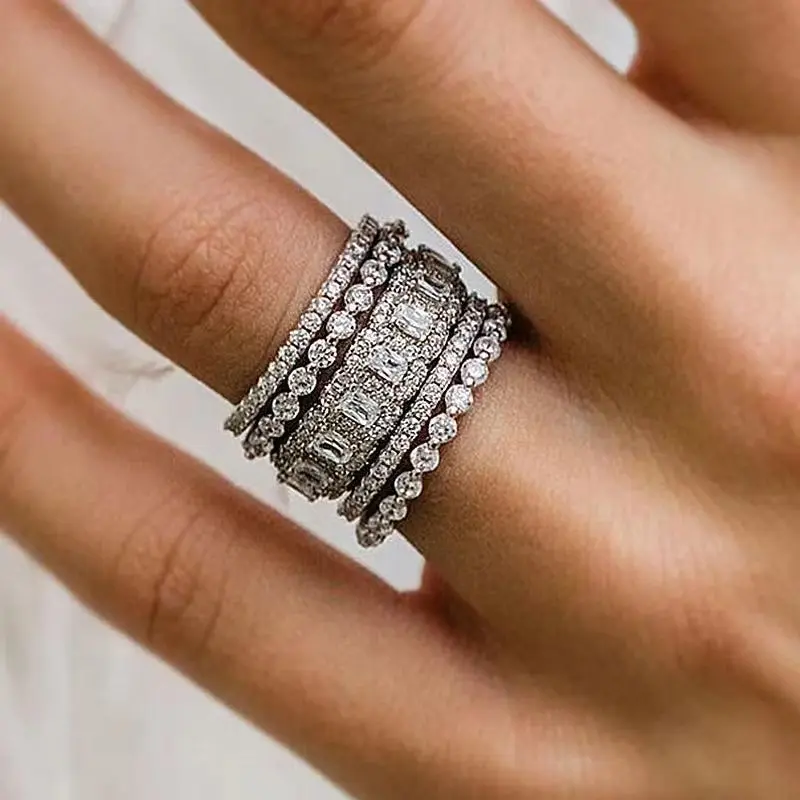
S925 on jewelry signifies that the jewelry is sterling silver consisting of 92.5% pure silver and 7.5% other metals, typically copper. The mark adheres to international fineness standards and means durability, brilliance, and wear with proper care.
A lot of rings, chains, and earrings are stamped with S925, 925, or .925, typically by the clasp or inside the band. The alloy combination increases strength over fine silver at 99.9% purity.
Up next, tests, care, and buying guides.
The s925 hallmark signifies that the item is made from quality sterling silver, consisting of 92.5% pure silver and 7.5% other metals. This stamp represents authenticity and intrinsic value, making it ideal for various silver jewelry designs like rings, necklaces, and bracelets.
The “S” is for “Sterling.” It informs you that the metal is of sterling silver quality and not a lower grade blend or silver toned base metal.
It aids in differentiating S925 from non-sterling purity marks. Without the “S,” some purchasers confuse plated or low-purity pieces with solid silver.
Trustworthy jewelers stamp the “S” to provide clear evidence of sterling content, which minimizes confusion at sale, resale, or appraisal.
‘925’ indicates the metal is comprised of 92.5% pure silver with 7.5% other metals, typically copper. That ratio is the global standard for sterling and appears on rings, chains, pendants, bangles, and studs from big brands to boutique studios.
Sometimes you’ll see just “925” or “S925.” Both indicate the exact same content and standard. As a shorthand, “925” has long been the generic purity mark for sterling, while “S925” is a bit more explicit.
By comparison, “999” (or “.999”) is fine silver, which is softer and less ideal for everyday wear, and “800” (or “.800”) is coin silver, which has less silver content and a different feel and color.
If a ring is stamped S925, it says the ring is sterling silver, generally reinforced with copper. Consumers seek out this stamp because it is a trustworthy signal of worth, artistry, and anticipated maintenance.
Sterling is an alloy made of pure silver mixed with other metals to add strength. The typical formula is 92.5 percent silver and 7.5 percent copper, occasionally with trace zinc or nickel to adjust hardness, flow, or color in casting.
This combo makes pieces harder, so prongs, chains, and clasps stand strong in everyday wear and intricate workmanship. Keep in mind that a few people with sensitive skin may have a reaction to nickel.
If that’s you, request nickel-free sterling or consider rhodium plating. Don’t be surprised if genuine 925 silver tarnishes or even leaves a faint greenish stain on skin occasionally. That’s just ordinary oxidation from air, water, or lotions.
S925 is the accepted sterling standard in many markets and meets rigorous assay standards.
In numerous countries, the hallmark is the law that marks a piece as sterling silver. The stamp promotes reliable quality from brand to brand and workshop to workshop, which facilitates fair pricing and resale conversations.
When you shop, look for S925 or 925 on inner bands, clasps or tags as a simple quality indicator.
S925 marks sterling silver jewelry, an alloy of 92.5% silver and 7.5% other metals, usually copper. This balance provides excellent durability for everyday use while maintaining the shiny silver appearance. Lower marks like 900 or 800 signify less silver and more base metal, so they are typically cheaper and more hard-wearing but drearier.
Marks such as 999 or S990 denote near-pure silver, which is softer and less durable for rings and bracelets.
|
Mark |
Silver content (%) |
Typical use |
Notes |
|---|---|---|---|
|
800 |
80.0 |
Flatware, vintage items |
Harder, less bright |
|
900 |
90.0 |
Vintage jewellery, hollowware |
Slightly softer than 800 |
|
925 / S925 / .925 |
92.5 |
Many jewelry |
Sterling standard, finest harmony |
|
990 / S990 |
99.0 |
Art works, some jewelry |
Softer than 925 |
|
999 |
99.9 |
Bars, coins, some pendants |
Finest silver, very soft. |
Note: “German Silver” or “Nickel Silver” contains no silver—usually copper, nickel, and zinc—so treat those as base-metal alloys. For comparison on other metals, 916 is 91.6 percent purity (usually on gold), and 750 is 75 percent gold.
Sterling silver, also known as S925 silver, is a 92.5% silver alloy combined with 7.5% other metals, adhering to the S925 standard recognized globally. The terms “sterling silver” and “S925 silver ring” are often used interchangeably in stores and catalogs, reflecting its popularity in quality silver jewelry. This metal is favored for its brilliant shine, pure tone, and low maintenance, making it a preferred choice for many jewelry enthusiasts.
Many vintage sterling silver pieces, including rings and bangles, feature an “S925” hallmark, ensuring authenticity and quality. This hallmark has been a consistent mark of quality over the decades, providing assurance to consumers regarding the sterling silver content.
The choice of sterling silver jewelry, particularly in the form of rings, reflects a blend of practicality and elegance. With its good detail retention and durability, it bends less than fine silver, making it a reliable option for various jewelry designs, including wedding rings and designer silver rings.
925” without the “S” still designates sterling silver, the same metal content as S925, which is 92.5% silver and 7.5% copper or similar. The “S” just emphasizes that it’s sterling, not a higher grade.
Both 925 and S925 are quality marks; you can see .925. Certain markets and brands like the more straightforward “925,” especially in small designs where space is limited. To verify authenticity, check for additional hallmarks like a maker’s mark, country assay mark or brand stamp, and examine weight, finish and clasp quality.
When in doubt, a simple acid or XRF test by a jeweler can validate the alloy.
Fine silver is 99.9% and marked “999,” while “S990” or “990” indicates 99.0%. These grades appear whiter and a tad more gray than sterling under natural light.
They’re softer than S925, so scratches, dings, and bends occur sooner in rings, cuffs, and chains. That’s why jewelers love S925 for everyday wear workhorses.
Fine silver does fit pendants, bezel-backed earrings, art jewelry, and coins where wear is less and the pure tone is a benefit.
S925 denotes a silver alloy that is 92.5% pure silver and 7.5% alloy metals, making it a quality silver choice for both everyday wear and heirloom pieces. This sterling silver standard offers a balance between precious metal content and strength without the fine jewelry price.
To calculate melt value, multiply weight by the live gram silver price and then multiply by 0.925. A 20 gram ring at $0.80 per gram equals $14.80 in silver.
S925 remains a precious metal. It retains its worth better than base metal or plated pieces and can be sold or recycled anywhere in the world.
Recycling does not eliminate value. Refined S925 goes back to close to original value as silver can be re-melted and repurposed with minimal loss.
Intrinsic value minus art and brand. It doesn’t factor in design or stones or finish or history, which frequently drive the ultimate price.
Expert work usually goes for price rather than metal. Handmade details, sharp milgrain, flush engraving, and fine filigree take time and skill, and that cost shows up in the tag.
Interestingly, branded or designer-marked pieces—think a named studio or heritage house—tend to retain and increase value because buyers believe in the make and service ecosystem.
Seek a uniform finish, crisp hallmarks, sturdy prongs, and stones sitting flat. These indicate the piece will wear well and last long.
Lots of folks appreciate S925 for its ability to take engraving, inlay, and flamboyant cuts with finesse, broadening style options and heirloom allure.
S925 is tougher than fine silver (99.9%) because the alloy mix hardens the metal. It bends less, holds shape longer, and brushes off light scratches — the ‘true value’ in everyday wear to some users.
Compared to gold of the same weight, S925 is typically more durable than high-karat gold but less durable than many 14k alloys. Platinum is harder but much more expensive.
This renders S925 an economical, functional choice for rings, chains, and cuffs. Care still matters. Store dry and clean with mild soap. Polish with a soft cloth to slow tarnish and keep strength over time.
Begin with the stamp. Real S925 silver jewelry will be stamped or hallmarked as ‘S925’, ‘925’, ‘.925’ or ‘sterling silver’, all of which mean 92.5 percent pure silver. The S925 standard is universal, so the stamp says the same thing regardless of the origin of the piece.
Don’t trust the stamp. There are counterfeit stamps. Take a magnifying glass and see if the engraving is neat, consistent, and located in a sensible location, like inside a ring band, close to a clasp, or on a tag.
Be on the lookout for other quality marks too, like maker’s marks or assay office symbols, which commonly accompany the mark of purity.
Purchase from trusted vendors or established brands. Save receipts and product specifications. If the piece feels sketchy, take it to an expert or have it analyzed with metal scanning equipment.
Try a small magnet. Real S925 silver is not magnetic so it shouldn’t stick. A gentle tug from a clasp spring is expected. A hard snap is not.
Hold the piece and feel its weight. Silver has a certain density and should feel kind of “heavy” for something that size. A lot of fakes, like aluminum or thinly plated brass, feel light.
If you have a scale, weigh like items. Silver will weigh more than aluminum fakes of the same dimensions.
Gently rub it with a clean soft cloth. Real silver will often leave faint black marks from silver oxide. That is normal tarnish! If it never tarnishes and stays mirror-bright after years, it is probably not solid S925.
Skip severe at-home testing. Scratches, acid, and abrasive treatments can ruin the surface and devalue it.
Find a cool white luster with a soft glow, not a mirror-chrome shine. Fine S925 has a polished surface, uniform coloration, and a sharp clear stamp.
Edges are clean, prongs are neat, and solder joints are tidy. Plated or bogus pieces display a yellowish tint, pitted texture, or uneven plating around hinges and corners.
Match your piece against a legitimate S925 piece, like a band from a trusted brand, to detect color shifts, weight differences, and hallmark quality. Assume the tarnish will come because it is natural; a quick polish will bring back the shine, but a piece that never tarnishes at all is suspect.
If the price is too low, it’s a red flag. S925 has a baseline of silver value and craftsmanship, so blowout prices for no reason deserve suspicion.
Compare price points among trusted retailers to discover anomalies. Anticipate higher rates if the piece contains stones, intricate settings or designer labels.
Reasonable and predictable means real silver and real labor.
S925 stamps signify that the item is 92.5% silver, which is the quality standard for sterling silver jewelry. While sterling silver chemically reacts with air and sulfur, leading to tarnishing that develops a dark film, this process only affects the surface. The core metal remains pure, and tarnishing is not a sign of counterfeit silver. With everyday wear and a little care, you can minimize its appearance and maintain the natural shine.
Sterling silver is an alloy consisting of 92.5% silver and 7.5% usually copper. The copper tarnishes first with the oxygen, moisture, and sulfur gases in the air, in tap or sea water, and in many common products. That reaction forms sulfides and oxides that appear dark or matte on the surface.
Air, sweat, pool chlorine, certain soaps, lotions, perfumes, and even sulfur-rich foods can hasten the transition. Humid climates and regular exposure to water increase the tarnish rate, while dry storage decreases it. Each person’s skin chemistry is different.
Some people’s sweat has more chloride or is more acidic, which can tarnish silver quicker and in rare cases can cause mild skin discoloration or irritation. None of that taints the metal’s fundamental purity. It’s a surface coating that you can wash away, and top-tier sterling maintains its resilience and polish with consistent tending.
Consider prevention as daily face care that keeps out air, moisture, and chemicals before they rest on your quality silver jewelry.
Daily care involves rinsing warm with a drop of mild soap, swishing, and rinsing well. Dry completely with a soft cloth, gently patting instead of aggressively rubbing.
For a deeper clean, employ a good silver polishing cloth. Use light, uniform strokes that will lift the film, not scratch it. Treat with a commercial silver solution as directed, rinse and dry. Try it on a small spot first.
Toothpaste and baking soda pastes, steel wool, and acid dips can scratch or strip finishes on silver jewelry, especially on plated or oxidized accents. For complicated or vintage sterling silver pieces, consult a professional to safeguard stones and patina.
S925 marks sterling silver: 92.5% silver and 7.5% other metals, usually copper. The 925 standard, at 925/1000, became an international convention in 1976. Stamps are an assistance, but real value stems from design, brand integrity, workmanship and how well a piece complements your style.
Fraud has historically dogged precious metals, so stamps and hallmarks are customer safeguards. Rate the entire booty—its spare lines, wear comfort and the tale it tells—and curate a wardrobe that’s you.
Expert jewelers craft S925 into lasting sophisticated pieces that endure daily wear. Fine silver (99.9) bends and scuffs too easily, which is why sterling is standard for rings, chains, and ear studs.
Handmade work has crisp bezels, well-burnished edges, and clean solder seams you don’t snag on clothing.
|
Characteristic |
What to look for |
Why it matters |
|---|---|---|
|
Finish |
Even polish, no ripples or sharp edges |
Comfort and longevity |
|
Stone setting |
Tight prongs, level bezels |
Security for gems |
|
Solder joints |
Smooth, color-matched joints |
Structural strength |
|
Markings |
Clear S925 plus maker’s mark |
Traceability and accountability |
|
Materials |
Recycled silver disclosure |
Lower environmental impact |
Certain craftspeople utilize recycled S925, reducing the dependency on newly mined silver with no impact on quality. Anticipate minor differences in texture or patina. These are the marks of a human hand, not defects.
S925 can be a savvy, ethical choice when sourced properly and crafted with recycled feeds. Most brands now publish sourcing policies, third-party audits, and energy data for workshops.
In certain countries, France and Great Britain for example, legal hallmarking gives you that additional peace of mind, whereas in others like Austria and Norway hallmarking may be voluntary, so you could need supplemental evidence of purity.
Request assay certificates, maker’s marks, or chain-of-custody information from vendors. Hallmarks and stamps do not supersede meticulosity, but they do ensure you receive what you purchase. Select pieces that combine good craft with transparent ethics, and you champion better habits without sacrificing beauty.
Jewelry does have a tendency to signify life. A sleek S925 band can seal a promise, a pendant can pay tribute to a birth, and a bracelet can evoke a trip.
With proper care, sterling lasts for generations, which is why so many families gift silver charms and chains. Etch a date, birthstone, or even a custom length like 45 cm for a pendant and suddenly a normal item becomes your narrative.
The stamp says ‘sterling’ but the significance is yours.
S925 means real silver with a little mixed metal. That marking refers to an obvious quality benchmark. Worth still derives from workmanship, mass, and style. A simple S925 band can seem cheap and reasonably priced. A thick chain in S925 can be weighty and expensive. Marks assist, but your eyes and hands speak volumes.
Check for a crisp stamp, a maker’s mark, and tidy seams. See how it ages. Light tarnish simply wipes off with a soft cloth. Too harsh yellow tones or flake can indicate a fake plate. A ring that keeps a cool grey tone after a quick rub narrates a good story.
Got a piece that’s got a brow raising? Post a close pic or get your local shop to test it.
S925 signifies that it is sterling silver, composed of 92.5% pure silver and 7.5% other metals, typically copper, enhancing the durability and maintaining the natural shine of quality silver jewelry.
S925 and 925 denote sterling silver, which consists of 92.5% silver content. In contrast, S990 or 990 indicates 99% silver, while 999 is nearly pure silver. The quality s925 sterling silver strikes the perfect balance of durability, price, and beauty.
Yes, worth is a factor of weight, artistry, and label. Quality sterling silver, such as s925 sterling silver, is valuable and collectible. It costs less than gold or platinum, making it a good fit for daily indulgence and presents.
Look for obvious hallmarks such as “S925” or “925” to ensure you’re getting quality sterling silver. Use a magnet; sterling silver is not magnetic. Additionally, watch for even color and weight, and consider a professional test from a reputable jeweler.
Yes, quality sterling silver can tarnish due to copper reacting with air and moisture, which is normal and removable. Clean your s925 silver ring with a silver polishing cloth or mild silver cleaner and store in airtight bags to slow tarnish.
Most of the time not. Sterling silver is typically hypoallergenic, but certain alloys might have trace nickel. If you’re sensitive, opt for an S925 silver ring from trusted brands or seek out ‘nickel-free’ labeling to mitigate.
The hallmark, such as the s925 stamp, is a useful sign of quality silver, but it can be forged. To ensure you are buying real sterling silver, purchase from reputable vendors, review return policies, and confirm with expert testing if necessary.
HonHo Jewelry is an OEM/ODM manufacturer in Dongguan, China, developing stainless steel, brass and 925 sterling silver jewelry for brands and wholesalers. Meet our team.
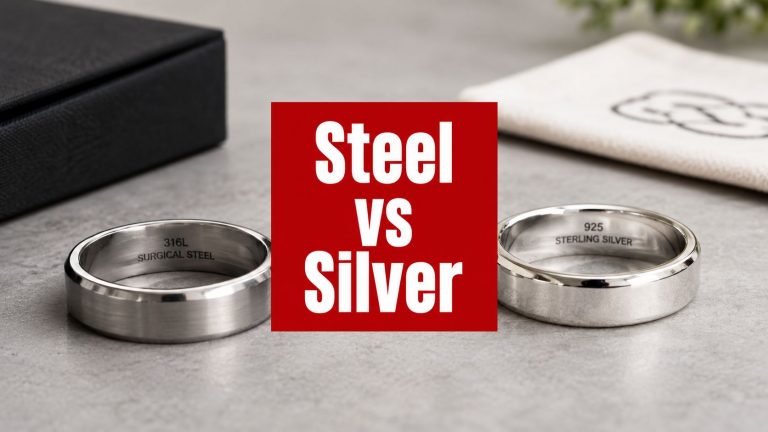
You’re pricing a new collection, and the sample tray is already split down the middle. The 316L surgical steel pieces look cleaner on cost and daily wear, the
You probably have a launch already in motion, a supplier sample on your desk, and one uncomfortable question underneath it all, will this gold color still look clean
You’re refining a ring design, the stone looks right, the setting is approved, and the band still feels like a detail you can solve later. That’s where many
Share your design, material, finish and quantities with HonHo. Our team can help you plan the next step.