The Ultimate Guide to Auditing a Jewelry Factory in China’s Manufacturing Hub
Dongguan, China, is not just a city; it is the Jewelry Factory powerhouse of the world. For any brand looking to source high-quality, fashion-forward jewelry, partnering with a manufacturer here is a strategic move. However, the success of this partnership hinges on one critical, often overlooked step: The Factory Audit.
A comprehensive factory audit is more than a simple visit; it is your brand’s ultimate risk mitigation tool. It ensures that your supplier can consistently meet your quality standards, protect your intellectual property, and comply with global ethical regulations. In the competitive world of jewelry, where quality and trust are paramount, skipping this step is a gamble no serious brand should take.
This guide, built on decades of manufacturing experience in Dongguan, breaks down the process into 10 critical steps. We go beyond the basic checklist to focus on the technical details that truly separate a world-class Jewelry Factory from the rest—details like advanced PVD plating quality control and robust design security.
Step 1: Verification of Legal and Business Credentials (The Foundation of Trust)
Before you even step onto the factory floor, the audit begins with paperwork. This step establishes the legal and financial stability of your potential partner.
What to Check:
- Business License: Verify the factory’s official name, registration number, and legal scope of business. Ensure the license is current and matches the company you are communicating with.
- Export Permits: Confirm they possess the necessary licenses to export goods directly, which can simplify your logistics and reduce costs.
- Tax Records and Financial Health: While sensitive, a reputable third-party auditor can often verify the factory’s financial stability. A factory struggling financially is a major supply chain risk.
- Manufacturer vs. Trader: This is crucial. Request utility bills, land-use certificates, and photos of heavy machinery to confirm they are a genuine Jewelry Factory and not just a trading company posing as one.
Content Gap Insight: Many “factories” are simply small workshops or trading offices. A true Dongguan Jewelry Factory will have a clear, verifiable history of land use and significant investment in machinery.
Step 2: Assessing Production Capacity and Infrastructure (Scalability Check)
Your audit must confirm that the factory can handle your current orders and scale with your future growth. This involves a physical inspection of the facility’s layout and equipment.
Key Areas to Inspect:
- Machinery and Technology: Look for modern equipment like CNC machines for precision wax molds, advanced casting equipment, and dedicated polishing stations. Outdated machinery is a bottleneck for quality and speed.
- Workflow Efficiency: Observe the flow of production from raw material storage to final packaging. A well-organized factory minimizes errors and speeds up lead times.
- Dedicated Plating Facilities: For materials like stainless steel and brass, in-house plating is a massive advantage. HonHo Jewelry, for example, operates its own PVD vacuum plating plant, which allows for superior quality control and a 24-month plating warranty. This level of vertical integration is a sign of a top-tier Jewelry Factory.
Step 3: Deep Dive into the Quality Management System (QMS)
A strong QMS is the backbone of consistent quality. It’s not enough to say they have quality control; you must see the documented processes in action.
The Three Pillars of QC:
- Incoming Quality Control (IQC): How are raw materials (metals, stones, components) checked upon arrival? Ask to see logs for metal purity tests and gemstone certifications.
- In-Process Quality Control (IPQC): Are there checks between major steps (e.g., after casting, before polishing, before plating)? Look for clear inspection points and sign-off sheets on the production line.
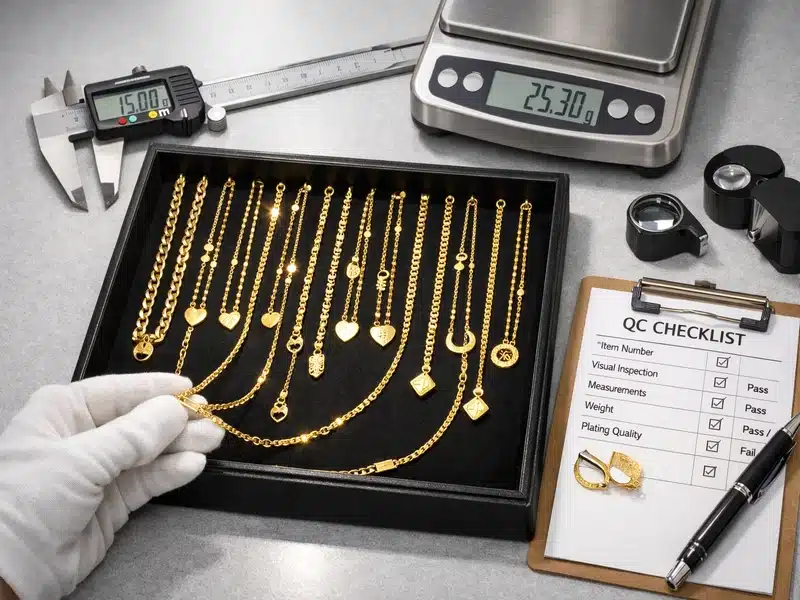
- Final Quality Control (FQC): The final, 100% inspection before packaging. This should include visual checks, dimension checks, and functional tests (clasp security).
EEAT Focus: Ask to see the factory’s ISO 9001 certification. This internationally recognized standard proves a commitment to consistent quality management.
Step 4: Technical Audit of PVD Vacuum Plating (The Content Gap Advantage)
This is where the audit moves from general manufacturing to specialized jewelry expertise. Plating quality is the number one complaint in fashion jewelry, and a deep dive here is essential.
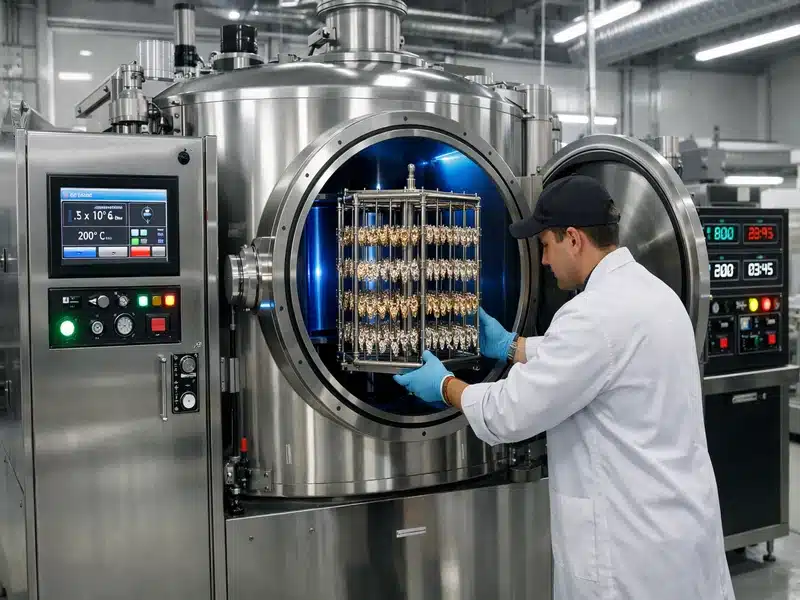
Understanding PVD: Physical Vapor Deposition (PVD) is a superior, environmentally friendly method compared to traditional electroplating. It creates a much harder, more durable coating.
Critical PVD Audit Points:
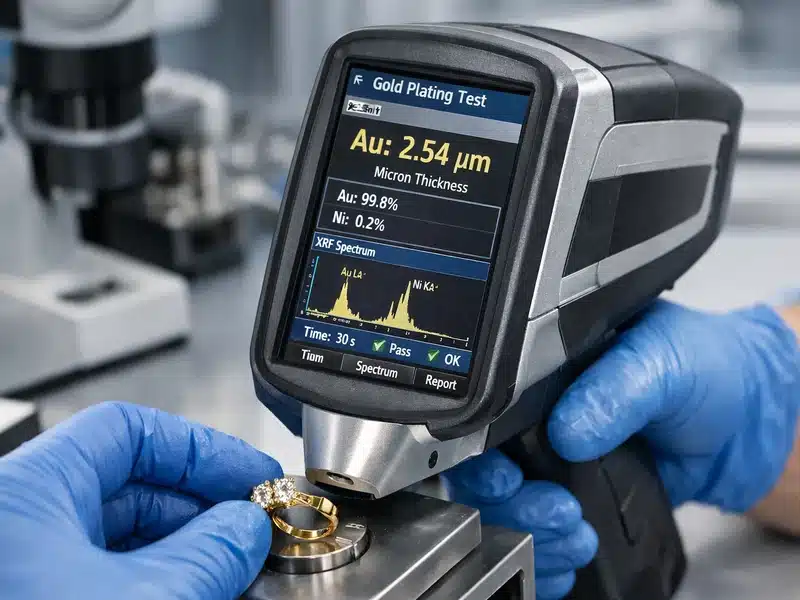
- Micron Thickness Verification: The most important check. Ask to see the X-ray Fluorescence (XRF) Analyzer in use. This machine measures the exact thickness of the gold or other metal layer in microns. A standard for durable, long-lasting jewelry is often 0.5 to 1.0 microns. HonHo Jewelry, a leading Jewelry Factory in Dongguan, offers customizable thickness up to 2.5 microns for maximum durability.
- Salt Spray Testing: This is the gold standard for testing corrosion resistance. Request to see the factory’s salt spray chamber and review recent test results. A factory should be able to simulate 2 years of wear with a 48-hour salt spray test.
- Adhesion and Hardness: Observe how the factory tests the plating’s adhesion to the base metal. Poor adhesion leads to flaking and peeling.
Content Gap Insight: Most audits only check for visual defects. A high-level audit demands proof of plating durability through XRF and salt spray data.
Step 5: Material Safety and Compliance Testing (Protecting Your Brand)
In the US and EU markets, strict regulations govern the presence of harmful substances. Your audit must confirm compliance with these standards.
Focus on the “Big Three”:
- Nickel: A common allergen. The factory must have a clear protocol to ensure all jewelry is nickel-free.
- Lead: Heavily restricted in jewelry, especially for children’s items.
- Cadmium: Another toxic heavy metal that is strictly regulated.
Audit Protocol:
- Documentation: Request recent third-party lab reports (e.g., SGS, Intertek) for the materials used. These reports should be less than 12 months old.
- In-House XRF Screening: The same XRF machine used for plating thickness can also screen for heavy metals. A proactive Jewelry Factory will use this for incoming material checks (IQC).
- Supply Chain Traceability: Can the factory trace the origin of the raw materials back to a certified, compliant supplier?
Step 6: Stone Setting and Craftsmanship Evaluation (The Art of Jewelry)
The beauty of jewelry lies in its craftsmanship. This step assesses the skill level of the artisans and the stability of the settings.
Technical Checks:
- The “Tap Test”: A simple yet effective test. Gently tap the jewelry piece. A loose stone will rattle. A skilled craftsman ensures a tight, secure setting.
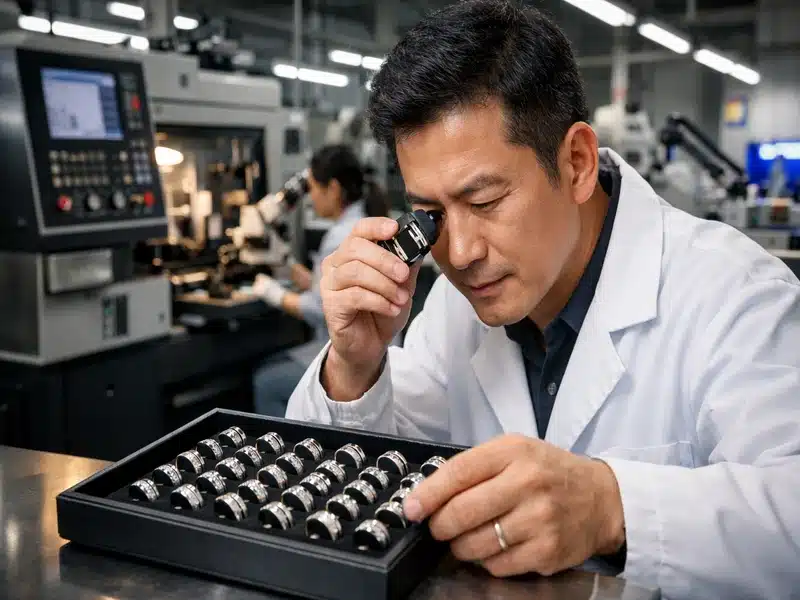
- Porosity Check: Porosity refers to tiny air bubbles trapped in the metal during casting. These weaken the structure and can cause plating to fail. Use a high-magnification loupe to inspect cast pieces for signs of excessive porosity.
- Clasp and Chain Durability: Functionality is key. Test all clasps (lobster, spring ring, toggle) for smooth operation and secure closure. Chains should be checked for consistent link size and welding strength.
Readability Note: Use simple analogies. Explain that porosity is like air bubbles in a cake—it makes the final product weak.
Step 7: Intellectual Property (IP) and Design Security (Protecting Your Assets)
In a competitive market like Dongguan, protecting your unique designs is paramount. Your audit must include a review of the factory’s IP security measures.
Digital and Physical Security:
- CAD File Handling: How are your 3D design files (CAD) stored? Are they on a secure, separate server? Who has access? The factory should have a strict protocol for file encryption and deletion after production runs.
- Mold and Tooling Storage: Physical molds are valuable assets. Inspect the mold room. Is it locked? Are molds clearly labeled with client codes rather than design descriptions?
- Non-Disclosure Agreements (NDAs): Ensure the factory is willing to sign a robust NDA that protects your designs. A professional Jewelry Factory will treat your designs with the same security as their own.
Content Gap Insight: Many factories only focus on physical security. The modern audit must address digital security, especially with the use of 3D printing and CAD software in the design process.
Step 8: Social and Environmental Compliance (Ethical Sourcing)
Ethical sourcing is no longer optional; it is a brand requirement. The audit must verify the factory’s commitment to fair labor and environmental responsibility.
Beyond the Basics:
- Working Conditions: Check for proper ventilation (especially in polishing and plating areas), adequate lighting, and the use of safety equipment (masks, gloves).
- Dormitory and Welfare: In Dongguan, many workers live on-site. Inspect the dormitory conditions, dining facilities, and recreation areas. Happy workers produce better quality.
- Environmental Management: This is critical for plating factories. Ask to see the permits and procedures for waste water treatment. Improper disposal of plating chemicals is a major environmental and legal risk.
- RJC Compliance: The Responsible Jewellery Council (RJC) sets the standard for ethical jewelry supply chains. While not all factories are certified, adherence to RJC principles is a strong indicator of trustworthiness.
Step 9: Sampling and Prototyping Speed (Time-to-Market Advantage)
The speed at which a factory can turn your design concept into a physical sample directly impacts your time-to-market.
Benchmarking the R&D Process:
- CAD to Sample: A highly efficient Jewelry Factory with in-house design and prototyping capabilities, like HonHo Jewelry, can deliver a CAD design in 1-2 days and a physical sample in 7-20 days.
- Design Team Expertise: Meet the R&D team. Do they understand your market trends? Can they offer suggestions for cost-saving or design improvement? This expertise is a sign of a true partner, not just a contractor.
- Quotation Speed: A quick, accurate quotation (ideally within an hour) shows efficiency and transparency in cost calculation.
Step 10: Logistics and Communication Efficiency (Seamless Partnership)
The final step ensures that the partnership will be smooth and hassle-free after the audit is complete.
Logistical and Communication Factors:
- Geographic Advantage: Dongguan’s proximity to major shipping ports like Shenzhen and Hong Kong is a logistical advantage. Confirm their process for dispatch and shipping (e.g., use of reliable carriers like DHL/FedEx/UPS).
- Communication: Assess the English proficiency and responsiveness of the sales and project management team. Miscommunication is the source of most sourcing errors.
- Post-Audit Follow-up: A professional factory will welcome the audit report and provide a clear plan for addressing any non-conformities found.
Conclusion: Turning an Audit into a Partnership
The Jewelry Factory audit in Dongguan is not a punitive exercise; it is an investment in a long-term, high-quality partnership. By focusing on these 10 critical steps—especially the technical deep dives into PVD plating, XRF testing, and IP security—you move beyond a basic checklist and establish a foundation of trust and quality.
Choosing a partner like HonHo Jewelry, with its 15+ years of experience, in-house PVD plating, and stringent quality control, means you are choosing a factory that has already passed the most critical audits.
Ready to secure your supply chain and bring your next jewelry collection to life?
Contact HonHo Jewelry Today to Discuss Your Custom Design Inquiry
Frequently Asked Questions (FAQs)
1. Why is Dongguan the best place for jewelry manufacturing?
Dongguan is renowned for its complete industrial chain, particularly in stainless steel, brass, and silver jewelry. It offers a unique concentration of skilled labor, advanced machinery (like PVD plating equipment), and proximity to major logistics hubs, making it highly efficient for high-volume, high-quality production.
2. What is the difference between electroplating and PVD vacuum plating?
Electroplating uses an electric current in a liquid solution to coat the jewelry, resulting in a thinner, less durable layer. PVD (Physical Vapor Deposition) is a vacuum process that bonds the coating to the base metal at a molecular level, creating a much harder, more corrosion-resistant, and environmentally safer finish. PVD is the superior choice for waterproof and non-tarnish jewelry.
3. How long does a typical jewelry factory audit take?
A comprehensive on-site audit typically takes 1 to 2 full days. This allows enough time to review documentation, inspect the entire production line, conduct technical checks (like XRF testing), and interview key personnel from QC, production, and management.
4. Can I perform a remote audit for a Dongguan factory?
Yes, remote audits are increasingly common. They often involve live video tours of the facility, detailed photo/video evidence of QC processes, and virtual meetings with management. However, a remote audit should always be supplemented by third-party lab reports for material safety and plating thickness.
5. What are the red flags to look for during a jewelry factory visit?
Major red flags include: a factory that is unwilling to show you their plating or casting areas; a lack of clear QC documentation; an inability to produce recent third-party material test reports; and poor organization or cleanliness on the production floor.
6. Is HonHo Jewelry open to third-party audits?
Yes, a reputable Jewelry Factory like HonHo Jewelry welcomes third-party audits. Transparency is key to building trust. We encourage brands to conduct their own audits to verify our quality management system and in-house PVD plating capabilities. Learn more about our commitment to quality
7. How does HonHo ensure nickel-free compliance?
HonHo ensures nickel-free compliance through a multi-step process: sourcing certified nickel-free base metals (stainless steel, brass, silver), conducting in-house XRF screening on incoming materials (IQC), and providing official third-party lab reports (SGS/Intertek) for final product batches to confirm compliance with EU/US standards.
8. What is the minimum order quantity (MOQ) after a successful audit?
MOQs vary based on the complexity of the design and the material. For custom designs, a typical MOQ for a high-quality Jewelry Factory like HonHo can be as low as 30 pieces per style, supporting emerging brands and minimizing inventory risk. Check our flexible MOQ options here (Internal Link 3).
9. What is the most important part of the audit for waterproof jewelry?
The most important part is the Salt Spray Test results (Step 4). This test simulates years of wear and tear, proving the durability and corrosion resistance of the PVD plating layer. A factory that can provide verifiable 48-hour salt spray results demonstrates superior quality for waterproof products.
10. How can I protect my custom jewelry designs from being copied?
Beyond signing a robust NDA (Step 7), ensure the factory has strict protocols for handling your CAD files, and that your physical molds are stored securely and labeled only with internal client codes. Focus on partnering with a factory that values long-term relationships over short-term gains. See our design protection measures (Internal Link 4).
References
[1] Responsible Jewellery Council (RJC). Code of Practices. https://www.responsiblejewellery.com/ (External Link 1 – Do-Follow)
[2] SGS. Jewelry Testing and Inspection Services. https://www.sgs.com/en/services/jewelry-testing-and-inspection (External Link 2 – No-Follow)
[3] Intertek. Jewelry and Accessories Testing. https://www.intertek.com/consumer/jewelry-accessories/ (External Link 3 – No-Follow)
[4] ISO. ISO 9001 Quality Management. https://www.iso.org/iso-9001-quality-management.html (External Link 4 – No-Follow)
[5] HonHo Jewelry. Stainless Steel Jewelry. https://www.honhojewelry.com/stainless-steel-jewelry/ (Internal Link 5)
Surgical Steel vs Sterling Silver: Buyer Guide
You’re pricing a new collection, and the sample tray is already split down the middle.
How to Gold Plated Jewelry the Right Way for Lasting Color
You probably have a launch already in motion, a supplier sample on your desk, and
What Is a Shank on a Ring: Guide to Design & Durability
You’re refining a ring design, the stone looks right, the setting is approved, and the