In the fast-paced world of jewelry retail, choosing the right materials for your inventory is more than just an aesthetic decision—it is a strategic business move. As we move into 2026, the debate between Stainless Steel vs Silver has reached a fever pitch. While sterling silver has long been the darling of traditional luxury, 316L stainless steel is rapidly becoming the backbone of modern, high-growth jewelry brands. For wholesalers and retailers, understanding the technical nuances, price stability, and market trends of these two metals is essential for maximizing ROI and customer satisfaction.
At Dongguan HonHo Jewelry, we have spent over 16 years navigating these material shifts. We have seen firsthand how the right choice can elevate a brand from a seasonal trend to a market leader. This guide provides a deep dive into the wholesale comparison of stainless steel and silver, uncovering the technical “content gaps” that most competitors overlook.
Material Composition: The Science Behind the Shine
To truly understand the Stainless Steel vs Silver dynamic, we must look at the molecular level. Sterling silver, or 925 silver, is an alloy consisting of 92.5% pure silver and 7.5% other metals, typically copper. While copper provides the necessary hardness that pure silver lacks, it is also the primary culprit behind tarnishing. When copper reacts with sulfur compounds in the air, it forms silver sulfide—the black film we know as tarnish. This reaction is accelerated by humidity, skin acidity, and even the trace amounts of sulfur found in common household items.
In contrast, 316L stainless steel is an industrial-grade alloy composed of iron, carbon, chromium, and nickel. The “secret weapon” of stainless steel is its chromium content (usually 16-18%). When exposed to oxygen, chromium forms an invisible, self-healing chromium oxide layer. This microscopic shield prevents oxygen from reaching the iron core, making the metal virtually immune to rust and corrosion. Furthermore, high-quality 316L contains 2-3% Molybdenum, which provides superior resistance to “pitting” in chloride-rich environments like sweat or ocean water. This chemical stability is why 316L is the preferred choice for surgical instruments and high-end marine hardware.
The Role of Molybdenum in 316L Stainless Steel
Many retailers are unaware that not all stainless steel is created equal. While 304 stainless steel is common in kitchenware, 316L is the gold standard for jewelry. The addition of Molybdenum specifically targets the weakness of other steels: salt-induced corrosion. For a jewelry brand, this means your products won’t just survive a day at the beach; they will thrive in it. This technical distinction is a powerful selling point for customers who live active, outdoor lifestyles.
Price and Profitability: A B2B Perspective
For a jewelry business, price is often the deciding factor. Sterling silver is a precious metal, meaning its cost is tied to the volatile global silver market. In 2025 alone, silver prices saw fluctuations of up to 20%, making it difficult for wholesalers to maintain consistent pricing for their retail partners. When the price of silver spikes, retailers are forced to either absorb the cost and lose margin or raise prices and risk losing customers.
Stainless steel, however, offers remarkable price stability. Because it is a base metal alloy, its cost is driven by manufacturing efficiency rather than commodity speculation. This allows retailers to plan their margins with precision and offer consistent value to their customers.
| Feature | 925 Sterling Silver | 316L Stainless Steel |
|---|---|---|
| Material Category | Precious Metal | Base Metal Alloy |
| Price Volatility | High (Market Dependent) | Low (Stable) |
| Inventory Risk | High (Tarnish/Theft) | Low (Durable/Stable) |
| Net Profit Margin | 30% – 50% | 50% – 70% |
| Resale Value | High (Scrap Value) | Low |
| Manufacturing Lead Time | Moderate | Fast |
Retailers switching to stainless steel lines often report a 12-15% increase in net profit. This is due to lower initial investment costs and the elimination of “dead stock” caused by tarnished silver that can no longer be sold at full price. Furthermore, the lower price point of stainless steel encourages “impulse buys,” increasing the average transaction frequency for your brand.
Understanding the ROI of Stainless Steel
When you invest in a stainless steel collection, you are investing in a product with a virtually infinite shelf life. Unlike silver, which requires constant attention and polishing to remain “showroom ready,” stainless steel can be stored in standard packaging for years. This reduces labor costs and ensures that every piece you pull from your inventory is ready for immediate sale. For a growing business, this operational efficiency is just as valuable as the initial price difference.
Durability and Maintenance: The “Set and Forget” Revolution
In 2026, the consumer mindset has shifted toward “low-maintenance luxury.” Modern shoppers, particularly Gen Z and Millennials, want jewelry they can wear in the shower, at the gym, and in the pool without a second thought. This is where the durability of stainless steel shines.
Stainless steel is significantly harder than silver. On the Mohs scale of mineral hardness, stainless steel ranks around 5.5 to 6, while sterling silver sits at a much softer 2.5 to 3. This means silver is prone to scratching, bending, and warping under daily stress. A silver ring can easily lose its circular shape if squeezed, whereas a stainless steel ring will maintain its structural integrity and mirror-like finish even after years of heavy wear.
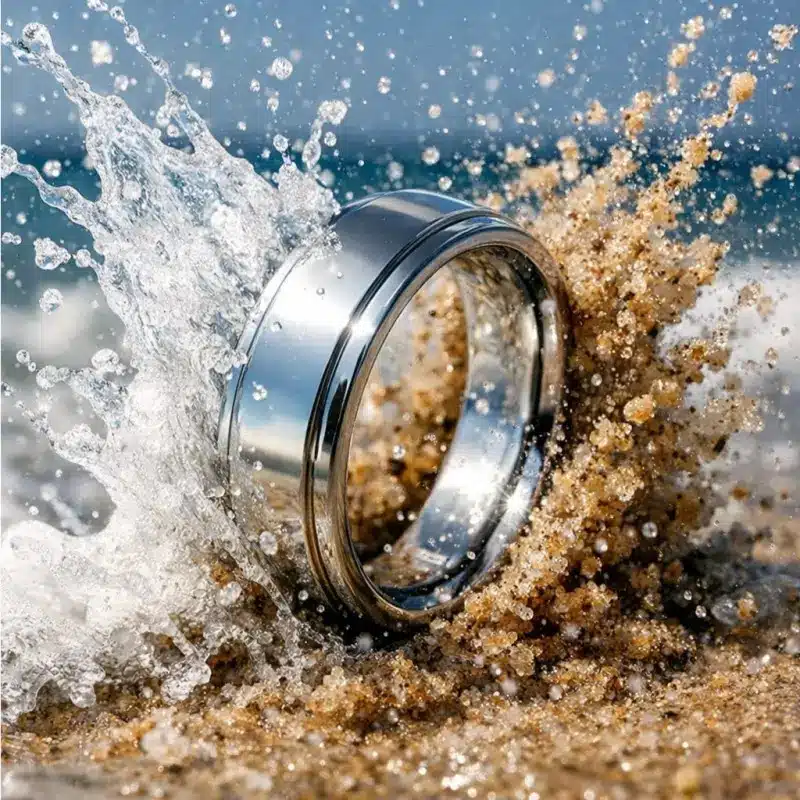
Alt: Stainless steel ring resisting tarnish and scratches after exposure to ocean water and sand.
From a wholesale perspective, the maintenance requirements of silver are a hidden cost. Silver stock requires climate-controlled storage and regular rotation to prevent tarnish. Even with anti-tarnish strips and specialized bags, silver will eventually require professional cleaning. Stainless steel, on the other hand, can sit in a warehouse for 18+ months and emerge looking exactly as it did on the day it was manufactured. This “set and forget” nature makes it the ideal material for e-commerce brands that rely on high-volume fulfillment.
The Myth of “Surgical Steel”
Many competitors use the term “surgical steel” as a marketing buzzword without providing the actual grade. At HonHo, we specify 316L because it is the specific grade used in medical implants. This level of transparency builds trust with your customers, especially those with sensitive skin. By educating your audience on the difference between generic “steel” and medical-grade 316L, you position your brand as a technical authority in the market.
Technical Excellence: The HonHo PVD Standard
One of the biggest “content gaps” in the jewelry industry is the misunderstanding of plating thickness. Most competitors use standard electroplating or basic PVD coating with a thickness of 0.1 to 0.3 microns. While this looks good initially, it quickly wears off, leading to customer complaints and returns. This is particularly problematic for rings and bracelets, which are subject to constant friction.
At HonHo Jewelry, we have set a new industry benchmark. Our PVD coating thickness ranges from 0.03 micron up to 0.1 micron, with a titanium nitride (TiN) protection layer of 0.5 micron. This is significantly thicker and more robust than the industry standard. This multi-layered structure ensures longer-lasting color retention and higher wear resistance, helping your products perform better in real-world markets.
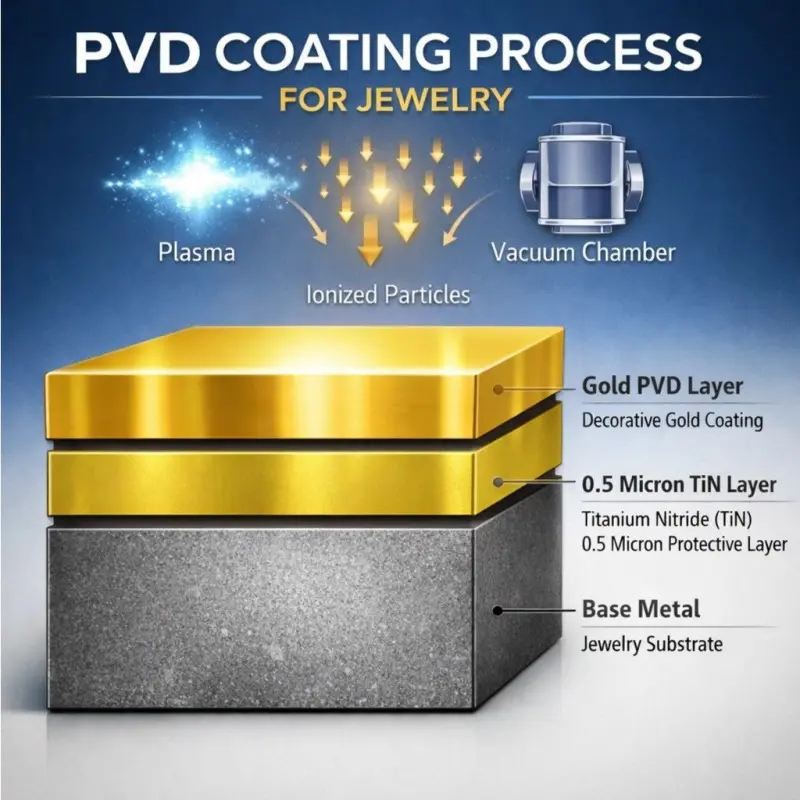
For our brass and sterling silver jewelry lines, we support palladium base plating up to 0.1 micron, combined with electroplating thickness from 0.03 micron to 2.5 micron (and up to 5 micron for special requirements). This high-spec approach meets the demands of both cost-sensitive and premium-quality markets. Palladium is a precious metal from the platinum group, and using it as a base layer provides an exceptional barrier against base metal migration, ensuring that the top gold layer remains bright and untarnished for much longer than standard plating methods.
Why TiN Protection Matters
Titanium Nitride (TiN) is an extremely hard ceramic material often used to coat cutting tools and medical devices. By incorporating a 0.5 micron TiN layer into our PVD process, we create a “hard shell” that protects the decorative gold layer from scratches and abrasion. This is the difference between a gold-colored ring that lasts three months and one that lasts three years. For a wholesaler, this translates directly into fewer returns and higher customer lifetime value.
2026 Market Trends: What Customers Actually Want
The market trend for 2026 is leaning heavily into “Waterproof Jewelry.” Search volume for terms like “sweatproof gold jewelry” and “ocean-proof rings” has tripled in the last 24 months. Consumers are tired of their favorite pieces turning green or losing their shine after a single summer. Stainless steel is the natural leader in this category, offering the look of gold or silver with the performance of a high-tech material.
Additionally, sustainability has become a core purchasing driver. Stainless steel is 100% recyclable and often produced with a lower environmental impact than traditional silver mining. Silver mining is an energy-intensive process that often involves harsh chemicals and significant land disruption. In contrast, much of the stainless steel used in jewelry today comes from recycled sources. Brands that highlight the eco-friendly nature of their steel collections are seeing higher engagement rates on platforms like TikTok and Instagram.
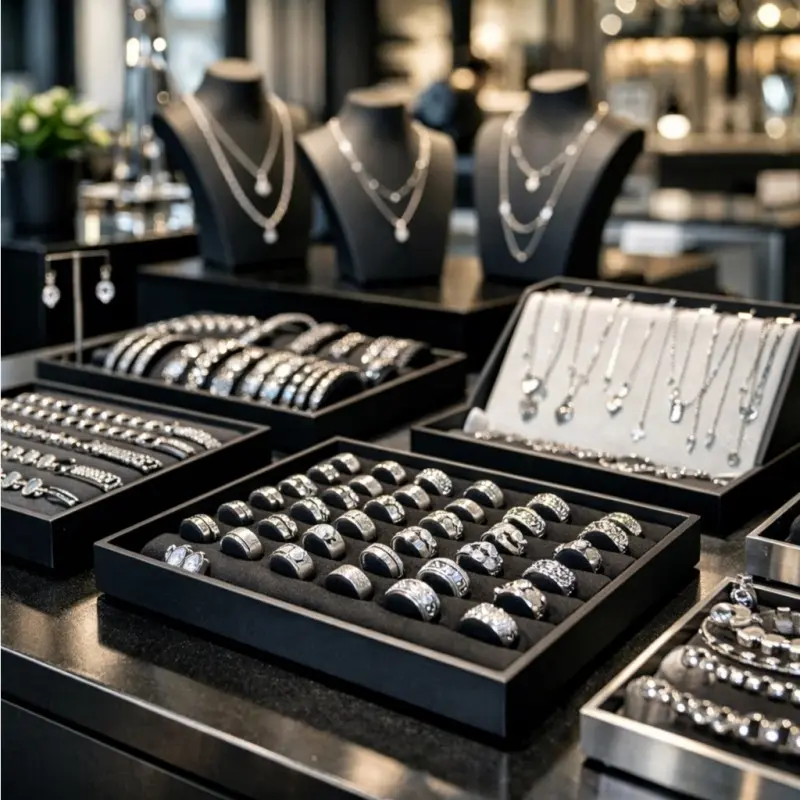
Alt: Modern wholesale jewelry showroom displaying a variety of stainless steel and silver collections.
The Rise of “Quiet Luxury” in Steel
In previous years, stainless steel was often associated with chunky, industrial designs. However, 2026 has seen the rise of “Quiet Luxury” in the steel market. Advanced manufacturing techniques now allow for delicate, dainty designs that were previously only possible in gold or silver. This has opened up a new market segment: the premium fashion consumer who wants the elegance of fine jewelry without the high price tag or maintenance requirements.
How to Choose the Right Inventory for Your Brand
Deciding between Stainless Steel vs Silver depends on your brand’s positioning and your target audience’s lifestyle:
- The Luxury Traditionalist: If your brand focuses on high-end, sentimental gifts and heirlooms, sterling silver remains the gold standard. Its “warm” luster and precious metal status are irreplaceable for engagement and anniversary markets. Customers in this segment are often willing to put in the extra effort for maintenance in exchange for the prestige of owning a precious metal.
- The Modern Lifestyle Brand: If you target active, fashion-forward consumers who value durability and affordability, 316L stainless steel is the clear winner. It allows for bold, industrial designs that are impossible to achieve with softer metals. This segment prioritizes “wearability” and “value for money” over traditional prestige.
Most successful retailers in 2026 are adopting a hybrid strategy—using silver for their “Signature Fine” lines and stainless steel for their “Everyday Essentials.” This allows them to capture both the high-margin gift market and the high-volume daily wear market.
Inventory Turnover and Shelf Life
One of the most overlooked aspects of the Stainless Steel vs Silver debate is inventory turnover. Because silver tarnishes, it has a “sell-by date” in the eyes of a retailer. If a silver piece doesn’t sell within 3-6 months, it may require re-polishing or even re-plating. Stainless steel has no such limitation. This makes it a much safer bet for new brands or those testing new designs. You can stock a wider variety of steel designs with much lower risk than you could with silver.
Frequently Asked Questions (FAQ)
Is 316L stainless steel truly hypoallergenic?
Yes. 316L stainless steel is considered surgical-grade and is highly resistant to releasing nickel, making it safe for the vast majority of people with sensitive skin. At HonHo, we ensure our 316L meets strict international standards for nickel release, providing peace of mind for your customers.
Can I wear sterling silver in the shower?
While plain water won’t destroy silver immediately, the chemicals in soaps, shampoos, and the chlorine in tap water will significantly accelerate the tarnishing process. Over time, this will dull the shine and require more frequent polishing. For a truly “shower-proof” experience, stainless steel is the superior choice.
Which metal has a better resale value?
Sterling silver has intrinsic value as a precious metal and can be sold for its scrap weight. This gives it a “floor” value that stainless steel does not have. However, for most fashion jewelry consumers, the resale value is less important than the initial cost and the longevity of the piece.
Does stainless steel look “cheap” compared to silver?
Not anymore. With modern polishing and PVD coating techniques, high-quality 316L stainless steel can be virtually indistinguishable from white gold or platinum. The “industrial” look of the past has been replaced by a sleek, high-end finish that appeals to luxury consumers.
How do I clean my stainless steel jewelry?
Maintenance for stainless steel is incredibly simple. A soft cloth and mild soap and water are all you need to remove fingerprints or oils. Unlike silver, you don’t need specialized chemical cleaners or polishing cloths to maintain its original luster.
Conclusion: Partnering for Success
The Stainless Steel vs Silver comparison isn’t about finding a “better” metal—it’s about finding the right tool for your business goals. Stainless steel offers unmatched durability, price stability, and profit potential, while silver provides timeless elegance and intrinsic value. As the market continues to evolve toward waterproof and low-maintenance options, the role of stainless steel in a successful jewelry inventory will only grow.
By leveraging advanced technologies like HonHo’s 0.5 micron TiN protection layer, you can offer your customers products that truly stand the test of time. Whether you are looking for custom stainless steel jewelry or high-quality 925 silver wholesale, partnering with an experienced manufacturer is the first step toward a profitable 2026.
Ready to elevate your jewelry collection? Contact Dongguan HonHo Jewelry today to request a quote and discover how our technical expertise can drive your brand’s growth. Our team of experts is ready to help you navigate the complexities of material selection and manufacturing, ensuring that your next collection is a resounding success.
The Evolution of Jewelry Manufacturing: From Traditional Craft to High-Tech Precision
The jewelry industry has undergone a quiet revolution over the last decade. While the core appeal of jewelry—beauty, symbolism, and self-expression—remains unchanged, the methods we use to create these pieces have evolved significantly. This evolution is at the heart of the Stainless Steel vs Silver debate. Traditional silver smithing is an art form that dates back thousands of years, relying on the malleability of the metal to create intricate shapes. However, this very malleability is what makes silver less practical for the modern, high-speed lifestyle.
Stainless steel manufacturing, on the other hand, borrows from the worlds of aerospace and medical technology. Using CNC (Computer Numerical Control) machining and high-precision laser cutting, we can now create stainless steel pieces with a level of detail and consistency that was previously impossible. This technological shift has allowed brands to scale their production without sacrificing quality, a key advantage for wholesalers looking to supply large retail chains.
CNC Machining vs. Traditional Casting
In traditional silver jewelry production, casting is the most common method. While effective, casting can sometimes lead to porosity—tiny air bubbles within the metal that can weaken the piece or cause surface imperfections. Stainless steel jewelry, particularly high-end rings and bangles, is often machined from solid bars of 316L steel. This process results in a much denser, stronger product with a superior surface finish. For a retailer, this means fewer defective items and a more premium feel for the end consumer.
The Psychology of the Modern Jewelry Consumer
To understand why stainless steel is gaining such ground against silver, we must look at the psychology of the 2026 consumer. Today’s buyers are more informed than ever. They research materials, they read reviews, and they value “utility” just as much as “luxury.” The rise of the “minimalist” and “capsule wardrobe” trends has led consumers to seek out a few high-quality, versatile pieces that they can wear every day, regardless of the activity.
Sterling silver, with its need for regular polishing and careful storage, often feels like a “chore” to the modern consumer. Stainless steel, by contrast, fits perfectly into the “frictionless” lifestyle that modern brands strive to provide. When a customer buys a stainless steel necklace, they aren’t just buying a piece of jewelry; they are buying the freedom to live their life without worrying about their accessories. This emotional benefit is a powerful marketing tool that wholesalers can pass on to their retail partners.
The “Value for Money” Equation
In an era of economic uncertainty, “value for money” has become a primary driver for jewelry purchases. Consumers are looking for products that offer the “look” of high-end luxury at a fraction of the price. Stainless steel delivers this in spades. A high-quality PVD-coated stainless steel chain can look identical to an 18K gold chain but cost 90% less. For the consumer, this is an irresistible proposition. For the retailer, it means higher volume and faster inventory turnover.
Sustainability and Ethics: The Green Profile of Stainless Steel
As we look toward the future, sustainability is no longer an optional “extra”—it is a business imperative. The jewelry industry has historically faced significant criticism for its environmental and ethical impact, particularly in the mining of precious metals like silver. Silver mining often involves the use of cyanide and other toxic chemicals, and it can lead to significant habitat destruction.
Stainless steel offers a much cleaner alternative. It is one of the most recycled materials on the planet. In fact, more than 60% of new stainless steel is produced from recycled scrap. Furthermore, the manufacturing process for stainless steel jewelry is generally more efficient and produces less waste than traditional silver casting. By positioning your stainless steel collections as a “sustainable choice,” you can tap into the growing demographic of eco-conscious consumers who are actively looking for ethical alternatives to traditional luxury.
Transparency in the Supply Chain
In 2026, transparency is the new currency of trust. Wholesalers who can provide detailed information about their material sourcing and manufacturing processes will have a significant competitive advantage. At HonHo, we pride ourselves on our transparent supply chain, ensuring that every piece of 316L stainless steel we use meets the highest ethical and environmental standards. This is information that retailers can use to build deeper connections with their customers, fostering brand loyalty in an increasingly crowded market.
Final Thoughts: Building a Future-Proof Jewelry Brand
The jewelry market of 2026 is more competitive, more technical, and more consumer-driven than ever before. The Stainless Steel vs Silver comparison is a reflection of this changing landscape. While silver will always have a place in the hearts of traditionalists, stainless steel is the material of the future for brands that value durability, profitability, and sustainability.
By partnering with a manufacturer like Dongguan HonHo Jewelry, you gain access to the technical expertise and high-tech manufacturing capabilities needed to thrive in this new era. From our industry-leading 0.5 micron TiN protection layer to our commitment to 316L surgical-grade steel, we provide the foundation upon which you can build a world-class jewelry brand.
The choice is yours: will you stick with the traditions of the past, or will you embrace the high-tech, high-growth future of stainless steel? Contact us today to start your journey toward a more profitable and sustainable jewelry business.
Surgical Steel vs Sterling Silver: Buyer Guide
You’re pricing a new collection, and the sample tray is already split down the middle.
How to Gold Plated Jewelry the Right Way for Lasting Color
You probably have a launch already in motion, a supplier sample on your desk, and
What Is a Shank on a Ring: Guide to Design & Durability
You’re refining a ring design, the stone looks right, the setting is approved, and the