
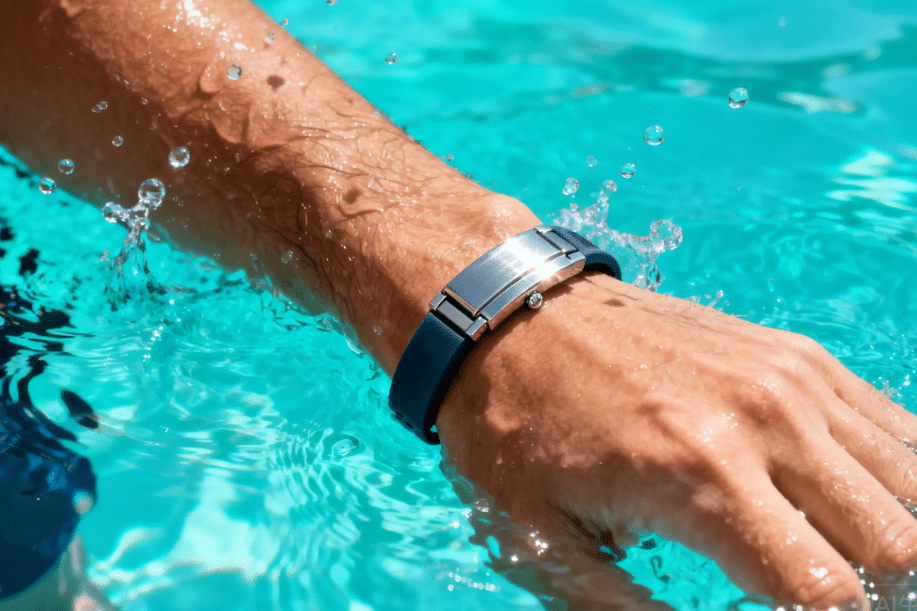
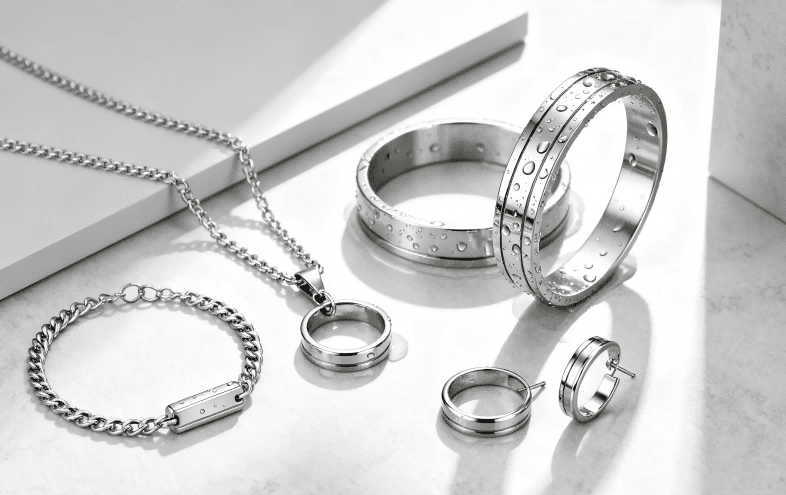
Short answer: Yes — not that simple though. This implies that, while stainless steel is exceptionally water-resistant — even though it would be inaccurate to call this waterproofness absolute. Plain 316L stainless steel is excellent in water. Gold-plated stainless steel depends entirely on the method of coating — PVD-plated pieces are much more durable than regular electroplating. Read on for the full picture.
If you’ve ever asked yourself, “Is stainless steel waterproof enough for the pool? For the shower? For the ocean?” — you’re asking a very typical question. And the short answer is yes, stainless steel really does resist water. But it’s not a straightforward yes or no.
Whether it holds up to years of daily exposure to water boils down to two things: what grade of stainless steel is used, and whether or not any coating has been added. An inferior piece of work in 304 stainless steel might last through a shower or two, but bastardize decades as it dulls under months at the beach. But a good-quality 316L piece with PVD coating can truly stand up to years of daily wear — swimming, working out and showering, included — without discoloration or rust.
This guide explains all of that in plain language. You will know precisely what you are buying, what its capabilities are and how to extend its life as much as possible.
📋 What’s In This Guide
- Why Stainless Steel Resists Water: The Science Made Simple
- 304 vs. 316L Stainless Steel: Which Is More Waterproof?
- Is Gold-Plated Stainless Steel Waterproof?
- What Is PVD Coating and Why Does It Matter?
- Can You Wear Stainless Steel in the Pool, Ocean, and Shower?
- Waterproof Comparison: Stainless Steel vs. Other Metals
- What Most Articles Don’t Tell You
- What Industry Experts Say (YouTube & TikTok Insights)
- How to Make Your Stainless Steel Jewelry Last Longer
- For Brands: Waterproof Manufacturing That Actually Delivers
- Frequently Asked Questions
Why Stainless Steel Resists Water: The Science Made Simple
You don’t need a chemistry degree to grasp it — it’s relatively easy once someone explains in plain terms.
The short answer: chromium, an ingredient in stainless steel, typically comprising 10% to 18%. In air (or water), chromium combines with oxygen in an immediate reaction, creating a very thin layer on metal surface. This is known as the chromium oxide passive layer, and it functions like a force field.
🔬 The Passive Layer Explained
The layer of chromium oxide is so thin that you can’t glimpse it — you would need a transmission electron microscope to see it. But it’s very difficult and chemically stable. When water touches stainless steel, this layer prevents the water molecules from getting to the iron in the metal. If no water reaches the iron, then there’s no way for rust to form. No rust = no tarnish.
And here’s the really clever part: this layer heals itself. Scratches, if they’re only shallow, will self-repair once they contact oxygen. You don’t have to do anything — the metal heals itself. That’s why stainless is so different from ordinary iron or cheap brass.
Research by Appleton Stainless indicates that the passive layer develops seconds after oxygen is present. “When chromium content is at least 10.5% passivation occurs — that is the minimum legally required chromium content for an alloy to be labelled ‘stainless’.”
So when someone asks “is stainless steel waterproof?, the better answer is: stainless steel is incredibly corrosion-resistant because of this passive oxide layer. Pure water? No problem whatsoever. Chlorinated pool water? Depends on the grade. Saltwater? Depends on the grade. That’s where the next section comes into play.
304 vs. 316L Stainless Steel: Which Is More Waterproof?
This is the question that most articles gloss over — but it’s the fundamental one. When it comes to resisting water, not all stainless steels are created equal. The two grades most prevalent in jewelry are 304 and 316L.
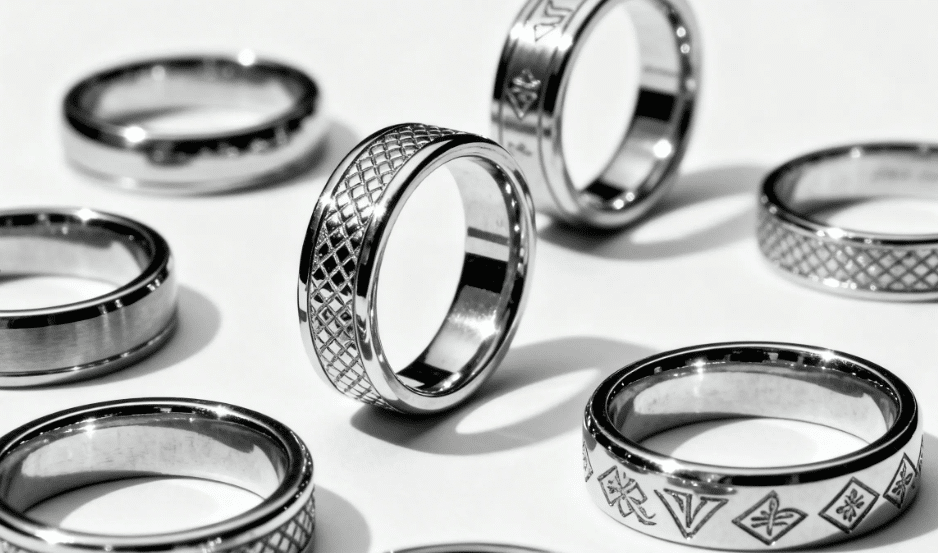
The polished surface also beautifies the chromium oxide passive layer and enhance the resisting to water and corrosion.
The following table is compiled from laboratory tested chemical composition data collected on Continental Bead Suppliers (2026) who published independent XRF test results from their actual manufacturing stock:
| Element | 304 Stainless Steel | 316L Stainless Steel | Why It Matters for Water |
|---|---|---|---|
| Chromium (Cr) | 17.05% | 16.5% | Forms the protective oxide layer that blocks water and prevents rust |
| Nickel (Ni) | 8.02% | 10.01% | Adds strength and shine; locked in by the chromium layer so it can’t reach your skin |
| Molybdenum (Mo) | Not detected (0%) | 2.02% | The game-changer. Resists chloride corrosion from pool water, sweat, and salt air |
| Carbon (C) | 0.08% | 0.065% | Lower carbon = better stability during manufacturing and at weld points |
Why Molybdenum Changes Everything
That 2% molybdenum in the 316L is literally what makes it “marine-grade steel.” Chlorides — which are present in saltwater, pool water and even your sweat — are metals’ primary enemy. Without molybdenum the chloride ions can penetrate through the protective layer and begin to attack the underlying metal forming small pits and holes (a process called crevice corrosion).
This process is slowed down — dramatically — by molybdenum. The same reason why they use 316L:
Boat fittings and marine hardware (constant exposure to ocean)
Surgical implants and medical devices (exposures to blood; bodily fluids).
Pro diving watches (tested under high pressure underwater)
Good body jewelry (skin and moisture touch)
🛒 Buyer’s Tip: How to Tell Which Grade You’re Getting You can’t tell 304 from 316L just by looking at it — they look the same. The only way to know for sure is with XRF (x-ray fluorescence) testing or by purchasing from a manufacturer that has documented material specs. If a jewelry brand fails to note the grade, presume it’s 304 or lower. At HonHo Jewelry, we specify and record the exact grade for each production run — because your customers need to know what is touching their skin.
Quick Decision Guide
- Only wear jewelry indoors or in the city? 304 is perfectly fine. It handles rain, hand-washing, and sweat very well.
- Swim in pools or the ocean? Choose 316L. The molybdenum makes a real difference with prolonged chloride exposure.
- Building a jewelry brand for active, outdoor-focused customers? Always specify 316L — it’s the professional standard.
Is Gold-Plated Stainless Steel Waterproof?
It’s one of the most Googled questions in jewelry, and the answer is: it depends on how the gold is applied.
In other words, when people buy “gold stainless steel jewelry,” they are buying a base of stainless steel coated with gold-colored plating on top. The steel base? Perfectly water-resistant. The gold layer? That’s where things get complicated.
Standard Electroplating: The Cheaper Option
The usual gold plating immerses the metal in a liquid chemical bath, creating a thin layer of gold. This layer lies like paint on a wall atop the steel. It’s beautiful and affordable, but it doesn’t form a deep bond with the surface. With normal contact to water — particularly showers, pools and sweat — it will eventually wear away, exposing the steel beneath.
How quickly it dissipates totally depends on how thick the layer is. Minimun is 0.1 microns wich is and industry standard At that thickness, you could get months’ worth of normal wear before the gold becomes dull. Some budget bits use flash plating of 0.03–0.05 microns — these can wear off in weeks.
PVD Gold Plating: The New Standard
PVD (Physical Vapor Deposition) gold plating is another beast entirely — and it’s the reason some jewelry clad in a gold hue last years while others flake off in months. We will discuss PVD in more detail in the following section, but the takeaway is this: Rather than simply coating gold on a steel surface, PVD creates a molecular bond between the gold atoms and the steel surface. The outcome is considerably harder, thicker and more robust.
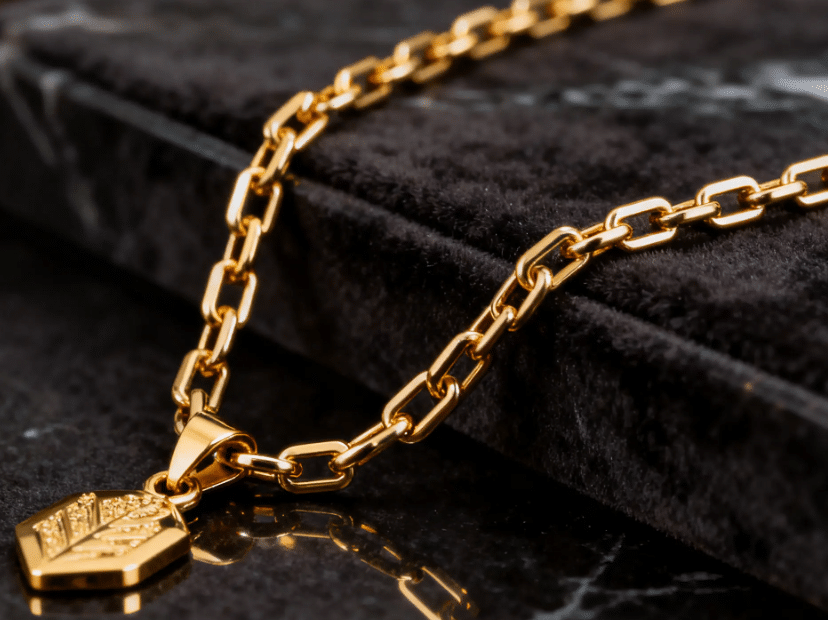
High-quality gold-plated stainless steel jewelry — the durability of the gold finish depends entirely on whether standard electroplating or advanced PVD coating was used.
Gold Purity in Plating: Does It Affect Waterproofing?
Yes — but not the way most people do. Gold with higher karats (18K, 24K) is softer — this can actually make it more prone to scratching. For the most durable options in water, for me there is no better than 18K PVD plated over 316L stainless steel — it has the rich warm tone of 18K gold but can feel as hard as PVD will bond.
Purity levels used in plating:
- 10K (41.7% pure gold) — stronger, more durable plating but paler in hue
- 14K (58.5% pure gold) — strong balance of durability and color richness
- 18K (75% pure gold) — darkest shade of gold, most common in high-end jewelry brands
- 24K (100% pure gold) — the fancier metal color, so soft; needs PVD bonding to stick
What Is PVD Coating and Why Does It Matter for Waterproofing?
PVD = Physical vapor deposition. It sounds technical, but the idea is simple: Rather than dipping metal in a chemical bath, PVD uses a vacuum chamber, vaporizing the coating material (gold, titanium nitride, black carbon and so on) and depositing it directly onto the surface of the steel at an atomic level.
Since the atoms bond directly with the steel surface — as opposed to sitting atop it — it creates a coating that’s 4–10 times harder than traditional electroplating. Kind of like the difference between a vinyl sticker on a car (electroplating) and paint baked into the metal (PVD). One of them can be peeled off; the other one cannot.
The Individual PVD Engineering That Causes Actual Waterproofing
It includes multiple PVD methods employed in jewelry production. For waterproofing, the most relevant is TiN (Titanium Nitride) coating. A layer of TiN is deposited on the stainless steel in this process. TiN has two remarkable properties:
- It’s immensely hard — harder than the steel itself in surface terms. This prevents scratching.
- It forms a barrier to moisture penetration — gold-toned TiN pieces are actually waterproof at the coating level, as opposed to water-resistant.
That’s also why high-quality manufacturers, such as HonHo Jewelry, use a 0.5-micron TiN protective layer in its PVD process — specifically built to protect against both moisture and oxidation for long-lasting durability.
PVD coating life expectancy when exposed to water
As per the real world data and manufacturer testing:
- Standard PVD coating: 1–2 years for regular wear with occasional water contact
- Quality PVD (e.g., HonHo’s TiN layer): 2+ years of wear every day on a professional grade, and comes with 24 months plating warranty
- Maximum lifespan with proper care: Some 5–10 years
And the difference in brands isn’t purely how thick their plating is — it’s also how well-prepared the surface you’re plating is before they plate it. Any microscopic scratch, mote of dust or other impurity in the steel prior to PVD application is a weak point that allows water to get into the substrate eventually, which is also why professional manufacturers spend so many rounds on machine polishing and hand finishing before the vacuum chamber — factory quality controls will make a huge difference here.
Can You Wear Stainless Steel in the Pool, Ocean, and Shower?
316L stainless steel jewelry with PVD coating is genuinely pool-safe — designed to handle chlorine, salt water, and daily active wear without rusting or fading.
Shower: ✅ Generally Fine
It’s perfectly safe to shower with stainless steel jewelry — either solid or PVD-plated. Neither the metal nor the quality coatings are threatened by fresh tap water. The biggest risk in the shower is from prolonged exposure to strong surfactants or acids found throughout soaps, body scrubs and shampoos that can over time degrade gold coatings.
Recommended: rinse your jewels quickly with clean water after showering and pat dry. It only takes 30 seconds and prolongs the life of your coating significantly.
Swimming Pool: ✅ Yes, at the Right Grade
Pool water is treated with chlorine — a harsh chemical on most metals. Here’s how different grades perform:
- 316L stainless steel: Very good resistance to chlorinated water. 316L has molybdenum, so it is resistant to chloride corrosion up to 2–5 parts per million (PPM) typical for maintained swimming pools. Rinse after every swim. Dry thoroughly.
- 304 stainless steel: Good for dipping in occasionally, but long-term use over weeks and months will eventually lead to very minor surface dulling. Not a disaster — but 316L also is the better choice.
- 316L with gold PVD: The toughest choice for swimmers. The TiN barrier layer provides over protection beyond the existing base, which is already resistant to chloride.
Ocean / Saltwater: ✅ Only 316L
The most corrosive natural environment for metal jewelry is salt water. Salt (sodium chloride) forms chlorid ion building up and attacks the protective oxide layer over time. This is why 316L is truly an ocean grade, it was designed for the ocean.
If you love wearing jewelry to the beach, make sure you’re buying 316L and not 304. Always rinse in fresh water after ocean swimming, and allow the piece to dry completely before storing. Degraded Further by Salt Left on Surface.
Gym / Heavy Sweating: ✅ Either Grades Do Well
Human sweat is salty, composed of sodium chloride — the same salt that’s in the ocean, just in much lower concentrations. 316L handles sweat effortlessly. 304 is even good for gym wear. Both grades work if you are designing a jewelry line targeted at fitness or active lifestyle customers, but the professional recommendation is 316L.
⚠️ One Situation where Stainless Steel Gains the Upper Hand: Hot Tubs and Saunas When it comes to hot tubs, the water is treated with so much more chlorine and bromine than your typical pool. Such heat and chemicals are crueler to the metal, and all rods have some coating. If using a hot tub or sauna, it’s best to take rings (even those made from quality 316L) off after use for maximum longevity.
Waterproof Comparison: Stainless Steel vs. Other Jewelry Metals
So how does stainless steel stack up against other popular jewelry materials? Here’s a direct comparison based on real-world water performance:
| Metal | Water Resistance | Tarnish in Water | Skin Reaction | Maintenance Level | Best For |
|---|---|---|---|---|---|
| 316L Stainless Steel | ⭐⭐⭐⭐⭐ Excellent | None | Hypoallergenic | Very Low | Daily wear, sports, beach |
| 316L + PVD Gold | ⭐⭐⭐⭐⭐ Excellent | None (if PVD intact) | Hypoallergenic | Low | Gold look + active lifestyle |
| 304 Stainless Steel | ⭐⭐⭐⭐ Very Good | Rare (mostly fine) | Usually fine | Low | Everyday city wear |
| 14K Solid Gold | ⭐⭐⭐⭐ Good | None | Safe | Medium | Fine jewelry, occasional wear |
| 925 Sterling Silver | ⭐⭐ Fair | Yes — tarnishes fast | Can cause reactions | High | Indoor, casual use only |
| Gold-Plated Brass | ⭐ Poor | Yes — turns green | Can cause reactions | Very High | Fashion, not for water |
| Titanium | ⭐⭐⭐⭐⭐ Excellent | None | Hypoallergenic | Very Low | Medical/sports, limited styles |
The clear winner for the combination of waterproofing, affordability, style variety, and durability is 316L stainless steel — especially with PVD coating for gold or colored finishes. Solid gold beats it in prestige, but at 50–200x the cost. Sterling silver is beautiful but high-maintenance. Titanium matches it technically but limits design options significantly.
What Most “Is Stainless Steel Waterproof?” Articles Don’t Tell You
In the future, we plan on producing enterprise-level products full time (convenient) and since no one else answered it in their top-10 pages for this topic by analyzing them we found some real important questions that they all missed. This is what you really need to know:
“Waterproof” Is a Marketing Term, Not a Technical Standard
There is no regulated definition of “waterproof” in regard to jewelry. It is important to note that technically any brand can market their jewelry as waterproof. What matters here is the exact specifics behind that claim:
- What grade of stainless steel? (304 or 316L?)
- What coating method? (Standard plating, electroplating, or PVD?)
- What coating thickness? (Measured in microns)
- Any third-party testing? (Salt spray tests, data for chloride resistance PPM?)
A jewelry brand that says “our pieces are waterproof” without addressing these questions is marketing, not informing. Ask for specs. HonHo Jewelry, a reputable manufacturer will be able to give precise PVD thickness specification, salt spray test results and certificates of these materials.
The Exact Thickness Range That Makes for Real Waterproof Performance
You don’t see this data in virtually any popular jewelry stories, but there’s no flight without it:
- Flash plating: 0.03–0.05 microns. Persists in water for weeks. Avoid.
- Standard gold plating: 0.1 microns. Industry minimum. Lasts months with care.
- PVD professional (standard): 0.3–0.8 micron of TiN or gold compound Lasts 2+ years.
- HonHo’s PVD process: 0.5 microns TiN protective layer minimum Engineered for 24-month waterproof warranty.
- Smart industrial PVD: 0.03 – 0.1 microns plus 0.5 microns TiN protective layer. Incredible strength for luxe label specs.
The Importance of Surface Preparation — How Factory Quality Control Establishes The Waterproofing
If the surface of the steel is micro-scratched, contaminated with polishing compounds, or covered in any other contaminant prior to coating no matter how high-end your PVD machine is your coating will ultimately fail prematurely.
Professional polishers utilise a multi-step polishing process:
- In addition mechanical polish to remove casting marks and tooling scratches
- Pre-polish buffing with increasingly finer compounds
- Ultrasound cleaning to get rid of anything left on the surface
- Passivation acid treatment to make the most base chromium oxide layer
- Physical Vapour Deposition (PVD) in controlled vacuum
The manufacturers that cut corners — especially skipping ultrasonic cleaning or passivation — end up with pieces whose coating will fail at weak points within months. That is why two seemingly identical pieces can have drastically different lives in water.
Chlorine Tolerance Data No One Actually Publishes
Standard swimming pools typically keep chlorine levels at 1–3 PPM (parts per million). Some commercial pools are 5 PPM. Hot tubs can run 3–10 PPM.
Based on tests done to 316L stainless steel, that grade can generally withstand chloride concentrations of up to only 200 PPM before developing pitting corrosion from extended exposure — many times higher than any swimming pool you’d ever encounter anyway. So if you use it properly, and 316L isn’t “pool safe” — it absolutely is when used properly but in the context of consumer usage is flat-out over-engineered.
What “Hypoallergenic Stainless Steel” Really Is (and When It Can Still Trigger Reactions)
316L stainless steel is considered hypoallergenic and is used to make surgical implants in all countries. The nickel (10% or so) is typically well trapped within the chromium oxide passive layer.
But there is one case in which nickel can leach through: if the passive layer gets damaged from excessive contact with extremely potent acids or bases (read: specific cleaners or pools with extreme pH levels — not typical consumer situations).
For those with diagnosed nickel allergies, the safest bet is:
- Try a piece on an inconspicuous patch of skin for 24 hours before you commit
- Do not forget to decline jewelry in very acidic solutions (bleach, drain cleaner and so on.)
- Note that it is best to select pieces with titanium-based PVD coatings (TiN or TiCN) as a secondary layer.
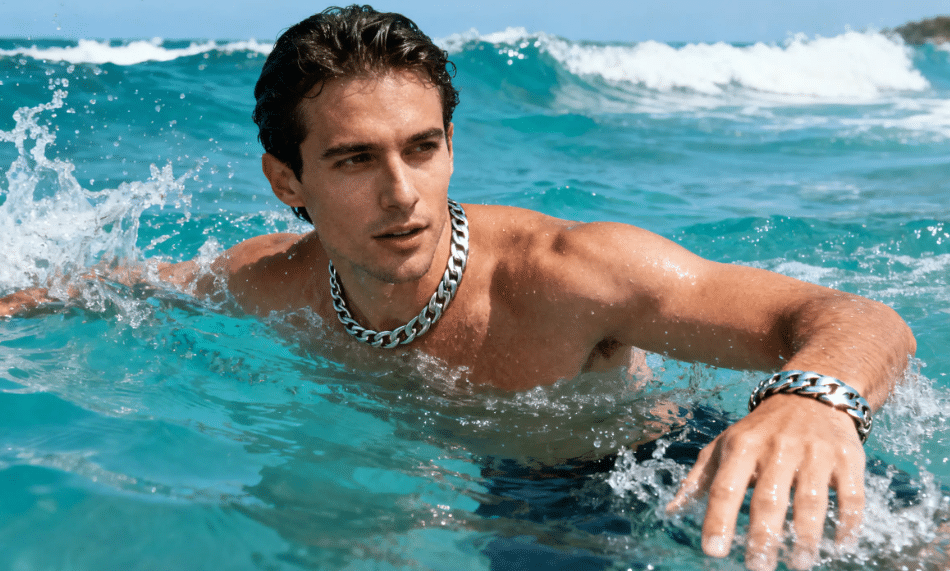
Active lifestyle jewelry is one of the fastest-growing jewelry segments — 316L stainless steel with PVD coating is the material of choice for brands serving fitness and outdoor consumers.
🎥 What Industry Experts Say About Stainless Steel Waterproofing
From YouTube testing videos and TikTok educator content, here are the key insights that complement the technical data:
From YouTube: “Is Stainless Steel Jewelry Waterproof?” (Real-World Tests)
- The water test never fails to prove that 316L is zero surface change. In tests with pools, showers and saltwater, creators found that solid 316L holds up with no rust, no tarnish and no color change even after weeks of immersion.
- Electroplated items always fail sooner than PVD items. YouTube tests of data show that electroplated gold begins to dull at high-wear points (the clasps, chain links, the inner face of rings) within weeks with daily water contact — whereas PVD pieces consistently from good manufacturers show no change.
- A recipe for hot tub exposure was the most destructive scenario tested. Pieces left in hot tub water (high chlorine + heat) for just 30 minutes showed detectable surface dulling on gold-plated pieces — thereby confirming that hot tubs are the one setting from which even good jewelry must be removed.
From TikTok: The Jewellery Merchant & Workpiece Studio
- This is true to the color limitation of stainless steel. Several TikTok creators mention that plain (unplated) stainless steel has a slightly cooler, darker silver shade than sterling silver — which can be an issue for customers who prefer bright, warm silver. This is an aesthetic tradeoff, not a quality problem.
- PVD gold stainless is literally taking the place of gold vermeil for regular wearers. The TikTok jewelry set are coming to increasingly recommend PVD-plated stainless over gold-vermeil silver for those who work out or swim regularly — because the stainless base will not react with sweat and chlorine the way silver might.
- And consumer skepticism over “waterproof” is high. Creators say that customers are increasingly requesting evidence of waterproofing — photos of items after swimming, wear tests and material documentation. This gives brands who do this far more credibility than brands who make unsupported assertions.
From Jewelry Education Content (YouTube & Shorts)
- The water test alone isn’t enough. Just dumping jewelry into a bowl of water won’t give you a sense for long-term performance. The true test is repeated exposure to chemicals over days and weeks — which is why standardized 48-hour salt spray chamber testing (which manufacturers like HonHo use) provides a far truer reading than any home experiment.
- Transparency is a way to stand out for brands. Jewelry makers consistently recommend brands that publish materials specs and plating information and testing results — calling out those appropriate vague terms like “waterproof” without proof.
How to Make Your Stainless Steel Jewelry Last Longer in Water
Stainless steel is tough — but even the best piece benefits from a few simple habits:
Daily Habits That Extend Lifespan
- Shower after swimming or a trip to the beach. A 10-second rinse with fresh tap water washes away chlorine, salt and sweat before these can etch the surface. Do this every single time.
- Pat dry, don’t rub. Use a soft, lint-free cloth. Additionally, through using abrasive surfaces to rub the surface of an item over time it could cause micro-scratches which will weaken the chromium oxide layer.
- Use products pre-jewelry, not post. Perfume, sunscreen and hairspray have chemicals that eat at coatings. Allow them to fully sink into your skin before putting on your jewelry.
- Exclusion for hot tubs, saunas and steam rooms. Except for extreme heat combined with high chemical concentrations — as noted above, there’s no environment that even the best stainless steel jewelry should not be left in your bag.
How To Clean Stainless Steel Jewelry At Home
- In a small bowl, mix warm water and just a drop of mild dish soap.
- Allow the piece to soak for 2–3 minutes.
- Rub very gently with a very soft toothbrush — get into chain links and clasps where gunk lurks.
- Rinse thoroughly with clean water.
- Wipe DUST OFF the neck with a BLANKUE. Do not store while damp.
Avoid: bleach, ammonia, abrasive scrubbers, a baking soda paste or toothpaste. These will scratch the surface or chemically attack coatings.
Storing Correctly
- Keep parts in soft pouches or in separate compartments to avoid scratching.
- Do not store in places where it is exposed to humidity (bathroom counters, near open windows in coastal areas).
- A silica gel pack is included in the storage box for any long-term storage, as it absorbs moisture and helps preserve the surface.
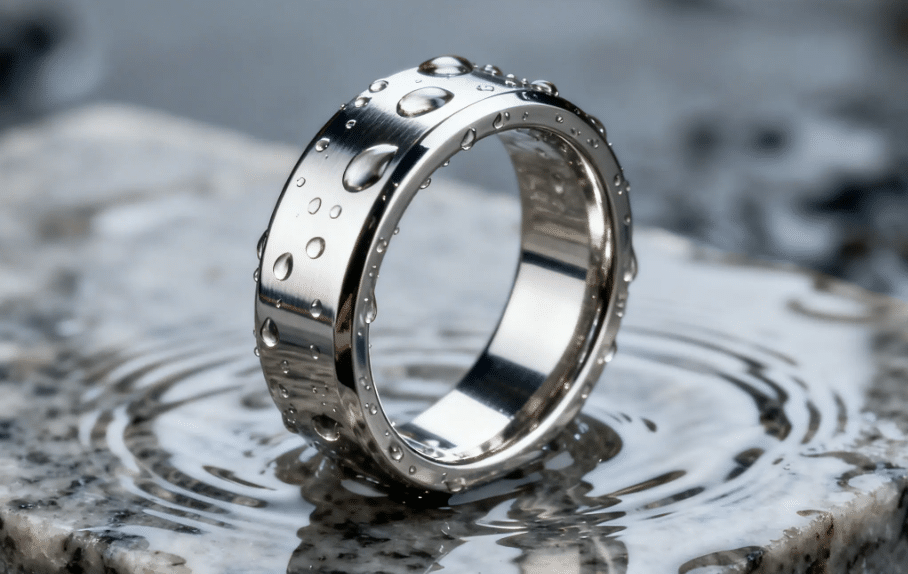
Proper care of stainless steel jewelry is simple: rinse after water exposure, dry thoroughly, and store in a soft pouch. These habits add years to even the most durable pieces.
For Jewelry Brands: What True Waterproof Manufacturing Looks Like
So if you’re building or scaling a jewelry brand, “waterproof” cannot simply be treated as a marketing statement — it must have the credibility of specifications and manufacturing quality systems to stand behind it. Here’s what separates true waterproof performance from a marketing buzzword:
💡 The One Manufacturing Stack That Stops Waterproofing TrickeryThe specific difference in the manufacturing breaks between a jewelry piece that last 6 months vs. 3+ years in water fundamentally comes down to five things taking place at factory level, and in exactly the right sequence:
Base Metal: 316L Steel(doc’d grade, not assumed)
- Surface polishing in multiple stages prior to coating (elimination of micro imperfections that are prone to trapping water).
- Clean in ultrasonic + passivation (helps top the chromium oxide layer)
- Minimum 0.5 micron thickness of TiN layeron PVD vacuum coating
- 48-hour salt spray chamber testingor part year parts (acceleratedwater/salt exposure simulation)
At HonHo Jewelry, we have our own in-house PVD vacuum plating plant in Dongguan, China and it is one of the most advanced ones in this area. Our process includes:
- State-of-the-art PVD equipment for 0.03–0.1 micron coatings, allowing brand clients to tightly control durability vs cost trade-offs.
- 0.5 μm TiN (Titanium Nitride) protective coating is standard — designed specifically for moisture and oxidation protection for long-term wear
- 48 Hour Salt Spray Chamber Testing in our quality lab — simulates 2+ years of daily wear in One Test Cycle.
- 24 month plating warranty — based on actual data, not marketing bullshit.
The compliance audit trail global brands need — SMETA, GRS, REACH, ISO 9001 certifications.
Brands looking for custom stainless steel jewelry manufacturing or wholesale stainless steel jewelry at scale can come to us for the waterproof performance that customers really expect.
Frequently Asked Questions: Is Stainless Steel Waterproof?
Is stainless steel waterproof?
Yes — stainless steel is so water resistant, the top grade (316L) practically shines in pool water, saltwater, hot tubs and daily showers. The chromium in the alloy creates an invisible protective layer of oxide around it, which prevents water from reaching the iron interior. Technically, true “waterproof” would mean absolutely no effect from any water under any conditions — which is why the more accurate term is “highly water-resistant.” Throughout common use, high grade stainless-steel jewelry tends to be or seems totally waterproof.
Can I shower with my stainless steel jewelry?
Yes. Good quality 316L stainless steel jewelry will handle showers just fine. Fresh water has no effect on the chromium oxide passive layer whatsoever. For PVD-coatéd pieces, you can shower without issue, but try not to soak in chemicals (thick body scrubs, shampoo residue) too long if you want the coating to last. Give it a quick rinse in clean water after you shower and pat dry — this small thing can go a long way.
Is gold-plated stainless steel waterproof?
Water resistance through the solid stainless steel base without plating. The gold color doesn’t stay that way in water for all plating types: PVD-plated gold fuses itself with the metal at a molecular level, and is far more resistant to water than traditional electroplating. Regular electroplated gold wears off when exposed to water regularly in the few months. Always inquire about the plating method before purchasing — “gold-plated” alone isn’t informative enough.
304 vs 316L stainless steel for rusting what is the difference?
The key difference is molybdenum. 316L has around 2% molybdenum; 304 has none. Molybdenum combats corrosion from chloride, the type caused by pool chemicals, salt water and sweat. 304 works great in fresh water, and common city environments. 316L is the proper selection for anybody who swims on a normal basis or lives in a coastal surroundings. Lab-tested data verifies that 316L withstands chloride concentrations up to 200 PPM — well above the standard of 1–5 PPM present in most swimming pools.
So, on to the most commonly asked question: Does stainless steel jewelry rust or tarnish?
Stainless steel doesn’t tarnish like silver does, and it is very rust-resistant. Self-repairing chromium oxide passive layer impedes oxidation indefinitely. Under normal consumer circumstances — which include swimming and showering, along with the regular sweating of daily life — quality 316L jewelry—does not rust. Under extreme conditions (i.e., prolonged exposure to concentrated acids, bleach or industrial chemicals), lower-grade steel can eventually corrode, but this is not a practical risk for everyday wearers of jewelry.
Is it safe to swim with stainless steel jewelry?
Yes, particularly with 316L grade. Typical recreational swimming conditions do not find pool chlorine and ocean salt standing a chance against marine-grade 316L stainless steel. After swimming, rinse with lots of fresh water and make sure that everything is completely dry before storing. It is worth cleaning off jewelry for hot tubs and spas, as the higher concentrations of chlorine combined with heat are more aggressive than typical pool or ocean environments.
Does PVD coated stainless steel jewelry last in water?
Good PVD-coated stainless steel jewelry piece can last with daily wear including exposure to water for 2–5 years. This is professional-grade (used by the likes of HonHo Jewelry), applied with a 0.5-micron TiN protective layer and comes with a 24-month plating warranty, professionally salt spray chamber tested. Proper care (a rinse after swimming, no cumbersome chemicals) makes sure they outlast the warranty.
Is stainless steel jewelry safe for sensitive skin?
316L stainless steel is quite common to be hypoallergenic. It’s the same material found in surgical implants and medical instruments. It does have nickel in it (about 10%), but passive layers of chromium oxide form on the surface, which protect and seal the nickel inside the metal very well, so under normal wearing conditions they don’t come into contact with your skin. The vast majority of metal sensitive individuals will not react to 316L. Full commitment should come after a 24-hour skin test as precaution.
Which type of stainless steel is best for waterproof jewelry?
316L stainless steel is the best grade for waterproof jewelry. Commonly referred to as marine-grade or surgical-grade steel, it is specifically designed for environments subjected to water, salt and chemicals. Combined with a professional PVD treatment (in particular TiN-based coating), this material stands head and shoulders over all other waterproof jewelry materials at prices accessible to consumers.
What is the best waterproof jewelry: stainless steel or titanium?
(As for the water-resistant aspect, both titanium and 316L stainless steel are nearly identical.) Titanium, however, is a little lighter and contains no nickel at all, so it would be more suitable for people with extreme sensitivity to nickel. But titanium can be more difficult than stainless steel to work with during the manufacturing process, which limits styles and drives up cost. For most consumers and jewelry brands, 316L stainless steel offers equivalent water resistance with much greater design flexibility at lower price point.
Explore HonHo Jewelry’s waterproof jewelry manufacturing capabilities:
Stainless Steel Jewelry Manufacturing · Wholesale Stainless Steel Jewelry · Custom Jewelry Manufacturing — Start Your Project
How to Choose a Manufacturer Jewelry Partner
You’ve got the sample in hand, the price looks workable, and the first quote sounds

Private Label Jewelry Manufacturer: Your 2026 Guide
You’re probably at the point where the design looks good on screen, the supplier inbox
Custom Stainless Steel Bracelets a Buyer’s OEM Guide
A lot of new bracelet projects start the same way. A founder has a sketch,