
In the morning you wear a new earring. By the time I get to afternoon, my earlobes are itchy and red and swollen. Sound familiar? If it does not, then you are by no means alone — and the answer which most individuals are in quest of is bare steel jewelery.
So what does hypoallergenic jewelry even mean? Does that mean there were no metals in the piece that could ever cause a reaction? Or is it just a buzzword companies put on whatever they are peddling?
In this guide we cover it all — the good science, the metals that do work, the ones to avoid and also a lot of fine print details like things that never get discussed in articles. At the end you will know what to specifically look for and why it is good.
Hypoallergenic comes from the Greek prefix hypo meaning less than or below, so it sounds reasonable to wonder what is a hypo-allergy? Hypoallergenic actually means less likely to cause an allergic reaction.
In terms of jewellery, hypoallergenic xmas jewelry is comprised of metals or coatings that are much less likely to trigger skin irritation, such as redness, itchiness, and swelling or rash where the piece has come into contact with your epidermis (more on that later).
This is where most articles stop short: it turns out that the United States has not precisely defined hypoallergenic, nor has either FDA or the FTC been able to enforce common accuracy standards. Legally, any company can print it on their packaging without having to meet any standard. So, there’s a legal backstop: we would not accept nickel metals into skin-contact jewelry at levels above 0.5 µg/cm²/week (EU REACH Regulation (Annex XVII, Entry 27)); but in the US there is not able to be such an assurance.
This implies that you have to search beyond the name. What it actually consists of — which can be how it is produced — are the components that will unravel whether or not it’s also distressing skin able.
Nickel is the most frequently guilty. However, nickel allergy is the most common cause of contact dermatitis due to jewelry in North America, affecting about 18% of people, according to the American Academy of Dermatology.
It’s not a matter of how much nickel is in the metal it’s how much nickel leaches out onto your skin when worn. If metal ions leach out and penetrate the skin, these foreign substances are recognized by your immune system as a threat, which results in an inflammatory response. That answer is what you see red, furious and enlarged.
Nickel is not the only sinner in sin. Metals that are also widespread allergens consist of:
One thing that almost no mainstream article mentions at all is the fact that the plating process itself can remove the protective passivation layer from otherwise safe metals — In HardwareX, a 2024 study concluded that although the base metal 316L stainless steel is considered “safe,” traditional electroplating can easily remove its protective chromium oxide layer that keeps nickel inside — causing built-up nickel to leak out of even the most “secure” ultra-low-nickel materials if done poorly. And this is precisely the reason why manufacturing method matters as much as material choice.
On the watch of sensitive skin, not all metals are created equal. This is the complete story of the MVP with a dozen options.
Which makes this the most viable and universally endorsed material for hypoallergenic jewelry — and those are well-deserved endorsements. Yes there is about 10-14% nickel by composition in 316L stainless steel, but the high chromium level bonds to oxygen, forming a passive oxide layer that prevents nickel from leaching onto your skin. Even higher is the nickel release rate which results in a release well below 0.5 µg/cm²/week, EU’s tolerance limit for safety.
According to Science Direct [9], a number of clinical studies demonstrate that 316L stainless steel is a non-sensitizer for allergic contact dermatitis in nearly all nickel-hypersensitivity patients. That is the same grade that surgical instruments and orthopedic implants are made out from — which should tell you something rather interesting about its biocompatibility.
316L has the added bonus of being durable. Compared to softer, precious metals, it is much more non-corrosive, sweat-resistant and not easily prone to draws over time of use. For casual jewelry, the type of rings, earrings and bracelets you’d wear into the shower or gym with you—there’s simply no contest.
For those who have allergies for metals in general, the gold-standard — titanium No nickel, no cobalt, and no reactive metals of any kind are found in pure titanium. Even with the most reactive subject types clinical data rank allergic reaction rates below 0.6% — which is exactly why it is also the material of choice for permanent body implants.
The biggest downside is price: titanium jewelry is usually 2–3 times the same-priced stainless steel pieces. For those on a budget, 316L stainless steel provides virtually the same level of protection as 950 palladium for most consumers at a fraction of the cost.
Moreover, solid gold at 14 karats (58.3% pure gold) and above is generally safe for sensitive skin because other metals get diluted to low levels due to the high gold content. The operative word is yellow gold — white gold is usually alloyed with nickel to give it a brilliant color, and that can be an irritant to nickel-sensitive wearers.
Check that your gold jewelry specifies it is made from nickel-free alloys. If you ever have any doubts, go yellow gold in 18k or more.
Platinum is nickel free by nature, the most durable metal option available and one of the safest metals for sensitive skin as it will not irritate you. The other side is cost — platinum fine jewelry comes at a premium and therefore is generally not practical for everyday or fashion pieces.
Not often spoken about but instead actually very good for special hypoallergenic jewelry. Essentially neither metal has any reactive potential; both are biocompatible. Niobium is highly sought as body jewelry and ear piercings because anodization can be used to create bright colors without any reactive coatings.
Knowing what to not do is half the battle.
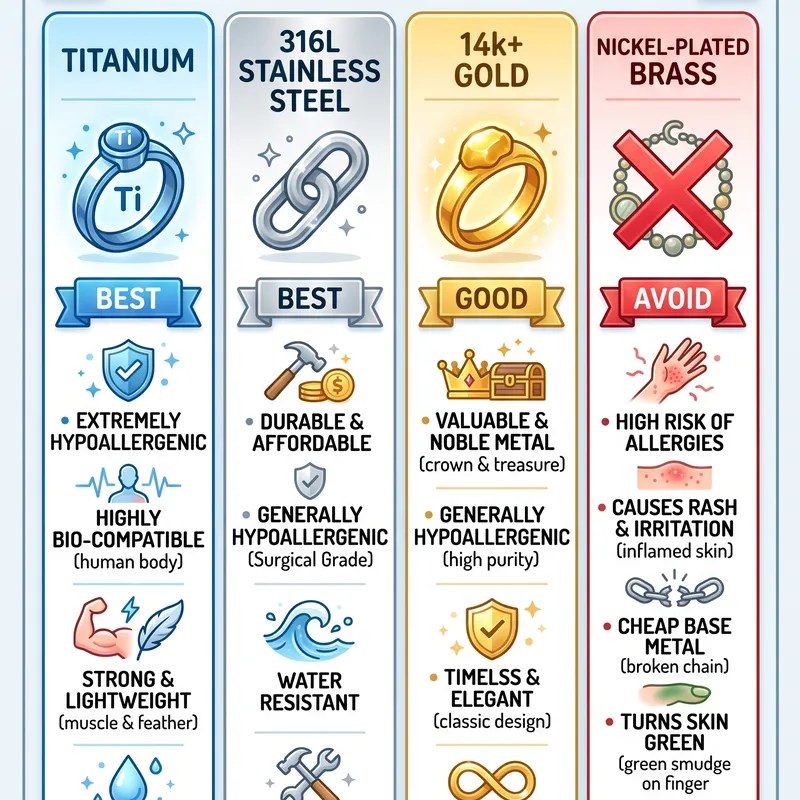
This is one of the largest content gaps on most “hypoallergenic jewelry” articles — virtually no one explains what exactly is the plating difference, but it plays a critically important role.
Electroplating is a traditional method for depositing metal ions to a surface using an electric current. It works, but leaves a thin layer that can wear away with daily use — and annoyingly as discussed above could damage the protective passivation layer on stainless steel so now increased nickel release risk from Zinc even where base metal is grade 316L.
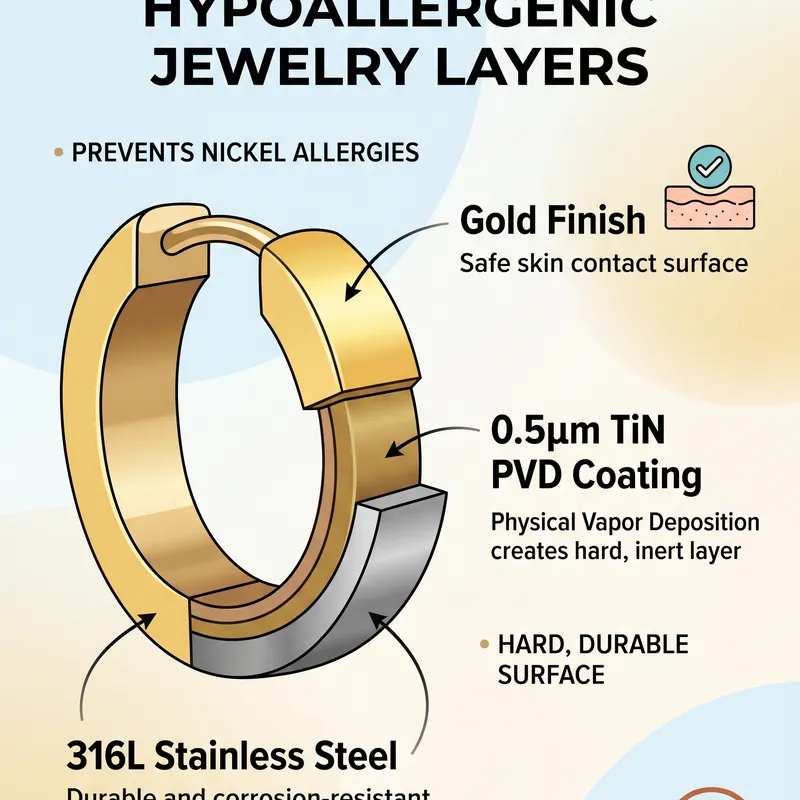
PVD (Physical Vapor Deposition) coating is an entirely separate entity. PVD vaporises metal in vacuum chamber rather than often less environmentally friendly chemical baths, adding it atom by atom to the jewelry surface. The result is:
In premium manufacturing, to get a quality PVD coating on 316L stainless steel, a Titanium Nitride (TiN) intermediate layer — typically about 0.5 microns in thickness — is always provided below the color overcoating. The TiN layer is stronger than steel, is highly resistant to corrosion and (functionally) separates skin from whatever metals remain in the alloy. This ensures that your jewelry remains safe for sensitive skin, even after everyday use for years on end.
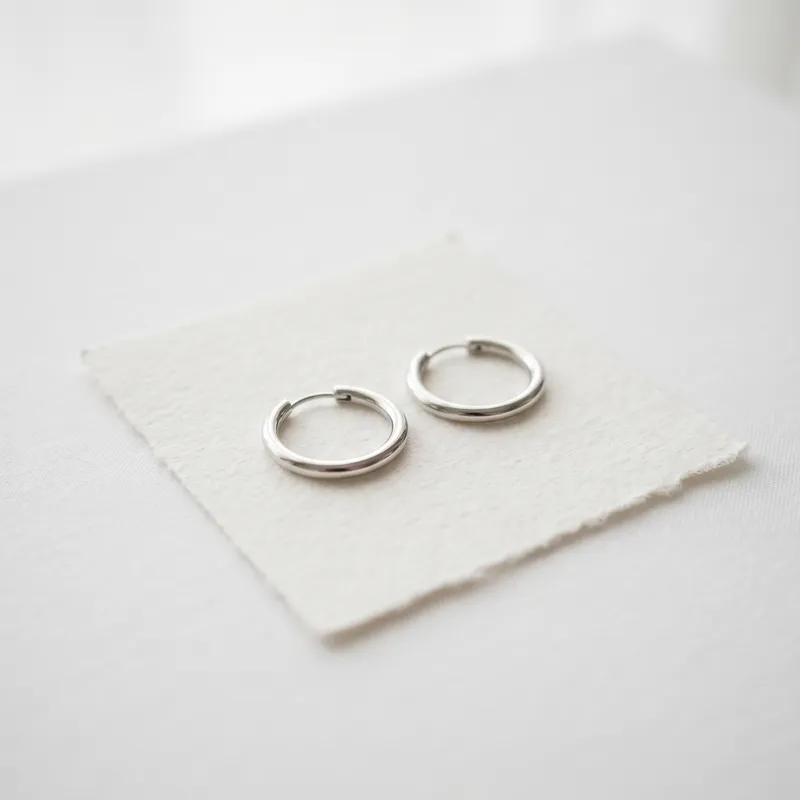
As the term is all but unregulated in the US, here are the practical checks that truly count:
Earrings require particular emphasis as piercing posts have continuous, close association with piercing channels doing so highlights that defectiveness is not a mirage; in fact the flaw exists because of a thin layer of skin and no natural barrier between metal and living tissue. This is where reactions almost invariably begin for those with nickel sensitivity.
Implant-grade titanium, niobium or solid 14k+ gold are the safest earring posts. 316L surgical steel with PVD finish – this is the most serviceable safe choice for your daily-wear fashion earrings: Steer clear of any earring where the material of the post is not specifically stated.
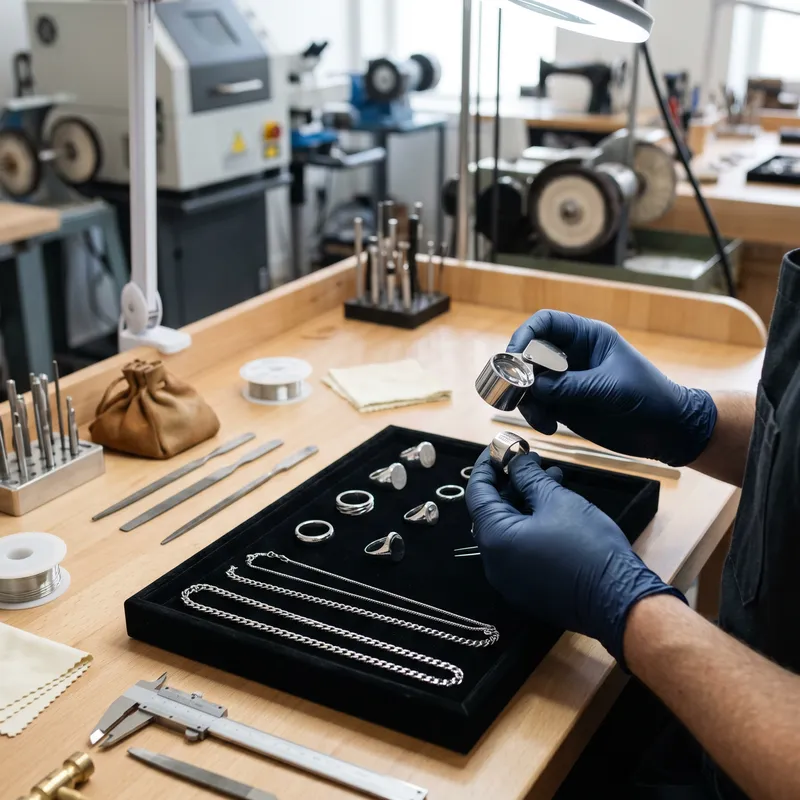
Kid’s skin is more penetrable and/or reactive than grownup skin, so they are at a greater risk of being sensitive to nickel from the metal. While there are strict limits on lead and cadmium in children’s jewelry, nickel is not as highly regulated by the CPSC. Use titanium or high-quality stainless steel only for children’s earrings, and decorative items made of unknown metals are not recommended.
Unlike an item you wear only on special occasions, your wedding ring is constant — gym, dishwashing and sleeping. skin coat gets a workout. The safest long-term bet is platinum, 18k yellow gold and titanium. PVD coated 316L stainless steel provides a low cost durable and practical alternative to the everyday wear. Nickel-free alloys should be indicated for all white gold wedding bands.
It depends on the material. 316L stainless steel and titanium are basically tarnish-proof; you could literally swim with these in the ocean without any special care and never have a problem with oxidation from sweat, water, or normal wear. Solid gold does not tarnish. Platinum is also highly resistant.
This barrier prevents oxygen and moisture from accessing the underlying metal, so jewelry with a PVD coating is extremely resistant to tarnishing. A good PVD coating on stainless steel will not fade or discolor after being exposed to sweat, water and humidity you get in the shower every day, as well as during exercise or a swim.
No matter how careful you are with the metal, sterling will always tarnish — it is a natural reaction of silver to sulfur compounds in air. It stays looking fresh with occasional polishing, but if you expect it to get a little tarnished, then stainless steel or titanium are better suited for heavy use.
Hypoallergenic jewelry is low-maintenance, but the following practices keep it in better shape:
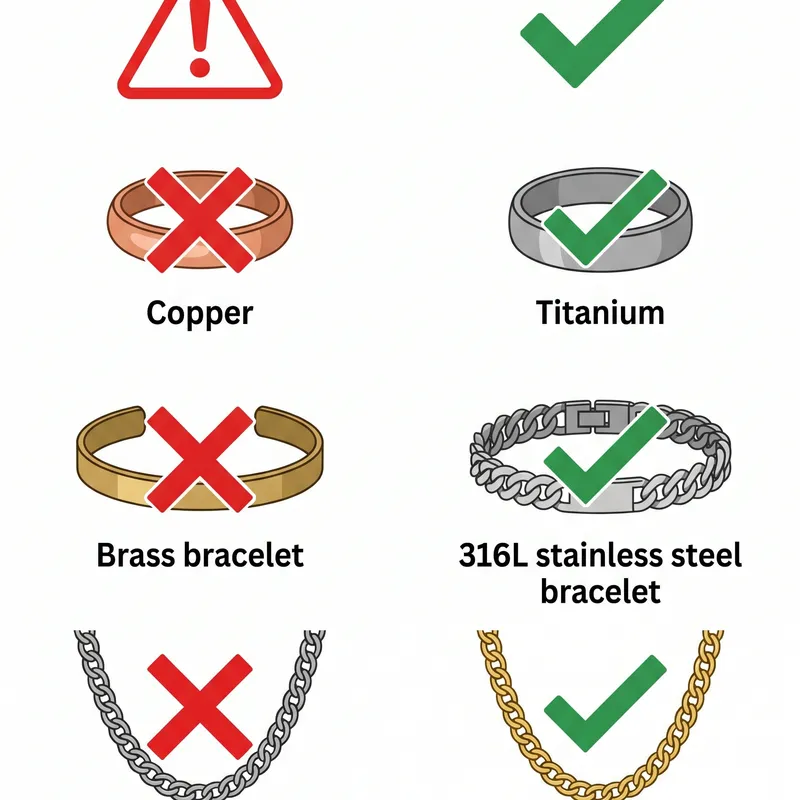
The number one consideration when sourcing hypoallergenic jewelry for your brand or customers is transparency from the manufacturer. Seek out brands that offer:
All production at HonHo Jewelry is with certified 316L where nickel release (≤0.2 µg/cm²/week — half the EU piercing jewelry standard) are REACH-compliant [and] Each piece undergoes an inhouse PVD Vacuum plating process which deposits a 0.5µm TiN intermediate layer before the gold or colour finish – two to five times thicker than the industry average of 0.1-0.3µm, ensuring that this protective barrier does not deteriorate with daily wear, swimming and exercise.
Brands wanting to introduce an own private label range of hypoallergenic certified stainless steel jewelry are offered a minimum order of 50 pieces per style, for the full supply chain process certifications covering ISO 9001, BSCI and SMETA.
The importance of knowing what is on the nickel allergy landscape for wholesale buyers: As per Mayo Clinic nickel allergy is one of the most common causes of contact dermatitis and a shift in interest toward hypoallergenic, skin-safe jewelry among health-conscious consumers — particularly in US and EU markets.
Is hypoallergenic jewelry completely allergy-free?
Hypoallergenic means less likely to cause a reaction, NOT no reaction. Individuals with extreme metal sensitivities may still have a reaction to materials that are safe for most people. The safest option, for the most sensitive wearers, is implant-grade titanium or niobium. We recommend patch testing every new material.
Is sterling silver hypoallergenic?
Generally yes, but not always. Nickel is a more reactive metal than copper because nickel has to be alloyed into standard sterling silver (925) with the addition of copper. Note that a few sterling silver uses nickel in the mixture, and tarnished silver might bother extra sensitive skin. Always look at the alloy composition of sterling silver using copper-alloyed sterling silver in case you are sensitive.
Question: Can an allergic reaction to stainless steel occur?
Rarely, but it is possible. 316L surgical-grade stainless steel is 10–14% nickel by composition, but the chromium oxide layer prevents almost all of it from leaching. Clinical studies show nickel diffusion from 316L is well below EU limits of safety. Many people with nickel sensitivity will still react to it, but most nickel-sensitive people have no problem wearing 316L stainless steel.
Hypoallergenic vs Nickel free: What is the difference?
“Nickel-free” is a more definitive statement — it means that the piece contains undetectable nickel, or in the EU, that nickel release does not exceed 0.5 µg/cm²/week. “Hypo-allergenic,” on the other hand, is a term that encompasses nickel free materials but also includes some metals that minimize allergic risk. A piece may be nickel-free but can still cause reactions if it has cobalt, copper, or other allergens in its composition.
How long does the hypoallergenic PVD coating last?
A well-applied PVD finish will typically provide 2–5 years of service on 316L stainless steel under normal daily wear, versus just 6 to 12 months in the case of conventional electroplating. The important variables being coating thickness (thicker = longer running), if there is a TiN base layer which helps, and how the piece is treated. Those pieces that frequently come into direct contact with harsh chemicals/abrasives will wear out faster.
Can hypoallergenic jewelry be used on new piercings?
It depends on the material. Implant-grade titanium (ASTM F136) or implant-grade steel (ASTM F138) is the worldwide industry standard according to the Association of Professional Piercers for fresh or healing piercings. Just because something says “Hypoallergenic” does not mean that it is safe for a fresh piercing — always ask what grade of material the label was tested against and avoid anything that isn’t rated as body implantable.
Can I shower and swim in hypoallergenic jewelry?
But surely YES — and only in the case that a piece is made of either 316L stainless steel, titanium or platinum which are all water and corrosion resistant. You can wear the new jewelry designs made from PVD-coated stainless steel for this type of daily usage. Products made with sterling silver and gold-plated (excluding PVD) materials should normally steer clear of water to avoid tarnishing or wearing out property coating.
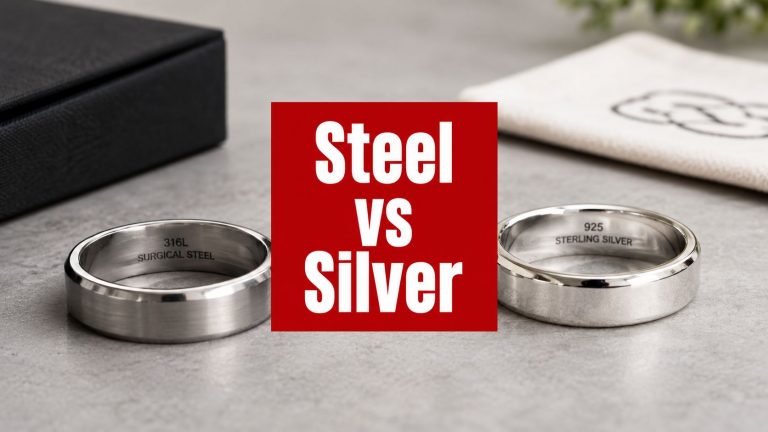
You’re pricing a new collection, and the sample tray is already split down the middle. The 316L surgical steel pieces look cleaner on cost and daily wear, the
You probably have a launch already in motion, a supplier sample on your desk, and one uncomfortable question underneath it all, will this gold color still look clean
If you are developing the ring itself, compare ring fabrication, casting and CAD methods before approving the shank dimensions and manufacturing route. You’re refining a ring design, the