
You’re usually not dealing with “sensitive skin” as a minor customer preference. You’re dealing with product-market fit, return risk, and whether your metal specs hold up after weeks of wear.
A new DTC jewelry brand often learns this the hard way. The first batch looks good in studio lighting, the plating passes a quick visual check, and the product page says “hypoallergenic.” Then the reviews start: itchy ears, redness under rings, green marks on necks, irritation after a few wears. At that point, the problem isn’t styling. It’s sourcing, alloy control, and claim verification.
The best jewelry for sensitive skin isn’t defined by one magic metal. It comes from a production system that controls the base alloy, the plating stack, the findings, and the paperwork behind every claim. If you’re building a private label line, that’s the standard you need.
Skin reactivity hits a jewelry brand in three places at once. First, customer support absorbs the damage through complaints, exchanges, and refund requests. Second, merchandising gets harder because a strong design can’t carry a product that causes irritation. Third, your brand claims come under scrutiny if “hypoallergenic” turns out to mean nothing more than a marketing line.
For a new brand, this usually starts with earrings, rings, and chain necklaces. These categories have long wear time and constant skin contact. If your posts, jump rings, clasps, or plated surfaces aren’t controlled properly, customers notice fast.
Many founders focus on silhouette, finish color, and target margin. They don’t spend enough time on the hidden stack:
Practical rule: If your supplier can’t tell you the exact base metal and finish stack for each component, you don’t yet know what you’re selling.
The damage isn’t limited to one unhappy customer. Returns take time. Reviews stay visible. Wholesale buyers and distributors ask harder questions after the first quality issue. Even when the product design is strong, unclear metal composition can make your collection harder to scale.
That’s why experienced jewelry production teams treat sensitive skin as a specification issue, not a branding issue. The brands that manage this well don’t just choose safer metals. They document them, test them, and build product pages around claims they can support.
The jewelry reaction and buyer-check guide explains how to document components and investigate a complaint without treating a product photograph as a diagnosis.
Most jewelry irritation comes down to metal exposure over time, not just first wear. A customer may wear a piece for days or weeks before the reaction appears, especially when sweat, friction, and daily movement start breaking down the surface barrier.

Nickel allergy is the most prevalent form of metal-induced contact dermatitis globally, affecting approximately 10% to 15% of the general population. In the European Union, the REACH regulation has strictly limited nickel release in jewelry to 0.5 micrograms per square centimeter per week since 2005 according to this nickel allergy and hypoallergenic jewelry guide.
In production terms, nickel becomes an issue when it migrates from the metal surface and contacts skin. That exposure can trigger contact dermatitis, which usually shows up as redness, itching, dry patches, or blistering in more reactive wearers.
The simplest way to explain it is this. The immune system treats nickel like the wrong key in the right lock. Once the body has learned to react, the customer often can’t “tough it out” and keep wearing the product. For diagnosed cases, avoidance is the only practical path.
That’s why generic terms like “stainless steel” or “silver tone” aren’t enough. The alloy and the finish both matter. A buyer who needs actual guidance on this should start with a detailed nickel-free jewelry guide for buyers and brands.
Consumer-facing content often says “stainless steel is safe” and stops there. That’s incomplete. Some steels perform well for mild to moderate sensitivity, but severe nickel allergy requires a much stricter approach.
A few practical points matter in manufacturing:
A product can be visually flawless and still be wrong for sensitive skin if the metal stack underneath the surface hasn’t been controlled.
If you’re sourcing the best jewelry for sensitive skin, start with categories that stay on the body the longest and touch the most delicate areas. Ear posts, hoops, cartilage jewelry, rings, and close-fit necklaces need stricter specs than occasional-wear fashion pieces.
The operational lesson is straightforward. Don’t treat skin compatibility as a copywriting issue to solve at launch. Treat it as an engineering issue to solve before sampling is approved.
Base metal choice sets the ceiling for how safe and durable your product can be. Plating can improve performance, but it can’t permanently rescue a poor substrate decision.
Here’s the metal hierarchy most brands should use when planning a hypoallergenic line.

Titanium is the safest technical choice for highly reactive customers. For severe nickel allergies, implant-grade titanium (ASTM F136) contains zero nickel, while surgical stainless steel (316LVM) contains nickel that can still trigger contact dermatitis in highly sensitive individuals, as explained in this guide to body jewelry for sensitive skin. If your line includes ear posts or body jewelry, titanium deserves serious consideration.
316L surgical stainless steel is the workhorse option for fashion jewelry. It offers strong wear performance, good customer perception, and broad commercial viability. 316L surgical stainless steel ranks as the premier hypoallergenic material for fashion jewelry, offering over 95% biocompatibility, while titanium is 100% nickel-free but more expensive. 925 sterling silver is considered safe only when explicitly formulated without nickel, as pure silver is too soft, according to this ranking of hypoallergenic jewelry materials.
For brands deciding between steel and titanium, this detailed titanium jewelry guide is useful because it frames the decision around product category and customer sensitivity, not just material hype.
A short comparison helps during line planning:
| Metal | Best use case | Main advantage | Main caution |
|---|---|---|---|
| Titanium | Ear posts, body jewelry, severe allergy lines | Zero nickel in implant-grade ASTM F136 | Higher cost and narrower finishing options |
| 316L surgical stainless steel | Everyday fashion jewelry | Strong value, durability, broad appeal | Not ideal for severe nickel allergy |
| Platinum | Premium fine jewelry | High purity and stable wear | Expensive for most fashion programs |
| High-karat gold | Elevated collections | Good option when alloyed without nickel hardeners | Must verify actual alloy composition |
| Nickel-free 925 silver | Fashion-fine crossover lines | Familiar material and premium perception | Needs explicit alloy verification |
The right answer depends on what you’re making.
Brass, copper, and loosely specified fashion alloys create unnecessary customer service issues. They may still have a place in trend-driven, low-cost collections, but they are not where you build trust with sensitive-skin buyers.
If a brand wants fewer irritation complaints, it should tighten metal specs before it spends more on packaging or ad creative.
Many brands stop at the substrate and miss the bigger issue. For plated jewelry, skin safety over time often depends on the finish stack just as much as the base metal.
That’s especially important when the item is sold as affordable fashion jewelry rather than solid precious metal. In those programs, the coating is the barrier between skin and whatever sits underneath.

A finish should be assessed as part of the complete item, including its base alloy, underlayers and surfaces that touch the skin. Ask for the coating specification and test reports for the finished product before making a wear-life or nickel-release claim. The American Academy of Dermatology’s nickel-allergy guidance recommends avoiding nickel exposure for people with a nickel allergy. A coating description alone does not establish that a piece is suitable for every wearer.
These two processes don’t perform the same way in the field.
| Finish method | What it does well | Limitation |
|---|---|---|
| PVD coating | Creates a durable bonded layer and improves barrier protection | Requires tighter process control and suitable substrate preparation |
| Standard electroplating | Flexible for color and decorative finishing | Can wear faster and expose underlying metal sooner |
| Rhodium finish | Useful bright white protective layer | Still depends on total stack quality and wear conditions |
| E-coating | Adds an extra barrier layer | Can degrade with abrasion over time |
If you want a clear production-side explanation, this comparison of PVD vs electroplating for jewelry coating is worth reviewing before you lock your sampling standard.
Cheaper plating lowers your factory price, but it can raise your total cost later through complaints and replacements. That trade-off gets worse in categories with constant friction, such as rings, bracelets, and layered chains.
This is where a manufacturer’s process capability matters. Some OEM and wholesale jewelry suppliers can provide custom jewelry production with adjustable PVD and electroplating specs, plating thickness checks, and wear-resistance testing. HonHo Jewelry is one example of a supplier structure that combines CAD, sampling, in-house finishing, and thickness control for private label programs. That setup doesn’t guarantee every style is right for sensitive skin, but it does make verification easier.
Thin plating is where many “hypoallergenic” claims fail. The product may leave the factory looking right and still become a problem once normal wear starts.
Before approving a plated style, ask for these details:
The best jewelry for sensitive skin often comes from modest designs with disciplined finishing, not from flashy designs with vague metal descriptions.
A customer emails support three days after launch. Her ears swelled after wearing your new hoops, and your team replies with the only language it has: “hypoallergenic.” If that claim is not tied to test records, material specs, and SKU-level traceability, the problem shifts from customer service to compliance risk.
Brands should treat hypoallergenic marketing as a documentation system. The right claim starts in development, gets confirmed in testing, and only then appears on the product page.
A defensible nickel-free or nickel-safe claim needs paperwork that matches the finished product, not just the raw metal. This guide to defensible hypoallergenic and nickel-free claims outlines the core records brands should request, including EN 1811 nickel release testing and plating specifications.
Use a simple approval standard:
For teams that need a production-side explanation, this overview of what hypoallergenic jewelry means in production and compliance is a useful reference.
For EU sales, the claim standard is narrower than many brands expect. General terms like “safe for sensitive skin” do not replace legal testing requirements. Product sourcing discipline matters here because testing, component control, and supplier documentation all connect. These expert insights on product sourcing are relevant for brand teams building a review process, not just buying finished samples.
Material wording also needs care. 316L stainless steel is often a reasonable option for sensitive-skin collections, but brands still need precise copy and supporting records. This manufacturer Q&A on stainless steel jewelry and nickel safety explains why raw material composition and finished-item performance are not the same thing. In production terms, that means a brand should avoid broad claims that the paperwork cannot support.
Use claim language your QA file can defend:
Short copy is fine. Vague copy is expensive.
Sensitive-skin shoppers respond to specificity because it sounds controlled and honest. Product pages should state:
That approach does two jobs at once. It lowers claim risk, and it gives your customer a clear reason to trust the brand.
A good sourcing process prevents most sensitive-skin failures before the first PO is paid. If your team buys on appearance and unit price alone, you’ll spend the next cycle cleaning up preventable issues.
The most useful habit is simple. Turn your supplier review into a document request, not a verbal conversation.

Request full material proof. When sourcing, buyers must verify the nickel-free requirement applies to all layers by requesting an XRF (X-ray Fluorescence) test report and a full material specification sheet on official supplier letterhead that explicitly lists approved base and plating materials, according to this hypoallergenic jewelry manufacturing guide.
Check every component, not just the main body. Findings, ear nuts, jump rings, clasps, and extender chains often come from separate stock.
Tie testing to the final construction. A report for raw material alone doesn’t fully cover a plated finished item.
Review the supplier’s process discipline. If you’re comparing factories, these expert insights on product sourcing are useful because they frame supplier selection around verification, communication, and operational fit rather than price alone.
Use direct questions. They get better answers.
A structured review tool helps here. This jewelry manufacturer vetting guide is the kind of resource procurement teams can adapt into their own supplier scorecard.
Reliable suppliers answer with documents, tolerances, and process notes. Weak suppliers answer with broad assurances.
A supplier who says “don’t worry, it’s hypoallergenic” hasn’t answered the question. A supplier who sends alloy details, finish specs, and test reports has.
If you’re building a wholesale jewelry or custom jewelry program, this checklist is what protects your margin later. It also gives your customer service team something better than guesswork when shoppers ask what the product is made of.
The best jewelry for sensitive skin comes from disciplined production. Material choice matters. Finishing matters. Testing matters. Clear documentation matters just as much as the design itself.
Brands earn trust when their claims match the product in the customer’s hand. That means choosing appropriate base metals, specifying protective finishes carefully, checking findings and components, and refusing vague supplier answers. It also means writing product pages that reflect real manufacturing data instead of recycled marketing language.
For DTC brands, wholesalers, and distributors, the production partner is part of the product. A capable OEM or ODM supplier helps you move from concept to sample to bulk production with fewer surprises, tighter quality control, and clearer support for compliance-sensitive claims. That’s how you reduce returns, protect reviews, and build a line customers can wear comfortably.
If you’re developing a sensitive-skin collection and want a manufacturing partner that can support material selection, sampling, plating verification, and private label production, HonHo Jewelry is worth evaluating as part of your supplier shortlist.
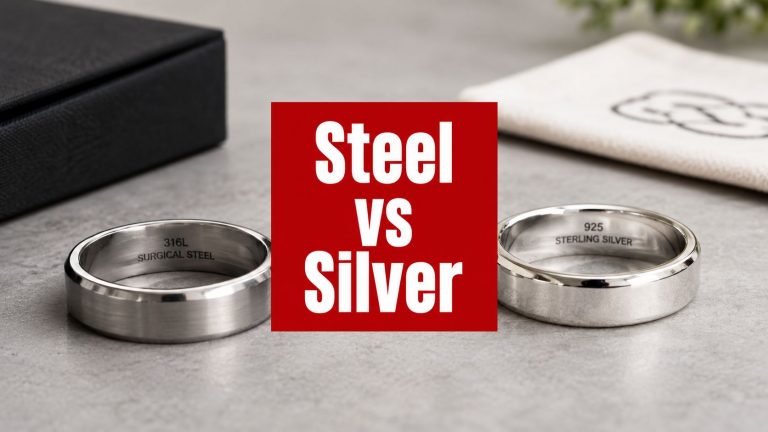
You’re pricing a new collection, and the sample tray is already split down the middle. The 316L surgical steel pieces look cleaner on cost and daily wear, the
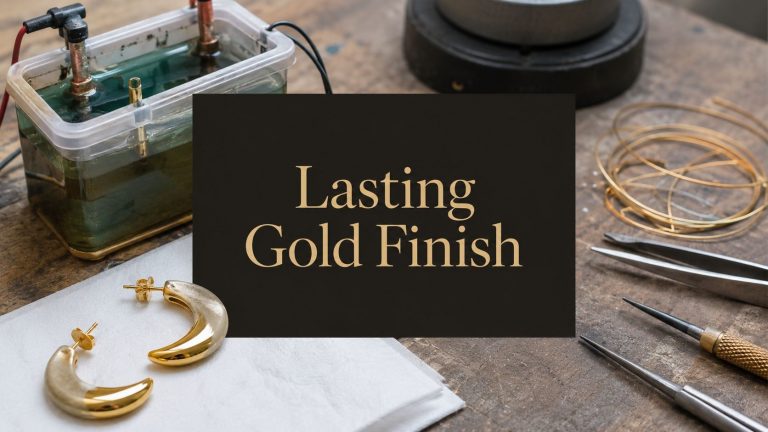
You probably have a launch already in motion, a supplier sample on your desk, and one uncomfortable question underneath it all, will this gold color still look clean
If you are developing the ring itself, compare ring fabrication, casting and CAD methods before approving the shank dimensions and manufacturing route. You’re refining a ring design, the