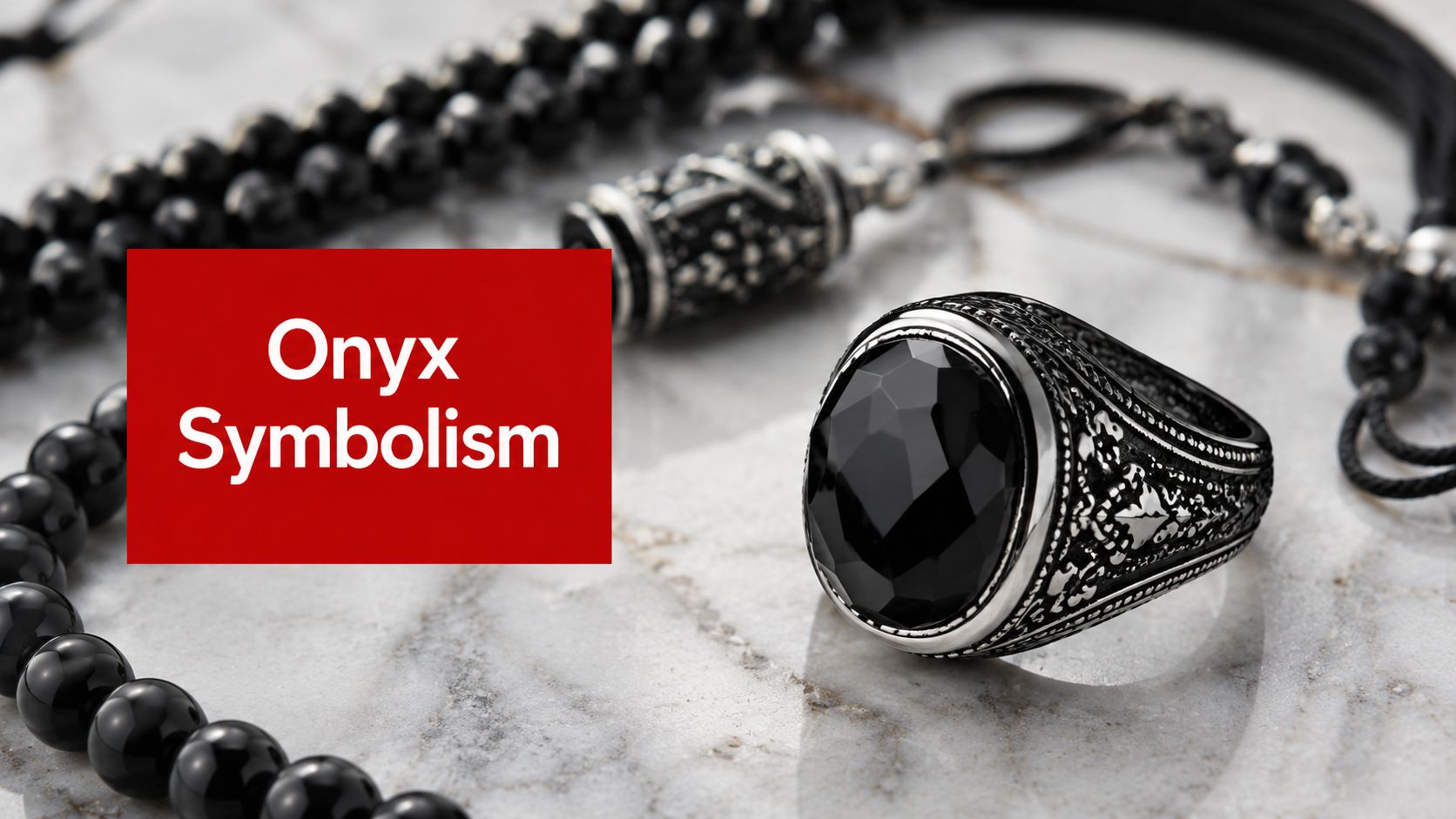
A buyer holds a black onyx ring under the showroom lights and asks the question that matters most. Is this stone only about looks, or does it carry a message customers will care about?
That question comes up often in wholesale and custom jewelry conversations, because onyx is one of those materials that looks simple at first glance but carries a long memory. Its symbolism has moved through battle, mourning, ritual, and modern minimalism, which is why the answer to what does onyx symbolize depends on history, culture, and the way the piece is designed. For brands, that layered meaning is useful because it gives the stone a story that feels earned, not invented. For buyers, it helps explain why onyx keeps showing up in men’s jewelry, formalwear, spiritual pieces, and heritage-inspired collections, including contemporary trend direction in the jewelry market HonHo Jewelry trend insights.
Why Onyx Captivates Jewelry Designers and Buyers
A designer can place a strand of onyx next to polished silver and know immediately that the piece will read as controlled, clean, and deliberate. A retailer can put the same stone into a men’s bracelet or a black pendant and see customers respond to its quiet authority. That reaction isn’t accidental, it comes from the way onyx has been associated with protection, courage, and restraint for centuries, which gives it a rare mix of visual simplicity and symbolic weight.
A stone that feels familiar but not ordinary
Onyx works in both statement jewelry and understated lines because it does not fight for attention. Its dark surface gives brands a clear visual anchor, while its history adds depth that customers can feel even if they don’t know every cultural detail. That makes it especially effective for collections aimed at people who want jewelry to signal strength without flash.
A useful way to think about onyx is as a material with two jobs. First, it functions as a strong black design element. Second, it carries heritage meaning that makes product copy easier to shape around protection, grounding, and disciplined style. In wholesale jewelry, that combination matters because it gives sales teams a story they can repeat across rings, pendants, bracelets, and gifting sets.
Practical rule: If a black stone looks too plain to explain, the marketing story around onyx should do the heavy lifting. The symbolism is often what turns a basic silhouette into a meaningful purchase.
That’s also why onyx holds up so well in modern collections that favor minimalism, masculine styling, and formal dressing. It feels current without needing a trend cycle to justify it. For buyers, that kind of durability is useful because it supports repeat ordering and broader merchandising across seasons.
Understanding Onyx as a Gemstone and Symbol
A jewelry buyer may see a black stone and assume it is dark. Onyx is more specific than that. It is a banded variety of chalcedony, which places it in the quartz family and gives it layered structure rather than a single flat color. A standard dictionary definition describes it as a banded variety of chalcedony made of parallel layers of different colors, and that structure explains why it works so well in carved forms as well as polished jewelry Merriam-Webster on onyx. In production terms, those layers are also why onyx can be used as cabochons, cut sections, or carved details in historical-style pieces.

Why the material itself shapes the meaning
Onyx carries meaning because its appearance is controlled and quiet. Across jewelry and gem references, it is linked to protection, grounding, self-control, inner strength, and stability, and those ideas match the stone’s dense, absorbing look. A stone that does not sparkle loudly usually reads as serious and contained, so onyx often fits designs that are meant to suggest discipline rather than display.
That connection between form and symbolism matters for brands and wholesalers. A polished black cabochon in a silver ring already signals a mood before the product copy begins. The stone looks bounded, calm, and composed, so it suits collections aimed at emotional steadiness, formal restraint, and clean styling.
Design insight: Onyx works best when the setting supports its low-reflective character. Clean lines, dark plating, brushed metal, and minimal ornament usually strengthen the stone’s message instead of competing with it.
Material history adds another layer. Onyx has long been used in carved jewelry and amulets, which helps explain why it remains credible in both decorative and symbolic applications. For brands positioning product within broader quality tiers, a useful reference point is what counts as fine jewelry, because onyx is often chosen to support a look that feels intentional, polished, and heritage-driven rather than flashy. That combination of material strength, visual clarity, and adaptable styling is a large part of why onyx still holds value in modern wholesale jewelry.
Onyx Symbolism Through History and Across Cultures
If a buyer holds an onyx pendant next to a bright, faceted stone, the difference is immediate. Onyx reads as composed and quiet, which is one reason it has stayed useful in jewelry storytelling for a very long time AJ Luxe on onyx meaning. Its history reaches back through ritual use, decorative carving, and protective symbolism, so brands can position it as more than a dark material choice.
In ancient Greece and Rome, onyx was linked with courage and steady resolve. Accounts describe it as a stone worn into battle to help ward off bad luck and support decisive action. That military association gave onyx an early reputation for remaining firm under pressure, a quality that still shapes how many jewelry companies present it to buyers who want strength without flash.
From sacred stone to mourning jewelry
Biblical tradition also places onyx among the 12 precious stones, which gives the gem a sacred dimension in historical interpretation Onyx historical symbolism. Across later periods, the meaning of the stone broadened rather than stayed fixed. In some settings it suggested blessing or protection, while in others it took on a more solemn role.
That shift is easy to see in the Victorian era, when black onyx became closely tied to mourning jewelry. It signaled grief, remembrance, and respect, which made it suitable for pieces meant to carry memory rather than celebrate ornament alone Victorian mourning association. For brands and wholesalers, this matters because it shows how the same material can move from protective use to memorial use without losing seriousness.
The modern market still draws on that layered history. Contemporary gemstone references describe onyx as a symbol of timeless elegance, strength, and restraint, and that language fits collections built around clean lines, formal wear, and understated luxury. For brand positioning, onyx works well when the product story emphasizes heritage, composure, and durability rather than sparkle.

Why history still matters in sales language
Buyers tend to trust stones that already carry a recognizable story. Onyx feels established, and that sense of history helps it work in both heritage-inspired and modern minimalist collections. For sales teams, the practical advantage is clear, the stone does part of the storytelling before the copy begins.
That makes onyx especially useful for brands that need a material with flexible symbolism. A black cabochon can speak to restraint, a carved piece can suggest continuity with older craftsmanship, and a polished setting can frame the stone as refined rather than severe. For a broader product-color reference point, brands can also use birthstone colors and meanings by month when shaping assortment stories around customer expectations and gift buying.
The strongest takeaway for jewelry brands is that onyx has never carried only one meaning. Across cultures and eras, it has been linked with protection, sacred use, mourning, restraint, and quiet strength. That range gives marketers room to tailor product language to different buyers while keeping the material itself consistent.
How Color and Culture Shape Onyx Meanings
A customer may see onyx as a sleek black accent, while a buyer from another tradition may read the same stone as a sign of protection, restraint, or transition. That shift matters for brands and wholesalers, because the meaning of onyx changes with color treatment, naming, and cultural context. A banded stone invites a different reading than a uniform black cabochon, and that difference gives product teams a practical way to shape storytelling without changing the material itself rock and gem field guide.

Black onyx, banded forms, and related stone language
Black onyx is the version most buyers encounter first, and it usually carries the clearest symbolic message. In modern crystal culture, it is commonly associated with grounding, seriousness, and protective energy. That reading is reinforced by its visual profile. The stone absorbs attention rather than scattering it, so it feels disciplined and controlled black onyx meaning.
Banded forms work differently. The eye moves across contrasting stripes, so the stone suggests balance, duality, and the meeting point between opposites. For product copy, that means a banded piece can be described in terms of contrast and alignment, while a solid black stone can be framed around quiet strength and clarity.
Some traditions also link onyx with initiation and change, including interpretations noted in Peruvian and Native American contexts cultural variation angle. That is useful for brands selling internationally, because onyx does not carry the same message everywhere. A customer buying a gift in one market may read the stone as protective, while another may connect it with transition, memory, or personal discipline.
Brand note: Do not write as if every black stone means the same thing in every region. Product language should stay specific, especially when you are selling across cultures.
A practical merchandising move is to separate black onyx from other banded stones in copy and photography. If the stone is visually uniform, lead with strength and restraint. If the banding is visible, talk more naturally about balance, contrast, and internal alignment. That distinction helps prevent confusion in wholesale catalogs and makes international listings easier to adapt. For brands building assortments around color stories, a broader reference such as birthstone colors and meanings by month can help keep product language consistent with customer expectations and gift buying.
Metaphysical and Emotional Associations of Onyx
Modern buyers often reach for onyx because they want a stone that feels emotionally steady rather than flashy. In crystal and spiritual jewelry, it is commonly linked to grounding, focus, emotional steadiness, and disciplined restraint, which makes it a frequent choice for people who want jewelry to feel supportive as well as stylish. The stone’s reputation for inner strength fits especially well in collections designed around calm confidence and everyday wear spiritual jewelry symbols guide.
Zodiac and anniversary ties that support gifting
Onyx is traditionally linked to Leo, with references placing that sign between July 23 and August 22 Leo onyx association. It also appears in some jewelry traditions as a stone for the 7th wedding anniversary and in others for the 10th onyx anniversary associations. Those links give retailers concrete occasions to build around instead of relying on broad spiritual language alone.
That kind of occasion-based marketing works because it gives the product a reason to be bought now. A Leo birthday, an anniversary, or a personal milestone can all support the same stone without changing the design.
How the look of the stone reinforces the message
Onyx usually reads as low-reflectance and high-contrast, so the visual language already supports themes like seriousness, self-control, and premium understatement. That is why it pairs naturally with black-plated stainless steel, brushed silver, and minimalist settings that don’t overpower the stone. The stone’s appearance and its symbolic associations move in the same direction, which makes the product easier to position.
For buyers building assortments, that alignment is valuable. It means the jewelry does not need a complicated explanation to feel intentional. A simple ring, pendant, or bracelet can communicate a complete mood if the setting, finish, and copy all point in the same direction.
Onyx in Jewelry Design and Brand Storytelling
A black onyx piece can do a lot of branding work before a customer reads a single line of copy. The stone’s strong contrast and quiet finish already suggest strength, restraint, and formal elegance, so a polished silver ring or a clean pendant can carry a clear message without heavy styling. That makes onyx a practical choice for men’s jewelry, minimalist collections, and heritage-inspired lines where the design needs to feel deliberate, not busy.
The symbolism also shifts by context, which gives brands room to position the same stone in different ways. A memorial-style pendant, a birthday gift, and a fashion-forward signet ring can all use onyx, yet the story changes with the setting, the finish, and the audience. For buyers and wholesalers, that flexibility matters because it lets one material support several product narratives without confusing the customer.
Pairing stone, metal, and finish with intent
The setting often does as much storytelling as the stone itself. Stainless steel gives onyx a modern, durable frame. Sterling silver supports a cleaner, more classic look. Gold-filled settings can make the stone feel more luxurious and giftable, especially when paired with black rhodium or brushed finishes that deepen the contrast.
That is why jewelry brands should pay close attention to stone setting choices, not just the center stone. A well-matched mounting helps the symbolism read clearly, and a useful reference for that process is this guide to jewelry stone setting. Surface finishes such as mirror polish, satin texture, or selective plating change the emotional tone of the piece even when the stone stays the same. A brushed finish feels more restrained. A high-polish black setting feels sharper and more formal. Those details shape how buyers read the product at first glance.
Product positioning rule: Describe onyx by the mood it creates in metal, finish, and silhouette, because that is what shoppers notice first.
Turning symbolism into catalog language
Catalog copy works best when the language is direct. Protection, grounding, inner strength, and composure stay understandable across markets, and they give sales teams a shared vocabulary that does not depend on heavy explanation. For gifting guides, onyx can be positioned around birthday gifting, anniversary buying, or memorial pieces, depending on the collection and the audience.
This approach is especially useful in wholesale jewelry because it gives distributors and retail teams language they can reuse across product pages, line sheets, and display materials. It also supports custom jewelry programs, since a brand can request a specific silhouette, setting, or finish while keeping the symbolic message consistent from one piece to the next.
Common Misconceptions About Onyx Symbolism
A common question from buyers is whether onyx brings bad luck. That idea usually comes from the way black jewelry has sometimes been tied to mourning, especially in Victorian memorial wear. Mourning, though, is about remembrance and respect, not misfortune.
Dark does not mean negative
Modern crystal culture usually describes onyx as protective and stabilizing, not harmful. That distinction matters when customers hesitate over black stones for gifts or everyday wear. Across history, onyx has appeared in protective, memorial, and ceremonial settings, so its meaning shifts with context rather than staying fixed in one narrow reading.
Another misconception is that onyx feels too somber for regular styling. In practice, it is one of the easiest black stones to wear because it pairs well with casual, formal, and minimalist wardrobes. A small cabochon ring, a clean pendant, or a bracelet with restrained metalwork can feel calm enough for daily use while still carrying symbolic depth.
The simplest way to answer customer objections is to keep the explanation clear.
- Protective history: Onyx has long been linked with courage, grounding, and self-control.
- Mourning context: In some Western traditions, black onyx also appeared in memorial jewelry.
- Modern use: Today it is commonly worn for clean style, emotional steadiness, and understated elegance.
That framing helps buyers see onyx as versatile rather than gloomy. It also gives sales teams a clearer response when customers ask whether the stone feels too dark for a gift.
Key Takeaways for Jewelry Brands and Buyers
Onyx symbolizes protection, strength, grounding, self-control, and timeless elegance, and those meanings are strong enough to support product storytelling across many jewelry categories. The stone’s history gives it credibility, while its dark, simple look makes it easy to wear and easy to merchandize. For brands, that combination is rare.

A short checklist for positioning onyx well
- Use occasion-led copy: Tie onyx to Leo birthdays, the 7th and 10th anniversaries, and memorial gifting where appropriate.
- Match finish to message: Brushed, blackened, or high-contrast settings reinforce restraint and seriousness.
- Separate black and banded pieces: Buyers understand symbolism better when the visual form matches the story.
- Keep language grounded: Protection, balance, and inner strength are clearer than vague spiritual claims.
If you’re building a collection, onyx is a dependable choice because it gives you both a design anchor and a story customers can understand quickly. If you’re buying wholesale or developing a custom line, start with the meaning you want the piece to carry, then shape the metal, finish, and silhouette around that message.
HonHo Jewelry supports brands that want onyx-inspired pieces handled with care, from custom design and sampling to OEM and ODM production in stainless steel, brass, gold filled, and 925 sterling silver. If you’re planning a black-stone collection or a heritage-inspired line, visit HonHo Jewelry to explore manufacturing support that aligns symbolism, quality control, and dependable production.
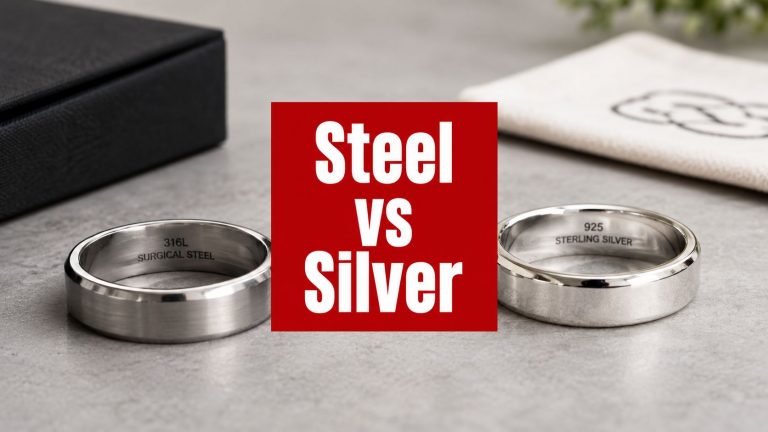
Surgical Steel vs Sterling Silver: Buyer Guide
You’re pricing a new collection, and the sample tray is already split down the middle.
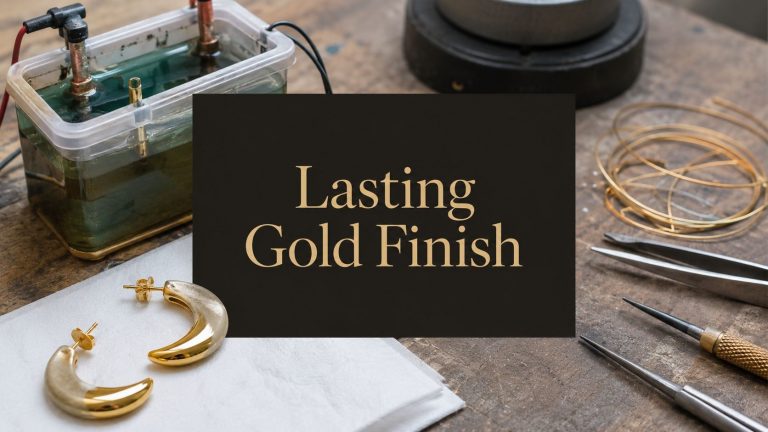
How to Gold Plated Jewelry the Right Way for Lasting Color
You probably have a launch already in motion, a supplier sample on your desk, and
What Is a Shank on a Ring: Guide to Design & Durability
You’re refining a ring design, the stone looks right, the setting is approved, and the