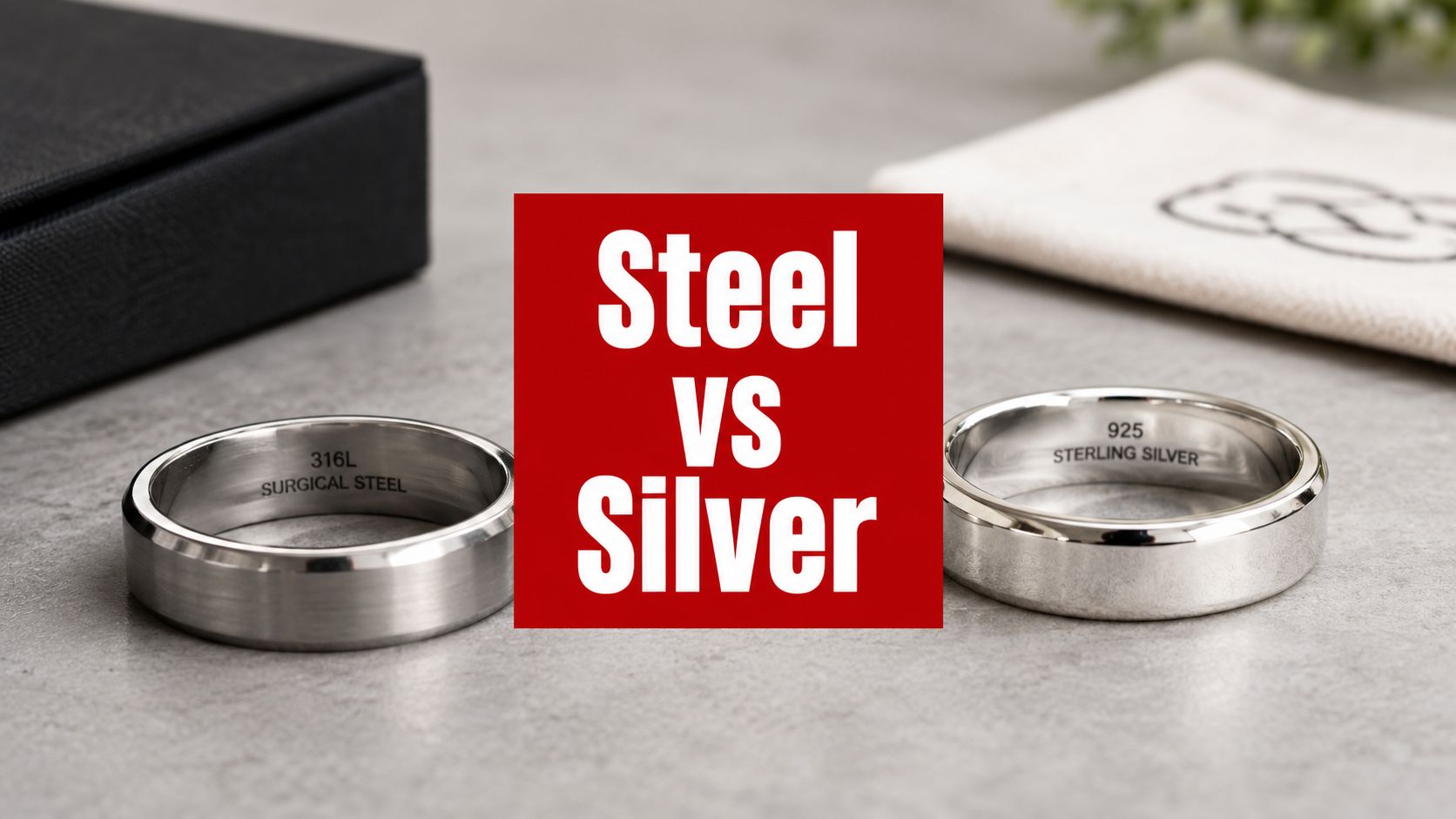
You’re pricing a new collection, and the sample tray is already split down the middle. The 316L surgical steel pieces look cleaner on cost and daily wear, the 925 sterling silver pieces look stronger on perceived value, and marketing copy won’t save you if the wrong metal creates returns later. For a real jewelry line, the question is not which metal sounds better. It’s which failure mode your customer will tolerate more, tarnish or nickel release.
| Property | 316L Surgical Steel | 925 Sterling Silver |
|---|---|---|
| Core identity | Corrosion-resistant stainless steel alloy | Legally recognized precious-metal alloy with 92.5% silver and 7.5% other metals, usually copper (source) |
| Skin risk focus | Low nickel release when well made, but not zero-risk for highly sensitive wearers (source) | Nickel-free by definition, but copper content can still create tarnish and maintenance issues (source) |
| Wear behavior | Strong, wear-resistant, low maintenance (source) | Softer, easier to scratch, easier to repair and resize |
| Visual aging | Holds its surface well | Tarnishes and darkens without care (source) |
| Best commercial use | Everyday, high-contact, lower-friction SKUs | Value-led fine jewelry and pieces where hallmark storytelling matters |
HonHo Jewelry’s own stainless steel jewelry guide is useful if you need the factory-side view, but the buyer decision is simpler than most brands make it. Pick the metal that matches the thing your customer is most likely to complain about after purchase.
A mid-sized brand can ruin a 12-SKU drop by choosing the right-looking metal for the wrong use case. I’ve seen buyers fixate on finish photos, then discover the cost sits in returns, re-plating, and customer service messages about itching ears or darkened pieces. That’s why surgical steel vs sterling silver isn’t a styling debate, it’s a risk-management decision.
If the target customer is sensitive, the issue is nickel release. Sterling silver is nickel-free by definition, while 316L surgical steel is chosen because it can keep nickel release low when the alloy is properly made and polished (source). That’s a big distinction, and it’s why body-contact SKUs and healed-piercing earrings need different thinking than rings or pendants.
If the target customer is style-first, the complaint is more likely tarnish. Sterling silver contains 92.5% silver and typically 7.5% copper, which gives it structure but also creates tarnish over time (source, source). Surgical steel, by contrast, is built around corrosion resistance, which is why it stays lower maintenance in everyday wear.
Practical rule: choose the alloy based on the issue you want to avoid in your post-purchase inbox. If your customer is likely to worry about skin contact, weight, and daily wear, steel usually wins. If your customer expects precious-metal value and is willing to care for the piece, sterling silver makes more sense.
For contract manufacturing, this changes the whole SKU plan. A steel line supports durable, price-sensitive wholesale jewelry. A sterling line supports finer positioning, deeper engraving, and a more premium unboxing story. Those are different production choices, not just different metals.
316L surgical steel is an austenitic stainless steel alloy, built on iron and strengthened with chromium, nickel, and molybdenum. The common composition cited for jewelry is about 16–18% chromium, 10–14% nickel, and 2–3% molybdenum (source). That chromium content is the reason the surface resists corrosion, while the low-carbon 316L formulation is preferred for body contact and healed-piercing jewelry.
For buyers, the key point is simple. This is not costume metal and it’s not precious metal. It’s a functional alloy that manufacturers specify for durability, predictable finishing, and low maintenance. The technical data sheet for 316L shows 70,000 psi tensile strength, 25,000 psi yield strength, 40% elongation, and hardness around 217 HB / 90 HRBW (source). That’s why it holds up well in thin components, clasps, hoops, and hardware-heavy designs.
Sterling silver means 92.5% silver and 7.5% other metals, usually copper, and that’s why the 925 stamp matters commercially (source). Pure silver is too soft for most jewelry applications, so the copper is there to give the piece shape and wearability. Sterling is also legally traceable as a precious-metal alloy, which is part of why it carries intrinsic value that base metals don’t.
Sterling silver contains no nickel by definition, which makes it easier to position for buyers who react to nickel-bearing alloys. The trade-off is maintenance. Copper reacts with sulfur compounds in air, moisture, and skin oils, which creates the dark tarnish layer people recognize on 925 jewelry (source). That isn’t rust in the iron-oxide sense, because silver has no iron, it’s surface discoloration that can usually be cleaned away (source).
HonHo Jewelry’s 316L stainless steel jewelry guide is worth reviewing if you’re matching material to production specs. The factory question is never “what looks nicer,” it’s “what alloy identity are you ordering, and what finish sits on top of it.”
| Property | 316L Surgical Steel | 925 Sterling Silver |
|---|---|---|
| Skin-contact behavior | Low nickel release when properly manufactured and polished, but not zero-risk for very sensitive wearers (source) | Nickel-free by definition, but copper and tarnish can still irritate some wearers |
| Tarnish and corrosion | Built for corrosion resistance, lower maintenance | Tarnishes as copper reacts with sulfur compounds (source) |
| Strength | 70,000 psi tensile strength, good for thin parts and hardware (source) | Softer, easier to scratch and dent |
| Finishing tolerance | Strong platform for PVD, mirror polish, and daily-wear durability | Better for polishing, engraving, repair, and hallmarked value |
| Buyer perception | Practical, modern, affordable | Precious, traditional, value-led |
Surgical steel protects against nickel release better than most low-cost alloys, but sterling silver is the cleaner answer when you need a nickel-free precious metal. Sterling avoids nickel, steel avoids tarnish better. That’s the real trade-off.
For jewelry buyers, hardness matters because it shows up in the product after two weeks of wear. 316L’s higher strength makes it more suitable for thin findings, ring shanks, and clasp hardware that must keep its shape. Sterling silver is easier to deform, but that same softness makes it easier for a jeweler to polish, resize, and repair.
Finish also changes the experience. A steel piece can be enhanced with PVD coating, especially when the base surface is mirror-polished before coating. That’s why plated steel can look premium without pretending to be silver. Sterling silver can also be coated or lacquered, but the selling point is different, it’s the underlying precious-metal identity, not just the surface.
If you’re thinking like a manufacturer, the clean takeaway is this. The base alloy matters, but the surface finish often matters more to the buyer’s eyes and hands. A well-finished steel SKU can feel more premium than a poorly finished sterling one, and a tarnished sterling SKU will lose perceived value fast.
Sterling silver usually costs more because the material itself carries precious-metal value, and the handling is softer and more labor-sensitive. Surgical steel is cheaper to source, but the final cost can rise once you add the finish customers expect, especially if you want gold or rose tones instead of natural steel color. That’s where PVD and electroplating move from cosmetic detail to margin control.
For mass production, the factory math is straightforward. Sterling silver blanks often sit around $3 to $8 per piece, while stainless steel can sit around $0.40 to $2 before finishing. Those are not retail numbers, they’re the kind of production-level ranges buyers use to judge whether a SKU belongs in a premium line or a value line. The lower raw cost of steel is attractive, but cheap base metal becomes expensive the moment plating fails and rework starts.
For fashion jewelry, plating thickness targets of 2 to 3 microns are commonly used to support product life without pretending to be permanent. Gold vermeil is a different benchmark from standard plating because it sits in a more deliberate precious-finish category, while standard decorative plating is usually a thinner surface treatment. Sweat, friction, and daily hand contact wear both systems down, and plated steel is no exception.
HonHo Jewelry’s gold plating thickness guide matters here because buyers often under-spec the finish and overestimate lifespan. If the SKU is meant for everyday use, the plating spec has to be written into the order, not assumed from the sample. A polished base, controlled thickness, and clear wear expectations keep customer complaints down.
Steel is usually the better base for affordable plated lines because it stays structurally stable and handles daily wear well. Sterling silver is the better base when the design is sold on intrinsic value, engraving depth, and a softer luxury feel. In both cases, the hidden cost is quality failure, either a finish that wears early or a piece that doesn’t retain the retail story you sold.
If you’re building wholesale jewelry for repeat buyers, the smartest move is to price the whole service life, not just the first invoice. That means plating durability, returns, and the customer’s expectation of what the metal should do after months of wear.

Cartilage and helix earrings should usually go to 316L surgical steel if the line is meant for regular wear, moisture, and lower price pressure. The skin-contact area is small, the use case is high-contact, and buyers want durability more than a precious-metal story. For that category, steel is the safer production bet.
Men’s rings and chainmaille also lean steel when the design needs scratch resistance and structural strength. A ring gets knocked on desks, gym equipment, and tools, and steel handles that abuse better than sterling. Chainmaille needs tensile strength more than softness, so steel is the practical factory choice.
Sterling silver belongs on signet rings, statement pendants, charm bracelets, and bridal or gift-led pieces. Those categories sell intrinsic value, engraving, and a classic precious-metal feel. Buyers will pay more for the narrative, and the metal needs to support that story.
HonHo Jewelry’s wholesale sterling silver rings page fits here because ring buyers often need both metal choice and private-label execution under one roof. In mixed collections, chains and findings often default to steel because hardware needs strength, even when the focal pendant is sterling.
For mid-tier bridges, I’d use surgical steel with PVD gold for affordable everyday hoops, and sterling silver with anti-tarnish coating for travel jewelry. That gives you two different answers to two different customer expectations. One values resilience, the other values finish and material credibility.

If your supplier can’t document the alloy, walk away. For steel, ask for the mill certificate that verifies 316L instead of a cheaper grade like 304. For sterling, ask for an assay report confirming 92.5% silver content. Those documents are how you keep the SKU honest before packaging ever starts.
Ask how the steel is finished before coating. A mirror-polished base usually gives a better PVD result than a rough surface, and the chamber setup matters if you’re specifying titanium nitride or ZrN looks. If plating is involved, confirm thickness in microns, not in vague marketing language. That’s how you avoid the gap between a sample piece and a production run.
Manufacturer check: if a supplier won’t state whether the finish is PVD, electroplated, lacquered, or simply polished, you don’t have enough control over the batch.
Quality control should be written into the order too. Ask whether the supplier uses cross-hatch adhesion checks, salt spray testing, or another method to verify finish retention. HonHo Jewelry, for example, positions in-house PVD and electroplating, documented inspection, and testing as part of its OEM/ODM workflow, which is the kind of structure buyers should look for in a contract manufacturer.
MOQ matters as well. Steel often starts at a higher MOQ because the line is built around hardware and surface treatment, while sterling silver can sometimes support lower runs because the pieces are handled more as value goods. Ask for sample sets with finish swatches, then ask how warranty claims are handled if plating fails or a batch misses assay. That’s not an edge case. It’s the part of the buying process that protects your margin.
| Criterion | Surgical Steel (316L) | Sterling Silver (925) | Best-Fit Brand Scenario |
|---|---|---|---|
| Skin sensitivity risk | Lower nickel release when well made, but not zero-risk | Nickel-free by definition | Healed-piercing lines, value-driven fine jewelry |
| Tarnish exposure | Better resistance | Needs more care | Gym, travel, humid climates, daily wear |
| Price tier | Lower upfront cost | Higher perceived value | Entry-level to mid-tier vs premium |
| Plating flexibility | Strong base for PVD and electroplating | Better as natural metal or lightly protected finish | Color-led fashion lines vs hallmark-led collections |
| MOQ practicality | Often better for hardware-heavy runs | Often workable for smaller value-led runs | Large earring drops vs smaller sterling capsules |
For a $25 to $60 everyday earring line, I’d choose 316L surgical steel, especially if the collection includes hoops, huggies, or moisture-exposed finishes. For a premium chain collection, I’d lean sterling if the brand wants a precious-metal story the customer can feel in the hand. For a unisex piercing range, steel is the cleaner production choice because the use case rewards durability and low maintenance. For charm-driven customizable SKUs, sterling is the stronger fit because engraving and perceived value matter more.
The better metal is the one whose dominant failure mode matters less to your customer. If your customer fears itching more than tarnish, steel wins. If your customer values intrinsic metal content more than wiping pieces down, sterling wins.
If you sell across multiple price points, mix them deliberately. Use steel for the structural parts, the daily-wear basics, and the waterproof SKUs. Use sterling for the hero pieces, the giftable items, and the designs where hallmark language and resale perception help the sale.
Sterling silver and steel both need simple care, but sterling needs more attention because it tarnishes. A soft polishing cloth works for sterling, while steel usually only needs mild soap and water. If a customer has reacted to nickel before, that history matters more with steel than with sterling, because sterling is nickel-free by definition. Mixing both metals in one collection doesn’t look inconsistent if the category logic is clear. It looks inconsistent when the same finish promise is used on products with different wear realities. Also, silver-plated base metal is not a substitute for 925 sterling silver, because plating thickness can wear away and reveal the underlying base.
HonHo Jewelry works with 316L surgical steel and 925 sterling silver in OEM and ODM production, so you can build a collection around the right failure mode instead of guessing. If you’re sourcing a private-label line and need help balancing finish, MOQ, and quality control, visit HonHo Jewelry and compare the manufacturing options against your actual SKU plan.
You probably have a launch already in motion, a supplier sample on your desk, and one uncomfortable question underneath it all, will this gold color still look clean
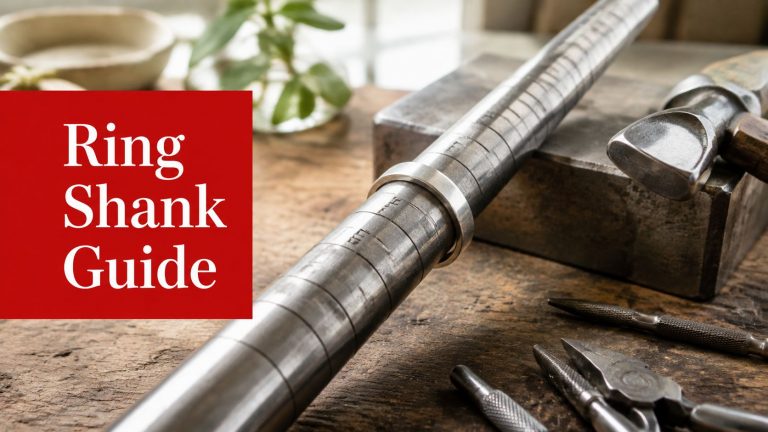
You’re refining a ring design, the stone looks right, the setting is approved, and the band still feels like a detail you can solve later. That’s where many
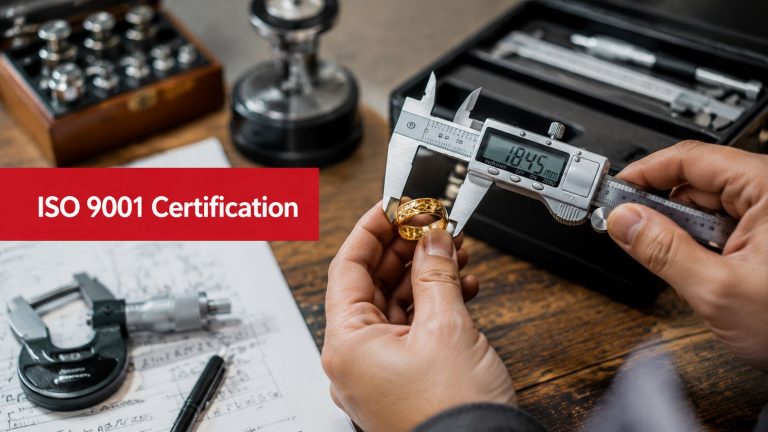
You’re comparing two factories and one sales rep keeps waving an ISO 9001 certificate like it settles everything. It doesn’t. The core question is simpler and more useful: