A Guide to Sandblasted Jewelry for Modern Brands

You’re probably looking at product samples right now and seeing the same problem over and over. High polish looks premium in renderings, then starts showing fingerprints, hairline scratches, and uneven wear the moment customers touch it. Brushed finishes help, but they push the design in a directional, often masculine-looking way that doesn’t fit every collection.
That’s where sandblasted jewelry earns its place. A proper sandblasted finish changes how metal handles light, wear, plating, and perceived quality. It can make a simple ring feel architectural, give stainless steel a softer presence, and create contrast that photographs cleanly across DTC channels. Once the samples are ready, many founders also need to streamline fashion photography with AI so matte textures still read clearly online without relying on expensive reshoots.
From a production standpoint, the finish matters even more than most new brands expect. Sandblasting affects not only appearance but also plating behavior, inspection standards, repair difficulty, and long-term customer satisfaction. If you’re sourcing custom jewelry or wholesale jewelry with a matte look, those details determine whether your launch feels refined or inconsistent.
The Search for a Signature Jewelry Finish
Most brand founders don’t start by asking for sandblasting. They start by asking for a finish that looks fresh, feels premium, and won’t generate complaints after a few weeks of wear. That usually means balancing design language with production reality.
Sandblasted jewelry works because it solves two problems at once. It delivers a soft, non-reflective surface that feels current, and it’s also more forgiving in everyday use than mirror polish. That makes it useful for minimalist collections, industrial-inspired pieces, men’s jewelry, logo-driven signets, and contrast designs where a matte field makes polished details stand out.
Historically, the method has deep roots in manufacturing. Sandblasting, historically known as abrasive blasting, was commercially pioneered by Benjamin Chew Tilghman in 1870, later becoming standard across industrial production and widely adopted in jewelry for frosted finishes by the mid-20th century. Today, over 70% of matte-finish stainless steel and silver pieces in the global market use this method, and it can remove casting flash 30 to 40% less time per unit than hand filing according to the compiled industry data cited by Ganoksin Orchid, V&A Museum, and Tooltos.
Sandblasting isn’t just a styling choice. In production, it’s often a decision about consistency, throughput, and how much post-finish handling a piece can tolerate.
For DTC brands, that matters. A finish has to survive customer touch, warehouse handling, and repeated photography while still matching the brand story.
What Exactly Is a Sandblasted Finish
A sandblasted finish is a uniform matte texture created by directing abrasive particles at the metal surface under pressure. The metal itself doesn’t change, but the top layer is intentionally roughened so it stops reflecting light like a mirror and starts diffusing it instead.

How the surface changes light
The easiest way to understand it is to compare clear glass with frosted glass. Both are glass, but one reflects and transmits light cleanly while the other softens it. Sandblasted jewelry does the same thing on metal. The surface becomes visually quiet.
That’s why this finish works so well for brands aiming for a modern, understated, or architectural look. It doesn’t glitter. It absorbs attention in a subtler way, especially on larger surfaces like signet tops, cuff exteriors, broad bands, and geometric pendants.
The process intentionally abrades the surface with particles like sand, glass beads, or nutshells to create a rough, matte texture that diffuses light. It’s also used on metals, glass, and ceramics in jewelry and serves as a critical pre-treatment for a clean substrate before PVD or electroplating, as defined in this sandblasted finish glossary from Joseph Jewelry.
How it differs from brushed and polished finishes
Brushed and sandblasted finishes are often grouped together by buyers, but they behave differently.
- Brushed finish creates visible linear grain. It has direction and tends to emphasize form lengthwise.
- Polished finish reflects light sharply. It looks crisp, but every handling mark shows.
- Sandblasted finish is non-directional. It creates an even matte field across the whole surface.
If you’re comparing finishing options during development, this guide to jewelry polishing techniques and surface effects is useful because it helps translate visual references into production language.
Practical rule: If your design relies on sharp shine, don’t sandblast the dominant surface. If your design relies on shape, silhouette, or contrast, sandblasting usually strengthens it.
The Manufacturing Process Behind the Matte Finish
A founder approves a matte sample, then the first plated production run starts coming back with uneven color hold on edges and high points. In most cases, the problem started before plating. Sandblasting sets the surface profile, and that profile directly affects how well a PVD layer deposits, bonds, and wears.

A good matte finish comes from process control. The operator has to manage abrasive type, air pressure, nozzle distance, travel speed, and post-blast cleaning. If any one of those drifts, the finish can turn patchy, edges can wash out, and the plated result can become less stable in wear.
The three variables that control the result
The first variable is media choice. Glass bead produces a softer, more even frost. Aluminum oxide cuts more aggressively and leaves a sharper surface profile. That choice affects more than appearance. A rougher profile can help mechanical keying before coating, but if it is too aggressive, the final plated surface may look dry, darker than the approved sample, or wear faster on exposed corners.
The second variable is air pressure. Lower pressure is safer for delicate geometry, thin sections, and softer metals. Higher pressure increases cutting speed and texture depth, but it also raises the chance of rounding edges, widening engraved details, or creating an inconsistent base for plating. In production, the right setting is the one that gives a repeatable matte without damaging the form.
The third variable is time and movement. Operators need a consistent angle and a controlled pass pattern across faces, shoulders, recesses, and backs. Holding too long in one zone creates a visibly different texture. Moving too fast leaves areas under-processed, which often shows up more clearly after PVD than it does on raw metal.
A broader look at how jewelry is made from design to finishing helps put sandblasting in context, because this step only performs well when casting cleanup, pre-polish, and final cleaning are already controlled upstream.
Here’s a live process view many buyers find useful before sampling:
Where process control usually fails
New DTC brands often approve texture from still photos alone. That is risky. Sandblasted parts need to be reviewed under direct light, at an angle, and after plating, because the same matte can look refined in raw steel and uneven after a gold or black PVD layer.
Failures usually show up in four places:
- Edge over-blasting. Corners lose definition, and plated high points wear first in customer use.
- Residual media. Particles stay trapped in stone seats, hinges, undercuts, or logo recesses and contaminate later steps.
- Inconsistent grain. Mixed or worn media changes the surface profile from batch to batch, which changes the plated look too.
- Post-blast contamination. Oils, polishing compound, or handling residue interfere with coating adhesion.
The business impact is straightforward. If a matte surface is specified without limits for roughness, coverage consistency, and cleaning standard, the supplier will interpret the finish by eye. That usually creates avoidable variation between pilot samples and bulk production.
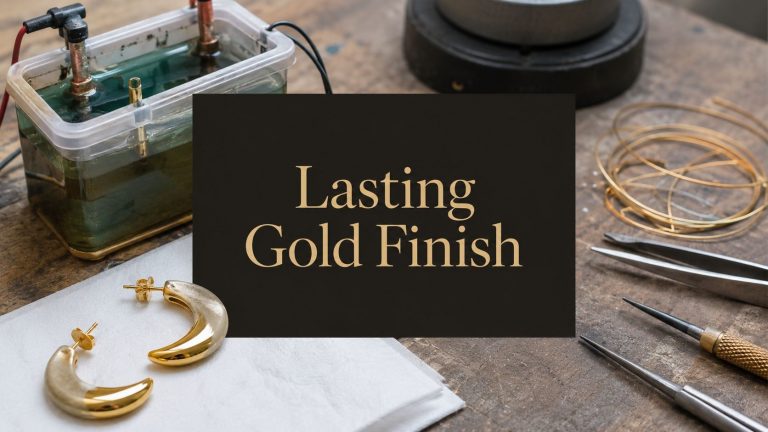
If your collection also uses plated metals, this external guide on durable jewelry finish explained is worth reviewing alongside your finish specs, because matte texture and coating durability are closely linked.
Choosing the Right Materials for Sandblasting
A founder approves a matte gold sample in brass, then asks for the same finish on steel for the second launch. On paper, that sounds simple. In production, it changes the blast response, the edge definition, the way PVD sits on the surface, and how the piece will look after a few months of wear.
Material choice sets the ceiling for a sandblasted finish. The same texture spec will not produce the same result across different alloys, and the difference is not only visual. It affects plating stability, reject rate, and how consistently your bulk order matches the approved sample.
Material Suitability for Sandblasted Finishes
| Material | Aesthetic Outcome | Durability | Best For |
|---|---|---|---|
| Stainless steel | Crisp, modern matte with an industrial edge | Strong everyday durability | Men’s jewelry, minimal collections, unplated silver-tone looks |
| Brass | Warm matte base, especially useful under gold color finishes | Good, but depends heavily on plating system | Fashion jewelry, logo pieces, plated collections |
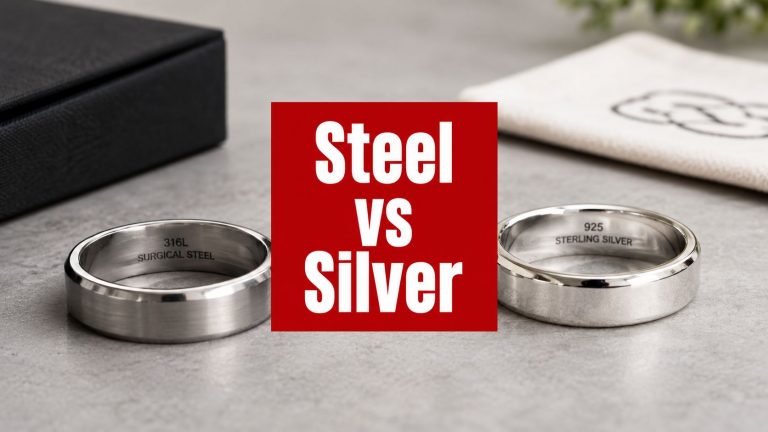
| 925 sterling silver | Soft frosted appearance | Softer surface feel in wear | Higher-end matte silver designs, small runs |
| Gold filled | Gentle matte if processed carefully | Depends on layer integrity and handling | Select premium styles where warmth matters |
Stainless steel is usually the most forgiving option for a sandblasted program. It holds geometry well, gives a clean matte surface, and is easier to standardize across repeat orders than softer materials. Brands weighing alloy options can review this guide to 316L stainless steel jewelry for product planning.
Brass is a common choice for gold-tone collections because it is cost-effective and casts well, but it needs tighter plating control. A sandblasted brass surface can look rich under gold PVD when the prep is clean and the coating is thick enough. If prep is inconsistent, the texture can read patchy after plating, especially on broad flat areas like signet tops, tags, and logo plates.
Sterling silver gives a softer, more diffuse matte. That can work well for premium silver collections, but the surface marks more easily in customer use than steel. Gold filled needs the most caution. Heavy blasting can cut too aggressively into the outer layer, so the finish has to be developed with lower pressure, finer media, and tighter operator control.
What works best by product goal
For cast parts, sandblasting is often part of cleanup as well as part of the final look. It helps remove minor casting residue and gives a uniform matte base before further finishing. That does not mean every material should be treated the same way.
Use material choice to match the business goal:
- Choose stainless steel for stable repeatability, sharp edges, and matte collections where long-term appearance matters.
- Choose brass for plated fashion lines where color flexibility and cost target matter, but specify the plating stack carefully.
- Choose sterling silver for a softer premium look in lower-volume collections that can accept more surface change over time.
- Choose gold filled only when the supplier has proven control over blast pressure and media size on layered materials.
In OEM production, I treat material, blast texture, and plating as one decision. If they are approved separately, sample rounds multiply and bulk consistency drops. For sandblasted jewelry, the safest material is not always the cheapest base metal. It is the one that still looks right after coating and daily wear.
Plating Durability and Quality Assurance
A brand approves a sandblasted gold sample. The matte looks clean under studio lighting, the color is on target, and the first article passes visual review. Three months after launch, the first returns come in. Edges are bright, high-contact areas are fading, and the finish looks uneven. In production, that failure usually starts with one mistake. The factory approved texture and coating as separate items.

Why texture and plating have to be specified together
Sandblasting changes more than appearance. It increases surface area and creates peaks, valleys, and edge break across the part. That can help coating grip the base metal, but it also makes thin color layers wear unevenly because the high points take contact first.
This matters even more on PVD finishes. A polished ring and a blasted ring should not automatically share the same coating target, even if the color code is identical. On the blasted version, the coating has to cover a more demanding surface profile. If the texture is coarse or inconsistent, the finish can look acceptable at packing and still lose color early in customer wear.
That is why I review blast texture, base metal, pretreatment, and coating stack as one system. Brands that want the long wear advantages of PVD should also understand the production limits between PVD and electroplated jewelry coatings. The finish choice affects the durability target.
The materials science behind this is well established. The European Commission Joint Research Centre notes that rougher metal surfaces can increase localized corrosion risk when protective films are too thin, especially on stainless substrates with pronounced texture: https://publications.jrc.ec.europa.eu/
In practical terms, a matte plated ring can pass day-one inspection and still fail in use because the supplier built it like a polished part. The appearance was approved. The coating system was under-specified.
Approve sandblasted texture and coating thickness together, using the exact same sample and wear standard you expect in bulk production.
What quality teams should verify before mass production
A serious QA plan checks the finish as a process, not just a color swatch.
- Coating thickness by area. Check more than one point on the part. Flat surfaces, corners, and raised edges often plate differently on blasted pieces.
- Surface cleanliness before coating. Residual media, oil, or poor rinsing can reduce adhesion and create patchy wear.
- Adhesion after pretreatment and coating. Cross-hatch, tape, or bend testing should match the product type and base metal.
- Wear and corrosion testing. Use test conditions that reflect the selling market and the intended price tier, not just a basic internal pass standard.
- Post-plating handling control. Matte surfaces hide fingerprints well, but they do not hide rework. Once a blasted plated surface is scratched, repair usually shows.
Factory capability matters here. Some suppliers can create an attractive sandblasted sample but struggle to hold the same blast profile, cleaning discipline, and coating consistency across repeat orders. The weak point is often not the PVD chamber itself. It is variation in prep before coating.
Compliance checks matter too. The International Labour Organization has published repeated guidance on dust exposure, ventilation, and respiratory protection in small manufacturing environments, including workshops handling abrasive processes: https://www.ilo.org/global/topics/safety-and-health-at-work/lang–en/index.htm
For a DTC brand, the business takeaway is simple. If you sell sandblasted plated jewelry, durability is decided before plating starts. It is set by how evenly the texture is produced, how cleanly the part is prepared, and whether the coating spec matches the roughness you approved.
How to Specify Sandblasted Jewelry in an OEM Order
A founder approves a sample that looks right on the top surface, then bulk goods arrive and the finish reads darker, rougher, and less even once the pieces are plated and viewed from the side. That gap usually starts in the OEM brief.

“Matte gold finish” is too loose for production. A factory can interpret that as brushed, satin, light bead blast, or a heavier frosted texture. On plated jewelry, that ambiguity creates a bigger problem than appearance alone. Surface profile changes how the PVD color settles, how thick the coating needs to be to cover evenly, and how the piece will wear after launch.
A usable OEM spec should describe the finish as a controlled process, not just a visual target.
The details your tech pack should include
Put these points in writing:
- Call out the finish by name. Use “sandblasted finish” or “fine bead-blasted finish,” not only “matte.”
- Define the texture grade. State whether you want a soft, even velvet matte or a more pronounced frosted texture.
- Mark the exact blast area. Full coverage, recessed areas only, or contrast between blasted fields and polished edges need separate notes on the drawing.
- List the base metal and final coating. Stainless steel, brass, and silver do not respond the same way in blasting or plating.
- Specify the sequence. If the part is sandblasted before PVD, say so. If certain areas must be masked before coating, note that too.
- Include an approved reference. A marked-up photo, retained sample, or finish standard prevents subjective interpretation on the factory floor.
If you are still comparing suppliers, this guide on how to find a jewelry manufacturer is a practical starting point. Finish consistency usually tracks with how well the supplier controls sampling, pre-treatment, and repeat production.
What brands often forget to specify
The overlooked line item is the relationship between blast texture and plating durability.
A rougher matte finish can look excellent in sampling because it diffuses light and gives the product a more premium, modern surface. It also increases the effective surface area. If the PVD spec is too light, high points will show wear earlier, edges can read thinner in color, and the final piece may look inconsistent from lot to lot. That does not mean sandblasting is a bad choice for plated jewelry. It means the finish and coating have to be specified together.
For that reason, the OEM brief should also state:
- Target appearance after plating, not only before plating
- Color standard under different lighting, especially for gold, black, or gray PVD
- Any edge-retention limits, if logos, corners, or prong-like details must stay crisp
- Sample approval standard for wear-prone parts, such as clasps, rings, and cuff edges
The sample approval mistakes that slow production
The delay usually comes from approval feedback that is too general. “Looks good” is not enough for a textured plated surface.
Review the sample the way the customer will handle it. Check top faces, side walls, inner curves, jump ring areas, and closure parts. Ask for photos or physical samples after the final plating step, because an unplated blasted sample does not fully predict the sold result. On sandblasted jewelry, rework is limited. If the factory has to re-polish one area or re-blast a small patch, the repair often shows.
A short approval checklist helps:
- Inspect all visible faces under direct and diffused light
- Check contrast zones where polished details meet blasted fields
- Approve the plated sample, not only the raw metal sample
- Confirm acceptable variation range for texture and color between units
- Ask how rejected pieces are handled, since local repair is often visible on matte surfaces
HonHo Jewelry is one example of a manufacturer that supports OEM and ODM development across stainless steel, brass, sterling silver, and gold-filled categories, including sandblasted finish options. The point is not the finish menu. It is whether the supplier can hold the same texture, cleaning standard, and plated result from sample to bulk order.
Frequently Asked Questions About Sandblasted Jewelry
A lot of misconceptions around sandblasted jewelry come from treating it as a simple “look” instead of a technical finish. The questions below are the ones buyers usually need answered before sampling.
Common Questions on Sandblasted Jewelry
| Question | Answer |
|---|---|
| Is sandblasted jewelry the same as brushed jewelry? | No. Brushed finishes have directional lines. Sandblasted finishes are non-directional and more uniformly matte. |
| Does sandblasting damage jewelry? | Not when it’s matched to the right material, media, and pressure. Poor control causes edge loss or uneven texture. |
| Is it a good finish for plated jewelry? | Yes, but only if plating thickness is specified correctly for the textured surface. Thin coating is where problems start. |
| Does it hide scratches? | It generally hides fingerprints and minor wear better than high polish, but deep damage is still visible. |
| Is it expensive? | It depends on geometry, cleanup needs, and whether the piece is plated after blasting. It isn’t automatically a premium-cost finish. |
| Can intricate pieces be sandblasted? | Yes. It’s especially useful for reaching recesses, filigree, and undercuts that are hard to clean by hand. |
| Is repair easy? | Usually no. Recreating the exact original matte texture on a damaged local area is harder than repolishing a smooth finish. |
The main assumption to challenge is this: a matte piece isn’t automatically a durable piece. Durability comes from the full process. Base metal, blast texture, cleaning standard, plating method, coating thickness, and inspection all have to work together.
If you’re developing a sandblasted jewelry collection and need help turning design references into production-ready specs, HonHo Jewelry can support OEM/ODM development, sampling, plating, and quality control for stainless steel, brass, sterling silver, and gold filled lines.