


A customer buys a plated necklace, wears it for a few weeks, notices lotion buildup near the clasp, and cleans it the same way they clean a solid silver ring. The next email you get isn’t about styling or reorders. It’s a complaint about fading, tarnish, or a stone that came loose after cleaning.
That problem usually starts long before the customer reaches for a cloth. It starts when brands use one generic care note for every SKU, regardless of metal, plating, stone type, or finish. In jewelry manufacturing, care instructions are part of the product specification. If the aftercare is wrong, the product experience is incomplete.
For buyers, distributors, and private label brands, jewelry cleaning solutions aren’t just a consumer topic. They’re tied directly to returns, review quality, and whether a finish performs the way it was intended to perform in real life.
Most brands don’t lose trust because a customer needed to clean jewelry. They lose trust because the customer cleaned it in a way the brand never warned against.
If you’re selling mixed-material collections, that risk multiplies fast. A stainless steel ring, a brass pendant, and a gold-tone plated earring shouldn’t carry the same aftercare language. The wrong cleaner can strip a finish, dull a plated surface, or weaken adhesive-backed components. Once that happens, the customer usually blames product quality, not care method.
In production, material choice and care method belong together. A buyer may focus on design, MOQ, plating color, and lead time. The end customer only sees whether the piece still looks right after normal wear and normal cleaning. That’s why post-sale guidance matters as much as pre-shipment inspection.
Practical rule: If a jewelry item needs special cleaning limits, those limits should be decided during product development, not after the first complaint.
For anti-tarnish collections, the same principle applies. Surface protection helps, but customer care habits still affect outcomes. Brands building long-wear assortments often benefit from reviewing how anti-tarnish materials and finish choices interact with cleaning routines, especially for plated lines and silver-based products. A practical reference is this guide to anti-tarnish jewelry manufacturing.
The most common mistakes are operational, not chemical:
A better approach is simple. Match each cleaning method to the actual build of the jewelry. That means metal, plating system, stone type, filler, adhesive use, and surface finish all need to be considered before the product ships.
Commercial jewelry cleaners and home mixtures can both work. The difference is control.
A commercial formula is designed to produce a repeatable result across many pieces. A DIY mix usually depends on what the customer has at home, how strong they make it, how long they soak the item, and whether the jewelry itself can tolerate the method. In production terms, one is standardized and one isn’t.

The useful part of a proper jewelry cleaner isn’t the label. It’s the chemistry inside it. According to Atolea’s breakdown of jewelry cleaner ingredients, effective jewelry cleaners rely on a synergistic blend of surfactants, mild acids such as citric acid, and ammonia, with pH balance acting as the critical determinant of metal and gemstone integrity. The same source notes that for plated jewelry, ammonia-free, low-abrasive solutions with pH 7.0 to 8.0 are mandatory to prevent coating delamination.
That lines up with what manufacturers see on the bench. Surfactants loosen skin oil, makeup residue, and daily grime. Mild acids can help address tarnish on appropriate metals. Ammonia can increase cleaning power for some non-porous materials, but it isn’t a universal safe choice.
If you’re dealing with stainless assortments, this practical overview of how to clean stainless steel jewelry is useful because it separates routine cleaning from aggressive cleaning.
DIY cleaning solutions usually fail in one of three ways:
A simple household mix can be appropriate for some plain metal items. But “natural” doesn’t always mean safer. Vinegar is still an acid. Baking soda is still abrasive. Both can be useful in limited applications, yet they don’t offer the consistency of purpose-made surfactant systems.
Cleaners don’t damage jewelry only because they’re “strong.” They damage jewelry when their chemistry doesn’t match the material stack of the piece.
Before approving a cleaner for a product line, ask four questions:
This is why experienced buyers don’t approve care language by marketing copy alone. They approve it by material compatibility.
The safest jewelry cleaning solution isn’t the one that sounds gentle. It’s the one that matches the exact metal and finish you’re selling.
Brands often group jewelry into simple categories like “silver,” “gold,” or “fashion jewelry.” Manufacturing doesn’t work that way. Stainless steel, 925 sterling silver, brass, and gold-filled pieces each react differently to moisture, pH, abrasion, and dwell time. A cleaner that improves one surface can shorten the life of another.
When customers say they want to “clean the jewelry,” they’re usually trying to remove one of four things:
Those soils don’t behave the same way. Oil removal depends heavily on surfactants and controlled brushing. Tarnish response depends on metal type and whether the treatment attacks the tarnish layer without harming the finish beneath it. Film and spotting are often a rinsing problem, not a cleaning problem.
That distinction matters in wholesale jewelry because your assortment may include several construction methods in one launch. A plain 316L ring can tolerate a routine that would be too rough for a gold-filled bracelet or a sterling silver charm with oxidized detailing.
| Material | Safe Solutions | Solutions to Avoid | Key Risk Factor |
|---|---|---|---|
| Stainless steel | Mild soap with warm water, soft brush, soft lint-free cloth | Harsh abrasives, aggressive acids, unnecessary ultrasonic use on pieces with stones or fillers | Surface scratching and damage to attached components rather than the steel itself |
| 925 sterling silver | Silver-specific cleaning approach, gentle paste methods used carefully, cool rinse, silver polishing cloth | Strong alkaline cleaners, rough abrasives, long soaking in unsuitable formulas | Tarnish response can tempt over-cleaning, which removes finish and detail |
| Brass | Mild soap with warm water, soft brush, immediate drying | Acid-heavy home remedies, harsh dips, abrasive scrubbing | Brass reacts quickly to improper chemistry and can discolor unevenly |
| Gold-filled | Ammonia-free, low-abrasive cleaning, soft cloth, short gentle cleaning cycle | Ammonia-containing cleaners, polishing compounds meant for solid metal, aggressive brushing | The bonded outer layer can wear prematurely if the method is too aggressive |
For stainless steel buyers, material selection matters before cleaning even begins. A good reference is this 316L stainless steel jewelry guide, especially if your collection includes everyday-wear rings, chain styles, or men’s jewelry.
If a brand wants low-maintenance jewelry, the answer isn’t only “use a better cleaner.” The answer often starts upstream:
Manufacturing support proves helpful. A care guide is only reliable when it reflects the actual production method behind the jewelry.
Customers don’t need ten cleaning options. They need one safe routine for the exact item they bought.
For everyday support, clear steps outperform broad advice like “clean gently.” The method below keeps the process simple and reduces the chance of accidental damage from soaking too long, scrubbing too hard, or rinsing badly.
Start with the visual workflow many customers understand fastest.

For plain stainless steel and brass pieces without vulnerable gemstones, the most dependable at-home routine is straightforward. The Gemological Institute of America care guidance states that for stainless steel and brass pieces without vulnerable gemstones, the industry-standard method is mild dish soap and warm water with a soft brush, and it emphasizes rinsing in a glass of water rather than a sink to prevent loose stones from being lost.
Use that as your baseline procedure:
That method works because it removes oily residue without relying on abrasive force. For brass, immediate drying matters. Any moisture left around joints or texture can leave spotting or encourage uneven discoloration.
A practical video demonstration can also help teams build customer support content around cleaning basics:
Sterling silver often needs a different mindset. Customers see tarnish and want to remove all visible darkening at once. That usually leads to over-polishing.
For standard silver care content, this 925 sterling silver care guide is a useful supplemental resource because it helps explain daily handling and storage in customer-friendly language.
For 925 sterling silver, use a silver-appropriate method:
For gold-filled jewelry, skip paste methods and don’t use aggressive polishing compounds. Use a soft cloth, mild non-abrasive cleaner, and a short contact time. Gold-filled items can look sturdy, but the exterior layer still needs restraint.
If a customer has to scrub to see improvement, the method is already too aggressive for most fashion jewelry finishes.
Some pieces should move out of the care-card category and into the inspection category.
Hold home cleaning if the item includes:
If your team publishes care content, include that stop signal clearly. It prevents support problems and protects the customer from making a minor appearance issue into a repair issue.
For finishing-sensitive styles, detailed jewelry polishing techniques can also help your team distinguish cleaning from true polishing. Those aren’t the same process, and customers often confuse them.
Most customer complaints about jewelry care aren’t really about dirt. They’re about finish loss.
A plated piece can look excellent at shipment and still fail early if the customer uses the wrong cleaning method. That failure isn’t always immediate. Often the piece looks fine after cleaning, then starts showing color fade, dullness, or edge wear later because the cleaning process weakened the surface first.

Ultrasonic cleaners are still recommended too broadly in jewelry content. That advice ignores how many modern collections rely on plating, layered finishes, adhesives, fillers, and decorative coatings rather than solid precious metal throughout.
The risk is measurable. The 2025 European Jewellery Federation Consumer Survey found that 42% of plated jewelry owners who used ultrasonic cleaners reported premature tarnish or color fade within 6 months, compared with 8% of those who used only soft cloths. That gap matters because it shows the method itself can accelerate finish complaints on plated products.
The issue isn’t only chemistry. It’s mechanical stress. Ultrasonic agitation can work into edges, micro-gaps, and already-thin areas of plating. If the item has decorative stones, coating transitions, black rhodium effects, or vintage-tone finishes, that stress becomes more visible.
A cleaning method can be safe for solid gold and still be the wrong method for plated fashion jewelry.
Well-executed plating improves durability, but it doesn’t make the item indestructible.
In manufacturing, PVD gives buyers a stronger option for wear resistance when compared with standard electroplating. For wholesale programs, PVD systems with adjustable thickness from 0.03 to 2.5 microns and TiN protective layers are used to support better wear resistance and can support a two-year plating color retention warranty under normal wear conditions when the product and care guidance are aligned.
That matters for sourcing because buyers often assume all gold-tone finishes perform similarly. They don’t. Process, thickness control, protective layering, and QC all affect how much abuse the surface can tolerate before the customer notices change.
A stronger finish still needs the right aftercare:
If you’re comparing finish systems for a collection, this overview of PVD vs electroplating jewelry coating is useful because it connects appearance, wear behavior, and maintenance expectations.
When plated jewelry fades after improper cleaning, customers rarely describe the problem as “I used the wrong method.” They describe it as poor quality.
That distinction is important for DTC brands and wholesale programs. Care guidance is part of finish protection. If the customer receives no warning about ultrasonic devices, harsh cleaners, or polishing compounds, the brand has effectively left the finish unprotected after delivery.
A strong care card does one job well. It tells the customer exactly what to do, exactly what to avoid, and exactly when to stop.
Generic inserts don’t do that. They usually say “avoid chemicals” and “clean with a soft cloth,” which leaves too much room for interpretation. Better care assets are specific to the construction of the line and simple enough that customer support can repeat the same language word for word.

Start by grouping products into care families instead of writing one universal insert.
A practical setup looks like this:
Add one short warning line that support teams can quote easily:
Do not use harsh cleaners, abrasive compounds, or ultrasonic devices unless the item is specifically approved for that method.
This works especially well when the manufacturing run is consistent. For buyers sourcing custom programs, rapid development cycles of 1 to 2 days for CAD and 7 to 20 days for sampling, together with 100% inspection, help keep product quality consistent across the run, which makes standardized care instructions more reliable and supports brand credibility.
Care guidance performs better when packaging makes it easy to follow.
Two packaging details help immediately:
For brands upgrading presentation, it helps to review practical bespoke jewellery packaging solutions that support inserts, pouches, and structured box formats without making care instructions feel like an afterthought.
You can also strengthen compliance with a simple packaging stack:
Here are short examples that work well in private label jewelry programs.
For plated earrings
Clean gently with a soft dry cloth. Avoid soaking, abrasive polishing, and ultrasonic cleaning. If deeper cleaning is needed, use only a mild ammonia-free cleaner approved for plated jewelry.
For stainless steel rings
Wash with warm water, mild soap, and a soft brush. Rinse in a glass of clean water and dry completely with a lint-free cloth.
For sterling silver charms
Use a silver polishing cloth for regular maintenance. If tarnish appears, use a gentle silver-safe cleaning method and avoid heavy rubbing on detailed areas.
For stone-set fashion jewelry
Wipe only. Do not soak if stones are glued, porous, filled, or appear loose. Seek professional inspection if the setting shifts.
Good care language reduces confusion. Better care language also reduces avoidable blame on manufacturing when the issue was a mismatched cleaning method.
If you’re building a new collection and want care instructions that match the actual metal, plating, and production method, HonHo Jewelry can help you align product development, finish selection, packaging, and post-sale guidance from the start.
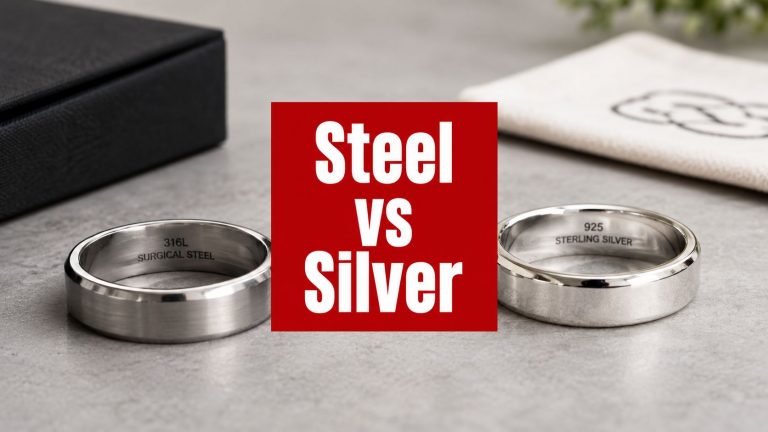
You’re pricing a new collection, and the sample tray is already split down the middle. The 316L surgical steel pieces look cleaner on cost and daily wear, the
You probably have a launch already in motion, a supplier sample on your desk, and one uncomfortable question underneath it all, will this gold color still look clean
You’re refining a ring design, the stone looks right, the setting is approved, and the band still feels like a detail you can solve later. That’s where many