


You buy a necklace you love. You wear it to the beach, don’t bother taking it off in the shower and three weeks later all you’ve got left is something that looks like it came out of a dumpster — green stains, dull patches or worse, flakes right on your skin. Sound familiar?
Finding the best waterproof jewelry is more challenging than it looks. Brands use terms like “tarnish-free,” or “waterproof” and “sweat-proof” but never give any details on what that even means. So you end up purchasing something very nice on the screen, but that is awful after six months.
This guide distills all that noise. We’ll demonstrate what materials are really waterproof, what the science behind PVD coating actually means, which stainless steel grades hold up in saltwater and chlorine, as well as what to look for — and keep on avoiding — while shopping. We will also cover how brands and boutique owners can source custom waterproof jewelry at the manufacturing level.
What “Best Waterproof Jewelry” Really Means
Let’s be fair — “waterproof” in the jewelry world is largely a marketing term. Legally, brands are under no obligation to show their products can withstand water. So before you believe a label, know what you’re really looking for.
Here’s the real distinction:
- Waterproof jewelry is comprised of water-tolerant materials that don’t tarnish, oxidize or lose their luster in the presence of water, sweat, chlorine and saltwater — indefinitely under normal wearing conditions.
- Water-resistant jewelry can handle short exposure — a hand wash, light rain, a splash — but is prone to losing its integrity over long-term submersion or chemical use.
- Water-resistant jewelry (a phrase rarely used but good to know) can withstand occasional water exposure, but isn’t made for regular wet situations.
From there, the difference is in the base metal and what’s been done to its surface. That is not waterproof by any real means, even if the product page says so; a sheet of thin gold-plated brass sputtered down to 0.1 microns worth of plating. A piece of 316L stainless steel with a physical vapor deposition (PVD) coating that is applied in a vacuum chamber? That’s truly waterproof — and we’ll tell you why soon.
Best Materials for Waterproof Jewelry
Not all metals react the same way to water. Here’s a breakdown of which materials genuinely hold up — and which ones don’t.
316L Stainless Steel — The Best All-Around Choice
316L Stainless Steel — The Absolute Best Choice
The best 316L stainless steel is the gold standard for giving you durable waterproof jewelry without a hefty price tag. Here’s why it can work on the most basic of science levels: stainless steel contains chromium (minimum 10.5 %), which when exposed in the air reacts with oxygen and forms a thin, invisible layer of chromium oxide that covers the surface. This layer is self-repairing — it even reforms automatically when scratched. It is one of the few everyday metals that can actually heal itself.
316L refers to a low carbon form of 316, which is even more resistant to corrosion than regular 316. And vitally, 316L contains 2–3 percent molybdenum (Mo) — a fact that most pieces on jewelry have omitted. It is that molybdenum which makes 316L resistant to chloride attack (the chemical action responsible for pitting in pool water and seawater). We discuss this further in the next section.
316L stainless steel is also found in surgical implants, pacemakers and marine equipment — so wearing it in the shower or pool isn’t asking much of it.
Solid Gold (10k, 14k, 18k)
Gold is the only metal that is genuinely, chemically inert in water — it just does not react. “The only waterproof jewelry is gold jewelry,” as Alexis Russo, founder of the jewelry brand Local Eclectic, tells me. But there’s a catch. Pure gold, 24k gold, is too soft to use for jewelry — it bends and scratches easily. Thus, most gold jewelry is an alloy (with other metals such as silver, copper, zinc and palladium) and anything lower than 24k can eventually tarnish because those added metals will respond to moisture over time.
14k gold has good durability and water resistance. Higher karat means more pure gold, and better water resistance. Solid gold, however, is much more expensive than stainless steel — which is why PVD-coated stainless steel has become a popular alternative for brands who want some of the shininess of gold with real-world toughness.
Titanium
Titanium is remarkable. It’s stronger than steel, less heavy and completely non-reactive — so it won’t corrode in seawater, chlorinated waters or sweat. It also makes it implant-grade safe, making this the top pick for earrings for extremely sensitive skin or nickel allergies.
The downside? Titanium is more difficult to work with than stainless steel so not as many designs, and generally more expensive. It is mainly used for straightforward earrings, rings and body jewelry as opposed to intricate layered pieces.
Platinum and Palladium
Platinum and palladium are naturally corrosion resistant noble metals. They wont tarnish or rust with any normal water exposure. In addition, they’re costly — often more so than 18k gold — which restricts them mainly to precious jewelry and high-end items. If budget is no object, and you want truly forever jewelry that can withstand any environment, platinum is about as good as it gets
Gold-Filled Jewelry
Gold-filled is different from gold-plated. Gold-filled pieces have a mechanical bond to a base metal, typically brass, consisting of at least 5% (by weight) of gold. This is much more resilient than gold plating and usually lasts 10–30 years with daily usage. It performs reasonably ok when it comes into contact with water, but prolonged exposure to pool chemicals — chlorinated water or otherwise — or for that matter submersion will destroy it over time. Gold-filled jewelry — which is gold applied to a base metal, such as brass or copper — does much better than gold-plated pieces when exposed to water (so if you shower, wash your hands), says Grein.
What About Sterling Silver?
Sterling silver (92.5% pure silver) is not water-proof. Water doesn’t do immediate damage, but silver tarnishes — that deep discoloration you see — from exposure to air, moisture, sweat and sulfur in skin oils. Silver is a lovely metal if you care for it properly, but you won’t want to keep it on 24/7.
| Material | Waterproof? | Chlorine Resistant? | Salt Water Safe? | Skin-Safe | Price Range |
|---|---|---|---|---|---|
| 316L Stainless Steel + PVD | Yes | Yes | Yes | Excellent (nickel-free) | $ |
| Solid Gold (14k+) | Yes | Yes | Yes | Excellent | $$$ |
| Titanium | Yes | Yes | Yes | Best (implant-grade) | $$ |
| Platinum | Yes | Yes | Yes | Excellent | $$$$ |
| Gold-Filled | Mostly | Moderate | Moderate | Good | $$ |
| Sterling Silver | No | No | No | Good | $$ |
| Brass/Copper | No | No | No | Can cause green skin | $ |
| Gold-Plated Brass | No | No | No | Poor once coating wears | $ |
The Science Behind PVD Coating — What No One Else Explains
You may be familiar with the term “PVD coating” from jewelry product pages, but without any context of what it entails. Here’s the complete picture — and why it matters more than nearly anything else when purchasing waterproof jewelry.
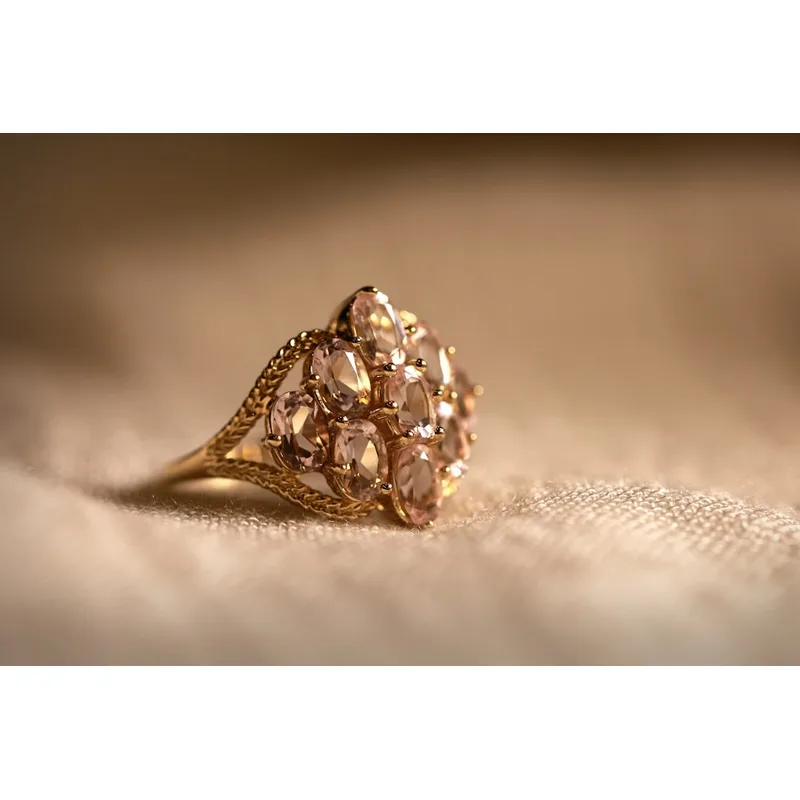
PVD (with its cousin DLP) stands for Physical Vapor Deposition. It’s a process that came to prominence in the aerospace, medical-device and watchmaking industries before being adopted as de rigueur for quality jewelry production. The procedure is fairly straightforward: a bit of jewelry (typically 316L stainless steel) is placed in a vacuum chamber. Air is then removed from the chamber, and the target material — gold, rose gold, titanium nitride, chromium — is heated until it vaporizes. Those metal atoms fly in a straight line through the vacuum, bonding directly to the surface of the jewelry at a molecular level.
Compare that to conventional electroplating where the jewelry is immersed in a chemical bath and an electric current deposits a layer of metal on the top surface. The bond is not molecular — it’s more like piling sheets upon sheets. It’s cheaper, faster and works on more materials, but the trade-off is a surface that scratches more easily, fades more quickly and eventually allows water molecules to sneak in through microscopic pores.
Why PVD Outperforms Standard Gold Plating
- Hardness — A PVD coating is about ten times more resistant to wear than a conventional electroplated finish on stainless steel. This applies mainly to rings and bracelets — the items that come into contact with surfaces all day long.
- Thickness Accuracy: The PVD layers are in microns ( micrometers) The TiN bonds strongly to metals during vapor deposition, forming a coating that acts as an inert and highly resistant bond, which is done in layers (PVD) of between 0.3 and 0.5 microns as the surface protection, while the decorative layer of gold will be added on top for good measure @ HonHo, our PVD thickness is 0.03–2.5 microns depending piece design and functionality.
- No chemical leaching: Traditional gold plating can leave behind chemical impurities and may even utilize nickel as a base layer. PVD is a dry, vacuum process — no acids, nickel leaching or clandestine alloys to reach your skin.
- Fade pattern: When PVD finally wears, it does so slowly and evenly. Electroplating has failings — it tends to flake and peel off suddenly, exposing base metal that oxidizes quickly.
Titanium Nitride (TiN) — the invisible barrier: Many high-quality waterproof jewelry lines use titanium nitride as an intermediate PVD layer sandwiched between steel and its decorative gold plating. TiN, that same burnished golden yellow coating you see on your higher-end drill bits. It’s highly difficult (about 2000 on the Vickers hardness scale), chemically inert, and adds a carbon layer providing an extra moisture barrier gold PVD alone doesn’t provide. At HonHo, the default waterproofing elements of our products include a 0.5-micron TiN coating exclusively for moisture and oxidization protection.
316L vs. 304 Stainless Steel: Why the Grade Matters for Waterproof Jewelry
This is a content gap that almost no jewelry blog addresses — and it’s genuinely important. Not all stainless steel is the same, and the grade used in your jewelry makes a significant difference in how it holds up in water.
Both 304 and 316L are stainless steel alloys. Both contain iron, chromium (18%), and nickel (8–10%). The critical difference is that 316L also contains 2–3% molybdenum.
What Molybdenum Does
It is the component that makes 316L particularly resistant to chloride attack — the type of corrosion caused by chlorine in pools and sodium chloride (NaCl) in seawater. In the absence of molybdenum, stainless steel is susceptible to pitting corrosion, in which chloride ions penetrate the chromium oxide passive layer at microscopic imperfections, producing little pits that over time expand.
In a standard salt spray test (5% NaCl solution at 35 °C — an industry standard for accelerated corrosion testing), 304 stainless steel true pitting begins to occur after ~48–72 hours. 316L stainless steel stays in the same conditions for 200+ hours. Over actual use — swimming in the ocean, wearing things in chlorinated pools — that translates to a very real difference in how long your jewelry will last.
| Property | 304 Stainless Steel | 316L Stainless Steel |
|---|---|---|
| Chromium content | 18–20% | 16–18% |
| Nickel content | 8–10% | 10–14% |
| Molybdenum content | None | 2–3% |
| Carbon content | ≤0.08% | ≤0.03% (low carbon) |
| Chloride resistance | Moderate | Excellent |
| Salt spray test (hours to pitting) | 48–72 hours | 200+ hours |
| Medical/surgical use | Some applications | Yes (implants, surgical tools) |
| Nickel release | Moderate | Lower (EU nickel directive compliant) |
| Best for | Indoor/dry use, general jewelry | Ocean, pool, daily water exposure |
When you shop for waterproof jewelry from a brand or manufacturer, ask directly: is this 316L or 304? Press them if they simply say, “stainless steel” without a grade. Many brands — particularly drop-shippers using generic overseas suppliers — use 304 and proclaim it waterproof. It holds up decent to the light exposure from water, but it’ll start to pit if you’re swimming in the ocean once or twice a week.
At HonHo Jewelry, we manufacture all waterproof and non-tarnish pieces with the base metal being 316L stainless steel, while any PVD coating is done in-house at our vacuum plating shop.
Metals That Will Fail You — And How to Spot Them
What to avoid is almost as important as what to buy. Here’s a look at the biggest offenders and how to spot them before you spend your money.
Brass and Copper
These two metals are the most common base metals used in inexpensive fashion jewelry — and they have terrible reactions to any exposure to water. Copper reacts nearly instantaneously with moisture and acids (like sweat), forming copper carbonate — the green stuff that dyes your skin. Brass is an alloy of copper and zinc, so it has the same issue. Both metals can be gold-plated for a pretty picture, but once that thin plating is gone, you end up with something that’s going to do all sorts of horrible things to your body and tarnish within months.
How to identify it: Look at the product description. If it reads “zinc alloy,” “metal alloy,” or fails to name the base metal altogether, assume brass (or copper). If the price is under $5 and it’s marketed as “waterproof gold,” it’s certainly a thin electroplated brass item.
Zinc Alloy (Pot Metal)
Zinc alloy, also known as pot metal, is the lowest-cost casting material. It’s heavy, sensitive to corrosion and can have trace amounts of lead and cadmium — both health concerns, particularly for jewelry that touches skin for long periods. Waterproof is NOT a term to use for zinc alloy jewelry. It will rust rapidly in water and can stain the skin dark.
Nickel Alloys
Nickel is a common culprit of contact dermatitis (skin allergies) from jewelry. Countries around the world have limited nickel release from jewelry — all EU member states have strict limits under the EU Nickel Directive (EN 1811). There’s no similar federal law in the US, which is why jewelry sold here is more likely to cause nickel allergies. And even if a piece is labeled “hypoallergenic,” see whether it explicitly states nickel-free — those terms are not interchangeable.
Silver-Plated Steel
Not to be mistaken with sterling silver. Plating silver over steel (or any base metal) will eventually wear through exposing the underlying metal. Plated silver is not waterproof.
Best Types of Waterproof Jewelry by Category
Once you know what materials to look for, here’s how to think about waterproof jewelry across different categories.
Waterproof Rings
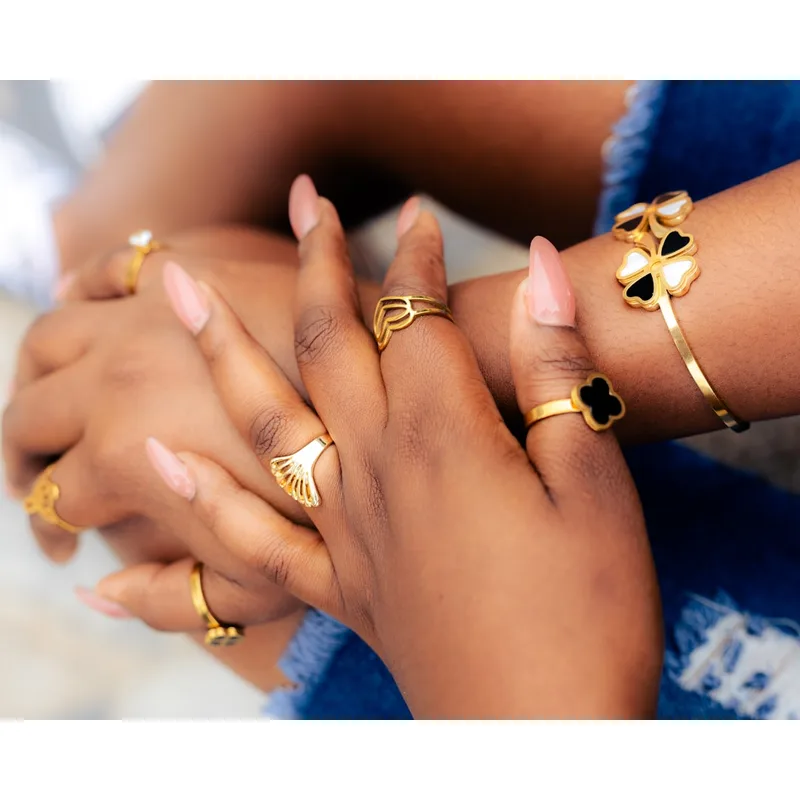
Rings take more of a beating than almost any other type of jewelry — they rub against surfaces, endure hand washing countless times per day and sit stuffed inside pockets and gloves. For waterproof rings, the demands are severe. 316L stainless steel (or solid gold/titanium) with PVD coating or solid gold if budget allows. Steer clear of any ring that uses a base metal other than these — the coating on the inside of the band erodes quickest, and that’s the part touching your skin most directly.
Ring sizing tip: stainless steel rings in particular cannot be resized (the way gold or silver can), so make sure to measure carefully before you order custom pieces.
Waterproof Necklaces
Necklaces are less friction than rings but they’re on your skin all day — particularly in summer if sweat is also a factor. So, a good waterproof necklace in 316L PVD stainless steel or solid gold can be genuinely worn 24/7 without removing it. The chain links are the weakest point — look for solid links, not hollow ones; hollow chain links can maintain moisture inside and corrode from within.
Explore HonHo’s custom waterproof necklace collection for wholesale and OEM options.
Waterproof Earrings
And among categories, earrings may be the place where material matters most to health as much as appearance. If you have a pierced ear, then that metal sitting in your interior channel has direct contact with mucous membranes and wound-healing tissue — especially for new piercings. If you have sensitive skin, titanium (implant-grade, ASTM F136) is the safest of those to wear while swimming or exercising. The second-least poor option if you want waterproof metal earrings that can be worn every day is 316L stainless-steel.
Waterproof Bracelets
Bracelets sit on the wrist — a relatively high-sweat zone — and often dip into water. They also make a lot of contact with hard surfaces. A waterproof bracelet (316L PVD or better in solid gold) will significantly outlive any brass, copper clone by years. Check the clasp: toggle clasps and lobster clasps can retain moisture, so do a periodic wipe of them with a soft cloth to remove oxidation.
Waterproof Anklets
Anklets are beach-wear essentials. They get soaked by surf, caked in sand, and regularly deluged with salt water. This is the part where the difference between 316L and 304 stainless steel really comes into play — if you’re wearing a anklet in the ocean, you need that molybdenum protection. A thin chain anklet in solid 316L PVD gold is your best bet.
How to Make Waterproof Jewelry Last Even Longer
EveEven the most waterproof jewelry needs simple maintenance. This is what actually matters, drawing on actual recommendations from jewelry manufacturers and materials scientists.
- Rinse after chlorine or saltwater. 316L stainless steel should also be rinsed with clean fresh water after swimming pools or the ocean. Chlorine and salt don’t harm the surface immediately, but prolonged exposure right after a swim session — when the chemicals dry on the surface — does contribute to cumulative wear over time.
- Dry before storing. Imperfections on the surface oxidize more rapidly with moisture trapped between an item, and its storage box. Pat dry with a soft cloth, and put away.
- Avoid harsh chemicals. o Bleach, acetone (nail polish remover) along with a few fragrances can cause PVD coatings to etch over time. Apply perfume, before you wear your jewelry, not after the fact.
- Store separately. If you have more than one piece of metal in a jewelry box, stainless steel is not only hard but will scratch. Store separate pieces in different pouches or compartments.
- Clean gently. You need only use mild soap and warm water on a soft cloth for routine cleaning. Avoid abrasive cleaners or brushes, which can scratch a PVD surface. You don’t use ultrasonic cleaners for standard stainless steel parts.
- Avoid extreme heat. Dating back to high temperatures (hot tubs, saunas), metals expand and contract rapidly and can put pressure on PVD coatings with the passing time. If you can, take jewelry off before entering a hot tub or sauna.
The cause of green skin: If the skin beneath your jewelry is green, it’s nearly always caused by copper or brass reacting with your sweat The reaction creates copper carbonate — a green compound that rubs off onto skin. This is not a hygiene issue, but rather a base metal issue and does not occur with 316L stainless steel, solid-gold, titanium or platinum. And if your “gold” jewelry makes your finger turn green, the gold layer has worn off to copper or brass underneath.
How to Buy Waterproof Jewelry Without Getting Fooled
The market is full of brands that use vague language to imply waterproofing they cannot actually deliver. Here’s a checklist of what to look for before you buy.

7 Questions to Ask Before Buying
- What is the base metal? The correct answer would be steel 316L, pure gold, titanium or platinum. Anything else should raise red flags about waterproof claims.
- What is the coating process? Quality is marked with PVD (Physical Vapor Deposition) or Ion Plating Something called “gold plated” without the process specified is usually electroplating over a soft alloy.
- What is the coating thickness? You also want at least 0.3 microns of PVD for a ring or bracelet. Less will not stand up to daily use.” Some brands publish this spec; many do not — which is itself informative.
- Is it nickel-free? Nickel content does not have to be disclosed in the US. Brands that prominently claim “nickel-free” and “EU compliant” or “REACH compliant” are pretty reliable.
- Is there a warranty offered from the brand? A real 12–24 month plating warranty shows that you want the brand to believe in their own product. A nonexistent or virtually worthless warranty (lots of exclusions) is a red flag.
- Does the company provide full disclosure on their manufacturing process? Legitimate manufacturers will discuss their process — vacuum plating, salt spray testing, plating thickness — in layman’s terms. Non-technical jargon, vague terms that seem like marketing at the expense of substance.
- Does it have relevant certifications? Check for REACH compliance (regulating chemicals in the EU), ISO 9001 (for quality management) or SMETA (supply chain ethics audit). These are things that they actually have to inspect, not just self-declare.
Red Flags to Watch Out For
- Prices that appear too good for what claimed solid gold (less than $20 for a “14k solid gold necklace” is not possible)
- Product descriptions that state “metal” or “alloy” without specifying the metal
- “Waterproof” promises without specifying category of base material or process for coating
- An returns policy that will cost you in postage to ship back to an overseas address
- Packaging that doesn’t match what was promised (a near-constant complaint in Reddit jewelry communities about certain dropshipping brands)
For Brands and Retailers: Custom Waterproof Jewelry Manufacturing
If you’re a jewelry brand, a boutique owner or an entrepreneur wanting to add waterproof jewelry to your offerings, the most important decision is not which designs to launch with but who you manufacture with. Here’s what to consider in a manufacturing partner.

Why In-House PVD Matters
Most of the jewelry factories do not have their own PVD coating in-house so they send it out to some plating company. This adds time, adds cost and — most important — diminishes quality control. The enterprise does everything in-house, so the company controls every variable: chamber temperature, vapor pressure, deposition time and coating thickness. When you do outsource it, you’re just hoping these two companies nail the communication on specs every batch.
At HonHo Jewelry, we have our own in-house vacuum PVD plating facility which is located in Dongguan, China — the same manufacturing center supplying jewelry for many of the world’s leading fashion brands. PVD coatings are customizable between 0.03-2.5 Microns of thickness, and finished coated pieces are plated with a 24-month warranty for the same.
What to Ask a Waterproof Jewelry Manufacturer
- Could you demonstrate a salt spray test report to me? Request documented performance from a 48-hour salt spray test (ASTM B117 or equivalent). Any decent manufacturer will have these.
- What is the minimum order quantity (MOQ) for your products? HonHo’s MOQ starts at 30 pieces per style — within reach for small brands and boutiques trying out new designs. Request a quote here.
- Do you offer free CAD designs and samples? We provide free 3D CAD rendering for custom order by our design team, sample produced in 7–20 days.
- What certifications do you hold? With ISON 9001, SMETA, and REACH certification, HonHo also tests plating thickness and Rust resistant in a 48-hour salt spray chamber.
- Can I use my own branding? They offer complete OEM (manufacturing to order) and ODM (design + manufacturing) service, including branded packaging in your own logo and brand colors.
HonHo’s Waterproof Manufacturing Credentials
Since 2017, HonHo Jewelry has manufactured waterproof and non-tarnish jewelry for over 500 brands all around the world. We are a waterproof jewelry manufacturer like no other:
- Own electroplating vacuum plating plant (no outsourcing)
- Every waterproof item will have a 0.5-micron titanium nitride (TiN) protective layer
- Salt spray chamber 48h used for internal corrosion testing (represents 2 years of daily wearing)
- 99.2% quality pass rate (defect rates < 0.5%)
- 316L stainless steel base for all waterproof styles (no substitution with 304)
- Nickel-free, lead-free and cadmium-free production — meets US and EU standards
- 24-month plating warranty
- 150+ new styles every season with quarterly design updates
- 15-day Average Deliveries, 99% On Time DHL/FedEx/UPS Shipping
For brands that want quality they can put their name on and defend to customers — that’s the manufacturing standard that actually matters.
Frequently Asked Questions About Waterproof Jewelry
What is the most durable type of jewelry?
Solid gold (14k or higher), titanium, and 316L stainless steel with a PVD coating are the best materials for waterproof jewelry. Even gold salts are chemically inert and will not react with water in any normal quality. 316L/pvd stainless steel is an excellent value option — it provides nearly the same level of water resistance as solid gold and costs less than 1/10th the price.
Does it allow swimming such as in the pool?
316L stainless steel jewelry and solid gold are resistant to chlorinated pool water. 316L is richer in molybdenum which enhances its resistance to chloridebased pitting corrosion. But after swimming, be sure to rinse off your jewelry with clean water and dry it before putting it away, as there can be a long-term buildup.
Is PVD gold plating waterproof?
We wash our hands, we sweat, we swim and get drenched with rain: The electroplating technique for the PVD gold coating that is applied to the 316L stainless steel used for our watches is completely waterproof under everyday circumstances. It won’t last under extreme conditions (hot tubs, high-concentration bleach solutions) but properly applied PVD over 316L stainless steel will survive years of normal water exposure.
How long does it last? Waterproof jewelry lasts for as long as you take care of them.
You’ll see your 3–7 years of daily wear before the finish starts to acquire a slow patina that’s softer than brass — and it doesn’t peel or crust-flake like electroplated brass. Solid gold jewelry is permanent. The key variables are coating thickness; the base metal grade and care habits (stoop, bleach and harsh chemicals, and rinse off anyone prolonged exposure to hot water).
Why does certain jewelry make your skin turn green?
Your green skin is the result of copper or brass reacting with your sweat and the acid on your skin to form copper carbonate. That’s when the plating on a piece of jewelry has worn away to reveal the base metal. Not with solid 316L stainless steel, pure gold, titanium or platinum — metals that have only trace amounts of copper.
Understanding Waterproof vs. Water-Resistant Jewelry
Waterproof jewellery is made with base metals (316L stainless steel, solid gold, titanium) which wouldn’t oxidise when submerged for lengthy periods. Water-resistant jewelry can tolerate short exposure, but even minimal contact with chemicals or prolonged exposure can destroy any piece. If you swim frequently, indoors or live in a humid coastal region then even the minute difference makes great difference.
Can I order custom waterproof jewelry in bulk?
Yes. Manufacturers like HonHo Jewelry offer OEM/ODM waterproof jewelry manufacturing with MOQ starting at 30 pieces per style, full custom design services, and 24-month plating warranties. This is how most jewelry brands — including many you’d recognize — source their waterproof collections. Contact HonHo for a free quote.
Is stainless steel jewelry safe for sensitive skin?
316L stainless steel is widely considered safe for sensitive skin and is used in medical implants. It releases significantly less nickel than cheaper alloys and is compliant with EU nickel release standards (EN 1811). If you have a documented nickel allergy, titanium (implant-grade ASTM F136) is the safest choice.
Can waterproof jewelry be worn in the ocean?
Yes, if it is made from 316L stainless steel or solid gold. The 2–3% molybdenum content in 316L provides specific protection against sodium chloride (salt water) corrosion that standard 304 stainless steel lacks. After ocean swimming, rinse pieces with fresh water to remove salt deposits.
How do I find a reliable waterproof jewelry manufacturer in China?
Look for manufacturers with: (1) in-house PVD plating equipment, (2) 316L stainless steel as their standard base material, (3) documented salt spray testing, (4) REACH and ISO 9001 certifications, and (5) a plating warranty of at least 12 months. HonHo Jewelry meets all five criteria and has been manufacturing for global brands since 2017.
References
- Reddit r/jewelry — “Need help Understanding Waterproof Jewellery” and related threads. https://www.reddit.com/r/jewelry/comments/1ckn2yy/need_help_understanding_waterproof_jewellery/
- HonHo Jewelry Manufacturing — Waterproof and Non-tarnish product technology. https://www.honhojewelry.com
- Marie Claire — “The Best Waterproof Jewelry an Olympic Swimmer Swears By,” featuring expert commentary from Local Eclectic founder Alexis Russo and AUrate founder Sophie Kahn. https://www.marieclaire.com/fashion/best-waterproof-jewelry/
- KeepsakeMom — “What Type of Jewelry Is Waterproof? Tips, Types & Materials.” https://www.keepsakemom.com/blog/waterproof-jewelry-tips-types-materials/
- Amarewear — “Ditch the Worry: Top Waterproof Jewelry for 2025.” https://amarewear.com/blogs/amare-wear-jewelry-blog/ditch-the-worry-top-waterproof-jewelry-for-2025
- EXCITÀRE Studios — “Electroplating vs PVD Coating for Jewelry.” https://excitarestudios.com/blogs/jewelry-guides/electroplating-vs-pvd-coating
- Continental Bead Suppliers — “Electro-Plated vs PVD Waterproof Gold” (including 304 vs 316L salt spray test data). https://www.continentalbeadsuppliers.com/es/blogs/blog/jewelry-plating-thickness-electro-plated-vs-pvd-gold

How Is Jewelry Made? A Step-by-Step Guide to the Full Manufacturing Process
Have you ever picked up a piece of jewelry and wondered how it made the
Brass Jewelry Wholesale: The Complete Buyer’s Guide 2025
You’re not the only one looking to add brass jewelry wholesale to their inventory and
Custom Necklace: The Complete Guide to Ordering Wholesale for Your Brand
If you have ever looked up a custom necklace manufacturer and found yourself more baffled