

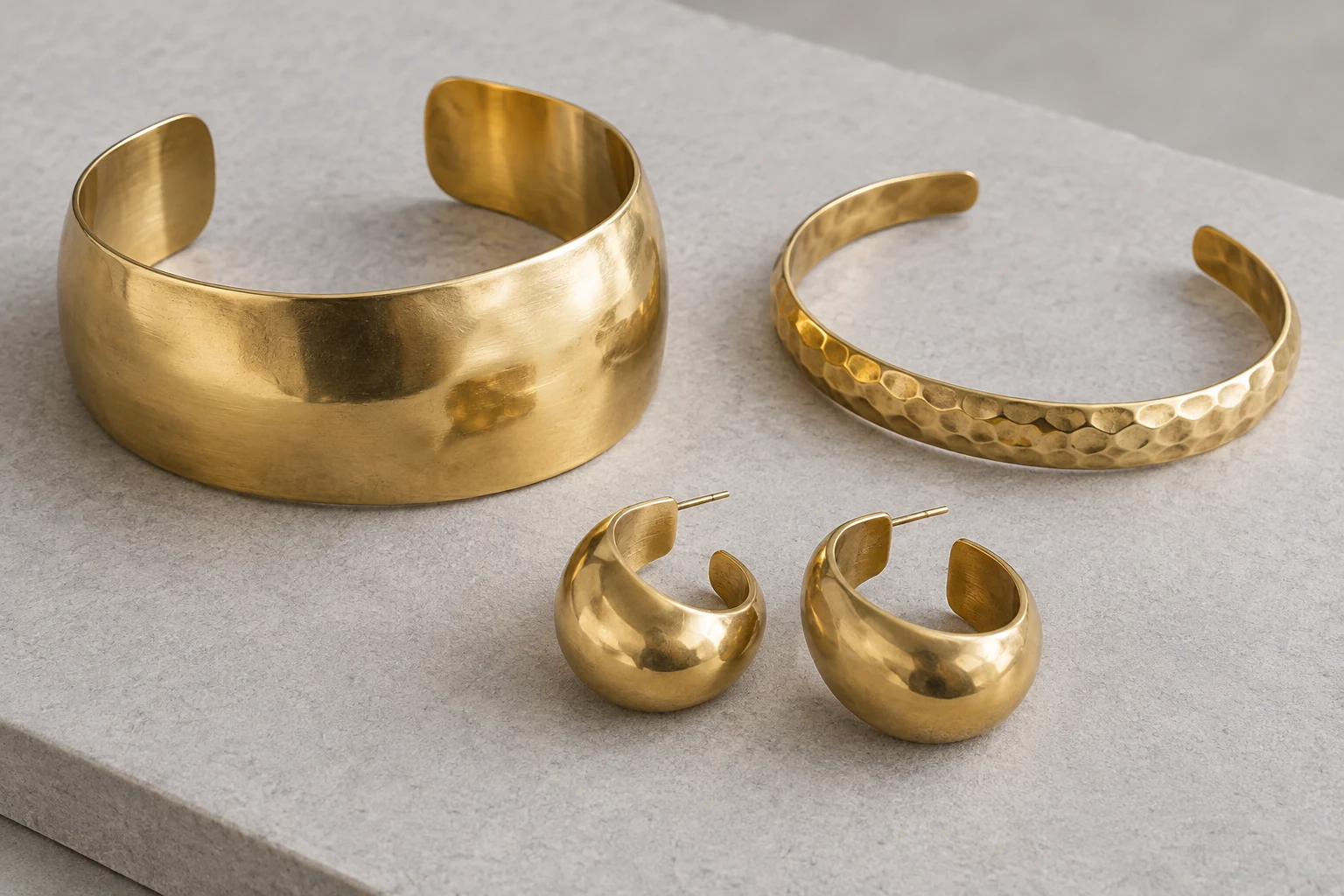
Brass jewelry wholesale works best when the buyer specifies the finished product, not just a gold color and a target price. Brass is a copper-zinc alloy that can suit sculptural earrings, pendants, cuffs and rings. The commercial result depends on the construction, surface preparation, plating system and findings as much as the base metal.
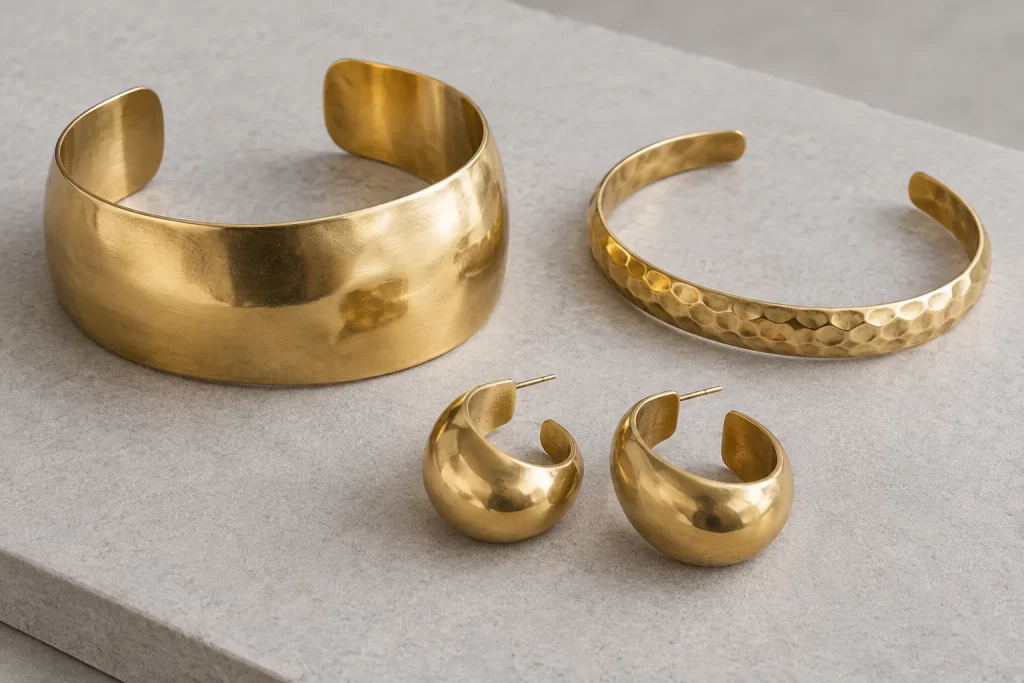
Brass is worth considering for designs that need shaped surfaces, decorative relief or a substantial appearance. A factory may cast, stamp, form or machine components according to the geometry and quantity. The right route should be confirmed during development; a render does not show which process will produce clean edges and consistent dimensions.
Compare it with stainless steel and sterling silver at the design level. There is no dependable rule that one finished brass design costs a fixed percentage of the same design in another metal. Labor, weight, tooling, stone setting, finish and reject rates can change the comparison. For a material-specific project, see our brass jewelry manufacturing service.
| Item | Specify | Why it affects the order |
|---|---|---|
| Body and construction | Alloy, dimensions, solid or hollow construction, target weight | Controls material use, feel and production method. |
| Contact components | Post, backing, chain, clasp, solder and connector materials | The assembly may contain more than one alloy. |
| Finish | Approved color sample, surface texture, coating layers and thickness requirements | “18K color” alone does not define a plating system. |
| Stones | Material, size, cut, color reference, setting method and allowable variation | A trade grade such as “AAA” is insufficient on its own. |
| Order split | Pieces or pairs per style, color and size | Small subdivisions can change setup costs and minimum quantities. |
| Packaging | Card, pouch or box; logo artwork; individual protection and labels | Packaging changes labor, freight volume and presentation. |
First separate gold color from gold content. Then distinguish the gold layer from any barrier layer and protective topcoat. Ask the supplier to describe each layer and confirm which thickness is being quoted. A combined coating thickness is not automatically the thickness of real gold.
Underlayers, polishing quality and coverage around recesses influence the finished result. A smooth display face does not prove equivalent coverage inside a ring, behind a stone setting or around a hinge. Compare samples under consistent lighting and examine these areas as part of the approval.
The U.S. FTC Jewelry Guides on gold descriptions explain why gold-content and coating claims need to describe the construction accurately. A gold-plated brass item should not be sold as solid gold or gold filled. For the practical distinction, read what gold-plated jewelry means.
Do not accept a guaranteed wear life based only on a short salt-spray test. Exposure, friction, cleaning habits and product geometry differ. Specify the agreed test method and acceptance criteria, and keep any customer-facing durability claim within the evidence available.
Brass can be used in several production routes, but the route and finishing work determine much of the practical quotation. A flat cut shape, a hollow hoop and a detailed casting may use the same broad alloy family while requiring different tooling, assembly and cleanup. Ask the manufacturer to identify the operations that dominate the proposed design’s cost.
For sculptural pieces, review access to recessed surfaces and the amount of cleanup around joints or casting connections. For earrings, compare finished weight and the construction used to achieve it. For pieces with stones, define the stone dimensions and setting method so that two suppliers are pricing equivalent labor.
If the quotation is above target, ask for a named alternative and keep the original option in the comparison. A simpler back surface, a revised attachment or fewer separately assembled parts may be worth evaluating. A thinner body or lighter chain should be treated as a construction change, with its effect on feel and function reviewed on a sample.
Keep coating changes explicit. Reducing one layer, changing a protective treatment or changing the preparation sequence can affect the product description and evidence required. A price saving is useful only when the buyer understands which specification has changed and accepts the finished result.
For fine brass chains, check movement after the final protective treatment. HonHo has identified a stiffness issue on some fine cable/O, snake and rope chains when 2.5 µm thick-gold plating is combined with E-coating. For suitable projects, a gold-protection treatment without E-coating can be discussed to preserve flexibility. The exact chain and finish need their own sample and performance review.
Do not accept forcing or repeatedly working a stiff chain as an informal fix; it can damage links or the coating. Approve drape, articulation and clasp operation on the finished necklace. Keep that version as the production reference rather than an untreated sample that behaved differently.
Approve a reference sample with its drawing revision and bill of materials. Photograph its front, back, connection points and packaging. If a finding or finish changes after approval, record the change and decide whether another sample or test is needed. Our jewelry quality assurance overview provides context for the inspection discussion.
Name the layer you need measured and identify the sample, finish version and measurement locations. A single unexplained number cannot tell a buyer whether it describes gold, an underlayer or the combined stack. Geometry and the method used also matter when comparing a broad face with a small recess.
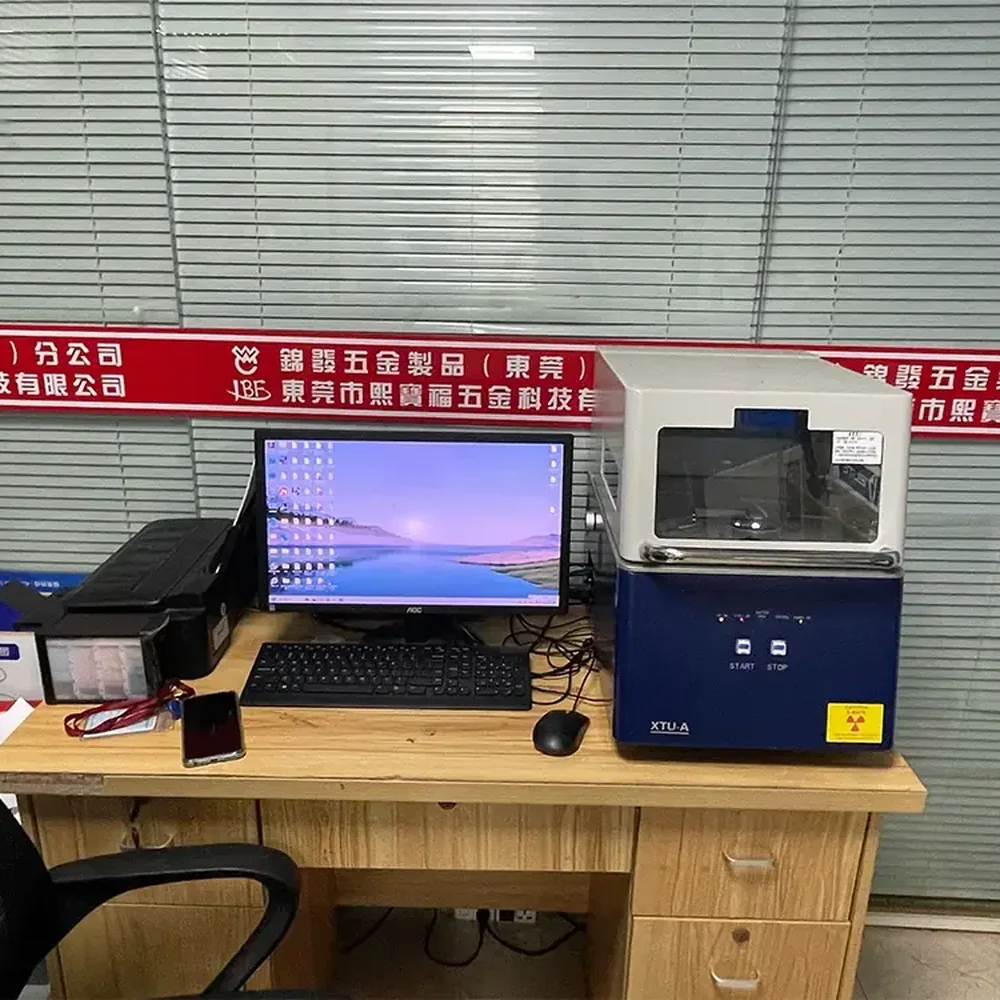
HonHo has an XRF coating-thickness instrument and can discuss measurement of customer-provided samples. Confirm the sample requirements and reporting scope with the team. As Fischer’s precious-metal applications guidance explains, XRF is used for precious-metal analysis and coating assessment. It does not turn a thickness reading into a nickel-release result, an independent laboratory certification or a guaranteed number of years of wear.
Keep the report with the physical reference and drawing revision. When a coating or component changes, ask which evidence needs to be repeated. A report for a different color or geometry should not silently become the evidence for every product in the collection.
A maker’s discussion of protecting brass from tarnish raises concerns about a plastic-looking surface and movement between coated links. These are useful sample questions, not reasons to assume all protective finishes behave alike.
Handle the finished sample under normal viewing conditions and operate its moving parts. Compare the requested texture, color and flexibility with the reference. Ask how the surface should be cleaned and whether refinishing is available if the protective layer wears. A coating that changes the intended feel or requires care the customer cannot reasonably follow may be a poor match even if the initial color is attractive.
For HonHo brass development, send the intended wearing use with the finish reference: an occasional statement earring and a frequently handled cuff present different design questions. Agree the finished sample and the customer-facing care wording together before applying the same finish description to a full collection.
Request separate amounts for development, tooling, samples, unit production, testing and packaging. Confirm whether freight, duties and taxes are included, the currency, quote validity and the named delivery term and place. A low unit price can be misleading when one quote omits plating specifications or uses a different clasp.
For U.S. imports, consult the current USITC Harmonized Tariff Schedule with your broker for classification and applicable duties. A jewelry guide cannot provide one universal import rate for all brass products and shipment circumstances.
Ask HonHo to confirm the minimum quantity by style, color and variant in the current project quotation. Sampling and production schedules should state the approval milestone that starts each stage, whether days are working days, and the effect of revisions or special components. Use the written schedule for that order rather than a general blog estimate.
Suppose a collection uses a sculptural brass hoop with a steel post. The visible body and the skin-contact post are two different components. Record the hoop’s outside size, opening, section and weight, then specify the post alloy, usable length, backing and joining method. Check whether the finish covers the same surfaces on the sample and production pieces. A good-looking front photograph cannot settle any of those points.
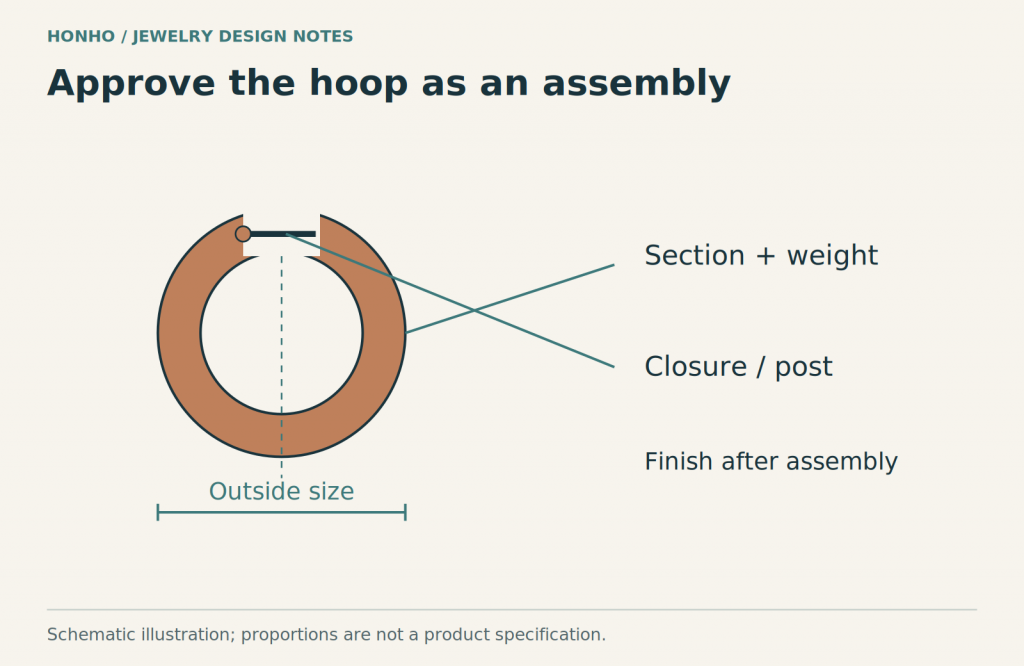
For sample review, place the drawing, component list and physical pair together. Measure both earrings, compare their hanging orientation and operate the backing. Photograph any agreed cosmetic allowance with the sample ID in view. If a revision changes the post or finishing sequence, record it before approving the next sample. These are suggested buying checks, not a claim that a particular batch has passed them.
Retain an approved pair, the finish reference and the dated specification. On reorder, ask whether the alloy source, post, solder, coating or subcontractor has changed. Reassess the affected dimensions and evidence instead of treating the old sample as approval for a different construction.
If you prefer choosing existing styles before commissioning a custom design, browse HonHo Jewelry Wholesale and confirm each product’s current specifications and ordering terms.
For ready-stock selection, HonHo offers two routes. Self-service orders through the wholesale website have no per-style MOQ and a US$100 minimum order value. Sales-assisted orders from the latest PDF catalog have a minimum of five pieces per style and a US$300 minimum order value. These terms apply to available stock; they do not define the MOQ for an altered design or a new brass development.
For custom brass production, submit the drawing, finish and variant breakdown so that minimum quantity, tooling and sample charges can be confirmed for the project. Use the wholesale link above for existing styles or contact sales for the latest catalog. Keep the catalog or SKU reference with the order to avoid confusion between similar designs.
HonHo’s current sample planning is 15–20 days at the earliest, with an outer planning window of one month, and bulk production is planned at 25–35 days. Confirm the start milestone, whether the days are working or calendar days, and the effect of sample changes or special components in the quotation. Transport and destination clearance are separate from factory completion.
For a new collection, identify which style has the most demanding shape, assembly or finish and include it in the sample review. A simple pendant sample does not settle how a hinged hoop or a fine chain will perform. Approve the difficult details before extending the specification to the rest of the range.
| Field | Record for the delivered lot |
|---|---|
| Identity | SKU, finish, size, quantity and supplier batch reference |
| Appearance | Color and texture compared with the retained reference |
| Construction | Dimensions, weight and component fit under the agreed plan |
| Function | Closures, hinges and moving-chain behavior after finishing |
| Exceptions | Affected pieces, photographs and the agreed corrective action |
Keep accepted and questioned pieces separate while a discrepancy is reviewed. Preserve a returned piece’s condition where possible instead of polishing away a mark before the supplier sees it. Record customer complaints by SKU and location so that a recurring issue can be connected to a specific component or process.
A useful follow-up inquiry states what has been learned from the sample or first order: an earring is too heavy, a chain is stiff, a clasp is difficult to use, or the requested finish needs a closer match. Send those observations with the reference and photographs so HonHo can review a concrete revision.
Copper-containing alloys can leave discoloration under some wear conditions. A color mark alone does not diagnose an allergy. Persistent irritation should be assessed separately, and a coating should not be advertised as guaranteeing zero reactions.
No. A magnet test cannot identify the exact alloy or verify a coating. Request traceable material documentation and suitable testing. Heating finished jewelry with a lighter is not an appropriate buyer inspection method.
Not necessarily. A ring, cuff and pendant experience different friction and have different contact areas. Establish a specification for the intended use rather than copying a finish name across the collection.
To discuss a brass collection, send HonHo your drawings and order breakdown, including the target market and finish reference.
Updated October 18, 2026.
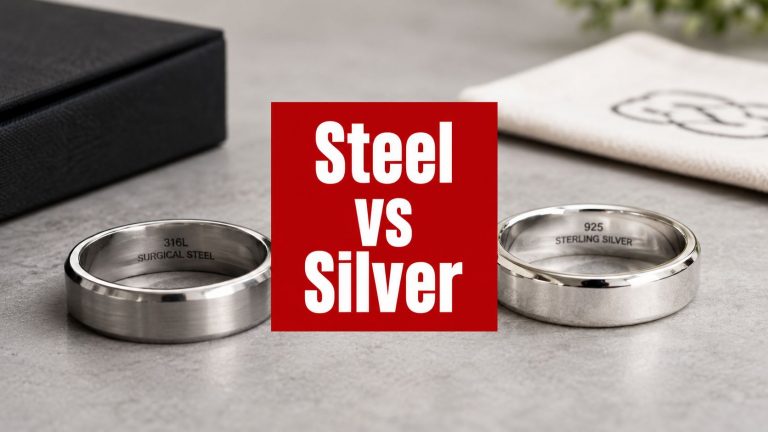
You’re pricing a new collection, and the sample tray is already split down the middle. The 316L surgical steel pieces look cleaner on cost and daily wear, the
You probably have a launch already in motion, a supplier sample on your desk, and one uncomfortable question underneath it all, will this gold color still look clean
If you are developing the ring itself, compare ring fabrication, casting and CAD methods before approving the shank dimensions and manufacturing route. You’re refining a ring design, the