

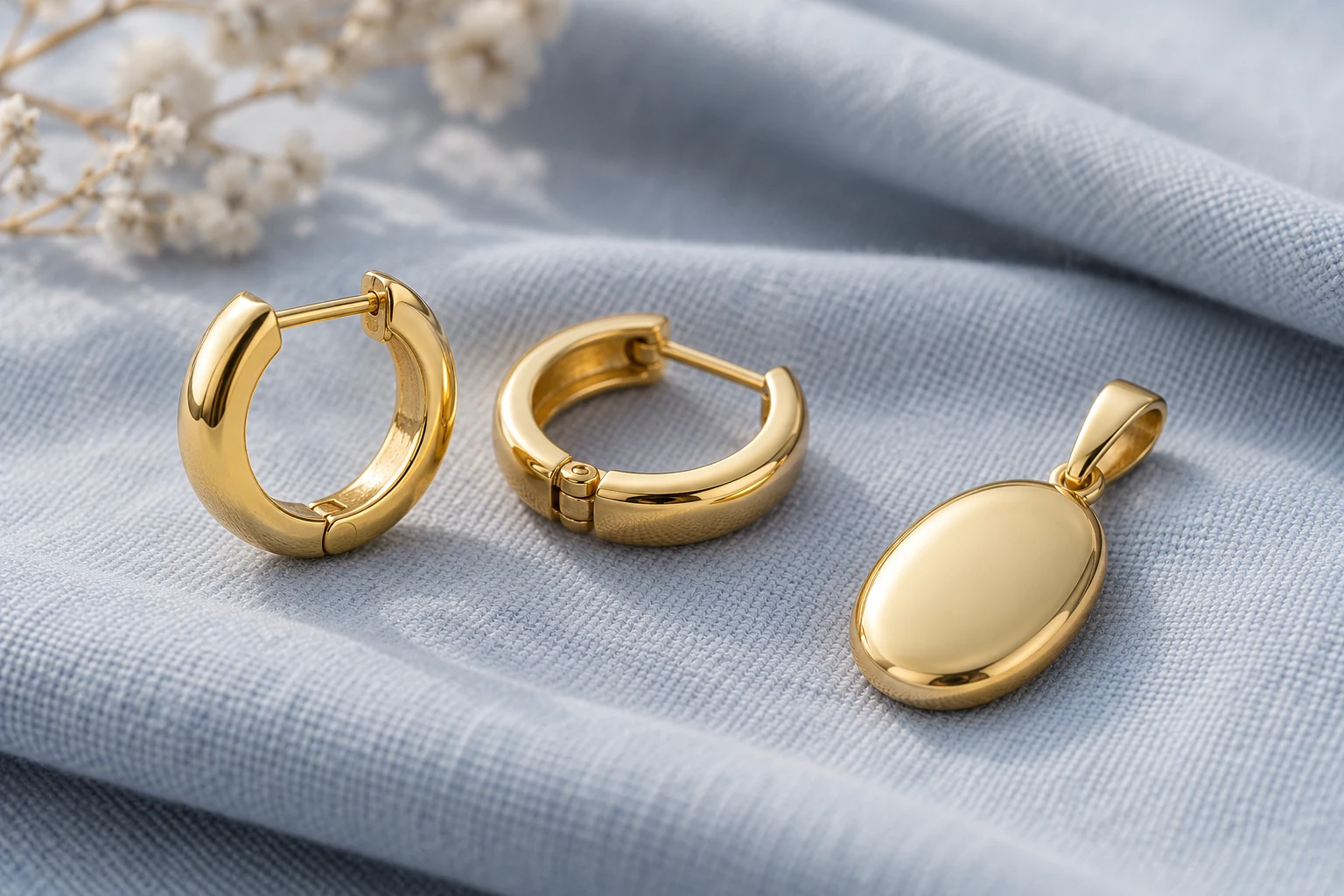
Gold-plated jewelry has a layer of gold or gold alloy over another material. The base may be brass, stainless steel, silver or another specified metal. It gives designers a gold surface appearance without making the whole piece from a gold alloy, but its wear performance depends on the complete coating system and how the item is used.
An accurately described gold-plated item has gold in its coating; the entire piece is not solid gold. Ask the seller to identify the base metal, the coating’s gold fineness and the relevant thickness. Gold color alone does not establish gold content.
The U.S. FTC Jewelry Guides distinguish gold-content and coating descriptions. Claims such as gold plated, gold filled and solid gold should reflect the actual construction rather than be used as interchangeable color names.
| Description | Basic construction | What to verify |
|---|---|---|
| Gold plated | A gold or gold-alloy coating on another material | Base metal, fineness, coating specification and applicable labeling requirements. |
| Gold filled | A mechanically bonded gold-alloy layer on a base-metal core | Gold-layer weight fraction, karat designation and construction. |
| Vermeil | Gold coating over sterling silver, subject to the applicable definition | Silver base, gold fineness and required coating thickness. |
| Solid gold | A gold alloy throughout the specified metal part | Karat, whether the item is hollow, and the material of separate components. |
Gold fineness and hollow construction are separate specification questions. Ask for the karat, whether the item has a base-metal core or coating, and whether its sections are hollow. In U.S. consumer guidance, “solid gold” also indicates that the item is not hollow; use precise descriptions rather than treating that phrase as a shortcut. For the mechanically bonded construction, see our gold-filled jewelry guide. The FTC’s separate vermeil guidance is relevant when that term is used for the U.S. market.
Plating lets a brand combine a chosen base construction with a gold surface color. That can support larger shapes, coordinated color collections and a different price position from a comparable gold-alloy piece. The commercial benefit is design flexibility; it should not depend on pretending that plated and solid-gold constructions are identical.
Compare the actual finished product. A complicated plated design with many stones and labor-intensive finishing can cost more to produce than a much simpler design in another material. Metal name alone does not determine the quotation.
Brass can suit formed or sculptural components, while stainless steel can suit designs developed around its fabrication and finishing processes. Silver offers a different material proposition. Each needs an appropriate coating process and a specification for its separate findings.
Ask about surface preparation, polishing, underlayers and coverage. Edges, holes, settings and moving parts can be more difficult to finish consistently than a flat display face. The production sample should represent the complete piece, including its chain, clasp or earring back.
PVD means physical vapor deposition, a coating process family. It does not by itself identify the coating’s gold content or fineness. A gold-colored titanium nitride layer and a real-gold layer are different materials. If a supplier proposes a multilayer system, have each layer named separately.

Likewise, a quoted total coating thickness is not automatically the thickness of real gold. Request the layer stack, the relevant measurement and the intended performance criteria. Our PVD versus electroplating guide explains the process comparison.
A decorative finish begins with the underlying part. Scratches, rough edges, polishing residue and inaccessible recesses need attention before coating. Ask which surfaces must be mirror polished, brushed or left textured, and inspect those details on the final sample. A coating can follow the prepared topography; it should not be expected to rebuild a rounded logo or correct a poorly finished joint.
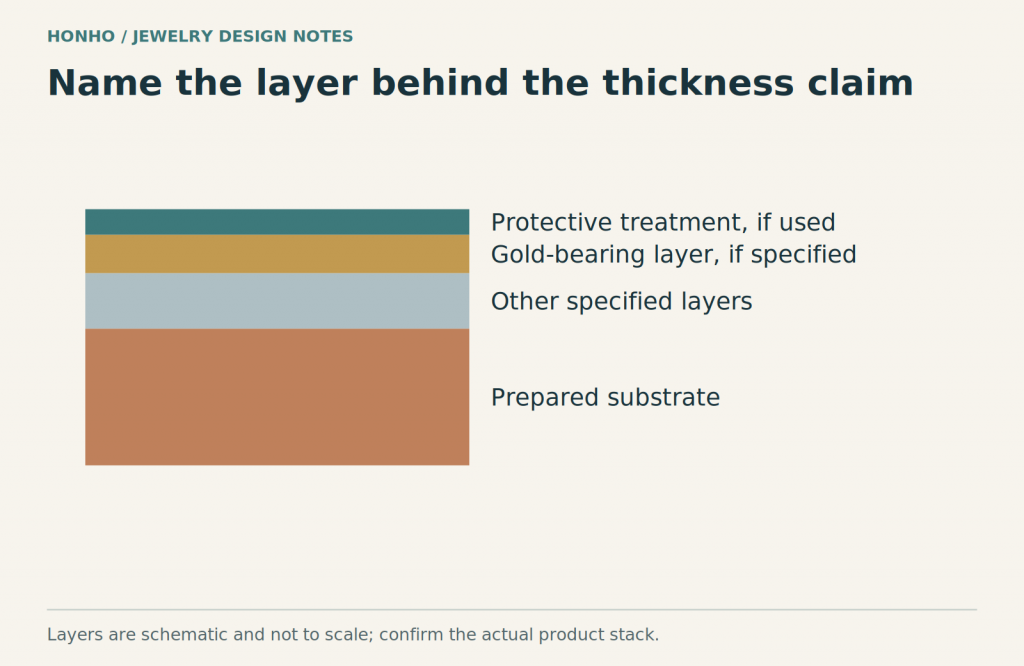
The supplier may propose an adhesion or barrier layer, a decorative layer and a protective treatment, depending on the substrate and process. Have these described by function and composition where relevant. Do not impose a generic stack copied from another material: an electroplated brass article and a PVD-coated steel article need their own process explanation.
Use a physical reference for the agreed yellow, rose or other tone and compare the complete assembly under the same lighting. A chain, clasp and pendant can reflect light differently because of their shapes and textures. Record an acceptable range or an approved pair of samples when variation is permitted. A screen photograph can support communication, but it cannot settle a subtle color disagreement by itself.
For two-tone designs, mark the boundary and identify which parts receive each finish. Check masked edges, recessed areas and the back of the item. Ask whether the selected assembly sequence affects those boundaries or requires parts to be finished separately before joining.
HonHo’s production experience identifies a specific development issue with some fine brass or silver chains: a 2.5 µm thick-gold specification combined with E-coating can leave cable/O, snake or rope constructions too stiff. Working a stiff chain by hand to loosen it can cause breakage or damage to the finish. This is a project-specific process concern, not a statement that every E-coated chain will behave that way.
For an affected design, HonHo can discuss a gold-protection treatment without E-coating. The aim is to preserve movement while protecting the surface; the sample and agreed tests must establish the result for the actual chain. Request the protection chemistry and care requirements relevant to the proposal. Do not treat the alternative as a universal service-life guarantee.
Compare the chain after every intended finishing stage, then assess drape, articulation, the clasp and connections on the finished necklace. Keep the final treated sample as the reference. An uncoated sample that hangs well does not establish the movement of a chain after its full production finish.
These variables make a universal lifespan promise unreliable. A ring and an occasional-wear pendant can experience very different conditions. Accelerated test hours describe a test result; they do not directly establish a number of years of wear.
A coating report can be misunderstood if “thickness” is given without naming the layer. Ask whether the figure refers to gold, a barrier layer, a decorative nitride or the complete stack. Record the measurement method and location. A result taken on a flat reference coupon does not automatically describe a recessed setting, moving clasp or thin edge on the jewelry.
| Claim on a quote | Question to ask | Record to keep |
|---|---|---|
| 18K gold plated | What is the substrate and what does 18K refer to? | Layer description and relevant material evidence. |
| PVD gold color | Is the visible color from gold, a compound coating or a multilayer system? | Actual coating specification. |
| Thick coating | Which layer, where measured, and by what method? | Report tied to the sample and measurement locations. |
| Long-lasting finish | Under what use and test conditions? | Defined claim, test scope and care instructions. |
For production approval, use the actual article alongside the color reference. Inspect the inside of rings, back of pendants and moving findings as well as the display face. Agree how an uneven shade, missed area or stuck clasp will be handled; a single photograph cannot establish uniform coverage.
A useful report says which layer was measured, which parts and locations were sampled, what method was used, and how the result is evaluated. Ask the laboratory or supplier to explain whether the reported value is a local reading, an average of stated locations, or a batch statistic. Those descriptions answer different questions.
For a curved or assembled article, select representative locations rather than relying on the easiest flat surface alone. A reading on a tail tag or clasp can be relevant to that component, but it cannot automatically stand in for the chain body. The method’s suitability, calibration and measurement limitations belong in the testing discussion.
| Requirement | Example of a clear instruction |
|---|---|
| Layer identity | Name the gold-bearing layer separately from the total stack. |
| Sample identity | State SKU, finish version and production lot or development sample. |
| Locations | Mark the agreed component surfaces on a drawing or photograph. |
| Acceptance | State whether the requirement applies to each location or a defined average. |
| Other performance | List adhesion, appearance and functional checks separately from thickness. |
Rack arrangement and part geometry also deserve attention when consistent coverage matters. Closely packed or shielded areas can behave differently from exposed display faces. Discuss the actual loading and movement with the coating specialist, and inspect representative finished parts. A photograph of a full rack is evidence of a process scene, not a thickness report for every item on it.
When the target cost is tight, ask the supplier to separate changes in geometry, surface preparation, coating specification, assembly and packaging. Keep each alternative named. A lower price achieved by changing the gold layer or omitting a protective treatment must remain visible in the comparison and subsequent product description.
Send HonHo the base material, drawing, finish reference, quantities and intended sales market with the quotation request. Identify whether the product will make a specific gold-content, water-resistance or skin-contact claim. The proposed process and evidence can then be matched to that claim before the final sample is approved.
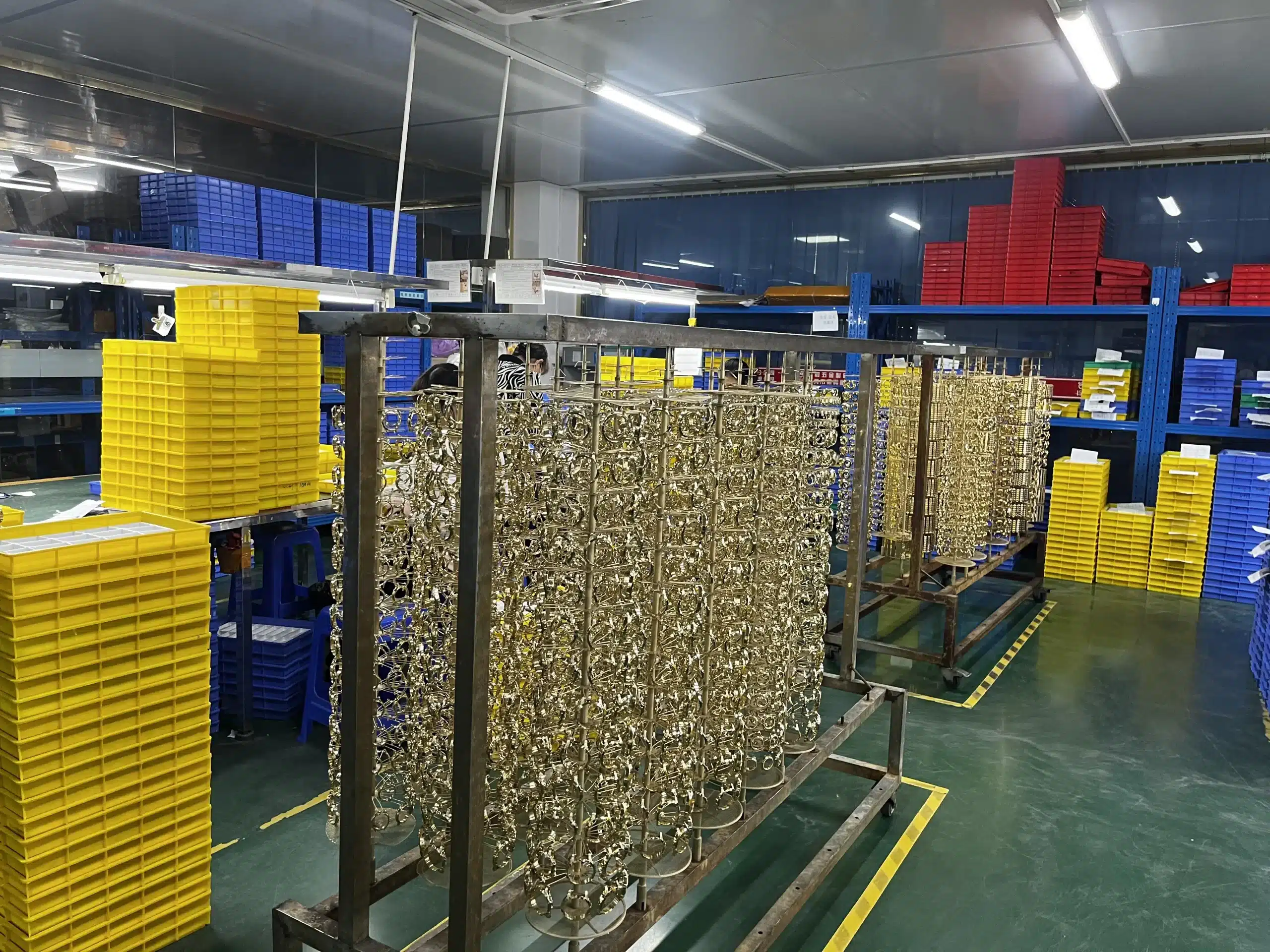
An elemental or coating measurement does not replace every other assessment. For example, a thickness reading does not prove nickel-release compliance or that a clasp works correctly. Keep the test purpose explicit.
A figure such as 2.5 µm is incomplete without the layer identity and the basis of the measurement. In U.S. gold-description guidance, certain coating examples use a fine-gold-equivalent thickness. That should not be confused with an unqualified physical thickness of a lower-karat alloy layer. Have the supplier explain how its quoted figure and report relate to the intended product description rather than comparing two bare numbers.
The current FTC gold-description guidance sets out those distinctions. For a commercial order, keep the agreed layer specification attached to the quotation and purchase order. A photograph of a yellow surface, a karat label or the name of a coating machine cannot replace it.
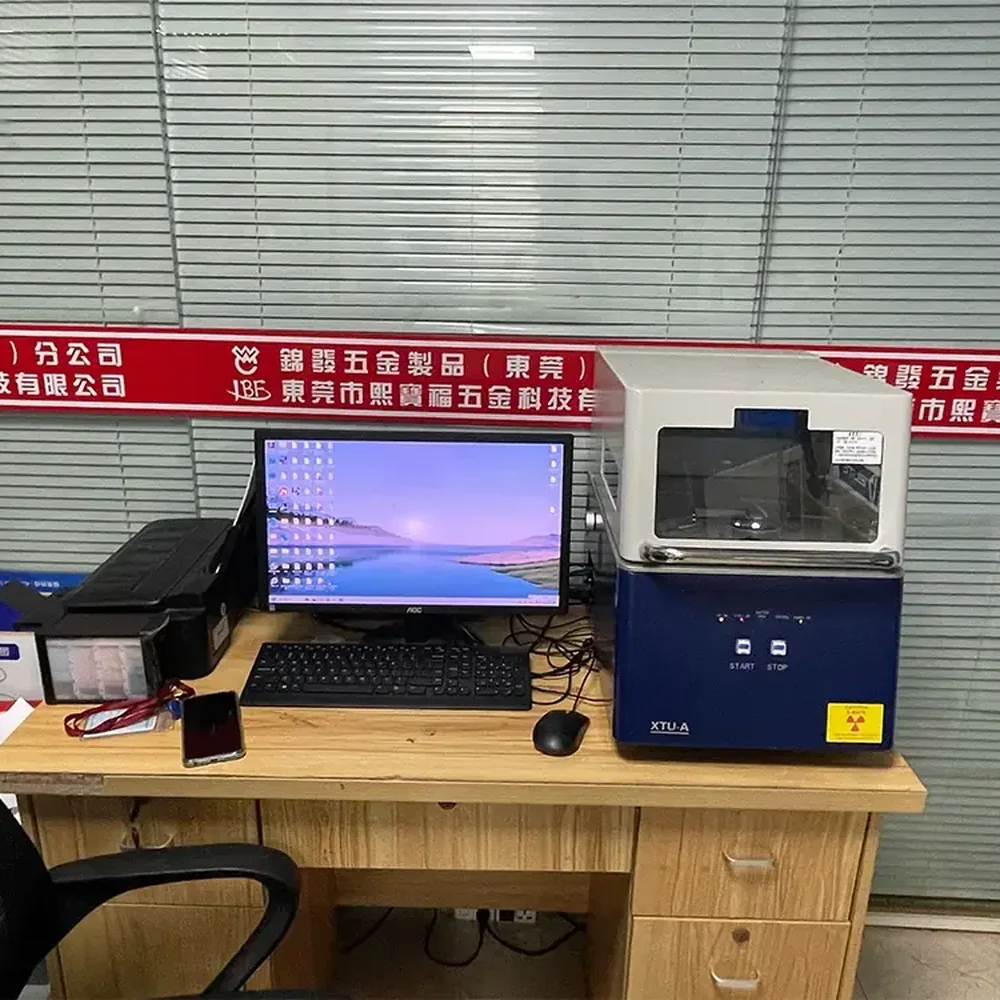
Fischer’s jewelry measurement guidance describes XRF applications for the composition and thickness of complex coating systems. The useful buyer question is whether the proposed setup and interpretation suit the actual sample. Ask the operator to identify what was measured and what the report does not establish.
HonHo has XRF coating-thickness equipment and can arrange thickness checks on customer-supplied samples. Send the construction information, the layer you need checked and photographs of the relevant locations when discussing the service. Confirm the scope, sample handling and reporting with the team. Do not treat that thickness check as a nickel-release test, an accredited certification or proof of years of wear.
Photograph the item before cleaning it, preferably beside an unused sample of the same finish and under the same light. Record whether the change is on an exposed edge, a skin-contact surface, a recess or a moving joint. Note the time in use and any reported cleaning or chemical exposure, without assuming that the wearer caused the problem.
A deposit, a changed topcoat, local wear and exposed substrate can look different but may coexist. Ask for an assessment of the actual construction before prescribing a polishing cloth or a chemical cleaner. Polishing can enlarge an already worn area; cleaning cannot rebuild missing gold. A refinishing proposal should explain whether stones or findings need removal and whether fine details could be altered.
For a brand launching a range, decide the response before the first return: who assesses the piece, which photographs and order details are needed, and when replacement or repair will be considered. That is more useful to a customer than an undefined “lifetime finish” claim. Use the observations to review the affected component and finish specification for the next production batch.
Use the care instructions supplied for the actual finish. Gentle wiping and avoiding unnecessary abrasion are sensible starting points; harsh polishing can remove a coating. Cleaning will not restore a layer that has worn away. For plated steel pieces, see how to clean stainless steel jewelry.
Gold plating is not an allergy guarantee. The outer alloy, underlayers and hardware all matter. Our jewelry-reaction guide explains the component checks behind more accurate customer information.
No. The description concerns the coating when accurately used. The underlying material must be identified separately.
No universal claim follows from the process name. Water, chemicals, wear and the complete assembly need to be considered for the specific product.
Some pieces can be refinished, but feasibility depends on the substrate, stones, assembly and original coating. Ask a qualified jeweler or the manufacturer to assess the item.
For a custom collection, use the jewelry quotation checklist and send HonHo your design and finish requirements.
Updated October 18, 2026.
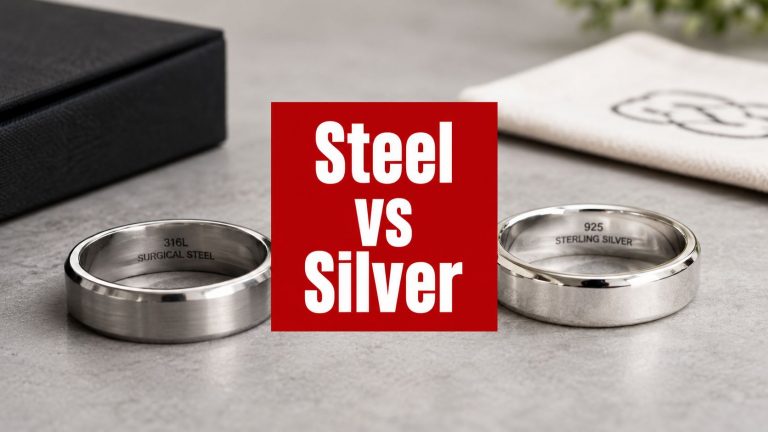
You’re pricing a new collection, and the sample tray is already split down the middle. The 316L surgical steel pieces look cleaner on cost and daily wear, the
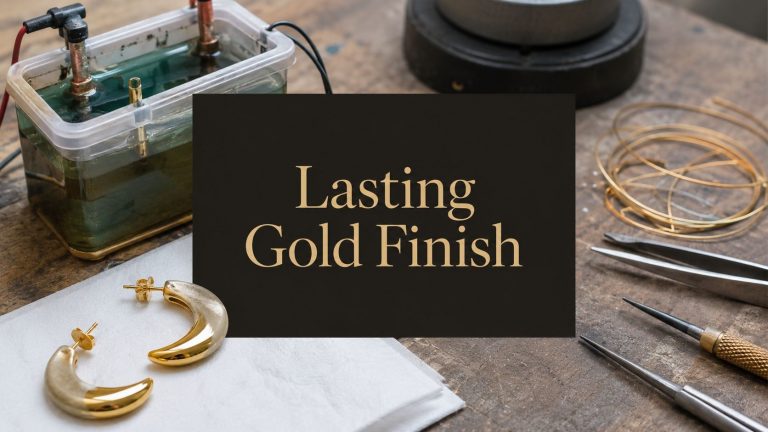
You probably have a launch already in motion, a supplier sample on your desk, and one uncomfortable question underneath it all, will this gold color still look clean
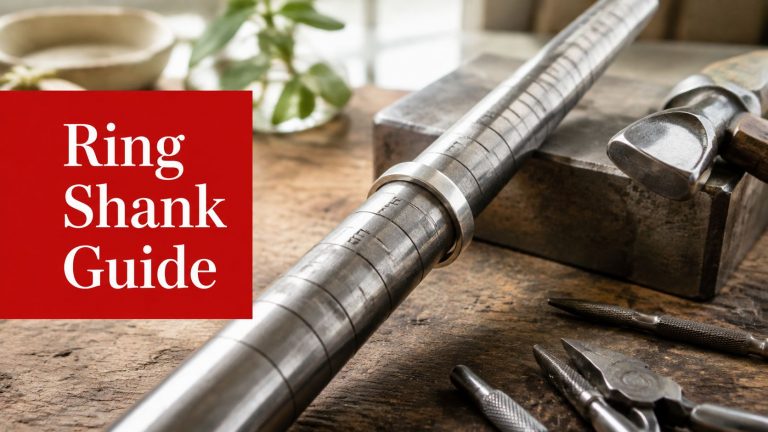
If you are developing the ring itself, compare ring fabrication, casting and CAD methods before approving the shank dimensions and manufacturing route. You’re refining a ring design, the