

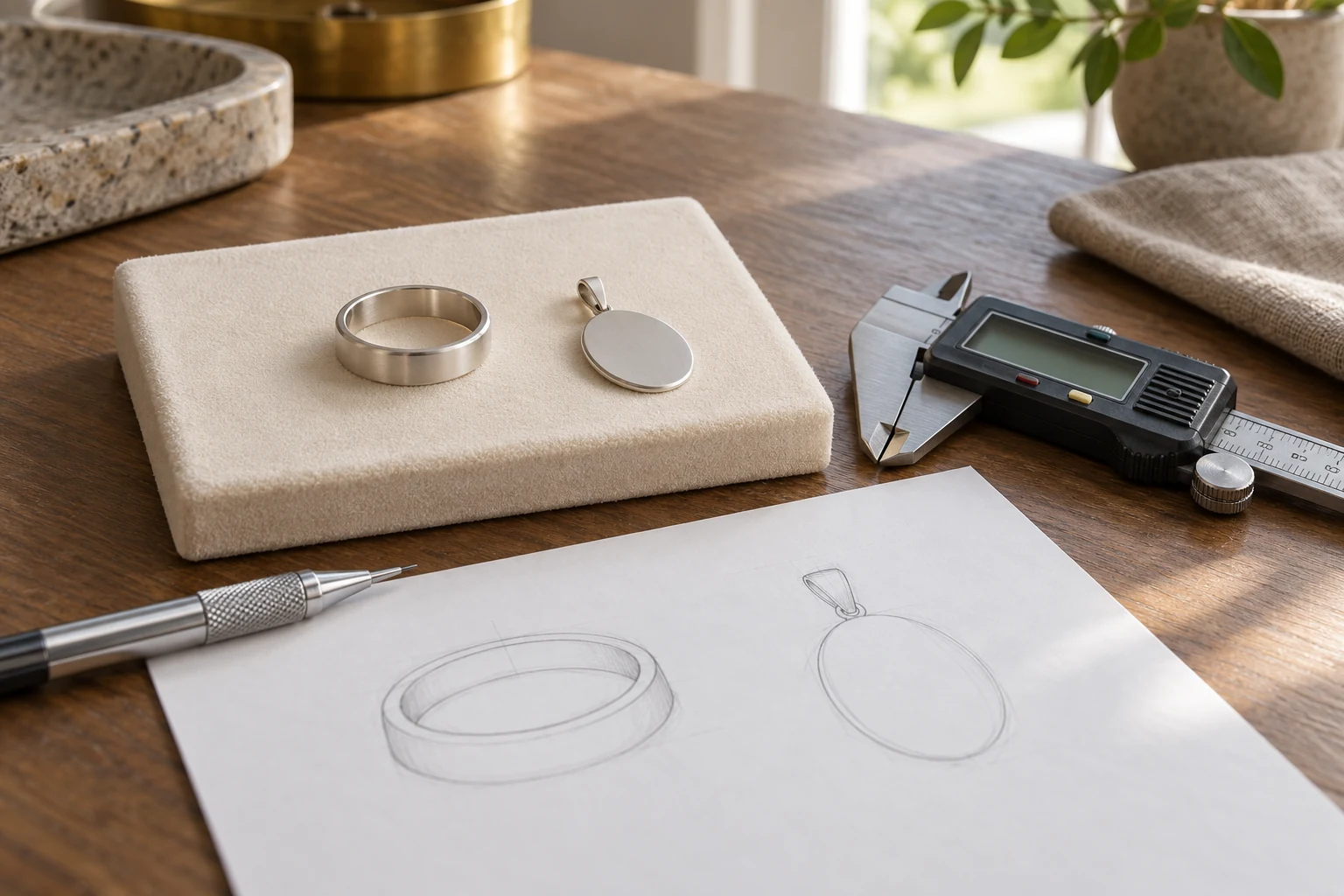
A useful custom jewelry quote request gives a manufacturer enough detail to price the same product you intend to approve. Include the design, material, dimensions, construction, finish, order breakdown and packaging. Ask for development and tooling costs separately from the production price so you can compare quotes without hiding assumptions.
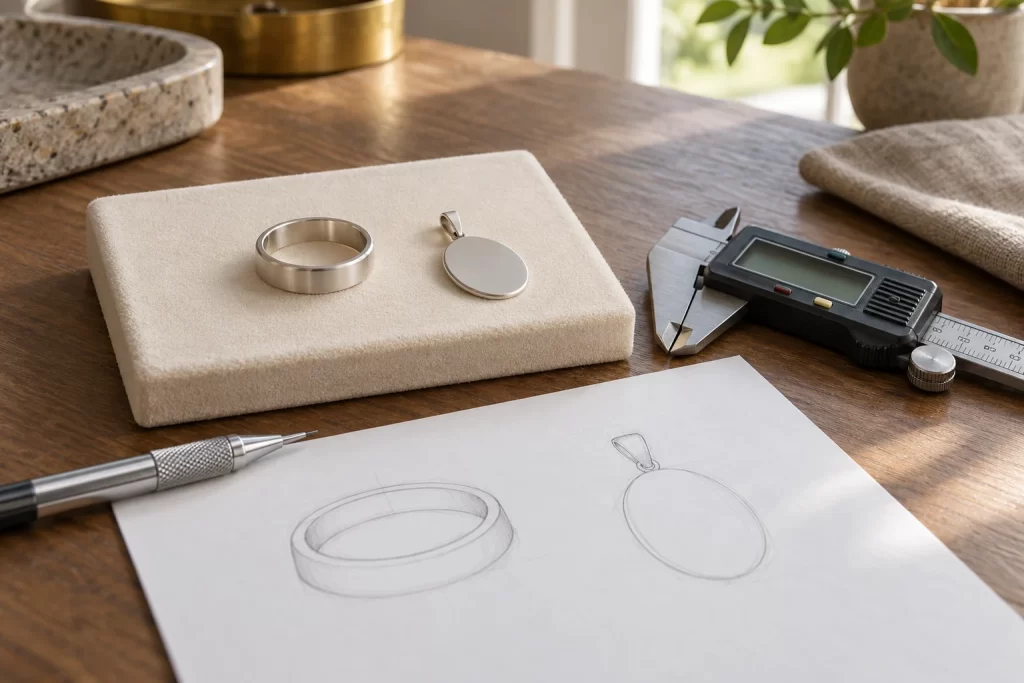
Use the table below as an RFQ checklist. Fill in confirmed details and mark undecided items “to be confirmed.” A reference photo can show a visual direction, but it should not replace dimensions or authorize copying another brand’s protected design.
| Field | Information to provide |
|---|---|
| Project and revision | Brand, contact, project name, SKU, drawing revision and date. |
| Product | Ring, earring, necklace, bracelet or component; intended wearer and use. |
| Design files | Dimensioned front, side and back views; CAD file if available; reference images with notes. |
| Body material | Specified alloy or grade; solid or hollow construction; target weight if relevant. |
| Dimensions | Length, width, thickness, ring sizes or chain lengths; units and critical tolerances. |
| Findings | Chain, clasp, connecting rings, ear posts and backs, including material and size. |
| Stones | Material, cut, dimensions, color reference, quantity and setting method. |
| Surface and finish | Polished, brushed or other texture; color reference; coating layers and thickness requirements. |
| Branding | Vector logo or text, position, dimensions, engraving or other marking method. |
| Quantity | Pieces or pairs per style, color and size; quantity tiers to quote. |
| Packaging | Card, pouch or box; artwork, labeling, individual protection and carton requirements. |
| Testing and inspection | Destination market, intended age group, requested tests and agreed acceptance criteria. |
| Timing | Sample target, approval milestones and required delivery date. |
| Delivery basis | Destination, currency, delivery term and named place; clarify freight, duties and taxes. |
| Commercial questions | Tooling ownership, sample revisions, reorder terms, payment schedule and quotation validity. |
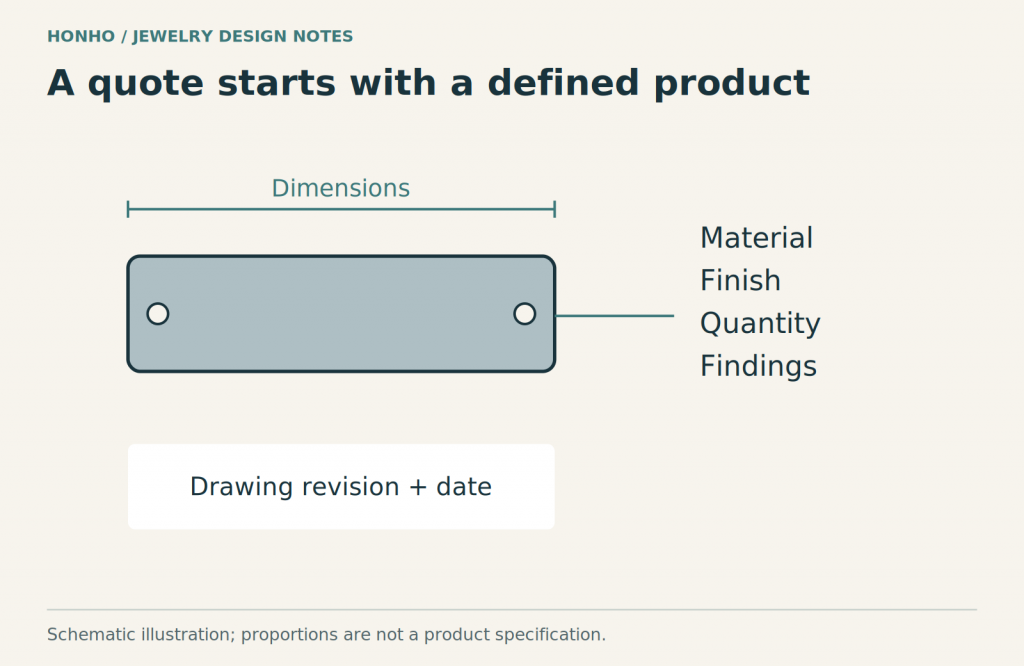
A dimensioned drawing helps resolve scale and construction. If you have a CAD model, identify the file format and software version and ask which export the supplier can use. STL, STEP and 3DM serve different purposes; a mesh file is not automatically an editable engineering model.
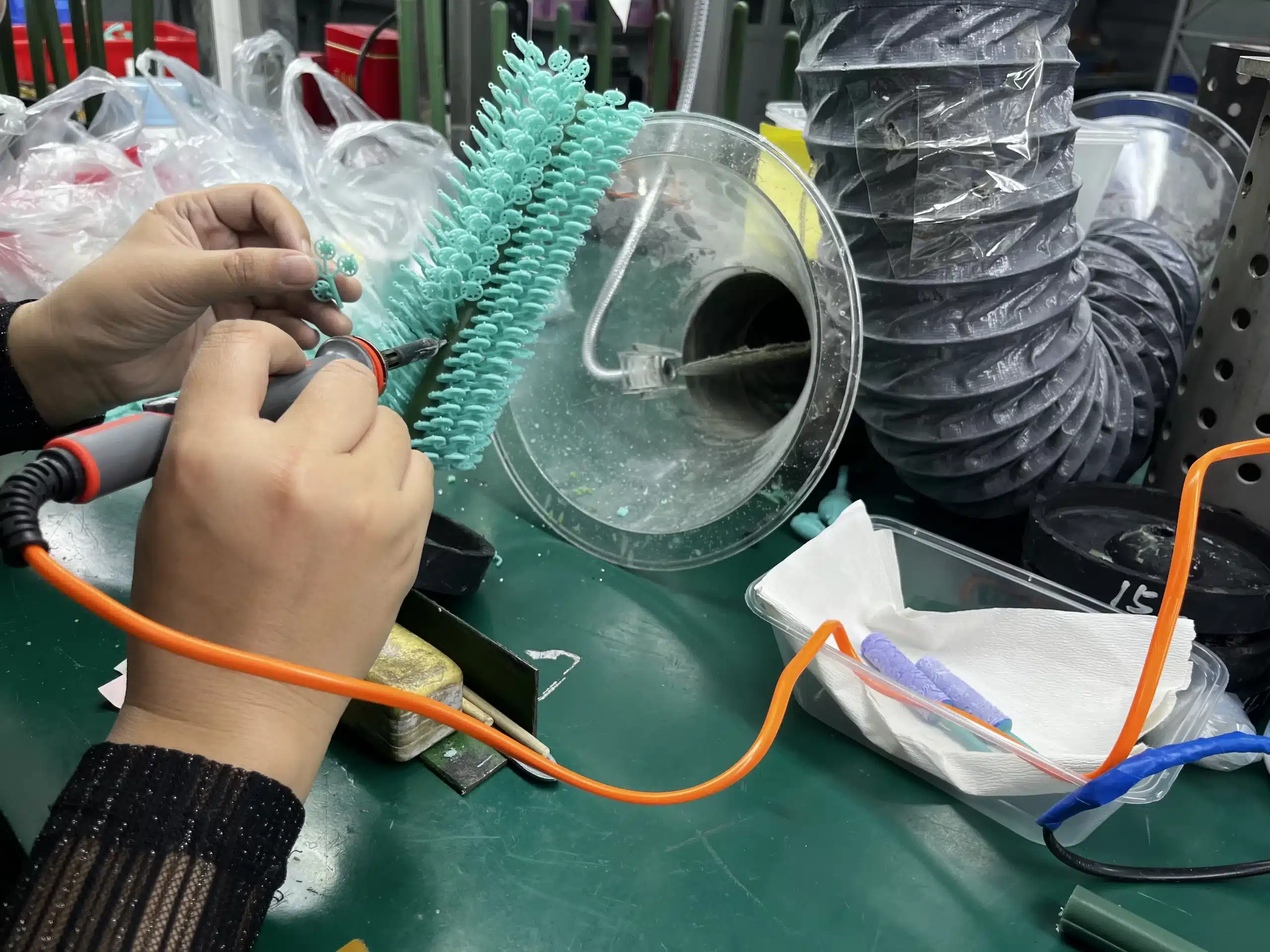
For a ring, show the inner profile, finished size and section thickness; our ring-making methods guide explains how the production route affects development. For earrings, show the post position and backing. For a necklace, include chain length, extender, clasp and pendant attachment. An attractive render can hide these details.
CAD-based weight calculations are estimates tied to the modeled volume and assumed material. Confirm the finished sample weight after manufacturing and finishing. A rendering also cannot prove the final color, stone appearance or coating durability.
State the base metal, desired color and surface texture. Ask the manufacturer to describe the proposed coating stack and identify the thickness of the relevant layer. Do not confuse total coating thickness with the thickness of real gold, or a gold-colored PVD coating with a particular gold fineness.
If the specification is undecided, request clearly named alternatives and the price difference between them. Read the gold-plated jewelry guide before comparing a coating described only by color with one that has a defined composition.
Use measurable stone requirements instead of relying on labels such as “AAA.” Specify the stone material, size, cut, color reference and setting method. Identify whether any report is needed and what it is meant to establish; a gemological report is not a blanket product-safety certificate.
Small components also matter. Two quotes can use the same pendant but different chain weights, clasp sizes or earring backs. Our chain style guide, clasp selection guide and earring backing guide help define those choices.
Confirm whether “unit” means one piece or one pair. Keep the specification unchanged when comparing quantity tiers. If a supplier proposes a cheaper construction, ask for it as a separate option rather than letting it replace the original requirement silently.
Instead of “Please quote a gold necklace like this photo,” describe the pendant dimensions and thickness, selected steel grade, chain style and finished length, extender, clasp, color reference, engraving area and quantity per color. Attach the dimensioned drawing and ask the supplier to identify any detail that remains unconfirmed. This is an illustrative brief, not a stock specification or price offer.
The starting quantity depends on the project type. Use the applicable line below and still provide the size and finish breakdown. These custom-development terms are separate from the ready-stock wholesale website and sales-catalog routes.
| Custom project | Current starting quantity | Known tooling basis |
|---|---|---|
| Stainless steel style | 50 pieces per style | Quoted for the design |
| Stainless steel ring | 30 pieces per ring size | US$100 main mold; US$50 for each additional ring-size mold |
| 925 sterling silver style | 30 pieces per style | Quoted for the design |
| Brass or a special construction | Confirm in the project quotation | Confirm the required development and tooling |
Sample charges are project-specific and should be itemized. Current sample planning is 15–20 days at the earliest, with an outer planning window of one month, and bulk production is planned at 25–35 days. Ask the quotation to state the start milestone and whether the periods use calendar or working days, plus the effect of revisions, special components and transport.
For an accepted expedited project, an initial metal blank can be available as quickly as three days with an additional charge. That is an early production stage. It does not mean a fully finished sample, completed testing or a shipment can be promised within three days.
If a stainless steel ring order uses four sizes at the 30-piece-per-size starting quantity, it contains 120 pieces. Under the stated mold basis, one main mold and three additional size molds total US$100 + 3 × US$50 = US$250. This example covers that tooling arithmetic only; sample work, unit production, finishes, testing, packing and freight remain separate quotation items.
State all size and color combinations before requesting the final price. A request for “120 rings” does not tell the manufacturer whether the order is four sizes of one finish or a more complicated split.
A preliminary quote may rely on an estimated weight, an undecided stone or a reference photograph without a side view. Ask the supplier to list those assumptions and identify which will be resolved by CAD, a physical sample or a material selection. This makes a later price revision understandable and helps the buyer decide where more detail is worth the development effort.
For a pendant, thickness and the back construction can change both weight and finishing work. For an earring, the post position, backing and weight can affect comfort. For a stone-set ring, actual stone dimensions and setting access can change the model. Request a revised written quote when those decisions change the product instead of assuming that the first estimate remains valid.
Tell the manufacturer which features are fixed and which can change. If the silhouette and retail price are fixed, ask about alternative construction or simpler finishing details. If the metal and coating claim are fixed, ask about geometry, assembly or packaging options. Each alternative should name its differences so that a cheaper version is not mistaken for the original specification.
| Priority | Useful comparison request |
|---|---|
| Lower earring weight | Compare feasible sections or hollow construction with finished weight estimates. |
| Matching a collection color | Quote against the same physical reference and coating description. |
| Simple replenishment | Identify shared findings and the controls for later component changes. |
| Readable small branding | Review the marking area and approve the actual-size method on a sample. |
Separate the dates for design approval, first sample, any revision, finished-sample approval, bulk completion and shipping. Confirm who provides each decision. A missing artwork approval or a revised stone size can interrupt the sequence even when manufacturing capacity is available.
Include the destination and required arrival date, then ask the supplier to distinguish factory completion from transport. If the schedule is tight, identify which decision or process can be expedited and the additional charge, rather than shortening every stage on paper.
At sample approval, retain the drawing revision, component list, finish reference and agreed inspection criteria. A photograph can support the record, but the approval should identify the physical sample or accepted standard. That record connects the quotation to what will be made and to the later receiving inspection.
| Quote detail | Why it can change the comparison | What to record |
|---|---|---|
| Unit | A pair of earrings and one earring are different quantities. | Currency and price per piece, pair or set. |
| Development | A low unit price may exclude a mold or sample charge. | One-time charges, revisions included and ownership terms. |
| Finish | A color name may hide different substrates or coatings. | Material and layer specification for both offers. |
| Delivery | Freight and destination charges may be excluded. | Named delivery term, named place and included costs. |
Use a simple comparison sheet: goods cost plus the applicable development, inspection, packaging and delivery costs. Divide only by the agreed saleable units for that scenario. Label assumptions such as duties or future defect allowances; they are estimates until confirmed. Do not compare a quoted factory price with another supplier’s delivered total.
Tell the manufacturer the target and identify the features you want to preserve. In a buyer’s discussion about a custom-ring quotation, the drawing also shows the wrong ring size. Correcting that specification is necessary even if it does not produce the price reduction the buyer hopes for. Forum estimates cannot price an unseen production brief.
Request two written options against the same revision: the original design and a proposed lower-cost version. Ask the supplier to identify the changed operation, material or component. Simplifying an assembly or using a shared finding is a different decision from reducing a load-bearing section or quietly changing the coating.
| Proposed saving | Question before accepting |
|---|---|
| Fewer parts or simpler setting | Does the changed appearance still serve the collection, and can the sample confirm the construction? |
| Shared chain, clasp or backing | Does it fit the intended product and preserve the agreed material description? |
| Different order split | Are the quantities feasible by size and finish, and can the business use the extra stock? |
| Simpler packaging | Does it still protect the piece and provide the required product information? |
For a HonHo inquiry, say which target is fixed: unit cost, order total or retail positioning. Those are different constraints. Keep sample charges and tooling separate so that a one-time development expense does not obscure the cost of later production.
Ask the quotation to identify unresolved inputs and its validity period. If weight, stone choice, coating or quantity changes, request a dated revision before placing the order. Confirm which version the deposit and purchase order accept. A price copied from a chat message may describe an earlier design or omit a charge that appears in the formal quote.
Keep a short change record: what changed, who approved it, and its effect on cost and completion date. If the supplier cannot yet fix a cost, ask what decision or sample will resolve it. That gives both sides a concrete next step without pretending an early visual estimate is a finished production specification.
Yes, a dimensioned sketch and clear requirements can support an initial discussion. The supplier should identify assumptions and any development work needed before a production price is finalized.
Compare construction, weight, finish, findings, quantity split, testing, packaging and delivery basis. A headline unit price rarely explains all of those differences.
The controlling specification, price scope, milestones, approval process and written commercial terms. Keep any agreed exceptions with the quote.
Send the completed RFQ details to HonHo for a project review. If you are still comparing manufacturing partners, use the jewelry supplier checklist alongside the quotation.
Updated October 18, 2026.
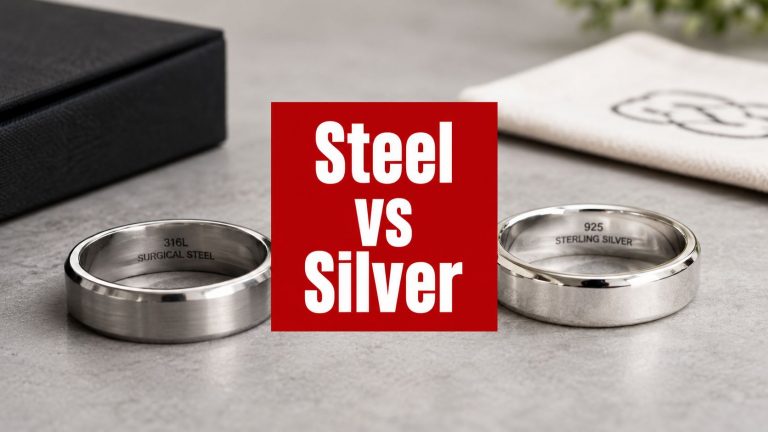
You’re pricing a new collection, and the sample tray is already split down the middle. The 316L surgical steel pieces look cleaner on cost and daily wear, the
You probably have a launch already in motion, a supplier sample on your desk, and one uncomfortable question underneath it all, will this gold color still look clean
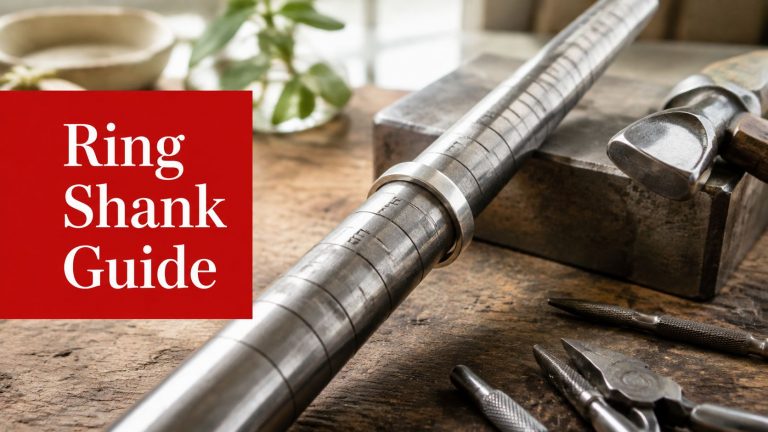
If you are developing the ring itself, compare ring fabrication, casting and CAD methods before approving the shank dimensions and manufacturing route. You’re refining a ring design, the