
A lot of product teams reach the same point with a new stainless steel collection. The design looks right in CAD. The silhouette is approved. Then the finish decision stalls everything. Mirror polish looks too flashy for the line. Sandblasting feels too dry. Matte can read flat. You need something that looks intentional, wears well, and can be specified clearly enough for production.
That’s where brushed finish stainless steel usually earns a place in the range.
For jewelry brands, a brushed surface solves two problems at once. It gives pieces a modern, controlled texture, and it makes daily wear look better over time than a highly reflective finish. It also gives sourcing and QC teams something very specific to manage, because brushed finishes are only as good as the consistency of the grain, the prep before brushing, and the way the finish is protected after assembly.
Teams developing stainless steel lines can compare that balance against other options in our guide to stainless steel jewelry for stylish and lasting fashion.
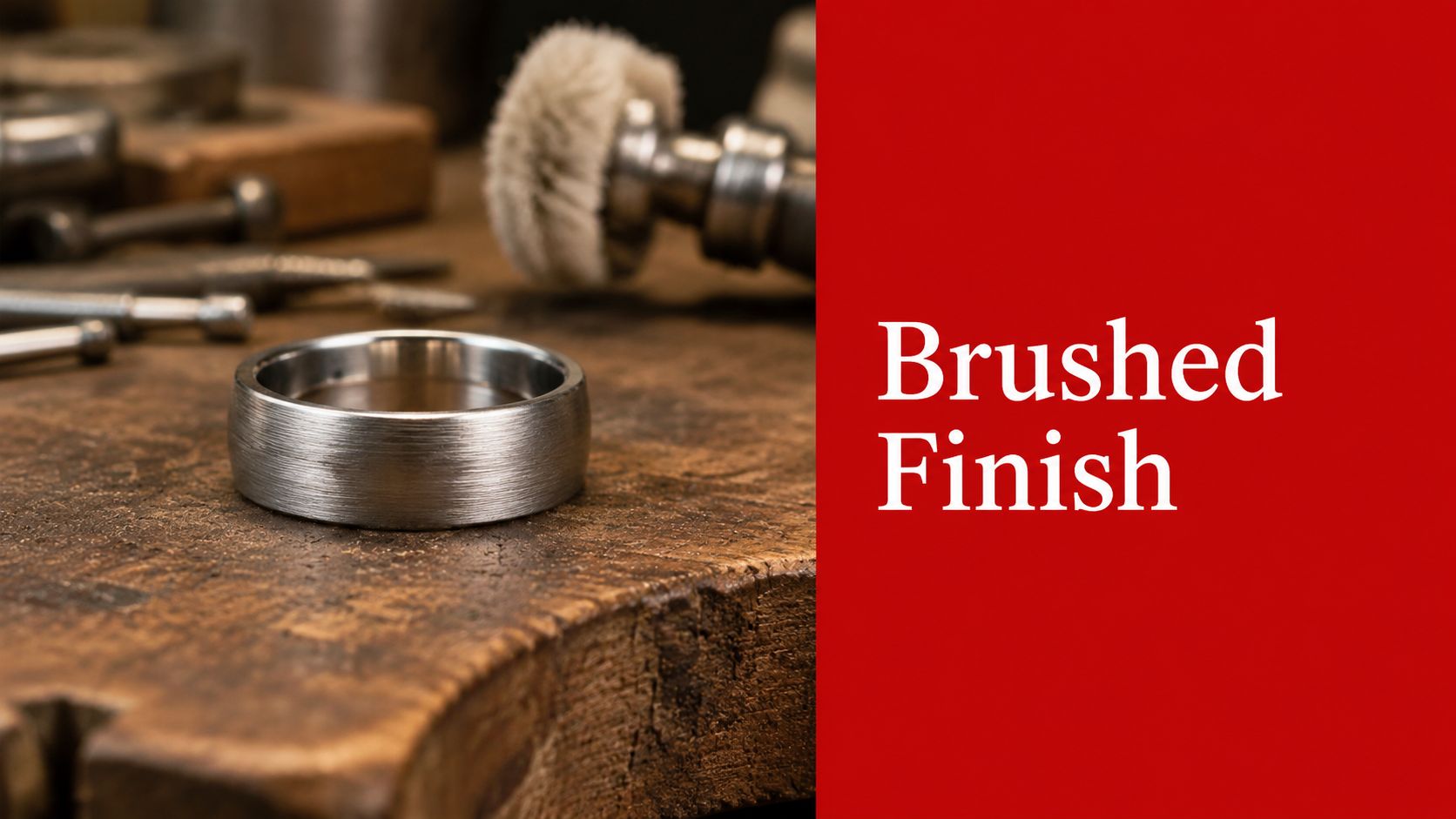
In jewelry manufacturing, brushed finish stainless steel is not a different alloy. It’s a surface treatment applied to stainless steel to create a fine, directional texture that looks satin rather than reflective. For brands building rings, cuffs, pendants, and men’s styles, that distinction matters because the finish changes the visual character of the product without changing the base metal choice.
The finish is created mechanically. Abrasion draws parallel lines across the surface, giving the metal a controlled grain. In production terms, that grain becomes part of the design language. On a flat pendant, it can make a simple shape feel architectural. On a ring, it can reduce glare and help the piece hold a cleaner appearance in daily wear.
The practical reason this finish stays relevant is simple. It gives stainless steel a modern look without the maintenance profile of mirror polish. It’s also easy to pair with OEM and ODM development because the grain direction, coarseness, and protected areas can all be defined in a tech pack and checked against a master sample.
Practical rule: If the finish is part of the product identity, specify it like a dimension, not like a mood word.

A brushed finish is a controlled abrasion pattern applied to the metal surface. Brushed stainless steel is defined not as a distinct material but as a surface finish achieved through mechanical abrasion, typically using 60–120 grit abrasive material followed by a 120–180 grit belt to create a uni-directional satin pattern. This finish is most commonly applied to 304 or 316 stainless steel grades, as outlined by CSMFG’s explanation of stainless steel versus brushed steel.
For jewelry teams, the key takeaway is that “brushed” describes the exterior appearance and texture. It doesn’t replace the material spec. If your product is 316L stainless steel, it’s still 316L after brushing. You’re specifying finish on top of alloy, not choosing one instead of the other.
The process sounds simple, but the details determine whether the result looks premium or inconsistent. The abrasive has to move in one direction. Pressure has to stay steady. The operator or machine setup has to maintain the same visual grain across all visible surfaces.
That’s why a brushed ring with a crisp, even grain looks expensive, while a ring with mixed grain depth looks unfinished.
If your team is reviewing multiple finish options, it helps to understand how brushing fits within broader jewelry polishing techniques.
“Brushed” and “satin” are often used loosely in product discussions. In practice, people may use them interchangeably, but a brand should still define the exact visual standard by sample.
| Finish term | What it usually means in production | What the customer sees |
|---|---|---|
| Brushed | Directional abrasion lines | Linear texture, low glare |
| Satin | Soft sheen, often low reflectivity | Smooth, subdued surface |
| Polished | Buffed for high reflectivity | Bright, mirror-like shine |
A short process view helps make the difference visible in real production work:
The reason brands choose brushed finish stainless steel is rarely just style. It’s style with discipline. The grain adds texture, hides handling marks better than reflective finishes, and gives industrial consistency when it’s specified correctly.
A finish decision is a trade-off between appearance, wear pattern, customer expectation, and production control. In jewelry, brushed finish stainless steel usually sits in the middle ground. It’s more refined than a rough matte look, less formal than mirror polish, and easier to keep visually consistent in everyday wear than high-shine surfaces.
| Finish | Appearance | Scratch Visibility | Fingerprint Resistance | Best For |
|---|---|---|---|---|
| Brushed | Directional, satin-like, modern | Lower visibility for light wear marks | Good | Men’s jewelry, minimalist lines, daily-wear rings |
| Polished | Bright, reflective, dressy | High visibility | Lower | Formal styles, statement pieces, classic fashion jewelry |
| Satin | Soft sheen, less directional | Moderate | Good | Clean unisex designs, understated collections |
| Sandblasted | Dry, matte, textured | Can disguise some marks but may show spot wear differently | Good | Industrial looks, contrast panels, accent surfaces |
Brushed finish stainless steel works well when the design already has strong geometry. Flat signet tops, beveled bands, bar pendants, and cuff plates all benefit from directional grain because the texture emphasizes line and proportion. Mirror polish does the opposite. It reflects the environment and shifts attention away from the form itself.
Polished finishes still have a place. They sell well in classic and feminine categories, especially where shine is part of the perceived value. But they also show micro-scratches sooner, and the customer notices every wipe mark. That’s why many brands combine finishes, using brushed on dominant surfaces and polish on edges or chamfers.
A mixed-finish part only looks premium when the border between the two finishes is sharp and repeatable.
Brushed surfaces are less forgiving than many teams expect. The finish may hide small wear marks later, but during production it exposes inconsistency fast. If the grain direction shifts around a curved bracelet plate, or if one batch has a coarser visual texture than the approval sample, the mismatch is obvious.
Polished surfaces create different problems. They amplify tiny dents, buffing waves, and heat marks from prior operations. Sandblasted surfaces can be attractive, but they don’t always suit logos, engraved copy, or a premium “metal” read.
For plated collections, the finish choice also changes how color reads. A black or gold coating over brushed steel feels more technical and muted than the same color over mirror polish. That comparison matters if your team is evaluating PVD versus electroplating for jewelry coating.
Use brushed when the collection needs these characteristics:
Choose polished when shine is the product story. Choose satin when you want restraint without a strong visible grain. Use sandblasting as a secondary texture, not a default answer for every style.
The strongest argument for brushed finish stainless steel in jewelry is how it behaves after launch. Customers don’t wear jewelry in controlled lighting or store trays. They wear it while typing, carrying bags, opening doors, and stacking it with other pieces. A finish that still looks composed under that use pattern has real value.
Brushed stainless steel (ASTM No. 4) has a unidirectional texture with a typical surface roughness (Ra) of 0.4 to 1.0 micrometers, which effectively masks minor scratches and grinding scores compared to mirror-polished surfaces, according to Fractory’s overview of EN and ASTM stainless steel finishes.
That matters on jewelry because everyday wear rarely creates one dramatic scratch first. It creates many small interruptions. On a polished ring, those marks scatter light and show quickly. On a brushed ring, the existing linear grain helps visually absorb light surface disturbance.
A brushed ring or bracelet usually feels more settled in use. It doesn’t flash as much. It doesn’t demand constant wiping. It often fits better in collections built around utility, minimalism, or men’s fashion.
For product teams, that translates into fewer finish-related disappointments after delivery. The customer still wears the item hard, but the finish ages in a way that feels consistent with the design intent rather than fighting it. This is one reason many brands position brushed stainless pieces as reliable daily-wear products, especially for customers comparing long-term value in pieces like rings and cuffs. The broader wear profile also aligns with what brands look for when reviewing how long stainless steel jewelry lasts.
If the line includes color, PVD coating is usually the smarter premium option. The finish already helps disguise light wear. Adding a more wear-resistant coating builds on that advantage instead of undermining it.
PVD-coated brushed stainless steel jewelry maintains its finish for 3–5 years under daily wear conditions, while standard electroplated brushed pieces typically fade within 6–18 months, as described in Ektaraa’s discussion of PVD-coated jewellery.
That doesn’t mean brushed plus basic plating never works. It means the expected wear pattern is different. For a fashion program with short selling cycles, standard plating may be acceptable. For core styles, reorder programs, or distributor lines where customer complaints are expensive, brushed plus PVD is usually the safer specification.
Color on brushed stainless steel can look excellent, but only if the coating method matches the wear expectation. A brushed gold ring with weak plating often disappoints faster than a plain steel version. The surface texture doesn’t cause that problem. The coating choice does.

Brushed stainless steel jewelry coated with PVD (Physical Vapor Deposition) demonstrates a hardness of 800–2000 HV compared to 100–200 HV for traditional electroplating, making it significantly more resistant to abrasion and wear, based on Providence Metallizing’s explanation of PVD coating for jewelry.
For a product developer, that difference shows up in practical ways. Edges stay cleaner. High-contact surfaces resist visible breakdown better. Texture holds its intended look longer on gold, black, or dark grey finishes.
A brushed base also changes the visual result. PVD over a directional grain tends to look more technical and less flashy than the same color over a polished base. That’s often exactly what modern wholesale jewelry buyers want for men’s lines and minimalist collections.
PVD improves wear resistance, but it doesn’t make the product indestructible. Deep dents, gouges, and sharp impact damage can still cut through both the brushed texture and the coating. Once that happens, a perfect repair is difficult.
Use simple care guidance with your retail and distribution teams:
Damage on a brushed coated surface is easier to create than to hide. Prevention is cheaper than repair.
For brands building custom jewelry lines, this is where process capability matters. One option is HonHo Jewelry’s PVD plating service, which pairs stainless steel manufacturing with in-house color finishing so the grain and coating can be reviewed together during sampling instead of treated as separate vendors’ work.

Most brushed finish problems don’t start on the factory floor. They start in incomplete tech packs. A brand says “matte brushed steel” and assumes everyone shares the same picture. They don’t. One supplier interprets that as a soft satin grain. Another makes it coarse. A third brushes the wrong direction on a ring top. All three think they followed instructions.
The industrial side is standardized. The industrial brushing process is standardized under EN and ASTM specifications and involves cleaning, abrasive brushing with silicon carbide or aluminum oxide belts in a single direction, and a final cleaning to ensure uniform texture and preserve corrosion resistance, as described by Part Manufacturing’s guide to brushed stainless steel. But those standards don’t remove the need for brand-level specification.
At minimum, your OEM or ODM file should define these points:
For brushed jewelry, the master sample matters more than the phrase in the PO. It becomes the physical answer to every quality question later. Is the grain too coarse? Compare to the sample. Is the direction off by a visible margin? Compare to the sample. Is one batch duller than the approved look? Compare to the sample.
The PO starts the order. The master sample settles the argument.
Teams that skip this step usually lose time in revisions because finish complaints are hard to resolve through words alone.
A reliable QC process for brushed finish stainless steel should include visual checks under consistent lighting and angle. Random casual inspection isn’t enough, because directional grain can look acceptable from one view and uneven from another.
Use a checklist like this:
For custom jewelry production, this discipline is what keeps a brushed finish from becoming a return-risk finish.
Some finishes are versatile but forgettable. Brushed steel isn’t one of them. It performs best when the product shape gives the texture room to speak. The most successful applications are usually pieces with broad visible planes, clean edges, and a design language that benefits from restraint.
Men’s rings are one of the strongest categories for brushed finish stainless steel. A signet top with a linear grain looks intentional even without stones or complex detailing. The same logic applies to cuff bracelets, ID bars, and plate-style bangles. The finish supports weight and structure without making the product feel overly formal.
This is also where the wear benefit matters most. Hand-worn jewelry takes repeated contact, so a finish that hides minor visual disturbance gives the end customer a better long-term experience.
Brushed pendants work well when the form is simple. Bars, discs, dog-tag shapes, geometric plaques, and layered modern silhouettes all benefit from a directional surface. The finish adds visual depth without adding ornament.
For earrings, brushed steel tends to work best in hoops with flat faces, angular drops, and compact unisex forms. On very small parts, the grain can become visually insignificant, so the design should justify the finish.
One of the most commercial ways to use brushed steel is as a contrast surface inside a broader finish story. A polished edge around a brushed center panel creates definition. A brushed black PVD face paired with polished sidewalls creates a clean technical look. Laser engraving often reads more controlled on brushed areas than on highly reflective ones.
There is one caution that product teams should keep in mind. Restoring a uniform brushed finish on large surfaces after deep scratches is extremely difficult for non-professionals, as stopping mid-stroke or using the wrong tool creates visible grain interruptions, as discussed in this metalworking discussion on restoring brushed finishes. Jewelry pieces are smaller, but the same principle applies. If the finish is extensively damaged, a quick cosmetic fix usually creates a mismatch instead of a repair.
That’s why brushed steel is strongest in designs that treat the finish as a durable, wearable texture, not as something customers should expect to restore perfectly at home.
If you’re developing a stainless steel collection and need clear OEM or ODM support on brushed finishes, HonHo Jewelry can help you turn design intent into a production-ready spec. Share your sketches, CAD files, finish references, or master samples, and the team can review grain direction, coating options, sampling, and QC checkpoints before mass production starts.
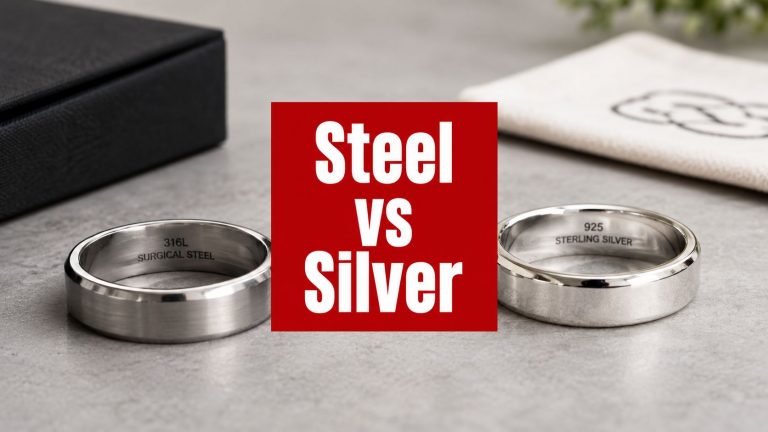
You’re pricing a new collection, and the sample tray is already split down the middle. The 316L surgical steel pieces look cleaner on cost and daily wear, the
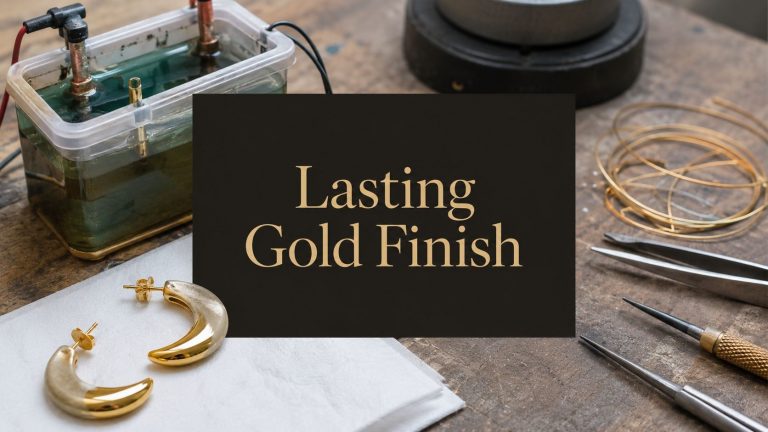
You probably have a launch already in motion, a supplier sample on your desk, and one uncomfortable question underneath it all, will this gold color still look clean
You’re refining a ring design, the stone looks right, the setting is approved, and the band still feels like a detail you can solve later. That’s where many