You acquired a strand of pearls at an estate sale. Perhaps you inherited a set of pearl earrings from your grandma. Or you do some shopping and wonder why one necklace goes for $45 and another one goes for $4,500. However you found your way here, there is one question in mind: how much do pearls cost?
The truthful answer to the ultimate question is: it depends. Individual pearls can range from a couple of dollars to several thousand, while a complete strand can cost from $50 up to well over $100,000. Its a big range and it reduces down to a few specific variables that are likely so simple for someone to put together in your mind as there is nothing IRL code changing.
In this guide we will take you through each and every thing that affects prices of pearls up or down, you see what does sell for how much in 2026, and tell you a few secret artworks to assess pearl fine quality yourself — without the want of gemologist. We will also the things nearly no other guide discusses (at least not directly), like how climate change is quietly dusting off pearl supplies, how much it costs to keep pearls looking good over time, and how to dodge the commonest traps buyers fall into.
Natural Pearls vs Cultured Pearls: The Price Difference Is Massive
How Much Are Pearls Worth? The first thing you should know is that nearly all pearls sold in jewelry stores today — about 99% of the world market — are cultured pearls, not natural ones. This is not a bad thing. Pearls are real pearls that have been cultivated inside of actual mollusks. They are not fakes. However, these are not natural pearls, and the price difference is enormous.
A natural pearl happens all on its own when an irritant, usually a parasite or piece of debris, comes inside the mollusk and the animal coats it in layer after layer of nacre (the same material that lines the shell). This process is done over years with no assistance from humans. Today is exceptionally rare to find a pearl in nature also.
A cultured pearl goes through the same biological process, but a farmer surgically inserts a nucleus (often a bead) to initiate the process. All of that nacre is still being produced by the mollusk. The pearl is still real. However, due to the fact that the process is controlled, cultured pearls are much more abundant — and much cheaper than natural ones.
- Natural pearl, single ORM diamond strand: $10,000 – $500,000+ (only available throught auction houses; very rare in retail)
- Cultured pearl strand: $150 – $100,000+/each depending on the type and quality
It sold for $36.1m at Sotheby‘s in 2018, and is not only the most expensive natural pearl ever sold at auction but also the second most valuable jewel. And that price tag is more about rarity than it is beauty. In order to find out whether your pearls are of natural or cultured origin a microscopic inspection, an X-ray or CT scan at a certified gemological laboratory may be necessary — the naked eye cannot tell.
The 4 Most Major Types Of Cultured Pearls As Well As Their Price
The type is commonly the first factor that determines how expensive are pearls when people ask this question. The following is a simple rundown of the four major paint types and their projected 2026 retail price ranges:

FRESHWATER PEARLS — Low-priced most, maximized
Freshwater pearls are farmed fresh water mussels in lakes and rivers, mostly in Zhuji, China. They account for the overwhelming majority of worldwide pearl production. The quality has also changed — the best freshwater pearls today has as much luster as entry level Akoya but at only a fraction of the price.
Nucleated freshwater pearls: more spherical, lustrous gems developed by Chinese farmers or the Akoya as a substitute for 30–40% of their capital cost. You get to see these in events like pearl livestreams (Douyin) live from source, but buyer beware that what you see is not always what ships — there can be some dodgy practices.
- Standard sizes: 6 mm – 12 mm (Edison pearls may grow up to 15 mm)
- Price: $50 – $2,500 per strand
- Cost range of single pearl: $5 – 300
Akoya pearls — The classic white round pearl
Akoya pearls are the original pearl: small, white, round with a bright mirror-like luster. Japanese Akoya, grown mainly in Japan (some China and Vietnam), faced substantial declines: 67% over two years as ocean temperatures have increased decreases yields. This supply squeeze is real and evolving.
- Typical size: 6 mm – 9.5 mm
- Price per strand: $500 – $10,000+
- Single Pearl Price: $50 – $500
- Mikimoto Akoya strands begin at $1,500 and up to $30,000 plus for premier specimens.
Tahitian Pearls — The Dark Exotic Classic
Tahitian pearls (also known as black pearls) are cultivated in the black-lipped oyster, Pinctada margaritifera found in French Polynesia. They naturally range in color from silver-gray to deep black, with overtone of green, blue, purple and peacock. Just a French Polynesia are the strict rules and surrounding to create real Tahitian pearl.
OUR NOTE THAT MOST TRAVEL GUIDEBOOKS WILL NOT TELL YOU: GIA reports that dyed freshwater pearls are sold to almost 38% of the pearls marketed as “Tahitian.” Require proof of French Polynesian origin or GIA certification if you are paying Tahitian prices.
- Typical size: 9 mm – 14 mm
- Prices range per strand: $1,000 – $25,000+
- Single Pearl Price: $100 – $1,500
South Sea Pearls: The Rarest and Most Expensive
Characteristically the biggest and most costly, South Sea pearls are generally cultured pearls. Cultured in the giant Pinctada maxima oyster native to Australia, Indonesia and the Philippines, they possess a soft, satiny luster — rich in luminescence rather than mirror-bright. Just 10% of harvests result in round gems.
- Typical size: 10 mm – 20 mm
- Price Per Strand: $5,000 – 100,000+
- Cost: $200 – $10,000+ a pearl
- Average auction price: Up to $1 million for exceptional strands
What You Need To Know About Pearl Value: The 7 Factors
There are seven factors that the Gemological Institute of America (GIA) uses to determine a pearl’s quality and value. These are the one thing you need to get it that helps me the most after buying or selling pearls.

1. Luster — The Most Important Factor
Luster is the shine retreived from light that reflects inside the surface of a pearl. GIA uses a five-tier scale to grade it: Excellent, Very Good, Good, Fair and Poor. Luster is no doubt the largest price driver. No algorithm can replicate the luster of a slightly off-form pearl, but as they say, every time you choose an ugly pearl with perfect sphere shape but dull shine over another one which is exactly opposite to it.
Pearl luster is best judged under warm store lighting—not all stores have the right lights here. Request to see pearls in open daylight — that is the light you will truly wear them in.
2. Nacre thickness– A quality indicator hidden in plain sight
Pearls are made out of a substance known as nacre. According to GIA research, pearls with nacre thinner than 0.5 mm may start peeling in as little as 5–10 years-especially for larger sizes-which few retailers will tell you. Tip pearl to bright light: thin-nacre pearls display nucleus shadow Budget Akoya are allowed to have nacre of as low as 0.25 mm under one year,
3. Surface Quality—What do you even mean by “perfect”?
No pearl is 100% flawless. This is normal as there can be minor bumps or faint ridges. Those are cracks, deep pits and color spots, which is what actually damages value. Focus on luster over sheen at all times.
4. Shape — Round is the Rarest, but Not Always the Best
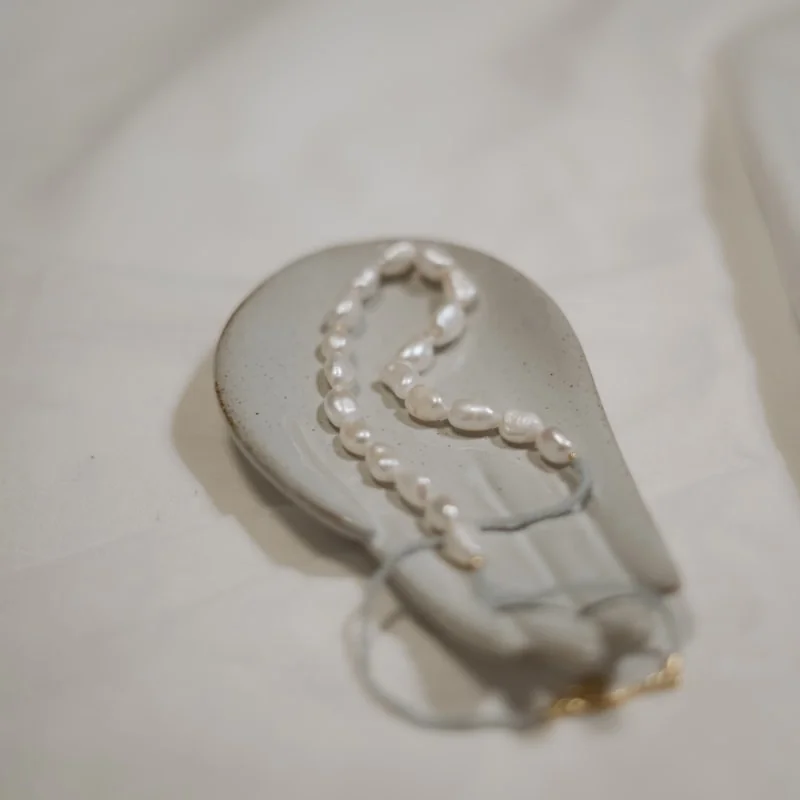
People generally assume round is best, period. The same is true to a large extent for both Akoya and South Sea pearls, where roundness attracts a significant premium However, artistic collectors will routinely pay a significant premium for same-of-a-kind baroque and keshi pearls (highly irregular shapes) — since no two look alike.
- Round / Near-Round: Capstone Value; The Most Traditional
- Semi-round (oval, button): Mid-range; practical for earrings
- Baroque / Drop: Quite variable; can be very valuable with high luster
- Keshi (Pearls): High luster, very small all nacre pearls; rising in popularity with collectors
5. Size — Bigger Costs Exponentially More
Millimeters are the unit of measurement for pearl size. The price increase when size increases is not linear: it is exponential. A good 9 mm pearl is not roughly twice as expensive as a 7 mm pearl either. A large pearl can cost four to six times as much since they are far scarcer in the top grades and take a considerably longer time to develop.
For instance: An 7 mm good-quality freshwater pearl → about $50. The same quality at 9 mm → ~ $ 200. At 11 mm → $800+.
6. Color: Preference is Value
Pearl colors can vary from White to Cream, Pink, Silver, Green, Blue and Black as well Gold. Even coloring throughout with an desirable overtone contributes to value. Asian market premiums go to South Sea gold pearls; Western taste is for rose-overtone Akoya pearls. D: some pearls are lab-created; E: note: some have been bleached or dyed Treated pearls must cost lower — UV light uncovers sure remedies; laboratory testing vindicates it.
7. Matching — Extremely Relevant for Strands and Earrings
In multi-pearl pieces the value goes up if all of the pearls match in size, shape, color and luster. From the thousands of Akoya pearls harvested, it can take years to assemble a perfectly matched 18-inch strand. That is labor you are paying for.
5 At Home Tests To Tell If Your Pearls Are Valuable
- The Tooth Test: Gently scrape the pearl with your front tooth. The nacre that fills that space has a crystalline structure, which gives you that slightly gritty feel when you rub pearls between your fingers—pearls are not really smooth; real ones have some texture. Real pearls feel slightly grainy while fake glass or plastic pearls are smooth like air.
- The Weight Test: Real pearls are heavy — much heavier than the size suggests. If a strand seems light and empty in density — be suspicious.
- The Light Test: Hold a pearl to bright light. The depth and inner glow of quality pearls. A shadow of a nucleus shows up thin nacre.
- The Loupe Test: A real pearl surface has tiny overlapping crystalline tiles under 10 x magnification. Fakes generally appear smooth or painted one color.
- The Drill Hole Test: Examine the drill holes on strung pearls. Real pearls have concentric nacre rings. Cheap fakes show none. I simply mean since there would be the natural wear of nacre separating at the drill hole on worn pearls and it is normal to ask for prophylactic restringing.
Pearl Nacre Thickness: Why No One Tells You about Longevity
This is probably amongst the least talked pearl topic online, but it’s absolutely treacherously important if you buy pearls as a long term investment or heirloom.
Measurement of nacre thickness is done in units of a microns (µm) or millimeters (mm):
| Nacre Thickness | Quality Level | Expected Lifespan (daily wear) |
| Less than 0.35 mm | Low | 3–5 years before peeling risk |
| 0.35 – 0.5 mm | Moderate | 5–10 years with care |
| 0.5 – 0.8 mm | Good | 10–20+ years |
| 0.8 mm+ | Excellent | Potentially lifetime heirloom |
| 100% nacre (natural/keshi) | Exceptional | Indefinite with normal care |
Request specifically from your supplier nacre thickness 데이터. Reputable manufacturers measure this. The ones who will not share this data with you, well they are always pricing low-nacre pearls at big prices.
The Unknown Costs of Purchasing Pearls (Most Consumers Never Think Of)
Total cost of ownership seems to be included in almost none of the pearl buyer’s guides. Before you buy:
- Restrung: Every 1–3 years with tied silk thread Costs $25 – $100.
- Yearly – professional cleaning of absorbed perfume and oils. Costs $20 – $60.
- Insurance appraisal: $50 – $150 per piece; every 3–5 years.
- Where: Ensure not to keep in plastic bags (traps sweat) or hard jewelry( scratch pearls). Use a soft-lined dedicated box.
For a $1,500 Akoya strand, that means, over 10 years an extra $400-600 in maintenance. Factor that in.
Should You Invest In Pearls In 2026?
The case for pearls — Prices of the genuine Akoya supply from Japan have increased 67per cent over two years as warming waters are wiping out oysters. South Sea and Tahitian pearls take 2–6 years to grow, so supply cannot be ramped up quickly. Best natural pearl strands have performed extremely well over the long-term.
Case against: Freshwater production is massive in China and likely not to appreciate. However, resale of cultured pearls is tough because jewelry stores usually only pay 10–20% of retail value. This means that auction houses are only worth it for pieces valued at $5,000+.
Key takeaway: Purchase well-loved pearls at the highest quality and price point you can afford Fine South Sea and Tahitian items are likely decent as an in the long run worth warehouse. Never purchase any pearl with a view to immediate resale profit.
Emerging Impacts of Climate Change on Pearl Prices
Pearl oysters are very sensitive to temperature and pH (the measure of how acidic or basic a solution is). As ocean conditions shift:
- Rising mortality from warm-water disease now threatens Japan’s Akoya oysters. These regions include Mie and Nagasaki Prefectures which had widespread crop losses — this is a structural supply problem.
- By slowing nacre formation, ocean acidification affects black-lipped oysters in French Polynesia, producing less thick and lustrous gems from environmentally-stressed mollusks.
- Some Australian South Sea operations have also moved farming further south as northern waters warm, pushing up costs.
The practical implication: relative value of well-grown pearls from more established farms is likely to increase with mounting environmental pressure.
Source of Pearls — Retail or Wholesale or Custom Manufacturer
The quality is exactly the same but where you purchase the pearls has a dramatic influence on price.
- Department store retail: Highest prices. That’s why you are paying for brand, market, and retail overhead. Your typical price should be 3 — 5x manufacturing cost
- Online pearl retailers: More competitive. Companies such as The Pearl Source or Pearl Paradise sell direct-to-consumer and can save you 30–50% over department stores for the same quality.
- Wholesale / custom manufacturers: Lowest cost for bulk, custom designs or branded jewellery lines. As most cultured pearls are sourced from China, dealing directly with a manufacturer located there can shave off 50–70% of prices charged at retail for equivalent quality. Which makes this model more fit for jewelry brands, retailers or bigger individual purchases.
At the end of the day, for the brand looking to build a jewelry brand or sourcing pearl jewelry at scale — you will want to work with that manufacturer who is able to provide material testing data, nacre thickness reports and quality certifications. HonHo Jewelry works with international jewelry brands show sourcing and manufacturing high quality pearl jewellery while complete documentation of material, custom design from individual kaizen to the completion of multi-piece collections We have in-house testing of nacre quality and durability as well as manufacturing process with quality certificates before being dispatched.
Pierl Value FAQ section
What is the value of one pearl?
A large, top-grade South Sea pearl can be worth $10,000 or more; a small freshwater gemstone as little as $5 each. The average jewellery retail pearl sells anywhere from $20 – $500 per pearl. Rarity drives up the cost of natural (wild) pearls exponentially.
Tipped the post: REAL or FAKE? How do I know my pearls are real?
At-home, the most succore test is simply rubbing the pearl on the edge of your front tooth. Real pearls (cultured or natural) have a little bit of grit to them. Smooth-finished fake plastic or glass pearls. A Gemological lab accredited by the GIA can conduct definite testing that can also distinguish between natural and cultured pearls, if account is necessary due to their confirmed authentication.
Are freshwater pearls worth anything?
Yes. This highest quality type of modern freshwater pearls – especially nucleated freshwater pearls from China over 9 mm in size – can be extremely valuable, ranging from $100–$500 per pearl in the finest grades. Don AUS Budget fresh water pearls can go for as little as a few dollars. Luster, Roundness and Size are the two most significant factors.
How much about a necklace of pearls?
The price of a real pearl necklace usually starts at around $100 (basic freshwater strand) and goes to 50,000+ USD (South Sea or fine Akoya strand). Expect to pay $500–$3,000 for a standard quality Akoya pearl necklace. Normal secondhand worth is 10–20 % of retail absolutely new apart from if it’s through a luxury logo or the piece has its certification.
Pearls: Do they maintain their value over time?
Natural pearls, as well as high-end South Sea or Tahitian strands, have perhaps offered the best long-term value retention with quality specimens. On the other hand, reselling cultured pearls is complicated. In general very little is offered for used cultured pearls at retail jewelry stores. Of coin, the major-finish resale for treasured parts is specialized auction houses or licensed jewelers that cater to collectors.
Q: Which pearls are the most valuable?
The most expensive type of pearl by a long shot are natural (wild) pearls, as strands can easily sell for hundreds of thousands at auction when certified as such. Of all cultured peals, South Sea gold pearls and white South Sea pearls are the most valuable and fine strands frequently go for over $50,000 at retail.
Why a Pearl Lose Worth?
Thin Nacre that leads to peeling or crazing (fine surface cracks) significantly decrease value. Damaging storage conditions (common light, chemicals or drying) greatly diminish value through discoloration. The main quality problems that devalue what a purchaser may well pay out are plain bad luster, damaged surfaces, and strands of hair that are not in look.
Can I get a pearl appraised?
Yes. A formal appraisal can be done by a certified gemologist (GIA Graduate Gemologist). Expect to spend between $50–$150 on each piece. Obtain a written appraisal that describes pearl type, measurements, quality grades and replacement value for insurance purposes. Pearl market values change, so appraisals should be updated every 3–5 years.
However, the vast majority of black pearls sold in jewelry stores are cultivated in farmed conditions and come from only a handful of countries.
No, Tahitian pearl is a restricted term to pearls cultured in French Polynesia. A lot of lower priced black or dark pearls are dyed freshwater pearls. According to the GIA over 70% of pearls labelled Tahitian are actually treated or misrepresented. When purchasing high-priced dark pearls, always ask for origin documentation.
Q: What is nacre, and how thick should nacre be on a good pearl?
To ensure a long-lasting pearl, we look for nacre of at least 0.5 mm thickness, but ideally closer to 0.8 mm or greater. Nacre thickness of 0.8 mm or greater is typically found in quality South Sea and high-grade Akoya pearls. Some budget Akoya pearls have been grown for under a year, resulting in nacre as thin as 0.2–0.3 mm — do not expect these to age well!
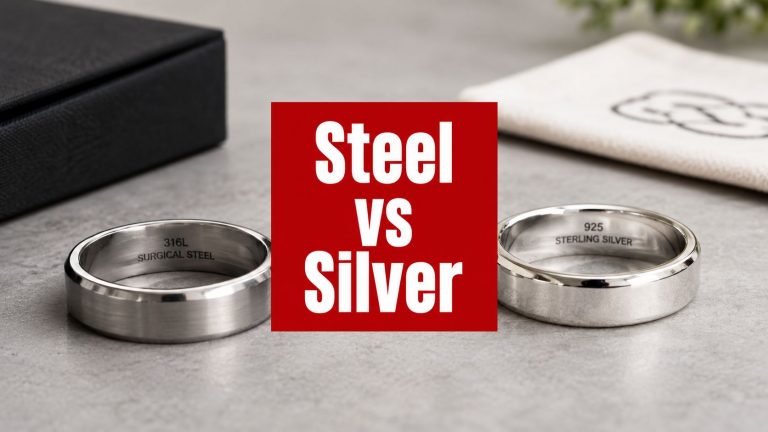
Surgical Steel vs Sterling Silver: Buyer Guide
You’re pricing a new collection, and the sample tray is already split down the middle.
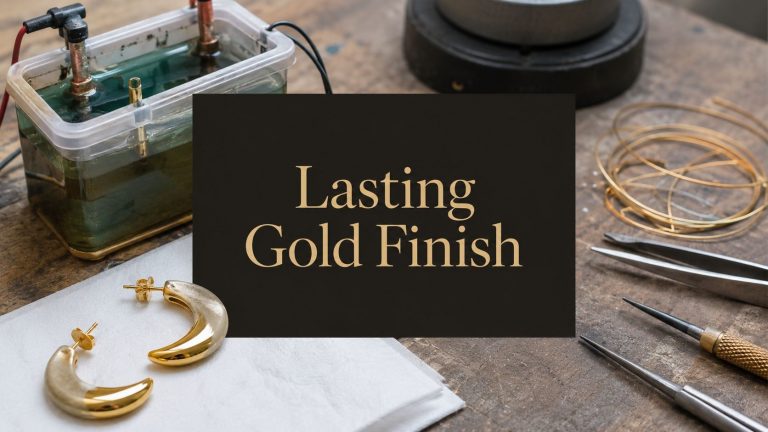
How to Gold Plated Jewelry the Right Way for Lasting Color
You probably have a launch already in motion, a supplier sample on your desk, and
What Is a Shank on a Ring: Guide to Design & Durability
You’re refining a ring design, the stone looks right, the setting is approved, and the