
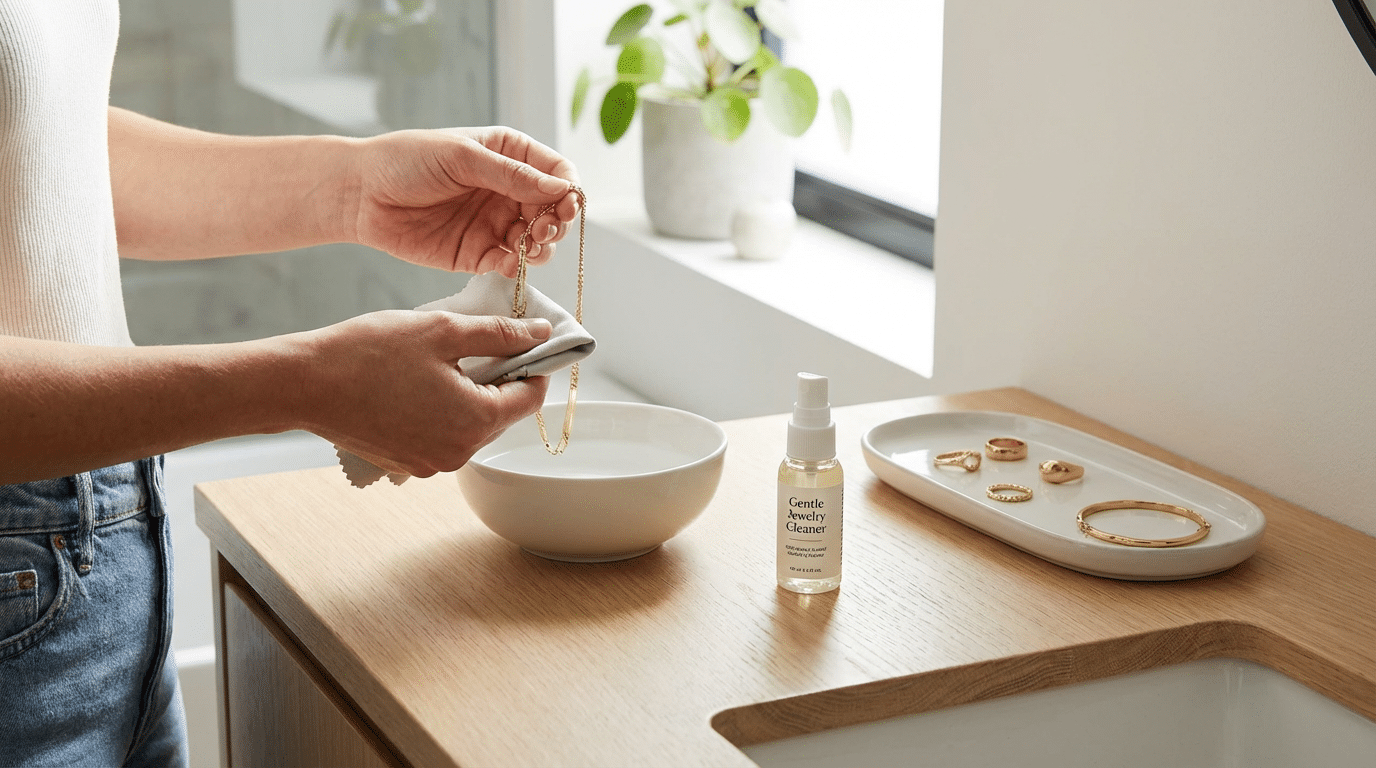
If your gold-plated jewelry has started to look dull, dark, or even a bit green, you’re not alone.
Most people don’t realize how thin the gold plating layer actually is—and how easy it is to damage with the wrong cleaning hack (looking at you, toothpaste and baking soda). One harsh scrub, and that beautiful shine can disappear for good.
In this guide, you’ll learn exactly how to clean gold-plated jewelry safely at home using gentle, affordable household items—without stripping the plating or fading the color. You’ll see the best way to:
- Remove tarnish from gold-plated jewelry without scratching
- Deal with gold-plated jewelry turned black or leaving green stains on your skin
- Keep your Dongguan HonHo Jewelry pieces looking bright for years, not months
If you want to restore shine to gold-plated jewelry and actually make it last longer, instead of accidentally ruining it, you’re in the right place.
Understanding Gold-Plated Jewelry
If you’ve ever wondered why your “gold” pieces fade faster than you’d like—or feel nervous about how to clean gold-plated jewelry without damaging it—this is where it all starts: knowing what you actually have.
Gold-Plated, Gold Vermeil, and Gold-Filled
These terms look similar, but they’re not the same:
- Gold-plated jewelry
- A very thin layer of gold bonded over a base metal (usually brass, copper, or alloy).
- The gold layer is mostly for color and shine, not long-term durability.
- Most affordable fashion jewelry falls into this category.
- Gold vermeil
- A thicker layer of gold over sterling silver.
- Usually at least 2.5 microns of gold, often 18K.
- Looks and feels more “fine jewelry,” but still needs gentle care.
- Gold-filled
- A much thicker layer of gold that’s mechanically bonded to a base metal.
- The gold content is higher and more durable than standard plating.
- Less likely to wear through quickly, but still not solid gold.
Understanding this helps you choose the best way to clean plated gold at home and how cautious you should be.
How Thin Is the Gold Layer?
On most fashion and trend pieces, the gold layer is extremely thin:
- Many mass-market gold-plated items: around 0.1–0.5 microns
- Better quality or premium plating: 1–3 microns (for example, 3-micron 18K gold plating we use on our higher-end lines for improved durability)
- By comparison, solid gold is the same material all the way through—no layer to rub off.
Because that gold layer is so thin, anything abrasive or harsh can remove tarnish from gold-plated jewelry and the gold layer along with it.
Why Harsh Cleaning Damages Plating
Harsh cleaning doesn’t just remove dirt; it eats into the gold:
- Abrasive products (baking soda, toothpaste, rough cloths) literally scratch off the thin gold.
- Strong chemicals (bleach, ammonia, heavy-duty jewelry cleaners) can fade or discolor the plating and the base metal underneath.
- Aggressive scrubbing with stiff brushes wears through the finish faster, especially at edges, corners, and clasps.
Once the gold layer is rubbed off, you’ll start to see:
- The base metal showing through
- Gold-plated jewelry turned black or dull
- Green stains on gold-plated rings where copper or brass reacts with skin
That’s why the best way to clean plated gold at home is always gentle, non-abrasive, and controlled—just enough to remove sweat, oil, and light tarnish, without stripping the plating you paid for.
What NOT to Do When Cleaning Gold-Plated Jewelry
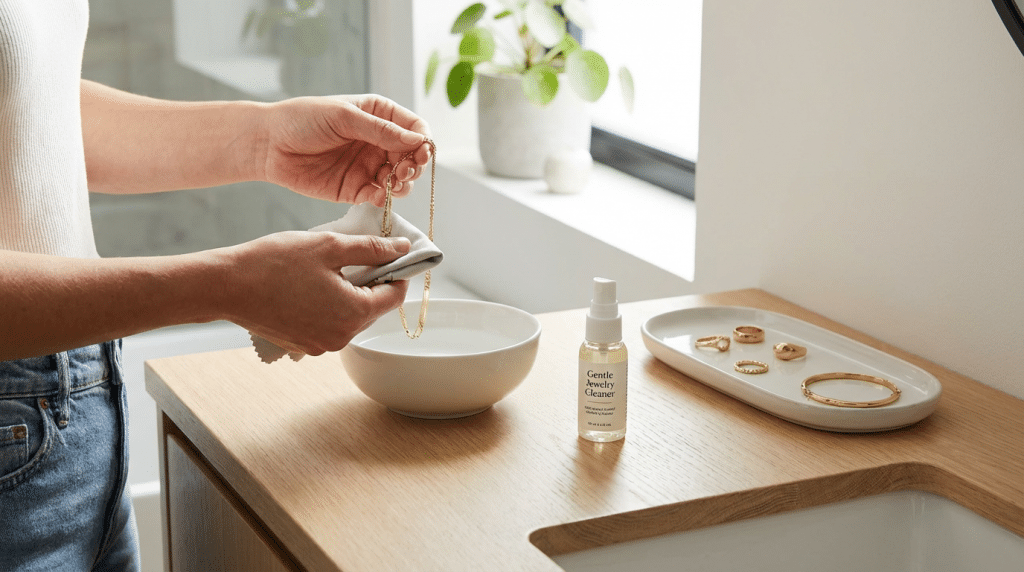
When you clean gold-plated jewelry, the main rule is simple: no abrasives, no harsh chemicals, no extreme methods. The gold layer is thin, and once it’s scrubbed off, it’s gone.
Harsh cleaners and tools to avoid
Never use these on gold-plated or gold vermeil pieces:
- Toothpaste, baking soda, or powdered cleansers – all are abrasive and will scratch and thin the plating.
- Scouring pads, stiff brushes, paper towels – even “soft” kitchen sponges can be too rough.
- Bleach, ammonia, chlorine, jewelry dips, silver dips – they can strip or discolor the gold layer fast.
- Glass cleaner / Windex or household degreasers – too strong for plated finishes.
Use only soft microfiber or jewelry cloths and mild cleaners designed for plated pieces or gentle dish soap. If you want a deeper breakdown of why plated finishes react this way, I’ve covered it more in our guide on whether gold-plated jewelry tarnishes and how the coating behaves over time.
DIY “hacks” that actually ruin plating
Skip these popular TikTok / YouTube hacks on gold-plated jewelry:
- Toothpaste polishing – micro-scratches and dull spots.
- Baking soda + aluminum foil boil – works for solid silver, but too aggressive for thin gold plating.
- Boiling jewelry in water, vinegar, or lemon – heat + acid can loosen glue, damage stones, and weaken plating.
- Salt or soda scrubs – abrasives that grind down the gold layer.
These methods might give a short-term shine but permanently thin or patch the plating, especially on budget fashion pieces and thinner coatings.
Why ultrasonic cleaners and chemicals are risky
Ultrasonic cleaners are great for solid gold, but bad news for most plated jewelry:
- The high-frequency vibrations can cause micro-cracks in the gold layer.
- Glued stones or crystals can loosen and fall out.
- If you add strong cleaning solution, you’re doubling the risk: mechanical + chemical damage.
Also avoid:
- High-concentration alcohol mixed with harsh additives
- Peroxide or strong acidic cleaners
If you’re unsure about a piece (especially custom designs or thicker 18K plating from manufacturers like Dongguan Honho Jewelry), treat it like it’s fragile: mild, soft, and slow beats “deep clean” every time.
Daily Care and Prevention for Gold-Plated Jewelry
Daily care is what actually decides how long your gold-plated jewelry stays bright. Cleaning is important, but prevention is everything.
Simple daily habits to reduce dirt, sweat, and oil
To clean gold-plated jewelry without damaging it, start by building small habits into your routine:
- Put jewelry on after skincare, makeup, sunscreen, and perfume.
- Take pieces off before you work out, cook, or clean.
- Avoid touching or twisting your chains and rings all day – skin oils dull the shine.
- If you sweat a lot (hot climate, gym, outdoor work), wipe pieces down as soon as you can.
These tiny habits remove sweat and oil before they start to attack the thin gold layer.
How to store gold-plated jewelry to prevent tarnish
Good storage slows down tarnish and fading better than any cleaner:
- Keep pieces in individual pouches or soft compartments so they don’t rub and scratch.
- Use anti-tarnish storage bags for jewelry or lined boxes to block air and moisture.
- Store in a dry place, away from bathrooms and windows.
- Never throw gold-plated and silver or steel pieces together in one pile – the friction kills the plating fast.
If you’re building a larger collection or working with factories, it’s worth looking into how professional makers handle plating and storage across full lines of product, like the processes described in this overview of polishing and plating in modern jewelry production.
When to take jewelry off (water, perfume, workouts)
If you remember only one rule, make it this:
Gold-plated jewelry is “last on, first off.”
Take it off before:
- Water – showering, swimming, hot tubs, sauna, ocean.
- Chemicals – perfume, hairspray, self-tanner, cleaning sprays, chlorine.
- Workouts – sweat, friction, and impact speed up fading.
- Sleeping – tossing and turning grinds plating away over time.
This is how you prevent your gold-plated jewelry from fading and turning black or green.
Why and how to wipe pieces after each wear
A quick wipe is the safest way to restore shine to gold-plated jewelry daily:
- Use a soft microfiber cloth or a gentle jewelry cleaning cloth (no paper towels, no tissues).
- After wearing, gently wipe all surfaces that touched skin – backs of chains, inside of rings, earring posts.
- Don’t scrub; just light, one-direction strokes to lift sweat, oil, and product.
This 10-second step removes the stuff that causes tarnish and green stains on gold-plated rings and keeps your plating looking new for much longer.
Safe Methods to Clean Gold-Plated Jewelry at Home
How to choose the right cleaning method
When I clean gold-plated jewelry, I always match the method to the problem and the piece:
- Light dirt / fingerprints
→ Soft microfiber cloth or jewelry polishing cloth only.
Method 1 – Clean Gold-Plated Jewelry with Mild Dish Soap and Warm Water
If you want a safe, go-to way to clean gold-plated jewelry without damaging it, this is the method I rely on the most.
Exact Soap-to-Water Ratio
Use a very mild mix so you don’t strip the thin gold layer:
- 1–2 drops of mild, fragrance-free dish soap
- In about 1 cup (240 ml) of warm water (not hot)
Stir gently until the water looks slightly soapy, not foamy.
Step-by-Step Gentle Cleaning Process
- Prep the bowl
- Use a small ceramic or glass bowl. Avoid metal bowls.
- Soak the jewelry
- Place your gold-plated necklace, bracelet, or earrings in the solution.
- Soak for 5–10 minutes max to loosen sweat, oils, and light dirt.
- Gently clean
- Use a soft microfiber cloth or a very soft baby toothbrush.
- Lightly wipe or brush along the grain of the metal.
- Don’t scrub or push hard on edges, logos, or thin chain links.
- Check stones/settings
- If there are stones or glued parts, just dab and wipe, don’t tug.
This method works well for everyday fashion pieces, including wholesale earrings like the ones we design for our women’s earrings collections.
How to Rinse and Dry Properly
- Rinse quickly
- Run the piece under lukewarm running water for just a few seconds.
- Hold it securely so you don’t drop it down the drain.
- Blot dry (don’t rub hard)
- Pat dry with a clean, soft, lint-free cloth.
- Avoid paper towels; they can be slightly abrasive.
- Air dry fully
- Lay the piece flat on a dry cloth and let it air dry for 10–20 minutes.
- Make sure there’s no trapped moisture in clasps or between links to avoid water spots.
When This Everyday Method Works Best
Use this dish soap and warm water method when:
- Your gold-plated jewelry looks dull, oily, or sweaty, but not heavily tarnished
- You need a quick weekly clean for necklaces, bracelets, and earrings
- You want a budget-friendly, non-abrasive home remedy
- You’re cleaning gold-filled or gold vermeil pieces and want to stay on the safe side
If you keep to this gentle routine and pair it with good storage and basic care, you’ll restore shine to gold-plated jewelry without grinding down the plating.
Method 2 – Isopropyl Alcohol Quick Wipe (Fast, Safe Shine)
When alcohol works better than soap and water
Use isopropyl alcohol when you need a fast clean without soaking—for example:
- After a long day when your gold-plated jewelry feels oily or smudged
- To remove fingerprints, makeup, sunscreen, or light skin oils
- For pieces with mechanisms (like clasps or watches) where you don’t want water sitting in tiny gaps
It’s one of the safest ways to clean gold-plated jewelry without damaging the thin plating, especially if you just want to restore shine quickly.
Best alcohol concentration for gold-plated jewelry
Stick to:
- 70% isopropyl alcohol – ideal balance of cleaning power and gentleness
- Up to 90% is fine if you use it quickly and don’t soak
Avoid anything scented, colored, or mixed with harsh additives. Use plain, pharmacy-grade isopropyl alcohol only.
How to safely wipe and dry with alcohol
Here’s the simple, non-abrasive method I use on our own plated pieces:
- Prep a soft cloth
- Use a lint-free microfiber cloth or a jewelry polishing cloth made for plated gold.
- Dampen, don’t soak
- Lightly dampen a corner of the cloth with isopropyl alcohol.
- Do not pour alcohol directly on the jewelry and don’t soak it.
- Wipe gently
- Wipe the surface of the jewelry in small, light strokes.
- Focus on skin-contact areas: inside of rings, backs of earrings, underside of chains and bracelets.
- Dry immediately
- Use a dry part of the cloth to buff and dry the piece.
- Make sure no moisture is left around clasps, hinges, or watch edges.
Done right, this is a safe way to clean gold-plated jewelry and keep the plating intact.
What alcohol actually removes
An isopropyl alcohol quick wipe is perfect for:
- Skin oils and sweat that dull the shine
- Fingerprints and smudges on smooth surfaces
- Makeup, foundation, and sunscreen residue
- Light lotion or hair product build-up on necklaces and earrings
For deeper tarnish or heavy grime, alcohol alone won’t fix gold-plated jewelry turned black—that’s when you’ll need a different method or, in some cases, re-plating.
If you’re wondering how long good plating should last under daily wear and cleaning, this guide on whether gold-dipped jewelry tarnishes gives a solid baseline for realistic expectations and care.
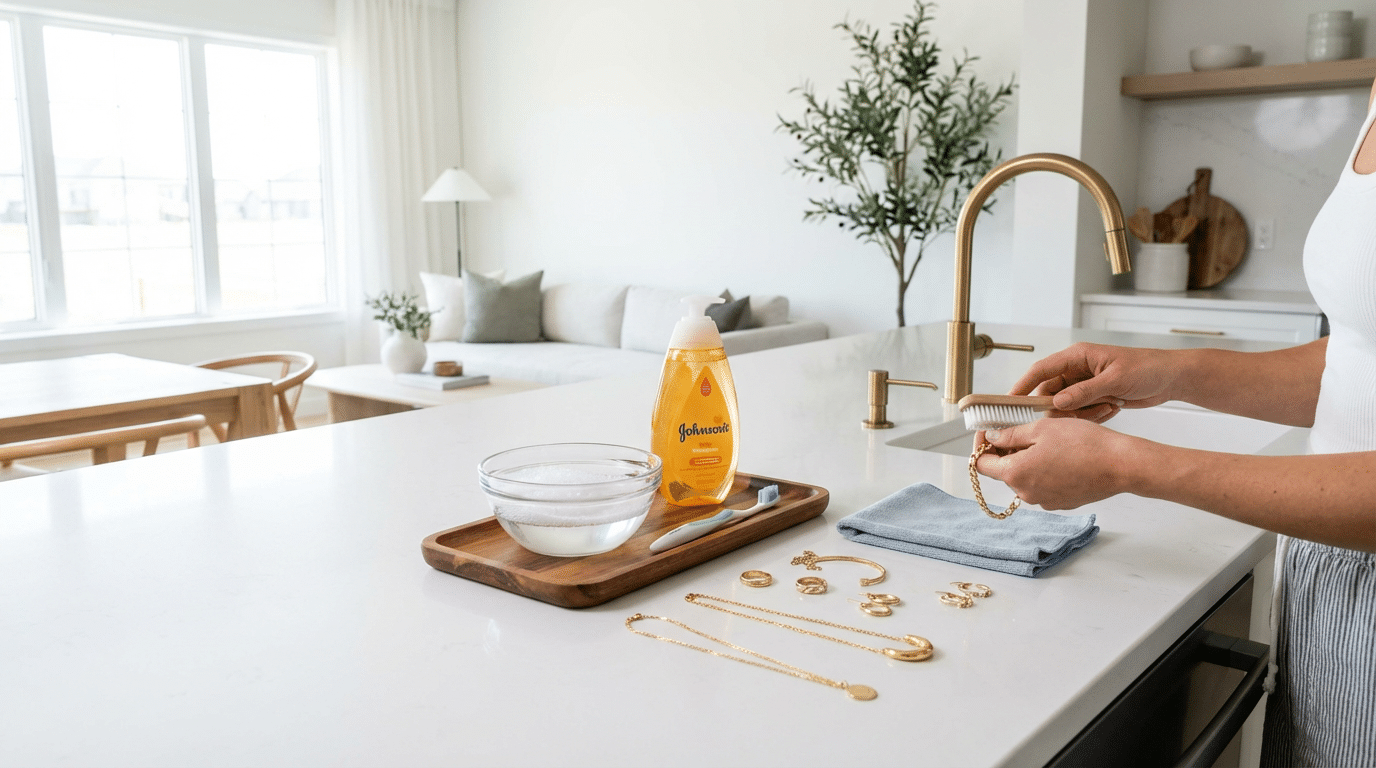
Method 3 – Baby Shampoo for Delicate Gold-Plated Pieces
Why baby shampoo is gentler
For delicate gold-plated jewelry (pearls, opals, soft gems, crystals, glued stones), baby shampoo is one of the safest cleaners because it’s:
- Very mild and low in sulfates – less likely to strip thin gold plating
- Balanced for sensitive skin – so it’s also gentle on soft stones and coatings
- Free of strong perfumes and dyes (if you pick a simple formula) – reduces the risk of clouding crystals or loosening glue
If your gold-plated pieces mix metals, stones, enamel, or resin, I always treat them with baby shampoo instead of harsher jewelry cleaners.
How to clean gold-plated jewelry with gems or glued settings
Use this method for:
- Gold-plated earrings with CZ or crystal stones
- Necklaces and bracelets with glued rhinestones
- Gold-plated rings with pearls or soft gemstones
- Mixed-material fashion jewelry from fast-fashion or wholesale lines
Avoid soaking if you suspect glued settings – you don’t want to weaken the adhesive.
Step-by-step baby shampoo cleaning method
You’ll need:
- 1 small bowl of lukewarm water (not hot)
- A drop of fragrance-free baby shampoo
- A soft microfiber cloth or very soft baby toothbrush
- A dry lint-free cloth or tissue
Step 1 – Mix a gentle solution
- Add 1–2 drops of baby shampoo to about 1 cup (250 ml) of lukewarm water
- Stir gently until it lightly suds (you want soft bubbles, not foam overload)
Step 2 – Spot clean, don’t soak (for glued pieces)
- Dip the soft cloth (or toothbrush) in the solution
- Gently wipe or brush:
- Around stones and prongs
- On the back of earrings and clasps
- On areas that touch skin (inside rings, bracelet underside)
If the piece has no glue and sturdy stones, you can give it a quick 1–2 minute dip, but never leave it soaking for long.
Step 3 – Rinse carefully
- Lightly rinse under a thin stream of lukewarm water
- Keep water away from watch faces or any open mechanisms
- For super delicate items, wipe off the soap with a damp cloth instead of rinsing under the tap
Step 4 – Dry completely
- Pat dry with a soft cloth – no rubbing hard on the plating
- Let the piece air dry fully on a clean towel before storing so moisture doesn’t sit around stones or in clasps
Extra care tips for fragile or mixed-material pieces
For fashion jewelry with thinner plating or mixed materials, I stick to these rules:
- Be extra gentle around pearls & soft stones
- No scrubbing
- Use only the cloth, not a brush
- Skip hot water, hairdryers, and steam – heat can loosen glue and damage coatings
- Avoid alcohol, vinegar, and strong cleaners on:
- Pearls
- Opals
- Painted enamel
- Resin or acrylic parts
- Clean less often but more carefully – quick baby shampoo cleans when pieces look dull, not every day
- Store in soft pouches or anti-tarnish bags so you don’t have to deep-clean as often
If you’re building a range of delicate plated necklaces and mixed-material pieces, it’s worth checking how we handle surface finishes and care in our own lines of wholesale fashion necklaces, so your cleaning routine matches the actual plating thickness and materials used.
Method 4 – White Vinegar and Salt for Tarnish
When to use vinegar and salt on gold-plated jewelry
I only use a white vinegar + salt soak as a last resort for gold-plated pieces that are:
- Heavily tarnished or dull grey
- Cheap fashion jewelry with already thin or patchy plating
- Not sentimental or high-value
If your piece is high-quality vermeil or thick 3 micron 18K plating, skip this method and stick to gentler cleaners. Vinegar and salt are mildly acidic and can speed up plating wear.
Exact measurements, dilution, and safe soak time
Here’s the mildest “safe-ish” version I recommend for plated pieces:
- 1 cup (240 ml) warm water
- 1 tablespoon white vinegar
- 1/4 teaspoon fine salt
Stir until the salt dissolves completely.
Soak time:
- Max 3–5 minutes for gold-plated jewelry
- Check the piece every 60 seconds
- If you see any color change in the gold, pull it out immediately
Never use hot or boiling water – that’s too aggressive for thin plating.
How to rinse and dry to protect the plating
Right after soaking:
- Rinse under lukewarm running water for 20–30 seconds to remove all vinegar and salt.
- Blot dry gently with a soft microfiber cloth (no rubbing or polishing yet).
- Let it air dry fully on a clean towel before storing.
Avoid paper towels – they’re rougher than you think and can scratch or thin the gold layer. I use the same type of soft cloths we recommend for our own plated pieces and for other fine metals like 925 Italy silver jewelry.
When this method is too strong and should be avoided
Skip vinegar and salt completely if:
- The piece is gold vermeil (thicker gold over sterling silver)
- The plating is already worn, patchy, or flaking
- The jewelry has pearls, opals, turquoise, or porous stones
- Gems are glued, not prong-set
- You’re cleaning gold-plated watches or anything with moving parts
In these cases, vinegar can:
- Strip gold faster
- Loosen glue
- Stain soft stones
- Expose base metal, making tarnish and green stains worse
If you’re not sure what base metal or plating thickness you’re dealing with (especially with mass-produced or OEM pieces from large jewelry production companies), assume the plating is thin and avoid this method altogether.
Method 5 – Professional Jewelry Cleaning Cloth
A professional jewelry cleaning cloth is one of the safest ways to clean gold-plated jewelry without damaging it.
How polishing cloths work on gold-plated jewelry
Polishing cloths are made with:
- Ultra-soft microfiber or treated cotton that lifts fingerprints, sweat, and light tarnish
- Embedded gentle polishing compounds that restore shine without harsh scrubbing
They work dry, so there’s no risk of soaking, loosening glue, or attacking thin plating with chemicals.
Best types and brands of cleaning cloths to use
For gold-plated and gold vermeil jewelry, I always stick to:
- Two-layer cloths: outer soft layer for buffing, inner treated layer for light polishing
- Non-abrasive microfiber cloths: labeled safe for gold, gold-plated, and gemstones
Look for high-quality jewelry cloths similar to what we use for our plated pieces in-house and in wholesale lines – the same style most jewelers include with better-quality gold jewelry collections.
How to polish gently without rubbing off the gold layer
To clean gold-plated jewelry without damaging it:
- Make sure the piece is dry and free of dust (no sand or grit)
- Use light pressure only – small, smooth strokes instead of hard scrubbing
- Focus on flat areas and edges, avoid over-rubbing raised details or very thin plating
- Stop as soon as the shine comes back – more rubbing doesn’t mean more clean, just more wear
If you see a silvery or coppery tone coming through, that’s plating wearing off. Don’t keep polishing.
When a cloth is better than liquid cleaners
Use a jewelry cleaning cloth instead of liquids when:
- You just need to remove fingerprints, light oils, or dullness
- The piece has glued stones, enamel, resin, or watch parts that shouldn’t get wet
- You’re dealing with daily or weekly maintenance, not heavy tarnish
- You want a quick wipe-down before wearing or storing
For most everyday gold-plated necklaces, bracelets, and earrings, a professional jewelry cleaning cloth is the best way to clean plated gold at home—fast, safe, non-messy, and ideal for keeping the plating bright for longer.
Removing Green or Black Stains from Gold-Plated Jewelry
Why gold-plated jewelry turns green or black
Gold-plated pieces can leave green or black marks on your skin or metal when:
- The base metal (usually copper, brass, or alloy) reacts with sweat, lotion, or humidity.
- The plating is thin and starts to wear off on high-contact areas like rings and chains.
- Strong chemicals (perfume, sanitizer, pool water) eat through the plating over time.
Those stains don’t always mean your jewelry is “ruined”, but they do mean the plating is wearing and you need to clean more gently and wear more carefully.
How to safely clean skin-contact areas
To clean gold-plated jewelry without damaging the thin layer:
- Do a quick wipe first
- Use a soft microfiber cloth or jewelry polishing cloth.
- Gently wipe the inside of rings, bracelet clasps, and chain sections that touch skin.
- Mild soap spot-cleaning
- Mix: 1 drop of mild dish soap + 1 cup (240 ml) lukewarm water.
- Dip a soft cloth or cotton pad in the mix (don’t soak the whole piece unless needed).
- Lightly rub stained areas, especially inner bands and chain backs.
- Rinse quickly under lukewarm water and pat dry fully with a lint-free cloth.
- For heavier black buildup
- Use isopropyl alcohol (70%) on a cotton swab.
- Gently wipe only the stained sections, then dry right away.
- Avoid scrubbing or repeating too often – friction + alcohol can speed up wear.
Always think “wipe and lift” dirt off – never “scrub and grind” the plating.
Modified aluminum foil + baking soda method (plated-safe version)
The classic aluminum foil + baking soda trick can be too strong for thin gold plating if you go full power. Here’s the gentler, plated-safe version for light tarnish on base-metal areas showing through:
- Set up a mild solution
- Line a small bowl with aluminum foil, shiny side up.
- Add 1 cup (240 ml) warm water (not hot, not boiling).
- Mix in just 1/4 teaspoon baking soda and 1/4 teaspoon salt. Stir well.
- Very short contact time
- Place the jewelry so only the most tarnished metal areas touch the foil and water.
- Soak for 30–60 seconds max. Stay there and watch it.
- If you see any color lifting from the plating itself, remove it immediately.
- Rinse and dry immediately
- Rinse under lukewarm water.
- Pat dry with a soft cloth and let it air dry fully.
Use this only when:
- The piece is already quite tarnished.
- You accept that some plating may already be thin and this is more of a rescue move than a perfect fix.
For higher-end plated pieces or gold vermeil, I’d rather go for gentle cloth + soap and, if needed, a professional clean than risk overdoing home chemistry.
How to prevent green or black stains next time
If you want to keep gold-plated jewelry from turning green or black again, these habits help a lot:
- Take it off for water + sweat:
- No showers, pools, hot tubs, or workouts with gold-plated pieces.
- Sweat + chlorine + salt water = faster plating wear and more green marks.
- Avoid chemicals on jewelry:
- Put jewelry on after perfume, lotion, sunscreen, and hair products.
- Keep away from harsh cleaners and regular use of strong hand sanitizers on rings.
- Wipe after each wear:
- Quick wipe with a soft microfiber cloth to remove sweat and oil.
- This is the easiest way to extend plating life and keep shine.
- Store it right:
- Use anti-tarnish bags or pouches and keep each piece separate.
- Store in a cool, dry place away from direct sunlight and steam (not the bathroom).
If you’re working with larger collections or planning new designs, make sure your supplier uses thicker plating (like 2–3 micron 18K) and good base metals. That alone cuts down on green marks and customer complaints. When we build our own lines or help brands source, we always push for better base metals and plating thickness, similar to the standards discussed in this guide on how to buy jewelry from manufacturers the right way.
Special Cases: How to Clean Gold-Plated Jewelry Safely
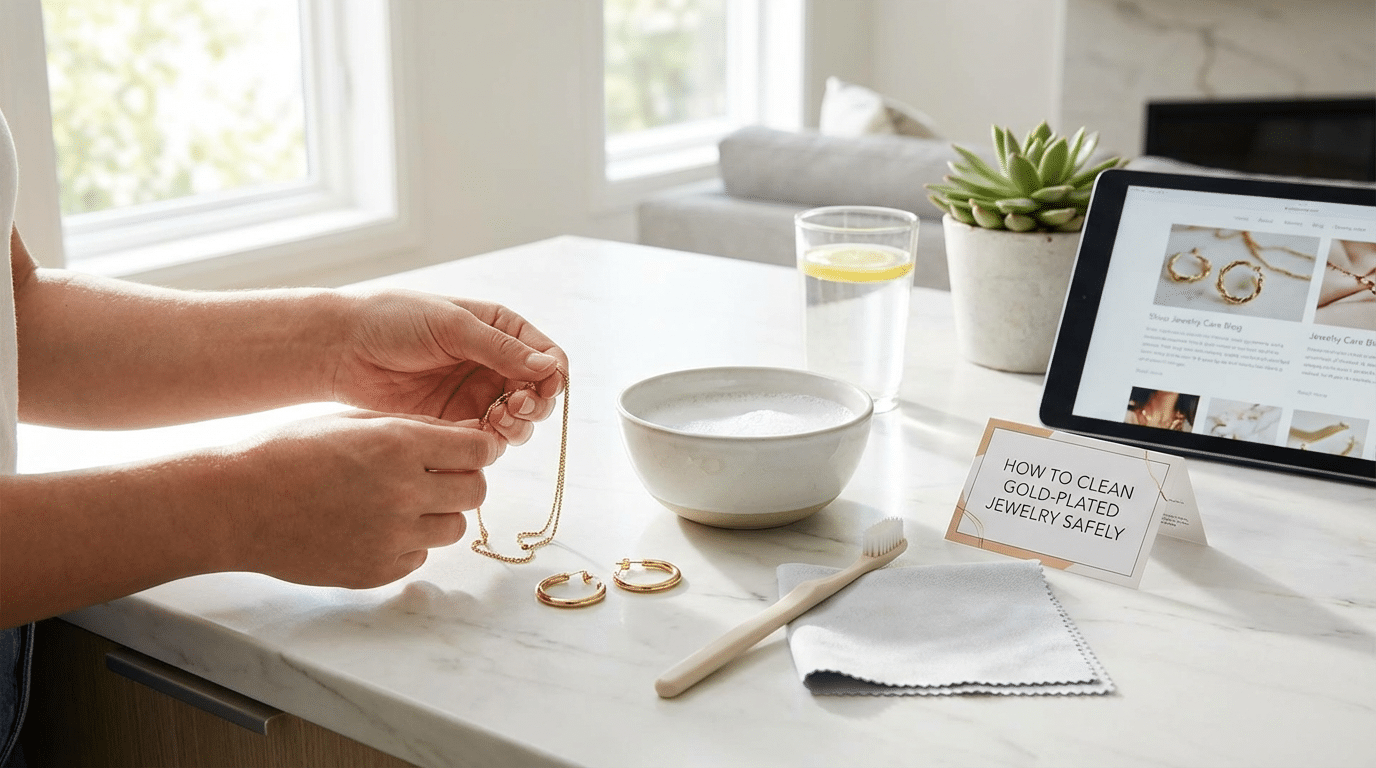
How to clean gold-plated watches without damage
Gold-plated watches need extra care because of the movement and seals. I handle them like this:
- Never soak the watch in water or cleaner.
- Mix a drop of mild dish soap with warm water, dip a soft microfiber cloth in, wring it almost dry.
- Wipe only the metal surfaces (case, bracelet) – avoid the crown, pushers, and caseback gaps.
- Use a barely damp soft brush for links, then wipe dry immediately with a clean cloth.
- Finish with a professional jewelry cleaning cloth on the gold-plated bracelet to restore shine, without pressing hard.
If you sell or customize watch chains or bracelets, pairing them with the right types of chains in gold plating gives you more durable options to work with.
Safe cleaning for gold-plated earrings and sensitive backs
Earrings touch both skin and piercings, so I keep cleaning simple and gentle:
- Wipe posts and backs with 70% isopropyl alcohol on a cotton pad, then dry.
- For the plated front, use mild soap + water on a soft cloth, not direct soaking if stones are glued.
- Avoid harsh rubbing on posts to keep the plating from thinning where it touches skin most.
- If your lobes are sensitive, clean both jewelry and piercing area regularly and avoid perfumes or hair spray on the earrings.
Heavily tarnished or vintage gold-plated pieces
For old, dark, or vintage gold-plated jewelry:
- Assume the plating is very thin and fragile.
- Use only lukewarm water + a drop of baby shampoo and a super soft cloth. No scrubbing.
- Skip any powders, pastes, or aggressive “tarnish removers” – they’ll expose the base metal fast.
- If color doesn’t come back after a gentle wipe, you’re not dealing with dirt anymore; the plating is likely worn, not dirty.
If you’re developing vintage-style or gold vermeil collections, working with an experienced gold vermeil jewelry manufacturer lets you start with thicker plating that tolerates light cleaning better.
When gentle surface cleaning is the only safe option
There’s a point where more cleaning only makes things worse:
- If you see patchy color, dull grey spots, or base metal peeking through, stop all scrubbing.
- From there, stick to light surface wiping only (soft dry cloth) just to remove skin oils.
- Don’t re-try stronger home remedies over and over; that usually finishes off what gold is left.
- When the look no longer matches your standards, the next step isn’t deeper cleaning – it’s re-plating or replacement, especially for frequently worn pieces.
When to Stop DIY Cleaning and Go Professional
At some point, “how to clean gold-plated jewelry at home” isn’t the answer—you need a pro. Here’s how to know when it’s time to put down the dish soap and talk to a jeweler.
Signs Your Gold-Plated Jewelry Needs Re-Plating, Not Cleaning
If you see any of these, cleaning won’t fix it:
- Base metal showing through
- Obvious silver, copper, or brass color on edges, clasps, or ring bands
- Dark patches that don’t improve no matter how gently you clean
- Color is uneven
- Yellow tone looks dull, greyish, or patchy
- One part of the piece is much lighter or darker than the rest
- Texture looks worn
- Surface feels rough, pitted, or “burned” from over-cleaning
- Design details are fading because the gold layer is thin or already rubbed off
Once the plating is gone, there’s nothing to “restore”—you need fresh gold plating, not more cleaning.
When Home Methods Stop Working (Or Make It Worse)
Stop DIY cleaning and go professional if:
- Gentle soap and water, alcohol wipes, or a soft jewelry cloth don’t bring back any shine
- The piece looks duller or more scratched after each clean
- Tarnish comes back very fast even with proper storage
- You’ve already tried multiple home methods and the color keeps fading
Pushing harder with stronger chemicals, scrubbing, or longer soaking times usually accelerates wear on thin plating—especially on fashion jewelry.
How Professional Jewelers Clean and Re-Plate Gold-Plated Jewelry
Most professional shops (and serious manufacturers like us) handle plated pieces with a structured process:
- Deep but controlled cleaning
- Gentle ultrasonic or steam cleaning if the piece can handle it
- Special jewelry-safe solutions that dissolve oils, sweat, and light tarnish
- Surface prep before re-plating
- Light polishing to even out the surface
- Thorough degreasing so the new gold layer bonds properly
- Re-plating (electroplating)
- Applying a fresh layer of gold—often 0.5–3 microns depending on the brand
- Adjusting color (14K, 18K, 24K tone) to match your original piece or your preference
- Final inspection and finishing
- Quality check for color match, coverage, and clasp/setting security
If you’re working with higher-quality plating (like thicker 18K or vermeil), pro re-plating can make the piece look almost new again and extend its life by years.
What to Ask a Jeweler Before Sending Pieces In
Treat this like a service, not a mystery. I always recommend you ask:
- Do you work with gold-plated / vermeil / gold-filled jewelry specifically?
Not every jeweler is good with thin plating or mixed metals. - How thick will the new plating be, and what karat?
- Ask for a clear answer (e.g., 1–3 microns of 18K gold).
- Thicker plating usually lasts longer but may cost a bit more.
- Will you clean and inspect settings, stones, and clasps?
Important for gold-plated earrings, necklaces, and watches so nothing loosens. - How do you handle base metals (brass, copper, stainless steel, sterling silver)?
This matters for adhesion and long-term durability. - What’s the estimated lifetime of the new plating with normal wear?
Helps you plan how often you might need maintenance. - Price, turnaround time, and warranty
- Get a clear quote before you leave the piece.
- Ask if they offer any guarantee against early peeling or discoloration.
If you’re curious about metal markings or quality standards before you invest in re-plating, it’s worth understanding what the numbers on your jewelry mean—guides like this breakdown of what “585” means on jewelry are a good starting point when you’re judging the base and plating quality.
When your gold-plated jewelry has obvious wear, streaky color, or exposed base metal, DIY cleaning won’t save it—professional cleaning plus re-plating is the only way to truly restore the look.
How to Make Gold-Plated Jewelry Last Longer
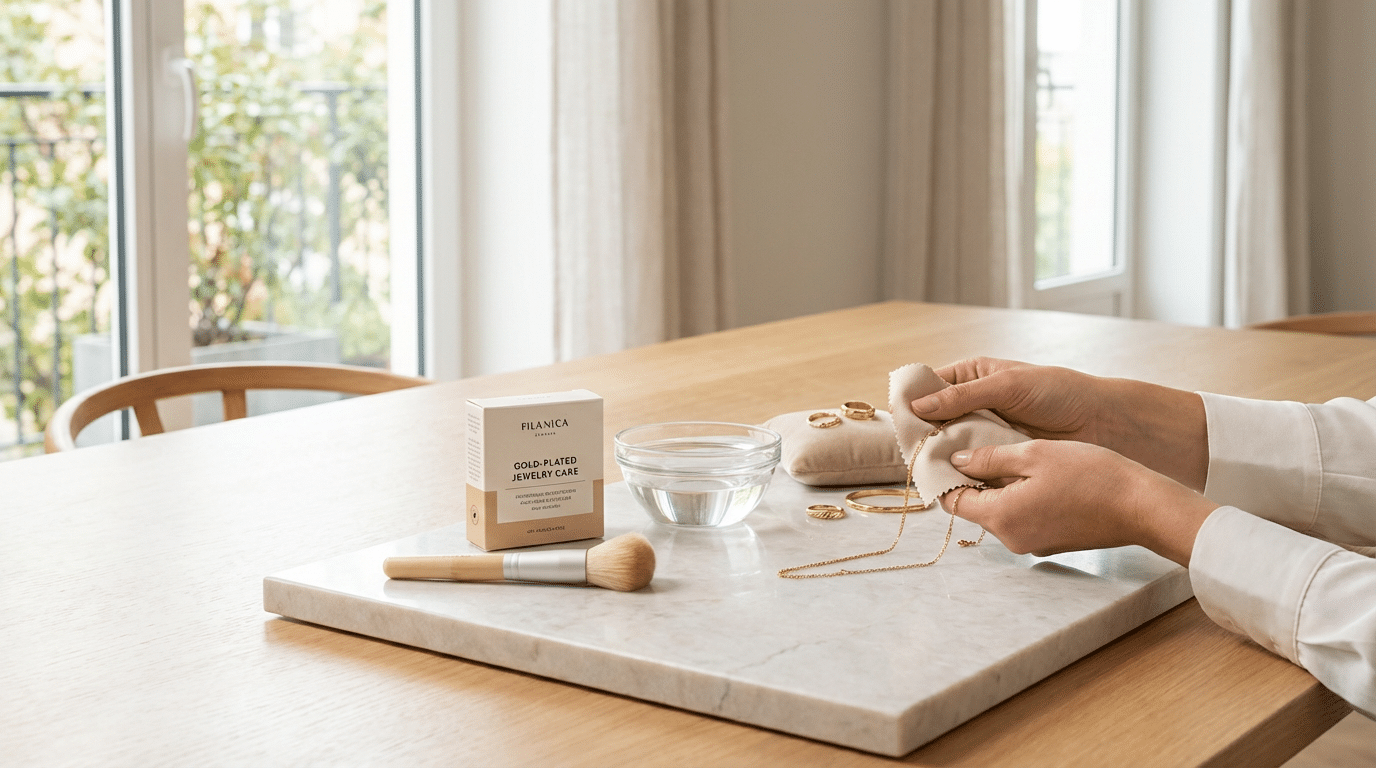
If you treat gold-plated jewelry like solid gold, it won’t last. The plating is thin, so the way you wear and store it makes all the difference.
Daily & Weekly Habits to Protect Plating
Daily:
- Put jewelry on last, after skincare, perfume, hair spray, and makeup.
- Take pieces off before washing hands, showering, swimming, or working out.
- After every wear, wipe gently with a soft microfiber or jewelry cloth to remove sweat, oil, and sunscreen.
- Avoid stacking too many plated pieces together; metal-on-metal rub wears plating fast.
Weekly (or every few wears):
- Do a quick clean with mild soap and water or an approved jewelry cleaner for plated gold.
- Check clasps, chains, and ring shanks (underside) for early signs of fading so you can rotate pieces before they get patchy.
Best Storage Practices for Gold-Plated Collections
Storing correctly is half the battle if you want to prevent tarnish and fading:
- Keep each piece in its own compartment, pouch, or soft zip bag to avoid scratching.
- Use anti-tarnish storage bags or lined boxes to slow down oxidation.
- Store in a cool, dry place away from bathrooms and windows (humidity and sunlight speed up discoloration).
- Lay chains flat and close clasps to avoid tangling and friction.
If you’re building a bigger collection or sourcing in volume, it’s worth matching your care setup to the quality level of your supplier. For example, higher-end fashion manufacturers like a good Thailand jewelry manufacturer often offer thicker plating options that justify investing in better storage.
Rotate Pieces to Reduce Wear and Fading
Constant friction is what kills plating fastest:
- Don’t wear the same gold-plated ring or bracelet daily—rotate between a few pieces.
- Use plated jewelry as your “off duty” or occasional wear and keep daily-wear slots for solid gold or steel.
- For necklaces, rotate chain thickness and length so the same area on your neck or collarbones isn’t constantly rubbing.
Think of gold-plated jewelry as “fashion workhorses” with a limited mileage—rotating simply slows down how quickly you hit that limit.
Care Tips for Thicker 18K Gold Plating (e.g., 2–3 Microns)
If you’re working with better-quality plating—like 18K, 2–3 microns thick (often seen in premium vermeil or high-end fashion pieces)—you can expect longer life, but you still need to respect it:
- You can clean a bit more regularly with mild soap and a soft brush, but still avoid anything abrasive.
- These pieces handle occasional longer wear (events, full workdays), but I still recommend taking them off for sleep, showers, and workouts.
- Store them separately from cheaper costume pieces to avoid harder metals scratching the thicker gold layer.
- When sourcing or producing, ask your supplier to confirm plating thickness (in microns), base metal, and plating method. Reliable partners (similar to large wholesale custom jewelry suppliers in Asia) will share this upfront, so you can match your care instructions to the real specs.
Use these habits consistently and you’ll extend the life, shine, and resale value of your gold-plated pieces instead of watching them turn dull and patchy in a few months.
FAQ About Cleaning Gold-Plated Jewelry
Is baking soda or toothpaste safe on gold-plated jewelry?
No. Both are too abrasive and will scratch or thin the plating fast.
If you want a safe way to clean plated gold at home, stick to:
- Mild dish soap + warm water
- Baby shampoo for delicate stones
- A soft microfiber jewelry cloth
Can I use glass cleaner or Windex on plated pieces?
I don’t recommend it. Glass cleaners can contain ammonia, alcohol, and other harsh chemicals that:
- Dry out and weaken plating
- Damage glued stones or coatings
Use a jewelry-safe cleaner made for plated gold, or a basic mild soap solution instead.
How often should I clean gold-plated jewelry at home?
Keep it simple:
- Quick wipe: After each wear with a soft, dry microfiber cloth
- Light wash: Every 1–2 weeks if you wear it often (soap + warm water)
- Deep clean: Only when you actually see buildup or light tarnish
Over-cleaning can wear the plating down faster, especially on thin fashion pieces. If you’re unsure what type of plating you have, this breakdown of gold-filled vs gold-plated jewelry is a good starting point.
Does hand sanitizer or sweat ruin gold plating?
Over time, yes, they can.
- Hand sanitizer (alcohol + additives): Can dry and fade the gold layer
- Sweat, salt, and skin oils: Speed up tarnish and discoloration
Best habits:
- Take rings and bracelets off before using sanitizer
- Wipe pieces down after heavy sweating (workouts, hot weather)
Is it okay to shower, swim, or sleep in gold-plated jewelry?
I strongly suggest no to all three if you want your plating to last:
- Shower: Shampoo, body wash, and hot water slowly strip the gold
- Swim: Chlorine and saltwater are brutal on plating
- Sleep: Friction on pillows and sheets wears down high-contact spots
For gold-plated and vermeil jewelry, “last on, first off” is the rule: put it on after skincare and perfume, take it off before water, workouts, and bed.
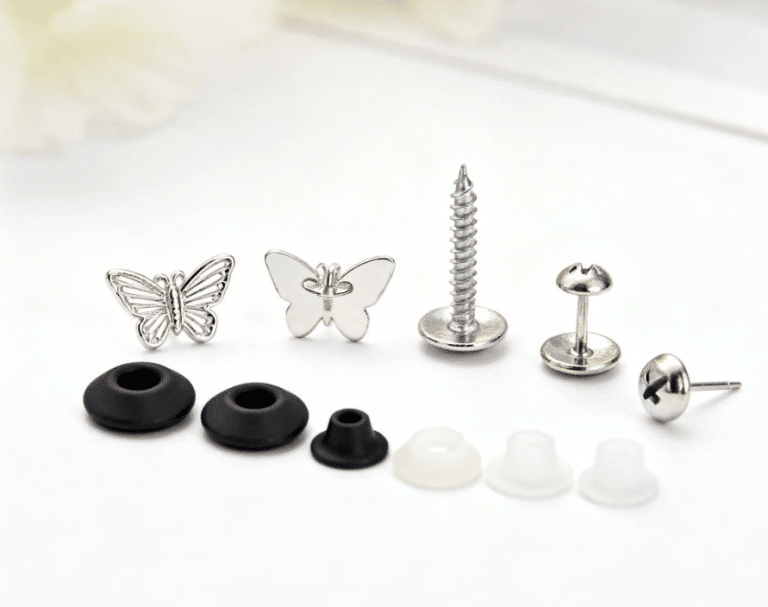
The Unseen Hero: Why Earring Backings Define Quality Jewelry
Every jewelry brand owner knows the sinking feeling. A customer calls, distraught. They’ve lost one
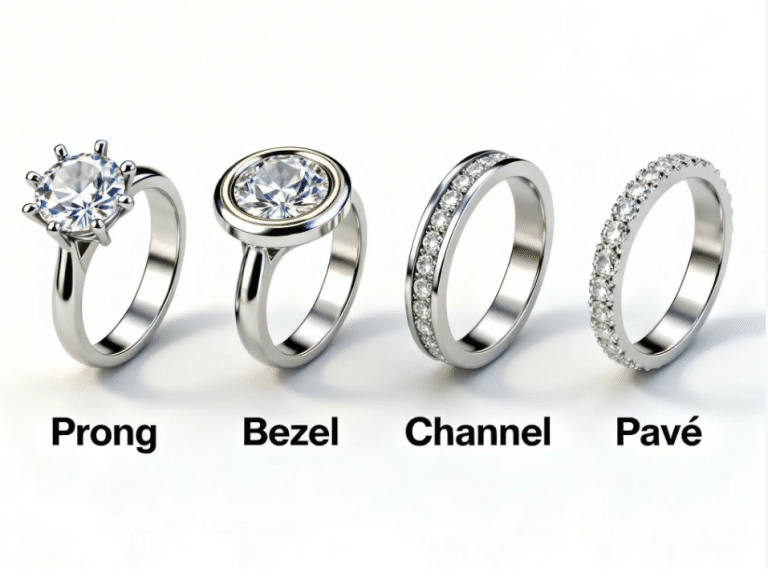
Choosing the Best Jewelry Stone Setting for Mass Production
Selecting the right jewelry stone setting is one of the most pivotal decisions for any
Best Jewelry Stone Setting for Mass Production | HonHo
Choosing the best jewelry stone setting Choosing the best jewelry stone setting is one of