An expert professional wholesale custom jewelry manufacturer own their entire chain by bringing CAD design, precision casting and in-house plating all under one roof.
So you identify a supplier that looks just right for you. Cheap, fast response time, a good looking website. You place the order. Fast forward six weeks and a box arrives — and the pieces are totally different from the sample.
Believe it or not, this happens more often than you may think. The jewelry sourcing world is littered with self-proclaimed manufacturers, factories that do sub-par plating, and ambiguous contracts that provide no recourse for buyers. When looking for a wholesale custom jewelry manufacturer, it often comes down to one thing between having an enjoyable experience or real pain coming into the equation as you should know by now what and how many questions you should ask before sending that first dollar.
This guide is everything you need — from how to check if a factory is real, to what plating thickness does for your customers, and the green flags you want in a partner versus the red ones. The insights come from industry forums, factory transparency reports, and technical sourcing guides that most competitors never make public.
In a nutshell: A genuine wholesale custom jewelry manufacturer will can provide you with factory credentials (if required), explain plating specs in microns, share third-party test reports, and guarantee your mold designs as part of their own written NDA. If they cannot do all four, keep searching.
Why “Wholesale” & “Custom” Together Are Really Key
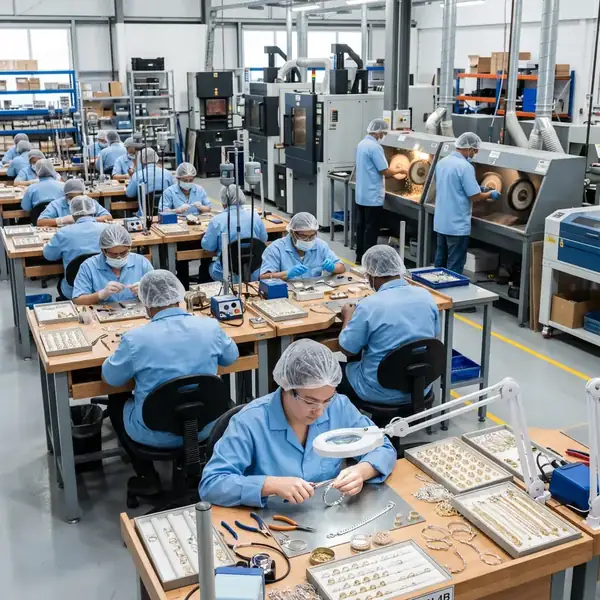
A basic supplier has prepared styles and offers large volumes of product. A white label manufacturer produces a product according to your specifications, but repeat orders may be more expensive. Specifically, if you are building a brand, this is what you actually want: they would produce your exact design at your volume and the price which lets you have a margin selling retail. I need more than a showroom and a phone, I need an in-house production capability.
Search for factories that stand their own:
- DEPARTMENT OF CAD MODELING AND 3D RENDERING
- Mold-making equipment
- Casting or die-stamping lines
- Plating facility – preferably PVD, otherwise both traditional and PVD
- In-house quality control lab
Each time you outsource one of these steps, your lead-times become uncertain and your quality is put in the hands of someone else.
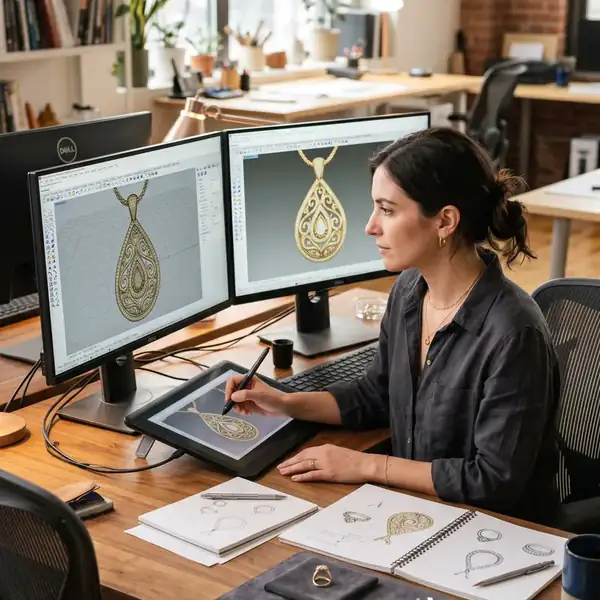
Which brings us to our first part of the custom jewelry process — intricately modeling it using CAD (computer-aided design) software — a step that many factories without in-house design teams will skip or outsource.
Dirty Secret of Plating (And Why Plating Needs to be Measured in Micron Thickness)
So when a maker calls one of their parts gold plated that term would actually apply to an extremely wide starndard of quality. This is something that industry insiders break down into two very different buckets:
Flash Plating vs. Micron Plating
Flash plating is a process that accumulates gold of less than 0.1 microns in thickness directly onto the surface. With that, it basically acts as a color process. At that thickness a ring can become visibly base metal with regular wear within weeks. This is what the majority of cheap fashion jewelry uses, and this most factories will not tell you that unless you directly ask them.
Micron plating (also known as heavy gold plating) deposits 0.5 micron or greater. Gold plating applied to a depth of 0.5 microns will withstand one or two years of daily wear, given proper application. The life spans further extends up to 1-2 microns. What brands who charge a premium price point such as this need.
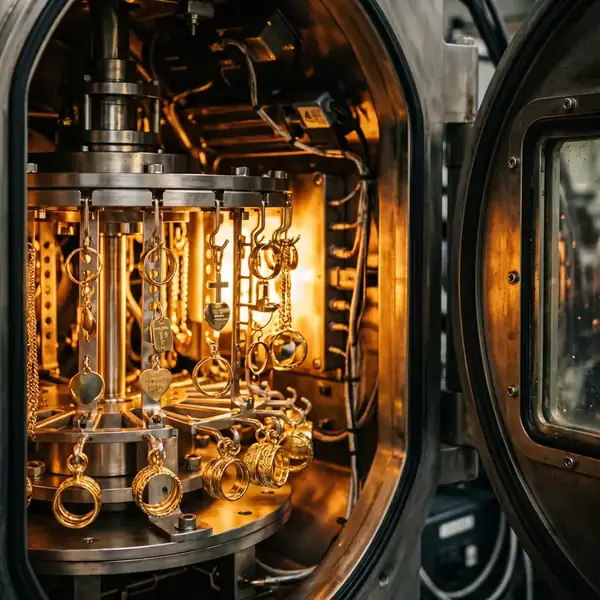
Physical Vapor Deposition, or PVD, is an entirely different technology. PVD does this on a molecular level — it bonds titanium nitride or gold to the metal with a vacuum chamber, rather than bonding liquid chemicals through electroplating. This translates into a coating that is:
- Much harder than standard gold plating
- Able to withstand sweat, saltwater and everyday wear
- Independent tests certify no fading in 2+ years of wear
- Not susceptible to the nickel and lead leaching hazards associated with liquid electroplating
No shipment leaves the factory until our in-house PVD facility is satisfied that plating thickness (ranging from 0.03 to 2.5 microns) and 48-hour salt spray tests (simulating two years of wear) are more than up to standard at HonHo Jewelry.
Question for any manufacturer: “What is the actual plating thickness shown in microns for this design? and a test report?”
While PVD vacuum plating produces a more durable finish than standard electroplating, it needs costly in-house equipment that most factories outsource.
What Do Base Metals Actually Mean for Your Customers? Material Guide.
Durability, skin compatibility and the future reputation of the product in terms of price lie in-depth under the plating – material selected for base metal. A layman’s description of what factories utilize and signify for each is as follows:
| Base Metal | Key Properties | Best For | Watch Out For |
| 316L Stainless Steel | Surgical-grade, nickel-free*, highly corrosion-resistant, non-magnetic | Durable everyday jewelry, hypoallergenic lines | More difficult to engrave, more dense than silver |
| 304 Stainless Steel | Less ratio chromium/nickel than 316L, cheaper | Low-cost bulk fashion pieces | Can cause reactions in extremely sensitive wearers; lower quality than surgical |
| 925 Sterling Silver | It is described as soft, highly workable and will tarnish because it is 92.5% pure silver. | Fine jewelry, engraving, gemstone settings | Requires anti-tarnish coating for longevity |
| Brass / Copper | Great price point, great for detail casting, lightweight | Fashion jewelry, intricate designs | Cups can cause green skin if plating peels; should use lead/cadmium-free sourcing |
Respectable wholesale custom jewelry manufacturer will be specific about what type of metal is used. SPEC SHEET says: “stainless steel” MEANS SPEC SHEET MUST SPECIFY 316L or 304, in answer ASK. That is a warning sign if they are unable to answer.
HonHo specializes in 316L stainless steel,925 sterling silver and brass which are from verified certified supplier. REACH documentation is provided with each batch confirming that it contains no restricted substance in accordance with EU chemical regulations.
5 Red Flags Buyers Overlook When Selecting a Jewelry Manufacturer
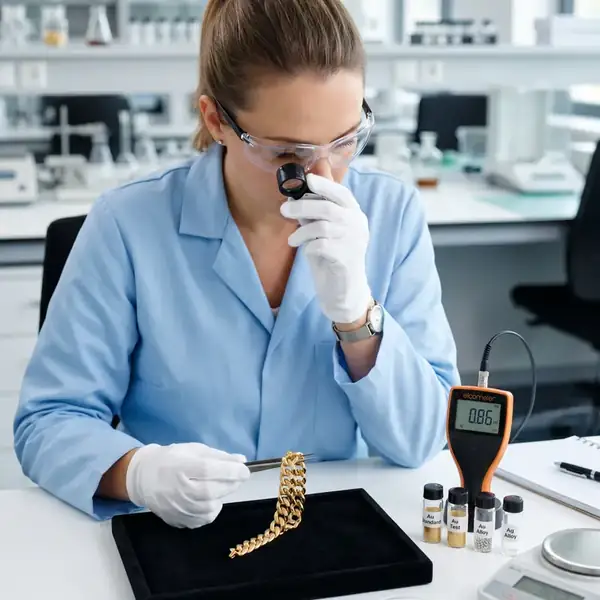
The same red flags appear endlessly in industry forums and sourcing communities. These are only learned of after a bad experience by most buyers. Here they are upfront:
- Price Below Raw Material Cost: If, even after calculating the gram weight for a 925 silver ring + basic labor it still somehow remains cheaper than the quote you received if you’ve bought anything else from there recently, then your manufacturer is either using another (cheaper) metal or are skimping somewhere behind the scenes that you cannot directly see. Spot gold and silver are in the public domain. Use them for a sanity check baseline.
- Refusing a Factory Video Call: Kind of factory supposed to be real has no secret. A supplier that is reluctant or consistently deflects requests for a live video tour of their production floor can almost certainly be ruled out as a manufacturer and most likely is trading company. There is nothing wrong with trading companies per se — but they add a mark up and control none of the quality, while charging manufacturer prices.
- No Written Mold (IP) Protection: This is a well known issue in the Chinese jewellery manufacturing industry. If you pay for a custom mold created from your original design, that mold is your IP. If you do not have a written agreement, factories will tiptoe behind your back and use your mold for other clients — effectively handing over your design to the competition as well. This is why you should always demand an NDA and a mold ownership clause prior to the start of any design process.
- Complex Pieces —”Guaranteed” Flash Shipping: For custom jewelry — real custom, not “Modularity” or twenty-six settings selected and added to a case for free from off the shelf — you need CAD modeling, mold making, casting + hand finishing and plating. In reality, it takes 7–20 days for a sample and 25–35 days for a production run! However, even a factory are effective at building custom product within two weeks of designing it will almost always be shipping stock items with slight modifications.
- Production-Quality Sample: That is one of the most painful lessons within any industry. Some factories will use their most skilled craftspeople, the highest-grade materials, and thickest plating to produce a sample — before switching to their standard production specs for the bulk order. Ask the factory to confirm in writing which spec the sample was made to, and outline production will be exactly on spec.
As professional manufacturers, the in-houses quality inspection specifies Plating thickness testing and Defect rate measurement for different products which is the crucial distinction from most of trading companies.
All About MOQ: Minimum Order Quantities
The first stumbling block for many new buyers — MOQ These are what realistic numbers under different order types look like:
- Mold: New, Custom design: 30–100pcs/style is the norm For orders of less than 30 pieces, mold-making and setup costs create a per-unit cost that is prohibitive for most business models to be viable.
- Solid design + customization: (logo, engraving — often starting at 10–30 pieces because no mold is involved)
- Making available bulk repeat orders on approved designs: — Minimum Order Quantity drops massively from hundreds of units on fashion apparel, sometimes to single units if they are an established account.
Caution should be exercised in regard to those companies advertising “no minimum order” on fully bespoke pieces. Most of the time they are not actually custom (they’re just tweaking their existing designs) or they have been giving you a huge per unit upcharge to offset the high fixed costs they aren’t charging as MOQ.
For custom designs, our minimum order quantity is 30 pieces per style at HonHo Jewelry. We provide free services on CAD and 3D rendering so that new brands can have a visual understanding of what they are purchasing before even spending money on their mold costs.
Certifications: What They Mean and Which Ones to Actually Request
Each manufacturer claims they are “certified.” Not all certifications are equal. But what you find is really important when a wholesale custom jewelry manufacturer supplies the US and EU markets:
- ISO 9001: A Quality Management System certification — which signifies the factory is following documented, auditable processes building consistent product. This does not itself certify the product but means that a third party has verified the quality control processes of the factory.
- REACH Compliance: REACH is the EU regulation which governs chemicals contained in products, including jewelry. This means that the pieces your customers wear are independently verified to be free of banned substances around nickel (which causes contact dermatitis in 10–15% of the population), lead, cadmium and various carcinogenic dyes.
- SMETA / SEDEX: This addressed the ethical standard of a factory based on the Smeta audit (which is part of the Sedex platform) including workers, health and safety, environment management etc. SMETA certificate from the manufacture is good evidence for brands who promote sustainability or ethical sourcing.
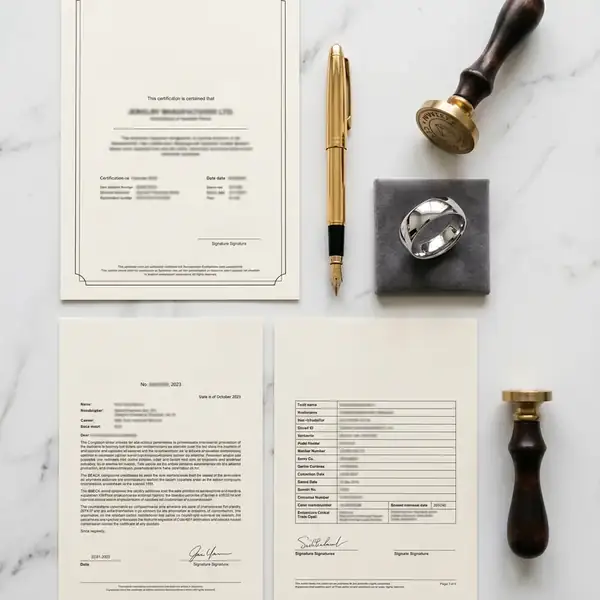
- SGS or Intertek Test Reports: SGS and Intertek, on the other hand test the actual product (unlike above, which audit processes). The most direct proof of quality is an independent lab test report that indicates which metals passed nickel release tests and chemical composition standards. Avoid ONLY getting an image of their certificate and request the report.
HonHo is certified in ISO 9001, SMETA and REACH. We also have an in-house test lab, including one temporary salt spray 48 hours chambers, plating thickness meters and defect-rate tracking (tct). For any batch you can require SGS test report from us.
Step-by-Step Process of Custom Jewelry Manufacturing
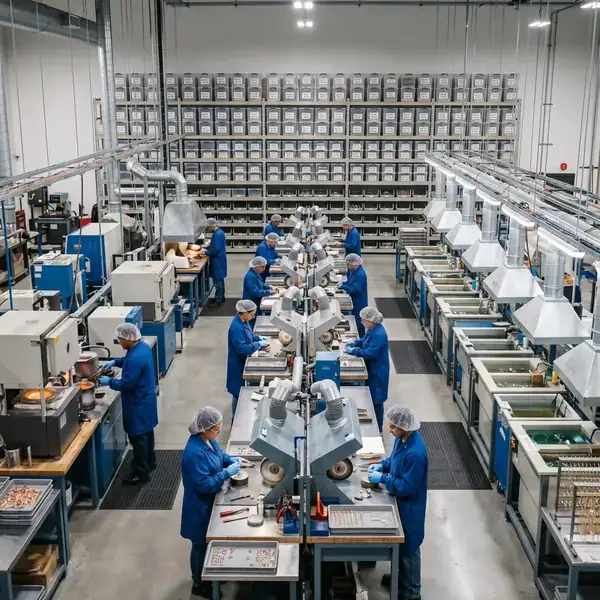
Knowing how things work helps you plan better deadlines and identify issues sooner. This is how it works in a professional factory:
- Day 1 — Design Brief: You provide reference images, dimensions and specs of materials to be used or any branding requirements. The more specific, the better. Crisp briefs minimize rework and delays.
- CAD Modeling (1–2 days): A designer makes a 3D digital representation of the object. It’s the perfect time to evaluate proportions, stone placement and other volume aspects without having ∄ metal. Ask for wall thickness specs — on most pieces it minimum 0.8–1.0mm for structural integrity.
- Quotations (same day as CAD review): Upon confirmation of dimensions, the factory calculates gram weight, material cost, labor & plating. For serious manufacturer, It gives you the breakdown line by line not one price.
- Mold Making (3–5 days): A metal mold is cut using the CAD file. Custom manufacturing has the highest fixed cost here. Your order should be labelled with your name or a number and secured in place.
- Sampling (7 days): The first pieces are cast, sanded by hand, polished and plated. They send you a physical sample for your hands to approve it. Here is your opportunity to assess every aspect — finish quality, fit and colour exercise.
- Production (for normal orders, 25–35 days): When a sample is approved, bulk production commences. A factory with separate dedicated production lines for each client ensures that there is no cross-contamination and consistency cannot be maintained.
- Quality Inspection: 100% pieces (or a statistically valid sample according to AQL 2.5 standard if larger orders) should be checked for plating, structure, stone, and dimension at pre-shipment QC inspection.
- Shipping: Wholesalers pack items with protective material, site details regarding shipping through DHL / FedEx / UPS are available with tracking. Documents for lead-free and nickel-free certification should accompany the goods.
How To Tell If You Are Dealing With Real Factory (Not Trading Company)
Most of the money lost by a buyer goes down here. A trading company looks just like a factory — same website, similar product photos, sometimes the same certifications as its partner factories. When problems happen, the difference is apparent: a trading company has no ability to resolve production issues quickly, change out tooling or replace defective parts.
Here is a practical checklist:
- Book a live factory video tour. Not a pre-recorded video. A live video call whereby you could ask them to walk to specific machines, show a work order with your order number, or scan the mold storage area.
- Request the factory registration number. Chinese factories have a Business License (营业执照) that includes a registration number you can look up and verify on government databases.
- Proof the factory address against SEDEX/SMETA contrived. If the address on the certificate does not correspond to the address that is provided by the provider, find out why.
- Ask for photos of your specific molds at their facility. Putting a label on your mold for photographing you mold in their rack of real factory will do the work after all of these molds creating. A trading company cannot.
- Inquire if they have in-house plating capability. Most trading companies outsource plating. It is one of the main reasons for an uneven finish of bulk orders.
Packaging and Private Label: Never Get Enough Credit, Always Get the Short End
If your product is a jewelry brand, then the unboxing experience is literally part of the product. Many wholesale buyers realize packaging too late — after the jewelry is manufactured and on route to their destination — and are forced to use generic pouches, since custom boxes also have lead times.
A wholesale custom jewelry manufacturer should be full-service and include the following services:
- Boxes that are customized with your logo and brand colors
- Foam or velvet inserts cut to pieces
- Hang Tags display your art or care note
- Silver pieces may be stored in anti-tarnish pouches or sachets
Packaging customization at HonHo is embedded in the same production workflow, not an afterthought. This is particularly relevant for brands, selling on platforms like Shopify or Amazon where customer images of unboxing directly affect ratings and reviews.
Example of What Ethical Sourcing Would Looked Like in the Real World
- Documentation of Conflict-Free Gemstones: Kimberley Process for Diamonds; RJC (Responsible Jewellery Council) Certification covers all precious materials.
- Traceable recycled metals: Insist on SCS certified documentation not a mere marketing claim.
- Standard of labour on the factory side: SMETA audit (independently verified) to check working hours, wages, child policy and safety — request audit date + current certificate
- LEAN: Documentation of metal waste rate in professional factories Both positive signs are recycling programs for metal overruns and low scrap rates.
For jewelry that you supply to US retailers, environmental claims made about the item (including those passed up from your manufacturer) are subject to FTC’s Green Guides. It protects from liability with the third-party documentation.
Pricing Reality: Why Are Quotes So Divergent?
Inevitably the price difference between factories for “the same piece” relates back to four factors:
- Material types: (316L denotes much more expensive than 304) Real 925 silver has a higher price than copper plated with silver. Lower base materials always yield lower quotes.
- Plating thickness and plating method: Flash plating is much cheaper than PVD. It will always cost more — and wear far better.
- Primary: Minute Data: Hand setting stones, laser engraving and multi-step polishing labor cost. Anything that is an unrealistically low quote typically omits these steps or skips through them and sends it, as a lower flush.
- Not spot-checking for easy QC: Such a rigorous QC run (100% pre-shipment inspection), whilst more expensive to administer than you might think, and it means doing it all before the truck either arrives overland or is ocean-borne. That cost is either reflected in your price or in your defect rate.
Frequently Asked Questions
Wholesale Custom Jewelry Manufacturer Minimum order quantity
Since new molds are created for fully custom designs MOQ will usually be 30 to 100 pieces per style. Some manufacturers have a lower MOQ for stock designs with customization such as logo or engraving (10–30 pieces). Very low MOQs (sub 10 pcs) on fully custom pieces almost always incurs a so high per unit price that offsets the mold cost. For custom manufacturing, we can offer at least 30 pieces for one style here at HonHo Jewelry.
The time required for you to produce custom wholesale jewelry
New custom design — 1–2 days for CAD, 3–5 days mold making, 7 days sample production (10~20days from design confirmation to sample in hand) It takes 25–35 days for most piece types to bulk produce after sample approval. It is possible to do rush production, but that generally raises prices and increases the likelihood of skimping on quality.
How is PVD plating different from gold plating in jewelry?
In standard electroplating, gold is deposited using a liquid chemical bath. It produces results between 0.05 microns (flash plating) and greater than 1 microns(heavy gold plating.) By placing a piece of the desired metal into a vacuum chamber, PVD (Physical Vapor Deposition) seals a metallic layer at an atomic level adding ultra-strength coating which is sweat resistant, salt water resistant while also light and durable enough for daily wear.
How Do I Know A Jewelry Supplier Is Real Manufacturer Or Trading Company?
Asking for a live video factory tour — not a pre-recorded video. Request to see their specific molds stored in their storage. Inquire about their business registration number, and check it. Ask if they have plating in-house because many trading companies outsource this process.
11 Shocking Questions on Certifications a Wholesale Custom Jewelry Manufacturer Needs to Answer
The key certifications for markets in the US/EU are ISO 9001 (quality management), REACH compliance (covering chemical safety of primary concern — nickel and lead), and SMETA/SEDEX (ethical manufacturing audit).
How can I ensure manufacturer does not duplicate my custom jewelry?
Sure, but only if you get the right paperwork taken care of before going off into the design process. Make sure he signs the NDA (Non-Disclosure Agreement) and has a clause that clearly states that no molds originally created from your designs will ever belong to him and can never be utilized for other clients’ orders.
Which base metals lower the chances of a rash and are suitable for hypoallergenic jewelry?
The safest and most reliable choice of hypoallergenic fashion jewelry is surgical grade stainless steel 316L. Its nickel is so entrapped in the alloy that it does not leach like lesser quality metals. For pieces of precious metal, certified nickel-free 925 silver is a durable choice.
Need a wholesale custom jewellery manufacturer to prove everything I have written in this guide? Request Free CAD consultation and sample quote at HonHo Jewelry 250 global brands over 16 years serviced from our Dongguan, China facility — including in-house PVD plating, ISO 9001 certified, SMETA compliant and a physical test-data backed 24-month PVD plating warranty.
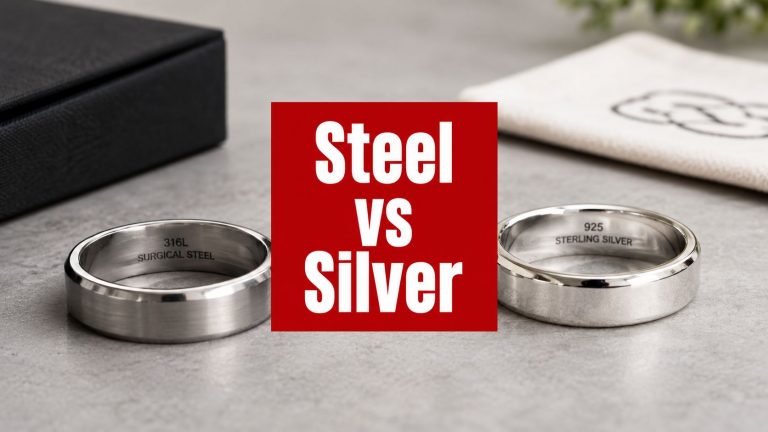
Surgical Steel vs Sterling Silver: Buyer Guide
You’re pricing a new collection, and the sample tray is already split down the middle.
How to Gold Plated Jewelry the Right Way for Lasting Color
You probably have a launch already in motion, a supplier sample on your desk, and
What Is a Shank on a Ring: Guide to Design & Durability
You’re refining a ring design, the stone looks right, the setting is approved, and the