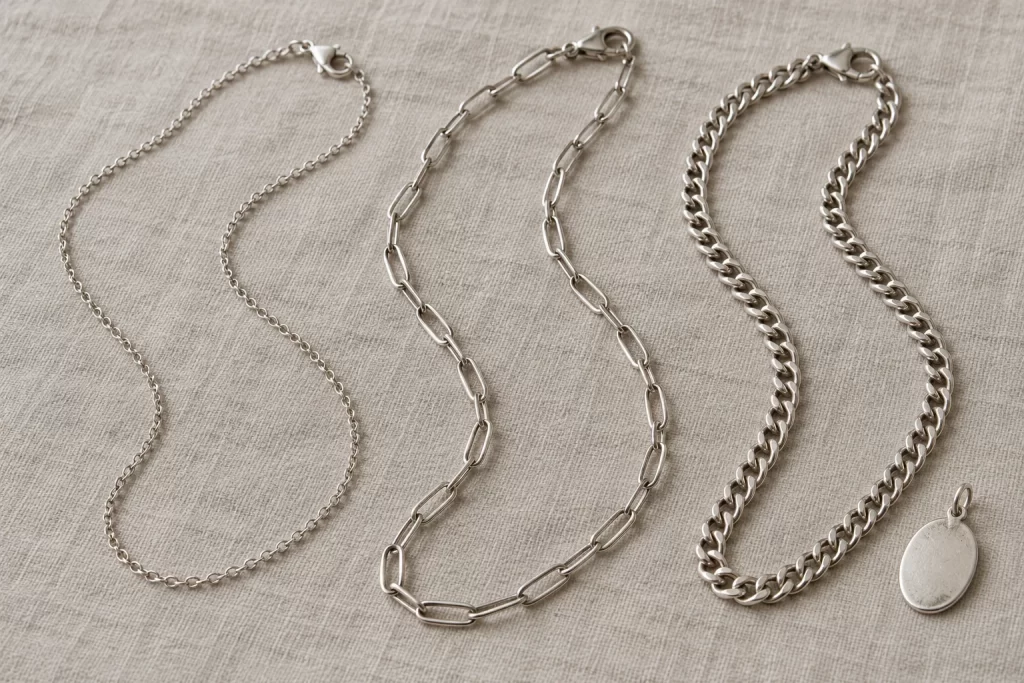

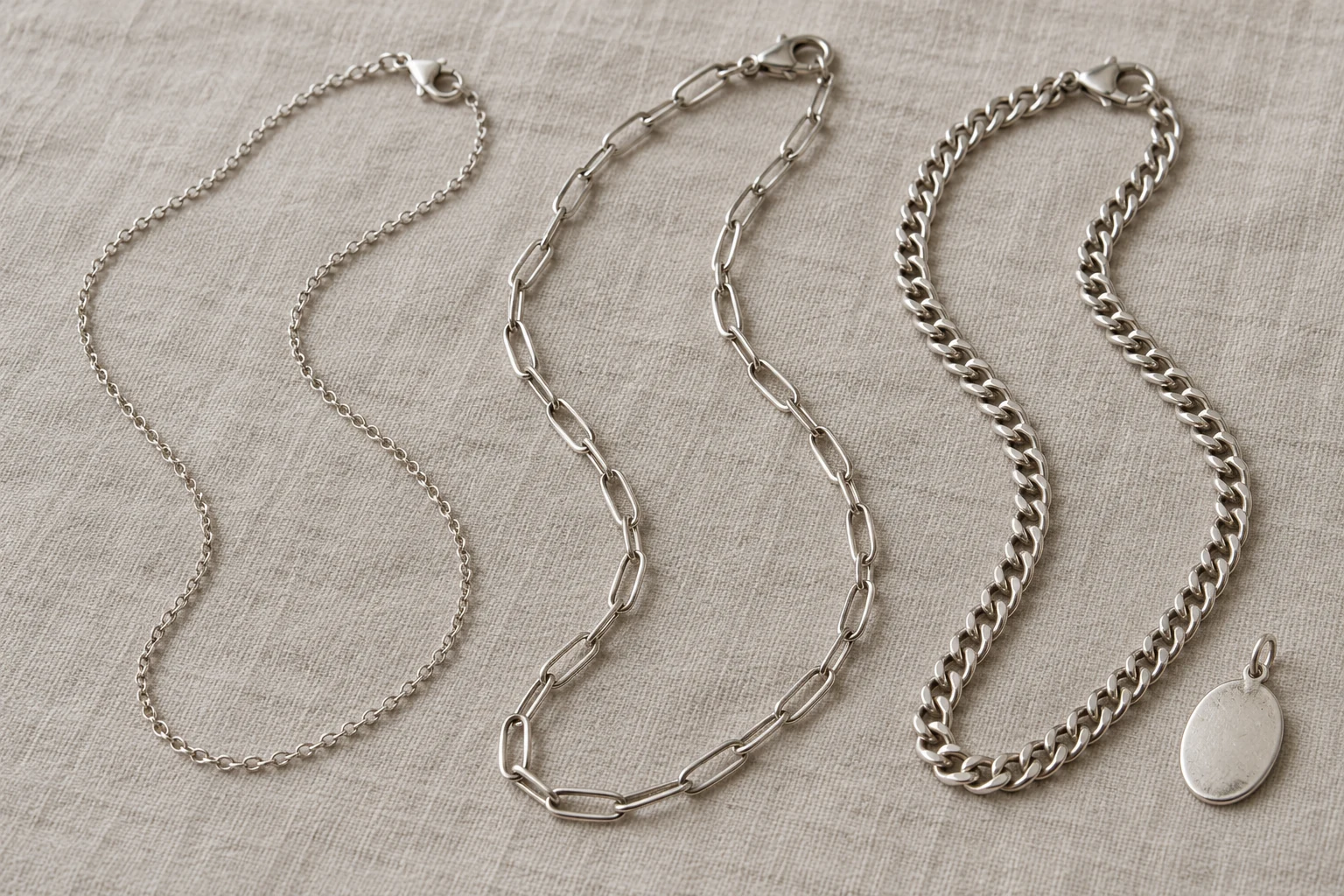
Types of Chains Guide Necklace Chain Styles Explained
Key Factors to Consider When Choosing Types of Chains
When you’re choosing between different types of chains, it’s not just about what looks pretty. The right chain needs to fit your skin, your style, your lifestyle, and your budget. Here’s how I guide my own customers through the essentials.
1. Chain Materials: Gold, Sterling Silver, Platinum, Stainless Steel
Your chain material affects look, price, and durability.
Most common jewelry chain materials:
- Gold (10K, 14K, 18K, solid or gold‑filled)
- Pros: Classic look, great for everyday, holds value, good for sensitive skin (especially higher karats).
- Cons: Softer at higher karats, more expensive.
- Best for: Investment pieces, daily chains, gold chain designs.
- Sterling Silver (925)
- Pros: Bright, versatile, affordable, timeless; huge variety of sterling silver chains.
- Cons: Tarnishes over time; needs polishing.
- Best for: Everyday wear, layered looks, women’s necklace chains and men’s chain styles.
- Platinum
- Pros: Extremely durable, naturally white, hypoallergenic.
- Cons: Premium price, heavier.
- Best for: Fine jewelry, heirloom pieces, sensitive skin.
- Stainless Steel
- Pros: Very durable, budget-friendly, minimal maintenance.
- Cons: Not as “luxury” as precious metals, can’t easily resize.
- Best for: Active lifestyles, men’s chain styles, modern minimalist pieces.
If you have sensitive skin, look for hypoallergenic chain materials like platinum, titanium, or high-quality stainless steel, and avoid unknown base metals.
2. Chain Length Types and Size Guide
Length completely changes how a necklace sits and how it frames your face and neckline.
Common necklace chain types by length:
- Choker (14–16 in / 35–40 cm)
Sits close to the neck. Great with open necklines, off-the-shoulder tops, and layered looks. - Princess (17–19 in / 43–48 cm)
The most universal length. Works with almost any neckline and is ideal for best chains for pendants. - Matinee (20–24 in / 50–60 cm)
Falls at the bust. Great for work outfits, higher necklines, and simple pendants. - Opera (28–36 in / 70–90 cm)
Long and elegant. Worn single, doubled, or layered with shorter chains for statement looks.
If you’re unsure, I usually recommend starting with a princess-length chain for maximum versatility.
3. Chain Thickness and Weight
Thickness affects comfort, style, and how visible your chain is.
- Thin (0.5–1.5 mm)
- Delicate, subtle, feminine.
- Great for minimalist chain necklaces and small pendants.
- Can tangle or break more easily if mishandled.
- Medium (2–4 mm)
- Best all-round width for everyday.
- Works as a standalone chain or with pendants.
- Ideal for layering multiple necklace chain types.
- Thick (5 mm and above)
- Bold, statement look.
- Heavier on the neck; usually worn alone.
- Great for Cuban link chain, Figaro chain, and curb chain jewelry.
When you add gemstones or larger pendants, you’ll want a medium to thicker chain that can handle the chain thickness and weight without sagging or snapping.
4. Durability and Maintenance
Different types of chains wear differently over time.
Generally durable chain styles:
- Curb, cable, rolo, box, wheat (spiga), Cuban link
These are strong and resist tangling, making them good durable jewelry chains.
Higher-maintenance or delicate styles:
- Herringbone, snake, very fine chains
They kink more easily and need gentle handling and flat storage.
Maintenance basics:
- Wipe after wear to remove sweat and oils.
- Keep away from harsh chemicals and perfumes.
- Store in separate pouches to avoid scratching and tangling.
5. Best Chain Types for Pendants vs Standalone Wear
Not every necklace chain type is ideal for pendants.
Best chains for pendants:
- Cable chain
- Rolo (Belcher) chain
- Box chain necklace
- Wheat (Spiga) chain
- Singapore twist chain
Look for:
- Smooth, flexible structure.
- Medium thickness (so the pendant doesn’t overpower it).
- Strong links for everyday security.
Best standalone chains (no pendant needed):
- Cuban link chain, Figaro chain, curb chain jewelry
- Rope chain necklace
- Byzantine chain necklace
- Herringbone (for a sleek, flat look)
- Paperclip chain jewelry
These chains are designed to be the main visual focus, so they don’t need a charm to shine.
6. Matching Chain Types to Necklines and Outfits
The right chain can completely change how your outfit reads.
Quick matching guide:
- Crew neck / high neck
- Longer chains: matinee or opera.
- Great with bold rope chain, Cuban link chain, or layered pendants.
- V-neck
- Princess length that mimics the V shape.
- Figaro chain, cable chain, or box chain necklace with a pendant works beautifully.
- Off-the-shoulder / scoop neck
- Chokers or short chains.
- Try snake chain, herringbone, or layered paperclip chain jewelry.
- Shirts and blazers
- Princess or matinee for a polished look.
- Simple curb chain jewelry or wheat chain for a refined finish.
Choose metal color to complement your outfit:
- Warm tones (beige, brown, rust) pair nicely with gold chain designs.
- Cool tones (black, white, navy, grey) look sharp with sterling silver chains or platinum.
7. Choosing Chains for Different Occasions and Lifestyles
Your lifestyle should guide which types of jewelry chains you rely on most.
Everyday wear chains:
- Strong, simple designs: cable, curb, box, wheat.
- Materials: 14K gold, sterling silver, stainless steel.
- Good for work, errands, daily wear.
Active lifestyles:
- Avoid delicate snake chain vs herringbone styles that kink easily.
- Choose durable, low-fuss chains like curb, rope, or stainless steel.
Office and business settings:
- Subtle, polished pieces: medium cable, box, or Singapore chain.
- Neutral metals that complement your wardrobe.
Evening and special occasions:
- Elegant designs: Byzantine chain necklace, herringbone, snake chain, or diamond-cut rope chain necklace.
- Longer lengths and layered looks for drama.
Men’s chain styles:
- Popular: Cuban link chain, curb chain jewelry, Figaro chain guide, rope chain necklace.
- Usually medium to thick width for a more masculine look.
Women’s necklace chains:
- Popular: cable, wheat (spiga) chain, box chain, paperclip chain jewelry, minimalist chain necklaces.
- Easy to layer and pair with pendants.
When you know your material, length, thickness, and how you actually live day-to-day, choosing the right types of chains becomes much simpler—and you’ll actually wear what you buy.
Classic and Versatile Types of Chains

When I design or source types of jewelry chains, I always start with the classic four: cable, rolo, box, and curb. These necklace chain types work for both men’s and women’s jewelry and are easy to style every day.
Cable Chain Type
Features:
- Simple oval or round links in a uniform pattern
- Available in gold chain designs, sterling silver, stainless steel, and more
- Works for both necklaces and bracelet chain styles
Best Uses:
- Everyday women’s necklace chains
- Minimalist men’s chain styles in thicker gauges
- Ideal as a base for charms and pendants
Pros:
- Classic, timeless look
- Easy to repair if a link breaks
- Great starter option if you’re unsure which types of chains to choose
Cons:
- Very thin cable chains can tangle and snap more easily
- Plain design if you want something more statement
If you’re buying in bulk or producing your own line, versatile cable styles are a smart pick from any good necklace supplies wholesale source, like our curated selections at Honho Jewelry’s necklace supplies wholesale collection.
Rolo (Belcher) Chain Type
Features:
- Round or slightly oval links with a thicker, more solid look
- Links are usually symmetrical and uniform
- Common in sterling silver chains and stainless steel
Best Uses:
- Everyday bracelets and anklets
- Casual pendants and charm bracelets
- Unisex designs
Pros:
- Strong and durable for daily wear
- Rounded links feel smooth on the skin
- Good balance between delicate and chunky
Cons:
- Heavier than cable in the same thickness
- Not as flat under clothing as box or curb chains
Box (Venetian) Chain Type
Features:
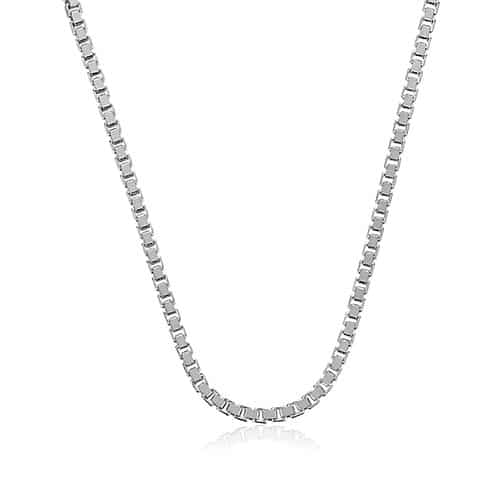
- Small square links forming a sleek, geometric “box” profile
- Popular in box chain necklace designs, especially in gold and silver
- Often used for minimalist designs
Best Uses:
- Simple pendants and small gemstones
- Sleek minimalist chain necklaces
- Layering with other chain types
Pros:
- Clean, modern look
- Good strength for its size
- Doesn’t look “too busy,” great for professional outfits
Cons:
- Thin box chains can kink if bent sharply
- Harder to repair if a link is badly damaged
Curb Chain Type
Features:
- Interlocking links that lie flat when worn
- Variations range from fine curb to chunky Cuban link chain styles
- Common in curb chain jewelry for both men and women
Best Uses:
- Men’s chain styles in bold thicknesses
- Statement gold chain designs
- Standalone necklaces or bracelets without pendants
Pros:
- Very durable and strong
- Sits flat on the neck and under clothing
- Great for both street style and classic looks
Cons:
- Chunky versions can feel heavy
- Fine curb chains can tangle if stored poorly
Best Classic Chain Types for Everyday Wear
For everyday, low-stress use, I usually recommend:
- Best for pendants: Cable chain, box chain
- Best for durability: Rolo chain, curb chain
- Most versatile for men and women: Cable and curb chains in medium thickness
- Best for layering: Fine cable and box chains mixed with a slightly heavier curb
If you need stronger options for bracelets, especially in stainless steel, you can look at robust designs similar to those in our stainless steel bracelets wholesale range at Honho Jewelry.
Textured and Statement Types of Chains

When I’m designing bold, textured jewelry, I reach for a few statement types of chains over and over: rope, Figaro, Cuban link, and anchor (mariner) chains. Each has a different attitude, weight, and best use, especially for men’s chain styles and standout women’s necklace chains.
Rope Chain Type
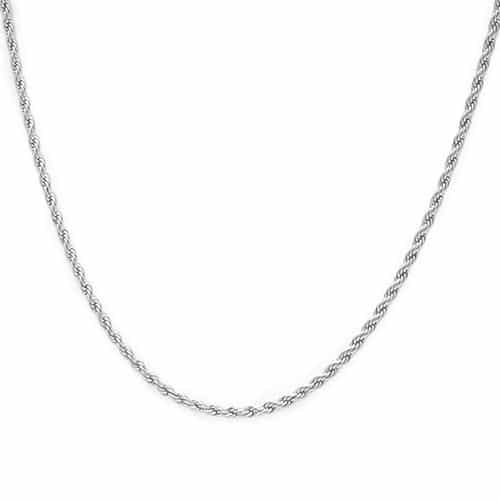
A rope chain necklace is built from twisted links that spiral like a real rope.
Description & Features
- Twisted pattern that reflects light from all angles
- Available in slim, subtle sizes or heavy hip-hop style thickness
- Works well in gold chain designs and sterling silver chains
Styling Tips
- Thin rope chains: great for everyday, minimal outfits and small pendants
- Thick rope chains: perfect as a standalone statement, over a T-shirt or under an open shirt
- Looks premium layered with a flat chain (like herringbone) or a simple box chain necklace
Pros
- Very sparkly and eye-catching
- Strong and durable compared to many delicate necklace chain types
- Versatile for both men’s and women’s chain styles
Cons
- Can be harder to repair if a section breaks
- Fine sizes can tangle if stored badly
Figaro Chain Type
The Figaro chain mixes one long link followed by two or three shorter links in a repeated pattern.
Description & Features
- Classic Italian-inspired pattern
- Flat yet textured, so it catches light without being too flashy
- Common in men’s jewelry chains but also trending for women’s necklaces and bracelets
Styling Tips
- Mid-thickness Figaro: great everyday men’s chain style with or without a pendant
- Slim Figaro: elegant base layer with a charm or gemstone
- Works well with casual shirts, streetwear, and simple knitwear
Pros
- Strong and reliable for daily wear
- Easy to style alone or with pendants
- Pattern adds interest without screaming for attention
Cons
- Can twist if worn too short and tight
- Flat links can show scratches over time
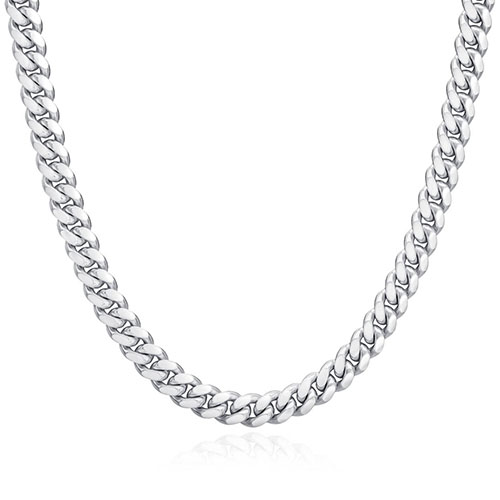
Cuban (Miami Cuban) Link Chain Type
The Cuban link chain (Miami Cuban) is the king of statement gold chain designs.
Features
- Thick, closely packed, rounded curb-style links
- Heavy, solid feel – often made in gold, gold-filled, or stainless steel
- Designed to sit flat and look bold from every angle
Styling Tips
- Ideal as a standalone necklace with no pendant
- Pairs well with streetwear, oversized fits, and open collars
- For a quieter look, choose a slimmer width in sterling silver or stainless steel
Pros
- One of the strongest chain types for everyday wear
- High visual impact with simple outfits
- Works well for men’s chain styles and unisex looks
Cons
- Heavy in thicker widths
- More expensive in solid gold – many brands (including us) use gold-filled or plated versions for better value, often made with gold-filled jewelry manufacturing techniques similar to those used by professional gold-filled jewelry manufacturers in China.
Anchor (Mariner) Chain Type
The anchor chain (mariner chain) is inspired by ship anchor chains: oval links with a bar across the center.
Features
- Nautical, structured look
- Available in flat or puffed styles
- Great in both chunky and fine variations
Styling Tips
- Thin anchor chains: subtle, good for pendants and everyday wear
- Chunky mariner chains: strong statement on a plain tee, tank, or open shirt
- Fits coastal, resort, and smart-casual styles very well
Pros
- Distinctive design without being overly flashy
- Good strength, especially in thicker versions
- Works for necklaces and bracelet chain styles
Cons
- Bars inside the links can trap dirt if not cleaned
- Very wide styles can feel rigid on small necks
Choosing Statement Chain Types for Bold Looks
When you want your chain to be the main event, here’s how I usually decide:
- For max shine: go with a rope chain necklace in medium–thick width.
- For classic street style: a Cuban link chain in gold or steel.
- For patterned but wearable: pick a Figaro chain in mid thickness.
- For nautical and chic: choose an anchor (mariner) chain.
If you’re building a product lineup or stocking a shop, I always suggest carrying at least:
- 1 bold Cuban link
- 1 textured rope chain
- 1 Figaro
- 1 anchor chain
These four cover most bold requests in both men’s chain styles and women’s statement looks and pair well with custom pendants or pieces made by lost wax casting processes like those used in high-quality lost-wax jewelry casting services.
Elegant and Intricate Types of Chains

When I choose elegant types of jewelry chains for my collections, I look for pieces that sit smoothly on the skin, catch the light beautifully, and still feel reliable enough for real-life wear. Here’s a quick, practical breakdown of the most popular necklace chain types for dressy looks.
Snake Chain Type: Features, Uses, Pros & Cons
Features:
- Smooth, flexible tube-like look
- Very fluid drape, almost like a metal cord
- Available in gold, sterling silver, and stainless steel
Best Uses:
- Minimalist pendant chains (small, light pendants)
- Sleek chokers and short necklaces for office or dinner
- Great for women’s everyday outfits when you want a “polished” look
Pros:
- Very elegant and modern
- Doesn’t catch easily on clothing
- Reflects light evenly for a clean shine
Cons:
- Can kink if bent sharply
- Harder to repair if damaged
- Not ideal for heavy pendants
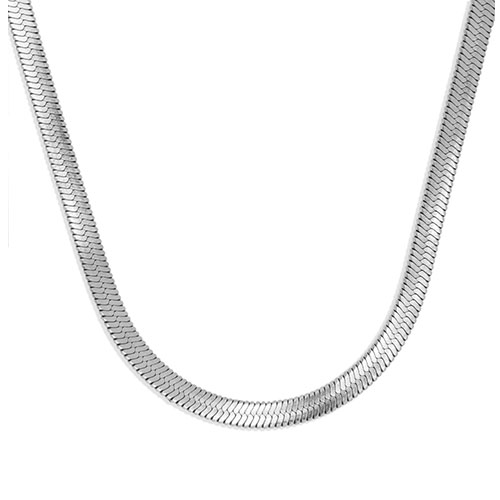
Herringbone Chain Type: Features, Uses, Pros & Cons
Features:
- Flat, tightly arranged V-shaped links
- Wide, mirror-like surface that looks “liquid”
- Typically seen in gold chain designs and sterling silver chains
Best Uses:
- Standalone statement chain (no pendant needed)
- Perfect under blazers, open collars, or off-shoulder tops
- Dressy events, nights out, formal photos
Pros:
- Extremely eye-catching and luxurious
- Looks expensive even in plated versions
- Great for layering with thinner classic chains
Cons:
- Very prone to kinking if twisted or bent
- Should be stored flat to avoid damage
- Not suitable for pendants or rough, everyday wear
Wheat (Spiga) Chain Type: Features, Uses, Pros & Cons
Features:
- Four strands of twisted, braided links
- Rounded, textured but still smooth on the skin
- Known as wheat chain or spiga chain
Best Uses:
- Strong yet elegant pendant necklace chains
- Men’s and women’s bracelet chain styles
- Everyday wear with a dressy edge
Pros:
- One of the more durable “fancy” chains
- Good balance of strength and elegance
- Works in thin, delicate styles or thicker statement versions
Cons:
- Slightly harder to clean between links
- Can feel heavier in thicker widths
- Costs more than basic cable or curb at similar thickness
Byzantine Chain Type: Features, Uses, Pros & Cons
Features:
- Complex, woven pattern with a 3D texture
- Very flexible and substantial in hand
- Popular as Byzantine chain necklace and bracelets
Best Uses:
- Standalone statement chain (no pendant needed)
- Men’s chain styles and bold women’s chains
- Formal, evening, or special-occasion looks
Pros:
- Looks highly detailed and luxurious
- Strong, dense structure
- Stands out even in shorter lengths
Cons:
- Heavier than many other intricate chain types
- Higher price due to labor-intensive construction
- Can look “too much” if you prefer minimalist style
Best Elegant Chain Types for Dressy Occasions
For dressy outfits, I usually recommend:
- Minimal & polished: Snake chain, thin wheat chain
- High-glam statement: Herringbone, Byzantine
- With pendants: Thin wheat (spiga) or delicate snake
- Without pendants: Herringbone and Byzantine as standalone hero pieces
If you’re curating for a boutique or planning a new jewelry line, these elegant necklace chain types are must-haves alongside your classic basics. You can pair them with custom pendants or branded charms, and if you’re sourcing in volume, working with experienced private label jewelry manufacturers makes it easier to control quality, finish, and metal options for global customers.
Specialty and Modern Types of Chains

When we design and source different types of chains, I always look at how they wear in real life: comfort, durability, and how easily they fit into everyday style. These modern necklace chain types are perfect if you like clean, minimalist jewelry that still feels intentional.
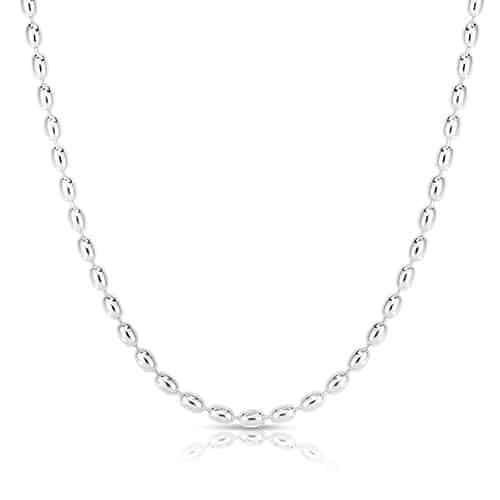
Ball (Bead) Chain Type
Features:
- Small metal beads linked closely together
- Comes in very fine to chunky sizes
- Often used in stainless steel, sterling silver, and plated metals
Best Uses:
- Minimalist necklace chains and simple pendants
- Men’s dog-tag–style pendants and key chains
- Casual everyday pieces and bracelet chain styles
Pros:
- Lightweight and easy to wear
- Great for a clean, modern look
- Usually more affordable than heavy link chains
Cons:
- Not the strongest chain type for heavy pendants
- Beads can kink if pulled too hard
- Cheap versions can tarnish quickly
Singapore Chain Type
Features:
- Twisted, braided look with high shine
- Fluid drape that catches light from every angle
- Common in gold, gold vermeil, and sterling silver
Best Uses:
- Delicate gold chain designs for pendants
- Women’s minimalist chains that still sparkle
- Dressy but everyday-friendly necklaces
Pros:
- Very eye-catching for such a thin chain
- Works well alone or layered
- Comfortable and flexible on the neck
Cons:
- Fine versions can tangle if stored badly
- Needs gentle handling to avoid knots
- Not ideal for very heavy charms
Paperclip Chain Type
Features:
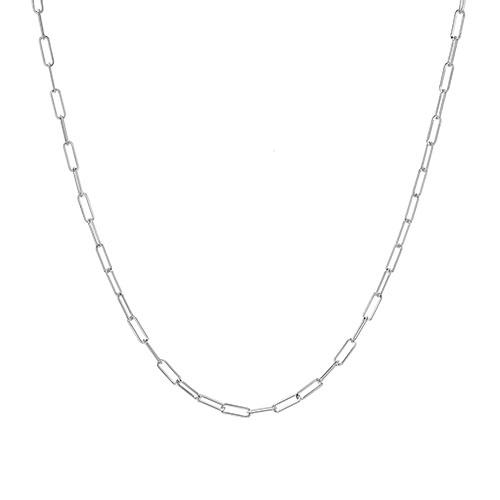
- Long, rectangular links (like tiny paperclips)
- Sleek and graphic, perfect for minimalist chain necklaces
- Popular in gold, gold-plated, and sterling silver
Best Uses:
- Statement but clean women’s necklace chains
- Layering with shorter or thinner chain types
- Modern men’s chain styles in thicker gauges
Pros:
- Super versatile: works with pendants or on its own
- Easy to adjust length by clipping into different links
- Bold but still minimal, great for everyday wear
Cons:
- Larger links can snag on knits if you’re not careful
- Hollow versions may dent over time
- Needs decent metal quality to keep its shape
Modern Chain Types for Minimalist Jewelry
If you like modern, simple jewelry, these types of jewelry chains are some of the best:
- Ball chains – sporty, casual, and unisex
- Singapore chains – delicate, twisted, and light-catching
- Paperclip chains – bold, linear, and ultra-modern
I usually suggest:
- Ball chain for casual, street-style looks
- Singapore chain for a subtle feminine shine
- Paperclip chain for a clean, elevated everyday chain
If you’re planning to stack several modern chains, it’s worth reading a practical guide on how to layer jewelry the right way so your layering necklace chains don’t tangle and your lengths sit perfectly.
How to Style and Layer Different Types of Chains
Styling different types of chains is all about balance: thickness, length, texture, and how you wear them with your outfits day to day.
Layering Different Chain Types and Thicknesses
Keep layering simple but intentional:
| Layer | Recommended Chain Type | Thickness | Length Guide |
|---|---|---|---|
| Base | Cable / Box / Curb | Medium | 14–16″ choker / short |
| Middle | Figaro / Rope / Wheat | Medium | 18–20″ princess |
| Long | Paperclip / Singapore | Light–Med | 22–24″+ matinee/opera |
Quick rules:
- Mix 1–2 delicate chains + 1 bolder chain.
- Vary length, link shape, and texture so they don’t visually “merge”.
- Keep metals consistent (all gold or all silver) for a clean, modern look.
Combining Classic and Statement Chain Types
Pair classic necklace chain types with stronger designs so they don’t compete.
- Safe combos:
- Box chain + Cuban link
- Cable chain + Rope chain
- Paperclip chain + Figaro chain
- Let just one statement chain (Cuban, Rope, Byzantine, Figaro) be the focus.
- Use classic chains (cable, box, curb) as “supporting players”.
If you’re working with bold gold-plated designs, partnering with a specialist gold-plated jewelry manufacturer helps keep weight, finish, and durability in check – I fine-tune this a lot in our own collections using the same approach as described in this gold-plated jewelry guide.
Pairing Chains with Pendants, Charms, and Gemstones
Match pendant style with the right chain type:
| Pendant Style | Best Chain Types |
|---|---|
| Small / minimalist | Cable, Box, Singapore, Wheat |
| Medium everyday | Rolo, Curb, Rope (thin), Paperclip |
| Heavy / bold | Cuban, Figaro, Rope (thick), Anchor |
| Gemstone solitaire | Snake, Wheat, Singapore, fine Cable |
Tips:
- One pendant chain per stack; keep others plain.
- For diamonds / gemstones, choose smooth, refined chains (snake, wheat) so the stone stays the hero.
- For charm necklaces, use sturdy cable or rolo that can handle extra weight.
Types of Chains for Men’s Jewelry Styling
For men, focus on strength, comfort, and clean lines:
- Everyday men’s chain styles:
- 3–5 mm Curb or Cuban link chain (solo)
- 2–3 mm Rope chain under a shirt
- 2–4 mm Box chain with a pendant (cross, dog tag, bar)
- Good lengths for most men: 18–22″ (sits at collarbone/upper chest).
- Go for stainless steel or 316L grade for sweat, gym, and travel – that’s exactly why I lean heavily on high-grade 316L stainless steel jewelry in durable men’s chains.
Types of Chains for Women’s Everyday Outfits
For daily wear, mix comfort + versatility:
- Work / office:
- Thin cable or box chain (16–18″) with a tiny pendant.
- Short snake or wheat chain under a blouse.
- Casual / street style:
- Layered paperclip, rope, and curb chains.
- Choker + longer pendant combo.
- Minimalist look:
- Single fine Singapore or snake chain in gold or sterling silver.
Seasonal and Occasion-Based Chain Styling Tips
Adjust your necklace chain types with the season and event:
- Summer (T-shirts, tanks, open necklines):
- Bolder chains: Cuban, Figaro, Rope, Paperclip.
- Shorter chokers + mid-length layers.
- Winter (sweaters, high necks):
- Longer matinee/opera chains: Rope, Wheat, Byzantine.
- Skip delicate chains that disappear under layers.
- Formal events:
- Elegant chains: Snake, Herringbone, Wheat, Singapore.
- One hero piece, not too many layers.
- Active lifestyle / travel:
- Strong, low-maintenance chains: Curb, Box, Rope in stainless steel or solid gold.
- Shorter lengths that don’t snag.
Use these types of jewelry chains as modular pieces: keep a small “capsule” of 3–5 chains (classic + statement + pendant-friendly) and you can build looks for almost any outfit or occasion fast.
Care and Maintenance for All Types of Chains

Looking after different types of chains properly is the only way to keep them looking sharp and wearable for years. Here’s how I handle cleaning, storage, and knowing when it’s time to repair or replace.
Cleaning Methods for Different Chain Materials
Different necklace chain types and metals need different care:
- Gold chains (solid & gold-plated)
- Use lukewarm water + mild soap, soft cloth or very soft brush.
- Avoid harsh chemicals and ultrasonic cleaners, especially on gold plated chains.
- For plated pieces, be extra gentle and read about the thickness of gold plating so you don’t scrub it off.
- Sterling silver chains
- Use a silver polishing cloth for quick cleanup.
- For deeper cleaning: mild soap + water, then dry completely.
- Store in airtight bags to slow down tarnish.
- Platinum and stainless steel chains
- Very durable: clean with soap, water, and a soft cloth.
- Rinse well to remove any residue and dry fully.
- Delicate designs (snake, herringbone, wheat, Byzantine)
- Never scrub aggressively.
- Stick to soaking in mild soapy water, then pat dry.
- If they’re very dirty, I recommend professional cleaning.
For a deeper dive into different types of jewelry chains and how they’re built (which affects how you clean them), I break that down on my types of chains guide at Honho Jewelry.
How to Store Different Types of Chains (Avoid Tangling)
Storage can make or break your necklace chain types:
- Hang thicker chains (curb, Cuban, rope) on hooks or a jewelry stand.
- Store delicate chains (snake, herringbone, Singapore) flat in individual pouches.
- Use separate compartments for each chain style to avoid scratching and knotting.
- When traveling:
- Thread delicate chains through a straw or use a travel roll.
- Close the clasp before packing every chain.
Preventing Kinks and Damage in Delicate Chain Types
Some types of jewelry chains are more fragile than others:
- Snake and herringbone chains
- Don’t bend them sharply or twist them.
- Don’t sleep, work out, or shower in them.
- Avoid heavy pendants – they pull and kink easily.
- Fine box, wheat, and Singapore chains
- Keep pendants light.
- Don’t tug on them to remove; always open the clasp.
- Take them off before sports or physical work.
General habits that protect all necklace chain types:
- Put chains on last (after perfume, lotion, hair products).
- Remove them before swimming (chlorine and salt are brutal).
- Avoid wearing them 24/7, especially delicate designs.
When to Repair or Replace Damaged Chains
You won’t always need to throw a chain away; some are worth fixing:
Consider repair when:
- The clasp is loose, stuck, or broken (easy fix).
- A link is slightly open or misaligned but not completely snapped.
- The chain is a higher-value metal (gold, platinum) or sentimental.
Consider replacement when:
- Snake or herringbone chains have visible kinks or flat bends that won’t lay smooth.
- Multiple links are stretched, thinned, or cracked along the chain.
- The cost of repair is close to or higher than buying a new chain.
If you’re building a line or buying in bulk, good manufacturing and finishing dramatically extend chain life. That’s why, on our side, we control quality tightly throughout jewelry manufacturing so every bracelet chain style or necklace we produce can handle daily wear without constant repairs: jewelry manufacturing process at Honho.
Handled right, even thin and intricate gold chain designs, sterling silver chains, and Cuban link chains will stay strong, shiny, and ready for everyday wear.
FAQs About Types of Chains
Strongest chain types for everyday wear
If you want durable jewelry chains for daily use, go for:
- Curb chains – strong, low‑maintenance, great for men’s chain styles and heavier pendants.
- Box (Venetian) chains – excellent tensile strength, ideal as necklace chain types and bracelet chain styles.
- Wheat (Spiga) chains – flexible, very sturdy, perfect for everyday wear chains.
- Rope chains (solid, not hollow) – bold, durable gold chain designs for daily use.
These are the strongest chain types I recommend when customers want a chain that won’t baby them.
Best chain types for pendants
For best chains for pendants, you want strength plus smooth movement:
- Cable chain – classic, works with almost any charm or gemstone.
- Rolo (Belcher) chain – rounded links hold weight evenly.
- Box chain necklace – great for minimalist chain necklaces with a single pendant.
- Singapore chain – twisted but strong, nice for small, delicate pendants.
Avoid very flat or kink‑prone designs like herringbone for heavy pendants.
Choosing between gold and silver chain types
When you’re stuck between gold chain designs and sterling silver chains, think about:
- Skin tone & style
- Warm tones / classic looks → yellow or rose gold.
- Cool tones / modern minimalist jewelry → sterling silver or white gold.
- Budget
- Sterling silver and stainless steel chains are more affordable.
- Durability
- Gold (especially 14K–18K) is longer‑lasting if you care for it properly.
If you use pendants or name bars often, pairing them with solid, custom options like stainless steel name bar necklaces is a cost‑effective choice for everyday wear.
Best chain length types for different body types
Use this quick chain length guide for necklace chain types:
- Choker (14–16 in / 35–40 cm) – suits slim necks, great for layering necklace chains.
- Princess (18 in / 45 cm) – flatters most body types; ideal for women’s necklace chains and pendants.
- Matinee (20–24 in / 50–60 cm) – good if you have a fuller bust or prefer more coverage.
- Opera (28–36 in / 70–90 cm) – elongates the torso, works well over sweaters and dresses.
For men’s chain styles, 20–24 in is usually the sweet spot for everyday chains.
Types of chains suitable for sensitive skin
If you have sensitive skin, focus on hypoallergenic chain materials:
- Stainless steel (nickel‑free) – top choice for durable jewelry chains, sweat‑friendly.
- Titanium – ultra‑light and hypoallergenic.
- Platinum – premium choice, great for long‑term wear.
- Sterling silver – good for most people; look for quality alloys.
To avoid reactions, skip cheap base metals and unknown platings, and stick with trusted materials and well‑made jewelry findings and chains that are clearly marked for sensitive skin.
share this recipe:
Still hungry? Here’s more

Jewelry Manufacturer Vetting Guide to Choose Reliable Factories
Understanding Your Needs Before Jewelry Manufacturer Vetting Before you even start a jewelry manufacturer vetting

What Does S925 Mean on Jewelry? Value, Authenticity, and Care
Key Takeaways S925 on jewelry signifies that the jewelry is sterling silver consisting of 92.5%

Understand the Jewelry Business Market
If you want to start a jewelry business, you can’t skip the market. This is
Ready to Design Your Own Jewelry?
Have an idea in mind or need help shaping it? From sketches to finished pieces, our custom jewelry team will work with you step-by-step to bring your vision to life.