Jewelry Manufacturer Vetting Guide to Choose Reliable Factories
Last updated: January 19, 2026
Admin
Table of Contents
Understanding Your Needs Before Jewelry Manufacturer Vetting
Before you even start a jewelry manufacturer vetting process, you need a clear picture of what you’re building. If you skip this step, every supplier will look “okay” on paper, and you’ll waste months talking to the wrong factories.
Know Your Jewelry Product Type and Positioning
Be specific about what you want to make. Factories specialize, and you want one built for your category:
Fine jewelry – solid gold, high-grade sterling silver, natural diamonds or gemstones
Fashion jewelry – brass, alloy, plated pieces at accessible prices
Stainless steel jewelry – durable, hypoallergenic, good for men’s, minimalist, or everyday pieces
Gold-filled / vermeil / heavy plating – in-between option for “affordable luxury”
Write down:
Your main metal (stainless steel, 925 silver, brass, solid gold, etc.)
Your style level (minimal, bold, delicate, statement, street, bridal)
Your brand promise (fine, demi-fine, affordable fashion, sustainable everyday)
This is the first filter when choosing a reliable jewelry manufacturer.
Define Target Customers, Price Point, and Brand Positioning
Gen Z trend buyers? Brides? Professionals? Gift buyers?
Your retail price range
Under $30, $30–$80, $80–$200, or above $200+
Brand positioning
Budget, mid-tier, premium, or luxury
“Trendy and fast” vs. “timeless and slow” vs. “ethical and sustainable”
Once this is clear, you can instantly rule out factories whose cost structure or quality level don’t align.
Decide Your Customization Level: Private Label, OEM, ODM, Full Custom
Different factories are set up for different business models:
Private label – you put your logo on their existing designs
OEM – you bring your design; they produce exactly to your specs
ODM – they help design for you based on your ideas and trend direction
Fully custom – unique designs, custom molds, new components
Be honest about what you actually need. A custom jewelry manufacturer evaluation is very different if you just need logo stamping vs. complex CAD development.
Set Realistic Production Volumes and MOQs
Manufacturers care a lot about MOQ for jewelry manufacturers (minimum order quantity). You should know:
Are you launching with very small runs (50–100 pcs per style)?
Are you prepared to order 300–500+ pcs per SKU once you scale?
Are you testing a new category or building a core line?
If you’re a startup, say so. Look for factories that accept small MOQs now but can handle bigger volumes later. This will guide your jewelry production partner selection.
Plan Budget, Cost Targets, and Margins
You can’t vet pricing if you don’t know your numbers.
Map out:
Target landed cost per piece (including shipping, duties, and packaging)
Desired gross margin (e.g., 70%–80% retail margin for DTC brands)
How much you can pay for:
Simple fashion ring
Stacking necklace
Statement earrings
This makes it easier to compare quotes and spot unrealistic lowball offers that often lead to poor quality or scams.
Map Target Markets and Compliance Needs
Your overseas jewelry supplier vetting has to align with local regulations in your selling markets:
US: CA Prop 65, lead/nickel/cadmium limits
EU: REACH, RoHS, nickel release standards
UK, Canada, Australia, etc.: similar heavy metal and allergy regulations
Write down:
Where you will ship and sell (US, EU, UK, global marketplaces)
Which certifications for jewelry manufacturers you want them to support (e.g., test reports from SGS, Intertek, etc.)
This becomes part of your checklist when you verify jewelry factory authenticity and compliance.
Align Manufacturer with Your Brand Values
If you care about ethical jewelry sourcing practices, bake that into your requirements from day one:
Are you aiming for recycled metals, low-impact plating, or eco-brass?
Do you want conflict-free stones or lab-grown?
Do you want to market sustainable jewelry and need proof?
Note whether you prefer:
Ethical, sustainable, eco-friendly positioning
Basic compliance only, with no heavy sustainability story
This will narrow your search to a sustainable jewelry manufacturer selection that actually supports your message.
Prepare a Simple Tech Pack or Design Brief
Even if you’re early, don’t contact factories empty-handed. A basic tech pack or design brief makes your jewelry manufacturer vetting checklist much smoother.
You don’t need a perfect fashion-industry tech pack. You just need enough structure for factories to quote accurately and show you how professional they are in communication.
Once you’ve done this homework, your jewelry manufacturer vetting becomes faster, clearer, and far less risky. You’ll instantly see which suppliers actually fit your product, price point, and brand values—and which ones don’t.
Where to Find Reliable Jewelry Manufacturers
Finding the right production partner starts with knowing where to look and how to filter fast. Here’s how I personally approach jewelry manufacturer vetting when I’m sourcing new suppliers.
1. Start With Trusted B2B Platforms
Use major B2B sites, but don’t just scroll – filter hard:
Turn on: Verified supplier, Onsite check, Export experience, Years in business
Check if they clearly offer OEM/ODM jewelry, list MOQs, and show actual factory photos
These platforms are great for building your initial jewelry manufacturer vetting checklist.
2. Use Jewelry-Specific Directories
Go beyond general B2B:
Jewelry sourcing platforms and industry directories that focus only on jewelry factories
Look for suppliers specialized in gold-filled, stainless steel, or fine jewelry (this cuts down irrelevant contacts fast) If you’re exploring gold-filled options, it helps to study how gold-filled jewelry manufacturers in China typically operate so you know what to expect.
3. Attend Jewelry Trade Shows & Fairs
If you can travel, trade shows are still the best jewelry supplier due diligence tool:
Key hubs: Hong Kong, Shenzhen, Bangkok, Jaipur
Walk the floor, compare finishing quality on the spot, and note which suppliers truly understand your target market
Ask directly about MOQs, lead times, and OEM/ODM capabilities while you’re at their booth
4. Focus on Major Manufacturing Hubs
For overseas jewelry supplier vetting, I mainly look at:
China (Shenzhen, Guangzhou, Dongguan), India (Jaipur, Mumbai), Thailand, Turkey
Each hub has strengths: CZ and fashion jewelry in China, gemstone work in India and Thailand, etc. Choose the hub that matches your product type, price point, and positioning.
5. Leverage Referrals & Communities
Don’t sleep on word-of-mouth:
Ask other brand owners, agents, or consultants for vetted jewelry factories
Join online communities, sourcing groups, and forums where people share real experiences
Use these referrals to verify factory authenticity and avoid common jewelry manufacturing scams
6. Compare Domestic vs. Overseas Production
Your business model decides if you go local or overseas:
Overseas manufacturers: lower unit cost, broader capacity, but more work on quality control and compliance Run the numbers including shipping, duty, packaging, and returns before deciding.
7. Shortlist Only the Best-Fit Factories
From all channels above, I narrow down suppliers by:
Matching product type (fine, fashion, stainless, gold-filled, etc.)
Matching MOQ for jewelry manufacturers to my current scale
Once I have that shortlist, then I move into deeper jewelry supplier due diligence, sample testing, and finally trial orders.
Initial Screening and Shortlisting in Jewelry Manufacturer Vetting
When I run jewelry manufacturer vetting for my own brands, the initial screening is where I cut 80% of bad options fast. Here’s exactly what I check before I ever send a serious brief.
1. Verify Factory Authenticity vs. Trading Company
Start by confirming whether you’re dealing with a real jewelry factory or a trading middleman:
Ask for business licenses, registration details, and tax numbers.
Cross-check company names and addresses on local government databases or platforms like Alibaba’s verification.
Look for matching info across their website, catalogs, and documents. Any mismatch is a warning.
This is the first step in a solid jewelry manufacturer vetting checklist and helps you verify jewelry factory authenticity early.
2. Request Visual Proof of the Production Site
Don’t rely on pretty catalogs alone:
Ask for factory floor photos, workshop videos, and warehouse images.
Push for a live video call walking through production, packing, and office areas.
Check if the facility size, staff, and machines match their claimed capacity.
Real factories are usually happy to show their space; evasiveness is a red flag in jewelry supplier due diligence.
3. Check Experience, Exports, and Markets
For overseas jewelry supplier vetting, I always ask:
Years in business and founding year.
Main export markets (US, EU, UK, Middle East, etc.).
Experience with brands similar to yours (DTC, Amazon, boutiques, etc.).
A factory that already serves your target region usually understands compliance, styles, and packaging expectations.
4. Review Product Range and Niche Fit
You want a custom jewelry manufacturer that actually knows your category:
Ask for the latest catalog or line sheet.
Check if they specialize in your niche: stainless steel, 925 silver, brass fashion jewelry, gold-plated, lab-grown stone jewelry, etc.
Look for depth in that category, not just a few random pieces.
If you’re targeting stainless steel pieces, for example, their catalog should show strong SS ranges, not only silver or fashion items.
5. Evaluate Website and Branding Quality
Website quality is a simple but powerful trust signal:
A serious factory will have a clean, up-to-date website, clear navigation, and real factory information.
Check product photos, descriptions, and content quality.
Professional branding often correlates with better quality control in jewelry production and better communication standards.
A supplier listed among top Chinese jewelry suppliers and factories with solid branding is usually more reliable than a faceless listing.
6. Test Communication Early
Strong manufacturing partners reply like real business partners:
Track response time (do they reply within 24 hours on weekdays?).
Check English clarity, structure, and whether they actually answer your questions.
Notice attitude: do they listen to your brand positioning, target market, and quality expectations?
Good communication is critical for jewelry production partner selection and avoids headaches later.
7. Ask About MOQ, Lead Times, and Samples Upfront
Before you waste anyone’s time, clarify the basics:
MOQ for jewelry manufacturers for each category (e.g., per design, per color, per size).
Lead times for samples and mass production.
Sample costs, sample lead time, and whether sample charges can be refunded against bulk orders.
If their MOQs and timelines are totally off from your business model, move on.
8. Compare Rough Pricing and Spot Scams
You’re not negotiating yet; you just want realistic numbers:
Ask for rough price ranges for similar items (e.g., simple stainless steel ring, CZ pendant, 925 silver hoop earrings).
Compare against market averages and quotes from other suppliers.
Be cautious of prices far below everyone else—this is a classic sign in avoiding jewelry manufacturing scams (cut materials, thin plating, poor stones, or no intention to deliver).
9. Shortlist Only Serious, Capable Manufacturers
After this initial jewelry supplier vetting:
Keep a simple comparison table: authenticity, niche fit, MOQ, lead time, rough price, communication quality.
Narrow the list down to 3–7 strong candidates that fit your product category, market, and budget.
From here, you can move into deeper jewelry factory audit process, sample testing, and full due diligence with far less risk and wasted time.
Evaluating Production Capabilities and Technical Strength
When you’re doing serious jewelry manufacturer vetting, production capability is non‑negotiable. If the factory can’t technically execute your designs, nothing else matters.
1. Check Their Core Specialization
Start by matching their strengths to your niche:
You Need
What to Confirm With the Factory
Fine jewelry
Strong in 925 silver, 14K/18K gold, natural gemstones
Fashion / brass / alloy
Experience in brass, zinc alloy, plating consistency
Stainless steel jewelry
304/316L expertise, mirror polish, PVD plating
Ring-heavy brands
Ring sizing accuracy, comfort fit, stone‑setting quality
Ask directly:
“What % of your production is silver / gold / brass / stainless steel?”
“What category are you best known for?”
2. CAD, 3D, and Prototyping Support
A reliable custom jewelry manufacturer should handle the full digital flow:
CAD design: Can they convert your sketches into professional CAD files?
3D rendering: Can they send realistic renders before sampling?
Prototyping: How many days for the first physical sample? What’s the cost?
If you work with detailed custom pieces or spinning/fidget designs, you want a factory that’s used to CAD-heavy products, not just simple stamped charms.
3. Core Process Capabilities
You’re looking for control over the full production chain:
Stone Setting – micro pavé, prong, bezel, channel, etc.
Polishing – high-luster finish, smooth edges, comfort fit
Plating – stable color, even coverage, suitable for daily wear
Ask for short process videos or photos from their line. For example, when we develop custom brass rings for wholesale, we always show clients our casting and polishing stages so they know what quality to expect.
Digital workflow (barcodes, ERP, or at least a clear tracking system)
Dedicated lines for your metal type (especially for stainless steel or silver)
Then push on flexibility:
Can they handle complex designs, moving parts, spinning rings, hinged clasps?
Can they create custom components rather than only catalog parts?
What’s their typical development time from design → sample → mass production?
If you’re planning more advanced or trend-led collections, look for a partner that already serves overseas brands with complex structures, not just basic mass-market pieces.
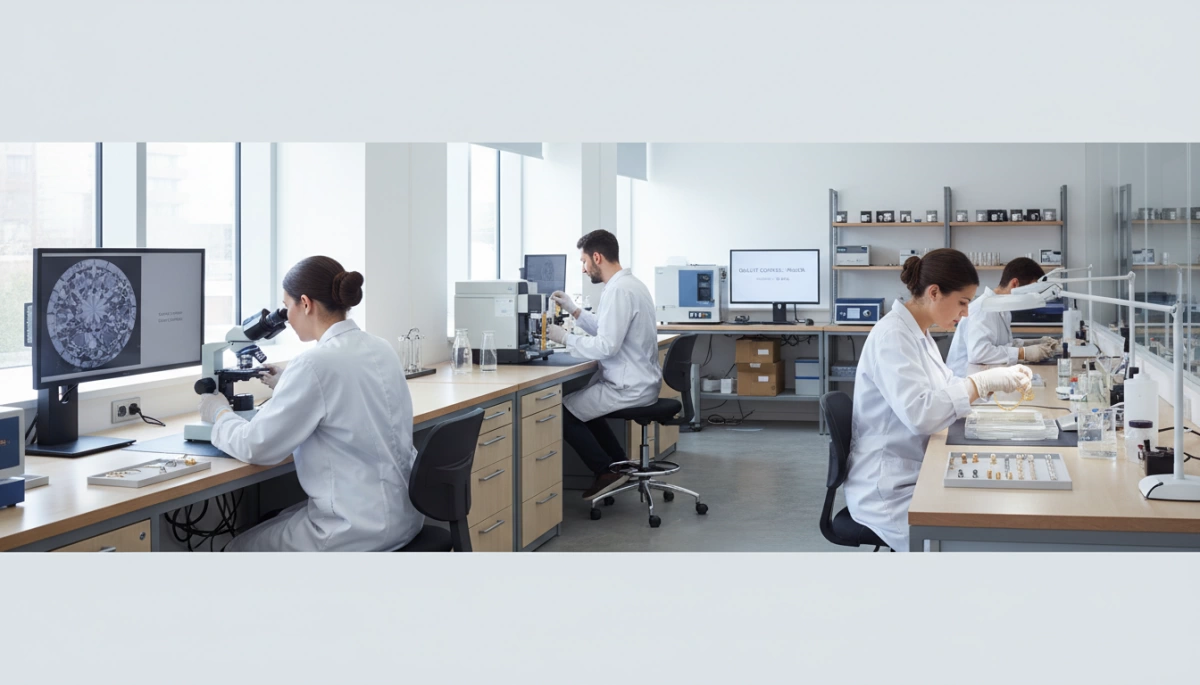
Quality Control and Inspection in Jewelry Manufacturing
When I vet a jewelry manufacturer, quality control is non‑negotiable. If a factory can’t show a clear, written QC system, I walk away.
Here’s exactly what I ask for and check:
Written QC (quality control process) Ask for a simple document that shows:
Incoming material inspection
Pre‑production checks
In‑line (during production) inspection
Final inspection before packing
Pre‑production, in‑line, and final inspection I confirm they:
Approve samples before mass production
Inspect pieces at key stages (casting, stone setting, plating, assembly)
Do 100% or at least AQL‑based final checks before shipment
Defect rate and problem‑solving Ask for:
Historical defect rates for similar products
How they record issues, root cause analysis, and corrective actions
How they prevent the same problem from happening again
Plating, color, and allergy testing For any serious jewelry brand, this is critical:
Plating durability tests (salt spray, abrasion, sweat tests if available)
Colorfastness and consistency across batches
Allergy risk: confirm nickel‑free, lead‑free, and compliance with EU/US limits
Quality standards and AQL levels I ask which AQL standard they use (e.g. AQL 1.0 / 1.5 for critical, 2.5 for major) and how they define:
Critical defects (e.g. sharp edges, broken parts)
Major defects (e.g. missing stones, obvious plating issues)
Minor defects (e.g. small scratches)
Rework, repairs, and rejects Clarify:
What happens when a batch fails QC
How much they can rework vs. remake
Their policy on replacing or crediting defective goods
Third‑party inspections welcome A reliable jewelry manufacturer should be comfortable with third‑party inspections before shipment. If they resist this, that’s a red flag.
Sample QC reports and visual proof I always ask for:
Sample QC reports from previous orders
Photos or videos showing their inspection process
Before/after examples of rework where relevant
If the manufacturer can clearly walk me through their QC, show real reports, and back it up with consistent samples, I know I’m much closer to a trustworthy production partner. For brands that need a deeper view of overall process and capabilities, a more complete overview of jewelry manufacturing processes and standards is often useful when comparing suppliers.
Certifications, Compliance, and Ethical Standards in Jewelry Manufacturer Vetting
When I vet a jewelry manufacturer, certifications and ethics are non‑negotiable. This is where I filter out risky factories fast.
Core Certifications to Request
Ask every potential jewelry supplier for clear proof of:
ISO (e.g., ISO 9001) – basic quality management system.
BSCI / Sedex – social compliance and worker rights.
RJC (Responsible Jewellery Council) – gold standard for responsible jewelry sourcing.
Any local safety or industry certificates tied to their region.
Always request:
Certificate copies in PDF
Certificate numbers
Expiry dates
Issuing body details
Then verify them directly on the official certification websites, not just by trusting a stamped logo in a catalog.
Legal Compliance: REACH, RoHS, CA Prop 65
For global brands, you can’t skip chemical and heavy metal compliance. At a minimum, confirm:
REACH (EU) – restricted substances in metals, plating, coatings.
RoHS (mainly electronics, but still relevant for metal content).
CA Proposition 65 (California) – warnings and restricted chemicals.
Limits on lead, cadmium, nickel, chromium, and other heavy metals.
Ask them to:
Confirm compliance in writing
Share SGS or similar lab test reports (e.g., Intertek, TÜV, BV) for materials, plating, and finished pieces
Clarify test frequency (per batch, per quarter, per year?)
If a factory claims compliance but can’t show recent, third‑party lab tests, I treat that as a red flag.
Verifying Jewelry Factory Authenticity and Documents
Part of proper jewelry supplier due diligence is document verification. To keep it simple:
Cross‑check certification details on:
ISO, BSCI, Sedex, RJC official sites
Lab websites (SGS, Intertek, TÜV, etc.)
Make sure company names, addresses, and dates match what’s on the invoice and business license.
Watch for:
Blurred documents
Old, expired certificates
Wrong company names or locations
If you’re sourcing from China, lists like this of top Chinese jewelry manufacturers can be a useful reference point when cross‑checking who’s serious about compliance.
Ethical Sourcing and Conflict-Free Policies
Modern customers care where their jewelry comes from. I always push manufacturers on:
Traceability of metals and gemstones
Can they tell you where their gold, silver, or stones come from?
Do they use recycled metals?
Conflict‑free stones
Ask for written policies on diamonds and gemstones.
Check if they follow Kimberley Process or RJC-aligned standards.
Responsible sourcing of gemstones, CZ, and lab‑grown
Can they support lab‑grown diamonds or recycled metals for sustainable lines?
Also ask if they have:
Internal CSR (Corporate Social Responsibility) policies
Ethical sourcing guidelines for suppliers and subcontractors
Any recent audits or reports tied to social and environmental performance
Aligning Compliance With Your Target Markets
Every brand has different target markets and risk tolerance, so I match requirements to where I’m selling:
US: CA Prop 65, CPSIA where relevant, heavy metal limits.
EU/UK: REACH, nickel release limits, general product safety.
Global marketplaces (Amazon, Zalando, etc.): often require documented compliance ready to upload.
Before you commit to a custom jewelry manufacturer, make sure:
Their certifications, lab tests, and ethical standards meet or exceed the rules in your key markets.
They’re willing to update tests and renew certificates as regulations change.
They understand overseas jewelry supplier vetting expectations for brands targeting the US/EU/UK, not just local sellers.
This layer of jewelry manufacturer vetting protects your brand legally, builds trust with customers, and sets the bar for the type of partners you want in your supply chain.
Material Sourcing, Sustainability, and Brand Values
When I’m doing serious jewelry manufacturer vetting, I treat material sourcing and sustainability as non‑negotiables, not “nice to have.”
Sustainable metal choices
Start by asking very clear questions:
Do you use recycled silver, recycled gold, or eco-brass options?
Can you provide proof (invoices, supplier documents, or certifications) for recycled metals?
What plating options do you offer that balance durability with sustainability? For example, if you’re producing gold-filled jewelry, you want stable, long-lasting layers that match your brand promise – similar to what’s explained in this guide on a professional gold-filled jewelry manufacturer.
This is where your brand values and price point have to match the metal choice. Don’t sell “sustainable luxury” and then source the absolute cheapest brass with no traceability.
Stones and alternatives
Drill down into stone sourcing:
Where do your gemstones, CZ, and lab-grown stones come from?
Can you support lab-grown diamonds or moissanite for a more ethical positioning?
Are there any traceability documents for high-value stones or regions with conflict risk?
If your audience is sensitive to ethics and environmental impact, lab-grown and high-quality CZ can be strong selling points.
Vegan and non-animal materials
If your brand leans vegan or cruelty-free:
Ask if they can avoid shell, leather, horn, bone, or any animal-derived glue or components.
Confirm alternatives for things like mother-of-pearl or leather cords (e.g., glass, resin, or microfiber).
Get this in writing so there’s no surprise animal content in your supply chain.
Eco-friendly packaging
Packaging is a quick sustainability win and a strong branding moment:
Can you offer recycled paper boxes, FSC-certified card, and minimal plastic?
Do they have eco-friendly inserts, cotton pouches, or recycled tissue options?
Can they print your logo with soy-based or low-impact inks?
Make sure packaging choices match your brand promise and shipping realities (protection vs. waste).
Supply chain transparency
To really vet a jewelry supplier’s sustainability:
Ask who their main material suppliers and subcontractors are.
Check if any critical steps (plating, stone setting) are outsourced and to whom.
See how open they are about their supply chain – evasive answers are a red flag.
You don’t need 100% traceability on day one, but you do need a partner willing to move in that direction with you.
Balancing cost vs. sustainability
Sustainable materials usually cost more. Go in with clear expectations:
Decide your must-haves (e.g., nickel-free, conflict-free, recycled silver) vs. nice-to-haves.
Ask for price comparisons: standard vs. recycled metals, standard vs. eco packaging.
Make sure your target margins still work with the material spec you’re asking for.
The key is alignment: your material choices, sustainability messaging, and price point must all tell the same story, or customers will feel the disconnect fast.
Capacity, Lead Times, and Scalability in Jewelry Manufacturer Vetting
When I vet a jewelry manufacturer, I always stress-test their capacity, lead times, and scalability. A beautiful sample means nothing if they can’t deliver reliably when orders ramp up.
Check Capacity and Typical Order Volumes
Ask direct, numeric questions:
Monthly capacity for your category (e.g. 925 silver, stainless steel, gold vermeil).
Typical order sizes for current clients (by pieces and SKUs).
Whether they’re used to working with startups vs. established brands.
If you’re planning large drops or recurring collections (for example, trend-based or spiritual symbol jewelry collections), make sure their current capacity matches your roadmap.
Clarify Lead Times for Sampling and Production
Get clear timelines in writing:
Sample lead time (from confirmed tech pack to finished sample).
Mass production lead time (including plating, QC, and packing).
Extra time needed for custom molds, stones, or special plating.
Any jewelry manufacturer you trust should give realistic, consistent lead times, not just what they think you want to hear.
Understand Seasonality and Peak Management
Jewelry production can get crazy around:
Q4 (holiday / Christmas),
Valentine’s Day, Mother’s Day, and major local holidays in their country.
Ask them:
Their busiest months and how they plan capacity.
If they pre-book slots for long-term partners.
If they can’t explain how they handle peaks, expect delays when you need stock most.
Flexibility on MOQs and Scaling
For global brands, the best partners are those who can start lean and grow with you:
Ask if they offer low MOQs per style for new launches.
Clarify if MOQ is per style, per color, per size, or per plating.
Check if they’re open to scaling up quickly when a design starts selling fast.
A solid jewelry manufacturer vetting checklist always includes MOQ flexibility, especially if you’re testing multiple SKUs.
How They Prioritize Customers
You want to know where you sit in their internal “priority list”:
Do they prioritize long-term customers over one-off orders?
Do new brands get a dedicated account manager or just a generic email address?
How do they handle conflicts when multiple clients want the same capacity window?
Their answers will tell you a lot about how they’ll treat you once you’re mid-production.
Rush Orders and Replenishment
Stuff happens: a product goes viral, a big retailer comes in, or your stockout risk is high. Ask:
Can they take rush orders? At what surcharge?
Minimum lead time for urgent replenishment of existing SKUs.
How many rush jobs they realistically accept per month.
The more transparent they are about this, the easier it is to plan your drops and wholesale deals.
Can They Grow With Your Brand?
Finally, look at them as a long-term production partner:
Do they have a plan (or timeline) to upgrade equipment or expand workshops?
Are they open to reserved capacity if your volumes hit specific thresholds?
Can they support multiple collections (e.g. fashion, vermeil, and premium lines) under one roof or via stable partners?
The goal is simple: choose a reliable jewelry manufacturer whose capacity and scalability can match your long-term growth, not just your first order.
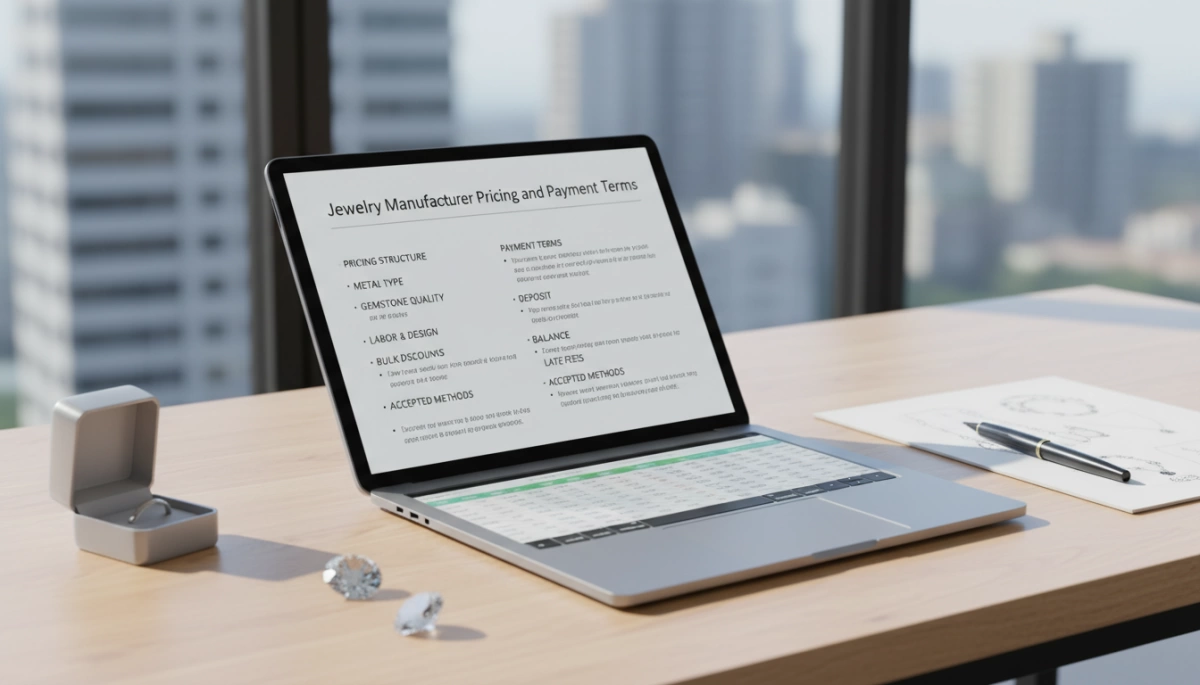
Pricing Structure and Payment Terms in Jewelry Manufacturer Vetting
When I vet a jewelry manufacturer, I treat pricing structure and payment terms as a risk filter, not just a cost conversation. A reliable partner is transparent on numbers from day one.
Get Transparent, Itemized Quotes
Ask for a detailed quotation that clearly breaks down:
Metal type and weight (silver, brass, stainless, gold-filled, etc.)
Stones (CZ, natural, lab-grown) and setting style
Plating type and thickness (e.g. 0.03–0.05 μm vs. 1–2 μm for premium)
A solid factory will quote in a way that lets you reverse-calculate your landed cost and margin. If you’re working in fashion or costume jewelry, looking at what established costume jewelry manufacturers typically charge is a good benchmark.
Compare Pricing Against Market Reality
I always compare each quote to:
Market averages for similar styles and specs
Quotes from 3–5 other capable factories
My own cost targets and retail price point
Red flags:
Prices far below everyone else with “same quality” claims
Vague answers when you ask why they’re cheaper
Refusal to specify plating thickness or metal purity
Ultra-low prices usually mean shortcuts: thin plating, mixed metals, weak QC, or future “hidden” costs.
Clarify What’s Included (and What’s Not)
Before you judge if a quote is good, clarify if it includes:
Molds / tooling (and if they’re one-time or per style)
Standard vs. custom packaging (polybag vs. branded box)
Logo stamping / engraving on tags, clasps, or charms
Basic compliance docs or lab testing (if any)
Make sure you know exactly what you’re paying for so you’re not hit with “extras” after you commit.
Mold Fees and Tooling Charges
For most custom or semi-custom jewelry, mold and tooling fees are normal. I always ask:
How much per mold / tooling?
Is the fee refundable after a certain order quantity?
Can molds be reused for reorders without extra cost?
Who owns the mold and where is it stored?
Lock in mold ownership in writing. You don’t want your designs reused for other buyers.
Payment Terms That Protect You
Standard terms with serious overseas jewelry suppliers usually look like:
30% deposit, 70% balance before shipment
Sometimes 50/50 for very small runs or new clients
Payment via bank transfer (T/T), occasionally PayPal for samples
Points I always confirm:
Deposit percentage and timing
When the balance is due (before shipment / against documents)
Accepted methods: bank transfer, PayPal, LC, credit insurance, platform escrow
Who pays bank fees
Spot Payment Red Flags
Be very careful if a “manufacturer”:
Demands 70–100% upfront for first orders with no protection
Refuses platform protection / escrow when available
Pushes you to skip samples and go straight to bulk with full payment
Won’t issue a proper PI (Proforma Invoice) or company bank details
These are common patterns in jewelry manufacturing scams, especially with new or small buyers.
Use Secure Channels When Possible
Where possible, I prefer:
Trade assurance / escrow on B2B platforms (e.g. Alibaba)
PayPal for small sample orders if fees are acceptable
L/C or insured terms for large, recurring orders once volumes grow
This gives some recourse if lead times slip badly or quality doesn’t match approved samples.
Balance Price with Long-Term Value
The goal isn’t the cheapest jewelry manufacturer; it’s the most reliable long-term production partner. When I choose a factory, I weigh:
Consistent quality and low defect rates
Honest communication around delays or issues
Capacity to scale as my brand grows
Their experience with fashion jewelry wholesale pricing and volume models (similar to established players in the space like those in the fashion jewelry wholesale segment)
I’d rather pay a bit more per piece for a factory that ships on time, respects my brand, and protects my supply chain than gamble on the cheapest quote and lose customers later.
In-Depth Due Diligence Checklist for Jewelry Manufacturer Vetting
When I vet a new jewelry manufacturer, I treat it like a full audit. This is the point where you separate serious partners from risky suppliers.
1. Verify the Business Is Real and Legal
Start with hard documents:
Request business licenses, registration certificates, and tax information Ask for:
Legal company name and registration number
Tax ID / VAT number
Registered address vs. factory address
Cross-check these details on local government or corporate registry sites. This is a key step in verify jewelry factory authenticity and avoiding scams.
2. Collect Audit Reports and Compliance Docs
A reliable factory won’t hesitate to share:
Past audit reports (social compliance, quality, environmental)
Any compliance documentation tied to your markets (US, EU, UK)
If you’re focusing on Asia-based production, you’ll often see these from established hubs like China and Thailand; for example, many vetted suppliers listed in guides to China jewelry manufacturers openly share this level of documentation.
3. Check Client References and Reputation
You’re not just buying production; you’re buying a track record.
Request references from existing overseas clients, ideally in your target market
Ask those clients about:
On-time delivery
Quality consistency
Communication and problem-solving
Verify online reviews, trade records, and dispute history on B2B platforms and forums
Use third-party services (local sourcing agents, basic factory audit companies) for independent checks
This is core jewelry supplier due diligence and filters out risky partners early.
4. Test Samples Like a Real Customer Would
Never rely on photos alone. Order multiple samples and compare:
Craftsmanship:
Finishing (polish, edges, solder marks)
Stone setting (tightness, alignment, symmetry)
Plating uniformity and color consistency
Comfort of wear:
Weight on ear/neck/wrist
Sharp edges, pinch points, or irritation
Packaging quality:
Box sturdiness and presentation
Branding options (logo print, cards, inserts)
Protection during shipping (foam, pouches, bubble wrap)
This is where you really see their quality control in jewelry production in action.
5. Run a Simple Jewelry Manufacturer Vetting Checklist
Don’t keep everything in your head. Use a simple jewelry manufacturer vetting checklist or worksheet:
This structured approach makes choosing a reliable jewelry manufacturer far easier and gives you a clear record when you decide who becomes your long-term jewelry production partner.
Red Flags and Risk Management in Jewelry Supplier Selection
When I run jewelry manufacturer vetting, I treat risk management as non‑negotiable. A “cheap” mistake in production can kill margins, timelines, and reputation fast.
Key Red Flags When Choosing a Jewelry Manufacturer
Watch for these signs during jewelry supplier due diligence:
Prices far below market If a quote is dramatically cheaper than other factories, assume: weaker materials, thin plating, poor QC, or a scam. Reliable custom jewelry manufacturers price within a reasonable market range.
Evasive answers about factory or certificates When you ask to verify jewelry factory authenticity (licenses, certifications, address, ownership) and they dodge or delay, that’s a clear no.
No video calls or factory “proof” A serious overseas jewelry supplier will agree to video calls, virtual tours, or at least live walk-throughs of the production floor. Refusal usually means they’re a trader posing as a factory.
Pushing for large upfront payments Big deposits or 100% prepayment with no protection is a huge risk. I prefer staged payments, trade assurance, or secure methods, especially on first orders.
Inconsistent information If details change between website, catalog, and actual communication (materials, location, MOQs, brand names), treat it as a red flag for future disputes.
No small trial orders allowed Reliable jewelry OEM/ODM suppliers are usually open to small test runs. If they insist only on large orders from day one, they’re shifting all risk to you.
Practical Risk Management Tactics
To keep your jewelry production partner selection safe and stable:
Always have backup suppliers Keep at least one additional vetted factory ready for key categories (e.g. one for stainless steel jewelry manufacturing and another for silver or brass). You can see how a factory-direct jewelry manufacturer structures its offer by checking examples like this factory-direct jewelry manufacturing approach.
Pre-plan how you’ll handle delays and quality issues Before placing your first order, define:
What happens if shipment is late
How to handle high defect rates
Who pays for rework, returns, or replacements
How fast they must respond to claims
Document these in writing (email or contract) so you’re not negotiating under pressure later.
Solid risk management in jewelry supplier selection is about discipline: don’t ignore red flags, don’t rush for the lowest price, and always protect your brand first.
Factory Visits, Virtual Tours, and Independent Audits
When I do jewelry manufacturer vetting, I never rely only on emails and catalogs. Seeing the factory—physically or virtually—is a core part of my jewelry supplier due diligence.
Virtual Tours When You Can’t Travel
If travel isn’t realistic, I ask for:
Live video calls walking through production, plating, packing, and offices
Close-ups of machines, workstations, and storage areas
A quick look at raw materials, semi-finished pieces, and finished inventory
Use this to verify jewelry factory authenticity: if they keep avoiding live calls or only show tight, edited angles, that’s a red flag.
In-Person Visits to Key Jewelry Hubs
If I can visit, I prioritize major hubs like Dongguan, Shenzhen, Bangkok, Jaipur, Istanbul, etc. On-site, I follow a simple jewelry factory audit process:
Check production flow: casting, stone setting, polishing, plating, assembly
Review storage for raw materials and finished goods
Look at sample rooms to understand catalog depth and specialization
This matters a lot if you’re planning to scale categories like wholesale fashion necklaces or sterling silver bracelets, because you need to see if their setup can support ongoing collections.
What I Observe On-Site
During a visit or video tour, I pay close attention to:
Cleanliness & organization – Is the workshop tidy or chaotic?
Inventory management – Are items labeled, tracked, and stored properly?
Worker conditions – Ventilation, lighting, safety gear, break areas
Safety practices – Fire exits, emergency signs, chemicals handling
**Turn
Negotiating Contracts and Protecting Your Jewelry Brand
When I vet a new jewelry manufacturer, I treat the contract as my main safeguard. This is where you lock in protection for your designs, your margins, and your timelines.
Lock in IP protection from day one
Sign an NDA before you share any design, CAD file, mold concept, or brand guideline.
Add IP clauses that clearly state:
All CAD files, molds, designs, and branding assets belong to your brand.
The factory can’t reuse or resell your designs, even with small changes.
No sharing of your product with other buyers, trade shows, or platforms without written consent.
Make specs and quality standards non‑negotiable
Attach a spec sheet / tech pack to the contract: materials, plating thickness, stone type, sizes, engravings, packaging.
Define QC standards and acceptable defect levels (e.g. AQL levels, what counts as a reject).
State exactly how the factory will handle rework, replacements, or credit if quality issues appear.
Put timelines and penalties in writing
Confirm lead times for samples and bulk production in the contract.
Add terms for delays:
Grace period (if any)
Penalties or discounts if delays exceed agreed days
Priority handling for re-orders or urgent replenishment
Structure safe payment milestones
Break payments into milestones tied to production checkpoints, for example:
30% deposit after contract & approved tech pack
70% balance after pre-shipment inspection passes
Use secure methods or platform protection (e.g. trade assurance on a vetted jewelry manufacturer vetting partner) when possible.
Avoid large 100% upfront payments with no inspection or documentation.
Clarify ownership of molds and tooling
State clearly:
Who pays for molds/tooling
Who owns them (ideally you)
Where and how they’re stored
What happens if you change factory (right to move molds, CAD files, and branding to another supplier).
Jurisdiction and governing law (which country’s law applies)
Confirm how evidence is recorded (inspection reports, videos, photos, emails).
Document everything
After each call, decisions in email and ask the factory to confirm.
Make sure all key points end up in a signed contract and stamped PI (Proforma Invoice).
Keep a shared folder with contracts, QC standards, and order records—this becomes your jewelry manufacturer vetting checklist in practice.
If you want a deeper breakdown of how I structure these protections when working with overseas partners, I walk through it step-by-step in my detailed guide on jewelry manufacturer vetting and supplier protection.
Starting Small and Testing the Relationship in Jewelry Manufacturer Vetting
When I vet a new jewelry manufacturer, I never jump straight into big orders. I start small, treat it like a real project, and use it as a live test of how they actually perform—not what they promise.
Run a Small Test Order First
Use a small trial order to validate the factory’s real capabilities:
Place a paid, small-volume order (not just free samples).
Use the same specs, branding, and packaging you’d use in real production.
Make sure the order includes a few SKUs and variations (sizes, colors, plating).
Compare Samples vs. Mass Production Quality
I always compare:
Sample quality vs. bulk quality side by side.
Plating thickness, color consistency, stone setting, comfort, and finishing.
Any shortcuts taken once the order scales (very common with lower-cost factories).
If you’re working with a custom jewelry OEM/ODM partner, like a specialized OEM jewelry manufacturer, make sure the mass production follows the final approved sample exactly.
Test Communication Under Pressure
Good jewelry suppliers show their true colors when things go wrong. I watch:
How fast they reply when there’s a problem.
Whether they take responsibility or make excuses.
How clearly they explain solutions, rework, or compensation.
Monitor Timelines and Responsiveness
For global brands, reliable timelines are non-negotiable. Track:
Actual production time vs. promised lead time.
Shipping time and document handling (invoices, packing lists, HS codes).
How they handle delays and whether they warn you early.
Measure Defects, Returns, and Customer Feedback
Your jewelry manufacturer vetting checklist should include hard data from the first runs:
Defect rate (scratches, bad plating, loose stones, broken clasps).
Return reasons from customers.
Reviews and feedback on comfort, color fading, allergies, and durability.
Use Data to Decide on Bigger Orders
I never scale on “gut feel” alone. I:
Score the factory on quality, communication, delivery, and problem-solving.
Decide if they’re ready for bigger orders or should stay as a backup supplier.
Adjust specs (e.g., thicker plating, better chains, stronger clasps) based on real-world issues.
Refine Terms and Processes
Based on this test order, I tighten the setup:
Update spec sheets, QC standards, and AQL levels.
Adjust payment terms if they’ve proven reliable.
Lock in clearer packaging, labeling, and branding requirements.
Starting small isn’t being cautious—it’s smart risk management in jewelry manufacturer vetting. A well-run pilot order tells you more about a jewelry supplier than any brochure, factory photo, or sales pitch ever will.
Building Long-Term Partnerships With Vetted Jewelry Manufacturers
Once you’ve done solid jewelry manufacturer vetting, the real upside comes from building a long-term partnership instead of hopping between factories.
Share Your Roadmap
I always share a clear growth roadmap with my vetted jewelry manufacturers so they can plan capacity and support new launches:
The more visibility they have, the better they can prioritize your brand.
Set Clear Communication Routines
To keep things smooth with overseas jewelry suppliers, I lock in simple routines:
One main contact on both sides
Fixed update rhythm (weekly or bi-weekly)
Shared folders for CADs, tech packs, and order sheets
Clear response time expectations
This makes choosing a reliable jewelry manufacturer pay off long term, especially when issues pop up.
Standardize How You Work Together
Create basic SOPs so every order runs the same way:
How you brief new designs and confirm samples
Approval steps for plating, stones, and packaging
Standard QC checklists for each jewelry category
These processes turn a “supplier” into a real jewelry production partner.
Give Feedback And Reward Good Performance
I don’t just complain when things go wrong; I also:
Share specific, constructive feedback with photos and examples
Highlight what went right (on-time deliveries, low defect rates)
Increase order volumes or give priority collections to factories that perform
Good manufacturers value this and will invest more in your brand.
Co‑Develop Products And Exclusivity
Once trust is built, I often:
Co-create custom jewelry collections using their CAD and prototyping strengths
Negotiate limited exclusivity on key designs or materials in certain markets
Lean on their suggestions for better materials (for example, tarnish-resistant brass if I’m planning high-wear brass pieces)
This kind of collaboration is where margins and differentiation really grow.
Diversify But Stay Focused
I never rely on just one jewelry factory, but I also don’t spread myself too thin:
2–4 core vetted jewelry manufacturers covering different materials or price tiers
Backup factories ready for peak season or urgent replenishment
Clear order allocation based on performance and risk
That balance gives stability without losing leverage.
Build A Stable, Scalable Supply Chain
Long-term, my goal is simple: a responsible jewelry supply chain that can grow with the brand:
Consistent quality control in jewelry production
Ethical sourcing practices that match my brand story
Manufacturers who can scale MOQs as we move from startup volumes to bigger runs
When you treat jewelry supplier due diligence as the starting point—not the finish line—you end up with partners who protect your brand, margins, and customers for years, not just one season.
FAQ on Jewelry Manufacturer Vetting
Biggest risks of skipping jewelry manufacturer vetting
If you skip proper jewelry manufacturer vetting, you’re basically gambling with your brand. Main risks:
Hidden compliance issues – heavy metals, nickel, or unsafe alloys that can get you banned from key markets.
Delays and stockouts – poor planning or fake capacity leads to missed launch dates.
IP theft – your designs quietly appear on marketplaces at half your price.
Cash-flow damage – large deposits lost to unreliable or scam suppliers.
A simple jewelry manufacturer vetting checklist up front is far cheaper than fixing brand damage later.
How to verify jewelry manufacturer certifications are legitimate
To verify jewelry factory authenticity and certificates:
Ask for clear scans of ISO, BSCI, Sedex, RJC, or similar certificates.
Check certificate numbers directly on the issuing body’s website.
Confirm company name, address, and validity dates match the supplier’s business license.
Be wary of low-res, heavily edited, or expired documents.
Cross-check with lab test reports (SGS, Intertek, etc.) that match your product type.
If you’re working with OEM/ODM partners, like a specialized wholesale jewelry manufacturer for OEM/ODM projects, always verify their documents before sending deposits.
Choosing between local and overseas jewelry manufacturers
When choosing a reliable jewelry manufacturer locally vs overseas, I look at:
Speed & communication – local often wins on response time and easy returns.
Cost & MOQs – overseas (China, Thailand, Turkey, India) usually offers lower per-unit cost and better MOQ for jewelry manufacturers.
Compliance & trust – local suppliers can be easier to audit and legally pursue, overseas needs stronger contracts and third-party checks.
Product type – for high-volume, plated or fashion lines, a strong overseas jewelry supplier is often the best fit; for high-end fine jewelry, local or mixed sourcing can work better.
You don’t have to choose only one—many brands run a hybrid supply chain for flexibility and risk control.
Typical MOQ ranges for reliable jewelry factories
MOQs vary by category and process, but for reliable jewelry factories you’ll usually see:
Stainless steel & fashion jewelry: 50–200 pcs per style/color.
Brass / alloy plated jewelry: 50–150 pcs per style.
925 silver jewelry: 30–100 pcs per style, sometimes lower with a low MOQ jewelry manufacturer.
Gold vermeil / gold-filled: 20–50 pcs per style for smaller workshops, higher for big factories.
Fine gold & diamond: often 5–20 pcs per SKU, or even “per order value” instead of strict MOQ.
If you’re just starting and need low MOQs, look for suppliers that openly position themselves as low MOQ jewelry manufacturers; for example, some gold-plated specialists like a dedicated gold plated jewelry manufacturer are set up for small, frequent runs.
How to handle quality issues after production
When quality issues hit after you receive an order, stay structured:
Document everything – photos, videos, defect rate, and customer complaints.
Compare the issues against your approved samples and written specs.
Share a clear defect report with the factory and ask for a corrective action plan.
Negotiate solutions:
Free rework or replacement for defective pieces
Discounts or credit on the next order
Partial refund in serious cases
Tighten your quality control in jewelry production: stricter AQL, pre-shipment inspections, better plating specs, and clearer tech packs.
If a supplier refuses to take responsibility or repeatedly fails, move them to backup status and activate another vetted jewelry production partner—never let one unreliable factory control your entire line.
About HonHo Jewelry
HonHo Jewelry is an OEM/ODM manufacturer in Dongguan, China, developing stainless steel, brass and 925 sterling silver jewelry for brands and wholesalers. Meet our team.
You’re pricing a new collection, and the sample tray is already split down the middle. The 316L surgical steel pieces look cleaner on cost and daily wear, the
You probably have a launch already in motion, a supplier sample on your desk, and one uncomfortable question underneath it all, will this gold color still look clean
You’re refining a ring design, the stone looks right, the setting is approved, and the band still feels like a detail you can solve later. That’s where many