

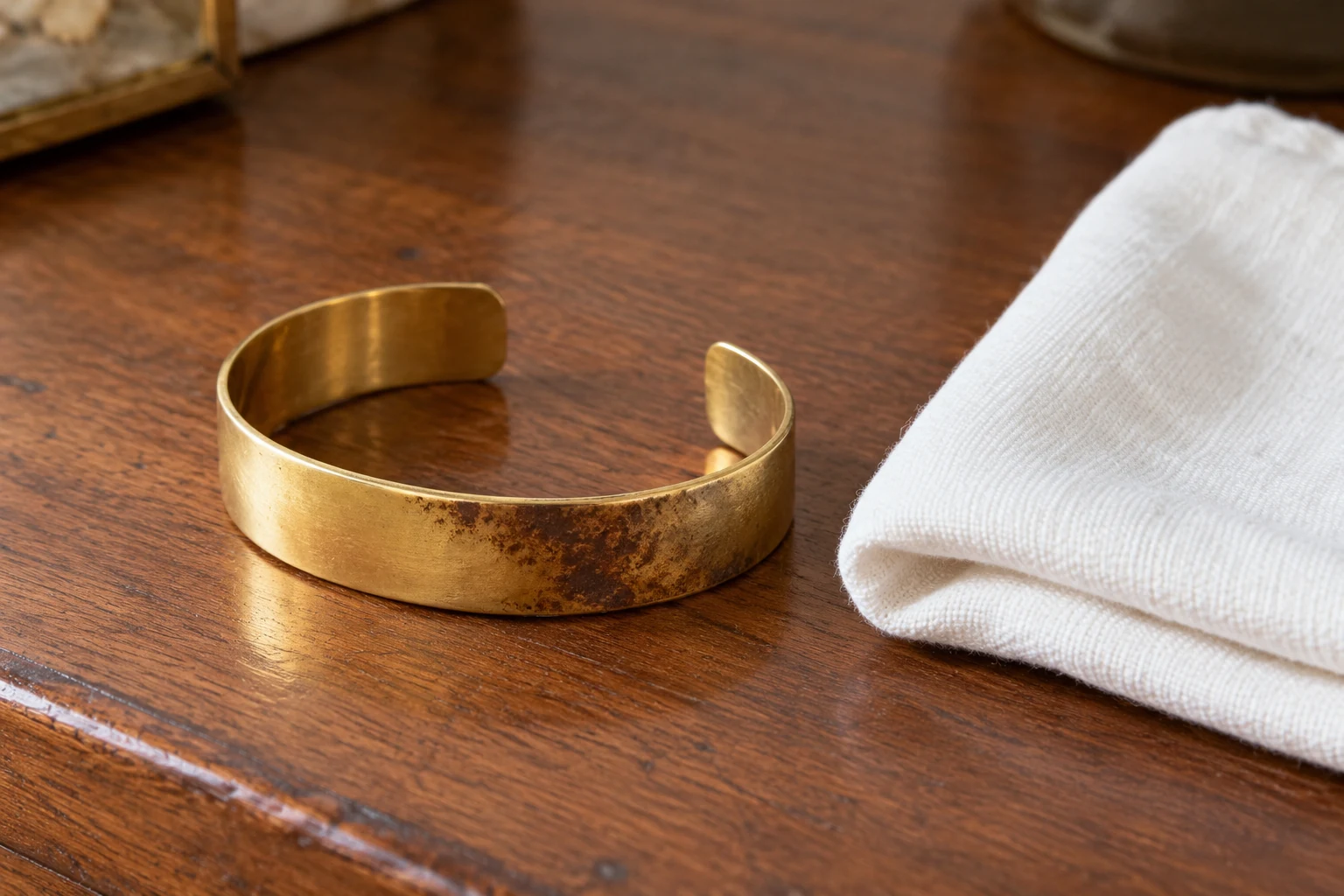
Yes, brass jewelry can tarnish. Brass contains copper, and its exposed surface can change color during use and storage. Before cleaning, determine whether you are looking at bare brass, a deliberately darkened finish, a clear coating or gold plating. The right treatment depends on that surface and on any stones, glue or other components in the piece.
| What you notice | Possible explanation | Sensible next step |
|---|---|---|
| Even darkening on known bare brass | Surface tarnish or an intended developing patina. | Check the maker’s care instructions before polishing. |
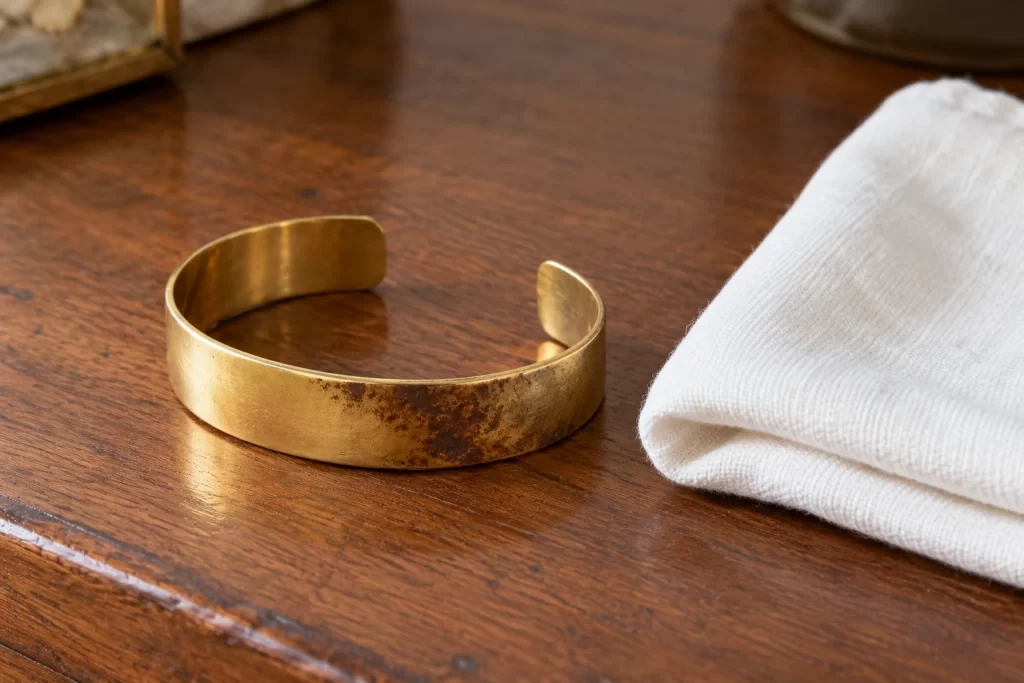
| Different color at edges or high-contact points | A coating may have worn through. | Ask whether refinishing is appropriate; harder rubbing cannot replace a missing coating. |
| Pink patches after a cleaner | Chemical attack on brass is one possibility. | Stop using the cleaner and have the finish assessed. |
| Peeling, blistering or loose settings | A coating or structural problem may be present. | Have the piece inspected before further wear or cleaning. |
| A skin mark, itch or rash | Staining and irritation have different possible causes. | Stop wearing an irritating item; do not diagnose the cause from color alone. |
These are inspection clues, not a way to identify an unknown alloy at home. The Canadian Conservation Institute’s guidance on brass explains how some cleaning conditions can remove zinc from the surface and leave a pinker appearance. It also documents damage from salt-and-vinegar cleaning. That is a reason to avoid a one-recipe approach to jewelry.
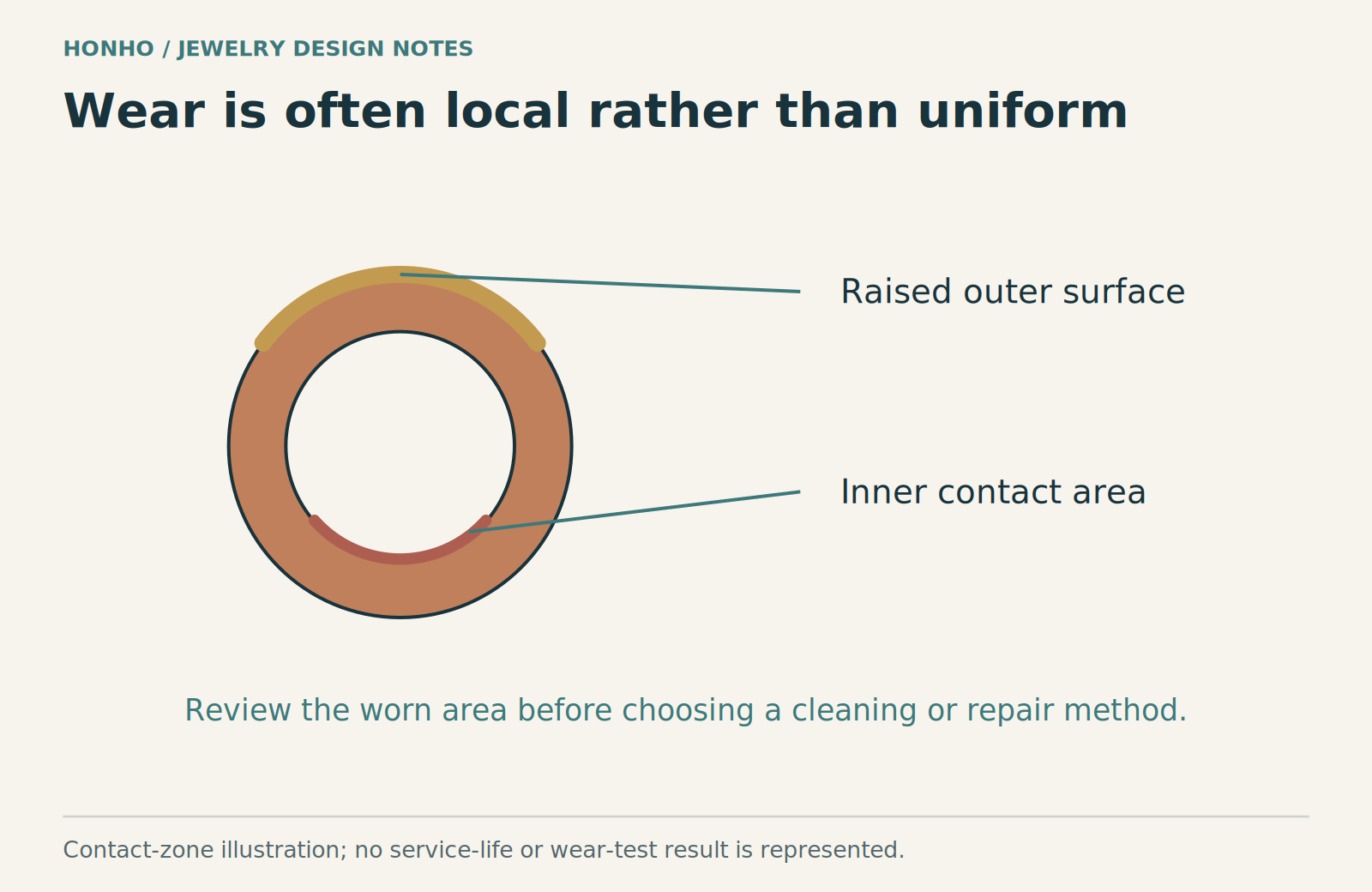
The alloy, polishing, coatings, design and use all matter. A ring interior receives rubbing and trapped moisture that a pendant front may not. Residues can remain in a recessed pattern even when the outer face looks dry. A worn coating can expose small areas of brass while the rest remains covered.
There is no reliable rule that brass will tarnish after a fixed number of days or stay attractive for a set number of years. A product-specific claim needs defined conditions and evidence. The brass material guide explains why a general alloy name is not a complete product specification.
Tarnish is a change at the exposed metal surface. Residue is material left on the piece, such as skin oils or cosmetic deposits. Coating wear is the loss or alteration of a layer that was applied during manufacture. More than one can occur on the same item. Distinguishing them matters because cleaning can remove a deposit, while a missing gold layer needs a different repair decision.
Start with the product’s original construction record. Compare the affected location with a clear photograph of the new item and note whether the change is concentrated at edges, a clasp, an inner ring surface or a recessed pattern. Use good light and avoid scraping the mark as a test. A green or dark deposit by itself cannot tell you the exact alloy, coating or cause.
Raised edges and moving connections receive repeated contact. Recesses can retain moisture or residue. A pendant face and the inside of a ring therefore experience different conditions even when they were finished in the same color. A finish that looks consistent on a new sample still needs a design-specific inspection plan for the places that will be rubbed, handled or difficult to clean.
For a plated brass piece, repeated polishing at a worn corner can enlarge the exposed area. For an intentionally antiqued piece, polishing can remove the dark contrast that makes the pattern readable. Ask the maker which appearance is intended and what treatment is compatible with it before trying a stronger cleaner.
Consider a professional assessment when gentle approved cleaning leaves an uneven color, when a coating peels, or when the piece has loose stones or a damaged joint. Ask whether disassembly is needed, what original detail could change, and whether the process is economical for the item. Some repairs require stripping and rebuilding a finish; a quick rub with a cloth cannot perform that work.
Keep the item separate until it is assessed. If it is being returned to a supplier, photograph the affected areas first and follow the agreed return instructions. Cleaning aggressively before inspection can remove evidence that would help distinguish a care issue from a production issue.
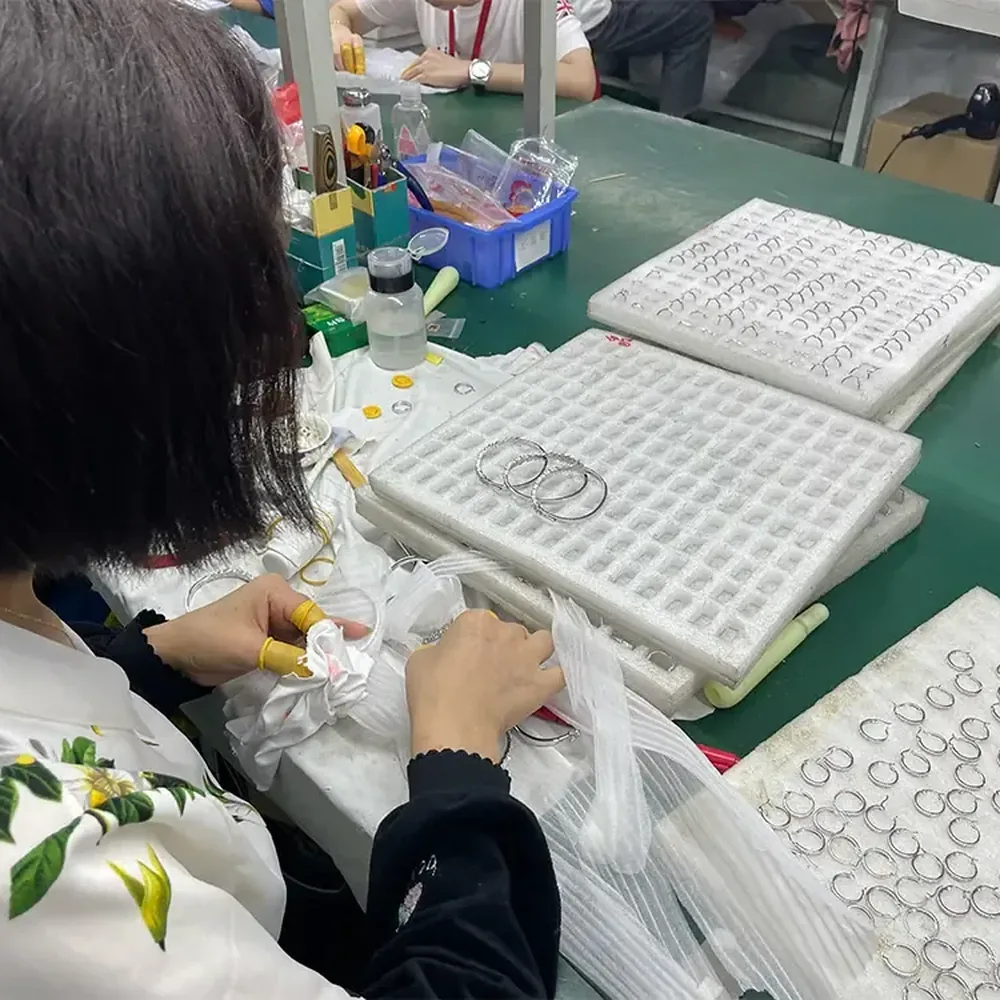
Bare-metal polishing removes some surface material. It can also soften engraving and round an edge. For plated brass, the same action may remove the layer you are trying to preserve. The polishing guide explains the difference between cleaning and refinishing.
Wipe off residues after wear and keep individual pieces from rubbing together. Let a permitted wash dry fully before packing. A pouch or divided box helps prevent scratches; it cannot reverse a damaged coating. Use anti-tarnish products only when the maker confirms compatibility with the complete piece.
Remove jewelry before swimming, household cleaning or other exposure excluded by its care instructions. Keep perfume and cosmetic application separate from putting on jewelry. Do not promise that a clear sealant makes a piece permanently tarnish-proof: coatings can wear and may require professional renewal.
A metal-related stain can occur without an allergic reaction, but discomfort should not be dismissed as “just tarnish.” Stop using the suspected item if it irritates the skin. Persistent, recurring or severe symptoms need medical advice. The jewelry reaction guide covers the distinction and the information a brand can collect for a component investigation.
Fast color change is a common reason for disappointment when someone bought brass for a bright gold-like appearance. In a discussion about a frequently worn brass cuff, the wearer described repeated darkening and wondered whether the appearance was realistic for daily use. The useful question is what surface was sold: bare brass that will develop a patina, brass protected by a maintained clear coating, or a different decorative finish.
Ask the maker which appearance to expect between maintenance intervals. A bare brass item is a poor match for someone who wants an unchanged bright color with no upkeep. That does not automatically mean the piece is defective; it means the original description and the wearer’s expectations need to agree. If a product was sold with a specific resistance promise, keep that wording and ask the seller to assess the change against it.
Record ordinary use without trying to reproduce the problem with harsher exposure. Note wear frequency, storage, permitted washing, cosmetics and contact with cleaners. Photograph the same area under similar light. This helps the maker compare the observation with the actual finish; it does not establish a chemical diagnosis or a fixed tarnishing timetable.
No coating should be treated as permanent simply because it is transparent. The Canadian Conservation Institute explains that protective coatings have a finite life and need maintenance or replacement. Its advice concerns conservation objects; it supports the limitation of a coating, not a universal home treatment for jewelry.
There is also an appearance and function trade-off. A maker’s discussion of brass sealants raises concerns about a plastic-like appearance and movement between chain links. Before coating a complete piece, ask about the finished gloss, color, skin-contact suitability, moving parts and the removal or renewal method. A household nail coating is not a substitute for a specified jewelry finish.
For a production sample, inspect the piece after the final treatment, including hinged sections and the clasp. HonHo has identified stiffness risks with certain fine brass or silver chains using 2.5 µm gold plus E-coating; the remedy depends on the particular chain and finish. A proposal that preserves color but prevents the chain from moving freely has not solved the whole product problem.
Approve care instructions alongside the finished sample. State whether the piece is bare brass, clear-coated, plated or antiqued, and describe a cleaning method compatible with any stones and attachments. A generic care card copied from a stainless steel range can be inappropriate for a brass collection with a different finish.
Packaging deserves its own trial. Pack a representative finished piece in the proposed pouch, card or box, using the handling and storage conditions planned for the order. Check contact marks, retained moisture, tangling and any visible change before adopting that packaging. Ask the manufacturer to assess compatibility with the specific surface; decorative packaging is not automatically protective packaging.
| Record before launch | Why it helps later |
|---|---|
| Body alloy and full finish description | Separates a material claim from a coating claim. |
| Approved appearance sample and photographs | Shows the intended color and deliberate dark areas. |
| High-contact and recessed inspection locations | Makes sample and return reviews comparable. |
| Agreed test method, conditions and acceptance | Defines what a resistance claim is based on. |
| Care card, packaging and batch reference | Connects customer information with the supplied version. |
If you want to describe a finish as tarnish resistant, first define the exposure being evaluated and the acceptable change. A test result needs its sample identity, duration, conditions and evaluation method. An accelerated test is useful for comparing specified samples under those conditions; it does not by itself establish a fixed number of months of customer wear.
Suppose a necklace retains its color at the pendant but changes around the clasp. Review the clasp’s material and coating separately, the contact between its moving parts, and whether the customer reports exposure to a particular cleaner. Compare the returned clasp with an unused retained sample from the same batch. This is an investigation example, not a diagnosis or a reported HonHo case.
The resulting action might concern a component, a finishing step, care instructions or a replacement policy. It should follow the evidence. For a new brass project, ask HonHo to review the design’s contact points, proposed finish and care expectations before the quotation is finalized. That gives both sides a clearer basis for deciding which appearance and resistance claims belong on the product page.
For a brass finish review, send HonHo the material specification, photographs of the affected locations, intended appearance and quantities. Ask the team to distinguish a care question from a finish-development or refinishing project. Updated October 18, 2026.
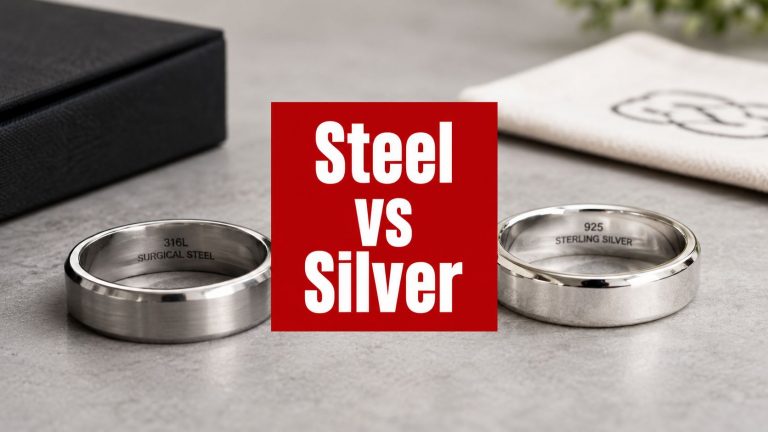
You’re pricing a new collection, and the sample tray is already split down the middle. The 316L surgical steel pieces look cleaner on cost and daily wear, the
You probably have a launch already in motion, a supplier sample on your desk, and one uncomfortable question underneath it all, will this gold color still look clean
If you are developing the ring itself, compare ring fabrication, casting and CAD methods before approving the shank dimensions and manufacturing route. You’re refining a ring design, the