What Is White Gold? The Complete Guide to This Popular Jewelry Metal

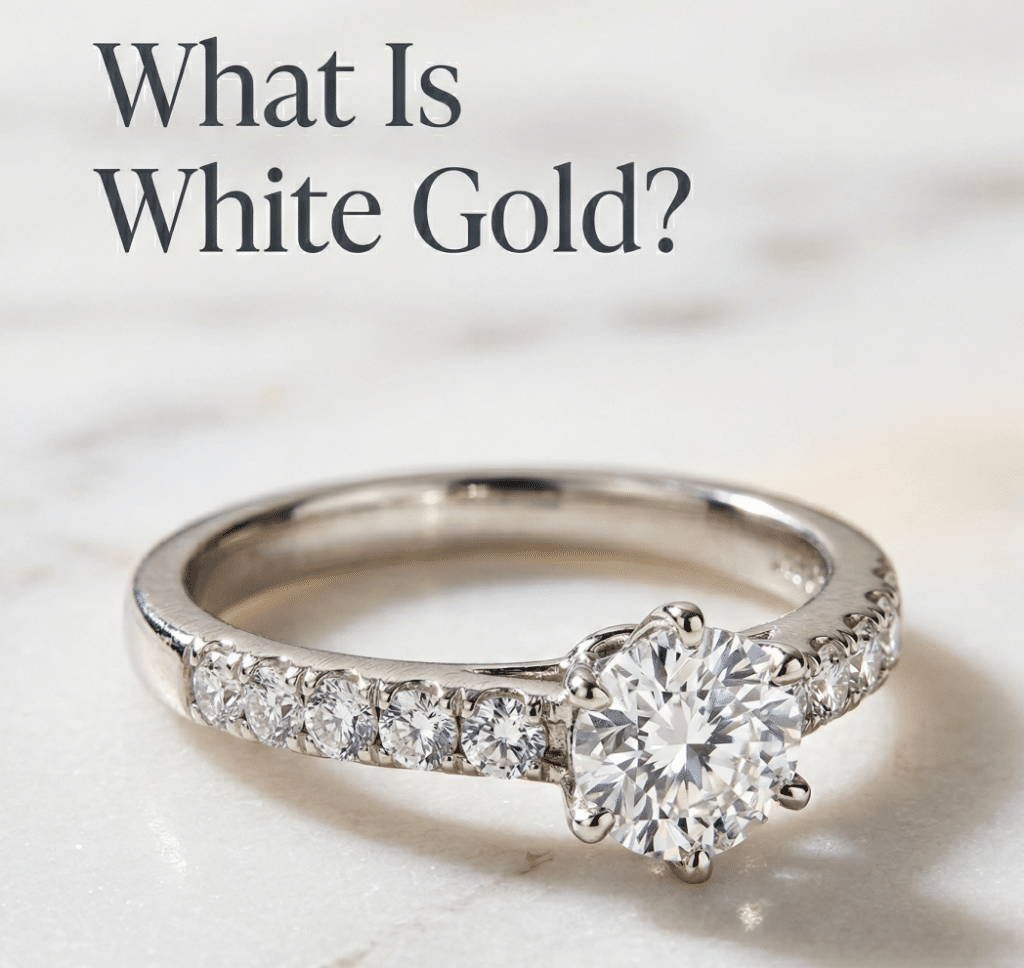
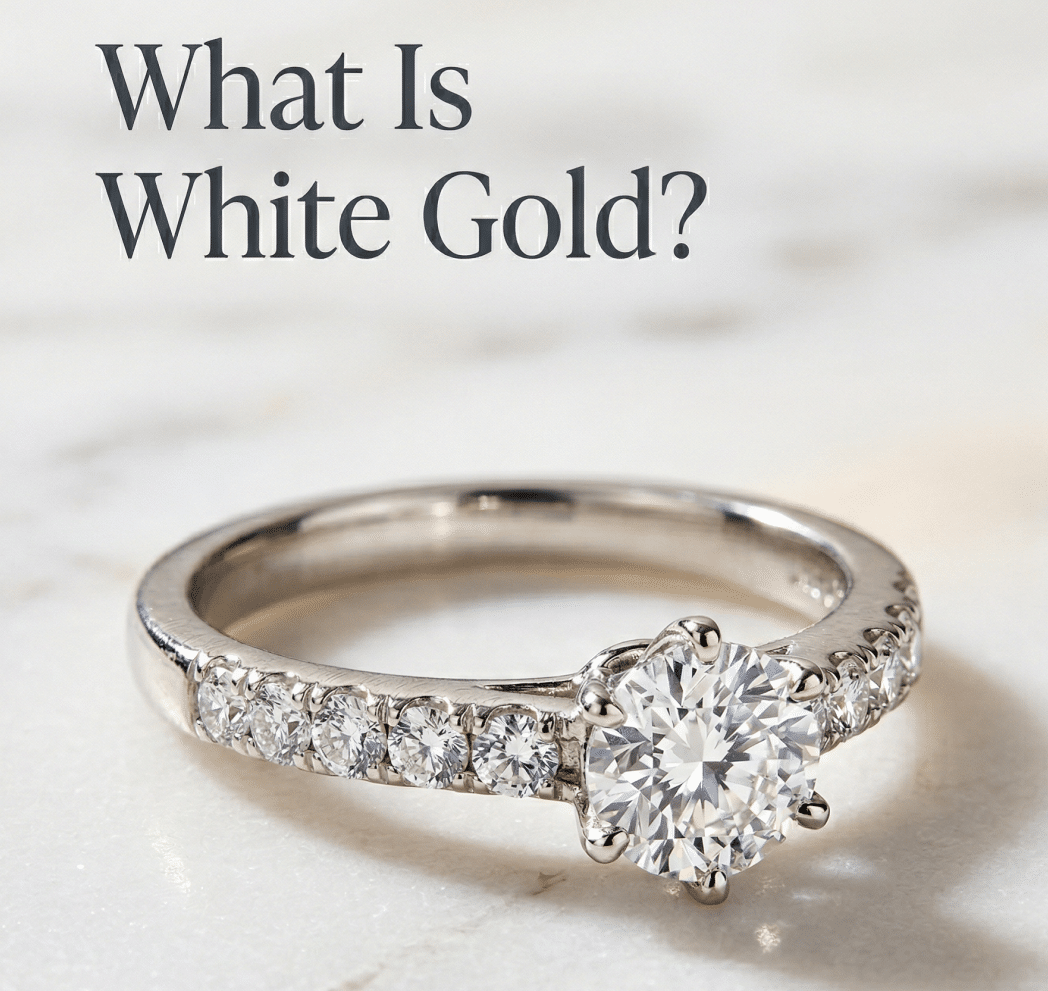
White gold’s brilliant rhodium-plated finish closely resembles platinum — at a fraction of the cost.
You’ve seen it everywhere — on engagement rings, necklaces, and luxury watches. But what exactly is white gold? Is white gold really gold? How is it different from silver or platinum? And why does it sometimes turn yellow?
This guide answers every question you’ve ever had, based on real metallurgy, jeweler expertise, and the questions real buyers ask every day.
✅ Is white gold real gold? Yes⚗️ Contains gold + white metal alloys🔬 Coated with rhodium💍 Comes in 10K, 14K, 18K🧴 Needs re-plating every 1–2 years
What Is White Gold? (The Simple Answer)
White gold is a gold alloy — which means it begins its life as pure yellow gold (24 karat) before being blended with at least one white metal, like nickel, palladium or silver, to alter the color to a lighter and whiter shade. Pure gold is naturally yellow in color and too soft to be worn as everyday jewelry, so the blending process whitens the metal while making it hard and durable.
Over that alloy, almost all commercially available white gold jewelry is electroplated with a thin coating of rhodium — a rare metal from the platinum group. This rhodium layer is also what you see in jewelry store windows as the bright, crisp, mirror-white finish of white gold.
So to summarize: white gold = gold alloy + whitish metal bleaching agent + rhodium surface coat.
Is White Gold Really Gold? Debunking the Myths
One of the most frequently asked questions — by jewelry aficionados and piles of people in forums, Reddit — is literally, “Is white gold for real or just silver?”
Yes, white gold is indeed real gold. The purity stamp you find on the inside of a ring — “14K,” “18K” or “750” — indicates exactly how much actual gold is in that piece. And that stamp is no option; in most countries it’s a legal hallmarking requirement.
| Karat | % Pure Gold | % Alloy Metals | Typical Hallmark |
|---|---|---|---|
| 10K | 41.7% | 58.3% | 417 / 10K |
| 14K | 58.3% | 41.7% | 585 / 14K |
| 18K | 75.0% | 25.0% | 750 / 18K |
So there’s a lot more pure gold in white gold than you find silver alloy in sterling. 4K white gold is 58.3 gist gold — whereas silver (“925”) is very slightly more pure at 92.5%, and that foundation against silver, a entirely different element with far lower intrinsic value than gold.
💡 The Pro Tip: Check for the hallmark stamp inside the band or on a jewelry clasp before purchasing. Absence of a stamp is a warning sign the piece might be counterfeit precious metal.
What Is White Gold Made Of? The Full Composition
The exact makeup of white gold varies by manufacturer, but here is the science behind what goes into each type:

The formulation of white gold varies by karat — and the higher the karat, the more gold it contains but also a slightly warmer, less white base tone before rhodium-plated.
Nickel-Based White Gold
The most popular (and certainly the original) white gold formula is a blend of gold with nickel, copper and zinc. Nickel is very good for whitening gold and it produces an alloy that is very hard — ideal for rings and pins that need to retain their shape. The downside: approximately 1 in 8 people has a nickel allergy (nickel dermatitis), wherefore many European countries have become stricter with nickel regulation in jewelry. One, the EU Nickel Directive, restricts nickel release in articles that come into contact with skin.
Palladium-Based White Gold
In palladium-based white gold, two metals are used as the base (gold and palladium), with small amounts of silver or platinum occasionally added. Palladium is a naturally hypoallergenic member of the platinum group. The resultant alloy is softer and more malleable than nickel white gold — perfect for intricate gemstone settings that call for fine metalwork. Palladium white gold, in its un-plated (i.e., natural) form is also whiter than nickel white gold, but it’s more expensive to manufacture.
The “Star White Gold” Formula
If you also find “Star white gold” in high-end jewelry. This means some certain proprietary alloy compositions which deliver a very white color, and do so without nickel (sometimes by alloying gold with palladium, silver, and platinum). These alloys use less rhodium plating to achieve an acceptable color, and they are also becoming increasingly popular with independent jewelers and artisan brands.
Silver: A Note on Silver as an Alloy Metal in White Gold
Silver is sometimes present in small amounts — usually 2–8% — as a brightening agent, reducing the overall cost of the white gold alloy. But this is not the same thing as silver jewelry. When silver is a small part of a gold alloy, the piece is still legally designated and hallmarked as gold.
The Rhodium Plating Process Explained
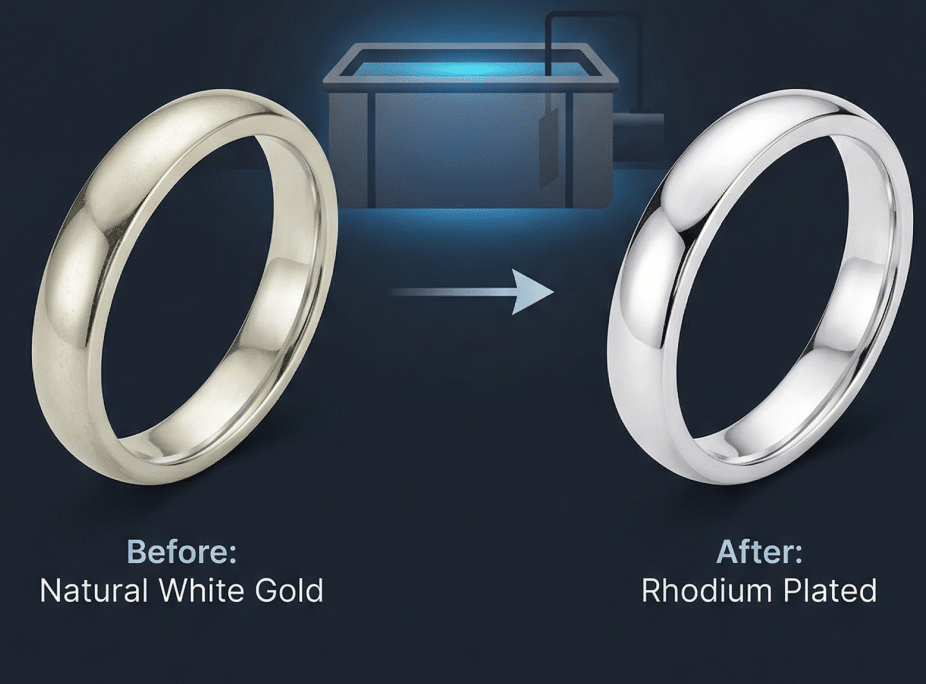
Before plating (left), white gold is an off-white to yellowish color. Post-rhodium electroplating (right), and the surface is mirror-knight and cool white.
Here is something that most jewelry articles don’t tell you: white gold isn’t naturally white. Most white gold alloys, in fact, naturally range from a warm off-white or light grayish-yellow color even when mixed with nickel or palladium. The brilliance of finished jewelry that looks “platinum-like” is only the rhodium layer.
How the Electroplating Works
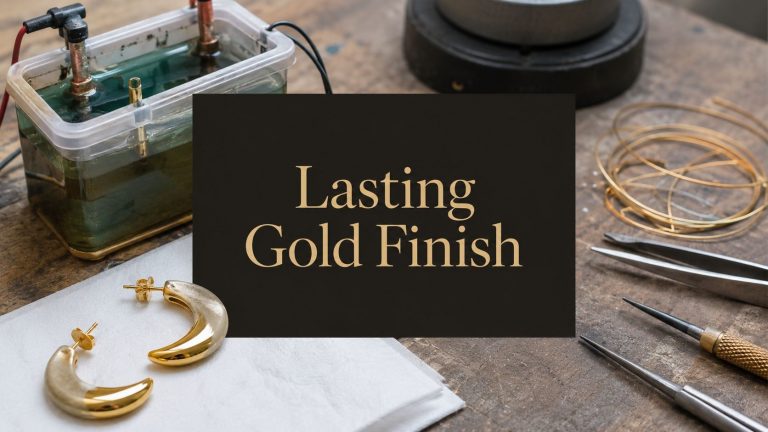
Rhodium plating — which you may hear referred to as “dipping” or “flashing” in the trade — is an electroplating process:
- The white gold object is thoroughly degreased and cleaned.
- It is immersed in a bath of rhodium solution.
- Low electrical current is passed through the bath, allowing rhodium ions to adhere in a metallic layer.
- The thickness of the resulting layer is very tiny — usually ranging from 0.03 to 0.05 micron.
That layer of rhodium, though as thin as a sheet of paper, forms a hard mirror-like and tarnish-free surface. It also serves as a barrier between your skin and any nickel in the alloy beneath — which is why newly plated white gold tends to have less allergenic potential.
Why Rhodium Wears Off
And a rhodium layer that’s too thin wears off in weeks; one that’s too thick may crack. Most daily-wear rings are plated with 0.05–0.1 microns of plating which is industry standard. The acidity of your skin, how frequently you wear the piece, exposure to chlorine or cleaning products and rubbing up against surfaces all contribute to how quickly the plating wears off.
💡 Did You Know? Rhodium is part of the platinum group of elements and generally sells for more than gold or platinum on a per gram basis. South Africa, Russia is its source. This means rhodium plating is a significant expense in the manufacture of fine jewelry.
That is also the reason some artisan jewelers don’t rhodium-plate their pieces at all. The jeweler Kristin Coffin, for example, says that she avoids plating because she finds the warm natural tone of unplated white gold to be far more pleasing and also thinks it unfair to lock clients into ongoing re-plating costs without their clear approval every time. When purchasing hand-made white gold, it is worth asking the maker if the piece is plated or not left in its natural form.
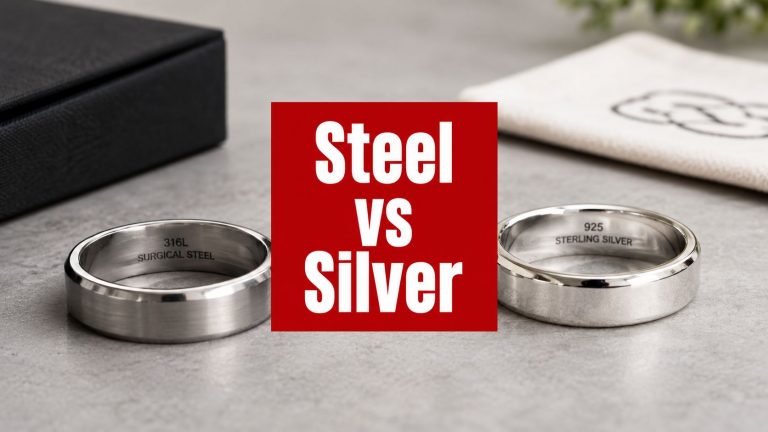
White Gold vs. Silver Jewelry: What’s the Real Difference?
From left: yellow gold (warm tone), white gold (cool mirror-bright), sterling silver (softer cool-gray tone). Compositionally and value-wise, they are quite different, visually they to appear similar.
One of the most frequent questions on such platforms as Reddit and Quora is “What is the difference between white gold and silver? They look the same to me.”
They do look alike — particularly when both are rhodium-plated. But the differences are significant:
| Feature | White Gold (14K) | Sterling Silver (925) |
|---|---|---|
| Base metal | 58.3% pure gold | 92.5% pure silver |
| Natural color | Off-white / light yellow | Cool gray-white |
| Hardness | ~120–150 HV (Vickers) | ~60–85 HV (Vickers) |
| Tarnish resistance | High (especially when plated) | Low — tarnishes in air & moisture |
| Durability | High — good for daily wear rings | Moderate — scratches more easily |
| Price | Higher | Much lower |
| Allergy risk | Nickel allergy possible | Generally low; copper allergy rare |
| Re-plating needed? | Yes, every 1–2 years (rhodium) | No (unless rhodium-plated for shine) |
| Resale value | Yes — gold content has intrinsic value | Minimal — silver is very abundant |
The take-away: white gold is more expensive, quintessentially precious metal resistant to wear in high-friction situations. Silver is less expensive, but it tarnishes, scratches more easily and has virtually no resale value. Then there is the question of engagement rings and wedding bands, in which case white gold is almost always preferable to yellow. For jewelry and statement pieces you wear from time to time, silver is a lovely low-cost alternative.
Gold vs. Silver Jewelry for Everyday Wear: A Buyer’s Perspective
When it comes to gold vs. silver jewelry for everyday wear, the decision boils down to three practical questions:
How Often Will You Wear It?
If you will be wearing a ring 24/7 — while washing dishes, exercising and sleeping — white gold’s greater hardness and tarnish resistance make it the proper choice. Silver tarnishes and darkens in a matter of months even when worn continuously.) This level of wear is what gold, and more especially 14K gold, is made for.
What’s Your Budget?
Silver is dramatically cheaper. A sterling silver ring could range from $20–$80. That same look in 14K white gold would run $200–$800 or more, depending on weight and workmanship. But gold retains its value and can generally be resold or exchanged at a gold dealer. If you’re wondering why cash for silver can be so low — it’s because there’s very little resale value in silver.
What Skin Tone Do You Have?
To that, stylists point out that both white gold and silver work best with cool and neutral skin undertones (but of course this is really subjective). Those with warm skin tones tend to favor yellow gold — but white gold suits all skin tones because its rhodium finish lends a cool, neutral look.
💡 Wholesale Buyer Note: If you’re sourcing jewelry for your brand or retail store, consider that 925 sterling silver jewelry offers the best margin-to-cost ratio for fashion pieces, while white gold plated brass or stainless steel gives a premium look at accessible wholesale prices. HonHo Jewelry manufactures both.
What Is “Yellow Silver”? Understanding Gold-Plated Silver
While browsing online marketplaces, or even providing service to clients, you may have encountered the term “yellow silver” and wondered what it actually means. This is an informal, non-technical term — it’s not a standard metallurgical classification.
When most people refer to “yellow silver,” they are referring to one of the following:
- Gold vermeil: 925 sterling silver with a heavy layer of gold plating (minimum 10K gold and minimum 2.5 microns thick). This is a technical trade name for gold-plated silver of high quality.
- Gold-plated silver (GPM): Sterling silver covered in a thinner layer of gold — yellow-hued but fades more quickly than vermeil.
Yellowed silver: Sterling silver that’s absorbed certain chemicals (like sulfur in the air, from hand creams or pools) may eventually develop a yellowish layer of tarnish before going completely black.
The yellow silver / gold vermeil is popular as it provides the same rich yellow color of gold but further reduced price. But unlike solid white gold or yellow gold, the layer of gold will wear off over time to reveal the silver base beneath it. Understanding this difference is important for manufacturers and retail brands when describing and marketing products to consumers.
White Gold vs. Platinum: The Difference That Matters
White gold and platinum look nearly identical to the naked eye, but they have very different properties, prices, and long-term maintenance needs.
White gold is often described as “a more affordable alternative to platinum” — and this is true. But the differences go deeper than price alone.
| Feature | White Gold (18K) | Platinum (950) |
|---|---|---|
| Natural color | Off-white / slightly warm | Naturally white / cool gray |
| Plating required? | Yes — rhodium plating | No |
| Density | ~15.5 g/cm³ | ~21.4 g/cm³ (noticeably heavier) |
| Hypoallergenic | Only if palladium-based | Yes — naturally hypoallergenic |
| Durability over time | Good; may need re-plating | Excellent; develops patina (no metal loss) |
| Price (ring, per gram) | Lower | 2–3× higher than white gold |
| Appearance long-term | Stays bright with maintenance | Develops “platinum patina” — softer gray |
One more subtle point that many buyers miss: Platinum doesn’t lose metal when it scratches — it merely displaces. This is how many platinum rings acquire a matte, satiny “patina” over time instead of looking worn. White gold, in comparison, does shed microscopic amounts of alloy material with every scratch; this is why rings eventually require resizing or re-plating.
A Brief History of White Gold: Why It Was Invented
White gold wasn’t always around. Yellow gold is a natural gold that has been used in jewelry for thousands of years. White gold, on the other hand, was created in the 19th century by alloying gold with palladium. A patent had been filed by F. Blumenthal, and it became commercially available as of 1912 in Pforzheim, Germany — the historic jewelers capital of Europe.
White gold really boomed in the 1920s, when the U.S. government declared platinum a “strategic war metal” and restricted its use to military applications. Jewellers needed an alternative to platinum that looked just as elegant. Nickel-based white gold alloys took their place and almost instantly became the industry standard.
It was not until the 1970s that nickel allergy issues started making waves. This prompted the development of palladium-based (nickel-free) white gold formulas that became standard over time in Europe and Japan. Nickel-free white gold is now mandated in many countries for items worn against the skin.
It was in the late 1990s and 2000s that white gold peaked, dominating the engagement ring market both in terms of popularity and its choice for diamond settings. It is now the most popular metal worldwide for engagement rings, according to several surveys in the jewelry industry.
How to Care for White Gold Jewelry

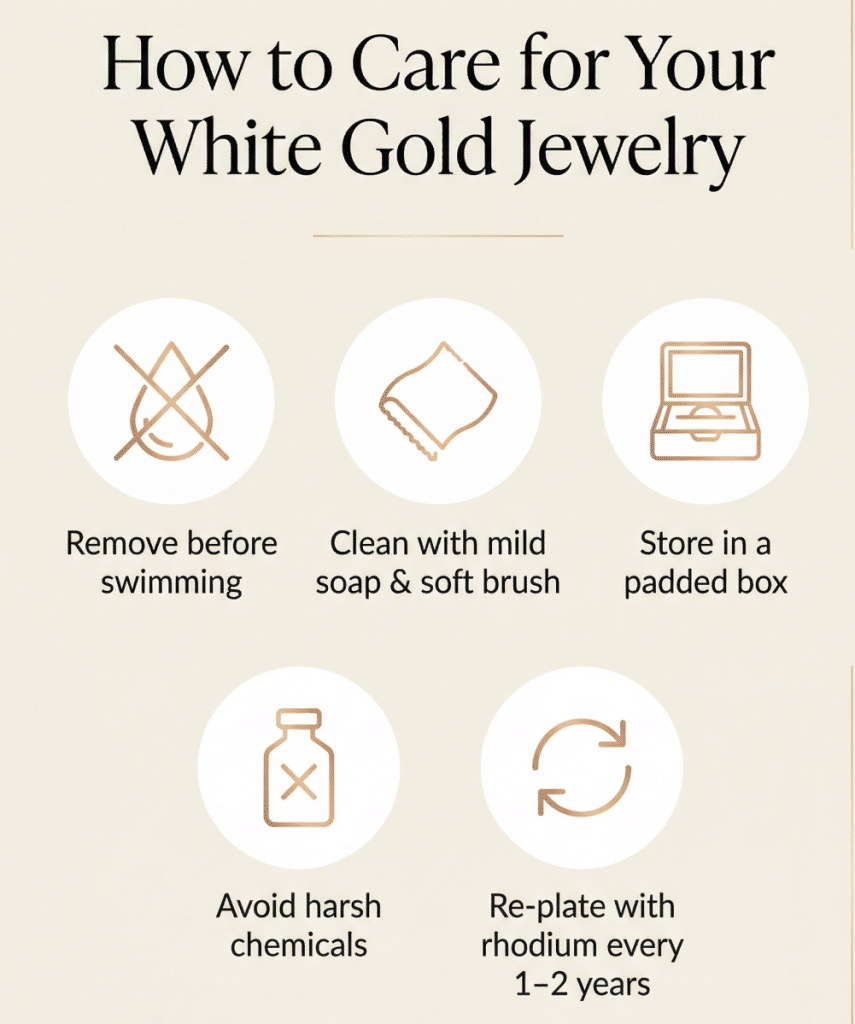
And simple habits will make a world of difference — keeping your rhodium plating intact can stretch the time between re-plate trips by months.
The upside: white gold is less high maintenance than silver. But there are a few habits that will make it look brighter longer.
Day-to-Day Care
- Remove it before swimming: Chlorine from pools and salt from the ocean speed up rhodium wear, potentially discoloring the alloy metals found within your piece.
- Remove before showering: Soap, shampoo and conditioner all leave residue that dulls the rhodium finish over time. Even water’s mineral content matters.
- Avoid rubbing against perfume and lotion: Put these on first, give some time to absorb, then wear your jewelry.
- Separate pieces by type: Store white gold on a soft pouch or lined jewelry box. Diamond-set pieces are particularly hazardous to other jewelry — diamonds are hard enough that they can scratch gold and even platinum.
Cleaning at Home
In a small bowl, dilute a few drops of mild dish soap in warm (not hot) water. Let the piece soak for 15–20 minutes. Use a very soft toothbrush to gently scrub — especially around any prong settings where dirt settles. Clean them with water and pat dry with a lint-free cloth. Do not use ultrasonic cleaners often — the vibration can loosen stone settings over time.
When to Get It Re-Plated
When your ring starts to develop a slight yellowish appearance or dull spots — particularly where the band meets the finger — it’s time for some re-plating. A local jeweler can usually rhodium-plate a ring for $40–$100 in under an hour. This is the least expensive way to make an old white gold ring look new.
💡 Manufacturer Note: If you’re designing gold plated jewelry for your brand, the thickness of the rhodium layer on white gold directly affects customer satisfaction. HonHo’s quality control process includes XRF (X-Ray Fluorescence) testing to verify plating thickness on every batch — ensuring your products maintain their bright finish as long as possible.
Content Gap: Things Most White Gold Articles Don’t Tell You
So from research done into the conversations had by actual buyers in various jewelry communities across Reddit, Quora and industry forums I gathered some of the essential points that most blogs about white gold tend to overlook.
The Incremental Impact of the EU Nickel Directive on Imports
If you are selling pieces of white gold jewelry in Europe, the EU Directive 94/27/EC (modified by REACH regulation) limits nickel to offer from jewelry items that contact with any skin less than 0.5 µg/cm²/week This could mean nickel-based white gold — even when rhodium-plated — might not be compliant if the plating wears thin. Brands that source their production from manufacturers can simply ask for nickel-free palladium white gold alloys or ensure appropriate rhodium plating thickness.
How Color Temperature of White Gold Changes the Look of Diamonds
As per GIA (Gemological Institute of America), the cool white exterior of rhodium-plated white gold gives an even whiter visual environment around the diamond, creating an illusion of a more colorless appearance to the stone. This is also the reason why a G-color diamond set in white gold can look visually close to an F-color diamond when set in yellow gold. Buyers with a savvy eye take advantage of this: they opt for white gold settings and a slightly lower diamond color grade — paying through the nose savings-wise with no visible distinction.
It Ain’t All “White Gold” — XRF Testing Sorts The Truth
At a manufacturer level X-Ray Fluorescence (XRF) analysis is the only non-destructive method that can accurately identify the composition of white gold and measure the thickness of plating. XRF can simultaneously quantify the rhodium plating thickness as well as the composition of every individual element present in the gold alloy beneath — all within seconds without any sample destruction. In fact, many purchasers may not realize that the hallmark stamp is determined by the alloy batch made — not on the individual finished item.
Read This After You Polish Your Gold: Polishing removes gold; re-plating does not.
It is not uncommon for people to get their white gold rings polished over and over again, just to make them shiny. But each dab of professional polish wipes away a micro layer of the real gold alloy. Over the years, this thins the metal — which can eventually impact ring integrity, an issue especially with thin bands. Whereas rhodium de-plating removes material, rhodium re-plating adds it. If you are looking for the ring to stay bright, plating is less destructive than polishing in the long term.
Some Fans of “Natural” (Un-Plated) White Gold
As mentioned in artisan jewelry circles, some customers actively seek un-plated white gold because they are more attracted to the warmer, more organic color — and want to avoid having a never-ending maintenance responsibility. This is a real niche, and the artisan jewelers who provide this option need to promote it expressly.
How to Buy White Gold Jewelry: What to Check Before You Purchase
Whether you’re looking to purchase a high-quality piece for yourself or sourcing white gold jewelry for your brand, here are the most essential quality checkpoints:
- ✅Look at the stamp: 14K (585) or 18K (750) or even 10K (417). No stamp = no guarantee.
- ✅ The alloy used: Is it nickel-based, or is it palladium? Palladium is safer for sensitive skin buyers.
- ✅ Inquire about rhodium thickness: Reputable makers use 0.05–0.1 microns for daily-wear pieces.
- ✅ Check prong and setting quality: Setting should be smooth, not catching on fabric Loose prongs: Number-one cause of lost stones.
- ✅ If you can, check the weight: White gold should be heavier than silver of equal size. If a “white gold” ring seems suspiciously light, it might be silver-plated or gold-filled rather than solid white gold.
- ✅ Ask for a certificate or assay: For high-value pieces, insist on independent assay or hallmarking certificates.
White Gold Jewelry from a Manufacturer’s Perspective
At HonHo Jewelry, we work with brands, designers, and retailers across the world to create custom gold jewelry — including 14K and 18K white gold pieces as well as white gold-finished sterling silver and stainless steel. Here’s what we’ve learned after years of manufacturing:
- Most B2B clients choose stainless steel or brass with white gold (rhodium) plating for fashion jewelry lines because it achieves a near-identical look to solid white gold at 10–30% of the material cost — making it viable for higher volume, trend-driven collections.
- 925 sterling silver with rhodium plating is the most popular base for fine fashion jewelry. Our sterling silver jewelry collection uses this approach across rings, necklaces, and bracelets.
- Solid 14K or 18K white gold is reserved for engagement rings, high-end collections, or clients in markets where consumers insist on solid gold hallmarked pieces.
- We strongly recommend specifying minimum plating thickness (0.15 microns+) in your product specifications and requesting XRF test reports to verify compliance.
Looking to create a white gold jewelry line for your brand? Explore our wholesale jewelry manufacturing services or request a free custom sample quote.
💍 Need Custom White Gold Jewelry Manufactured?
HonHo Jewelry is a trusted custom jewelry manufacturer in China with 10+ years of experience producing fine and fashion jewelry for brands worldwide. From 925 silver to 14K gold, we offer OEM/ODM services with low MOQ and fast sampling.Get a Free Sample Quote →
Frequently Asked Questions About White Gold
What is white gold made of?
White gold is an alloy of pure yellow gold (24K) with white metals like nickel, palladium or silver to lighten its color and enhance hardness. Finally, the surface is electroplated with a very thin layer of rhodium to give it a bright, silvery-white appearance.
Is white gold really gold?
Yes, absolutely. White gold is real gold. Its base material is real solid gold — the karat stamp (10K, 14K, 18K)029398 indicates what percentage is actual gold. 58.3% pure gold = 14K white gold All white gold, regardless of the color from alloying and rhodium plating, necessarily contains a significant and legally verifiable amount of actual gold.
How does white gold compare to silver jewelry?
White gold is an alloy of gold — it has real gold in it and is much harder, more scratch-resistant and more valuable than sterling silver. Unlike silver, which is soft and tarnishes over time when exposed to moisture in the air and has negligible resale value. 9 white gold combats a different problem — the need for periodic rhodium re-plating. Silver does not need to be plated but it needs regular polishing to prevent tarnishing.
What makes white gold yellow after some time?
In fact, white gold is coated in rhodium plating, which can wear off with frequent contact with skin, water and surfaces. This reveals the underlying gold alloy, which appears a natural off-white to lightly yellow color, once the plating has worn away. This is perfectly normal — and a jeweler can bring the original bright white luster back (usually in under an hour) by re-plating with rhodium.
How often does white gold have to be re-plated?
Most rings that are worn regularly require a re-plating of rhodium every 12–24 months. Earrings and necklaces, where there is less friction, might go 2–4 years between plating appointments. The concept of time varies based on the pH of your skin, whether you are exposed to any chemicals (chlorine, cleaning products, perfumes) and how frequently a piece is worn.
Is white gold allergic to the skin?
Approximately 1 in 8 people can experience allergic reactions (nickel dermatitis) to white gold allayed with nickel. Symptoms include itching, redness or a rash where the jewelry touches the skin. If you have sensitive skin, ask for white gold that’s palladium-based, which is hypoallergenic. An unblemished rhodium surface also sits between skin and the alloy, limiting the potential for reactions.
What’s the difference between white gold and platinum?
Platinum, on the other hand, is a naturally white precious metal and needs no rhodium plating. It’s denser (you notice the weight), more hypoallergenic, and two to three times as expensive as white gold. It becomes white gold through alloying and rhodium plating. Platinum elicits a natural “patina” (slightly matte, satin gray) over time while white gold retains its mirror-bright shine as long as it’s regularly re-plated.
Is white gold better at 14K or 18K?
14K white gold (58.3% gold) is a harder metal that resists scratches better than higher karatages, making it more suitable for rings and everyday jewelry. 18K white gold (75% gold) has more gold content, a slightly softer feel, and is preferred for high-end pieces and tricky gemstone settings. They were both rhodium-plated and after finishing, looked the same. For rings you wear every day, 14K is the practical option.
What is “yellow silver” jewelry?
“Yellow silver” is a colloquial, non-technical name for sterling silver (925) that has been plated with gold — or properly referred to as gold vermeil if the plating meets minimum thickness and karat standards. This is not the same as solid white or yellow gold. The gold plating will eventually rub off, exposing the silver below. It is a widely used and lower-cost option for yellow-gold mimicking jewelry.
Is it safe to shower or swim while wearing white gold?
It is not recommended. While gold doesn’t corrode in water, repeated exposure to chlorine (pools), salt water and soap chemicals will dull and wear away rhodium plating. To help your finish last, take off white gold jewelry before swimming, showering or using household cleaning products.
FAQs on If White Gold Could Tarnish Like Silver
No, white gold does not tarnish like sterling silver. Gold does not corrode in air or moisture. However, the rhodium plating applied to white gold will wear off over time, leaving the piece with a duller or slightly yellow appearance — which many mistake for tarnishing. This is a plating problem, not a chemical reaction, and it’s simple to fix with the help of any jeweler.
When was white gold invented?
First developed in the 19th century (using gold-palladium alloys), white gold became commercially available starting from 1912 in Pforzheim, Germany. Its popularity was widespread and peaked in the 1920s during which platinum became restricted for civilian jewelry usage due to wartime materials policies of the U.S. Palladium-based nickel-free white gold alloys gained favour from the 1970s onwards, due to an increasing awareness of sensitivity to nickel.
Final Thoughts: Is White Gold Right for You?
Of all the metals used in jewelry, white gold is among the most versatile and consistently popular. It has the prestige and actual value of gold, the sleek, modern appearance of platinum, and the versatility of silver — all in one material that works with every complexion and any kind of jewelry style from casual everyday rings to showstopper engagement pieces.
Its one genuine investment is the rhodium re-plating — a $100 maintenance move that removes discoloration and keeps the finish vivid. In return, you’ll have a lasting, precious, beautiful metal that retains its value over generations.
Whether you’re a consumer deciding on your next big purchase, or a jewelry brand looking to source your next collection, the more you understand what white gold really is — from karats and alloys to the plating process and its history — the better equipped you’ll be to make the right decision every time.
For more expert resources on jewelry materials and manufacturing, explore our jewelry manufacturer blog. And if you’re ready to create your own white gold or gold-plated jewelry line, contact HonHo Jewelry for a free quote.