


For plain, uncoated stainless steel jewelry, start with lukewarm water, a little mild soap and a soft cloth. Rinse away residue and dry thoroughly. If the item is plated, contains stones or includes glued components, check those parts before choosing a cleaning method: the complete piece can be more delicate than its steel base.
“Stainless steel” identifies the base material, not every part of an item. A necklace may also have a decorative coating, adhesive, enamel, a stone or a clasp with internal parts. Look at the product description and care instructions. If you cannot identify a component, use a lightly dampened soft cloth and ask the seller before soaking it.
| Jewelry construction | Gentle starting point | Check before doing more |
|---|---|---|
| Plain, uncoated steel | Mild soapy water and a soft cloth | Damage, trapped residue and moving parts. |
| Gold-colored or other coated steel | A soft cloth; mild cleaning only as permitted by the supplier | Coating wear, abrasives and chemical compatibility. |
| Stone-set jewelry | Care suitable for the specific stone and setting | Treatments, loose settings, porous materials and adhesive. |
| Mixed-material or unknown construction | Gently wipe accessible surfaces | Whether immersion is safe for every component. |
Repeat a gentle cleaning if necessary instead of immediately moving to a harsher chemical. A persistent dark area may be a finish change, damage or a deposit that needs professional assessment. Cleaning cannot rebuild metal or restore a worn coating.
Begin with a soft cloth and light pressure. Follow the supplier’s instructions for any use of water and soap. Avoid aggressive rubbing at corners, inside rings and around clasps, where wear can already be concentrated.
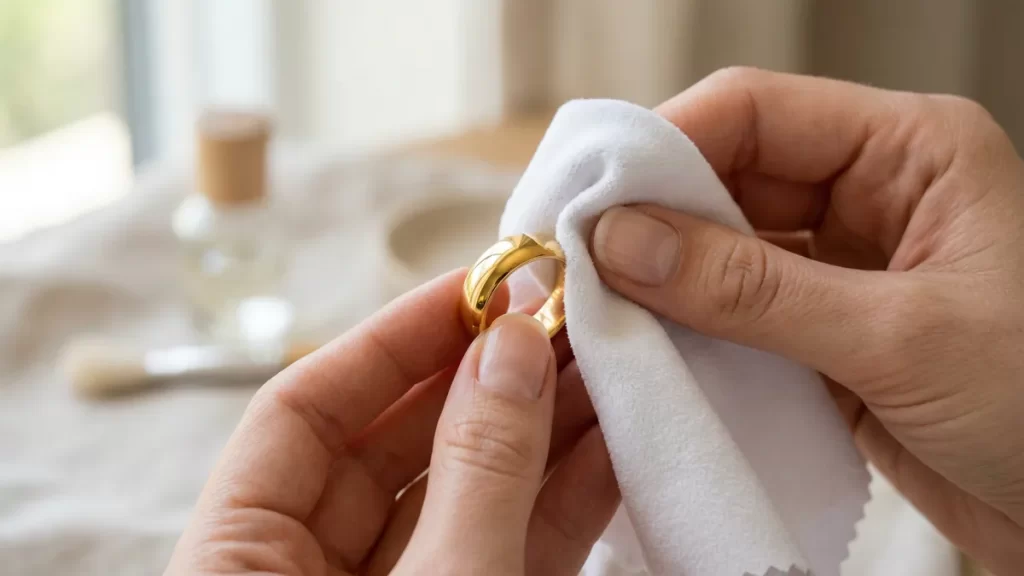
A PVD finish is still a coating system with a specified construction. Its name alone does not make every cleaner or polishing compound suitable. If a gold-colored surface has worn through, scrubbing will not put the color back. Ask about professional refinishing or replacement instead of covering the area with nail polish.
For the underlying finish differences, see PVD versus electroplating. The separate gold-plated jewelry guide explains what a gold description does and does not establish.
Do not mix cleaning products. If ordinary gentle cleaning fails, identifying the residue and finish is more useful than testing a series of household chemicals on the piece.
Only after the complete item has been assessed as suitable. Steel alone is not the deciding factor. GIA’s jewelry care guidance warns that some gems and treatments are unsuitable for ultrasonic cleaning and that vibration can loosen settings. A jeweler can assess the stone, setting, finish and assembly before using that equipment.
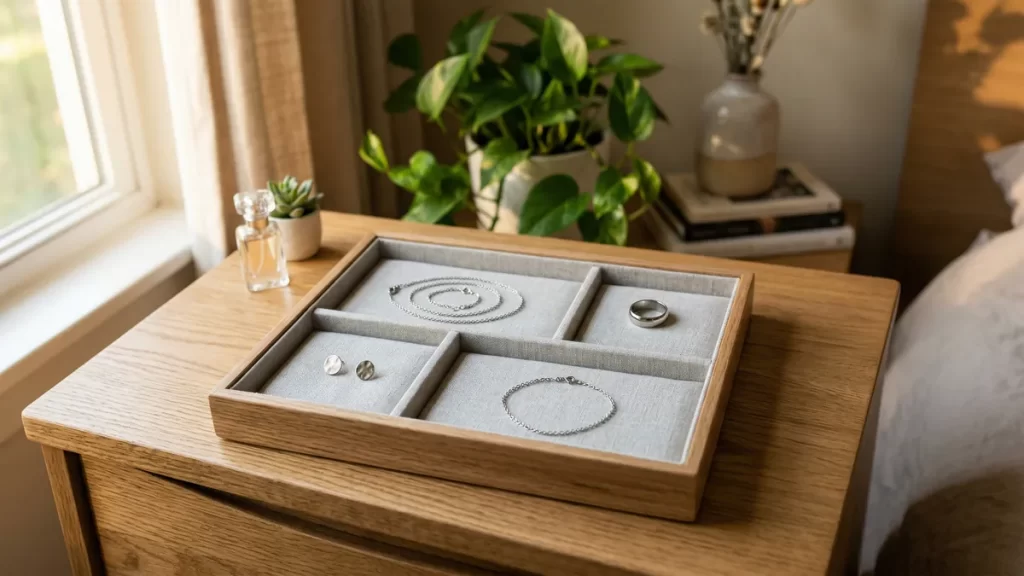
Let the piece dry before putting it away. Separate chains so they do not tangle and keep polished surfaces from rubbing against harder or textured objects. A divided tray or individual soft pouch makes inspection and storage easier.
Remove jewelry before exposing it to household cleaners, pools or activities that cause heavy abrasion. A manufacturer’s documented water-resistance claim for a particular item should not be generalized to every steel product or interpreted as resistance to all chemicals.
Write care instructions for the actual SKU: identify the finish and sensitive components, describe the approved gentle routine, list incompatible cleaning methods and explain where customers can ask for help. Test the instructions against production samples and update them if the coating, stone or adhesive changes.
A return labeled “tarnish” may instead involve residue, surface wear, a scratched finish or another metal component. Keep the returned item and compare it with the reference sample before deciding on a remedy. Discuss these checks alongside the quality requirements for your jewelry order.
No special harsh cleaner follows from that grade difference. The finish and complete construction remain the first considerations.
Cleaning removes surface residue. Scratch removal changes the surface and can affect a coating, texture or dimensions; ask a jeweler before polishing aggressively.
Use the supplier’s guidance and the condition of the piece rather than a fixed schedule. A gentle wipe after wear can reduce the buildup that later needs more attention.
For a wholesale collection, explore HonHo’s stainless steel jewelry manufacturing options and confirm the finish-specific care instructions during sample approval.
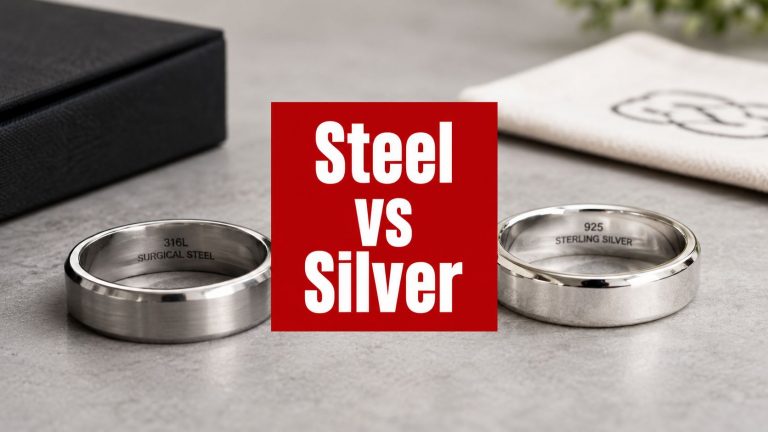
You’re pricing a new collection, and the sample tray is already split down the middle. The 316L surgical steel pieces look cleaner on cost and daily wear, the
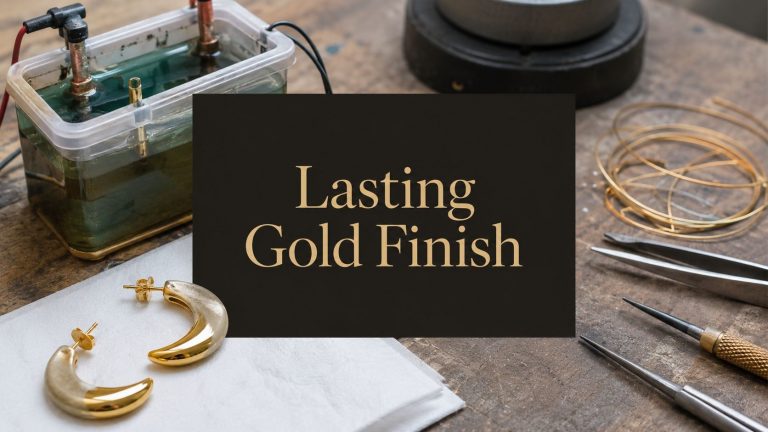
You probably have a launch already in motion, a supplier sample on your desk, and one uncomfortable question underneath it all, will this gold color still look clean
If you are developing the ring itself, compare ring fabrication, casting and CAD methods before approving the shank dimensions and manufacturing route. You’re refining a ring design, the