

If you are asking does surgical steel have nickel, the accurate answer is yes. The more important point, however, is that nickel content alone does not determine whether a product will cause irritation.
From a manufacturing and sourcing perspective, the real issue is not simply whether an alloy contains nickel, but how much nickel can be released from the surface during wear. That distinction explains most of the confusion in the market and leads to better material decisions.
For jewelry brands, wholesalers, and distributors, this matters at the specification stage. One stainless steel grade may contain nickel and still perform well for most wearers. Another product may be sold broadly as “surgical steel” yet generate avoidable returns because the grade, finish, or intended use was never defined with enough precision. If you are building sensitive-skin collections, it is useful to understand the difference between “nickel-free,” “hypoallergenic,” and “nickel-safe.” This overview of hypoallergenic jewelry materials is a useful starting point if you are evaluating claims for product pages or sourcing documents.
The real manufacturing error is not using stainless steel. It is relying on vague material language when the application requires precision.
Most surgical steel contains nickel. That part is straightforward. The complexity comes from the fact that nickel content and nickel exposure are not the same thing.
A customer may learn that a common surgical steel grade contains nickel and conclude that it is automatically unsuitable. A buyer may see “hypoallergenic” on a sample card and assume that means nickel-free. Neither assumption is reliable enough for product development or bulk purchasing.
Stainless steels used in jewelry are engineered alloys. Nickel is often included because it improves formability, ductility, weldability, and corrosion resistance. According to the Nickel Institute’s stainless steel overview, approximately 80% of global stainless steel production consists of nickel-containing grades, and roughly two-thirds of all global nickel production is used to manufacture stainless steel.
That explains why nickel appears so frequently in this category. It is not an incidental additive. It is a functional alloying element.
For practical sourcing, the better questions are:
Those questions are far more useful than a simple yes-or-no label.
The phrase sounds precise, but in commercial use it often is not. “Surgical steel” is widely used across jewelry, piercing, and accessories, yet it does not refer to a single alloy with a single composition.

As documented in Lynn Loheide’s discussion of implant-grade versus surgical steel, surgical steel is not a formal industry standard but a blanket marketing term for over 450 different corrosion-resistant steel blends, with nearly all containing nickel content ranging from 6% to 27%; specifically, the most common 316L surgical steel alloy contains 13–15% nickel by mass.
That helps explain why product claims vary so widely across suppliers. Two factories may both describe a product as “surgical steel” while delivering meaningfully different performance.
In higher-quality jewelry manufacturing, 316L stainless steel is usually the grade buyers mean when they ask for surgical steel. It offers strong corrosion resistance, a stable surface finish, and dependable processing performance across cast, machined, and assembled components.
For brands, that matters because consistency does not come from a marketing label. It comes from a controlled alloy specification, disciplined finishing, and repeatable quality control.
If a supplier cannot confirm whether a product is 304, 316, or 316L, the term “surgical steel” is not providing a meaningful basis for a safe buying decision.
This terminology typically causes issues in three situations:
For wholesale jewelry programs, the practical solution is simple: specify the exact stainless steel grade in the BOM, sample approval, and purchase specification. That single step reduces later disputes over allergy concerns, corrosion performance, and finish durability.
This is the distinction that matters most in real-world wear. A metal can contain nickel without releasing significant amounts of it to the skin.

One practical way to explain this to customers is as follows: nickel content is like an ingredient sealed inside a container, while nickel release is like dust escaping into the air. Skin reactions are driven by what reaches the skin, not simply by what exists within the material.
In stainless steel, nickel is part of the alloy structure. In better-performing grades, that nickel is tightly bound rather than present on the surface as a loose contaminant.
According to this overview of nickel-free jewelry and skin safety, surgical steel, typically 316L, nominally contains 12–14% nickel, but that nickel is tightly bound, resulting in a release rate of <0.3 µg/cm²/week, which is below the European Union Nickel Directive threshold of 0.5 µg/cm²/week for direct skin contact, as stated in the source from Kesheen on surgical steel nickel release.
That does not make 316L chemically nickel-free. It does help explain why many people can wear it without difficulty.
Material decisions should not end with a composition sheet. Surface finish, corrosion resistance, wear conditions, and intended use all influence whether a product performs well in practice.
Three common examples in jewelry manufacturing illustrate this clearly:
A customer reaction does not always mean the alloy specification was incorrect. In some cases, the product was simply used in the wrong category, such as fresh piercing use instead of healed wear.
What works is matching the material to the application and describing it precisely in the product listing.
What does not work is treating “contains nickel” as the only decision standard, or using “hypoallergenic” as though it guarantees zero reaction for every wearer. In practice, release behavior is the more useful guide for most stainless steel jewelry decisions.
Which stainless steel grade should a jewelry brand specify? In production, that decision usually comes down to 304 versus 316L.
This is not a matter of marketing language. It affects corrosion performance, service life, finishing consistency, and how confidently a brand can position a product for sensitive-skin customers.
| Feature | 304 Stainless Steel | 316L Stainless Steel |
|---|---|---|
| Typical alloy profile | Austenitic stainless steel commonly used in general metal goods and fashion accessories | Austenitic stainless steel commonly used for higher-spec jewelry and body jewelry |
| Molybdenum | Not typically part of the standard 304 formulation | Includes molybdenum, which improves corrosion resistance and helps 316L perform better in sweat, humidity, and daily wear conditions, as noted in this Reid Supply overview of surgical steel and stainless steel |
| Corrosion resistance | Good for dry, lower-exposure fashion use | Better suited to harsher wear environments and extended skin contact |
| Sensitive-skin suitability | More variable in real-world use | Usually the safer stainless choice for hypoallergenic positioning |
| Typical sourcing use | Cost-driven fashion jewelry, charms, chains, and components | Better-grade wholesale jewelry, piercing jewelry, and long-wear collections |
304 has a valid place in the market. It works for lower-cost assortments where price is a greater priority than sweat resistance, aftercare considerations, or sensitive-skin claims.
316L is the grade I would recommend when the line includes earrings, bracelets, body jewelry, or any piece expected to remain in contact with the skin for extended periods. It gives the factory more margin on corrosion performance, especially once polishing, plating preparation, and daily wear are taken into account.
That trade-off is commercially important. A lower-cost steel may reduce the quoted unit price, but it can create higher return rates later if the item discolors, pits, or triggers complaints in humid or high-sweat conditions.
A useful cross-check for teams comparing steel and titanium options is this independent piercing material guide, especially for body jewelry and sensitive-wear categories.
Keep the grade strategy straightforward and align it with the product promise:
For teams building a stainless assortment with fewer quality disputes, this 316L stainless steel jewelry guide is a useful reference for comparing applications, finishes, and category fit.
When a buyer needs a safer option for highly sensitive customers, stainless steel is not always the best endpoint. In many cases, the better answer is to choose a material that removes the nickel question altogether.

Titanium and niobium are commonly preferred when severe nickel sensitivity is a concern because they are used as nickel-free alternatives in jewelry practice. They also simplify customer communication. Instead of explaining release rates, you can state the substrate choice directly.
Another option comes from medical metallurgy. According to this medical materials study on nickel-free austenitic stainless steels, nickel-free austenitic stainless steels have been developed by replacing the 12–15% nickel content with nitrogen, completely eliminating the risk of nickel ion interaction with body tissues.
That makes these steels especially interesting for brands that want a stainless appearance without the conventional nickel trade-off.
A quality coating does not make every low-grade base metal suitable. However, a well-controlled PVD coating can act as a durable barrier between the skin and the substrate when the design, wear conditions, and production quality are appropriate.
This matters in fashion jewelry because buyers often need both performance and visual variety. Gold-tone, black, and rose finishes can be achieved without relying solely on softer plating systems. For some product lines, that creates a practical route to hypoallergenic positioning when paired with the right substrate and quality control.
For severe allergy claims, the safer choice remains a nickel-free base material. Coating is a useful barrier strategy, but it is not a substitute for accurate material disclosure.
Evaluate the components that will contact skin in the finished jewelry assembly. A material name alone does not establish comfort for every wearer or replace testing that supports a specific product claim.
Use this framework when selecting materials:
If you are comparing substrate choices for a new collection, this overview of stainless steel vs titanium jewelry helps clarify the trade-offs.
What should a brand include in the tech pack if it wants fewer allergy complaints and fewer production surprises?
Start with the actual material callout. “Surgical steel” is sales language unless the supplier ties it to a named grade, a finish system, and a defined use case. In production, those details determine whether a piece is appropriate for mainstream fashion wear, healed piercings, or customers with known nickel sensitivity.
I advise brands to write specifications that both a factory and a lab can follow. That means naming the alloy, stating whether the item is plated or PVD coated, and defining the required compliance documents before sampling begins. If the product will be sold into regulated markets, ask the supplier to confirm nickel release compliance for the finished item, not simply the base metal on paper.
Ask these before approving bulk production:
Strong sourcing is specific. The supplier should be able to confirm what alloy enters the workshop, what finish is applied, what subcontracted processes are involved, and what quality checks occur before shipment. If those answers remain vague, the risk usually appears later in the form of returns, discoloration, or skin-reaction claims.
A capable manufacturing partner should also help you choose the right trade-off. 316L may be an effective option for a fashion collection with controlled finishing and sound quality control. Titanium costs more and can be more difficult to machine, but it resolves more allergy concerns at the material level. Nickel-free specialty steels may suit certain programs as well, although sourcing consistency and minimum order requirements are often more demanding.
For brands comparing production partners, this guide to stainless steel jewelry suppliers for quality and growth provides a useful framework for reviewing development support, finishing control, and inspection standards.
The most effective way to reduce allergy complaints is to buy against a written material specification, not a retail label.
If you are developing a stainless steel, titanium, or hypoallergenic collection, HonHo Jewelry can support OEM/ODM production, custom development, sampling, PVD finishing, quality control, and private label manufacturing for brands, wholesalers, and distributors that need reliable material execution and responsive production support.
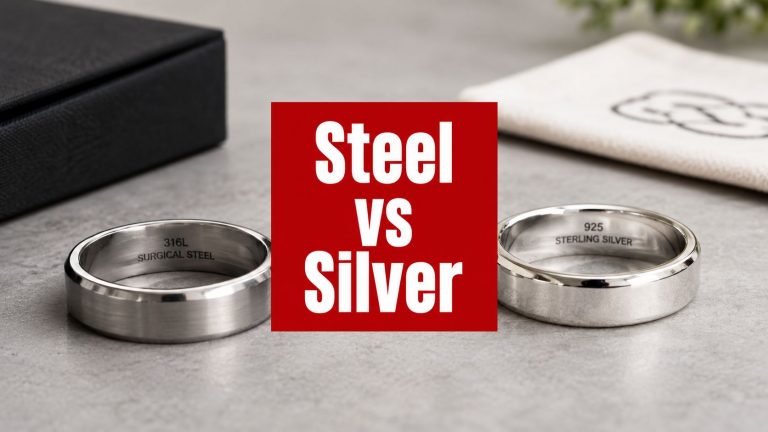
You’re pricing a new collection, and the sample tray is already split down the middle. The 316L surgical steel pieces look cleaner on cost and daily wear, the
You probably have a launch already in motion, a supplier sample on your desk, and one uncomfortable question underneath it all, will this gold color still look clean
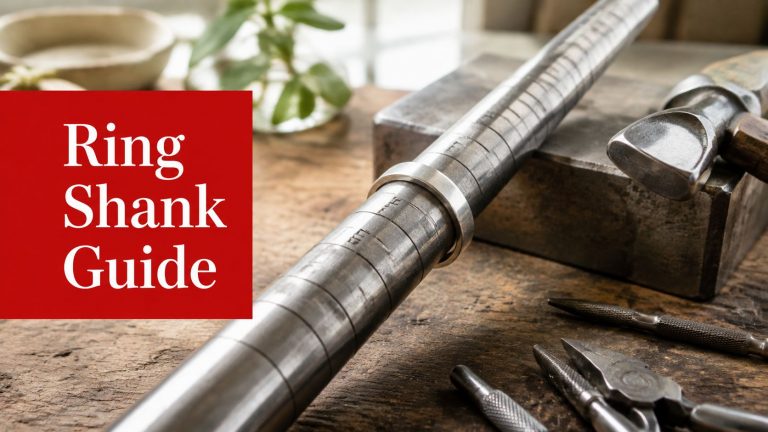
If you are developing the ring itself, compare ring fabrication, casting and CAD methods before approving the shank dimensions and manufacturing route. You’re refining a ring design, the