

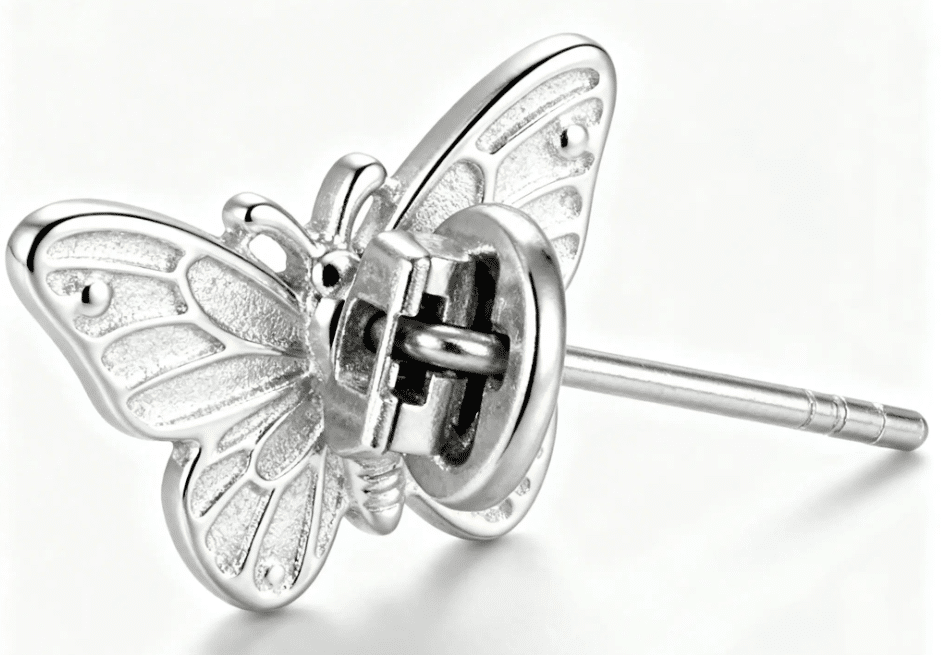
Allergic reactions to jewelry can start with a small component: an earring back, a clasp or the inner surface of a ring. Nickel is a common contact allergen, but a rash beneath jewelry is not enough to identify the cause. Friction, moisture and residues can also irritate skin. For a jewelry brand, the practical response is to document the entire assembly and investigate complaints without promising that any metal is safe for everyone.
Stop wearing the piece that causes irritation. If the rash persists, returns or is severe, consult a dermatologist rather than repeatedly trying different coatings or home remedies. The American Academy of Dermatology explains nickel exposure from jewelry; its patch-testing guidance describes how a clinician can investigate an allergic trigger.
Do not use a customer photograph to diagnose an allergy. A brand can record the product, affected contact area and batch, offer its documented material information, and investigate the item. Medical advice and a manufacturing investigation serve different purposes.
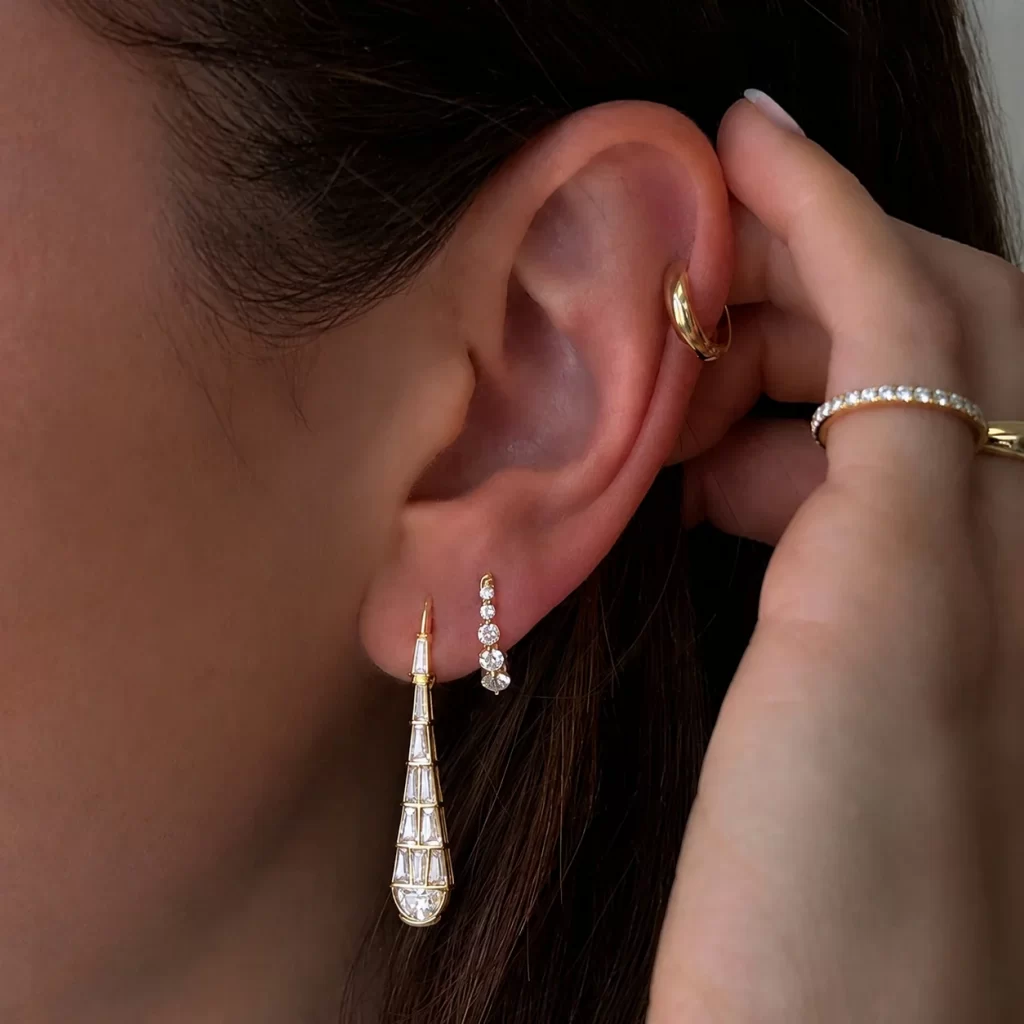
The products may have different contact materials, findings, surface wear or fit. Earrings also include parts that are easy to overlook when shopping: the post, backing and joining area. A label on the decorative front does not describe all of them. Friction, trapped moisture and residues can also contribute to irritation; the location alone does not identify an allergy.
This is the specific question raised in a discussion by a wearer who tolerates rings and necklaces but struggles with earrings. The replies suggest many possible explanations, but they cannot diagnose the person. If symptoms recur, take the product’s available material information to a dermatologist rather than repeatedly trying items advertised as hypoallergenic.
For a brand handling that report, check whether the original backing was replaced and whether the item differs from its documented specification. Provide the known materials and say which details are still being checked. Do not conclude that tolerating a ring proves an earring made from a broadly similar metal is suitable.
| Assessment | Question it addresses | What it does not establish |
|---|---|---|
| Clinician-directed patch testing | Whether a delayed contact allergy may explain a person’s skin problem | The manufacturing specification or compliance of a jewelry batch |
| Material or coating analysis | The composition or layer characteristics within the measurement scope | A medical diagnosis or a nickel-release result |
| Laboratory nickel-release testing | Release from the tested item under the stated method and preparation | A guarantee that every wearer will tolerate it |
The American Academy of Dermatology explains medical patch testing for delayed allergic contact dermatitis. This is different from an immediate allergy skin-prick test. A dermatologist decides what assessment is appropriate; repeatedly wearing a suspect earring is not a substitute.
For a plain-language introduction to nickel exposure, see the AAD’s nickel-allergy video on YouTube and its accompanying written guidance. It provides medical context, not certification of a jewelry material or a diagnosis for an individual reader.
The decorative part may use a different alloy from the post, backing, spring, solder or connecting ring. A pendant described as sterling silver, for example, does not establish the composition of the chain supplied with it. Request a bill of materials that identifies each component rather than accepting one material name for the complete product.
| Specification | What it tells a buyer | What still needs checking |
|---|---|---|
| 304 or 316L stainless steel | A defined stainless steel grade | These grades contain nickel; grade alone does not prove release performance or suitability for a particular wearer. |
| 925 sterling silver | Silver fineness | Other alloying elements, solder, coatings and separate findings. |
| Titanium | A material family | Exact grade, traceable documentation and the materials of the other components. |
| Brass | A copper-zinc alloy family | Exact composition, underlayers and finished-product testing. |
| Gold plated or gold filled | A surface or layered construction | Gold-alloy composition, base metal, exposed edges and hardware. |
For example, Outokumpu’s stainless steel grade information lists nickel in the composition of 316L. That is why “316L” and “nickel free” should not be used interchangeably. Our nickel-free jewelry guide explains the difference between alloy content, marketing language and nickel-release testing.
A coating changes the surface that initially touches the skin. Its effectiveness depends on adhesion, coverage, thickness, the underlying metal and wear at contact points. A gold-colored finish can look intact on the front while an edge or post experiences more friction.
Ask for the complete finish specification: substrate, underlayers, decorative layer, any topcoat and the thickness measurement method. PVD describes a deposition process, not a guarantee of a nickel-free product. Likewise, no single coating thickness automatically proves allergy prevention. See the PVD and electroplating comparison when discussing finish options.
Accelerated corrosion tests can help compare finishes under their stated conditions. They do not directly convert into years of wear and do not replace an appropriate nickel-release test. Clear nail polish or a home-applied coating is not a dependable manufacturing solution to an unresolved material complaint.
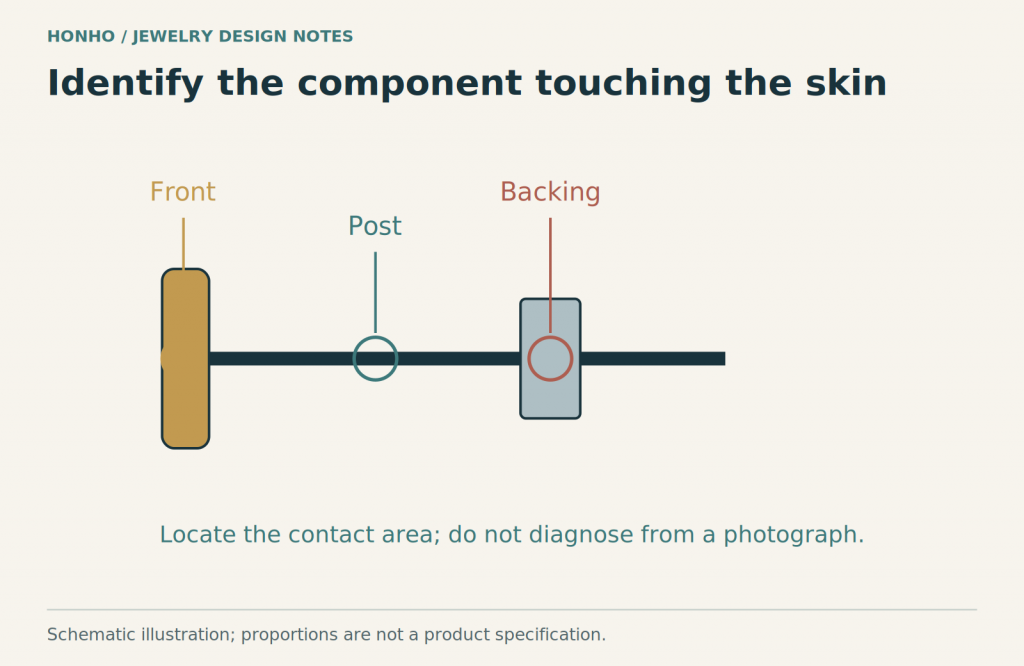
Itching or a rash where jewelry touches the skin can be consistent with contact dermatitis, but friction, trapped moisture, residues and other skin conditions can also be involved. A green or dark skin mark alone is not a diagnosis. The wearer needs appropriate medical advice when symptoms persist, recur or are severe; the supplier’s task is to provide accurate product information and investigate the item.
DermNet’s jewelry-allergy overview distinguishes allergic reactions from irritation and other causes. A customer-service team should preserve that distinction. Avoid telling a customer that their reaction proves the alloy is wrong, or that a passed product test proves the symptoms cannot be related to the jewelry.
For an earring complaint, identify whether the reported contact was at the decorative front, along the post or behind the ear near the backing. For a necklace, distinguish the pendant, chain and clasp area. For a ring, record the inner surface and any visible wear or residue. Those observations guide which components and records to review.
Ask whether the item was repaired or whether a component was replaced. A newly fitted backing or chain can introduce a different material from the original product. Keep that information separate from the customer’s medical history, and collect only what is needed for the product investigation.
Acknowledge the reported discomfort, advise stopping use of the suspected piece and provide the available material information. Explain the return or review process under the brand’s actual policy. Do not ask the customer to keep wearing the item to reproduce the reaction, or to try a home coating as proof that the problem is solved.
| Provide | Keep separate |
|---|---|
| Documented materials and coating | A medical diagnosis or guarantee of individual tolerance |
| Relevant test scope and sample identity | A claim that all allergies are impossible |
| Clear product-review or return steps | An unapproved remedy or promise outside the policy |
| A specific follow-up on the item | Unnecessary collection of private medical details |
If the available record omits the backing, clasp or underlayer, say which product information is being checked. A precise follow-up is more useful than repeating “hypoallergenic” without explaining what that means for the item.
An approved sample is a reference, not permission to substitute a similar-looking clasp or change the plating stack. Record the approved component suppliers and finish revision. Require written approval before a change, and reassess testing when a change could affect skin contact.
During inspection, compare the front and back of the piece, the condition of contact edges, the fit of findings and the finish at moving parts. Keep the purchase order, inspection record and relevant test reports connected to the batch. Our manufacturer vetting guide covers the wider supplier review.
Retain the SKU, batch, component list and finish revision. Photograph the returned piece before destructive work or refinishing, then compare its relevant contact areas with an unused retained sample. Check for a substituted part, rough edge, damaged coating, residue or other observable difference. These are product findings, not proof of the medical cause.
Where material or release evidence is needed, agree an appropriate assessment with a competent laboratory. Identify the actual component and finish being investigated. A composition result, a coating measurement and a release result serve different purposes, so choose the method around the question rather than ordering an unspecified “allergy test” for the jewelry.
Record complaints by design, variant and batch over a defined period. Several reports involving the same newly introduced backing deserve a different investigation from unrelated reports involving different constructions. Avoid using a small number of anecdotes to claim a population reaction rate or to dismiss an individual customer’s experience.
If a production defect or unapproved substitution is confirmed, identify the affected scope and agree the correction. Review whether the product description, supplier controls or inspection plan also needs to change. If the investigation is inconclusive, preserve that status instead of inventing a reassuring explanation.
Specify skin-contact components during development, including small bought-in findings. Approve customer-facing material wording against the available evidence and keep the test scope with the product record. Require review when an alloy, coating, post or backing changes.
No. It is not a promise that every wearer will tolerate the item. Give customers specific material information and support any performance claim with evidence.
Compliance with a test requirement does not establish that every individual will tolerate the product. Keep compliance statements separate from medical claims.
Send the design, component list, finish specification, destination market and any existing reports through our custom jewelry inquiry page. Identify the claim you want to make so the required evidence can be discussed before production.
Updated October 18, 2026.
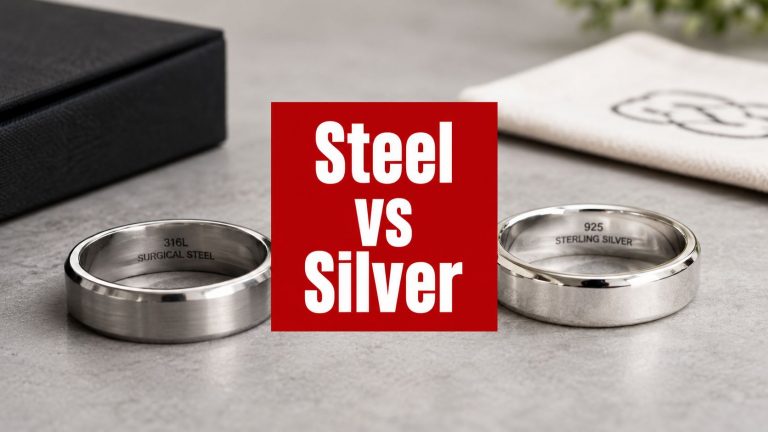
You’re pricing a new collection, and the sample tray is already split down the middle. The 316L surgical steel pieces look cleaner on cost and daily wear, the
You probably have a launch already in motion, a supplier sample on your desk, and one uncomfortable question underneath it all, will this gold color still look clean
If you are developing the ring itself, compare ring fabrication, casting and CAD methods before approving the shank dimensions and manufacturing route. You’re refining a ring design, the