
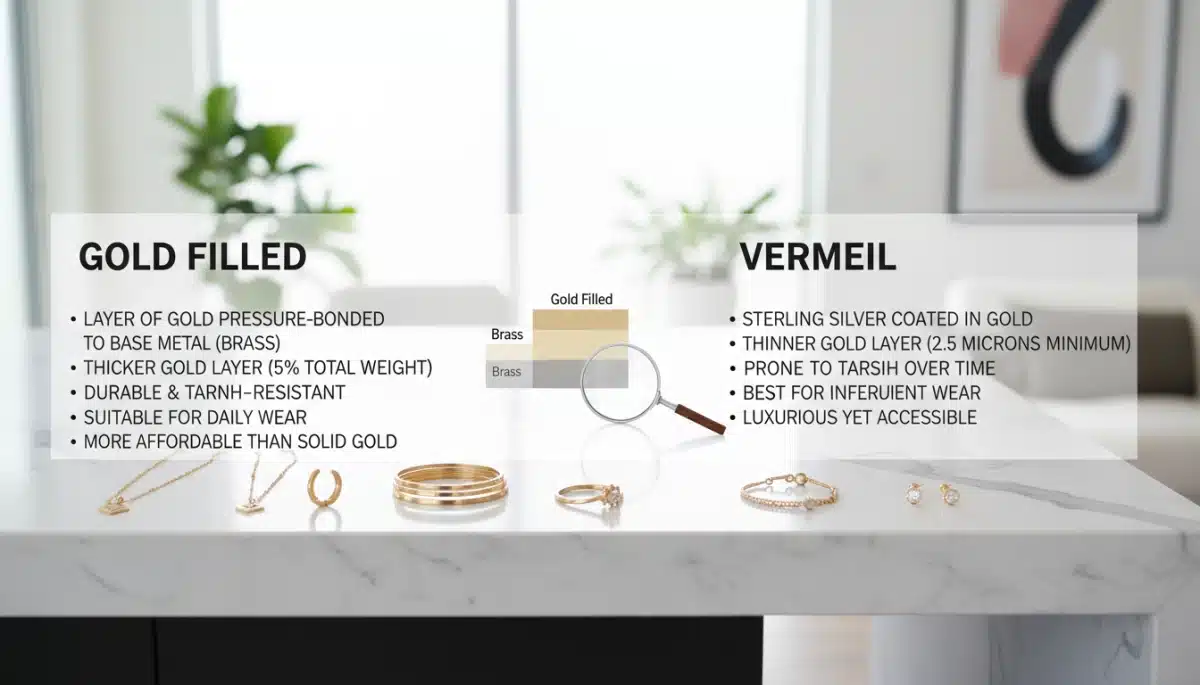
What Is Gold Filled Jewelry?
Gold filled jewelry is my go-to recommendation when someone wants real gold on a budget that can actually handle everyday life.
Clear definition and legal standards
By law in the US, gold filled jewelry must have:
- A thick layer of real gold mechanically bonded to a base metal
- Gold weight equal to at least 5% of the total item’s weight
- Proper markings like “1/20 14K GF” (meaning 1/20 of the weight is 14k gold, Gold Filled)
This is very different from thin gold plated jewelry, which often has only a microscopic layer of gold.
How gold filled is bonded
Gold filled isn’t just “dipped” or “sprayed” in gold. It’s made using:
- Heat and pressure to fuse solid gold sheets to a base metal core
- A mechanical bond, not just electroplating
- A gold layer that’s much thicker and more durable than standard plating
Because of this bonded construction, good gold filled pieces resist chipping and wearing through for years with normal care.
Base metals used and why they matter
Most gold filled jewelry uses:
- Brass as the core (most common)
- Sometimes copper-based alloys
Why this matters:
- Brass gives the piece strength and weight similar to fine jewelry
- It keeps the cost much lower than solid gold
- If the gold ever wears through in tiny spots, a brassy undertone may show
For most people, that’s not an issue, but if you’re extremely metal-sensitive, the base metal can matter.
Typical karat options and gold color
You’ll mainly see:
- 14k gold filled – the most popular
- Warm, balanced yellow
- Great mix of durability and real gold tone
- 12k gold filled – slightly paler yellow
- Often used in vintage or antique styles
Higher karat = richer gold color, but also softer. That’s why 14k gold filled is the sweet spot for both color and wearability.
Gold filled vs regular gold plated
Here’s the blunt version:
- Gold filled jewelry
- Thick gold layer (over 5% of total weight)
- Mechanically bonded
- Far more durable and tarnish resistant
- Better for daily wear
- Gold plated jewelry
- Ultra-thin gold layer (often under 0.5 microns)
- Electroplated only
- Wears off quickly with sweat, water, and friction
- Best for occasional or trend pieces
If you want jewelry that still looks gold after months or years, gold filled vs gold plated is not even a close comparison.
Common gold filled pieces
In my collections, the most loved gold filled jewelry pieces are:
- Everyday gold earrings (especially hoops and huggies)
- Necklaces and chains for daily wear
- Bracelets and anklets that see a lot of friction
- Rings that get constant contact with skin, water, and surfaces
These are the spots where regular plating usually fails fast—gold filled holds up much better.
Who gold filled jewelry is best for
Gold filled is ideal if you:
- Want affordable gold alternatives that actually last
- Wear the same pieces every day (work, errands, travel)
- Prefer tarnish resistant jewelry that doesn’t look cheap
- Need water resistant gold jewelry for occasional shower, sweat, or humidity (with reasonable care)
- Love the look of 14k gold but not the price of solid gold
If you’re building a demi fine jewelry collection and care about both value and longevity, gold filled jewelry is one of the smartest starting points.
What is vermeil jewelry?
Vermeil jewelry meaning & standards
Vermeil jewelry (often called gold vermeil) is sterling silver covered in a thick layer of real gold. It sits in the sweet spot between solid gold and basic gold plating – a true demi fine jewelry option.
In many markets (US, UK, EU), “vermeil” isn’t just a marketing word. To be called vermeil jewelry, it usually must meet these standards:
- Base metal: 925 sterling silver (not brass, not stainless steel)
- Gold purity: usually 10k or higher, most quality brands use 18k gold vermeil
- Gold thickness: commonly at least 1.0–2.5 microns thick (thicker than standard gold plating)
If a piece doesn’t use sterling silver as the core, or the gold layer is too thin, it’s just gold plated, not true vermeil.
Sterling silver base metal – why it matters
Vermeil uses solid 925 sterling silver as the base. That matters for a few reasons:
- It’s a precious metal core, so the piece has inherent value
- It’s generally more hypoallergenic than brass or mystery metals
- If the gold layer eventually thins, you still see silver, not a harsh yellow brass tone
- It keeps the piece lightweight and comfortable for everyday earrings, rings, and layering necklaces
If you’re sourcing or designing vermeil, start with high-quality sterling silver, like the pieces from a dedicated gold vermeil jewelry manufacturer working on sterling bases.
Gold thickness (micron standards)
The key difference between gold plating vs vermeil is thickness:
- Standard gold plating: often 0.1–0.5 microns
- Quality gold vermeil: usually around 1–3 microns
- The thicker the layer (more microns), the better the durability and color stability
For everyday gold earrings and rings, I always recommend opting for vermeil with at least 1–2 microns of gold for better vermeil vs gold filled durability.
How vermeil is made (electroplating process)
Vermeil is created with a controlled electroplating process:
- Sterling silver core is cleaned and polished
- The piece is placed in a gold solution
- Electric current bonds a thick gold layer to the silver
- The result: sterling silver gold layered with real gold, smooth and even
This high-quality electroplating gives a lux, fine-jewelry look at a much more budget friendly gold jewelry price.
Common gold karat levels in vermeil
Most vermeil jewelry uses:
- 18k gold vermeil – warm, rich, classic luxury color
- Sometimes 14k vermeil – slightly paler yellow, more subtle
- Occasionally 22k–24k vermeil – deeper, more saturated gold, very “high-lux” look
Karat affects gold color consistency, but not thickness. You can have thin 18k plating or thick 18k vermeil – thickness is what impacts durable gold finish and non tarnish gold jewelry performance.
Vermeil vs standard gold plated sterling silver
Both can have silver underneath, but:
- Vermeil jewelry
- Must use sterling silver
- Has a thicker gold layer (micron-level)
- Better tarnish resistant jewelry and more water resistant gold jewelry (with proper care)
- Standard gold plated sterling silver
- Gold layer is usually much thinner
- Wears down faster, especially on rings and bracelets
- Typically cheaper, but lower gold jewelry lifespan
If you want affordable gold alternatives that still feel premium, choose vermeil over basic plating every time.
Typical vermeil jewelry styles
Because the core is sterling silver (soft enough to work with, but strong enough to last), vermeil is perfect for:
- Demi fine jewelry and “affordable luxury” collections
- Delicate stacking rings and thin bands
- Everyday wear necklaces and chains
- Non irritating earrings for most people with sensitive skin
- Highly detailed, trend-driven styles – engraving, pavé, charms, and modern shapes
We use vermeil when we want fine jewelry aesthetics without the solid gold price tag.
Who should consider vermeil jewelry?
Vermeil is a strong choice if you:
- Want a luxury look on a budget
- Prefer lightweight pieces (especially for earrings)
- Have mildly sensitive skin and avoid cheap base metals
- Wear your jewelry regularly, but not hard like gym, pools, and heavy sweat every day
- Like to follow trends but still care about quality plating and longer gold jewelry lifespan
If you treat your pieces with basic care and follow simple gold jewelry care tips (no harsh chemicals, gentle cleaning, smart storage), vermeil jewelry can easily stay looking fresh for years and deliver excellent cost-per-wear.
Gold Filled vs Vermeil: Core Differences
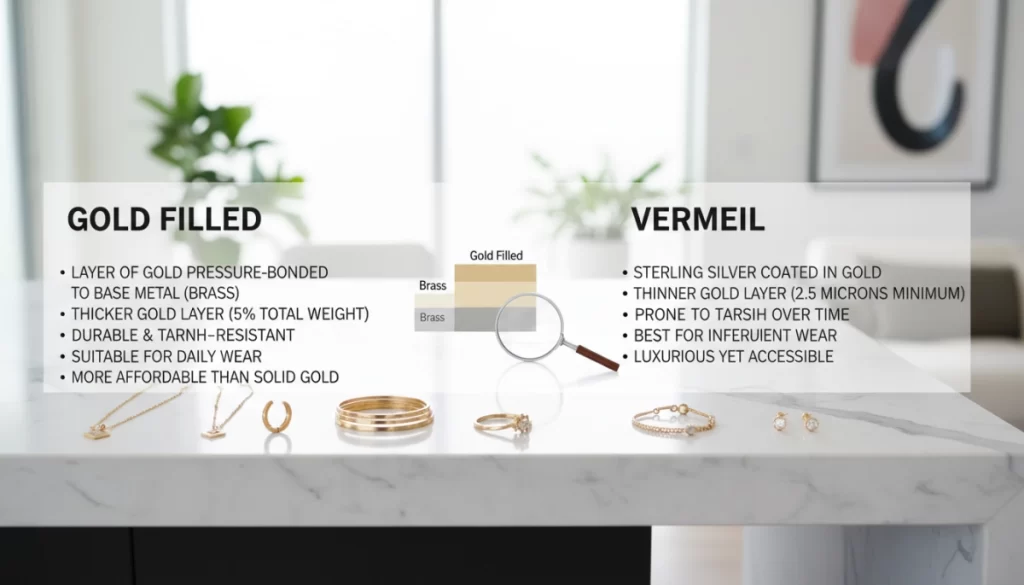
When you’re choosing between gold filled vs vermeil, you’re really choosing between two different constructions, two different base metals, and two different levels of durability.
Base Metal: Brass vs Sterling Silver
- Gold filled jewelry
- Core metal is usually brass.
- Brass is strong, affordable, and gives pieces a solid, weighty feel.
- Great for budget friendly gold jewelry that still feels substantial.
- Vermeil jewelry
- Core metal is always sterling silver (925) by legal definition.
- This makes vermeil ideal if you like hypoallergenic gold jewelry with a precious metal base.
- Lighter on the ear and wrist, good for people who dislike heavy pieces.
If you’re more curious about core metals and alternatives like stainless steel, this comparison of stainless steel vs gold jewelry gives extra context on how different bases behave over time.
Gold Layer Thickness: Who Has More Gold?
- Gold filled
- Legally must have at least 5% of total weight in gold (about 1/20 gold).
- The layer is much thicker than standard gold plating and usually thicker than most vermeil.
- Better if you want durable gold finish and non tarnish gold jewelry for everyday wear.
- Vermeil
- Must be at least 2.5 microns of gold plated over sterling silver.
- Thicker than normal gold plating, but typically still thinner than gold filled.
- Wears well for “demi fine jewelry” and occasional to moderate wear.
Bonding Method: Mechanical vs Electroplating
- Gold filled
- Uses mechanical bonding: solid gold is pressure-bonded to brass under heat.
- This creates a bonded gold layer that’s hard to rub off and resists daily friction.
- Vermeil
- Uses electroplating: gold is electroplated onto sterling silver.
- The finish is smooth and luxe, but over time heavy friction can wear it down, especially on rings.
Color, Shine, and Visual Feel
- Gold filled jewelry
- Commonly 14k gold filled, so color is a warm, slightly softer yellow.
- Shine is natural and balanced, less “flashy” than high-karat plating.
- Color stays consistent for years if you care for it properly.
- Vermeil jewelry
- Often 18k gold vermeil or higher, so the color is richer and more saturated.
- Slightly more “luxury” look, great for fine jewelry vs demi fine styling.
- Over time, especially at high-contact areas, you may start to see the silver base peek through and the gold fade.
Design Flexibility and Style Options
- Gold filled
- Best for everyday wear necklaces, simple chains, stacking rings, basic hoops, and classic bracelets.
- Mechanical bonding is less ideal for super intricate or ultra-thin, trendy shapes.
- Perfect if you like minimalist, classic styles that you can wear daily.
- Vermeil
- Sterling silver is easier to cast and detail, including through methods like lost wax casting.
- More design flexibility: filigree, engraved details, trendy shapes, statement rings.
- Ideal for trend-driven styles and more artistic or complex designs.
Weight and Feel on the Skin
- Gold filled
- Feels a bit heavier, especially on larger chains and bangles.
- Great if you like a solid, premium feel and don’t mind a bit of weight.
- Vermeil
- Generally lighter because of the sterling silver core.
- Better for sensitive ears or anyone who gets discomfort from heavy earrings.
Nickel, Lead, and Allergen Considerations
- Gold filled jewelry
- Quality pieces are typically nickel free jewelry, but always check the listing.
- The thick gold layer means skin usually doesn’t touch the brass core, but if the piece is damaged, very sensitive skin can react to brass or trace alloys.
- Vermeil jewelry
- Base is sterling silver, which is usually well tolerated by sensitive skin.
- If you’re looking for non irritating earrings or sensitive skin jewelry, vermeil from a reputable maker is often the safer bet.
In short:
- Want maximum durability, thicker gold, and everyday, low‑maintenance wear? Lean gold filled.
- Want lighter, hypoallergenic, detailed designs with a sterling silver core? Lean gold vermeil.
Durability and Longevity: Gold Filled vs Vermeil
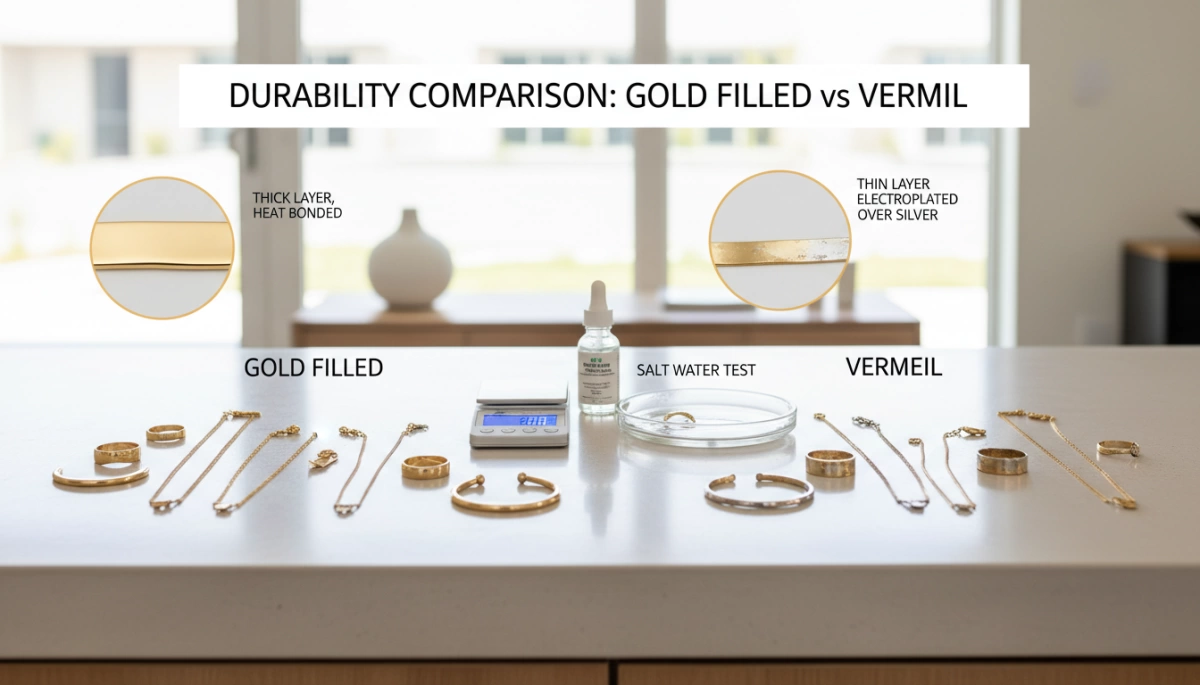
When it comes to gold filled vs vermeil durability, gold filled usually wins for heavy, everyday use – but both can last years if you treat them right.
How Gold Filled Holds Up to Daily Wear
Gold filled jewelry has a thick, mechanically bonded gold layer over a brass core. That bonded layer is why it behaves much closer to solid gold than normal plating.
- Great for everyday wear: rings, bracelets, everyday gold earrings, chains
- Handles friction (stacking, watch rubbing, bag straps) better than vermeil
- Less likely to show the base metal, even after years of use
If you want a deeper breakdown of structure and performance, I’ve covered it in detail in this guide to gold filled jewelry and how it’s made.
How Vermeil Holds Up to Daily Wear
Vermeil is gold plated over sterling silver, usually with a thicker plating than standard gold plated jewelry, but still thinner than gold filled.
- Fine for regular wear on earrings, pendants, and delicate rings
- More sensitive to constant rubbing (rings against other rings, bracelet against desk)
- Over time, high-contact spots can slowly show the sterling silver base
For trend-driven or detailed designs, vermeil is excellent, but it’s not the “wear 24/7 for years” option that gold filled is.
Water, Sweat, and Shower Exposure
Both gold filled and vermeil are water resistant, but not truly “do anything, never care” pieces.
- Gold filled
- Can usually handle occasional showers, sweat, and washing hands
- Better option if you forget to take jewelry off at the gym or beach
- Still smart to avoid chlorine, hot tubs, and harsh soaps
- Vermeil
- Should be kept out of showers, pools, and regular sweat sessions
- Constant water + friction speeds up gold thinning on high-touch areas
- Best to remove before workouts, swimming, or long hot showers
If you want “nearly no-maintenance” daily pieces, gold filled is the safer bet and is why we focus so much on durable gold bonded jewelry in our collections.
Tarnish Resistance and Color Fading
- Gold filled jewelry
- Highly tarnish resistant
- Color stays stable; it’s actual 12k/14k gold on the surface
- Any darkening is usually from dirt, oils, or product buildup, not the gold failing
- Vermeil jewelry
- The gold itself doesn’t “tarnish,” but as it thins, the sterling silver can oxidize, especially in humid climates
- This can show up as subtle darkening in creases or on edges
- Color fading starts at high-friction points (ring shanks, clasp areas)
Average Lifespan: Gold Filled vs Vermeil
These are realistic ranges with normal, responsible wear:
- Gold filled jewelry lifespan
- Daily wear: 5–10+ years
- Occasional wear: well over a decade
- Often never needs re-plating if you avoid harsh chemicals and polishing too aggressively
- Vermeil jewelry lifespan
- Daily wear: 1–3 years before noticeable thinning on high-contact areas
- Occasional/special occasion wear: 3–6+ years
- Can be re-plated to refresh the surface when the silver starts to peek through
You’ll see even better longevity if you follow simple care tips like storing pieces separately and wiping them down after wear.
How Lifestyle Impacts Durability
Your lifestyle matters as much as the metal:
- Gym / active lifestyle
- Gold filled is better for sweat, movement, and friction
- Vermeil should be removed before workouts to avoid accelerated wear
- Hands-on work (nurses, stylists, hospitality, fitness trainers)
- Gold filled rings and bracelets will perform better under constant washing and impact
- Vermeil works better for earrings and necklaces that don’t get hit as much
- Humid or coastal climates
- Gold filled resists tarnish strongly, even in humid, salty air
- Vermeil’s sterling silver core can oxidize faster, especially if stored poorly
When to Repair, Re-Plate, or Retire a Piece
Use this as a simple guide:
- Consider re-plating (mainly for vermeil) when:
- You can clearly see silver showing through on edges or prongs
- The color looks dull even after gentle cleaning
- It’s a piece you love and still wear often
- Consider retiring or downgrading to occasional wear when:
- The base metal is widely visible
- The piece has structural damage (bent, cracked, loose stones)
- Multiple re-platings would cost more than buying a new, better-quality piece
- Gold filled rarely needs re-plating. If it looks tired, a professional clean and polish usually brings it back, especially if the bonded layer is still intact.
If you want a long-term, low-maintenance “wear it and forget it” option, gold filled jewelry is usually the smarter investment. If you want lighter, trend-forward designs at a lower upfront cost, high-quality vermeil jewelry is a great fit—just know you’re likely to re-plate or replace sooner. For a deeper comparison of both, I’ve put together a full gold filled vs vermeil guide with side-by-side details.
Skin Sensitivity & Hypoallergenic Factors: Gold Filled vs Vermeil
When you’ve got sensitive skin, gold filled vs vermeil isn’t just a style choice – it’s a comfort and health decision.
How Sensitive Skin Reacts to Gold Filled Jewelry
Gold filled jewelry is usually made with a thick layer of gold bonded over brass:
- If your skin is only mildly sensitive, good-quality 14k gold filled can be very comfortable for everyday wear.
- Over years of heavy wear, the gold layer can thin on high-contact areas (ring edges, clasp corners). If brass starts to peek through, some people get:
- Itching or redness
- Dark marks on the skin
- For earrings, especially for kids or very reactive ears, I usually recommend nickel-free, high-quality gold filled only, from trusted gold filled jewelry manufacturers who clearly label metals and alloy content. A good example of this type of transparency is how some brands explain their processes for gold filled jewelry manufacturing.
How Sensitive Skin Reacts to Vermeil Jewelry
Vermeil jewelry uses sterling silver as the base metal and a layer of gold on top:
- For most people with sensitive skin, sterling silver + gold is more comfortable than brass-based pieces.
- If you’re allergic to nickel but not silver, 18k gold vermeil is often a safe bet.
- The risk: when the gold layer wears thin (especially rings and bracelets), skin may touch the sterling silver. A few people react to the copper content in sterling, but it’s less common than brass reactions.
Why Sterling Silver Helps Vermeil Be More Hypoallergenic
Sterling silver (usually 92.5% pure silver) is:
- Naturally nickel-free when made properly
- More skin-friendly than brass or cheap base metals
- Stable and less likely to cause rashes for most people
That’s why vermeil jewelry is often marketed as hypoallergenic gold jewelry – the silver core is doing a lot of the heavy lifting.
Allergy Triggers: Brass, Nickel & Other Base Metals
Possible triggers in gold filled vs vermeil:
- Brass (gold filled core):
- Can cause greenish skin marks
- Can trigger irritation for those with metal sensitivity
- Nickel (in some low-quality gold plating):
- One of the most common metal allergies worldwide
- Can cause itching, bumps, and redness
- Sterling silver (vermeil core):
- Rarely causes severe reactions, but some react to the copper content
If you have known nickel or brass allergies, be extra strict about your metal choices and labeling.
Tips for Choosing Metals for Sensitive Ears & Skin
When buying sensitive skin jewelry:
- Look for labels like:
- “Nickel-free”
- “Hypoallergenic”
- “14k gold filled” with no mystery alloys
- “925 sterling silver” base for vermeil
- For earrings:
- Choose gold filled posts or sterling silver / vermeil posts
- Avoid mystery “gold tone” or “alloy” descriptions
- For kids or very reactive skin, stick with metals marketed specifically as hypoallergenic jewelry, similar to the standards used for hypoallergenic jewelry for kids.
How to Test if a Piece Irritates Your Skin
If you’re unsure about a new piece:
- Patch test first:
- Wear it for a few hours at home, not overnight.
- Start with a bracelet or necklace before trying earrings.
- Watch for:
- Redness, itching, bumps
- Dark or green marks that don’t wash off easily
- If irritation appears quickly, stop wearing it immediately and avoid that base metal in future purchases.
Best Options for Nickel-Free, Hypoallergenic Gold Looks
If you want a gold look without the drama:
- Best for most sensitive skin:
- 18k gold vermeil (over genuine sterling silver)
- High-quality 14k gold filled from known manufacturers
- For very reactive ears:
- 14k+ solid gold posts
- Sterling silver or titanium posts with vermeil or gold filled on the visible parts
- Always prioritize:
- Clear metal disclosure
- Nickel-free wording
- Reputable brands that stand behind their metal quality
In short:
- Choose vermeil if you want a more hypoallergenic sterling silver core.
- Choose gold filled if you want thicker gold, great durability, and you’re not highly reactive to brass.
Pros and Cons of Gold Filled Jewelry
Key advantages of gold filled jewelry
Gold filled jewelry gives you a thick, bonded layer of real gold over a brass core, so it:
- Looks and feels close to solid gold at a far lower price
- Is more durable than regular gold plated or flash-plated pieces
- Stays tarnish resistant and keeps its color with normal wear
- Works well for everyday gold earrings, chains, and bracelets
If you want a deeper breakdown of how gold filled compares to gold plating, I’ve covered that in detail in this guide on gold filled vs gold plated jewelry.
When gold filled outperforms vermeil
Gold filled usually wins over vermeil when:
- You wear the piece daily (work, school, travel)
- You want water‑resistant gold jewelry and sometimes forget to take it off
- You need long-term color stability with minimal care
- You value cost-per-wear over trend-driven designs
Limitations in design and style
Because gold filled uses a mechanically bonded sheet of gold, it has some style limits:
- Less friendly for super intricate, ultra-detailed designs
- Not ideal for very thin, hollow, or super lightweight shapes
- Fewer fashion-forward or micro-pavé styles compared with vermeil and standard plated pieces
Comfort, weight, and wearability
Gold filled jewelry:
- Feels a bit heavier than vermeil on sterling silver, especially for big hoops or chunky chains
- Is very comfortable for everyday wear in simple styles
- Works best for classic, minimalist, demi fine jewelry that you keep on all day
Allergy risks and how to minimize them
Most gold filled jewelry uses a brass base metal under the gold layer:
- If the gold layer is thick and intact, skin rarely touches the brass
- Allergy risk rises if the piece wears down at high-friction points (ring undersides, clasp edges)
To minimize irritation: - Choose 14k gold filled (less alloyed metals than low karat plating)
- Look for nickel free jewelry claims from the maker
- For very sensitive ears, start with small studs and wear them short-term to test reaction
Price-to-longevity value
Gold filled is one of the best affordable gold alternatives:
- Higher upfront cost than basic plated or vermeil in many cases
- But lasts years instead of months with normal care
- Excellent cost-per-wear if you’re building a small, everyday capsule of gold basics
If you’re a brand or seller, working with specialized gold filled jewelry manufacturers lets you hit a strong price-to-longevity sweet spot for global customers.
When gold filled is not the best choice
Gold filled might not be ideal if:
- You want super lightweight, detailed, or trendy pieces that change with fashion
- You react to brass even through thicker coatings and need a sterling silver base metal
- You mainly wear jewelry occasionally, not daily (vermeil can make more sense)
- You’re investing in heirloom-level fine jewelry—in that case, go solid gold instead of any layered option.
Pros and Cons of Vermeil Jewelry
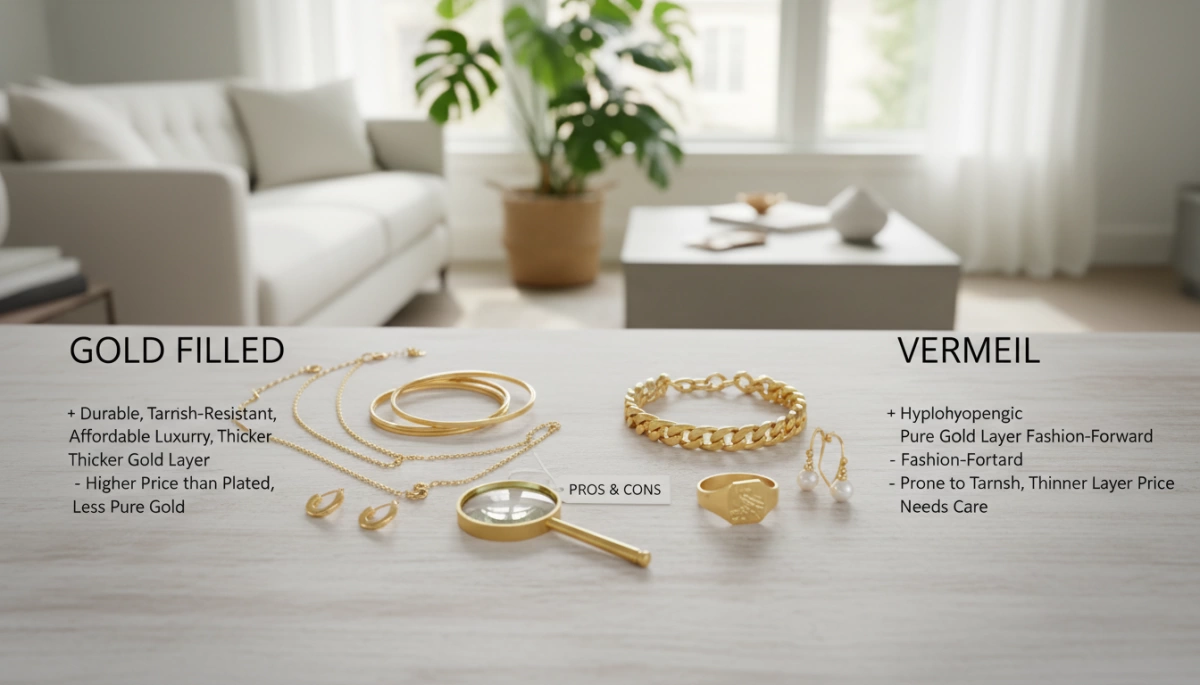
Key advantages of vermeil jewelry
Vermeil jewelry hits a sweet spot between solid gold and basic gold plating:
- Real precious metals only – thick layer of gold over a solid sterling silver base, no mystery metals.
- Richer gold look – usually 18k+ gold, so you get that deep, luxe yellow tone.
- Lightweight but premium – feels more refined than brass-based pieces, especially for earrings and bigger designs.
- Great value – you get a fine-jewelry look without solid-gold pricing, ideal for demi-fine and “affordable luxury” styles.
If you’re building a collection of demi fine jewelry or working with a reliable sterling silver jewelry supplier, vermeil is one of the most cost-effective gold options.
When vermeil is better than gold filled
Vermeil can outperform gold filled in a few situations:
- You want a sterling silver core rather than brass.
- You have sensitive skin and react to base metals but do well with silver.
- You prefer 18k or 22k gold color instead of the slightly paler 14k tone often used in gold filled.
- You’re buying design-led, detailed, or sculptural pieces that are easier to make in silver.
For fashion-forward, design-heavy, and occasional-wear pieces, vermeil usually wins.
Design flexibility, detail, and style
Sterling silver is soft enough for:
- Intricate engraving, filigree, and textures
- Trend-driven shapes, openwork, and statement designs
- Clean, minimal lines that still feel premium
That’s why a lot of trend-driven rings, chunky chains, and statement hoops are done in 18k gold vermeil over silver—designers get more freedom than with brass.
Maintenance and care level
Vermeil jewelry needs a bit more care than gold filled:
- Avoid daily showers, pools, and workouts in vermeil.
- Keep away from perfume, lotions, and harsh cleaners.
- Wipe with a soft cloth after wear and store in a dry, closed box or pouch.
Treat vermeil like you would treat fine jewelry: not fragile, but not “wear-it-and-forget-it” either.
How long vermeil stays looking fresh
Realistically, with normal, careful wear:
- Everyday pieces: expect 1–3 years of looking very fresh before noticeable fading on high-friction areas.
- Occasional wear: 3–5+ years if stored well and kept away from water/chemicals.
The gold layer on vermeil is thick (usually 2.5 microns or more), so it lasts longer than standard gold plated jewelry—but it will eventually show silver through on edges and contact points.
When vermeil may not suit your lifestyle or budget
Vermeil might not be the best fit if:
- You never take jewelry off (sleep, shower, swim in it).
- You live in a humid, hot, or coastal climate and don’t want to fuss with storage or cleaning.
- You’re hard on your jewelry—gym, sports, manual work, constant friction.
- You want pieces that last many years of daily wear with minimal color change (gold filled or solid gold will do better).
- You’re on a very tight budget and just need basic gold plated pieces for short-term wear.
In short:
- Choose vermeil jewelry for rich color, sterling silver core, and stylish, design-forward pieces you’ll treat with care.
- Skip vermeil if you need completely low-maintenance, shower-safe, long-term daily wear on a strict budget.
Price and value: gold filled vs vermeil
Typical price range
In most global markets, gold filled jewelry usually costs more than vermeil jewelry at the same size and style because it carries a thicker gold layer.
- Gold filled (simple chains, everyday earrings, stacking rings):
- Rough guide: low–mid price range for demi fine
- Often 2–4x the price of basic gold plated pieces
- Vermeil (dainty rings, detailed pendants, trendy designs):
- Sits between standard gold plated and gold filled
- Often priced close to gold filled when the brand is design‑driven
If something is advertised as “gold filled” or “gold vermeil” but is almost as cheap as fast‑fashion plated jewelry, that’s a red flag.
How gold content and thickness change the cost
You pay for three things: karat, thickness, and base metal.
- Karat (10k / 14k / 18k)
- Higher karat = richer color + higher cost per gram
- 18k vermeil usually costs more than 14k gold filled per gram of gold, but vermeil uses less total gold.
- Gold thickness
- Gold filled: legally a thick bonded layer (not just surface plating)
- Vermeil: must meet minimum micron thickness (often 1–2.5 microns)
- More microns = more cost, better durability
- Base metal
- Brass (typical for gold filled) is cheaper than sterling silver
- Sterling silver (vermeil) adds intrinsic value and scrap value
If you want a deeper dive into how gold content affects pricing overall, it’s similar to how the value of a 14k gold ring is calculated by weight and fineness.
Brand, craftsmanship, and design
Price isn’t just metal:
- Brand positioning – “designer” or “influencer” brands add a big markup
- Craftsmanship – hand‑finished pavé, precise stone setting, and custom molds cost more
- Design complexity – hinge hoops, articulated charms, engraving, or mixed materials push the price up
A simple gold filled chain from a smaller studio can be better value than a very basic vermeil chain from a big-name fashion brand charging mostly for the logo.
Cost-per-wear: where the value really is
Think in cost per wear, not just price tag.
- Gold filled
- Best for daily wear (necklaces, bracelets, work-friendly earrings)
- Often delivers the lowest cost-per-wear over years, especially for minimal styles you repeat constantly.
- Vermeil
- Best for occasional or rotational wear and more design‑heavy pieces
- Great value if you’re buying statement rings or trendy designs you won’t wear every single day.
If you’re planning to wear a piece in the shower, at the gym, or on vacation constantly, gold filled usually wins for long‑term value.
Solid gold vs gold filled vs vermeil
Think of them as three levels:
- Solid gold (10k/14k/18k)
- Highest upfront cost, highest resale value, best heirloom choice
- Ideal for wedding bands, signature chains, and piercings you’ll never take off.
- Gold filled
- Middle ground: real gold surface, strong durability, no luxury price tag
- Perfect for everyday gold earrings and water resistant gold jewelry if you’re still budget-conscious.
- Vermeil
- Silver core + gold finish, beautiful but more delicate
- Ideal for demi fine jewelry with intricate designs and lighter weight.
What “affordable luxury” really means here
For demi fine buyers, affordable luxury is:
- Real gold surface (no cheap orange tint)
- Decent thickness that won’t turn in a few weeks
- Comfortable, nickel free, and safe for sensitive skin
- Clean design that still feels premium, even without a big logo
That’s exactly the gap gold filled vs vermeil and high‑quality plated pieces aim to fill. If you’re comparing against basic fashion plating, check guides on gold plated jewelry quality and durability so you don’t confuse categories.
Spotting overpriced or suspiciously cheap pieces
Use these quick checks:
Overpriced signs:
- Simple design, but price close to solid gold
- Vague metal description: “gold tone”, “gold dipped” with no karat, micron, or “gold filled/vermeil” claim
- No weight, no base metal disclosed
Suspiciously cheap signs:
- “14k gold filled” or “18k vermeil” priced like typical costume jewelry
- No mention of sterling silver base for vermeil
- No hallmarks (like “14k GF” or “925”) and no brand accountability
Bottom line: for budget friendly gold jewelry with real longevity, gold filled usually gives the best cost-per-wear, while vermeil wins when you want detailed, design‑driven pieces without paying solid gold prices.
Gold filled vs vermeil: which is better for you?
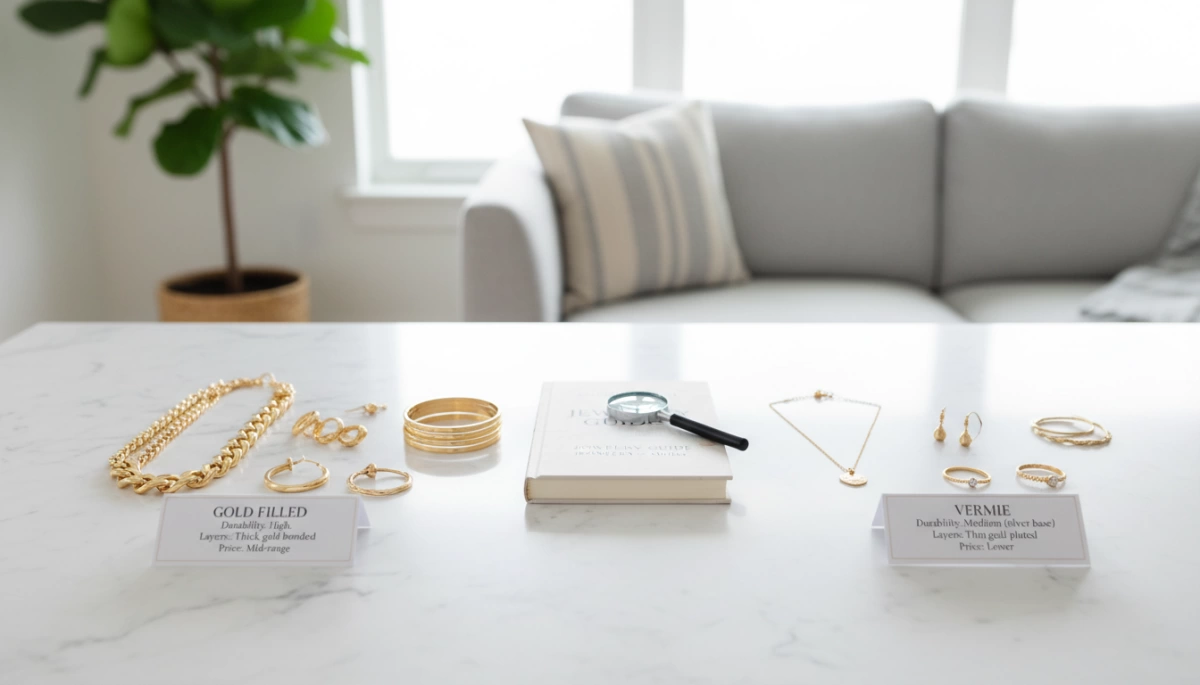
When it comes to gold filled vs vermeil, it’s less about which is “best” and more about which fits your lifestyle, skin, and budget.
Daily wear vs occasional wear
Use this rule of thumb:
- Choose gold filled jewelry if:
- You want pieces you can wear almost every day
- You rarely take jewelry off (sleep, commute, work, travel)
- You want better vermeil vs gold filled durability for the price
- Choose vermeil jewelry if:
- You wear pieces occasionally or rotate your jewelry a lot
- You want a richer 18k gold vermeil look and deeper gold color
- You’re okay with re-plating in the future
Best for active, low-maintenance lifestyles
If you sweat a lot, hit the gym, live in a humid climate, or just don’t baby your jewelry:
- Gold filled is usually the better choice:
- Thicker, mechanically bonded gold layered surface
- More water resistant gold jewelry (but still avoid pools and harsh chemicals)
- Great for everyday wear necklaces, bracelets, and everyday gold earrings
- Vermeil is more “take off when you get home”:
- Best treated as demi fine jewelry, not sports gear
- Ideal if you’re okay with a bit more maintenance and care
Best for sensitive skin and lightweight pieces
For sensitive skin jewelry and nickel free jewelry, base metal matters:
- Vermeil jewelry (gold over sterling silver):
- Sterling silver base is naturally more hypoallergenic
- Great for sensitive ears and people reacting to brass or unknown alloys
- Lightweight, especially for larger statement earrings
- Gold filled jewelry:
- Often brass-based, but can be low in nickel if made well
- Good choice when clearly labeled as hypoallergenic gold jewelry
- For nickel concerns, stick to
Quality checks and hallmarks to look for
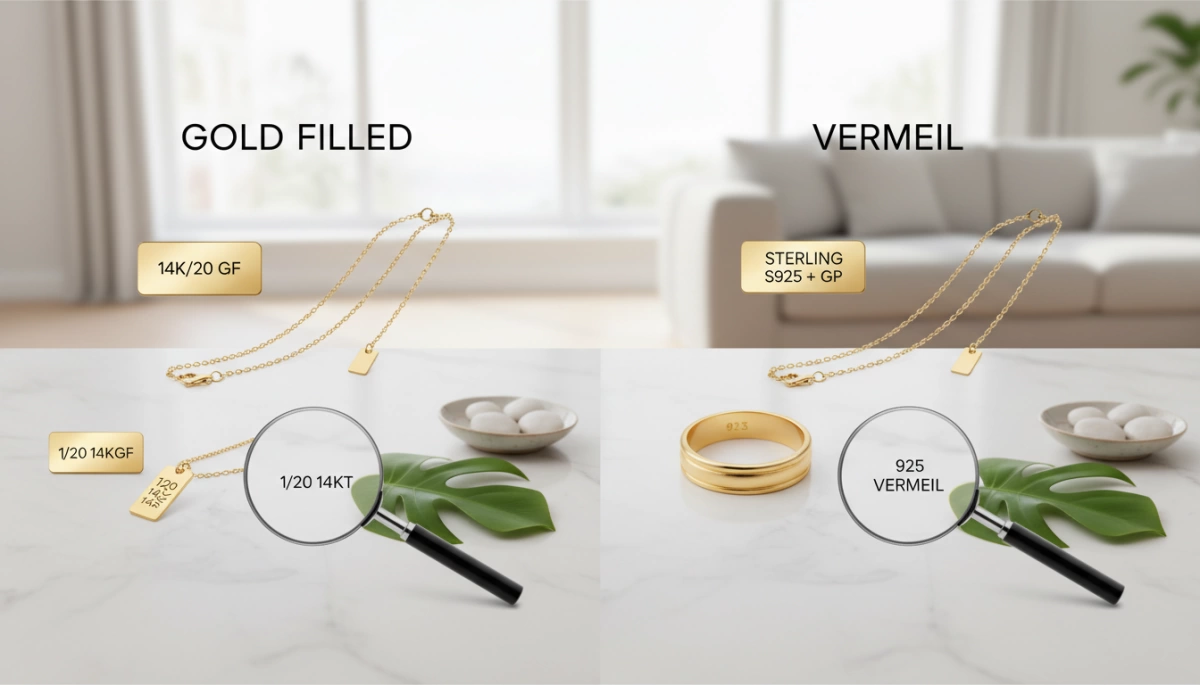
When you’re comparing gold filled vs vermeil, the markings and small details tell you almost everything about quality. I always tell customers: if the stamps and specs aren’t clear, walk away.
Common stamps for gold filled jewelry
Genuine gold filled jewelry should be clearly marked. Look for:
- “1/20 14K GF” – most common (means 1/20 of the total weight is 14k gold)
- “1/20 12K GF” or “1/10 12K GF”
- “GF” or “G.F.” next to the karat rating
- Sometimes a maker’s mark + GF code
If a piece claims to be gold filled but only says “14K” without “GF” or “1/20”, it’s a red flag. It’s probably just gold plated.
If you’re new to reading metal stamps, it helps to get familiar with how makers and metal quality are usually marked by checking guides like these breakdowns of common jewelry markings and stamps on professional jewelry marking resources.
Common stamps for vermeil & sterling silver
Vermeil jewelry doesn’t always say “vermeil” on the piece, but the sterling silver base metal should be clearly marked:
- “925” or “.925” – sterling silver
- “STER” or “STERLING” – older pieces
- Sometimes “925” + brand stamp
Some brands add:
- “VERMEIL”
- “GP” (gold plated) or “GEP” (gold electroplated) – but “GP” alone is NOT enough to prove vermeil
If there is no 925 / sterling marking anywhere, it’s not vermeil – it’s just gold plated on some other base metal.
How to read karat markings (10k, 14k, 18k, etc.)
Karat tells you how much pure gold is in the alloy:
- 10k – 41.7% gold
- 14k – 58.5% gold (most popular for 14k gold filled)
- 18k – 75% gold (often used in 18k gold vermeil)
- 24k – 99.9% pure (too soft for most jewelry)
You might also see European fineness numbers:
- 14k = 585
- 18k = 750
Remember: higher karat = richer yellow color, softer metal, usually higher price.
How to verify gold filled vs vermeil
To check if a piece is truly gold filled or vermeil, go through this quick checklist:
For gold filled jewelry:
- Look for: “1/20 14K GF”, “1/10 12K GF”, etc.
- Check the product description mentions thick bonded layer, not “plated”
- Confirm the base metal (usually brass or copper). If the seller can’t tell you, that’s not a good sign.
For vermeil jewelry:
- Confirm the stamp: “925” / “STERLING” somewhere on the piece
- Product listing should clearly say “18k gold vermeil” or similar
- There should be a minimum gold layer stated (often 1–2.5 microns for quality vermeil)
- Ask: “Is this sterling silver base with thick gold plating?” If the answer is vague, it’s probably just gold plated silver.
If you’re buying in bulk or for resale, work only with suppliers who are transparent about metal composition and fineness marks, similar to how serious wholesalers describe their sterling silver-based jewelry lines in detail, like this type of sterling silver wholesale jewelry reference.
Why reputable jewelers matter
With affordable gold alternatives like gold filled and vermeil, the biggest risk is mislabeling:
- Gold plated sold as gold filled
- Regular gold plated silver sold as vermeil
- Base metal unknown or hidden
Buying from reputable jewelers means:
- Transparent metal specs (base metal, karat, thickness)
- Clear photos of hallmarks and stamps
- Honest comparison: gold filled vs vermeil vs solid gold
- No fake “hypoallergenic” claims with mystery alloys
This matters even more if you have sensitive skin or need nickel free jewelry.
Return policies, warranties & aftercare as quality signals
Strong policies are a quiet but powerful sign that a brand trusts its own quality:
- Return window that’s reasonable (not just 7 days)
- Warranty on plating or bonding issues (especially for vermeil)
- Aftercare guidance on cleaning and storage
- Option for replating or paid refresh services for vermeil rings and everyday gold earrings
If a brand sells “premium vermeil” or “high quality gold filled jewelry” but offers no warranty, no clear return policy, and no care instructions, I wouldn’t put it in my long-term collection.
Bottom line:
Use stamps, karat markings, clear descriptions, and brand policies together. That’s how you spot true durable, non tarnish gold jewelry and avoid paying solid-gold prices for low-end plating.
Care and maintenance tips for gold filled vs vermeil
Keeping gold filled jewelry and vermeil jewelry looking fresh is mostly about what you don’t do to them. With a few simple habits, both can stay bright for years.
Daily habits to keep gold filled & vermeil shining
- Put jewelry on last (after skincare, perfume, hair spray).
- Take it off first when you get home.
- Wipe pieces quickly with a soft, dry microfiber or jewelry cloth after wear to remove sweat, sunscreen, and oils.
- Avoid sleeping in delicate vermeil chains or thin rings to prevent friction wear.
How to clean gold filled jewelry at home
Gold filled is more forgiving and can handle a gentle clean:
- Mix a few drops of mild dish soap with lukewarm water.
- Soak for 5–10 minutes.
- Use a very soft brush (baby toothbrush) to clean crevices.
- Rinse well with clean water.
- Pat completely dry with a soft cloth, then air dry before storing.
Avoid abrasive powders, toothpaste, rough cloths, and ultrasonic cleaners if stones or glue are involved.
How to clean vermeil jewelry without stripping the gold
Vermeil has a thinner gold layer, so go gentler:
- Do not soak for long periods.
- Dip a soft cloth in lukewarm soapy water (mild dish soap).
- Gently wipe the surface only.
- Rinse quickly under cool water.
- Pat dry immediately with a soft cloth—no rubbing, no polishing compounds.
Skip harsh jewelry cleaners, polishing cloths labeled for “removing tarnish,” and anything abrasive, which can strip the micron gold plating.
What to avoid: chemicals, pools, perfumes, lotions
Both gold filled vs vermeil will last longer if you keep chemicals off them:
- Remove jewelry before:
- Swimming (chlorine and salt water)
- Hot tubs, saunas, steam rooms
- Gym workouts (heavy sweat + friction)
- Cleaning with bleach, ammonia, or strong detergents
- Keep away from:
- Perfume, body spray, hair spray
- Sunscreen, tanning oils, thick lotions
- Hand sanitizer (alcohol can dull and degrade finishes)
These rules apply across metals—just like you’d avoid harsh solutions when you clean delicate copper jewelry at home, you need to treat vermeil and gold filled with the same care.
Best storage to prevent scratching & tarnish
Storage matters as much as cleaning:
- Store pieces individually in:
- Soft pouches
- Anti-tarnish bags
- Lined jewelry boxes with compartments
- Keep away from humidity (no bathroom storage).
- Keep chains clasped and laid flat or hung to prevent tangling and rubbing.
- Avoid throwing multiple pieces together—friction will wear the gold layer faster, especially on vermeil.
How often to clean and inspect
- Light daily wear: quick wipe after use, deeper clean every 1–2 months.
- Heavy daily wear (rings, everyday gold earrings): quick wipe daily, mild clean every 2–4 weeks.
- Inspect monthly for:
- Color changes (base metal peeking through)
- Flaking, rough spots, or discoloration
- Loose clasps, prongs, or stones
When to go for professional cleaning or re-plating
Consider pro help when:
- You see obvious fading or silver/brass showing through on vermeil.
- The piece has sentimental or higher monetary value and you don’t want to risk DIY.
- There are gemstones, intricate settings, or glued elements.
- The finish looks dull even after gentle at-home cleaning.
Gold filled jewelry usually doesn’t need re-plating unless it’s extremely worn down after many years. Vermeil jewelry can be re-plated once the gold layer wears thin, giving you a fresh surface without replacing the entire piece.
If you want a long-lasting, low-maintenance, “put it on and forget it” option, lean toward gold filled for daily wear and keep vermeil for lighter, occasional, or trend-driven looks.
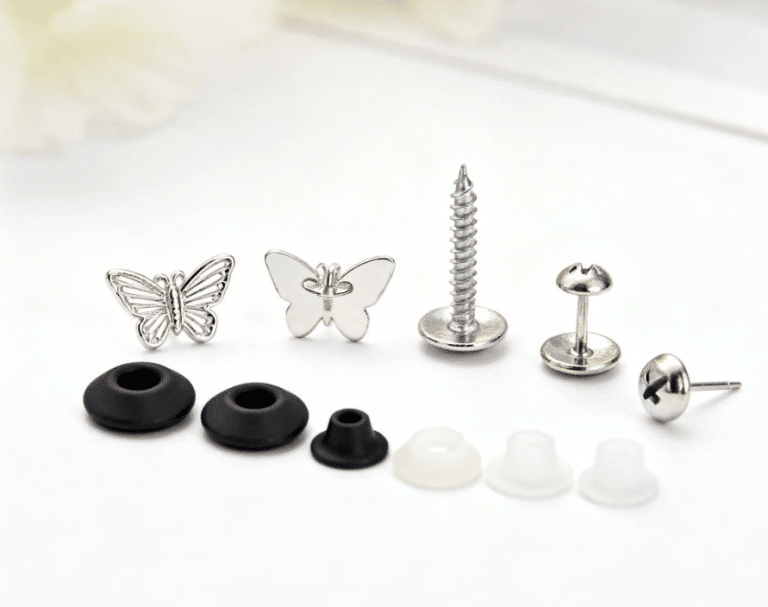
The Unseen Hero: Why Earring Backings Define Quality Jewelry
Every jewelry brand owner knows the sinking feeling. A customer calls, distraught. They’ve lost one
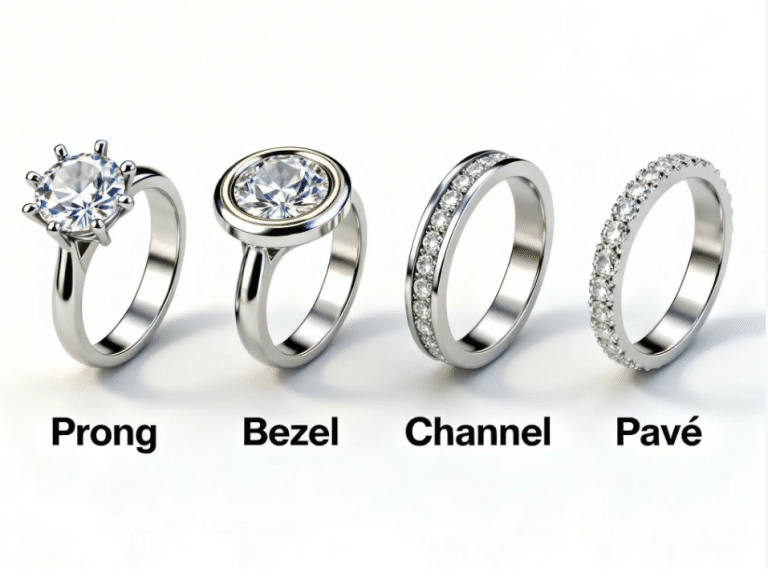
Choosing the Best Jewelry Stone Setting for Mass Production
Selecting the right jewelry stone setting is one of the most pivotal decisions for any
Best Jewelry Stone Setting for Mass Production | HonHo
Choosing the best jewelry stone setting Choosing the best jewelry stone setting is one of