

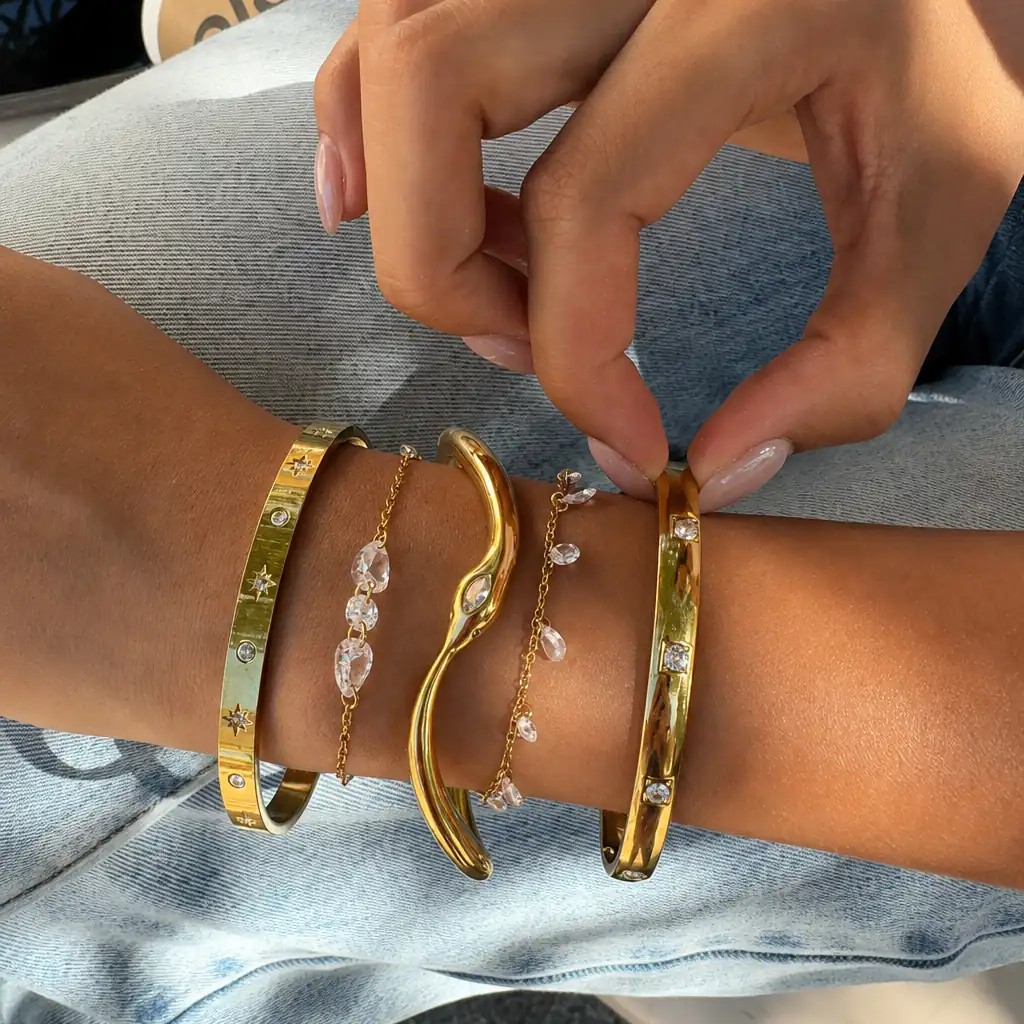
Buy jewelry by checking what it is made from, how it fits and what the seller can document. A photograph and a category such as “fine” or “luxury” do not answer those questions. Start with the intended use and budget, then compare equivalent products rather than titles that hide different materials or construction.
Consider where the piece will be worn and what may make it uncomfortable: a heavy earring, a ring that catches, a short necklace or a clasp that is difficult to operate. For a gift, confirm size and exchange options before adding engraving or other irreversible personalization. A meaningful design still needs to fit.
Set a total budget that includes any sizing, customization, delivery or care costs you already know. Treat an ordinary jewelry purchase as a purchase for use or enjoyment unless you have separate, appropriate valuation advice. Retail price, insurance replacement value and a resale offer are different figures.
Write down your total spending limit, the intended use and two or three features you care about. Take those notes into the store or use them to compare online listings. Ask to see the options within that limit and give yourself time to compare them before committing.
A first-time buyer choosing a graduation gift asks how to avoid overpaying while finding something worth keeping. That question is more useful than treating a brand name or a resale prediction as the answer. Compare the complete piece, the information supplied and the service you will actually use. Forum opinions about investment value or particular sellers are not an appraisal.
Before paying, ask the seller to put the metal and stone descriptions, any agreed alterations, and the return deadline in writing. For a gift, check whether the recipient can exchange the size and whether engraving changes the return terms. If a requested detail is still unclear, resolve it before authorizing the alteration.
| Description | Ask the seller | Why it matters |
|---|---|---|
| Gold-colored | What metal and coating produce the color? | Color alone does not establish gold content. |
| Gold plated | What is the substrate and coating specification? | The surface and the body are different materials. |
| Gold filled | Which components have the stated bonded construction? | A clasp and pendant may have different descriptions. |
| Sterling silver | What are the fineness and separate findings? | A silver body does not identify every attached part. |
| Stainless steel | Which grade and which components? | Steel is not automatically nickel free or suitable for every wearer. |
The FTC’s consumer guidance on jewelry metals explains common U.S. descriptions. Our fine jewelry guide separates broad retail categories from material claims. If a listing title conflicts with its specification, obtain a clear written answer before buying.
Distinguish natural, laboratory-grown and imitation materials. Ask about treatments and any effect on care. A laboratory-grown gem and an imitation are not interchangeable terms. For diamonds, the 4Cs are a useful framework, but do not apply the same grading language automatically to every colored stone or pearl.
For a significant gemstone purchase, request an appropriate independent report and check that it corresponds to the item. GIA’s buying guidance discusses laboratory reports and workmanship checks. A report, receipt and appraisal answer different questions; none should be substituted for another without explanation.
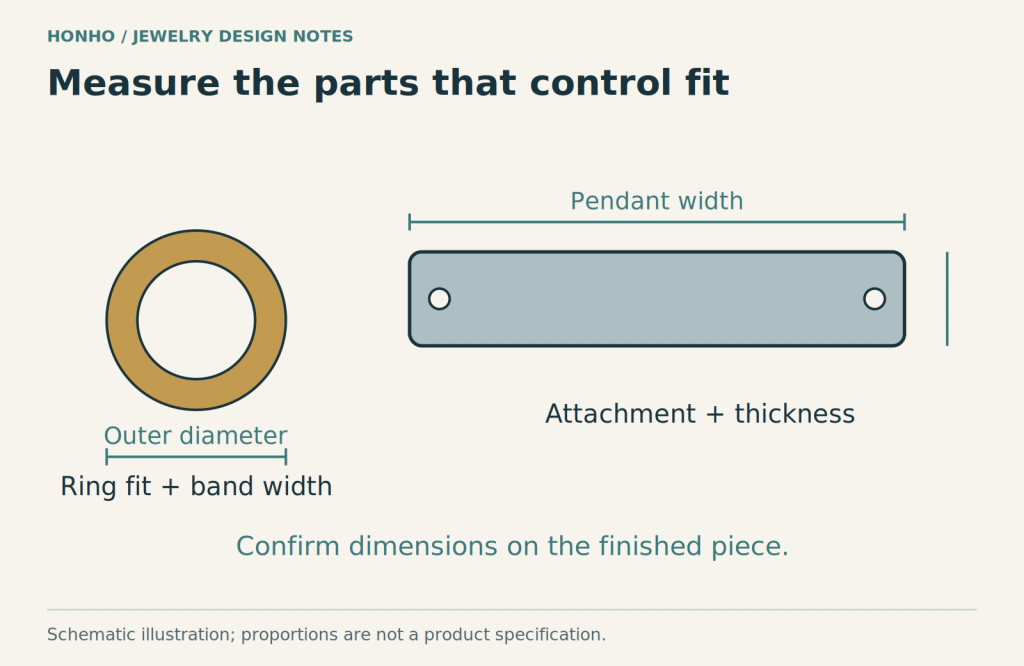

Try the clasp in its normal wearing position when possible. For online buying, request dimensions and a view of the back, inside and closure, not only a polished front image. The earring backing guide and chain guide explain common fit details.
Choose two or three products that serve the same purpose, then compare the details that change the experience of wearing them. For a gift necklace, that may be finished length, pendant size, fastening and exchange terms. For earrings, weight per earring and backing fit may matter more than the front-view diameter. For a ring worn daily, ask about the inner profile, setting height and realistic repair options.
Request photographs that answer a question: a side view for thickness, a back view for the attachment, and a close view of the fastening. Ask whether the photograph shows the exact item, a representative sample or a design illustration. Color on a screen helps with style selection but does not establish a metal’s identity or the precise appearance under other lighting.
Measure a piece you already find comfortable and compare its relevant dimensions. For a necklace, record the finished length and any extender separately. For an earring, compare the drop, width and weight rather than assuming all pieces of the same outside size feel alike. For rings, use an appropriate gauge and the proposed band width; a very narrow ring and a broad band can fit differently.
If a pendant must move between chains, check its bail against the largest end fitting that must pass through. A chain’s link width can be smaller than its tag or clasp connection. This is a practical reason to request measurements beyond the central decorative piece.
A receipt records the transaction and description. A laboratory report addresses the material or gemstone examined under its stated scope. An appraisal addresses a valuation purpose and assumptions. A warranty states a seller’s remedy and conditions. Keep them separate when comparing offers, and ask for clarification if one is presented as a substitute for another.
For significant material or gemstone claims, verify the report with its issuer and check the identifying details against the actual item. A report for a loose stone does not inspect the necklace’s clasp, and a metal declaration does not establish every stone treatment. The questions should follow the product you are buying.
| Record | What to retain |
|---|---|
| Product | Exact description, variant, dimensions and price at purchase. |
| Evidence | Relevant report number or material information and its scope. |
| Terms | Return window, personalization exclusions, warranty and repair arrangements. |
| Delivery | Seller identity, expected dispatch and applicable charges. |
| Questions | Written clarification of any ambiguous claim. |
Reviews can reveal repeated fit or service issues, but they do not verify an alloy or stone. A hallmark or stamp is also not a home assay. Magnetism, weight and color alone cannot authenticate unfamiliar jewelry. Seek professional assessment when identity or value is important.
Condition and previous work become part of the purchase. Ask whether the piece has been resized, repaired, replated or fitted with replacement stones or findings. Request clear views of the inside, joins and fastening. An old mark or original box is useful context, but it does not authenticate every part of the current assembly.
Where the purchase depends on a valuable metal or gemstone claim, arrange suitable professional assessment and agree the inspection and return terms before paying. Check whether the described report applies to the item as it is now. A repair estimate may also affect whether the piece fits your budget. Neither an unusually low price nor a seller’s confidence replaces that inspection.
A coating, pearl, treated stone or glued component can change the care requirements. Ask how the complete piece should be cleaned and whether future repair or replating is practical. Avoid assuming a general water-resistance label covers swimming, cleaners and every attached component.
If jewelry irritates your skin, stop wearing it and seek medical advice for persistent, recurring or severe symptoms. Do not rely on “hypoallergenic” as a guarantee for an individual. Our jewelry reaction guide explains the limits of material labels.
A personal purchase asks whether one piece is right for the wearer. A wholesale or custom order also asks whether the supplier can deliver consistent pieces, identify variants accurately and support replenishment. Start with one representative style and a written specification before extending the same assumptions across a collection.
| Decision | Personal purchase | Brand or boutique order |
|---|---|---|
| Fit | Confirm the wearer’s size and comfort | Define the size range and finished measurement method |
| Material | Understand the complete piece | Record body, findings, coatings and permitted changes |
| Appearance | Inspect the purchased item | Approve a reference sample and permitted variation |
| After-sales | Read repair, warranty and return terms | Agree defect handling, replacement parts and reorder references |
Price comparisons need the same unit. An earring quoted per piece is not directly comparable with a pair price. Development, samples, packaging, testing and freight may be separate. Record what is included and obtain a delivered-cost estimate appropriate to the destination before setting a retail margin.
For a first assortment, decide what the order is meant to test: one hoop size, two finish options or a particular necklace length, for example. Track those variants separately. An order spread across many unrelated styles may reveal less about customer preference than a smaller, deliberate comparison whose sales and returns can be understood.
Send a front, side and back view or a dimensioned sketch, identify the material and finish, and give quantities by style, color and size. Explain the intended customer and destination market. If the construction is undecided, say which requirement is fixed and which can change: weight, appearance, target cost, repairability or a specific material claim.
HonHo can review a brief at that stage and identify the sample and manufacturing decisions required. Request a quotation that separates confirmed specifications from options and development work. The next useful step is approval of a representative finished sample with its written specification, so that the bulk order can be compared with the same product the buyer evaluated.
Buying for a collection? Send HonHo your product references, material requirements and quantities so the purchasing route and sample checks can be discussed.
Updated October 18, 2026.
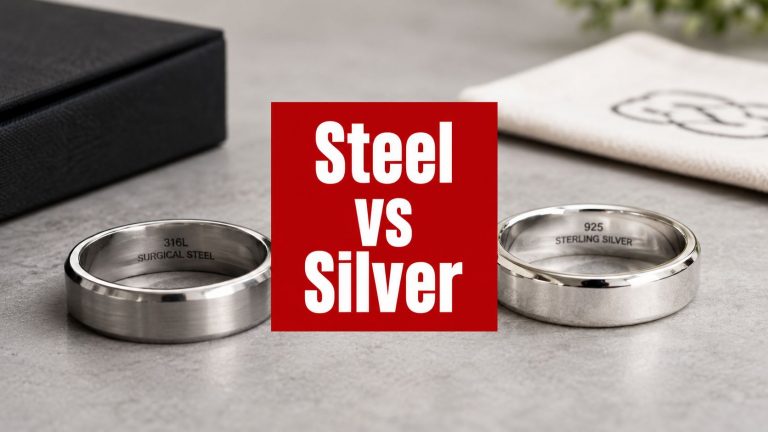
You’re pricing a new collection, and the sample tray is already split down the middle. The 316L surgical steel pieces look cleaner on cost and daily wear, the
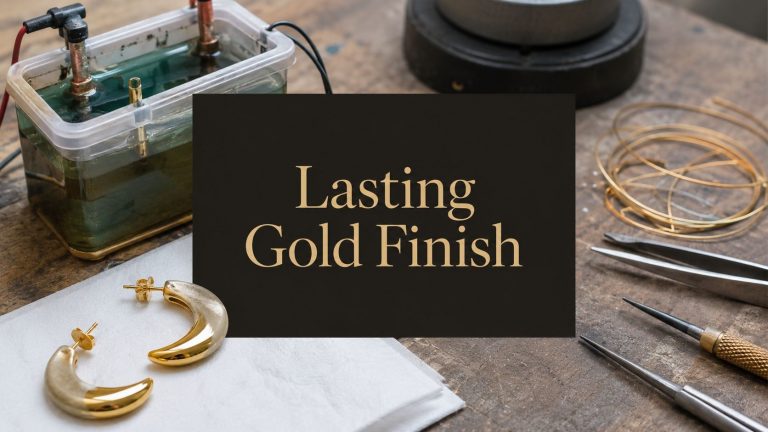
You probably have a launch already in motion, a supplier sample on your desk, and one uncomfortable question underneath it all, will this gold color still look clean
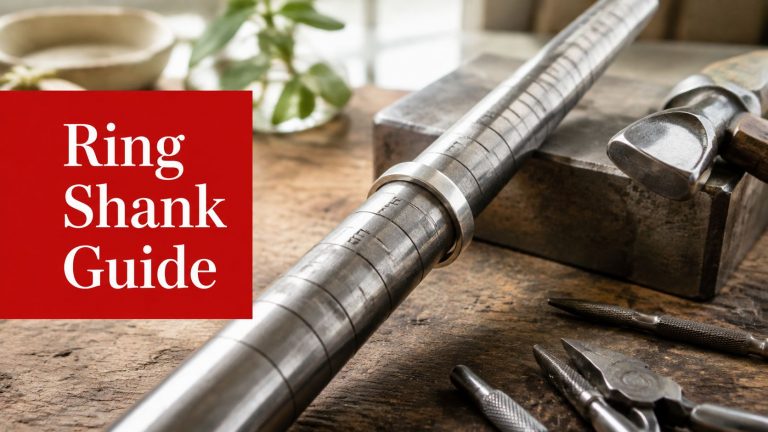
If you are developing the ring itself, compare ring fabrication, casting and CAD methods before approving the shank dimensions and manufacturing route. You’re refining a ring design, the