

Ever picked up your favorite “gold” necklace only to find it dull, dark, or even leaving green marks on your skin? You’re not alone.
The truth is, gold plated jewelry tarnishes much faster than solid gold—because that beautiful shine is just a thin layer of gold over a base metal that reacts with air, sweat, lotions, and perfume. But here’s the good news: you can untarnish gold plated jewelry at home using safe, gentle methods that actually work—and won’t strip off the plating.
In this guide, you’ll discover exactly how to untarnish gold plated jewelry step by step, using simple household items, plus how to prevent tarnish so your necklaces, rings, and bracelets stay bright for longer.
At Dongguan HonHo Jewelry, we design gold-plated pieces to last—and I’m going to show you how to keep them looking brand new in just a few minutes.
What You’ll Need to Untarnish Gold Plated Jewelry at Home
Worried you’ll ruin your favorite gold plated necklace by cleaning it wrong? You’re not alone. Gold plating is thin and easy to damage, so what you use (and don’t use) matters more than how hard you scrub.
Essential Supplies to Clean Gold Plated Jewelry
To clean tarnished gold plated jewelry at home, I keep the kit simple and gentle:
- Mild dish soap (clear, no bleach, no harsh degreasers)
- Lukewarm water (never hot or boiling)
- Soft microfiber cloths or a lens cloth
- Soft‑bristled toothbrush or baby toothbrush
- Cotton swabs for tight spots on chains and clasps
- Small bowl or glass dish (no metal)
- Paper towels or a clean towel for drying
- Optional for deeper DIY cleaning later:
- Baking soda
- Aluminum foil
- White vinegar (plain, 5% acidity)
These basics cover almost every home remedy for gold plating tarnish without stripping the gold.
Safe Tools vs. Risky Tools for Gold Plating
Gold plated jewelry needs non‑abrasive tools. Use these:
- Safe tools
- Soft microfiber or jewelry polishing cloth
- Soft toothbrush / baby brush
- Cotton pads or cotton swabs
- Plastic or glass bowls
- Risky tools that damage gold plating
- Hard toothbrushes or nail brushes
- Paper towels for scrubbing (they’re more abrasive than you think)
- Scouring pads, scrub sponges, or magic erasers
- Metal bowls or trays for soaking with chemicals
- Needles, pins, toothpicks used to “scrape” dirt
If a tool feels rough on your skin, it’s too rough for gold plated jewelry.
How I Prep My Workspace Before Cleaning
Before I untarnish gold plated jewelry at home, I set things up so I don’t lose or scratch anything:
- Choose a stable, clean surface
- Lay down a soft towel so pieces don’t roll or chip.
- Work away from sinks or open drains (or cover the drain).
- Good lighting
- Use bright light so you can see oxidation, dull spots, and scratches clearly.
- Set up your cleaning station
- One bowl for soapy water, one with clean water for rinsing.
- Keep your cloths and brushes within reach so pieces spend less time in water.
- Remove distractions
- Clean one bracelet, ring, or chain at a time to avoid tangling and accidental scratching.
With the right supplies, safe tools, and a prepped space, you can restore shine to a gold plated necklace, bracelet, or ring without thinning the gold layer or causing new damage.
How to Untarnish Gold Plated Jewelry Step by Step
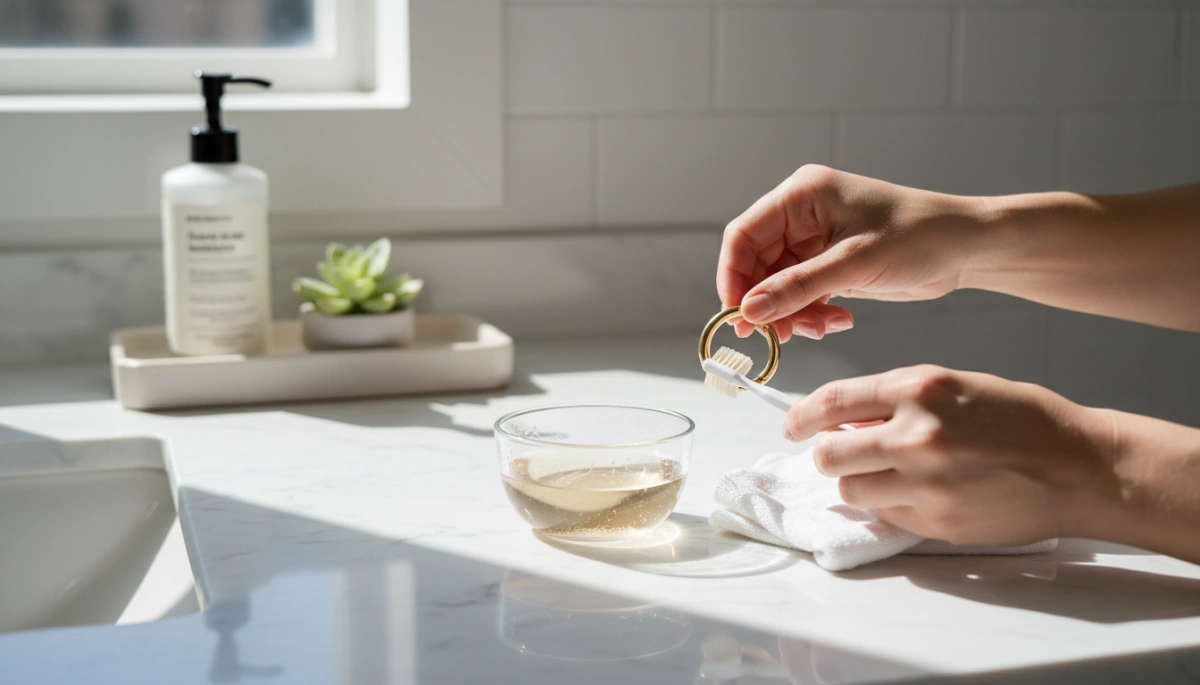
If the tarnish is light, the safest way to clean tarnished gold plated jewelry at home is with mild dish soap and warm water. This protects the thin gold layer while still lifting dirt, sweat, and oils.
How to untarnish gold plated jewelry with mild dish soap and warm water
Use this method on everyday gold plated rings, bracelets, earrings, and chains:
- Fill a small bowl with warm (not hot) water.
- Add 1–2 drops of mild, clear dish soap (no bleach, no strong fragrance, no “antibacterial”).
- Mix gently until the water is slightly sudsy.
This simple mix is one of the most natural ways to polish gold plated jewelry without stripping the plating or irritating sensitive skin.
Step‑by‑step cleaning routine for light tarnish
Follow this routine to clean tarnished gold plated jewelry safely:
- Remove dust first
- Quickly wipe each piece with a soft microfiber or cotton cloth to remove loose dust and grit. This avoids scratching during washing.
- Soak for a few minutes
- Place your gold plated necklace, bracelet, or earrings in the bowl.
- Let them soak for 5–10 minutes to loosen light tarnish, sweat, and lotion buildup.
- Gently clean details
- Use a very soft toothbrush or a clean, soft makeup brush.
- Lightly brush along chains, under settings, and around clasps.
- Keep pressure very gentle—you’re lifting dirt, not scrubbing metal.
- Rinse carefully
- Rinse each piece under lukewarm running water to remove all soap.
- Make sure the drain is covered so nothing slips away.
This routine works well if you mix gold plated styles with other pieces in your daily stack, like those from our trend guides on styling mixed metal jewelry.
How to dry and polish gold plated jewelry without scratching
Drying is where a lot of people accidentally damage their gold plating. Here’s the safe way:
- Pat, don’t rub
- Place jewelry on a soft towel and gently press another towel on top.
- Avoid hard rubbing, which can thin the gold layer over time.
- Air dry fully
- Leave pieces on a clean, dry cloth for 10–20 minutes until all moisture is gone—especially around clasps and stones.
- Polish with a soft cloth
- Use a non‑abrasive jewelry polishing cloth or microfiber cloth.
- Gently buff in one direction to restore shine to your gold plated necklace or bracelet.
- Skip any cloths that feel rough or treated with strong chemicals.
Done right, this simple routine is a safe way to clean a gold plated necklace or ring and keep it looking bright without risking the plating.
Baking Soda and Aluminum Foil Method for Gold Plated Jewelry
Using baking soda and aluminum foil can untarnish gold plated jewelry fast, but it has to be done gently or you’ll strip the thin gold layer.
How to untarnish gold plated jewelry with baking soda and foil
Here’s a simple at‑home setup:
- Line a small bowl with shiny side up aluminum foil
- Add 1 cup of hot (not boiling) water
- Stir in 1–2 teaspoons of baking soda until dissolved
- Place your gold plated necklace, bracelet, or chain in the solution so it touches the foil
- Let it sit while the solution loosens light tarnish and oxidation
This method uses a mild chemical reaction between the foil, baking soda, and the base metal under the plating, which can help clean tarnished gold plated jewelry without hard scrubbing.
Safe ratios, water temperature, and timing
To stay on the safe side:
- Ratio: about 1–2 tsp baking soda per 1 cup water
- Water temperature: hot tap water or just under boiling – if it’s too hot, it can loosen weak plating
- Time: 3–5 minutes max for gold plated pieces
- Rinse right away with cool water, then pat dry with a soft cloth
If you’re unsure about the quality of the plating (especially on fashion jewelry from unknown sources), shorten the soak to 1–2 minutes and check the surface.
Which gold plated pieces should NOT go in this solution
Skip the baking soda + foil method on:
- Gold plated jewelry with glued stones (crystals, rhinestones, pearls – the glue can fail)
- Plated pieces with enamel, resin, or painted details
- Very thin or badly worn plating where base metal already shows
- Gold plated earrings with mystery metal posts if you have sensitive skin – rinsing might not remove all residue
For these delicate pieces, stick to very gentle cleaning methods and soft cloths, or consider professional care. If you want a deeper dive into how different metals and platings behave, you can check guides like a detailed jewelry hallmarks and metal meaning breakdown before trying stronger DIY methods.
Using White Vinegar to Clean Gold Plated Jewelry
White vinegar can work to untarnish gold plated jewelry, but it has to be used gently and with control. I treat it as a “last step” home remedy, not a daily method.
How to Untarnish Gold Plated Jewelry with White Vinegar
Here’s a safe way to use white vinegar on gold plated pieces:
- Mix a weak solution:
- 1 part white vinegar
- 3–4 parts lukewarm water
- Place jewelry in a shallow glass bowl, making sure stones and clasps are fully visible.
- Soak very briefly:
- Light tarnish: 1–2 minutes
- Heavier tarnish: max 5 minutes (do not go longer).
This method works best if you want to clean tarnished gold plated jewelry that has light dullness or surface grime, not deep discoloration or worn plating.
Exact Soak Time and How to Rinse Properly
Timing and rinsing are what keep the gold layer safe:
- Never exceed 5 minutes in the diluted vinegar mix.
- After soaking:
- Rinse under cool running water for 20–30 seconds.
- Gently rub with your fingertips to remove any leftover vinegar.
- Pat dry with a soft, lint‑free cloth, then let air dry fully before storing.
If you’re working with larger batches of gold plated fashion jewelry (for example, pieces sourced from a costume jewelry manufacturer or wholesaler like Honho’s fashion jewelry collections), test one sample piece first before cleaning everything the same way.
Patch Testing Gold Plated Jewelry Before Full Soaking
Because gold plating thickness and base metals vary, always patch test:
- Choose a hidden spot (back of a pendant, inside of a ring band).
- Dip a cotton swab in the diluted vinegar solution.
- Dab that small area and let it sit 60 seconds, then rinse and dry.
- Check for:
- Color changes (yellow turning dull, copper/grey showing through)
- Flaking, pitting, or rough texture
If you notice any change, skip vinegar and use only mild soap and water or professional wipes instead. This is the safest way to restore shine to a gold plated necklace or bracelet without stripping the gold layer.
Toothpaste Spot Cleaning for Gold Plated Jewelry
Toothpaste can work as a spot cleaner for gold plated jewelry, but you need to be very careful so you don’t scratch or thin the plating.
How to use toothpaste to untarnish gold plated jewelry
Use this method only for tiny dark spots or light stains, not for full deep cleaning:
- Put a grain‑of‑rice sized dot of toothpaste on your fingertip or a cotton swab.
- Dab gently on the tarnished area of your gold plated ring, bracelet, or necklace.
- Rub very lightly in small circles for 10–20 seconds max.
- Wipe away with a soft damp cloth until all residue is gone.
- Pat dry with a clean microfiber cloth to restore shine.
This is a quick DIY untarnish trick when you don’t have other cleaners on hand.
Best type of toothpaste and brush to use
To keep the gold plate safe, follow these rules:
- Use white, non‑gel, fluoride toothpaste with no whitening, no charcoal, no microbeads, no baking soda.
- Avoid “extra whitening,” “tartar control,” or “deep clean” formulas – they’re too abrasive.
- If you need a brush, choose a baby toothbrush or extra‑soft toothbrush only.
- A soft cotton swab or microfiber cloth is even safer than a brush.
Common mistakes when using toothpaste on gold plating
Most damage happens because people treat gold plated items like solid gold. Avoid these mistakes:
- Scrubbing hard or too long – this can wear down the thin gold layer fast.
- Using whitening or charcoal toothpaste – these can scratch and dull the plating.
- Cleaning the whole piece repeatedly – over‑cleaning can make the base metal show through and cause the “gold plated jewelry turned green” problem.
- Letting toothpaste dry on the jewelry – it becomes more abrasive and harder to rinse off.
Use toothpaste only as a last‑resort, light spot cleaner. For regular care and to prevent tarnish on gold plated accessories, stick to mild soap, soft cloths, and smart storage.
Beer Cleaning Trick for Gold Plated Jewelry

Beer sounds random, but it can work as a gentle backup option to clean tarnished gold plated jewelry when you don’t have traditional cleaners on hand.
How to untarnish gold plated jewelry with beer
Use this only for light tarnish and dullness, not for heavy oxidation:
- Choose a light lager or pale beer (no dark, sticky, or flavored beers).
- Pour a small amount into a glass bowl. Let it sit a minute so some bubbles settle.
- Dip a soft microfiber cloth into the beer, squeeze out the excess, and gently wipe your gold plated necklace, bracelet, or ring in small circles.
- Focus on the dull or slightly dark areas, but don’t scrub.
- Rinse quickly with lukewarm water and pat dry with a clean, dry cloth.
- Finish with a jewelry polishing cloth to restore extra shine.
This is a quick, DIY untarnish trick you can use at home when you want to restore shine to a gold plated necklace or chain without harsh chemicals.
Why beer can lift light tarnish from gold plating
Beer contains:
- Mild acids (from grains) that can break down light surface tarnish and residue
- A bit of carbonation, which helps loosen dirt and body oils on the metal
Because it’s mild, it’s less likely to strip thin gold plating compared to strong chemical cleaners, as long as you rinse and dry the piece right away.
When to skip the beer method
Beer is not a universal fix. Avoid it and use safer, controlled methods if:
- Your jewelry has pearls, opals, emeralds, enamel, or glued stones
- The gold plating is very thin or already wearing off
- The piece has turned green or heavily black (that’s likely base metal showing or deeper oxidation)
- You’re sensitive to residue and need a fully hypoallergenic routine
In those cases, stick to mild soap and water or a dedicated gold plated jewelry routine like the one we recommend in our ultimate guide to gold plated jewelry care.
Use the beer hack only as a gentle, occasional home remedy for light tarnish on gold plated jewelry, not as your main cleaning method.
Cleaning Wipes and Cloths for Gold Plated Jewelry on the Go
How to use jewelry cleaning wipes on gold plated jewelry
Jewelry cleaning wipes are perfect when you need to untarnish gold plated jewelry fast without water or mess.
Simple steps:
- Make sure the piece is free of dust or sand (wipe gently with your fingers first).
- Take one jewelry cleaning wipe and gently rub the gold plated surface in one direction.
- Focus on fingerprints and dull spots, avoid heavy scrubbing on edges and corners.
- Let it air dry for 30–60 seconds, then buff lightly with a soft, dry cloth.
Use wipes mainly to restore shine to a gold plated necklace, ring, or bracelet between deeper cleanings.
Difference between polishing cloths and cleaning wipes
| Type | What it does | Best for |
|---|---|---|
| Cleaning wipes | Pre-moistened with mild cleaner, lift oils/tarnish | On-the-go cleaning, travel, quick fix |
| Polishing cloths | Dry cloth with polishing agents, boosts shine | At-home care, final buff after cleaning |
- Wipes = light cleaner + convenience.
- Polishing cloths = more shine, but you must be gentler on thin gold plating.
If you want a full, gentle routine, combine a mild wash (like in this guide on how to clean gold plated jewelry) with a quick polish cloth finish.
When wipes are safer than liquid cleaners for gold plating
Cleaning wipes are often safer than liquid cleaners for gold plated jewelry because:
- The formula is usually pre-diluted and mild, so you’re less likely to overdo it.
- There’s no soaking, which reduces the risk of loosening stones or attacking the base metal.
- You control exactly where the cleaner goes—ideal for gold plated earrings, chains, and pieces with glued stones.
Use wipes instead of liquid cleaners when:
- You’re not sure if the gold plating is very thin.
- The piece has glued crystals or faux stones.
- You’re traveling and want a low-risk, non-abrasive gold jewelry cleaning option.
For our customers who wear gold plated jewelry daily, I always suggest keeping one pack of wipes + one soft polishing cloth in your bag or drawer. It’s the easiest way to keep pieces looking fresh without stripping the gold layer.
When to Use Store‑Bought Jewelry Cleaner on Gold Plated Pieces
Sometimes home remedies aren’t enough, especially if you want to quickly clean tarnished gold plated jewelry without much hassle. That’s when a store‑bought jewelry cleaner makes sense—if you choose the right one and use it gently.
How to untarnish gold plated jewelry with commercial cleaners
Here’s a simple way to use a commercial cleaner safely:
- Choose a cleaner labeled safe for gold plated or fashion jewelry
- Pour a small amount into a dish (never dip the whole bottle)
- Dip a soft cloth or cotton swab, not the jewelry directly, into the cleaner
- Gently wipe the gold plated necklace, ring, or bracelet where you see dullness or light tarnish
- Rinse quickly in lukewarm water and pat dry with a lint‑free cloth
- Finish with a gentle polishing cloth to restore shine
If your gold plated jewelry is already turning skin green or showing deep discoloration, it might be a reaction with the base metal rather than simple tarnish; this is explained well in this guide on why some jewelry turns skin green.
What to look for on a jewelry cleaner label
Before you buy, check the label carefully. For gold plated vs solid gold tarnish, plated needs much gentler formulas. Look for:
- “Safe for gold plated / costume / fashion jewelry”
- Non‑abrasive / “no scrubbing required”
- Ammonia‑free and bleach‑free
- No mention of tarnish dip for silver only
- Clear instructions for short soak times or wipe‑on use
If you can’t clearly see “gold plated” or “fashion jewelry” as safe, I’d avoid it and stick to natural ways to polish gold plated jewelry like mild soap.
Signs a cleaner is too harsh for gold plated jewelry
If a cleaner is too strong, it will strip or thin the gold plating fast. Stop using it if you notice:
- The gold color fades after one or two cleanings
- The jewelry turns patchy, coppery, or silver‑colored (base metal showing)
- A strong chemical smell (like ammonia or harsh solvent)
- The label says “heavy tarnish remover,” “oxidation stripper,” or “for sterling silver only”
- Your jewelry feels rough or etched after soaking
Gold plating is thin by design, so over‑cleaning with strong chemicals can ruin it. If you see the base metal coming through, DIY cleaning won’t fix it—you’ll need replating or a replacement. For more background on how long plating really lasts and why it tarnishes, I recommend this breakdown on whether gold plated jewelry tarnishes and why.
How to Prevent Gold Plated Jewelry from Tarnishing
Daily habits to keep gold plated jewelry from dulling
If you want to keep gold plated necklaces, rings, and bracelets bright for longer, small daily habits matter more than deep cleaning. I always recommend:
- Put jewelry on last (after skincare, makeup, perfume, hairspray).
- Take it off first when you get home.
- Remove gold plated pieces before:
- Showering or swimming (chlorine, salt, and hot water are brutal)
- Working out or going to the sauna
- Cleaning with household chemicals
- After wearing, quickly:
- Wipe pieces with a soft microfiber or jewelry cloth
- Store them dry – never toss into a damp bathroom drawer
These are simple, but they dramatically reduce tarnish and slow down wear on the gold layer.
Protecting gold plated jewelry from sweat, perfume, and lotion
Most tarnish and discoloration on gold plated jewelry comes from sweat, oils, and chemicals reacting with the thin gold layer and the base metal underneath. To protect your pieces:
- Avoid spraying perfume or body mist directly on your chain or earrings.
- Let lotion, sunscreen, and body oil fully absorb before you put jewelry on.
- If you sweat a lot (gym, hot climates, daily commute), treat gold plated jewelry as “dress” pieces:
- Wear them when you’re dry and cool
- Take them off before intense movement
- After a sweaty day, gently clean with mild soap and water, then dry well instead of letting perspiration sit on the surface.
If you’re choosing new pieces for everyday wear, consider better-quality plating and base metals like stainless steel or sterling silver; this is where working with a specialized wholesale jewelry manufacturer really pays off in long-term durability.
Best storage methods to prevent tarnish on gold plated pieces
Storage is your “silent shield” against tarnish. Here’s how I set it up:
- Keep jewelry in a dry, cool place, away from bathrooms and windows.
- Store each piece in:
- A soft pouch, or
- Its own compartment in a lined jewelry box
- Avoid pieces rubbing together – friction = faster wearing off of the gold.
- Use anti-tarnish strips or small silica gel packs in your box to reduce moisture.
- For chains, clip them and lay them flat or hang them individually so they don’t knot and scratch.
If you’re comparing materials for long-term storage and wear, this guide on sterling silver vs stainless steel jewelry is useful when planning which pieces get daily rotation and which stay for special occasions.
Simple weekly care routine for gold plated rings, necklaces, and bracelets
You don’t need aggressive cleaning; you need gentle, consistent care. A quick weekly routine is enough:
Once a week:
- Prepare a small bowl of lukewarm water + 1–2 drops of mild dish soap.
- Dip a soft cloth (or very soft brush) into the solution.
- Gently wipe your gold plated jewelry to remove oils, sweat, and product buildup.
- Rinse quickly with clean lukewarm water.
- Pat dry with a lint-free cloth, then air dry completely before storing.
Avoid over-cleaning or scrubbing; with gold plating, less pressure, more consistency is the rule. This kind of routine keeps your gold plated jewelry looking bright and fresh without thinning the gold layer too fast.
Common Mistakes When Cleaning Gold Plated Jewelry
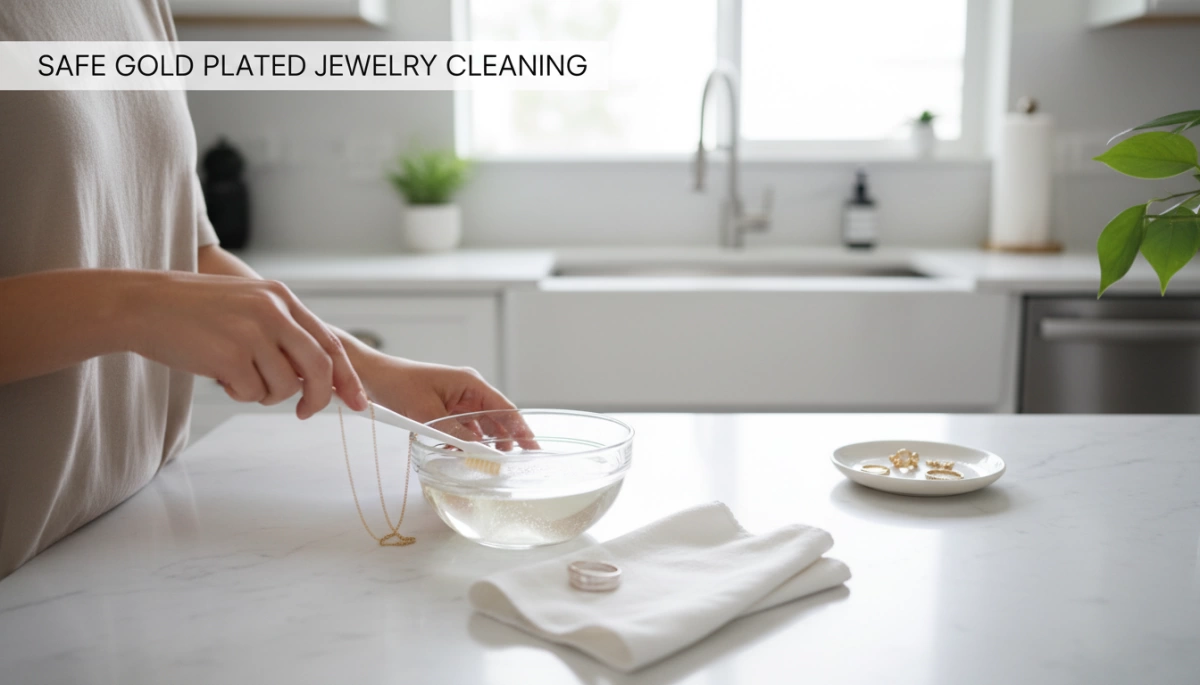
If you want to untarnish gold plated jewelry without ruining it, you have to avoid a few big mistakes. Gold plating is thin, so anything too harsh will strip or scratch it fast.
1. Harsh chemicals that strip gold plating
Skip anything that sounds like a heavy-duty cleaner. These can remove the gold layer instead of just cleaning it:
- Bleach, chlorine, or ammonia-based cleaners
- Strong jewelry dips meant for solid gold or silver
- Alcohol-heavy disinfectants used directly on jewelry
These might work on solid metal, but on gold plated jewelry they eat through the gold and expose the base metal underneath, which is exactly what you don’t want.
2. Abrasive tools that scratch gold plate
Anything rough will scratch or sand down the plating over time. Avoid:
- Hard toothbrushes or scrubbing pads
- Microfiber with rough weave or cheap towels with lint and fibers
- Baking soda or salt used as a scrub (it should only be fully dissolved in water if used at all)
Use only soft, non-abrasive cloths and gentle motions when you clean tarnished gold plated jewelry.
3. Why ultrasonic cleaners and steamers are risky
Ultrasonic cleaners and steamers look convenient, but they’re usually a bad match for gold plated pieces:
- Strong vibration in ultrasonic machines can loosen the gold layer
- High heat and pressure from steamers can cause the plating to lift or peel
- Any tiny cracks in the plating can expand and expose the base metal
These machines are better suited to solid metals like sterling silver or stainless steel. For plated pieces, stick to DIY untarnish methods like mild soap and water.
4. Over-cleaning that thins the gold layer
Even gentle methods can be a problem if you overdo them:
- Cleaning your gold plated rings, bracelets, or chains aggressively after every single wear
- Rubbing too hard trying to remove stubborn dark spots
- Repeating baking soda or vinegar methods too often
The more you scrub, the faster you wear down the plating. Aim for:
- Quick wipe-downs after wearing
- Deeper cleaning only when you actually see dirt or tarnish
If you find yourself constantly battling worn plating, you may be better off investing in brass jewelry or pieces with thicker plating from reliable suppliers like my own brass jewelry collection, which is designed for longer wear and easier maintenance.
Avoid these mistakes and you’ll restore shine to your gold plated necklace or bracelet without accidentally shortening its life.
How to Tell If Your Gold Plated Jewelry Needs Replating
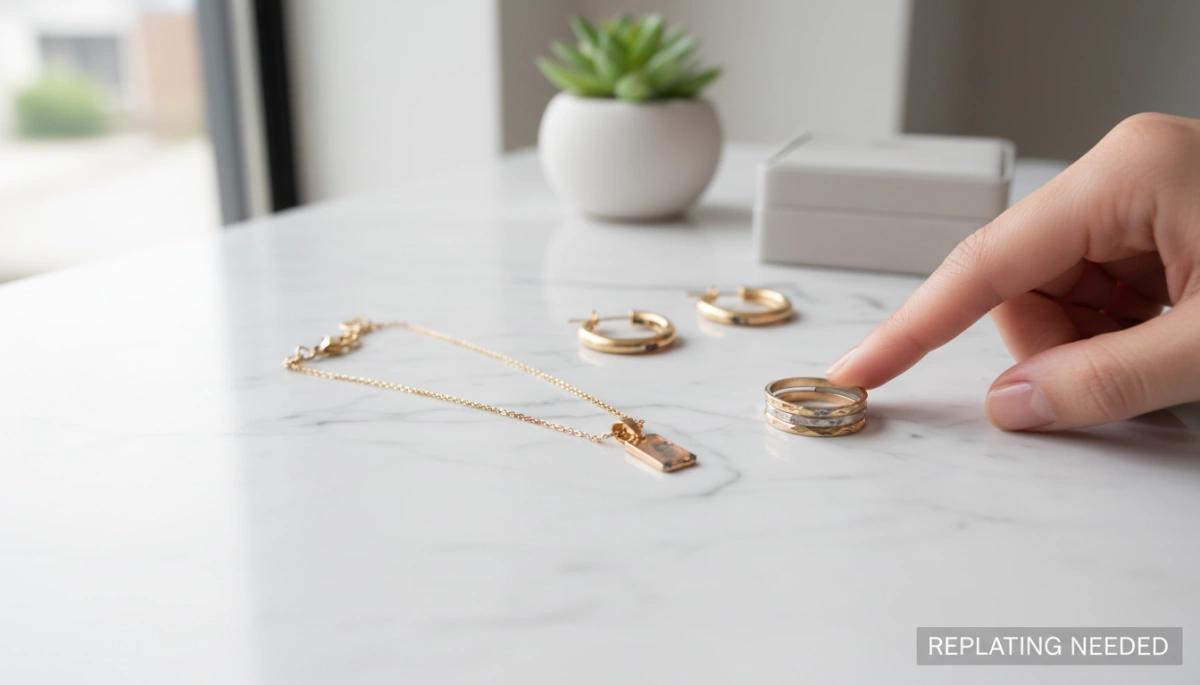
Knowing when to stop cleaning and start replating is key if you want your pieces
When to Get Professional Help for Gold Plated Jewelry

Even with the best home care, there are times you should stop DIY and let a pro handle your gold plated jewelry. Knowing when to take gold plated jewelry to a jeweler actually helps you extend the life of the plating instead of wearing it away.
When to take gold plated jewelry to a jeweler
Take your pieces to a jeweler if:
- The jewelry looks patchy, brassy, or coppery even after gentle cleaning
- You see base metal showing through on edges, prongs, or the back of the piece
- There are deep scratches, flaking, or peeling in the gold layer
- The piece has gems, crystals, or enamel you’re afraid to damage at home
- You have allergies or sensitive skin and the base metal is starting to touch your skin
- It’s a sentimental or high‑value piece (engagement ring, heirloom necklace, brand collab, etc.)
A professional jeweler (or a specialized gold plated jewelry manufacturer) can clean, inspect, and advise if you should replate or just polish.
What happens during professional replating
Professional replating is more than a quick dip:
- The piece is deep cleaned to strip oils, old polish, and oxidation
- Light sanding or buffing is done to smooth out surface flaws (without reshaping the design)
- A thin nickel or palladium barrier layer may be added to stop the base metal from bleeding through
- A new layer of gold (often 14K–18K) is electroplated to a set thickness (microns)
- The jeweler finishes with a final polish to restore shine and smoothness
This process lets you restore shine to a gold plated necklace, bracelet, or ring when home remedies can’t fix the dullness or discoloration.
Cost range and how often to replate gold plated pieces
Costs vary by country, gold thickness, and design detail, but here’s a realistic range most global customers will see:
- Simple chain or band: around $20–$50
- Detailed ring/bracelet with stones: usually $40–$100+
- Designer or custom pieces: can go higher, especially if you request thicker plating (e.g., vermeil‑like 2.5 microns+)
As a rule of thumb:
- Daily‑wear favorites (rings/bracelets): replate every 1–2 years
- Occasional‑wear pieces (earrings/necklaces): every 2–3 years, or only when you see obvious wear
- High‑friction items (stacking rings, watch bands, bangles): might need more frequent replating
If you’re starting a brand or need consistent quality for resale, working with a reliable custom or wholesale gold plated partner instead of random labs can help you get thicker, longer‑lasting plating from day one.
FAQs About Untarnishing Gold Plated Jewelry
Can I untarnish gold plated jewelry without removing the gold layer?
Yes, as long as you use gentle cleaning methods. Stick to:
- Mild dish soap + warm water
- Soft cloths or very soft brushes
- Non‑abrasive, ammonia‑free products
Avoid harsh scrubs, strong chemicals, and rough cloths. These strip the thin gold layer fast, especially on fashion pieces or intricate designs you might source from specialized makers like the ones highlighted in leading Turkish jewelry manufacturers.
How often should I clean gold plated jewelry at home?
- Light wear (a few times a month): quick wipe after each wear, wash every 3–4 weeks
- Daily wear: wipe after each wear, gentle wash once a week
- Rarely worn pieces: clean before storage and again when you take them out
If the piece still looks shiny, don’t over‑clean. Overdoing it can thin the plating.
Is tarnished gold plated jewelry safe to wear on sensitive skin?
It depends on the base metal:
- If the gold plating is just dull: usually fine.
- If you see green, black, or reddish tones coming through, the base metal (often brass, copper, or nickel) may be exposed and can irritate sensitive skin.
Anyone with allergies or eczema should choose hypoallergenic, nickel‑free plated jewelry and stop wearing a piece if it starts causing redness, itching, or dark marks.
Can I use silver cleaner or all‑purpose jewelry cleaner on gold plated pieces?
Usually no. Most silver cleaners are too strong and abrasive for thin gold plating. If you use a commercial cleaner, it must say:
- “Safe for gold plated jewelry”
- “Non‑abrasive / no ammonia / no harsh acids”
If the label is vague or only mentions sterling silver or solid gold, don’t use it on your plated items.
How long will gold plated jewelry stay shiny after cleaning?
That depends on:
- How often you wear it
- How much it touches sweat, perfume, and lotions
- Quality and thickness of the gold plating
With normal wear and good care, expect a few weeks to a few months of good shine after a gentle clean. Store pieces in dry, separate pouches, and wipe them after each wear to stretch the life of the plating and keep that “just cleaned” look longer.
Long‑Term Care Tips for Gold Plated Jewelry
Build a Simple Gold Plated Jewelry Care Routine
If you want your gold plated jewelry to stay shiny longer, keep the routine light and consistent, not aggressive:
- After every wear
- Wipe pieces with a soft, dry microfiber or jewelry polishing cloth
- Remove sweat, sunscreen, perfume, and skin oils before storing
- Weekly quick clean (for daily pieces)
- Rinse in lukewarm water + a drop of mild dish soap
- Swish gently with your fingers, no scrubbing
- Rinse well, then pat fully dry with a soft cloth
- Household rules
- Take off gold plated rings before washing dishes, cleaning, or working out
- Avoid direct contact with perfume, hairspray, lotion, and hand sanitizer
- Put jewelry on last when getting ready, and take it off first when you get home
This kind of gentle, regular care is the safest way to clean tarnished gold plated jewelry without thinning the gold layer.
How to Store Gold Plated Jewelry Long Term
Long‑term storage can make or break how your pieces age, especially if you live in a humid area:
- Store dry and separate
- Keep each piece in its own soft pouch, cloth pocket, or separate compartment
- Avoid metal-on-metal contact that can cause scratches and wear
- Limit air and moisture
- Use airtight boxes or zip bags with anti-tarnish strips or silica gel packs
- Don’t store jewelry in bathrooms where steam and humidity speed up tarnish
- Prep before storing
- Clean with mild soap and water, dry fully, then store
- Never store pieces that are damp, sweaty, or covered in lotion
If you’re buying in bulk or stocking a collection, combining proper storage with durable base metals like 316L stainless steel (see our full stainless steel jewelry guide) gives your gold plated pieces a much longer life.
Choosing Better Quality Gold Plating for Longer‑Lasting Shine
Long‑term shine starts with what you buy. Not all gold plated jewelry is made the same:
- Check gold thickness
- Ultra‑thin flash plating wears fast, especially on rings and bracelets
- For daily wear, look for thicker plating (measured in microns) for better durability
- We break this down in detail in our guide on the thickness of gold plating
- Choose the right base metal
- 316L stainless steel and quality brass cores usually last longer than cheap mystery alloys
- Better base metals also help reduce green skin and irritation
- Understand your options
- Compare basic gold plated, gold filled, and vermeil to see what fits your budget and wear habits
- If you wear a piece daily (especially rings), consider investing in thicker plating or vermeil for longer shine
When you combine smarter buying choices with a simple care routine and proper storage, you extend the life of your gold plated necklaces, rings, and bracelets and reduce how often you need to replate or replace them.
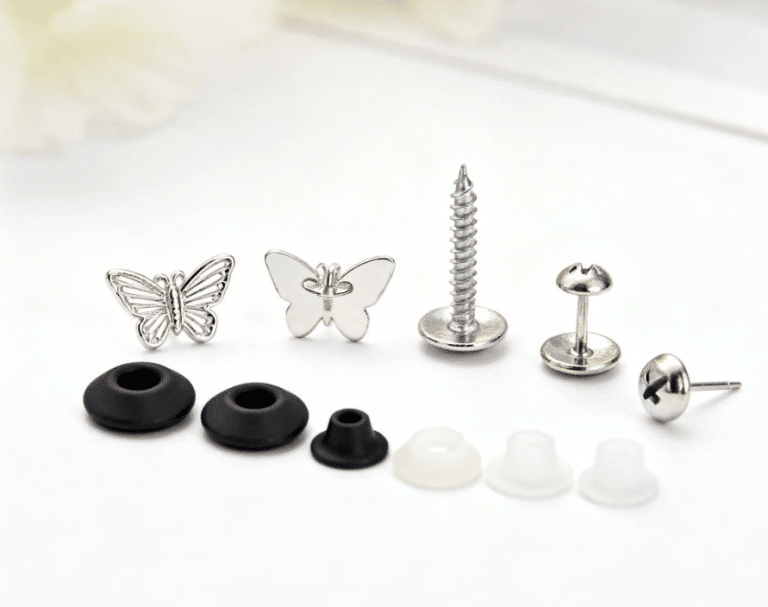
The Unseen Hero: Why Earring Backings Define Quality Jewelry
Every jewelry brand owner knows the sinking feeling. A customer calls, distraught. They’ve lost one
Choosing the Best Jewelry Stone Setting for Mass Production
Selecting the right jewelry stone setting is one of the most pivotal decisions for any
Best Jewelry Stone Setting for Mass Production | HonHo
Choosing the best jewelry stone setting Choosing the best jewelry stone setting is one of