If you’re a jewellery brand, designer, or creator, you’ve probably asked yourself:
- How do I move from handmade pieces to real bulk jewellery production?
- Who can help me keep quality consistent as orders grow?
- What’s the difference between a jewellery manufacturer, a wholesaler, and a trading company?
As a professional jewellery manufacturing company, I work with brands at every stage—from first sketch to full-scale production. Let’s quickly break down what that actually means for you.
What a Jewellery Manufacturer Does for You
A jewellery manufacturer is your production partner. We turn your ideas into finished pieces at scale, using professional processes, equipment, and quality control.
A good custom jewellery manufacturer or custom jewelry factory usually helps you with:
- Product development
- Refining your ideas into manufacturable designs
- Supporting jewellery design and prototyping using CAD and 3D models
- Material sourcing and processes
- Sourcing metals (silver, brass, stainless steel, gold-plated) and stones
- Advising on durability, plating options, and costs
- OEM jewellery production (your design, our production)
- Producing your private label jewellery under your brand name
- Supporting low to high volume bulk jewellery production
- ODM jewellery manufacturer services (our designs, your logo)
- Offering ready-made designs you can brand as your own
- Helping you react fast to trends in fashion jewellery and artificial jewellery
In short, a professional jewellery manufacturer gives you structure, repeatability, and scalability.
Who Actually Needs a Jewellery Manufacturer?
You should consider working with a manufacturer if you are:
- Startups and new brands
- You have a clear concept but lack production capacity
- You need a low MOQ jewellery manufacturer to test the market
- Growing jewellery brands
- You’ve outgrown handmade and can’t keep up with orders
- You need consistent quality for e-commerce, marketplaces, or retail
- Wholesalers and distributors
- You buy in bulk and resell to stores or online
- You need a reliable wholesale jewellery supplier with stable pricing
- Creators, designers, and influencers
- You want your own line but don’t run a workshop
- You need a private label jewellery manufacturer to bring your vision to life
If you care about quality, repeat orders, and brand reputation, a manufacturing partner is not optional—it’s essential.
Manufacturer vs Wholesaler vs Trading Company
These three are not the same, and choosing wrong will cost you time and money.
Jewellery Manufacturer
- Owns or operates the jewellery production process
- Direct control over materials, techniques, and quality
- Best option for OEM/ODM jewellery services and custom projects
Jewellery Wholesaler
- Buys ready-made jewellery in bulk and resells
- Limited or no design customization
- Good if you just want to resell generic styles
Trading Company
- Middleman between you and factories
- May offer sourcing, coordination, and communication
- Less transparency on real production and jewellery quality control
If you want long-term brand-building, work directly with a jewellery manufacturer whenever possible. You gain more control, better pricing, and clearer communication.
When to Move from Handmade to Factory Production
You don’t need a factory on day one. But if you see any of these signs, it’s time to talk to a jewellery manufacturing company:
- You can’t keep up with orders
- Lead times are stretching
- You’re constantly “sold out” and losing sales
- Your quality isn’t consistent
- Each batch looks slightly different
- Returns or complaints about finishing and durability are increasing
- Your costs are too high
- Handmade labor is eating your profit margins
- You can’t compete on price for wholesale or global markets
- You want to scale globally
- You need standardized SKUs, stable supply, and predictable production
- You plan to sell through retailers, marketplaces, or international distributors
A good jewellery manufacturer lets you move from “craft-level” to “brand-level” production—without losing your design identity.
Types of Jewellery Manufacturers
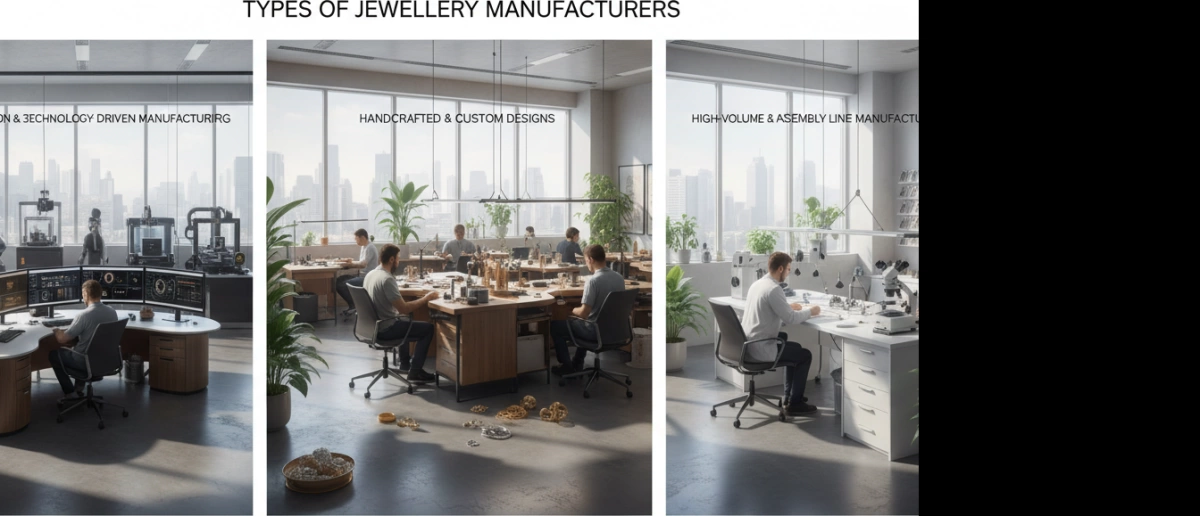
When you’re choosing a jewellery manufacturer, you need to match the factory to your product, price point, and brand vision. Here’s how the main types break down and who they’re best for.
Fine Jewellery Manufacturer (Gold, Diamonds, Precious Metals)
A fine jewellery manufacturer focuses on 14K/18K gold, platinum, natural or lab-grown diamonds, and other precious stones.
Best for you if:
- You sell engagement rings, bridal, or heirloom pieces
- You need certified stones and conflict-free sourcing
- You care about precise stone grading and luxury-level finishing
Look for:
- Expertise in micro-pavé, prong, bezel setting
- In-house gemologists and strict quality control
- RJC-certified or conflict-free sourcing policies
Fashion & Costume Jewellery Manufacturer
A fashion jewellery manufacturer or artificial jewellery manufacturer is built for high-volume, trend-led collections at accessible prices.
Best for you if:
- You run a fast-fashion or mid-market brand
- You release new drops every month or season
- You need bulk jewellery production with flexible designs
These factories typically work with:
- Alloy, brass, zinc, resin, crystals, acrylic
- Heavy use of plating (gold plated, silver tone, rose gold)
- ODM jewellery collections you can brand as your own
Sterling Silver Jewellery Manufacturer (925 Specialists)
A sterling silver jewellery manufacturer or 925 silver jewellery factory is ideal when you want higher perceived value but still accessible pricing.
Best for you if:
- You run a mid to premium brand on Shopify, Amazon, Etsy, or retail
- You want long-lasting pieces without solid gold pricing
- You need reliable plating over silver (rhodium, gold, rose gold)
Look for:
- Experience with 925 silver, anti-tarnish finishing, and plating thickness
- Proven knowledge of how long sterling silver lasts in real wear (see this detailed guide on sterling silver durability and care)
Stainless Steel & Brass Jewellery Factory
A stainless steel jewellery supplier or brass jewellery factory is the go-to for durable, affordable pieces that can handle everyday wear.
Best for you if:
- You target unisex, streetwear, minimal, or bold fashion styles
- You sell to global markets where durability and price matter
- You need strong chains, rings, and statement pieces
Stainless steel is:
- Highly durable, sweat-resistant, and color-stable
- Perfect for men’s jewellery, sporty, and casual brands
Brass is:
- Great for fashion jewellery with thick plating
- Flexible for more complex shapes and settings
Gemstone Jewellery Manufacturer
A gemstone jewellery manufacturer specializes in natural, lab-grown, or synthetic stones and professional stone setting.
Best for you if:
- Your brand story revolves around stones, healing, or birthstones
- You want consistent quality in cut, color, and matching pairs
- You use complex settings or multi-stone designs
Expect:
- Expertise in bezel, prong, channel, pave, and invisible setting
- Strong sourcing networks in India, Thailand, and China
Custom Jewellery Manufacturer (Private Label & Brand-Only)
A custom jewellery manufacturer or private label jewellery manufacturer helps you create designs that only your brand sells.
Best for you if:
- You want OEM jewellery production based on your own designs
- You need ODM jewellery manufacturer support with ready-made designs you can tweak
- You want custom stamps, logos, and branded packaging
Key services:
- CAD design, 3D prototyping, and sampling
- Custom moulds, logo engraving, custom tags, and branded boxes
- Full white-label production for e-commerce and retail brands
Ethical & Sustainable Jewellery Manufacturer
An ethical jewellery manufacturer or sustainable jewellery factory puts responsible sourcing and eco-friendly production at the front.
Best for you if:
- Your brand values include sustainability, transparency, and fair practices
- You need recycled metals, lab-grown diamonds, or conflict-free gemstones
- You sell into markets where sustainability is a key purchase driver (EU, UK, North America)
Look for:
- Recycled metal jewellery factory capabilities (recycled silver, gold)
- RJC-certified jewellery manufacturer status
- Clear policies on conflict-free sourcing and nickel-free materials (this nickel-free jewellery guide is a good benchmark for standards)
Choosing the right type of jewellery manufacturing company upfront saves you time, reduces quality issues, and lets you build a brand that can actually scale.
Choosing the Right Jewellery Manufacturer

Picking the right jewellery manufacturer is the difference between a smooth launch and constant headaches. Here’s how I filter factories before I ever send a deposit.
Match the Manufacturer to Your Brand & Price Point
Start with your positioning, then pick the right type of jewellery manufacturing company:
- Fine / premium brand → look for a fine jewellery manufacturer (gold, diamonds, precious gems, RJC / conflict-free sourcing).
- Mid-range fashion brand → a fashion jewellery manufacturer or sterling silver jewellery factory that understands trends and branding.
- Value-focused or streetwear brand → a stainless steel jewellery supplier or brass factory used to bulk jewellery production and sharp pricing.
- Highly branded creators / influencers → a custom jewellery manufacturer or private label jewellery manufacturer with strong OEM/ODM services.
Your target retail price should match their usual export price range. If the gap is too big, quality or margins will suffer.
Check Core Capabilities: Materials & Product Types
Only work with a jewellery manufacturer that already works in your core material and style:
- Materials: 925 silver, stainless steel, brass, gold plating, solid gold, lab-grown diamonds, gemstones, enamel, resin, etc.
- Techniques: stone setting, micro pavé, engraving, CNC, casting, stamping, electroplating, IP plating.
- Categories: rings, chains, earrings, bracelets, charms, pendants, personalised jewellery.
Ask for factory photos + process videos and product examples in your exact category. For technical projects, guides like this jewelry CAD design overview are a good benchmark for the level of expertise you should expect.
OEM vs ODM Jewellery Experience
Know what you need:
- OEM jewellery production: you bring the design, they produce it under your brand.
- ODM jewellery manufacturer: they provide ready-made or semi-custom designs you can brand.
Ask:
- How many OEM clients they handle in your niche.
- Whether they have ODM catalogues you can white-label.
- How they handle design files, revisions, and IP protection.
If they struggle to explain their OEM/ODM jewellery services clearly, I move on.
Capacity, Lead Times & Scalability
You need a jewellery manufacturer that fits your volume today and can grow with you:
- Minimum order: what’s their usual monthly output?
- Lead times: sampling (often 10–25 days), production (usually 25–45 days).
- Scalability: can they handle 5–10x your current order size in peak seasons?
Ask for their busy months, typical production schedule, and how they handle urgent orders.
Understand MOQs & Reorder Terms
MOQs (minimum order quantities) kill more projects than bad designs:
- Check MOQ per style / per color / per size.
- Confirm reorder MOQ (often lower than first order).
- Ask about mixed orders (e.g. 10 styles in one bulk jewellery production).
If you’re a startup, look for a low MOQ jewellery manufacturer that’s willing to start small and scale.
Reviewing Portfolios, Samples & Finished Pieces
Never skip this step:
- Request a digital portfolio focused on your category (e.g. gemstone jewellery manufacturer work vs stainless steel).
- Order physical samples:
- Check weight, finishing, plating colour, stone setting, soldering.
- Wear-test for a week to see plating, fading, and skin reaction.
- Ask for client references or proof of long-term partnerships.
If you’re sourcing from a China jewellery manufacturer, shortlists like the top trusted jewelry suppliers in China on sites such as HonHo Jewelry’s supplier guide are a useful cross-check to avoid weak factories.
When you see consistent quality across portfolio, samples, and communication, that’s usually a manufacturer you can safely grow with.
Quality Standards and Material Sourcing in Jewellery Manufacturing
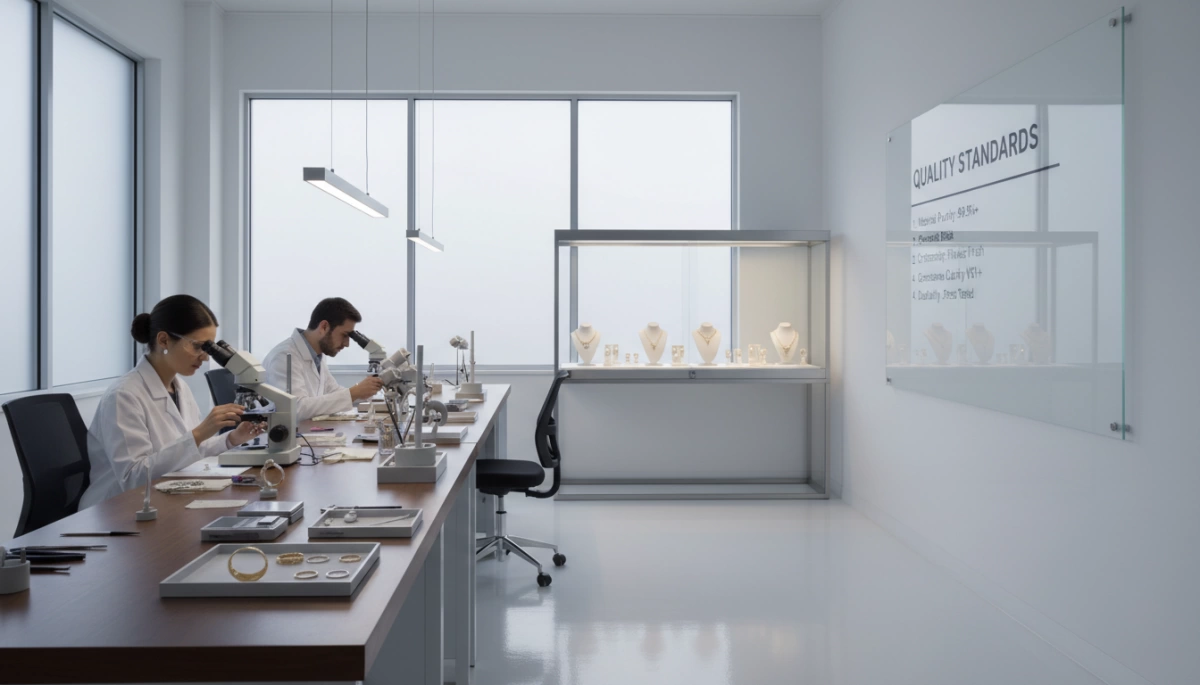
If you’re serious about building a jewellery brand, you can’t ignore quality standards and material sourcing. This is where a professional jewellery manufacturer can make or break your reputation.
How jewellery manufacturers source metals and gemstones
A reliable jewellery manufacturing company will:
- Buy gold, silver, brass, and stainless steel from verified metal suppliers with test reports (purity, alloy composition).
- Work with gemstone jewellery manufacturers and trusted stone dealers who provide grading, origin, and treatment info.
- Use conflict-free sourcing channels for diamonds and precious stones, often aligned with the Kimberley Process.
- Keep material traceability – each batch of metal and stones can be tracked back to a supplier.
If your brand needs stricter sourcing (ethical gold, Fairmined, etc.), you should confirm this at the quoting stage.
Plating quality, thickness, and durability
Plating is where a lot of artificial jewellery manufacturers cut corners. Don’t let that happen to your line.
Key points to lock in with your custom jewellery manufacturer:
- Base metal: brass, copper, sterling silver, or stainless steel.
- Plating type: gold plated, rose gold, rhodium, black plating, etc.
- Plating method: usually electroplating or PVD plating for stainless steel.
- Thickness:
- 0.03–0.05 μm: very thin fashion plating, will fade faster.
- 0.1–0.3 μm: decent mid-range fashion jewellery.
- 0.5–1.0+ μm: higher-end gold plated jewellery manufacturing, better durability.
Ask for clear specs in microns and request sample wear tests before bulk production.
Compliance, testing, and factory quality control
A professional jewellery manufacturer should have a clear jewellery quality control system, not just “we check everything”.
Look for:
- Incoming material inspection (metal purity, stone quality).
- In-process QC at casting, polishing, stone setting, and plating.
- Final inspection checking:
- Stone tightness
- Plating consistency
- Solder joints and sharp edges
- Logo and stamping (925, 14K, etc.)
For markets like the EU and US, ask how they handle:
- Nickel release limits
- Lead and cadmium content
- Skin-safety and allergy issues
Many established China jewellery manufacturers will also support third-party lab testing if you need official reports.
Key certifications to look for
Not every jewellery factory has every certification, but for serious brands, these matter:
- ISO 9001 – basic quality management system.
- RJC (Responsible Jewellery Council) – stronger signal for ethical and responsible practices.
- Conflict-free sourcing statements – especially for diamonds and gold.
- Environmental and social standards (where available) if you’re positioning as an ethical jewellery manufacturer.
When comparing OEM jewellery production partners, certifications help you filter out trading companies and focus on real factories.
Recycled metals and sustainable materials
If you want a sustainable jewellery factory behind your brand, talk about this upfront:
- Recycled sterling silver and recycled gold from certified refineries.
- Lab-grown stones from lab grown diamond jewellery manufacturers or synthetic gemstone suppliers.
- Eco-friendlier plating and reduced-chemical processes where possible.
- Packaging options using recycled paper and minimal plastics.
More factories are set up for recycled metal jewellery now, especially larger sterling silver jewellery factories and stainless steel jewellery suppliers doing bulk jewellery production.
If you want to see how a real OEM/ODM setup handles sourcing and QC, check a dedicated wholesale jewellery manufacturer offering OEM & ODM services like the one outlined on HonHo’s [OEM/ODM jewellery production page](https://www.hon
Design, Customization, and OEM/ODM Jewellery Services
OEM vs ODM Jewellery – What’s the Difference?
When you work with a professional jewellery manufacturer, you’ll usually choose between OEM and ODM:
| Term | What it means | Best for |
|---|---|---|
| OEM (Original Equipment Manufacturer) | You bring your own designs, the factory produces under your brand. | Established brands, designers, serious startups. |
| ODM (Original Design Manufacturer) | The factory provides ready designs; you add your logo/branding. | New brands, fast-launch collections, test markets. |
- OEM jewellery production = full control over design, specs, and brand identity.
- ODM jewellery manufacturer = faster, cheaper way to launch, with proven styles.
How Jewellery Design with a Manufacturer Actually Works
A solid jewellery manufacturing company will follow a clear, step-by-step design flow:
- Creative brief
- Brand story, target customer, price range, style direction.
- Concept & sketches
- Hand sketches or digital drawings based on your ideas or moodboard.
- Technical development
- Dimensions, materials (silver, brass, stainless steel), stone types, ring sizes, chain lengths.
- Costing & feasibility check
- Making sure your design fits your budget and target retail price.
You don’t need to be a technical expert, but you do need clear references and a realistic budget.
CAD, 3D Models, and Prototyping for New Collections
For serious jewellery OEM ODM services, digital tools are standard:
- CAD design (Rhino, Matrix, etc.)
- Exact dimensions, stone settings, and structure.
- 3D renders
- Realistic visuals for your team or pre-selling.
- 3D printing / wax model
- Physical sample to test proportion and comfort.
- Metal prototype
- Final pre-production sample for quality, finish, and wear test.
This makes the jewellery production process faster, more accurate, and easier to tweak before bulk jewellery production.
Custom Logo, Branding, and Packaging for Private Label Jewellery
If you run a private label jewellery brand, branding is non‑negotiable. A good custom jewelry factory can offer:
- Logo placement
- Laser engraving, stamping, or tag logo on pendants, rings, clasps.
- Brand details
- Custom hangtags, polishing cloths, care cards.
- Packaging
- Branded boxes, pouches, gift sets tailored to your market (e.g. e‑commerce vs. boutique retail).
If you’re still comparing suppliers, it’s worth checking what full-service support looks like with a professional jewelry supplier and OEM partner.
Protecting Your Jewellery Designs and Brand Identity
Outsourcing doesn’t mean losing control. To protect your IP when working with a custom jewellery manufacturer:
- Sign NDAs and IP clauses
- Before sharing detailed drawings, CAD files, or unique mechanisms.
- Clarify ownership of designs
- OEM: designs are yours.
- ODM: usually the factory’s, with you licensed to sell under your brand.
- Avoid sharing full collections with too many factories
- Test with small, controlled ranges.
- Register trademarks and key designs in your main markets where possible.
- Document everything
- Emails, version numbers of CAD, confirmed specs, and samples.
With the right jewellery manufacturer, you get speed, customization, and brand protection without sacrificing control over your creative direction.
Major Jewellery Manufacturing Hubs
China Jewellery Manufacturer Strengths
As a China jewellery manufacturer, I see daily why so many global brands produce here:
- Wide material range – sterling silver, stainless steel, brass, gold-plated, cubic zirconia, lab-grown stones.
- Competitive pricing – ideal for bulk jewellery production and fast fashion drops.
- Strong OEM/ODM support – factories are used to developing private label jewellery from scratch, including CAD, moulds, and packaging.
If you’re just starting to source overseas, guides like this breakdown on how to find a jewelry manufacturer in China are extremely useful.
Dongguan Jewellery Manufacturer: Scale and Speed
Dongguan is one of the most efficient jewellery manufacturing bases in China. At Dongguan HonHo Jewelry, we focus on:
- High capacity – ideal if you need thousands of pieces per style, with consistent quality.
- Fast lead times – strong supply chain and skilled workers keep sampling and production quick.
- Flexible MOQs – we support both startups and established brands with realistic minimums.
This makes a Dongguan jewellery factory a good fit for brands that want fast trend response and reliable re-orders.
India Jewellery Manufacturer Hubs (Jaipur, etc.)
India is a key jewellery manufacturing country, especially for:
- Silver and gemstone jewellery – Jaipur is famous as a Jaipur silver jewellery manufacturer hub, with strong stone-cutting and stone-setting skills.
- Traditional craftsmanship – hand-engraving, filigree, ethnic and boho styles.
- Semi-precious stones – amethyst, garnet, moonstone, and more at scale.
If your brand leans boho, ethnic, or gemstone-heavy, India is often a strong fit.
Thailand and Turkey for Niche Categories
Thailand and Turkey are great when you need niche skills and mid–high level craftsmanship:
- Thailand – clean stone setting, fine silver work, and intricate designs with good finishing.
- Turkey – bold statement jewellery, heavy silver pieces, and unique traditional looks.
These hubs suit brands that want something more distinctive than basic mass-market pieces.
Italy and European Jewellery Manufacturers
Italy and other European jewellery manufacturing hubs focus on premium and luxury positioning:
- Design-driven – strong styling, trend leadership, and brandable looks.
- Fine jewellery manufacturing – gold, diamonds, and high-end finishes.
- “Made in Italy” / “Made in EU” value – higher perceived value and pricing power.
If your brand is luxury or designer-led, Europe can justify higher production costs.
How Location Affects Shipping, Pricing, and Communication
When you choose a jewellery manufacturing company, location changes the full picture:
- Shipping time & cost
- China / India / Thailand / Turkey: best for sea freight on large runs; air for urgent drops.
- Europe: faster to EU markets but usually higher factory and labour costs.
- Pricing
- Asia: better for competitive pricing and large-scale OEM jewellery production.
- Europe: higher cost, higher branding value.
- Communication & support
- China/Dongguan: very used to global clients; clear processes, English-speaking sales, strong jewellery OEM ODM services.
- India/Thailand/Turkey/Europe: varies by factory; always test response speed before committing.
If you’re comparing different hubs, it helps to first understand their strengths, then compare 2–3 factory quotes side-by-side, similar to how you’d approach buying jewelry wholesale.
Jewellery Manufacturing Process Step by Step
When I work with a jewellery manufacturer, I follow a clear, step‑by‑step jewellery production process. That’s how we keep quality stable and costs under control.
1. Initial Brief: Brand, Market, Product Ideas
Everything starts with a clear brief for the jewellery manufacturing company:
- Your brand story and positioning (luxury, mid-range, fast fashion, streetwear, etc.)
- Target market and price point (fine jewellery vs fashion jewellery vs artificial jewellery)
- Product ideas: rings, chains, earrings, pendants, bracelets, findings, sets
- Materials: sterling silver, stainless steel, brass, gold plated, gemstones, lab-grown stones
- Style references: sketches, inspiration images, or physical samples
The better this first brief, the smoother every other step in the jewellery production process.
2. Design Development, Sampling, and Approval
Next, the custom jewellery manufacturer turns ideas into real designs:
- CAD drawings and 3D models for structure and proportions
- Technical specs: size, thickness, stone sizes, metal type, plating, engravings
- Sample making: 1–3 rounds to refine details and fit
- Final sample approval: this becomes the “master” for bulk jewellery production
At this stage, I lock in all specs to avoid surprises later.
3. Waxing, Casting, and Mould-Making
For metal jewellery, the factory moves into industrial production:
- Master model is used to create rubber or silicone moulds
- Wax injection: wax patterns formed from the mould
- Casting: metal (silver, brass, gold, stainless steel, etc.) is poured into the moulds
- Cleaning and trimming: remove sprues, excess metal, and casting marks
This is where a professional jewellery manufacturer really impacts consistency and cost.
4. Stone Setting, Soldering, and Assembly
After casting, pieces go through assembly:
- Soldering: joining components like bails, clasps, earring posts, chain parts
- Stone setting: prong, bezel, pave, channel, or micro setting for gemstones and lab-grown diamonds
- Assembly: adding chains, jump rings, clasps, and other findings (if you’re new to findings, I recommend checking a detailed jewelry findings guide to plan your designs)
Good stone setting and soldering are critical to avoid stones falling or parts breaking.
5. Polishing, Plating, and Finishing
This step defines the final look and feel:
- Polishing: tumbling, buffing, and hand polishing for smooth surfaces
- Plating: gold plated, rhodium plated, rose gold, black, etc., with different thickness options
- Surface finish: high shine, matte, satin, brushed, hammered, textured
For stainless steel jewellery, brass jewellery, and silver jewellery, the right finish is key to matching your brand’s aesthetic and price point.
6. Quality Inspection and Final Approval
A serious jewellery manufacturer will have strict quality control:
- Check plating thickness and color consistency
- Inspect stone setting, solder joints, and functional parts (clasps, hinges, locks)
- Measure sizes and weights against your spec sheet
- Pull out defective pieces before packing
This is where I insist on clear standards and batch checks to avoid quality issues.
7. Packaging, Labelling, and Export Prep
Once the jewellery passes QC, it’s prepared for shipment:
- Branded cards, pouches, boxes, and barcodes (for private label jewellery)
- Labelling by SKU, size, color, and collection
- Bulk packing in export-safe cartons with protective materials
- Documentation: packing lists, commercial invoices, HS codes, and export papers
When a jewellery manufacturing partner manages this process well, it saves time at your warehouse and makes scaling much easier.
Working With a Jewellery Manufacturer
Partnering with a professional jewellery manufacturer is where your idea turns into a real product. To keep costs, quality, and timelines under control, you need clear info, clear specs, and clear communication from day one.
Information You Need Before Contacting a Jewellery Factory
Before you message any jewellery manufacturing company or custom jewelry factory, have this ready:
- Brand positioning: fine jewellery, fashion jewellery, or mid-range everyday pieces
- Target price range: retail and rough target cost per piece
- Quantity: test run, low MOQ jewellery manufacturer needs, or full bulk jewellery production
- Timeline: sample lead time + desired launch date
- Key materials: sterling silver, stainless steel, brass, gold plating, gemstones, lab-grown diamonds, etc.
- Market: where you’ll sell (US, EU, UK, Middle East, etc.) for compliance and sizing
The clearer you are, the faster a jewellery manufacturing company can tell you if your project is realistic.
How to Send Sketches, Samples, or CAD Files
Jewellery manufacturers work best when they can see your idea:
- Sketches: clean front/side views with notes for stones, colors, and finishes
- Reference samples: existing pieces you like (for size, thickness, plating style, stone setting)
- CAD files: 3DM, STL, or similar formats if you already work with a jewellery designer
Send everything by email, cloud link, or factory portal with file names + item codes. A serious OEM jewellery manufacturer will keep your files organized and confidential.
Setting Clear Specs (Materials, Sizes, Plating, Branding)
Ambiguous specs = quality issues later. Lock in:
- Metal: 925 sterling silver, 316L stainless steel, brass, 14k/18k gold, or mixed
- Plating: type (gold, rose gold, rhodium), color tone, and thickness (e.g. 0.03–0.05 μm fashion, 0.1–2 μm premium)
- Stone details: natural, synthetic, CZ, lab-grown diamond; size, shape, color, setting style
- Sizes: ring sizes (US/EU/UK), chain lengths, bracelet sizes
- Branding: logo placement (tag, clasp, back of pendant), engraving style, packaging logo
Put everything in a simple tech sheet or spec sheet. This is the core of your jewellery OEM ODM services agreement.
How Jewellery Manufacturing Quotes Are Calculated
Most jewellery manufacturer quotes are based on:
- Material cost: metal weight x daily metal price + stones cost
- Labor: complexity of design, stone setting, polishing, finishing
- Plating: thickness, area, and type of plating
- Quantity: higher quantity = lower unit cost
- Packaging & branding: custom boxes, cards, engraving, QC extras
- Compliance: extra testing for nickel-free, lead-free, hypoallergenic, etc. (especially for kids’ or hypoallergenic jewelry)
Ask for a breakdown so you see where you can adjust design to hit your budget.
Payment Terms, Deposits, and Trade Practices
Most China jewellery manufacturers, India jewellery manufacturers, and other global suppliers follow similar terms:
- Samples: usually paid, sometimes refundable against bulk order
- Deposit: 30–50% before mass production, balance before shipment
- Currency: USD is standard for export
- Payment methods: bank transfer (T/T), sometimes PayPal for samples
- Incoterms: EXW, FOB, or CIF depending on who handles freight
Make sure everything is written in the PI (Proforma Invoice) and that you agree before paying any deposit.
Communication Tips to Avoid Problems
Smooth communication with your jewellery manufacturer saves you money and stress:
- Keep one clear contact point on your side and theirs
- Use item codes for each design; avoid “that round ring we talked about”
- Confirm everything in writing: specs, changes, deadlines, packaging, shipping method
- Approve samples before bulk; never skip this step
- Build realistic timelines; add buffer for revisions, QC, and shipping (especially if you’re buying from a China jewellery manufacturer for the first time – this guide on how to buy jewelry from China is a solid reference).
When you treat your jewellery manufacturer as a long-term partner, not just a cheap supplier, you get better pricing, more support, and far fewer surprises.
Common Problems With Jewellery Manufacturers & How To Avoid Them
Working with a jewellery manufacturer can go wrong fast if you don’t set the rules from day one. Here’s how I handle the most common issues so my projects stay on track.
1. Quality Issues: Set Standards Upfront
Most “bad quality” problems come from vague specs.
- Share clear written standards: metal type, purity, stone grade, plating thickness, allowed tolerance on sizes, weight ranges.
- Use reference samples (your own or market samples) and mark what you like/don’t like.
- Ask the factory to create a master sample and make it the “gold standard” for production.
- Include quality control checkpoints in your purchase order: what will be checked and what counts as a defect.
If you need lower-risk partners, start by testing a low MOQ jewellery manufacturer and build up volume once quality is stable.
2. Plating Fading & Stones Falling: Build Durability In
Plating and stone setting are usually the first to fail on fashion jewellery.
To improve durability:
- For gold plated jewellery manufacturing, set minimum plating thickness (e.g. 0.1–0.3μm for fashion, 1–2μm for premium).
- Specify base metal (brass vs copper vs stainless steel) and nickel/lead/cadmium-free requirements.
- Ask for salt spray / wear tests on plated samples.
- Use proper stone setting (prong, bezel, micro pave) instead of only glue on key styles.
- For high-stress designs (tennis bracelets, big stones), request reinforced settings and stress testing.
3. Delays in Production: Build Realistic Timelines
Delays usually come from unclear briefs, last-minute changes, or overbooked factories.
- Confirm lead times in writing for sampling and mass production.
- Add buffer time (2–3 weeks) around Chinese New Year, Diwali, and peak seasons.
- Lock designs before production and avoid changes after sample approval.
- Ask the factory for a production schedule with clear milestones.
- Tie delivery dates to your deposit and sample approval date, not just a calendar date.
4. Intellectual Property: Protect Your Designs
Your designs and brand are assets. Treat them like it.
- Use NDAs and non-compete clauses with your jewellery manufacturer, especially for OEM jewellery production and custom jewellery designs.
- Avoid sending your full collection to multiple factories at the same time.
- Ask the supplier to mark moulds and CAD files with your brand name and keep them separate.
- For key hero products, consider design registration/trademarks in your main markets.
5. Miscommunication on Specs, Packaging & Branding
Most painful mistakes are simple misunderstandings.
- Always send clear spec sheets: metal, stone, sizes, finish, plating colour, logo placement.
- Use drawings, sketches, and photos with notes instead of text-only explanations.
- For packaging and branding, send print-ready files (AI/PDF) and confirm mockups before bulk.
- Repeat key specs in the PI (proforma invoice) and purchase order so there’s no debate later.
If you’re new, this guide on how to start a jewelry business step-by-step can help you organize specs and expectations before you ever place an order: how to start a jewelry business step-by-step.
6. Regular Sampling & Batch Checks: Your Safety Net
You can’t control what you don’t check.
- Start with a sample order to test real-world quality and communication.
- Before every bulk run, approve a pre-production sample (PPS) based on final specs.
- For larger orders, use AQL-based inspections (by your team or a third party) before shipment.
- Keep a record of defects and send clear feedback so the factory can fix issues in the next batch.
Done right, this process turns your jewellery manufacturer from a risk into an asset, and makes scaling bulk jewellery production a lot safer and smoother.
Benefits of a Professional Jewellery Manufacturer
Working with a professional jewellery manufacturer isn’t just about cheaper prices – it’s about building a brand that can actually scale and last.
1. Cost Savings vs Local or In‑House Production
A good jewellery manufacturing company spreads machinery, labour, and overheads across thousands of pieces, so your unit cost drops fast.
| Option | Pros | Cons |
|---|---|---|
| Local studio / in‑house | Full control, flexible | High labour cost, slow, limited capacity |
| Freelance jewelry makers | Good for tests / samples | Inconsistent, hard to scale |
| Pro jewellery manufacturer | Best cost per unit, structured | Needs MOQs, more planning |
With bulk jewellery production and factory-level planning, I can usually land a better landed cost than most local workshops, especially for gold plated, sterling silver, and stainless steel pieces.
2. Consistent Quality on Every Order
Professional factories run standardized processes and jewellery quality control:
- Same alloys, same plating thickness, same stone-setting methods
- Each batch checked against your master sample
- Defect rates monitored and reduced over time
That consistency is what keeps wholesale jewellery suppliers, retailers, and online brands coming back.
3. Access to New Materials, Techniques, and Trends
Because we work across markets and regions, a custom jewellery manufacturer sees trends early:
- New plating colours, textures, and finishes
- Updated stone cuts, lab‑grown diamond options, and alternative materials
- Fresh fashion jewellery concepts and fine jewellery techniques
You’re not just buying production; you’re tapping into R&D and trend insight that would be hard to build alone.
4. Fast Scaling: From Small Runs to Bulk
A low MOQ jewellery manufacturer lets you:
- Test with small runs and tight budgets
- Scale quickly when a design takes off
- Keep lead times under control as volumes grow
Professional OEM jewellery production is built for this jump – from 50–100 pcs per style to thousands without reinventing the process each time.
5. Long‑Term Brand and Product Line Growth
A serious jewellery manufacturing partner supports:
- Private label jewellery with your logo, tags, and packaging
Spotlight on Dongguan HonHo Jewelry
Dongguan jewellery manufacturer you can actually build with
I run Dongguan HonHo Jewelry as a full-service jewellery manufacturer in China, focused on helping brands grow with stable quality and flexible production. We’re not a trading company – we’re a real Dongguan jewellery factory with in-house design, sampling, casting, stone setting, plating, and strict jewellery quality control under one roof.
Core services: OEM & ODM jewellery production
We mainly support brands through:
- OEM jewellery production – you bring the design (sketch, CAD, or sample), we handle full jewellery manufacturing from prototype to bulk.
- ODM jewellery collections – you pick from our ready-made designs, we customize materials, plating, stones, and branding for your private label jewellery.
- Custom jewellery manufacturer support – logo engraving, custom tags, branded packaging, and tailored specs for distributors, creators, and wholesalers.
This works well if you’re looking for a low MOQ jewellery manufacturer to test new designs, then scale into bulk jewellery production once sales pick up.
Materials we work with
HonHo is set up as a flexible fashion jewellery manufacturer and sterling silver jewellery factory. We work with:
- 925 sterling silver – solid silver, hallmark available on request
- Stainless steel – ideal for durable, hypoallergenic, everyday jewellery (see our breakdown of what stainless steel jewelry is and why brands use it)
- Brass – cost-effective base for gold plated jewellery manufacturing
- Gold plating – multiple thickness options (flash, 0.5–3 microns) in yellow, white, and rose gold
- Gemstones – natural, synthetic, zircon, lab-grown stones depending on your price point
We help you match materials to your market: premium, mid-range, or entry-level fashion.
Quality control and testing systems
Quality is non‑negotiable if you want repeat orders. At HonHo, we run:
- Incoming material checks – metal, stones, and plating solutions verified before use
- In‑process inspections – during casting, stone setting, polishing, and plating
- Plating and wear tests – to reduce issues like fading or tarnishing
- Final QC – size, color, logo, and packaging checks before shipping
If you’re building a serious brand, this type of structured jewellery quality control is what keeps returns and complaints down over time.
Built for startups, small brands, and big labels
We’re used to working with different types of customers:
- Startups & creators – lower MOQs on selected lines, clear guidance on specs, and step-by-step support
- Growing brands – stable OEM jewellery production, better pricing as volumes grow, and fast development of new drops
- Established wholesalers & labels – high-capacity China jewellery manufacturer support, multiple collections running at once, and long-term planning
If you’re just transitioning from handmade to factory, we help you set realistic specs and costs so you don’t burn budget on the first run.
Jewellery styles and categories we produce
As a custom jewelry factory and wholesale jewellery supplier, we cover a wide mix of styles, including:
- Necklaces & pendants – minimalist, religious, lockets, stone-set
- Rings – stackable bands, signet rings, promise and couple rings
- Earrings – studs, hoops, huggies, crawlers, dangles
- Bracelets & bangles – chains, cuffs, charm bracelets
Trends Shaping Jewellery Manufacturing
Sustainable jewellery & recycled metals
Sustainability isn’t a “nice to have” anymore – it’s a must. As a jewellery manufacturer, I see more brands asking for:
- Recycled silver, gold, and brass instead of freshly mined metals
- Traceable, conflict‑free sourcing and cleaner plating processes
- Partners who can act as a sustainable jewellery factory, not just a low‑cost supplier
If you want to sell globally, especially in the US and Europe, ethical and sustainable jewellery is now a core part of your brand story.
Lab‑grown diamonds & alternative stones
Fine jewellery manufacturing is shifting fast:
- Lab‑grown diamonds and moissanite for accessible “luxury”
- Synthetic and treated gemstones for consistent color at scale
- Alternative materials like zirconia and glass crystals for fashion jewellery manufacturers
A good gemstone jewellery manufacturer should offer both mined and lab‑grown options, with clear disclosure.
Personalized jewellery & small‑batch customization
Consumers want jewellery that feels personal. Today’s custom jewellery manufacturer needs to support:
- Engraving, name necklaces, letter pendants
- Birthstones, custom sizes, and mix‑and‑match charms
- Low MOQ jewellery manufacturing for test drops and limited collections
This mix of bulk jewellery production plus personalization is where a lot of brands win.
3D printing, CAD & AI in design
Modern jewellery makers lean heavily on digital tools:
- CAD design and 3D printing for fast prototyping and accurate sampling
- AI‑assisted design to explore more concepts before committing to moulds
- Faster iteration for both OEM jewellery production and ODM jewellery lines
If your jewellery manufacturing company isn’t using digital workflows, you’ll feel it in slower development and higher sampling costs.
Shorter trend cycles & faster product launches
Trends move in weeks, not seasons. Successful brands work with jewellery manufacturers who can:
- Turn ideas into production‑ready samples fast
- Scale from small test runs to bulk orders without sacrificing quality
- React quickly to social media trends in fashion, sterling silver, and gold plated jewellery manufacturing
This is exactly why many brands choose a China jewellery manufacturer or Dongguan jewellery factory that already has streamlined jewelry production systems for brands and wholesalers.
How To Start Your Jewellery Manufacturing Project
Checklist before you contact a jewellery manufacturer
Before you reach out to any jewellery manufacturing company, get your basics clear:
- Product focus: rings, necklaces, earrings, bracelets, charms, sets, or all of them
- Materials: sterling silver, stainless steel, brass, gold-plated, gemstones, lab-grown stones, etc.
- Target price range: your ideal retail price and acceptable production cost
- Brand positioning: fine jewellery, fashion jewellery, or everyday affordable pieces
- Order size & timeline: estimated quantity (per style) and expected launch date
- Brand assets: logo files, packaging ideas, and any existing design guidelines
Having this ready makes you look serious and helps any custom jewellery manufacturer quote fast and accurately.
How to choose between multiple factory quotes
When you compare offers from different jewellery manufacturers, don’t just chase the lowest price. Look at:
- All-in pricing: check if quotes include molds, plating, stones, labor, and packaging
- Materials and specs: confirm silver purity, plating thickness, stone types, and base metals
- MOQs: low MOQ jewellery manufacturers are useful for new brands testing the market
- Lead times: sampling time + mass production time + shipping
- Experience: ask for similar projects, especially in your category (e.g. sterling silver jewellery factory or fashion jewellery manufacturer)
Build a simple spreadsheet and rank each jewellery supplier on price, quality, communication, and flexibility.
Sample order, test runs, and first bulk order strategy
Never jump straight into bulk jewellery production. Move in stages:
- Sample order: approve design, weight, size, comfort, finishing, and branding
- Small test run: produce a smaller batch to test consistency and market response
- First bulk order: only after you’re happy with quality, timing, and communication
Use samples to stress-test:
- Plating durability
- Stone setting strength
- Color consistency across multiple pieces
For example, if you’re planning to launch a ring line, order several sizes and finishes, similar to the approach we take on our wholesale sterling silver rings collections.
Building a long-term partnership with your jewellery supplier
The best results come when you treat your jewellery manufacturer as a long-term partner, not a one-off vendor:
- Share your roadmap: future collections, volumes, and markets
- Be clear about feedback: what works, what doesn’t, and why
- Keep ordering rhythm: consistent reorders help the factory optimize costs and priority
- Respect payment terms and agreed timelines
A strong relationship gives you better support, priority in production, more flexible MOQs, and early access to new techniques and designs.
How to reach out to Dongguan HonHo Jewelry for a custom quote
If you’re ready to start, Dongguan HonHo Jewelry can support you as a private label jewellery manufacturer and custom jewelry factory:
- Send us your design brief: sketches, reference photos, or CAD files
- Tell us your material choice, plating options, and target price
- Let us know your expected quantity per style and launch timeline
We handle OEM jewellery production and ODM jewellery manufacturer services across silver, stainless steel, brass, gold plating, and gemstone jewellery. You can also reference styles you like from our wholesale fashion necklaces or bracelets and charms ranges, such as the pieces we showcase in our wholesale bracelets and charms collections.
Once we receive your details, we’ll quote clearly, suggest optimizations, and guide you from sampling to bulk production so you can launch your jewellery brand with confidence.
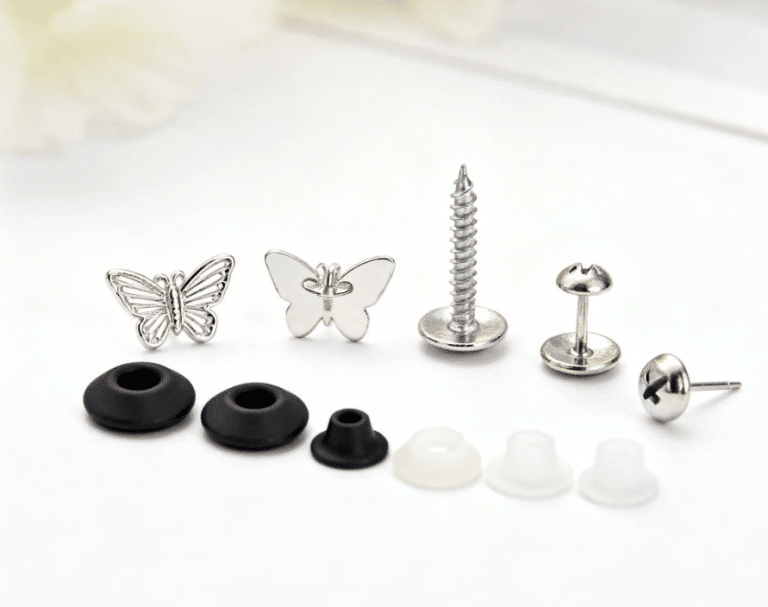
The Unseen Hero: Why Earring Backings Define Quality Jewelry
Every jewelry brand owner knows the sinking feeling. A customer calls, distraught. They’ve lost one
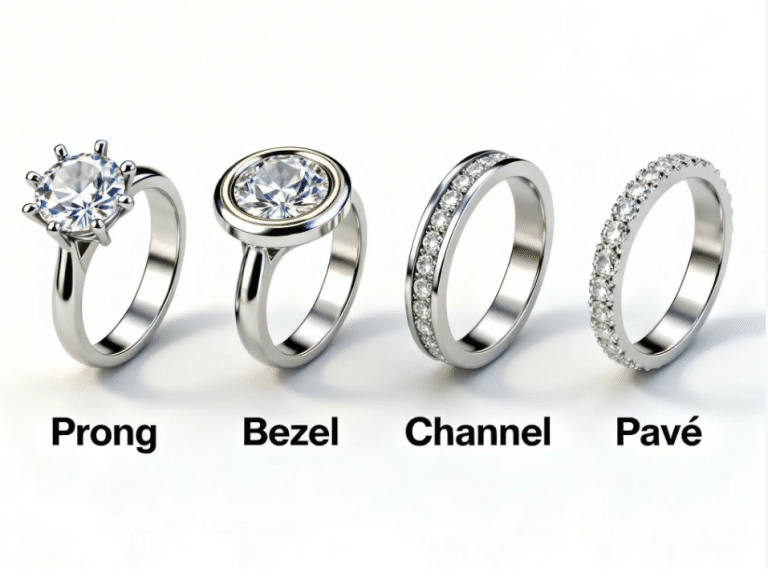
Choosing the Best Jewelry Stone Setting for Mass Production
Selecting the right jewelry stone setting is one of the most pivotal decisions for any
Best Jewelry Stone Setting for Mass Production | HonHo
Choosing the best jewelry stone setting Choosing the best jewelry stone setting is one of