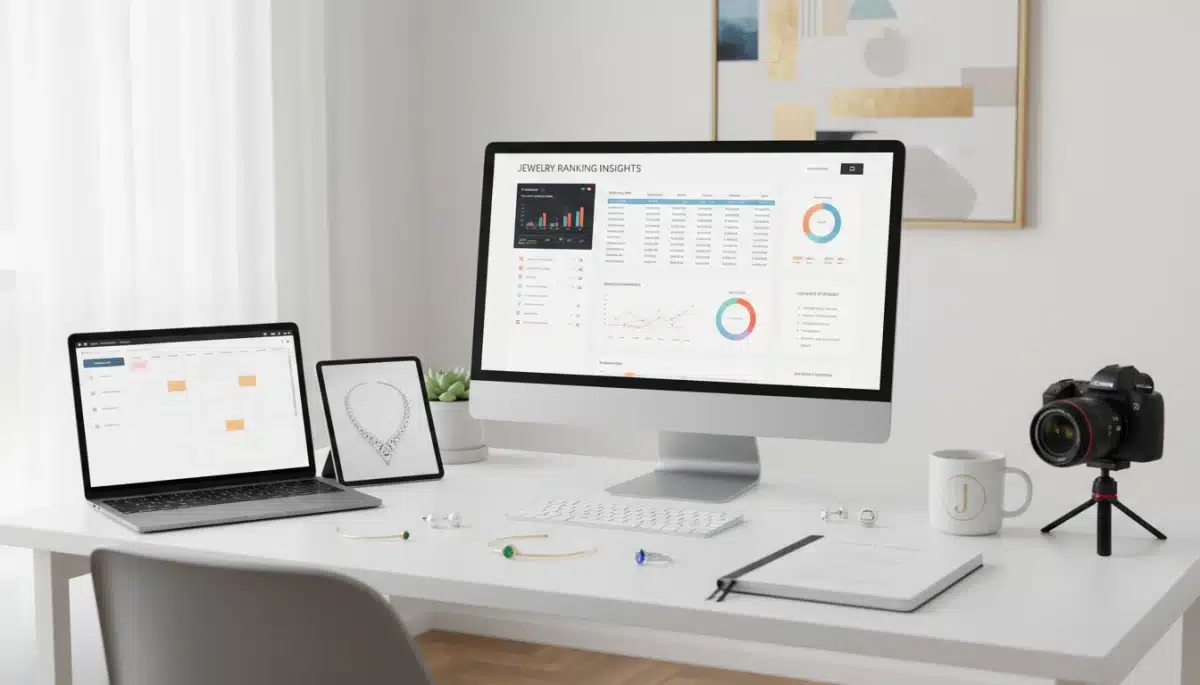
If you want to start a jewelry business, you can’t skip the market. This is where you decide what to sell, who to sell to, and how to actually make money—not just pretty products.
Jewelry Industry Overview and 2026 Opportunities
The global jewelry industry is still growing in 2026, driven by:
- Ecommerce – Online jewelry stores and social selling (Instagram, TikTok, Pinterest) are taking more share from traditional retailers.
- Affordable luxury – Customers want gold‑plated, 925 sterling silver, and lab grown diamond jewelry that looks high-end but stays under premium prices.
- Personalization – Customized name jewelry, birthstone jewelry lines, and zodiac jewelry collections are becoming core categories, not side products.
- Ethical and sustainable jewelry – Recycled metals, lab grown diamond jewelry, and transparent sourcing are strong selling points for Gen Z and Millennials.
If you’re starting a jewelry line now, this is a good time to build an online jewelry boutique with a clear niche, strong branding, and a smart jewelry pricing strategy.
Key Jewelry Customer Types
Most successful jewelry brands focus on one or two main customer types:
- Fashion jewelry buyers
- Trend-driven, low–mid price
- Love statement pieces, minimalist jewelry brands, men’s jewelry, and seasonal drops
- Bridal and fine jewelry buyers
- High trust, high ticket
- Engagement rings, wedding bands, lab-grown or natural diamonds, gold jewelry manufacturing
- Luxury and premium buyers
- Care about brand story, quality, and status
- Expect 925 sterling silver jewelry, solid gold, certifications, and top‑tier packaging
- Everyday wear buyers
- Simple, durable, comfortable
- Minimalist pieces, personalized name necklaces, stackable rings, daily hoops
Knowing your main buyer helps you decide everything: materials, price point, branding, and marketing channels.
Demand for Custom, Branded, and Private Label Jewelry
In 2026, customers don’t just want generic jewelry—they want identity:
- Custom jewelry – Name necklaces, initial pendants, engraved rings, custom birthstone jewelry. Great for gifting and higher profit margins.
- Branded collections – Your own logo, signature style, and cohesive design language. This builds long-term brand equity and repeat customers.
- Private label jewelry – Partnering with a private label jewelry manufacturer or jewelry wholesale supplier to put your brand on pre‑developed designs. Fast way to launch without designing from scratch.
If you work with a custom jewelry manufacturer or jewelry supplier in Asia, you can combine speed, scale, and customization for your own online jewelry store or B2B jewelry wholesale.
How Trends Shape Your Jewelry Startup Strategy
Current jewelry business trends should directly influence your launch plan:
- If your audience is on Instagram and TikTok, short‑form video, UGC, and influencer marketing should be built into your strategy from day one.
- If you want to sell sustainable jewelry, you must align your supply chain: recycled metals, ethical gemstones, clear messaging, and no greenwashing.
- If you target budget-conscious buyers, consider gold-plated base metals and 925 sterling silver jewelry with strong jewelry SEO strategy and marketplace presence (Etsy jewelry shop, Amazon Handmade jewelry).
In simple terms: choose a clear niche, understand your customer, and design your jewelry business model around how people actually buy jewelry today.
Jewelry Business Niches and Ideas

Popular jewelry business models
When you start a jewelry business, your model decides your costs, margins, and how fast you can scale:
- Handmade jewelry business
- You make each piece yourself.
- Low startup cost, higher labor, strong “artisanal” branding.
- Great for Etsy and small online boutiques.
- Jewelry dropshipping
- You sell; a supplier ships directly to your customer.
- Very low upfront cost, but lower control and thinner profit margins.
- Works best for trend‑driven fashion jewelry.
- Private label jewelry business
- You put your brand on existing designs from a private label jewelry manufacturer.
- Faster launch, good margins if you negotiate well, strong brand control.
- OEM / manufacturing
- You create original designs and work with a custom jewelry manufacturer or factory.
- Higher MOQ and investment, but best for building a long‑term, scalable jewelry brand.
- If you’re exploring OEM, a specialist OEM jewelry manufacturer like Honho Jewelry is built exactly for this kind of partnership.
Best jewelry business niches in 2026
In 2026, I focus on niches with clear demand and room to brand:
- Minimalist jewelry brand
- Thin chains, tiny pendants, simple hoops.
- Everyday wear, repeat purchases, easy to style and photograph.
- Statement jewelry
- Bold earrings, chunky rings, enamel pieces, colorful stones.
- Perfect for social media virality and seasonal drops.
- Men’s jewelry business
- Stainless steel chains, signet rings, bracelets, cufflinks.
- Fast‑growing niche with less competition than women’s segments.
- Zodiac jewelry collection
- Horoscope pendants, constellation necklaces, zodiac sign rings.
- Great for personalized gifts and evergreen content on Pinterest/Instagram.
- Birthstone jewelry line
- Monthly stones in rings, necklaces, and charm bracelets.
- Strong gifting angle, ideal for birthdays, anniversaries, and Mother’s Day.
You can also stack niches, like minimalist men’s jewelry or zodiac birthstone necklaces, to stand out.
How to pick a jewelry niche that fits you
I always balance three things before committing:
- Your skills
- Creative and crafty? Go handmade or small‑batch custom name jewelry.
- Strong in branding/marketing? Lean toward private label or OEM with unique positioning.
- Your budget
- Low budget: Start with handmade, dropshipping, or very small MOQs.
- Medium–high budget: Work with a jewelry wholesale supplier or manufacturer for custom designs.
- Your target customer
- Who are they? Age, income, style, where they shop.
- What problem are you solving? Affordable luxury, ethical jewelry, men’s accessories, gifts, etc.
- Where do they discover brands? Instagram, TikTok, Etsy, or local markets?
If a niche doesn’t match your skills, budget, and audience, it’ll be hard to grow.
Validating jewelry business ideas with real data
I never rely on “gut feeling” alone. Use platforms your buyers already use:
- Google Trends
- Compare terms like “minimalist jewelry”, “men’s chains”, “birthstone necklace”, “lab grown diamond jewelry”.
- Look for upward or stable 12–24 month trends.
- Etsy
- Type in “zodiac necklace”, “925 sterling silver jewelry”, “customized name necklace”.
- Check:
- Number of results (competition)
- Top sellers, their reviews, and pricing
- Styles that repeat (clear demand)
- Amazon / Amazon Handmade jewelry
- Search similar terms and look at:
- Best Seller Rank (BSR) in jewelry categories
- Number of reviews
- Gaps: styles or materials missing at certain price points.
- Search similar terms and look at:
- Pinterest marketing for jewelry
- Search boards and pins for your niche (e.g. “minimalist gold jewelry”, “men’s bracelet outfit”).
- Pins with high saves and repins signal strong style demand and content ideas.
Combine this data with your own strengths, then lock in one clear niche and model before you invest heavily.
Jewelry Business Planning and Strategy
Why you need a jewelry business plan before launching
If you’re serious about starting a jewelry business, you need a clear jewelry business plan before you spend money on inventory or a website. A simple plan helps you:
- Know your numbers – costs, pricing, profit margins.
- Avoid bad decisions – wrong niche, wrong manufacturer, wrong channels.
- Focus your energy – clear goals for your jewelry line instead of guessing.
- Attract partners – manufacturers, investors, and even wholesale buyers take you more seriously.
Treat your jewelry business plan as your roadmap, not a school project. It should be short, practical, and easy to update.
Core sections of a jewelry business plan
A solid jewelry business plan usually covers five core areas:
- Brand
Who you are, what your jewelry brand stands for, your story, and your unique selling point (e.g. minimalist 925 sterling silver jewelry, bold men’s jewelry, customized name jewelry). - Market
Your ideal customer, price range, key jewelry business niches, and what competitors are doing (online jewelry boutiques, Etsy shops, Amazon Handmade jewelry, etc.). - Operations
How you design, prototype, manufacture, and fulfill orders. This includes whether you go handmade vs manufactured jewelry, use a jewelry wholesale supplier, or work with a private label jewelry manufacturer. - Finances
Startup costs, ongoing costs, target profit margins, and basic cashflow. This is where you plug in your jewelry pricing strategy. - Marketing
How you’ll get traffic and sales: jewelry SEO strategy, Instagram jewelry brand content, TikTok jewelry marketing, Pinterest marketing for jewelry, and email marketing for jewelry business.
Keep it lean but specific. You can refine each section as you test and learn.
Defining your jewelry business model (ecommerce, wholesale, B2B, hybrid)
Before you launch, decide how you actually want to sell your jewelry:
- Ecommerce store – Your own Shopify jewelry store or WooCommerce site; you control branding, pricing, and customer data.
- Marketplaces – Etsy jewelry shop, Amazon Handmade jewelry; easier traffic at the start but more competition and fees.
- Wholesale / B2B – Sell to boutiques, concept stores, and jewelry retailers at volume; lower margins per piece but larger orders.
- Hybrid model – Most serious jewelry brands combine DTC ecommerce + marketplaces + B2B jewelry wholesale once they’re stable.
Your business model affects everything: minimum order quantities (MOQs), packaging, pricing, and which jewelry manufacturer you should choose. If you’re exploring production, use resources like this detailed jewelry wholesale suppliers guide to map out your sourcing and wholesale strategy.
Setting realistic jewelry business goals and KPIs
Without clear goals, your jewelry business will drift. Set simple, measurable targets:
- Revenue goals – e.g. $1,000/month in the first 3 months, then ramp up.
- Traffic goals – number of site visits from SEO, Pinterest, Instagram, TikTok.
- Conversion goals – target conversion rate (e.g. 1.5–3% for a new online jewelry boutique).
- Marketing KPIs – email list growth, cost per acquisition, ROAS on ads.
- Operations KPIs – production lead time, defect rate, on‑time delivery, return rate.
Start small, review your KPIs monthly, and adjust your jewelry business strategy based on real data, not vibes.
Jewelry Business Costs and Profit Margins
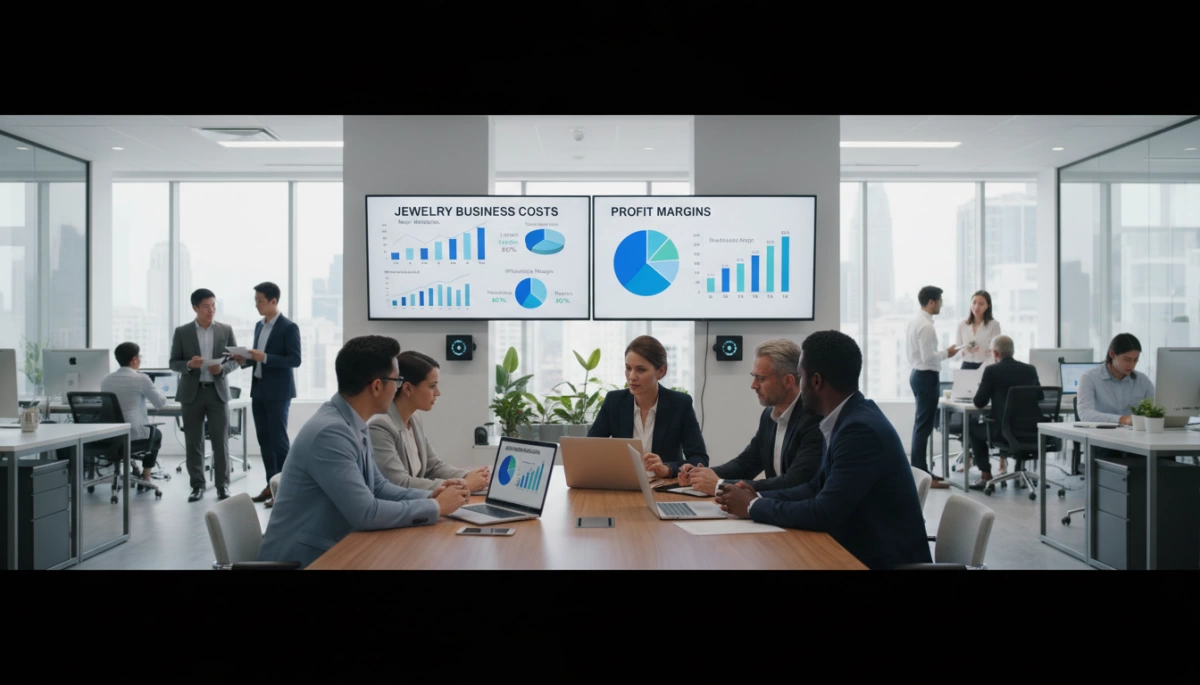
Typical startup costs for a jewelry business
When I start a jewelry business, I plan for these core upfront costs:
- Design & development – Sketches, CAD, and early 3D models: $200–$2,000+ depending on complexity and if I hire a designer.
- Prototypes & samples – Test pieces before launch: $300–$3,000, higher for gold and gemstones. (Using efficient methods like lost-wax casting prototypes can keep costs under control.)
- Initial inventory – Small runs of bestsellers:
- Fashion jewelry: $500–$3,000
- Sterling silver / gold-filled: $1,000–$5,000
- Fine gold / diamond: $3,000–$20,000+
- Branding – Logo, colors, jewelry logo and packaging design: $200–$2,000.
- Website / ecommerce – Domain, theme, apps: $200–$1,500 to launch a Shopify jewelry store or online jewelry boutique.
I keep my first collection tight (10–30 SKUs) to keep jewelry business costs low and test what actually sells.
Ongoing jewelry business costs
Once the jewelry line is live, I track these monthly/ongoing costs:
- Production & materials – Metal, stones, plating, labor (biggest cost driver).
- Packaging – Boxes, pouches, inserts; more premium for higher AOV.
- Shipping & fulfillment – Courier fees, mailers, 3PL costs, returns processing.
- Marketing – Meta/TikTok ads, influencer gifting, content creation, email tools.
- Platform fees – Shopify, Etsy, Amazon Handmade, payment gateway fees (2.5–4%).
- Overheads – Sample reorders, software, accounting, basic legal.
I aim for a structure where production + packaging + shipping + platform fees stay under 30–40% of my average selling price.
Typical jewelry profit margins by segment
Profit margins in the jewelry industry vary a lot by positioning:
- Fashion jewelry (plated / alloy)
- Target keystone or better: 3–6x product cost.
- Example: $5 landed cost → $29–$49 retail.
- 925 sterling silver jewelry / gold-filled jewelry
- Typical 3–5x production cost, depending on branding and design.
- Example: $20 cost → $79–$129 retail.
- Fine gold and diamond jewelry
- Lower volume but higher ticket.
- Often 2–4x cost for DTC brands, sometimes more with strong brand equity.
- Custom jewelry / personalized pieces
- High labor + design time ⇒ higher margins per piece or higher ticket price.
- I charge for design, materials, and an extra premium for uniqueness.
Using materials like properly produced gold-filled jewelry often gives me a sweet spot: more premium than plated, but still strong margins.
Pricing your jewelry for profit and sustainability
I don’t price just by “doubling cost.” I reverse-engineer from the business I want:
- Calculate true landed cost per piece
- Materials + labor + packaging + shipping to me + duties + platform fees.
- Set a target gross margin
- New jewelry brands: 60–80% gross margin is a healthy target for DTC.
- Use a simple pricing formula
- Retail price = Total cost × 3–6 (depending on segment and brand strength).
- Check market positioning
- Compare against similar brands on Shopify, Etsy, and Amazon; don’t be the cheapest – be clearly positioned.
- Leave room for promos and wholesale
- If I may do wholesale later, I price so I can sell at 50% off retail and still profit.
If the price I need to charge to stay profitable feels too high for my target customer, that’s my signal to adjust: choose different metals, simpler designs, lower MOQs, or a different jewelry business niche.
Designing Your Jewelry Line
How to design jewelry that actually sells
When you start a jewelry business, design with real buyers in mind, not just what looks pretty.
Focus on:
- Use cases: bridal, everyday wear, men’s jewelry, minimalist, zodiac or birthstone pieces.
- Customer lifestyle: Do they want affordable fashion jewelry, fine gold jewelry, or a statement piece for special occasions?
- Function: Hypoallergenic, tarnish‑resistant, comfortable weight, easy to put on and take off.
- Data, not guesses:
- Check what’s trending on Etsy, Amazon, and Pinterest.
- Read reviews on similar jewelry lines and fix what people complain about (clasps, fading, sizing, etc.).
If a design doesn’t match a clear need, price point, and target customer, it won’t move.
Tools and methods: from sketch to 3D
You don’t need to be a master artist to start a jewelry line, but you do need a clear way to communicate your idea.
Common tools:
- Hand‑sketching
- Fast for brainstorming and concept work.
- Great for early idea dumps and custom name jewelry concepts.
- CAD jewelry design software
- Programs like Rhino, MatrixGold, or Blender give accurate dimensions and details.
- Essential for gold jewelry manufacturing, 925 sterling silver jewelry, and any work with stones or prong settings.
- 3D modeling + 3D printing
- Export CAD files to create 3D printed jewelry prototypes in resin or wax.
- Lets you test size, weight, and comfort before committing to metal.
- AI‑assisted design
- Use AI tools to generate design variations, patterns, and motifs you can refine in CAD.
- Helpful when you’re building a full jewelry collection fast (e.g., zodiac jewelry, minimalist sets).
Pick a workflow you can repeat: sketch → CAD → 3D → sample → final production.
Professional jewelry designer vs. DIY
Both paths can work; choose based on your budget and skills.
DIY design is better if:
- You have a design background or are willing to learn CAD.
- You’re starting small with handmade jewelry or simple minimalist pieces.
- You want full control over your jewelry branding and product development.
Hire a professional jewelry designer if:
- You’re building a full private label jewelry brand or complex fine jewelry line.
- You need production‑ready CAD files, not just pretty visuals.
- You want someone who understands stone setting, metal thickness, and manufacturing limits.
You can start with a hybrid approach: simple DIY for basic pieces and bring in a designer for hero products or complex gold and sterling silver jewelry that need technical accuracy.
Building a cohesive collection and signature style
Random designs don’t build a brand. A successful jewelry business feels consistent at first glance.
To build a cohesive jewelry collection:
- Choose a strong theme:
- Minimalist lines, chunky chains, men’s jewelry, zodiac symbols, birthstones, lockets, crosses, celestial motifs, etc.
- Limit your core materials:
- For example: 925 sterling silver with gold‑plated accents, or stainless steel for durable fashion jewelry. If you’re comparing metals, understand differences like in‑depth guides on stainless steel vs. titanium jewelry or how long sterling silver lasts (e.g., guides like how long does sterling silver last).
- Keep a consistent visual language:
- Similar chain styles, recurring shapes, matching finishes (all high‑polish, all matte, or a mix that still feels intentional).
- Plan sets and upsells:
- Design around collections: ring + necklace + bracelet + earrings that can be sold as bundles.
- Create a recognizable signature:
- A special clasp shape, engraving style, motif, or metal texture that people can spot as “yours.”
Your signature style is what turns an online jewelry shop into a long‑term jewelry brand. Design with that end goal in mind from day one.
Prototyping and Sampling in the Jewelry Business
Before you push anything to mass production, you need a solid prototyping and sampling process in your jewelry business. This is where you catch design flaws, comfort issues, and quality problems before you burn cash on a big order.
Why prototypes and samples are critical
In any serious jewelry business (whether you’re starting a jewelry line or scaling a private label jewelry brand), prototypes protect your margin and your reputation:
- They show the true look, feel, and size of the piece – not just a pretty render.
- You can check comfort, clasp strength, and wearability on real people.
- You catch production issues early (stone setting, plating thickness, sharp edges).
- You confirm pricing and profit margins once you know real material and labor costs.
Skipping prototypes is one of the most expensive jewelry business mistakes you can make.
Common jewelry prototyping methods
Depending on your niche (minimalist, men’s, zodiac, birthstone, etc.) and your budget, you’ll usually use one or a mix of these:
- 3D printing prototypes
- Fast and accurate for CAD-based jewelry design.
- Great for checking scale, proportions, and stone settings.
- Widely used in modern gold jewelry manufacturing and 925 sterling silver jewelry production.
- Wax carving
- Traditional method, still popular for organic, sculptural designs.
- Ideal if you work with a custom jewelry manufacturer that does casting in-house.
- Resin models
- Useful for visualizing complex shapes and getting quick physical samples.
- Good low-cost option before committing to metal samples.
How many samples do you really need?
For a small online jewelry boutique or new Shopify jewelry store, I usually recommend:
- 1–2 development samples per design to refine size and details.
- 2–5 pre-production samples per design for:
- Fit – chain length, ring size accuracy, earring weight on the ear.
- Finish – polish level, plating tone, stone sparkle.
- Weight – not too heavy for daily wear, not too light that it feels cheap.
- Durability – test clasps, jump rings, prongs, plating wear.
Use these samples to align with your jewelry wholesale supplier or custom jewelry manufacturer on final specs and quality standards.
What to test before finalizing designs
When I test samples in my own jewelry business, I focus on:
- Wear test for at least 3–7 days
- Any green skin issues?
- Does plating fade too fast?
- Are there any sharp edges or snag points?
- Stress test the weak points
- Pull on chains and clasps.
- Gently bend rings to check structural strength.
- Tug on stone settings to see if anything loosens.
- Visual consistency
- Compare multiple samples for color matching, symmetry, and finishing.
- This tells you a lot about the factory’s real quality control.
For deeper pricing and margin checks once you have samples in hand, it’s worth understanding how wholesale jewelry pricing typically works in practice, especially if you’re planning to scale with a jewelry wholesale supplier (see this breakdown of wholesale jewelry pricing structures).
Get feedback from real customers, not just your gut
Don’t finalize your jewelry collection based only on what you like. Before locking designs:
- Share samples with your ideal customers
- Friends who match your target market (not just “any friend”).
- Loyal buyers from your Etsy jewelry shop, Instagram jewelry brand, or email list.
- Ask specific questions:
- “Would you actually wear this daily?”
- “What would you pay for this?”
- “Anything you’d change about size, color, or details?”
- Use:
- Short surveys (Google Forms, Typeform).
- Try-on sessions at home pop-ups or local markets.
- UGC content from testers for future marketing.
The goal: Validate that your jewelry design, price point, and comfort level all line up with what your niche actually wants. Only then should you give your jewelry manufacturer the green light for full production.
Protecting Your Jewelry Designs and Brand
Protecting your jewelry business isn’t just legal stuff – it’s protecting your profit, reputation, and long‑term brand value. If you’re serious about starting a jewelry line or scaling an online jewelry boutique, you need a basic IP (intellectual property) strategy from day one.
Basics of Intellectual Property in the Jewelry Business
For a jewelry business, IP usually means four things:
- Copyright / Design rights – protect the creative look of your pieces
- Trademarks – protect your jewelry brand name, logo, slogan, packaging style
- Trade dress – protects the overall “look and feel” of your brand (in some countries)
- Trade secrets – protect your processes, supplier lists, custom formulas, etc.
You don’t need to become a lawyer, but you do need to know what you can protect, where, and how it impacts your jewelry profit margins and long‑term brand equity.
Copyright & Design Protection for Jewelry
In many countries, original jewelry designs are automatically protected by copyright or design rights as soon as you create them (drawings, CAD files, 3D models, photos).
To protect yourself:
- Document your work
- Keep dated sketches, CAD files, and sample photos
- Save emails and contracts with any custom jewelry manufacturer
- Register designs where possible
- For your bestsellers or signature collections, consider design registration in key markets
- This makes it easier to take down copycats and prove ownership
- Use clear ownership contracts
- If you hire a CAD designer or freelance artist, ensure contracts say you own all IP
- This is critical if you’re using advanced tools or following guides like a detailed jewelry CAD design workflow
Focus on protecting unique design elements that really define your jewelry brand – not every single small variation.
Trademarking Your Jewelry Brand Name and Logo
Your brand name will often be more valuable than any single piece of jewelry.
To protect it:
- Choose a strong, unique brand name
- Avoid generic names like “Gold Boutique” or “Diamond Jewelry Store”
- Make sure your name is free on domains, social media, and major marketplaces
- Register your trademark in key markets
- Start with your home country, then expand to the US, EU, UK, etc. as you grow
- Trademark your name, logo, and potentially your tagline
- Use your mark consistently
- Same logo, same colors, same spelling everywhere
- Put your branding on jewelry packaging, website, and product cards
A registered trademark makes it easier to fight off copycat jewelry brands on Shopify, Etsy, Amazon Handmade, and social media.
Simple Steps to Reduce Design Theft and Copycats
You can’t prevent all copying, but you can make it harder and riskier for others:
- Use NDAs (non‑disclosure agreements)
- For new factories, designers, photographers, and freelancers
- Work with serious manufacturers only
- Choose a trusted OEM or private label jewelry manufacturer with clear IP policies
- Watermark or selectively share designs
- Don’t send full CAD files or high‑res images to random suppliers
- Only share what’s needed until you trust the partner
- Monitor marketplaces
- Search your key designs on Amazon, Etsy, AliExpress, TikTok Shop, etc.
- Keep screenshots and dates as proof if you need to report infringement
- Use platform tools
- Etsy, Amazon, Instagram, and Facebook all have IP complaint systems
- If you have trademarks or clear proof of original design, takedowns are easier
The goal is simple: protect your bestsellers, keep your jewelry designs unique, and build a recognizable jewelry brand that’s hard to copy.
Jewelry Manufacturing Options
When you start a jewelry business, your manufacturing choice decides your costs, margins, and how fast you can scale. I look at it in three main paths: local, China, and in‑house handmade.
Local vs. China vs. Handmade
| Option | Best For | Pros | Cons |
|---|---|---|---|
| Local production | Premium, small batches, faster re-orders | Better communication, easy QC, faster sampling | Higher unit cost, higher retail price needed |
| China production | Scaling a jewelry brand, wholesale, volume | Lower cost, wide material options, huge capacity | MOQs, longer lead times, IP + QC need tighter control |
| In‑house handmade | Unique, artisan, customized name jewelry | Full control, flexible, strong brand storytelling | Time‑consuming, hard to scale, labor is the bottleneck |
If you plan to build a volume-focused online jewelry boutique, working with a reliable jewelry supplier in Asia usually gives the best mix of cost and scalability.
Pros and Cons: Manufacturing in China vs. Local vs. Handmade
Manufacturing in China (OEM or private label)
- Pros:
- Lowest cost per piece (higher jewelry profit margins)
- Huge choice of metals (including 925 sterling silver and gold‑plated) and stones
- Scalable for B2B jewelry wholesale and online dropshipping models
- Cons:
- MOQs are higher, so cash is locked in inventory
- Need strong quality control and detailed specs
- IP and design protection need attention
If you’re exploring volume production, study how to buy jewelry wholesale and vet factories properly; guides like this one on how to buy jewelry wholesale and avoid problems are helpful.
Local production
- Great if your jewelry brand leans on “made in [your country]”, ethical jewelry, or premium pricing.
- Works well for small runs, prototypes, or higher-end gold and sterling silver jewelry production.
In‑house handmade
- Ideal for handmade vs manufactured jewelry brands, customized name jewelry, minimalist jewelry, and small drops.
- You trade lower upfront cost for higher time cost and slower scaling.
OEM vs. Private Label Jewelry Manufacturing
OEM (Original Equipment Manufacturer)
- You send your own CAD, 3D models, or sketches.
- Best for custom jewelry manufacturers, unique designs, zodiac or birthstone collections, and building a signature jewelry line.
- Higher development cost but stronger brand differentiation.
Private Label
- You choose from a factory’s existing designs and add your logo, tag, or small tweaks.
- Faster to launch, lower design cost, great for testing jewelry business niches quickly.
- Less unique, more competition on similar styles.
If you want deep customization, check lists of top companies that make custom jewelry and compare their OEM capabilities and MOQs.
How Production Method Affects Cost, MOQs, and Scaling
- Cost per piece
- Handmade > Local > China (for the same specs)
- Fine jewelry (solid gold, 925 silver) > fashion jewelry (brass, alloy, plating)
- MOQs
- Handmade: almost no MOQ, but limited output
- Local: low–medium MOQ
- China: medium–high MOQ, but best for scaling a jewelry business
- Scalability
- Handmade: low (great for boutique brands)
- Local: medium
- China: high (ideal for global ecommerce jewelry stores, Amazon Handmade, and B2B jewelry wholesale)
Choose the path that matches your budget, target price point, and growth plan—not just the cheapest offer.
Choosing a Jewelry Manufacturer or Supplier
Picking the right jewelry manufacturer or jewelry wholesale supplier will make or break your jewelry business. I never treat this step lightly – it affects quality, margins, delivery times, and your brand reputation.
Key factors to vet a jewelry manufacturer
When I evaluate a jewelry manufacturer (local or jewelry manufacturing in China), I always look at:
- MOQ (Minimum Order Quantity)
- Can you start small (low MOQ like 50–100 pcs per style)?
- Do they offer test orders or sample runs before big production?
- Quality control systems
- Do they have clear QC steps (incoming material check, mid‑production, final inspection)?
- Are they used to working with gold jewelry manufacturing and 925 sterling silver jewelry with consistent plating thickness?
- Communication & responsiveness
- Do they answer clearly, in detail, and on time?
- Are they proactive in suggesting better materials or structures?
- Production capability
- Can they handle your niche: minimalist jewelry, men’s jewelry, custom name jewelry, birthstone or zodiac jewelry?
- Can they scale if your online jewelry boutique suddenly grows?
For low-volume startups, I often recommend checking low MOQ jewelry manufacturers first so you’re not stuck with huge inventory.
Questions to ask potential jewelry manufacturers
Before I work with any custom jewelry manufacturer or private label jewelry manufacturer, I send a clear question list:
- What are your MOQs per style / per color / per size?
- What metals do you work with? (stainless steel, brass, 925 sterling silver, solid gold, gold‑filled, lab‑grown diamond jewelry)
- What’s your standard lead time for:
- Samples
- Mass production
- What is your defect / rework policy? Who pays for remakes or returns?
- Can you sign an NDA or basic IP agreement to protect my jewelry design?
- What standard plating thickness and allergy‑free standards can you guarantee (e.g. nickel-free)?
- How do you package each piece (OPP bag, box, card, custom packaging)?
- Do you support B2B jewelry wholesale and long‑term pricing tiers?
If they dodge these questions or reply vaguely, I move on.
How to evaluate jewelry samples and production quality
Never skip samples – this is where you see if the jewelry business idea is viable:
Check your samples for:
- Finish & polishing
- Is the surface smooth, no sharp edges, no plating bubbles or scratches?
- Color consistency
- Gold tone consistent across pieces? No patchy plating?
- Weight & comfort
- Heavy enough to feel quality, light enough to wear all day.
- Stones & settings
- Are stones straight, tight, and evenly set? No glue overflow?
- Engraving & details
- Are logos, names, zodiac signs, or birthstones clean and centered?
- Durability tests
- Try basic wear: open/close clasps multiple times, light pull test, simple water/sweat exposure to see if color changes.
I usually order 2–5 samples per design to make sure quality is consistent, not just one “perfect” piece.
Red flags to avoid in a jewelry factory or supplier
These are signs I walk away fast:
- Very low prices with “too good to be true” promises
- Often means thin plating, weak clasps, or unreliable delivery.
- No clear contract, PI, or QC terms
- Everything is “don’t worry” but nothing is written down.
- Refusal to provide samples or pushing for large first orders
- Poor communication
- Slow replies, one‑word answers, ignoring your specs or drawings.
- Inconsistent samples
- First sample looks good, second one looks totally different.
- No experience with your metal or niche
- If you want high‑quality sterling silver jewelry production, but they mainly do cheap alloy, quality will suffer.
If you need ODM/private label support (ready-made designs you can brand), a specialized ODM jewelry manufacturer can save time on design and product development.
Choose your jewelry manufacturing partner like you’d choose a co‑founder: carefully, with clear expectations, and only after they prove they can protect your brand and your margins.
Jewelry Manufacturing in China
Why Many Jewelry Brands Manufacture in China
I manufacture a big part of my jewelry line in China for one main reason: the supply chain there is built for jewelry business scale.
- Huge choice of factories (fashion, fine, stainless steel, custom)
- Fast access to stones, chains, findings, and plating options
- Flexible for small test runs and big wholesale orders
If you’re serious about starting a jewelry business or scaling an online jewelry boutique, China is usually on the table at some point.
Key Benefits for a Jewelry Business
| Benefit | What It Means for Your Jewelry Brand |
|---|---|
| Cost efficiency | Lower unit cost = better jewelry profit margins and competitive pricing |
| Scalability | Easy to move from small MOQs to large runs as your jewelry line grows |
| Material options | Gold-plated, 925 sterling silver, stainless steel, CZ, lab-grown stones |
| Lead times | Faster sampling + production once the relationship is stable |
Manufacturers in China (especially experienced stainless steel jewelry manufacturers) are strong in product development, custom jewelry manufacturing, and private label jewelry production.
Common Concerns (and How I Handle Them)
| Concern | How I Reduce the Risk |
|---|---|
| Quality issues | Detailed specs, pre‑production samples, clear QC checklist |
| Communication | Work only with reps who respond fast, use clear written English, videos |
| IP protection | NNN agreements, limit design files, avoid oversharing bestsellers |
| Hidden costs | Get full quotes: mold, plating, packaging, shipping, duties (landed cost) |
I also compare multiple factories (often using guides like this top jewelry manufacturers USA vs. overseas overview) to benchmark price, quality, and service.
How to Safely Place Your First Order in China
Use a simple step‑by‑step approach:
- Shortlist 3–5 factories
- Look for experience in your niche: minimalist jewelry, men’s jewelry, zodiac jewelry, or custom name jewelry.
- Check photos, certifications, and client references.
- Send clear specs
- CAD files or sketches
- Materials (e.g., 316L stainless steel, 925 sterling silver, gold-plated)
- Size, finish, stones, packaging requirements
- Order paid samples first
- Test weight, plating, stones, clasps, engraving
- Wear test pieces for 1–2 weeks
- Start with a small production order
- Negotiate MOQ but keep it realistic
- Use secure payment (Trade Assurance, LC, or staged payments)
- Lock in QC and shipping
- Ask for detailed QC photos/videos before shipping
- Confirm shipping method (air, courier, or DDP) and delivery time
- Calculate landed cost per piece (product + shipping + duties)
If you control specs, samples, and QC, jewelry manufacturing in China can be one of the strongest levers to scale your jewelry business profitably.
Working With Custom Jewelry Manufacturers
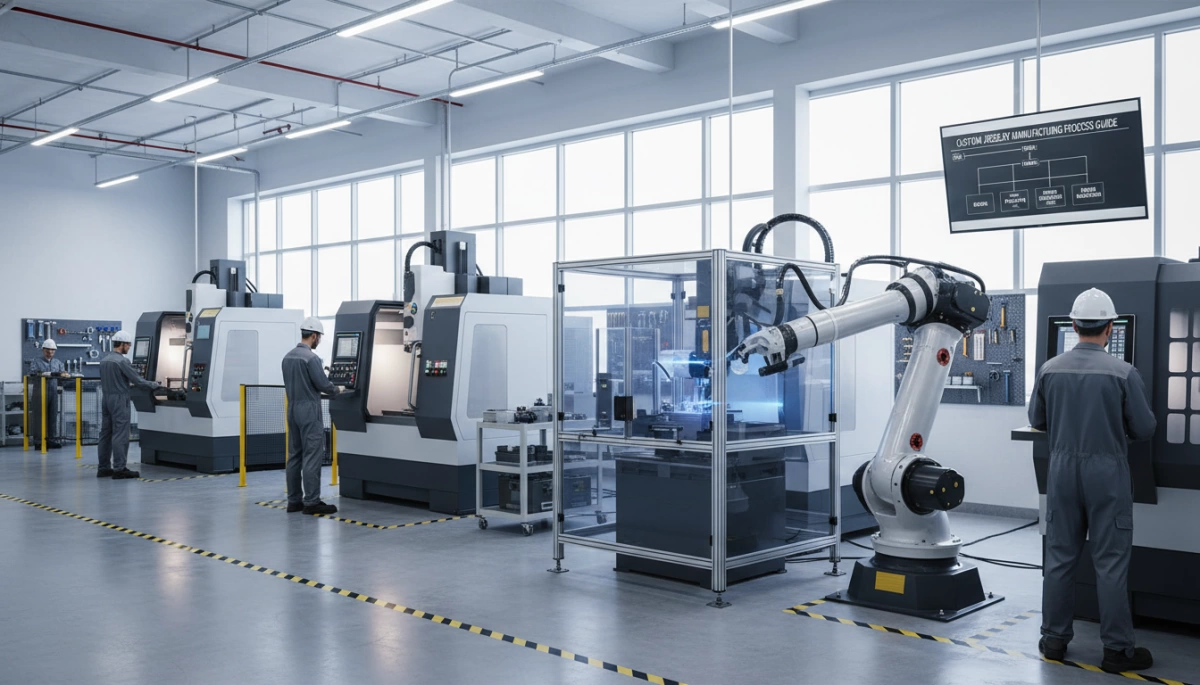
What a custom jewelry manufacturer does for your brand
When you start a jewelry business and want your own designs, a custom jewelry manufacturer is your behind‑the‑scenes engine. They can:
- Turn sketches, mood boards, or CAD files into production‑ready pieces
- Source metals, stones, and findings that match your price point and brand (gold, 925 sterling silver, brass, lab‑grown stones, etc.)
- Handle molding, casting, stone setting, polishing, plating, and quality control
- Advise on cost‑saving tweaks so your jewelry line is profitable at scale
In short, a good custom jewelry manufacturer lets you focus on branding and sales while they handle the technical side of jewelry production.
How to send design files, specs, and requirements clearly
Clarity is everything when working with a custom jewelry manufacturer. Here’s what I always send:
- Design files: CAD (e.g., .stl, .3dm), clear hand sketches, or 3D renders
- Measurements: mm dimensions, ring sizes, chain lengths, weight targets
- Materials: metal type (925 sterling silver, 14k gold vermeil, brass), plating thickness, stone types, colors, and sizes
- Finishes: high polish, matte, brushed, hammered, antique, etc.
- Brand details: logo placement, engraving files, packaging requirements
- Tolerance + quality: acceptable variance in size/weight, minimum QC standards
Put everything into a simple tech pack or PDF so the factory has one single source of truth.
Understanding MOQs, lead times, and production calendars
Before you lock in a private label or custom jewelry manufacturer, get aligned on numbers and timing:
- MOQs (Minimum Order Quantities):
- Fashion jewelry: often 50–300 pcs per style
- Fine / sterling silver: sometimes lower but higher cost per unit
- Lead times:
- Samples: 2–4 weeks on average
- Mass production: 3–8 weeks after sample approval
- Production calendar:
- Confirm cut‑off dates for seasonal drops (Valentine’s, Mother’s Day, Q4)
- Ask when they’re busiest so you can plan ahead
Use this to build your production calendar and cash flow plan, so you don’t oversell or run out of stock.
How to build a long‑term partnership with your jewelry factory
The best jewelry brands treat their custom jewelry manufacturer like a strategic partner, not a one‑off vendor. To build a strong, long‑term relationship:
- Communicate clearly and early about changes, delays, or forecasted growth
- Pay on time and respect agreed terms
- Give constructive feedback with photos, measurements, and specifics—not just “quality is bad”
- Share your growth plans so they can reserve capacity and suggest better production solutions
- Start small but consistent: regular orders build trust faster than one huge order
If you’re exploring production in Asia, using a vetted partner like these specialized jewelry manufacturers in China can help you balance cost, MOQs, and quality while you scale your jewelry business globally.
Gold and Sterling Silver Jewelry Production
When you build a serious jewelry business, your metal choices decide your brand image, pricing, and profit margin. Here’s what actually matters.
Gold-Plated vs Gold-Filled vs Solid Gold
| Type | What It Is | Pros | Cons / Best Use |
|---|---|---|---|
| Gold-Plated | Thin gold layer over base metal (brass, copper, steel) | Lowest cost, trend-friendly | Wears off faster, not for “heirloom” positioning |
| Gold-Filled | Thick bonded gold layer over brass (usually 5% gold) | More durable, mid-price “everyday” | Higher cost than plated, limited fine-jewelry feel |
| Solid Gold | Gold alloy all the way through (e.g. 10K, 14K, 18K) | Premium, luxury, long-term value | Highest cost, needs strong luxury brand positioning |
How I use them:
- Fashion / trend brand → mostly gold-plated + a few gold-filled staples
- Mid-tier, sentimental pieces → gold-filled for everyday wear
- Luxury / bridal or investment jewelry → solid gold only
What 925 Sterling Silver Is (And Why It Sells)
925 sterling silver = 92.5% pure silver + 7.5% alloy (usually copper)
You’ll often see stamps like “925”, “S925”, or “Sterling”.
Why it’s a staple in the jewelry business:
- Looks premium but costs far less than solid gold
- Works great for minimalist, men’s, zodiac, and birthstone jewelry
- Easy to plate (e.g. gold over 925 for “vermeil-style” looks)
- Customers already understand and search for “925 sterling silver jewelry”
If you plan to focus on high-volume, modern designs, combine 925 base with strong finishing techniques such as those described in this guide to polishing and plating in modern jewelry.
Choosing Metals and Finishes for Your Jewelry Brand
Match metals to your brand positioning and price point:
- Budget / trend brand
- Metals: brass, stainless steel, some 925 for hero pieces
- Finishes: gold-plated, PVD plating, rhodium plating over silver
- Mid-range everyday jewelry
- Metals: 925 sterling silver, gold-filled, stainless steel for men’s
- Finishes: thicker gold plating, vermeil-style looks, black PVD for men
- Premium / luxury / bridal jewelry
- Metals: solid gold (10K/14K/18K), high-grade 925, platinum (for high-end)
- Stones: natural or lab-grown diamonds, high-quality CZ or gemstones
Think in terms of:
- AOV (average order value): higher metals → higher AOV but slower turnover
- Customer promise: “trend & affordable” vs “heirloom & investment”
- Maintenance: plated pieces need clear care instructions; solid gold is low maintenance
Quality Standards and Certifications (Gold & Silver)
To keep your jewelry business credible, lock in clear standards:
- Hallmarks / Stamps
- 925 / S925 / Sterling for sterling silver
- 10K, 14K, 18K, 585, 750, etc. for gold purity
- Nickel / Lead / Cadmium regulations
- Ensure nickel-free where required (EU, parts of US)
- Ask your manufacturer for compliance reports (e.g. REACH, RoHS)
- Plating thickness
- Fashion: 0.1–0.3 microns gold
- Better quality: 0.5–1 micron
- Premium vermeil-style: 2.5 microns or more over silver
- Lab reports
- For fine jewelry: request metal and stone certificates
- For lab-grown diamond jewelry: IGI/GIA-type certificates increase trust
If you work with stainless steel or gold alternatives, pair them with clear education content and use resources like this overview of wholesale stainless steel rings to benchmark quality and finishes.
The tighter you control metals, plating, and hallmarks, the easier it is to price confidently, avoid returns, and build a jewelry brand customers trust.
Sustainable and Ethical Jewelry Production
What “sustainable jewelry” really means
When I talk about a sustainable jewelry business, I’m not just talking about “eco” buzzwords. In practice, sustainable jewelry means you:
- Reduce waste in design, sampling, and production
- Use recycled metals and responsibly sourced stones wherever possible
- Pay fair wages and work only with factories that follow safe labor standards
- Design for long wear (repairable, non‑throwaway pieces) instead of fast fashion
If you’re working with an overseas or jewelry supplier in Asia, you need written proof of their standards, not just promises.
Eco‑friendly materials, recycled metals, ethical gemstones
For a modern ethical jewelry brand, I focus on three pillars:
- Recycled metals:
- Recycled sterling silver (often labeled 925 sterling silver)
- Recycled gold for gold‑plated, gold‑filled, or solid gold jewelry
- Ethical gemstones:
- Traceable origin where possible
- Conflict‑free certification for diamonds and other precious stones
- Low‑impact extras:
- Lead‑free, nickel‑safe components
- Recycled or FSC‑certified packaging instead of plastic-heavy boxes
The goal is simple: cut the footprint without killing your margins.
Lab‑grown vs. natural diamonds in a jewelry business
Lab‑grown diamond jewelry has changed how I plan collections:
- Lab‑grown diamonds
- Chemically identical to natural diamonds
- More affordable, more consistent quality
- Easier to trace and market as a responsible choice
- Natural diamonds
- Strong emotional and resale value for luxury buyers
- Must be conflict‑free with clear documentation
In 2026, many customers don’t care if it’s mined or grown—they care if it looks great, is honestly labeled, and fits their values and budget.
How to market sustainability without greenwashing
If you want your sustainable jewelry production story to convert (and not backfire), keep it real:
- Be specific, not vague:
- “Our chains use 100% recycled 925 sterling silver” is better than “eco‑friendly metals.”
- Show certifications and proof:
- Third‑party audits, recycled metal certificates, ethical sourcing statements
- Share your limits and plans:
- “Our main line uses recycled silver; we’re working on switching all clasps by 2026.”
- Make it visible where people buy:
- Product pages, packaging inserts, and brand story sections
If you’re also working with a manufacturer that offers ethical fashion necklaces, highlight their processes and materials transparently, just like you’d do with your own line.
Branding Your Jewelry Business
Define your jewelry brand story and mission
Your brand story is why your jewelry business exists, not just what you sell. Keep it simple:
- Who you design for (minimalist jewelry lovers, bridal customers, men’s jewelry, etc.)
- What makes your jewelry different (custom name jewelry, 925 sterling silver, lab‑grown diamond jewelry, sustainable jewelry production)
- What you stand for (ethical jewelry brand, fair pricing, everyday luxury)
Write a 1–2 sentence mission like:
“ We create affordable, sustainable jewelry that people wear every day, not just on special occasions.”
Choose a memorable jewelry brand name
Your jewelry business name should be:
- Easy to spell, say, and search
- Short enough for social handles and a .com domain
- Aligned with your niche (zodiac jewelry, minimalist jewelry brand, men’s jewelry business, customized name jewelry business)
Check: domain availability, Instagram/TikTok handles, and trademark conflicts before you lock it in.
Create a clear visual identity
Your visual identity must instantly tell people your price range and style:
- Logo: simple and legible on tiny jewelry tags, boxes, and website headers
- Colors: soft neutrals for minimalist / bridal, bold colors for fashion and statement jewelry
- Typography: 1–2 fonts max; clean sans‑serif for modern, serif for luxury
- Packaging style: boxes, pouches, and inserts that match your look and price point
If you’re going for a modern, mid‑range online jewelry boutique, use clean fonts, neutral colors, and simple but premium packaging. For inspiration on packaging and positioning, study how a brass jewelry manufacturer or a personalized jewelry manufacturer list presents their branding online.
Align brand positioning with your audience and price
Your branding must match your target customer and profit margins:
- Selling fine gold jewelry or lab grown diamond jewelry? Go for a luxury look, slower drops, higher perceived value.
- Selling fashion jewelry or private label jewelry? Use bolder visuals, trend‑driven campaigns, and accessible pricing.
Ask yourself: If a stranger saw my logo, colors, photos, and packaging, would they guess my price range and style correctly? If not, tighten your jewelry branding and packaging until the answer is yes.
Jewelry Branding and Packaging
How packaging shapes perceived value
In the jewelry business, your packaging quietly tells customers what your brand is worth. A $50 piece in a flimsy poly bag feels cheap; the same piece in a well‑designed box instantly feels like a $120+ product. Good jewelry branding and packaging:
- Signals quality and trust (especially for online buyers)
- Justifies your pricing and profit margins
- Makes your brand feel “gift‑ready” without extra effort
- Encourages customers to post unboxing content on Instagram, TikTok, and Pinterest
If you’re selling gold‑plated, 925 sterling silver, or stainless steel pieces, your packaging needs to match the level of perceived value you want to build.
Premium jewelry packaging on a budget
You don’t need luxury‑brand budgets to look premium. Focus on a few key elements:
- Rigid jewelry box: small, matte or soft‑touch finish, with a simple logo stamp (foil or emboss).
- Branded pouch: microfiber, velvet, or cotton pouch for daily use and scratch protection.
- Insert card: one small card with care instructions (for example, how long stainless steel jewelry lasts and care tips) and a short brand message.
- Consistent colors: 1–2 core brand colors + 1 accent; keep it clean and minimal.
Start with a small run of basic boxes and pouches, then upgrade finishes as your jewelry business scales.
Unboxing experience and brand loyalty
A tight unboxing flow can turn first‑time buyers into fans:
- Branded mailer → protective tissue or kraft paper
- Jewelry box or pouch → neatly placed piece, no tangles
- Care card + thank‑you note → clear, simple, on‑brand tone
- Optional: small freebie (polishing cloth, sticker, or discount for next order)
Make it easy to photograph: no messy stuffing, just a clean layout that looks good on camera and reflects your jewelry brand story.
Printing, materials, and suppliers
When you source jewelry packaging, keep this checklist:
- Materials: paperboard boxes, recycled kraft, cotton or velvet pouches, foam or velvet inserts
- Print methods: foil stamping, deboss/emboss, spot UV, simple 1–2 color logo print
- Specs to confirm: size, color code (Pantone), logo position, insert type, and MOQ
If you sell stainless steel, gold‑plated, or silver pieces, combine your packaging with clear quality and care information—for example, linking to a simple jewelry quality assurance guide on your site. This builds trust and reduces returns, while reinforcing your positioning as a serious, reliable jewelry brand.
Jewelry Photography and Product Presentation
Why Great Jewelry Photos Are Non‑Negotiable
If you sell jewelry online, your photos are your storefront. In jewelry ecommerce, clean, sharp images directly impact:
- Click‑through rate (people actually opening your product pages)
- Perceived quality and price justification
- Return rate, because good photos set clear expectations
Think of every image as a sales asset. If you’re investing in gold or 925 sterling silver jewelry, but using dull photos, you’re burning margin.
Basic Jewelry Photo Setup (Easy, Low Budget)
You don’t need a full studio to start a jewelry business with strong visuals. You need consistency:
- Lighting:
- Use soft, diffused light (window light + white curtain, or softbox).
- Avoid harsh shadows and yellow light.
- Backgrounds:
- Start with clean white or light grey for your ecommerce jewelry store.
- Add a second set with a neutral textured background (stone, linen, wood) for variety.
- Angles:
- Front view, side view, close‑up detail, scale shot (in hand or next to a coin/ruler).
- For earrings and necklaces, show length clearly.
- Props:
- Keep it simple: ring stands, trays, jewelry boxes, fabric.
- Don’t let props distract from the jewelry line itself.
If you’re shooting stainless steel, this 316L stainless steel jewelry guide gives a good sense of finishes you’ll want to capture in close‑ups.
Lifestyle vs. Studio Shots
Use both in your jewelry business marketing:
- Studio shots (white / neutral background)
- Best for product pages, catalogs, wholesale line sheets
- Ideal for Amazon Handmade jewelry, Etsy listings, and SEO‑driven pages
- Lifestyle shots (on models / in real settings)
- Best for Instagram jewelry brand content, TikTok jewelry marketing, Pinterest
- Show size, fit, how pieces layer and stack
- Perfect for minimalist jewelry brands, men’s jewelry business, and zodiac jewelry collections that rely on “vibe” and styling
Rule of thumb:
- Studio = clarity and conversion
- Lifestyle = emotion and discovery
Optimizing Images for Speed, SEO, and Conversions
Good jewelry photography is wasted if your site loads slowly or images don’t rank:
- File size:
- Compress images before upload (aim for ~150–300 KB per image where possible).
- Use WebP or optimized JPEG for Shopify jewelry stores and WooCommerce.
- Image SEO:
- File names like gold-plated-zodiac-necklace.jpg instead of IMG_1234.jpg.
- Alt text that matches search intent: “minimalist 925 sterling silver birthstone ring” or “customized name necklace in gold vermeil”.
- Conversion tips:
- Show multiple angles + on-model shot on the product page.
- Add a zoom feature for detailed metals and stones (especially lab grown diamond jewelry, fine gold jewelry, and engraved pieces).
- Keep image style consistent across your online jewelry boutique for a professional, branded feel.
Great jewelry photography is one of the fastest ways to upgrade your brand, justify higher prices, and make your jewelry business look “established” from day one.
Setting up your online jewelry store
Launching an online jewelry business is way easier when you pick the right ecommerce platform and set up your store properly from day one.
Best ecommerce platforms for a jewelry business
Here’s how I look at the main options when starting a jewelry line:
- Shopify jewelry store
- Pros: Built for ecommerce, tons of jewelry themes and apps, easy to scale, great for branding, supports global payments and currencies.
- Cons: Monthly fees + paid apps; you handle your own traffic (no built‑in marketplace).
- Etsy jewelry shop
- Pros: Ready‑made audience searching for handmade, custom and minimalist jewelry; easy to start with low upfront cost.
- Cons: High competition, fees add up, limited branding, Etsy controls search and can shut you down.
- Amazon Handmade / Amazon jewelry
- Pros: Massive traffic, strong trust, Prime shipping boosts conversions.
- Cons: Strict rules, fees, less brand control, better for volume and B2C than for “boutique” branding.
- WooCommerce (WordPress)
- Pros: Full control, flexible, good for SEO, lower software costs long‑term.
- Cons: More technical, you manage hosting, security, and updates yourself.
My usual setup: start with Shopify as your main branded store, then add Etsy or Amazon later as extra sales channels.
Must‑have pages and features for a jewelry website
At minimum, your ecommerce jewelry store needs:
- Homepage – clear brand story, bestsellers, social proof.
- Shop/Collections – organized by type (rings, necklaces), material (gold, 925 sterling silver), style (minimalist, men’s, zodiac).
- Product pages – strong jewelry photography, detailed product descriptions, sizing info, care instructions, clear pricing.
- About – who you are, why you started your jewelry business, what makes your jewelry different (materials, sustainability, custom options).
- FAQ – shipping, returns, warranties, materials, tarnish, resizing/repairs.
- Contact – email or form, social links, response time.
- Policies – shipping, returns & refunds, privacy policy, terms of service.
- Reviews / UGC – real customer photos and feedback.
Key features that help a jewelry business convert:
- Size guides & length charts
- Currency converter for global buyers
- Wishlist / “save for later”
- Back‑in‑stock alerts
- Klarna/Afterpay‑style installment options (helps with higher‑ticket gold or lab‑grown diamond jewelry)
Mobile, speed, and secure checkout
Most jewelry customers browse on their phone, so your ecommerce store has to be:
- Mobile‑first
- Use a responsive theme.
- Make buttons big enough to tap easily.
- Keep navigation simple (2–3 levels max).
- Put “Add to cart” and price above the fold.
- Fast
- Compress images without losing quality.
- Limit heavy apps and scripts.
- Use optimized image sizes for jewelry close‑ups.
- Test site speed regularly (e.g., Google PageSpeed).
- Secure
- SSL certificate (https) is non‑negotiable.
- Trusted payment gateways (Stripe, PayPal, Apple Pay, Google Pay).
- Show trust badges and clear refund policy near the checkout.
When you sell gold‑plated or 925 sterling silver jewelry online, customers will also want to know how durable it is and how to care for it, so I always add a care section and link to practical guides on topics like how gold‑plated jewelry behaves over time and whether it tarnishes directly from the product or FAQ pages. This builds trust and reduces pre‑purchase questions.
Jewelry Business on Marketplaces and Wholesale Platforms
Selling Jewelry on Etsy, Amazon Handmade & Marketplaces
When I start a jewelry business online, I treat marketplaces as fast “traffic boosters” for my brand:
- Etsy – great for handmade, minimalist jewelry brands, customized name jewelry, birthstone jewelry, and zodiac jewelry collections.
- Amazon Handmade – better for scale and speed; ideal if you already have solid production and want volume.
- Niche platforms – local craft sites, regional marketplaces, and online jewelry boutiques can bring highly targeted buyers.
Always:
- Use clear titles with keywords like “925 sterling silver jewelry”, “minimalist gold plated necklace”, “men’s bracelet” etc.
- Add detailed materials, sizing, and care info to reduce returns.
- Keep shipping times, reviews, and response rate tight – these platforms reward good performance with more visibility.
How to Stand Out With Branding and SEO
Most jewelry sellers look the same. I stand out by treating each listing like a mini brand page:
- Consistent branding – same logo, color palette, and tone across images, banners, and descriptions.
- SEO-focused titles & tags – include search terms buyers actually use: “custom name necklace”, “lab grown diamond jewelry”, “minimalist jewelry brand”, “men’s jewelry business”.
- Strong photos – close-ups, lifestyle shots, and a clean white background for the main image.
- Story-driven description – why this piece exists, who it’s for, how it fits into their style or as a gift.
Wholesale & B2B Platforms for Jewelry
If I want predictable bulk orders, I use B2B and wholesale channels alongside marketplaces:
- List my line on wholesale platforms to reach boutiques looking for private label jewelry manufacturers and ready-to-sell collections.
- Partner with a reliable jewelry wholesale supplier or online jewelry wholesale manufacturer to handle volume, consistent quality, and fast turnaround.
- Offer clear wholesale terms: MOQs, lead times, price tiers, and branding options (e.g., custom logo tags, branded packaging).
Building Relationships with Local Stores & Concept Shops
Local placement still moves product and builds brand credibility:
- Start with curated concept shops, salons, and fashion boutiques that match your aesthetic and price point.
- Offer consignment or low-risk first orders to get in the door.
- Provide a simple line sheet, wholesale pricing, and clear reorder process.
- Keep communication tight: restock before they sell out, refresh displays, and share social media assets so they can promote your jewelry business easily.
When marketplaces, wholesale platforms, and local stores work together, they create multiple sales channels that make your jewelry brand harder to copy and easier to scale.
Payment, Tax, and Legal Basics for Your Jewelry Business
Choosing Payment Gateways for Your Jewelry Store
For an ecommerce jewelry store, smooth payments = more sales. I keep it simple and reliable:
- Global gateways: Stripe, PayPal, Shopify Payments – good for most online jewelry businesses.
- Buy Now, Pay Later: Klarna, Afterpay, Affirm can boost AOV for higher‑ticket gold and sterling silver jewelry.
- Multi‑currency & local methods: If you sell internationally, enable local cards and wallets where possible.
Key checks before you choose:
- Fees (domestic vs international, chargebacks)
- Payout times (cash flow matters in a jewelry business)
- Fraud tools and dispute handling
Business Registration and Structure Basics
Even for a small online jewelry boutique, I treat it like a real business from day one:
- Sole proprietor / self‑employed: Fast and cheap, but no liability protection.
- LLC / Limited company: Most jewelry startups go this route for protection and credibility.
- Partnership / Corporation: Only if you have co‑founders or investors.
Register your business name, apply for a tax ID, and keep business and personal bank accounts separate. It makes scaling a jewelry brand much cleaner.
Sales Tax, Duties, and Compliance Essentials
Jewelry sellers deal with tax in three layers:
- Domestic sales tax / VAT:
- In the US: collect sales tax where you have “nexus” (location or volume).
- In the EU/UK and many other regions: charge VAT/GST based on rules in your country.
- Import duties: When you import from a jewelry manufacturer in China or Asia, calculate customs, duties, and brokerage fees into your landed cost per piece.
- Compliance:
- Follow local rules for precious metals stamps, nickel release, lead/cadmium limits, and gemstone claims.
- Be honest with gold plating, 925 sterling silver marks, and lab‑grown vs natural stones.
When in doubt, talk to a local accountant who understands ecommerce and jewelry.
Returns, Warranties, and Terms of Service
Clear policies protect both you and your jewelry customers:
- Return policy:
- Define window (e.g., 14–30 days).
- Clarify exceptions (custom jewelry, engraved items, worn earrings).
- State who pays return shipping.
- Warranty:
- Simple promise works: e.g., 6–12 months against manufacturing defects (stones falling out, clasps failing).
- Terms of service & privacy policy:
- Cover payments, shipping, IP ownership, and limitation of liability.
- Protect your jewelry designs, brand assets, product photos, and content.
Put links in your footer and checkout so buyers see them before paying. This reduces disputes and chargebacks in your jewelry business.
Marketing Your Jewelry Business Online
If you want to grow a profitable jewelry business, you need a simple, focused online marketing plan – not random posts and boosted ads.
Core jewelry marketing channels
For a new jewelry brand, I focus on 4 channels that actually move product:
- SEO (search engine optimization)
- Optimize product and collection pages around keywords like “minimalist gold jewelry”, “925 sterling silver jewelry”, “custom name necklace”, “men’s bracelet”.
- Publish useful content: styling guides, gifting guides, and care tips (e.g. how to care for stainless steel jewelry or what costume jewelry really is).
- Aim to rank for “how to start a jewelry business” style queries if you also sell B2B/wholesale.
- Social media (Instagram, TikTok, Pinterest)
- Instagram & TikTok: short videos, close‑ups, behind‑the‑scenes, packaging clips, UGC, before/after styling.
- Pinterest: mood boards, lookbooks, and shoppable pins for “zodiac jewelry”, “birthstone jewelry line”, “minimalist jewelry brand”, etc.
- Email marketing for jewelry business
- Grow your list from day 1 with pop‑ups, discount codes, and giveaways.
- Send weekly campaigns featuring new drops, restocks, bestsellers, and styling tips.
- Automate flows: welcome series, abandoned cart, post‑purchase, and win‑back.
- Paid ads (when you’re ready)
- Start small with Meta (Facebook/Instagram) for retargeting website visitors and engaged followers.
- Use Google Shopping ads once you have clear product‑market fit and proven bestsellers.
6–12 month jewelry marketing plan (simple version)
For a new online jewelry boutique, keep it lean and repeatable:
Months 1–3 (foundation)
- Launch basic Shopify jewelry store or Etsy jewelry shop.
- Set up Instagram, TikTok, Pinterest with consistent branding.
- Post 3–5x per week (mix of product, lifestyle, and BTS).
- Add email capture to your site and a 3‑email welcome flow.
- Publish 2–4 SEO‑optimized blog posts (style guides, gift ideas).
Months 4–6 (optimize + retarget)
- Add abandoned cart and post‑purchase emails.
- Start small retargeting ads to past visitors and IG engagers.
- Double down on content that gets saves, shares, and link clicks.
- Test one small collaboration with a micro‑influencer (gifting).
Months 7–12 (scale what works)
- Increase content volume on the best platform (IG, TikTok, or Pinterest).
- Scale ad spend on ads with proven ROAS.
- Launch limited drops / VIP early access to grow email and repeat sales.
- Start building B2B jewelry wholesale leads if that’s part of your model.
Setting a realistic marketing budget for a new jewelry business
You don’t need a huge budget to start, but you do need a clear rule:
- Pre‑validation phase (no proven sales):
- Spend mostly time, not money.
- Budget: $0–$200/month (email tools, basic apps, maybe a few test ads).
- Early traction (consistent small sales):
- Put 10–20% of monthly revenue back into marketing.
- Split:
- 40% paid ads (mostly retargeting)
- 40% content creation (photo/video, props, simple tools)
- 20% influencers / gifting / small collabs
- Proven product‑market fit:
- You can push up to 20–30% of revenue into marketing if your margins support it.
- Only scale what you can measure profitably.
Always check your jewelry profit margins before deciding on ad spend. Low‑priced fashion jewelry can’t carry the same ad costs as high‑ticket fine or lab grown diamond jewelry.
Tracking what’s working (and what’s wasting money)
If you don’t track, you’re guessing. I track 4 things:
- Traffic
- Use Google Analytics and your ecommerce dashboard (Shopify/Etsy/Amazon).
- Check where visitors come from: SEO, Instagram, TikTok, Pinterest, email, ads.
- Conversions & revenue
- Core metrics: conversion rate, average order value (AOV), revenue per channel.
- Example: if Instagram brings traffic but no sales, change strategy or reduce time spent.
- Channel‑specific data
- Social: saves, shares, profile visits, link clicks (these predict sales).
- Email: open rate, click rate, revenue per send.
- Ads: ROAS, cost per purchase, cost per add‑to‑cart.
- Simple decision rule each month
- Do more of what:
- Drives sales at a healthy cost.
- Brings email subscribers who actually buy.
- Cut or fix what:
- Eats time and money with no sales.
- Only generates vanity metrics (likes with no clicks or orders).
- Do more of what:
Keep your online jewelry marketing simple: pick 1–2 main channels, set a small but consistent budget, and let data – not guesswork – decide your next move.
Jewelry SEO and Content Strategy
Keyword research for a jewelry business
If you want your jewelry business to show up on Google, start with smart keyword research.
- Use tools like Google Keyword Planner, Ubersuggest, or Ahrefs to find real search terms:
- “minimalist gold necklace”
- “925 sterling silver ring”
- “custom name necklace”
- “men’s bracelet”
- Mix broad keywords (“jewelry business”, “online jewelry boutique”) with long‑tail keywords (“dainty birthstone necklace for moms”).
- Look at Etsy and Amazon suggestions – they show you what people actually type in.
- Create a simple keyword list for:
- Your homepage (brand keywords)
- Collections (e.g. “zodiac jewelry collection”)
- Product pages (e.g. “gold plated hoop earrings”)
- Blog posts (e.g. “how to clean 925 sterling silver jewelry”).
On-page SEO for jewelry collections and products
On-page SEO is what makes your jewelry product pages easy for Google and customers to understand.
Focus on:
- SEO titles & meta descriptions
- Include the main keyword + benefit.
- Example: “Minimalist 925 Sterling Silver Rings – Stackable Everyday Jewelry”.
- H1 and headings
- Use one clear H1, like “Gold Name Necklaces”.
- Use H2/H3 for benefits, materials, and care tips.
- Product descriptions
- Write for humans first, then add keywords naturally.
- Cover: material (e.g. nickel‑free, 925 silver), size, finish, who it’s for, when to wear it.
- If you mention marks like 925, link to a helpful guide, e.g. a detailed jewelry hallmarks meaning guide so buyers feel informed and safe.
- Image SEO
- Use clear file names: gold-plated-huggie-earrings.jpg.
- Add alt text: “minimalist gold plated huggie earrings for everyday wear”.
- Internal links
- Link between related products, care guides, and material guides (for example, from silver products to a nickel-free jewelry guide if that’s your angle).
Content ideas that actually bring traffic
Don’t just blog for the sake of blogging. Create content that answers what your ideal customer is already searching for.
Strong content ideas for a jewelry brand:
- Style guides
- “How to layer necklaces without tangling”
- “Minimalist jewelry for office outfits”
- Gifting guides
- “Best birthstone jewelry gifts for June birthdays”
- “Anniversary jewelry ideas under $100”
- Trend posts
- “2026 men’s jewelry trends”
- “Why lab grown diamond jewelry is taking over engagement rings”
- Care tips
- “How to clean gold plated jewelry at home”
- “How to store 925 sterling silver jewelry so it doesn’t tarnish”
Turn each main niche into a content cluster: one big guide + several smaller posts linking back to it and to specific products.
Use blog content to attract organic traffic and authority
Your blog is how you pull in free organic traffic and position your brand as the expert, not just another shop.
- Target search intent:
- “What is 925 sterling silver?” → explain, then showcase your 925 pieces.
- “Nickel free earrings for sensitive ears” → educate and link to a curated collection.
- Always connect content to products:
- Add “Shop the look” sections under style guides.
- Link to specific products inside gifting guides and trends posts.
- Keep posts simple and skimmable:
- Short paragraphs, bullets, clear headings.
- Strong visuals – close‑ups of details, textures, and materials.
- Update your best‑performing posts every few months with fresh photos, new products, and updated trends so they keep ranking and converting over time.
Do this consistently, and your jewelry SEO strategy becomes a long-term engine: new people find your content, fall in love with your brand story, and end up buying from your ecommerce jewelry store without you paying for every click.
Social media for jewelry brands

If you’re serious about your jewelry business, social media isn’t optional—it’s your storefront, lookbook, and sales machine in one.
Best platforms for a jewelry business
Focus where jewelry buyers already hang out:
- Instagram – Non‑negotiable for any online jewelry boutique. Great for:
- Reels
- Close‑up product shots
- Stories with drops, polls, and Q&A
- TikTok – Perfect for trending sounds, viral jewelry styling videos, and behind‑the‑scenes of your jewelry line.
- Pinterest – A must for bridal, minimalist jewelry, birthstone jewelry line, and zodiac jewelry collection. Pins keep sending traffic to your ecommerce jewelry store for months.
If you sell on Etsy or run a Shopify jewelry store, these three platforms should be your core.
Content types that actually sell jewelry
Don’t just post “pretty pictures.” Post content that answers, “Would I wear this?” and “Can I trust this brand?”
Mix these formats:
- Reels / TikToks
- Before‑and‑after shots (sketch → 3D printing jewelry prototypes → finished piece)
- “Get ready with me” styling different outfits with the same piece
- “Pack an order with me” from your online jewelry boutique
- UGC (user‑generated content)
- Real customers wearing your minimalist jewelry brand or men’s jewelry business pieces
- Reposts of tagged photos (with permission)
- Close‑ups
- Macro shots of 925 sterling silver jewelry details, stones, engravings
- Side‑by‑side of stainless steel vs. gold jewelry to show quality (you can also explain differences like in this guide on stainless steel vs. gold jewelry)
- Behind‑the‑scenes
- Sketching, CAD jewelry design software previews, stone selection
- Visits to your jewelry wholesale supplier or custom jewelry manufacturer
- Quality control checks before shipping jewelry from China or your local studio
Always add clear captions, benefits, and a direct call to action (CTA).
Simple posting schedule that works
You don’t need to post 10 times a day. You need consistency.
A realistic starting point:
- Instagram: 3–5 posts/week + Stories most days
- TikTok: 3–7 short videos/week
- Pinterest: 5–10 pins/day (batch and schedule)
Create a simple content calendar:
- 1 day: new product / collection
- 1 day: behind‑the‑scenes of starting a jewelry line
- 1 day: UGC / customer review
- 1 day: educational (care tips, how to style, sizing)
- 1 day: sales push (limited drop, discount, preorder)
Reuse the same idea across platforms: one shoot → photos, Reels, TikToks, Pins.
Turn followers into paying jewelry customers
Attention is nice. Revenue is better. To convert:
- Add clear CTAs
- “Shop this ring – link in bio”
- “Comment ‘LINK’ and I’ll DM you the product”
- Optimize bios
- One‑line brand promise (e.g., “Ethical jewelry brand for everyday gold lovers”)
- Link to your ecommerce jewelry store (or Linktree with Etsy jewelry shop, Amazon Handmade jewelry, and website)
- Use social proof
- Share screenshots of reviews, unboxing videos, and repeat customers
- Create urgency
- Limited drops
- Preorders with deadlines
- “Only X pieces left” updates in Stories
- Make buying easy
- Tag products on Instagram Shopping
- Pin product images that link directly to your Shopify jewelry store or product page
- Use DMs to answer questions fast and close sales
If you’re showcasing gold jewelry manufacturing quality or your sustainable jewelry production process, make it visual, simple, and always link it back to why your pieces are worth the price and where to buy them.
Influencer and creator partnerships in your jewelry business
Influencers can move product fast when you pick the right creators and structure deals smartly.
Finding influencers that match your jewelry brand
Look for creators whose audience already loves your style and price point:
- Check their content: do they wear jewelry like yours (minimalist, bold, men’s, birthstone, zodiac, etc.)?
- Look at engagement, not just followers (saves, comments, shares).
- Prioritize creators whose audience is in your target countries and age range.
- Scroll their feed: have they promoted other jewelry brands? Did followers ask for links or prices?
Micro‑influencers (5k–50k followers) are often best for a new jewelry business: cheaper, more niche, and more trusted.
Gifting vs paid collaborations vs affiliate programs
Use each model based on your budget and goals:
- Gifting only
- Good for very small brands or testing new markets.
- Offer clear expectations: “If you love it, we’d appreciate 1–2 posts or a reel.”
- Paid collaborations
- Use when the creator has proven sales results or very strong engagement.
- Pay for specific deliverables: X reels, Y stories, Z photos you can reuse.
- Affiliate programs
- Great for long‑term jewelry influencer marketing.
- Give each creator a unique link + discount code and pay a % commission on sales.
Often the best setup is gifting + affiliate, and then moving top performers into paid campaigns.
Structuring win–win influencer campaigns
Make it simple and fair for both sides:
- Be clear on deliverables: content type, posting date, tags, link placement.
- Share your jewelry brand story, bestsellers, and key talking points (materials, 925 sterling silver, sustainability, custom name jewelry, etc.).
- Give them creative freedom so the content feels natural to their audience.
- Let them choose jewelry pieces that fit their style—content looks better and sells better.
You can also build themed campaigns:
- “Layering challenge” with multiple necklaces
- “Gift guide” featuring your minimalist or men’s jewelry
- “Birthstone / zodiac drop” with limited-time codes
Tracking influencer ROI with codes and custom links
If you can’t track it, don’t scale it:
- Give each influencer:
- A unique discount code (e.g., “EMMA15”)
- A custom URL (UTM link) for clicks and sales tracking
- Monitor:
- Orders and revenue per code/link
- Average order value and refund rate
- Content performance (saves, comments, shares, link clicks)
Double down on creators who consistently bring profitable sales and build longer partnerships. If you’re working with creators who also help you test new products, pair campaigns with strong jewelry quality control and reliable manufacturing so you can scale winners quickly—especially if you’re using a factory jewelry direct model like the one described in this guide to working with factory‑direct jewelry suppliers.
Email Marketing and Customer Retention for Your Jewelry Business
Email is non‑negotiable if you’re serious about growing a profitable jewelry business. Unlike social media, your email list is an asset you own. It lets you launch new collections, push limited drops, and nurture high‑value customers without fighting algorithms or rising ad costs.
Why email is a must‑have for jewelry businesses
Email works especially well for jewelry brands because:
- You sell emotional, visual products (gifts, anniversaries, self‑treats).
- Customers buy repeatedly over time (birthdays, holidays, weddings).
- You can segment by style, budget, metal, or collection to send highly relevant offers.
Used right, email will become your main engine for repeat sales and higher customer lifetime value.
How to build your email list
Focus on capturing emails everywhere your brand shows up:
- Popups & flyouts on your ecommerce jewelry store (e.g., “Get 10% off your first order” or “Unlock early access to new gold-filled drops”).
- Lead magnets: style guides, ring size guides, gifting checklists, care guides for 925 sterling silver jewelry.
- Giveaways on Instagram, TikTok, and Pinterest (e.g., “Win a customized name necklace when you join our VIP list”).
- Checkout opt‑ins: keep the box pre‑checked (where compliant) for news and offers.
Keep the promise simple: exclusive offers, early access, and insider previews.
Essential email flows for jewelry brands
Set up these automated flows before scaling traffic:
- Welcome Flow
- Introduce your brand story, mission, and bestsellers.
- Show social proof and UGC of customers wearing your pieces.
- Follow up with a limited‑time welcome offer to push the first purchase.
- Abandoned Cart Flow
- Reminder 1: simple nudge (“You left something shiny behind”).
- Reminder 2: add urgency or answer objections (shipping, returns, materials).
- Reminder 3: final call, possibly with a small incentive.
- Post‑Purchase Flow
- Order confirmation + what to expect.
- Jewelry care tips and styling ideas for what they bought.
- Ask for reviews and photos.
- Cross‑sell complementary items (e.g., matching bracelet, earrings).
These flows run 24/7 and quietly increase your jewelry profit margins without extra ad spend.
Loyalty, VIP drops, and repeat purchases
To keep jewelry customers coming back:
- Loyalty program
- Points for purchases, reviews, referrals, and social follows.
- Rewards: discounts, free shipping, free polishing cloth, or early access.
- VIP segment
- Tag high‑value buyers and frequent shoppers.
- Give them VIP drops, 48‑hour early access to new collections, or exclusive limited‑edition pieces.
- Repeat purchase tactics
- Timed emails around key dates: birthdays, anniversaries, holiday gifting.
- “Complete the set” campaigns for minimal and fashion jewelry collections.
- Gentle win‑back flows if someone hasn’t bought in 6–12 months.
When you combine strong branding, consistent email marketing, and reliable suppliers (for example, a specialized gold‑filled jewelry manufacturer if you sell higher‑end fashion pieces), email becomes a major driver of retention and long‑term growth for your jewelry business.
Logistics, Shipping, and Fulfillment for a Jewelry Business
Logistics can make or break your jewelry business. Small, high-value products are great for margins, but you need tight control over fulfillment, shipping, and customer expectations.
Choosing a Fulfillment Method
For a new or growing jewelry brand, you’ve got three main options:
- Self‑fulfillment
- Best when: you’re just starting, low order volume, need full control.
- Pros: highest control over packaging, QC, and brand experience; lowest fixed cost.
- Cons: time‑consuming; hard to scale in busy seasons.
- 3PL (third‑party logistics)
- Best when: you’ve hit consistent monthly sales and are shipping globally.
- Pros: faster shipping options, negotiated carrier rates, scalable storage.
- Cons: fees add up; you must manage SLAs, inventory, and clear SOPs.
- Factory dropshipping
- Best when: you work with a reliable jewelry manufacturer and want low inventory risk.
- Pros: almost no stock holding; manufacturer ships directly to customers or your 3PL.
- Cons: weaker control over packaging and QC; longer lead times if shipping from Asia.
Many brands start with self‑fulfillment, then move to a 3PL or factory dropship once orders pick up and cashflow stabilizes.
Shipping Options, Protection, and Tracking
Jewelry is small but fragile and often high value. I always build a basic shipping framework like this:
- Shipping tiers
- Economy / standard
- Expedited / express
- Free shipping above a certain order value (great for boosting AOV)
- Packaging protection
- Rigid mailer boxes or padded mailers outside, branded jewelry boxes or pouches inside.
- Use foam, tissue, or inserts so pieces don’t move around.
- Always avoid “rattling” packages – it screams cheap and risky.
- Tracking and insurance
- Use tracked shipping as your default, especially for international and higher ticket gold or 925 sterling silver jewelry.
- Add insurance for higher‑value orders or custom pieces.
- Send automatic tracking emails/SMS so customers don’t chase you.
International Shipping Basics for Jewelry Brands
If you ship worldwide, set up a simple, clear system:
- Focus markets first: usually US, Canada, UK, EU, Australia, and key Asian hubs.
- Carriers: mix postal services (cheaper, slower) and couriers like DHL/UPS/FedEx (faster, pricier).
- Duties & taxes:
- Decide if you ship DDP (Delivered Duty Paid) or DDU (Delivered Duty Unpaid).
- Clearly state on your site who pays duties and VAT.
- Restricted items: check local rules on precious metals, gemstones, and high‑value shipments before sending.
If you manufacture in Asia and ship bulk stock internationally, it’s worth working with a factory that understands export logistics and can coordinate with your 3PL or warehouses.
How Shipping Time and Cost Impact Conversions
Shipping is a direct conversion lever in any ecommerce jewelry store:
- Fast and clear > cheap and vague
- Show realistic delivery windows on product pages and at checkout.
- Avoid surprise fees; hidden shipping costs kill cart conversion.
- Free or reduced shipping thresholds
- “Free shipping over $X” pushes larger baskets.
- Test thresholds until you find a profitable sweet spot for your jewelry profit margins.
- Communication reduces complaints
- Order confirmation, shipping confirmation with tracking, and delivery notifications cut “Where is my order?” tickets.
- If delays happen (peak seasons, customs, factory issues), update buyers before they ask.
Dialing in logistics and shipping is one of the fastest ways to lift conversion rates, reduce refunds, and build trust in your jewelry business.
Shipping from China for Jewelry Brands
When you run a jewelry business and manufacture in China, shipping can make or break your profit. I’ll keep this tight and practical.
Common shipping methods from China
For most jewelry brands, you’ll usually choose between:
- Courier (DHL, UPS, FedEx)
- Fast: 3–7 days
- Best for: Small, high‑value shipments, launches, urgent restocks
- Cost: Higher per kg, but simple and trackable
- Air freight (airport to airport or DDP service)
- Speed: 7–15 days including customs and last‑mile
- Best for: Medium volumes when you’re scaling, but not container‑level
- Cost: Cheaper than courier on a per‑piece basis
- Sea freight (LCL/FCL)
- Speed: 25–45+ days
- Best for: Large, planned orders with stable demand
- Cost: Lowest per piece, but requires strong planning
DDP vs DDU for jewelry shipping
You’ll see DDP and DDU on quotes from your jewelry supplier or freight forwarder:
- DDP (Delivered Duty Paid)
- Supplier / forwarder handles shipping + customs + duties + taxes
- You pay an all‑in rate; parcels arrive to your door/warehouse
- Easiest for new jewelry brands; you avoid surprise bills
- DDU (Delivered Duty Unpaid)
- You pay duties and taxes when the goods arrive
- Often cheaper upfront, but less predictable
- Can cause delays if paperwork or payment is slow
If you’re new to importing, I strongly suggest starting with a DDP quote from your jewelry wholesale supplier or logistics partner so you can focus on sales, not customs.
Customs, duties, and taxes on jewelry imports
Every country treats jewelry differently, but a few basics:
- Jewelry has specific HS codes (e.g., gold‑plated brass vs 925 sterling silver jewelry vs lab‑grown diamond jewelry).
- Duties are usually a % of the declared value + freight.
- VAT / GST / sales tax may be added on top (especially in the EU/UK).
- Under‑declaring value is risky: fines, confiscation, or blocked shipments.
Ask your supplier or forwarder to help you confirm the correct HS codes and expected duty rate for your main products (gold vermeil, sterling silver, etc.). Experienced manufacturers like a specialized gold vermeil jewelry manufacturer or sterling silver wholesale jewelry partner usually know these numbers well.
Estimating landed cost per jewelry piece
You need to know your landed cost before you set prices. A simple approach:
- Add up:
- Product cost (from factory)
- Shipping cost (courier/air/sea)
- Duties + taxes + customs fees
- Insurance (if you use it)
- Divide that total by the number of units in the shipment.
This gives you your true cost per piece, which you then use to build your jewelry pricing strategy and profit margins.
Tip: Keep a spreadsheet for each shipment and update with the final invoices. Over time, your cost estimates will get very accurate.
Reducing delays and shipping surprises
To keep your jewelry shipping from China smooth:
- Lock specs early to avoid last‑minute production changes.
- Confirm Incoterms (DDP vs DDU), HS codes, and declared values before shipping.
- Use clear, consistent product names and SKUs on all documents (invoice, packing list, labels).
- Avoid shipping big orders right before Golden Week, Chinese New Year, Black Friday – everything gets congested.
- Work with one reliable forwarder or factory that ships jewelry regularly; they know common customs issues and how to avoid them.
Handle shipping like part of your jewelry product development – planned, costed, and controlled – and you’ll avoid most nasty surprises while still keeping your landed cost competitive.
Customer Service and Quality Management in Your Jewelry Business
Set Clear Expectations Upfront
In a jewelry business, customer service starts before the order is placed. Spell everything out clearly:
- Shipping: show delivery timeframes, processing times, tracking options, and any international duties/taxes.
- Returns & exchanges: who pays return shipping, return window (e.g. 14–30 days), condition required (unused, tags on), and which items are final sale (e.g. customized name jewelry).
- Repairs & warranties: define what’s covered, for how long, and what counts as wear-and-tear vs. manufacturing fault.
Put this on your FAQ, policy pages, and order confirmation emails so expectations are aligned and disputes are reduced.
Handle Complaints, Returns, and Refunds Like a Pro
Problems will happen. What matters is how you respond:
- Answer calmly and quickly (aim for <24 hours on weekdays).
- Listen first, then acknowledge the issue and offer a simple solution: replacement, repair, store credit, or refund.
- For high-value gold or 925 sterling silver jewelry, ask for photos to assess defects before deciding on the fix.
- Document every case so you can spot patterns (e.g. a clasp type that keeps failing).
A smooth, respectful return/refund experience often turns an angry buyer into a repeat customer.
Build a Quality Control Checklist for Jewelry Stock
Whether you use a local factory, a private label jewelry manufacturer, or jewelry manufacturing in China, you need strict quality control on incoming stock:
Check every batch for:
- Appearance: plating color, shine, stones alignment, engraving accuracy.
- Materials: hallmark stamps (e.g. “925” for sterling silver), correct metal, no rust or strange odors.
- Construction: clasps open/close properly, jump rings closed, chains not twisted, earrings straight.
- Wear test: random pieces checked for comfort, sharp edges, and obvious weak points.
Use a simple checklist and reject or rework anything that doesn’t match your brand standard. You can also use guides like this breakdown of titanium nitride PVD jewelry to better understand coating quality and durability.
Turn Unhappy Buyers into Loyal Fans
A strong jewelry brand uses problems as chances to impress:
- Offer a small surprise with a replacement (cleaning cloth, discount code, or care guide).
- Follow up after resolving an issue: “Did the new bracelet arrive okay?”
- Educate customers on care (e.g. how to store pieces or how to clean copper jewelry at home using simple steps: clean copper jewelry guide).
- Ask satisfied customers to update their review or share their experience on social media.
Consistent, honest customer service plus strong quality management is what separates a one-off online jewelry shop from a long-term, trusted jewelry business.
Scaling Your Jewelry Business
Signs your jewelry business is ready to scale
I only scale a jewelry business when the data backs it up. Clear signals include:
- Consistent monthly profit (not just revenue) for at least 3–6 months.
- Regular stock-outs of bestsellers and waitlists you can’t fulfill fast enough.
- Repeat purchase rate above ~20–25% and strong reviews.
- Clear proof that your jewelry pricing strategy still works even after ad costs and fees.
If those boxes are ticked, scaling your jewelry business stops being a gamble and becomes a calculated move.
When to increase production or expand SKUs
I scale in stages instead of blowing up everything at once:
- Increase production when:
- You’re consistently selling out top SKUs.
- Your jewelry manufacturer can handle higher MOQs without killing cashflow.
- Expand SKUs or collections when:
- Customers keep asking for variations (sizes, metals, stones).
- Your top 10–20 products already pay the bills, and you can safely test.
- Enter new markets (EU, US, Middle East, etc.) when:
- You understand duties, returns, and shipping for each region.
- Your branding and product line fit local tastes and price points.
Always test new SKUs or markets in small batches before committing big capital.
Building a small team
To scale a jewelry business, I start by getting myself out of the weeds:
- Support: customer service, DMs, returns, repairs, warranty questions.
- Marketing: content, social media, email marketing for jewelry, creator outreach.
- Operations: inventory updates, purchase orders, QC, shipping coordination.
You don’t need a big payroll. Start with freelancers or part-time roles, document tasks, and use simple SOPs (screen recordings + checklists) so anyone can plug in fast.
Streamlining with systems and automation
Scaling is mostly about systems, not hustle. I lock in:
- Inventory + order management tools to avoid overselling.
- Automated email flows (welcome, abandoned cart, post-purchase) to boost LTV.
- Project tools (Notion, Trello, Asana) to track launches, photoshoots, and production.
- Quality control checklists tied to every incoming shipment so issues are caught early.
Once these systems are in place, you can confidently push more traffic, grow new product lines (for example, an anti‑tarnish jewelry collection), and scale your jewelry business without burning out or breaking the customer experience.
Growing Your Jewelry Product Line
Scaling a jewelry business isn’t about adding random SKUs; it’s about growing a product line that your audience actually wants and will buy again and again.
When and how to add new collections
I only add new collections when:
- Core products are selling steadily (consistent monthly revenue, low return rate)
- I see clear demand in data (search terms, DMs, “Do you have this in…?”)
- I can reuse existing materials and molds to keep jewelry business costs under control
Smart ways to launch:
- Start with small capsule collections (3–8 pieces)
- Use pre-orders or waitlists to validate demand
- Launch new pieces around key gifting seasons (Valentine’s, Mother’s Day, Christmas)
Testing new materials: gold, silver, lab-grown stones, engraving
When I test new materials, I keep it tight and data-driven:
- Start with a few SKUs in each material:
- 925 sterling silver basics
- Gold‑plated or vermeil for mid-price
- One lab grown diamond jewelry hero piece
- Track profit margins carefully: gold jewelry manufacturing and sterling silver jewelry production have very different cost structures
- Offer custom engraving on bestsellers (name necklaces, signet rings, birthstone pieces) to lift AOV and retention
If you’re exploring birthstones, anchor new designs to what customers actually search for and use a reference like this birthstones for every month guide to plan your line.
Limited drops vs. evergreen collections
I use both in my jewelry business:
- Limited drops
- Great for hype, urgency, and testing new styles
- Perfect for bold trends, zodiac jewelry, seasonal colors
- Lower inventory risk, ideal when starting a jewelry line
- Evergreen collections
- Classic pieces that sell year‑round (hoops, chains, solitaires)
- Foundation for predictable cash flow
- Used in most jewelry SEO strategy and paid ads
Rule of thumb: trends = limited; classics = evergreen.
Using customer feedback for product development
Customer feedback is my best product designer:
- Watch reviews and returns (too thin, tarnish issues, clasp problems)
- Track most‑saved and most‑wishlisted items on your ecommerce jewelry store
- Ask email subscribers and Instagram followers to vote on designs before production
- Offer small runs and scale only the pieces that hit your target jewelry profit margins
If a specific format keeps coming up—like custom necklaces design requests—that’s a clear signal to build a focused line, and you can even prototype using a partner that already supports custom necklace designs to speed up testing.
Grow your jewelry product line slowly, based on proof, not guesswork. That’s how you protect profit, avoid dead stock, and scale a sustainable jewelry business.
Common Jewelry Business Mistakes to Avoid
When you start a jewelry business, the mistakes you don’t make matter as much as the moves you do. Here are the big ones I see all the time.
Misjudging Production Costs and MOQ
Many new jewelry brands underestimate:
- Real unit cost (metal, stones, plating, labor, packaging, shipping, duty, platform fees)
- Minimum order quantity (MOQ) and how much cash gets locked in inventory
- Extra charges for custom molds, engraving, and small batch runs
Always request a full cost breakdown from your jewelry wholesale supplier or OEM/ODM jewelry manufacturer and build your pricing with a healthy margin from day one.
Skipping Samples and Quality Checks
If you order big before testing, you’re gambling:
- Never place a large order without physical samples
- Check samples for weight, finish, clasp strength, plating thickness, and comfort
- Create a simple quality control checklist for every batch
One bad batch can kill your reviews and cash flow. Samples and QC are not optional in a serious jewelry business.
Weak Branding, Bad Photos, Vague Descriptions
Even great designs won’t sell if they look cheap online:
- Invest in clean jewelry photography (macro details, lifestyle shots, true-to-color)
- Make sure your brand name, logo, and packaging feel consistent and professional
- Use clear product descriptions: metal type, plating, size, weight, closure type, hypoallergenic info
In a crowded online jewelry boutique market, branding and visuals are your first trust signal.
Ignoring Legal, IP, and Tax Basics
This is what comes back to bite you later:
- Register your business structure and understand your local taxes + sales tax rules
- Protect your brand name and logo with a trademark where possible
- Learn the basics of IP for jewelry design so you know what you can and can’t copy
- Add Terms of Service, Privacy Policy, Returns & Warranty to your site
Sorting this early keeps your jewelry business safe as you scale and start doing real volume.
Jewelry Business Success Tips and Next Steps
Mindset for Long-Term Jewelry Business Success
If you want a profitable, long-lasting jewelry business, mindset matters as much as design.
- Play the long game. Don’t chase every trend. Build a brand, not just a few viral products. Think in 3–5 years, not 3–5 weeks.
- Treat it like a real business. Know your numbers, track cash flow, and respect your time. “Side hustle” effort brings side hustle results.
- Iterate, don’t panic. Slow month? Fix photos, test new hooks, adjust pricing, refine your offer. Don’t quit—optimize.
- Detach from ego. Your “favorite” piece might not be your best seller. Let the market tell you what works and double down on that.
Learn From Data, Customers, and Small Experiments
Smart jewelry brands don’t guess—they test.
Use small experiments to improve your jewelry business:
- Data to watch weekly:
- Store sessions, conversion rate, average order value, and refund rate
- Top-selling SKUs, top traffic sources (IG, TikTok, Pinterest, SEO)
- Mini tests:
- Test 2–3 product photos per hero piece
- Try different price points on similar styles
- A/B test product titles and descriptions with key jewelry SEO terms
- Talk to real customers:
- Ask why they chose your jewelry over others
- Ask what stopped them from buying sooner
- Collect feedback on packaging, weight, comfort, and shipping
Turn every launch and campaign into a learning loop: test → measure → keep what works → cut what doesn’t.
Build Long-Term Partnerships With Jewelry Manufacturers
A reliable jewelry manufacturer is a growth lever, not just a vendor.
- Choose partners, not just factories. You want a manufacturer that cares about your brand, offers suggestions, and helps you scale. When I vet a jewelry factory, I look at their MOQs, communication speed, QC process, and how they handle issues—guides like this on jewelry manufacturer vetting and quality control are a good benchmark.
- Be clear and organized:
- Share detailed specs, CAD files, and reference photos
- Standardize materials, plating thickness, and stone grades
- Create a simple SOP for production and quality checks
- Think long term:
- Pay on time
- Be fair with timelines
- Give them visibility on your 3–6 month production plans
The more consistent you are, the more your custom or private label jewelry manufacturer will prioritize your orders and help you scale smoothly.
Plan Your Next 6–12 Months of Growth
Don’t just “hope” your jewelry brand grows. Map it out.
Split your next year into two simple phases:
Next 3–6 Months (Foundation + Optimization)
- Lock in 1–2 hero collections (e.g., minimalist jewelry line, birthstone jewelry, or men’s jewelry collection)
- Tighten your pricing strategy and margins
- Upgrade your top 20–30 SKUs with better photos, descriptions, and SEO
- Set up core marketing: email flows, IG/TikTok content rhythm, Pinterest pins for evergreen traffic
Next 6–12 Months (Scale What Works)
- Add new SKUs that are extensions of best sellers (same style, new stones/metals)
- Test one bigger move:
- New sales channel (Etsy shop, Amazon Handmade, or B2B wholesale)
- A solid influencer or UGC creator push
- A strategic manufacturer upgrade for better quality and lower costs
- Streamline operations with clearer systems for inventory, QC, and reorders
Keep your jewelry business simple: fewer, better products, tight branding, strong supplier relationships, and a repeatable marketing system. Then use your data and customer feedback to decide each next step—and scale with confidence.
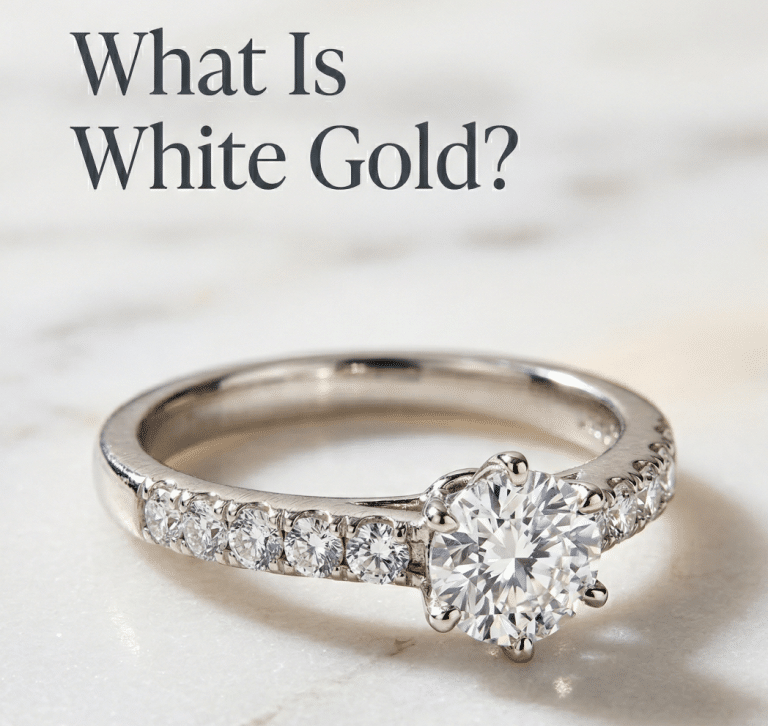
What Is White Gold? The Complete Guide to This Popular Jewelry Metal
White gold’s brilliant rhodium-plated finish closely resembles platinum — at a fraction of the cost.
Is Stainless Steel Waterproof? The Complete Truth (2026 Guide)
Short answer: Yes — not that simple though. This implies that, while stainless steel is
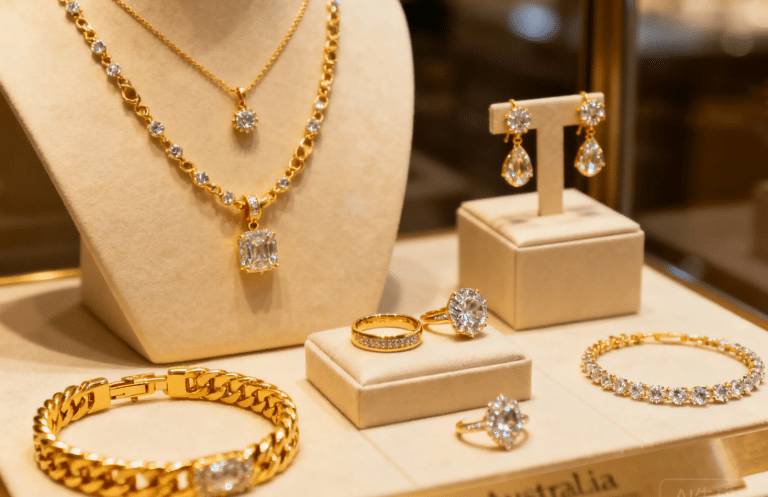
Top 15 Australian Jewellery Brands Worth Buying in 2026
Top 15 Australian Jewellery Brands Worth Buying in 2026 If you’ve been thinking of updating