Parts of Jewelry Glossary of Components and Sourcing Tips

Almost 40% of jewelry returns in the US are linked to skin sensitivity or premature tarnishing according to Artbeads’ discussion of jewelry findings. That single fact changes how buyers should think about parts of jewelry. Returns usually don’t start with the visible design. They start with the hidden choices: the post metal, the jump ring gauge, the clasp spring, the barrier layer under plating, or the wrong base metal under a gold color finish.
A clean sketch and a nice render aren’t enough. If the ring shank wears through, if the earring post irritates skin, or if the clasp corrodes first, the whole product fails in the customer’s hands. That’s why component-level sourcing matters. The small parts decide whether a piece feels premium after months of wear or becomes a warranty problem.
This guide treats parts of jewelry the way production teams handle them. Not as a decorative glossary, but as a set of decisions tied to durability, assembly, finish quality, and customer comfort. If you’re building a custom jewelry line, writing RFQs for wholesale jewelry, or reviewing OEM samples, the right questions usually start at the component level.
Practical rule: If a supplier can name the decorative finish but can’t explain the base metal, plating method, and stress points on each part, you still don’t know what you’re buying.
Introduction to Parts of Jewelry
The term parts of jewelry covers far more than visible design elements. It includes structural components like shanks, posts, bails, links, jump rings, settings, pin bars, hinge tubes, and clasp bodies. It also includes the invisible layers that affect wear, such as barrier coats and plating systems. In production, those choices aren’t minor details. They define service life.
Buyers often focus on silhouette first. That’s normal. A necklace should look balanced, and a ring should match the collection’s style language. But manufacturing teams have to read the same piece differently. They ask where friction happens, where sweat sits, what touches skin directly, and which part will fail first under daily use.
What matters in real sourcing
A useful component review usually starts with four checks:
- Skin contact points
Posts, ring interiors, bracelet cuffs, and chain segments near the neck need closer scrutiny than decorative dangles. - Load-bearing parts
Jump rings, clasp loops, hinges, and pendant bails carry force. If tolerances are loose or the alloy is too soft, assembly problems show up quickly. - Finish exposure
Ring shanks, clasp edges, and bracelet undersides lose finish faster because they rub against skin, desks, and clothing. - Repair tolerance
Some parts can be reworked easily. Others can’t. A design that looks simple on paper may become expensive if findings are hard to replace cleanly.
Why the small parts matter
A customer doesn’t separate the clasp from the bracelet or the post from the earring. They judge the whole piece. If one component causes irritation or fading, the product gets blamed as a whole. That’s why experienced sourcing teams specify parts individually instead of approving only a top-level material description like “gold plated” or “stainless steel.”
For anyone buying custom jewelry production, the best habit is simple. Ask for part-by-part material definitions, not just a style description.
Overview of Jewelry Categories and Their Parts
Jewelry categories look different on the surface, but they share a common production logic. Most pieces combine three layers: a decorative body, a connection system, and a wear mechanism. Once buyers understand that pattern, technical discussions with manufacturers become clearer and faster.

Core categories at a glance
- Earrings rely on posts, hooks, hinges, backs, and decorative drops.
- Rings center on the band, shank, shoulder, head, and setting.
- Bracelets use links, cuffs, hinges, end caps, and closure hardware.
- Necklaces combine chain links, extenders, jump rings, bails, and clasps.
- Charms depend on loops, bails, or attachment rings.
- Findings include the utility parts that hold the whole product together.
- Settings secure stones and shape how light reaches them.
- Chains create drape, strength, and visual rhythm.
- Clasps determine both security and ease of use.
That structure matters during design review. A procurement team may approve a pendant shape, but if the bail opening doesn’t match the chain thickness or if the clasp is too light for the pendant weight, the product still won’t perform well.
One product family often overlaps another
A ring can include a setting and a stone mount. An earring can include chain elements and multiple findings. A bracelet can use the same lobster clasp as a necklace but require a different jump ring size because movement and load are different on the wrist. Good sourcing depends on seeing those overlaps early.
For vintage inventory or inherited pieces, category knowledge also helps outside manufacturing. Teams handling restoration, valuation, or insuring antique jewelry collections benefit from being able to identify original findings, replacement parts, and altered settings accurately.
Buyers get better results when they describe a design as an assembly of parts instead of a finished object. That language leads to better samples, cleaner quotations, and fewer revisions.
Earrings Components Explained
Earrings look simple because most of the engineering is hidden in tiny parts. In production, the comfort and return rate of an earring usually come down to the post, the backing, and the hinge or hook design.
Posts backs and hooks
A post earring uses a straight stem that passes through the ear. The backing does the retention work. Common options include butterfly backs, clutch backs, and screw-backs. Butterfly and clutch styles are common in fashion jewelry because they assemble quickly and suit high-volume production. Screw-backs take more machining discipline but give a stronger sense of security.
A hook earring replaces the post with a curved wire. It’s visually lighter and works well for drops, but the open design means retention is lower unless a silicone stop or secondary finding is added. A lever-back combines cleaner security with movement, which is why many brands prefer it for midweight dangles.
If your team needs a practical breakdown of closure styles, this earring backings guide is a useful reference when reviewing design specs.
Comfort starts at the skin-contact point
The post is often the first failure point for wearer comfort. Even when the decorative body looks excellent, a poor post material can trigger irritation. That’s why manufacturers should treat the post as a separate specification rather than assuming it matches the rest of the earring body.
A few practical sourcing habits help:
- Specify the post metal separately if the earring body uses a different alloy.
- Check edge finishing on posts and post holes. Rough finishing creates discomfort quickly.
- Review backing tension during sampling. A loose clutch feels cheap. An overly tight one frustrates the wearer.
Assembly choices affect the final look
Drop earrings often combine several parts: top stud, connecting ring, center ornament, and lower pendant. Every extra joint adds movement, but it also adds another wear point. If the collection needs a sharper silhouette, a semi-rigid connector often performs better than multiple free-moving jump rings.
For plated earrings, watch the high-contact zones. Posts, hinge pins, and the underside near the lobe tend to show wear first. Those parts deserve more attention than the front-facing decorative surface.
Key Elements of Rings and Bracelets
Rings held the largest share of the global jewelry market in 2025 at roughly 34%, generating over USD 135 billion in revenue (according to Grand View Research’s jewelry market analysis). In OEM production, that volume turns small design choices into large warranty costs. A ring shank that is too thin, or a bracelet end connection with weak solder, may look acceptable in a sample but fail quickly once thousands of pieces reach daily wear.
Ring anatomy that buyers should specify
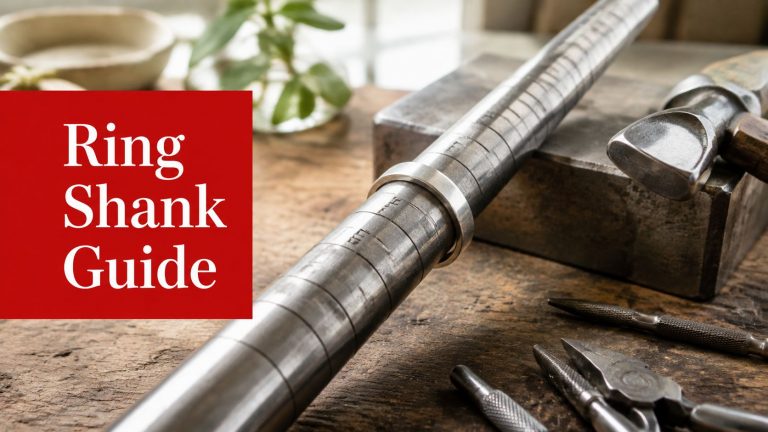
A ring is built around a few load-bearing parts. The shank handles constant friction against skin, desks, and tools. The shoulders carry force from the top down into the band. The head and setting area hold the stone or decorative element in place and need clean alignment to avoid a top-heavy feel.
The trade-off is usually between appearance and service life. A slim shank looks refined, but it wears faster and can distort more easily in softer base metals. A taller head gives stones more presence, but it also increases the chance of knocks and prong lift during everyday use.
For plated rings, the contact zones deserve separate review. The palm side of the shank and the lower shoulder area usually lose color first because they see the most abrasion. If the item is specified in brass with gold plating, ask for clear plating thickness and undercoat details by part, not just for the ring as a whole. That matters for both wear life and skin-contact safety.
Useful call-outs in a tech pack include:
- Inner band finish to control comfort and reduce drag during wear
- Shank width, thickness, and profile to balance appearance with deformation resistance
- Head-to-shank joint construction to prevent twisting or separation
- Setting type such as bezel, prong, or flush, based on stone protection needs
- Plating specification on high-friction areas including thickness, undercoat, and nickel release requirements where applicable
Bracelet structure depends on stress concentration
Bracelets fail at predictable points. In production, the weak spots are usually the clasp connection, the first link near the clasp, hinge joints on rigid styles, and any decorative link that also carries load.
Cuffs and bangles need careful dimensional control. If the hinge pin fit is loose, the bracelet feels cheap and shifts out of alignment. If the tongue lock is too tight, the user struggles to close it. Chain bracelets create a different set of problems. Oversized decorative links may look substantial, but if the jump rings, end caps, or solder joints are undersized, the bracelet still breaks at the ends.
This is also where surface treatment affects real wear. Bracelets contact tabletops, bags, sleeves, and skin more than many other categories, so plating loss shows up sooner on the underside, clasp arm, and end rings than on the center motif. Buyers comparing chain-based bracelet concepts can use this chain construction reference guide to match visual style with mechanical behavior.
Material and finish choices show up quickly in wear tests
A sterling silver ring, a stainless steel ring, and a plated brass ring can share the same silhouette but perform very differently after months of use. Stainless steel usually gives better scratch and corrosion resistance, but it limits some fine forming and stone-setting options. Brass is flexible for fashion production and cost control, yet it depends heavily on plating quality and barrier layers if the piece will see frequent skin contact. Sterling silver offers value and repairability, but it needs attention to tarnish control and thickness in exposed structures.
In factory review, I treat rings and bracelets as high-contact parts first and decorative items second. That approach improves repeat orders because the piece keeps its finish longer, feels better on the skin, and comes back with fewer complaints about fading, distortion, or clasp failure.
Necklaces and Chains Breakdown
Necklaces often look like the easiest category to source. They usually aren’t. Chain geometry, pendant connection, and closure choice all affect drape, break resistance, and how the piece feels when worn.
Chain styles and what they do
A cable chain is versatile and easy to pair with pendants. A curb chain gives a flatter, more directional surface. A snake chain creates a smooth, continuous look but needs careful handling because kinks can ruin the appearance. A box chain offers a more architectural line and usually pairs well with cleaner, modern pendants.
The right chain style depends on the pendant and intended wear. A heavy pendant needs enough structural support at the attachment point. A minimal pendant can use a finer chain if the brand wants a lighter profile.
For a visual guide to common constructions, this types of chains guide helps buyers align style language with manufacturing terms.
The small connectors do the hard work
Most necklace failures happen at the support points, not in the center of the chain. That means buyers should pay close attention to:
- Bails that connect the pendant to the chain
- Jump rings that close the circuit or attach extenders
- End tabs or end caps where the chain meets the clasp
- Extender links for adjustable sizing
- Clasp rings that receive the clasp arm
A pendant may look secure in a rendering, but if the bail opening is too narrow or the jump ring is undersized, assembly gets slow and service issues follow.
Match the chain to the use case
A sleek snake or box chain looks refined with a small geometric pendant. A cable chain often suits charm programs better because it accepts varied attachment styles. Multi-layer looks need more than visual coordination. They need chain weights and movement characteristics that won’t tangle too easily.
Buyers should also ask whether the clasp size makes sense relative to the chain scale. A closure that is too large can overpower a delicate necklace. One that is too small may frustrate users with limited dexterity.
In custom jewelry production, chain decisions should happen early. They’re not an accessory to the pendant. They’re part of the engineering.
Findings and Clasp Mechanisms
Findings are the utility parts of jewelry. They rarely get photographed, but they often decide whether the product feels dependable. A weak jump ring, rough split ring, or mismatched clasp can undo good design work quickly.
Findings that deserve more attention
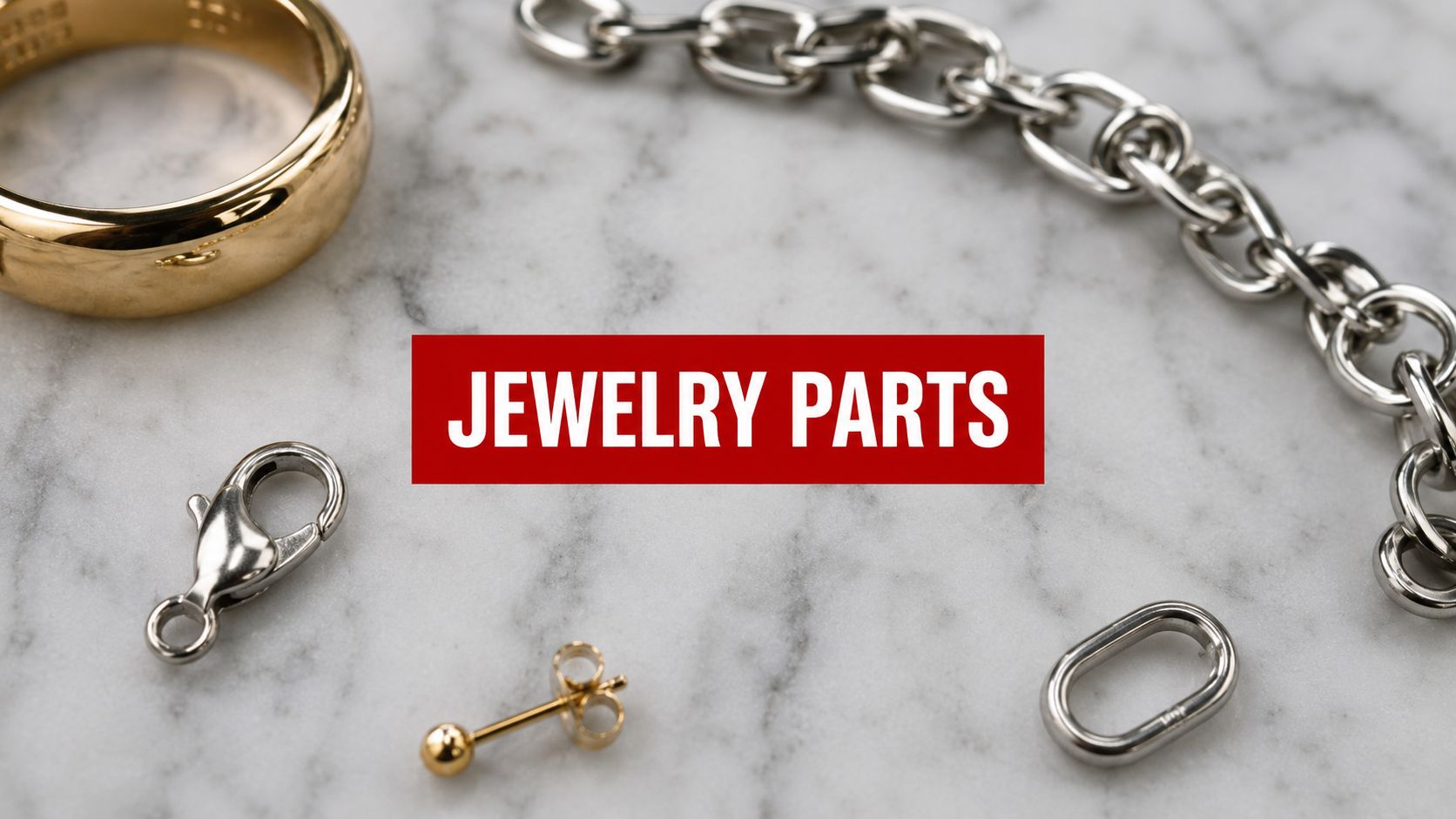
The most common findings include jump rings, split rings, ear wires, head pins, eye pins, crimp parts, connectors, and bails. In production, the most important question isn’t just what they are. It’s whether their dimensions and material match the rest of the piece.
For closure systems and practical examples, this guide to chain clasp types is a helpful reference during development.
Clasp choice changes the customer experience
A lobster clasp is widely used because it balances security and familiarity. A spring ring clasp works on lighter pieces but can be less convenient for customers with limited finger strength. Toggle clasps contribute to the design language and can work well on bracelets, but they need enough tension and weight balance to stay secure. Magnetic clasps improve ease of use but require careful evaluation for product type and wearer needs. Box clasps are common where a flatter, integrated look is required.
When comparing clasp types, think about three things:
- Security during movement
- Ease of self-fastening
- Compatibility with the piece’s visual scale
Material matters most in these small parts
For exposed findings that touch skin or face moisture often, the base metal matters more than many buyers realize. For components like jump rings and clasps, 316L surgical-grade stainless steel is preferred for corrosion resistance; it reduces nickel release rates below 0.05 µg/cm²/week, meeting strict hypoallergenic standards, as described in Jusnova Jewelry’s stainless steel jewelry manufacturing process overview.
That matters in real life because clasps and jump rings sit at high-friction points. They get pulled, twisted, and exposed to sweat and water repeatedly. Brass can still have a place in fashion lines, but if the product promise includes skin comfort and stronger corrosion resistance, stainless steel findings are often the safer call.
Shop-floor note: If a supplier says “stainless steel clasp” but can’t confirm the grade, treat it as an incomplete specification.
Settings and Mounting Styles
A setting does more than hold a stone. It determines how the piece wears, how much light reaches the stone, and where stress concentrates over time. In custom jewelry manufacturing, poor setting choices create both visual and structural issues.
Common setting types and their best use
A prong setting exposes more of the stone and supports sparkle, but the prongs must be shaped and aligned carefully. A bezel setting surrounds the stone edge and gives better protection, which makes it a strong choice for active wear and designs that need a smoother profile. A channel setting aligns stones in a row between metal walls. It works well when the line of stones is part of the design language. Pavé uses many small stones set closely together for surface brilliance. Flush settings sit low and feel sleek, while collet and tension-inspired looks are chosen more for style effect and specific stone presentation.
Security and finish are linked
A setting doesn’t exist in isolation. It changes how the whole part can be finished and plated. Deep recesses, narrow galleries, and tight corners can make finish consistency harder to maintain. Designs with many micro details may look strong in renders but become harder to polish cleanly before final coating.
Important checks during development include:
- Prong uniformity so the stone sits square
- Bezel wall consistency so the edge doesn’t look uneven
- Gallery clearance so the underside isn’t clogged visually
- Mount alignment so the head sits centered on the ring or pendant
Match the setting to actual wear
For everyday rings, buyers often underestimate how useful a protective setting can be. A high prong head looks elegant, but it may catch more often than a lower bezel or lower-profile mount. For earrings and pendants, more exposed settings may be acceptable because the wear pattern is different.
The best setting is usually the one that fits both the design intent and the customer’s lifestyle. Good sourcing decisions keep those two goals in balance.
Materials and Plating Comparison
About 80% of what customers describe as a “quality problem” in jewelry turns out to be a material or plating mismatch. The failure usually shows up first on the parts that take the most contact, such as earring posts, ring shanks, clasp tongues, jump rings, and chain links.

Base metals and where they fit
Base metal choice sets the ceiling for wear life, corrosion behavior, and skin compatibility. A gold-colored finish on brass, silver, and stainless steel may look similar in a sample tray, but those parts will age very differently once they are worn, exposed to sweat, or rubbed against clothing and hard surfaces.
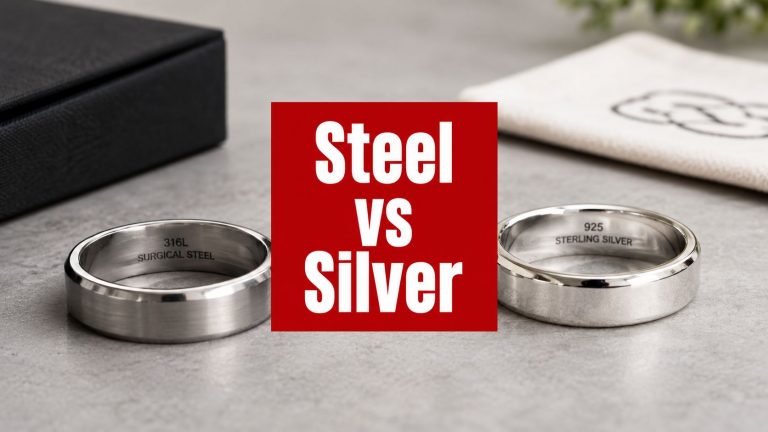
For stainless steel, 304L and 316L are common options. In production, 316L is usually the safer pick for parts with frequent skin contact because it offers better corrosion resistance, especially for posts, chains, and bracelet components. Brass still has a clear place in fashion jewelry because it casts well, polishes efficiently, and supports lower target pricing, but it depends more heavily on plating quality and barrier control. 925 sterling silver remains a strong option for brands that want precious-metal value and hallmark-ready positioning, and this 925 sterling silver crafting process article gives useful background on how that workflow is typically handled. Gold-filled is often chosen when the brief calls for a richer precious-metal presentation than standard flash plating can deliver.
The practical point is simple. Do not approve color before approving substrate.
Plating systems are not interchangeable
Plating method affects hardness, adhesion, color stability, and how quickly wear shows on exposed edges. Analysts at Alibaba.com note in this guide to gold-plated stainless steel jewelry selection that PVD coatings on jewelry parts can reach much higher hardness than conventional electroplated layers and are generally positioned for longer color retention under daily wear.
That difference matters at the part level. On flat pendant faces, many finishes look acceptable for a while. On ring bottoms, lobster clasps, extender ends, and earring backs, weak plating shows quickly because friction is concentrated there. If a brand wants to market pieces as suitable for frequent water exposure or long-term daily wear, PVD and electroplating cannot be treated as equivalent options.
For buyers comparing coating methods side by side, this PVD vs electroplating jewelry coating guide is useful during finish selection and quotation review.
A short visual walkthrough helps clarify the difference in production behavior:
Thickness barrier layers and quality checks
Thickness still matters, even with a good plating process. Walker Metalsmith notes in its overview of gold plated stainless steel longevity that heavier gold plating holds up longer in daily wear than thin decorative layers, and the same reference points to X-ray fluorescence spectrometry as a practical method for checking plating depth.
In OEM work, I pay close attention to barrier layers on brass parts because the visible top color is only part of the story. If the underlayers are poorly controlled, tarnish migration and color shift can appear early, especially around solder points, sharp corners, and assembled joints. On stainless steel, adhesion prep becomes the bigger issue. On silver, scratch visibility and tarnish behavior usually drive the finish decision.
Skin safety should also be tied to the actual part, not just the collection name. Earring posts, ear nuts, ring interiors, and bracelet components that sit tightly against the skin need stricter material control than large decorative drops with limited contact. Walker Metalsmith also notes that buyers may ask for documentation related to skin-contact safety and nickel limits when sensitive-use claims are part of the selling point.
Practical buying checklist
- Approve the base metal before the color sample
- Specify the plating method by name, especially for stainless steel parts
- Ask where wear will appear first on that specific component, not just on the overall style
- Request plating thickness or test records if your warranty depends on finish life
- Use XRF verification when metal content or coating depth affects compliance or claims
- Separate skin-contact parts from decorative parts if you need tighter hypoallergenic control
Supplier Sourcing and Quality Control Tips
Sourcing jewelry well isn’t about finding the cheapest sample. It’s about making sure the supplier can repeat the result at production scale, with the same materials, finish behavior, and assembly discipline.

What to verify before placing an order
If you’re qualifying a new OEM or ODM partner, start with process clarity. The supplier should be able to explain how a design moves from CAD to prototype, then to mold approval, production, inspection, packaging, and dispatch. If those handoffs are vague, delays and inconsistency usually follow.
For teams reviewing suppliers systematically, this jewelry manufacturer vetting guide is a good framework for pre-qualification questions.
Useful checkpoints include:
- MOQ alignment with your launch strategy
- Sampling workflow so revisions are documented cleanly
- Material traceability for posts, clasps, chains, and findings
- Plating confirmation with thickness and method clearly stated
- Packaging coordination so finished goods and branded materials arrive together
Quality control should be visible not implied
A reliable supplier should show how inspection works, not just promise that quality is “strict.” HonHo Jewelry maintains a documented defect rate below 0.5% through 100% inspection and 48-hour salt spray testing in an in-house lab, backed by REACH and ISO 9001:2015 certifications, according to HonHo Jewelry’s manufacturing overview. Those are the kinds of process details buyers should ask any supplier to document.
You should also look for consistency in the production language. If one person says the clasp is stainless steel, another says alloy, and the sample note says plated metal, there’s already a control problem.
Practical steps that reduce sourcing risk
- Lock the sample specification
Don’t approve only by photo. Confirm alloy, findings, plating method, color target, and logo details. - Review the stress points first
Inspect ring shanks, earring posts, hinges, clasp loops, and jump rings before decorative surfaces. - Use NDA discipline
Share drawings and CAD files through controlled channels if the design is proprietary. - Ask how rework is handled
A good supplier can explain what gets repaired, re-plated, or rejected.
The strongest supplier relationships come from precise specifications and documented approvals, not from broad promises about quality.
Quick Reference Tables
The fastest way to use a parts of jewelry guide is as a specification shortcut. The table below works well when building tech packs, comparing samples, or tightening RFQs before production.
Parts Quick Reference
| Part Category | Key Components | Material Notes | Durability |
|---|---|---|---|
| Earrings | Posts, hooks, lever-backs, backs, hinges | Skin-contact parts benefit from hypoallergenic metals; post material should be specified separately when needed | High if posts and closures are matched to intended wear |
| Rings | Shank, shoulders, head, setting, inner band | Everyday rings need strong attention to friction zones and finish at the shank | Depends heavily on base metal and finish system |
| Bracelets | Links, cuffs, hinge pins, end caps, safety parts, clasps | End connections often fail before center links, so attachment hardware matters | Strong when closure and end hardware are sized correctly |
| Necklaces | Chain links, bails, jump rings, extenders, clasps | Pendant weight should match chain style and connector size | Good when support points are reinforced properly |
| Findings | Jump rings, split rings, eye pins, connectors, crimp parts | Small parts should never be treated as generic; material grade affects wear and comfort | Varies widely by alloy, tolerance, and finish |
| Settings | Prong, bezel, channel, pavé, flush, collet | Setting choice should reflect both visual goal and actual wear conditions | Higher when mount design protects edges and controls stress |
Common findings and wear notes
| Finding | Best Use | Skin and wear note |
|---|---|---|
| Jump ring | Connecting pendants, extenders, clasp loops | Needs correct closure and metal choice at stress points |
| Split ring | Secure multi-turn attachment | Better retention than an open jump ring for some applications |
| Lobster clasp | Necklaces and bracelets | Balances security and usability well |
| Spring ring clasp | Light necklaces and fine chains | Compact, but less user-friendly for some wearers |
| Bail | Pendant attachment | Opening size must match chain thickness |
| Earring back | Stud earrings | Tension and finish quality affect comfort directly |
Glossary Index of Jewelry Terms
Bail: Connector that allows a pendant or charm to hang from a chain. See necklaces and chains.
Bezel setting: Metal rim that surrounds the stone edge for protection. See settings and mounting styles.
Box chain: Chain made from squared links for a clean, structured look. See necklaces and chains.
Butterfly back: Common earring backing used with straight posts. See earrings components explained.
Channel setting: Stones set between parallel metal walls. See settings and mounting styles.
Clasp: Closure mechanism for necklaces and bracelets. See findings and clasp mechanisms.
Curb chain: Flattened linked chain with a directional surface. See necklaces and chains.
Finding: Utility component such as a jump ring, clasp, or connector. See findings and clasp mechanisms.
Gallery: Open structure beneath a setting that affects support and appearance. See settings and mounting styles.
Jump ring: Circular connector used to join parts. See findings and clasp mechanisms.
Lever-back: Hinged earring closure with better retention than an open hook. See earrings components explained.
Pavé: Surface set with many small stones placed closely together. See settings and mounting styles.
PVD: Physical Vapor Deposition coating method used for durable finishes. See materials and plating comparison.
Shank: Main body of a ring, especially the lower wear area. See key elements of rings and bracelets.
TiN protective layer: Titanium nitride layer used to improve coating protection in some plated systems. See materials and plating comparison.
If you’re developing a new collection or refining an existing one, HonHo Jewelry can support OEM and ODM projects across stainless steel, brass, gold-filled, and 925 sterling silver lines, with help on CAD development, sampling, plating options, findings selection, private label requirements, and production planning.