
In the competitive world of jewelry, the difference between a piece that lasts a lifetime and one that tarnishes after a few months often comes down to a single, critical factor: the coating method. For jewelry brands and discerning buyers, the choice between PVD vs Electroplating is not just a technical detail—it’s a decision that defines quality, longevity, and brand reputation.
If you are a brand looking to elevate your product line, or a consumer seeking jewelry that truly stands up to daily life, you are asking the right question: Which finish delivers the best value, durability, and sustainability?
For decades, electroplating has been the industry standard, a familiar chemical process that gives base metals a beautiful, thin layer of gold or silver. However, a newer, more advanced technology—Physical Vapor Deposition (PVD)—has emerged, promising a superior, more eco-friendly coating method that is rapidly becoming the benchmark for high-quality fashion and fine jewelry.
At Dongguan HonHo Jewelry, we specialize in both methods, operating our own in-house PVD and electroplating facilities. This unique position allows us to offer an objective, deep-dive comparison, grounded in over 15 years of manufacturing expertise. We will break down the science, the real-world performance, and the environmental impact of PVD vs Electroplating, ensuring you have the knowledge to make the best choice for your brand.
Understanding the Core Technology: The Chemical Process Behind Each Coating
To truly understand the difference in performance, we must first look at the science. The core distinction between PVD vs Electroplating lies in the fundamental chemical process used to bond the coating to the base metal.
What is Electroplating? The Traditional Chemical Process
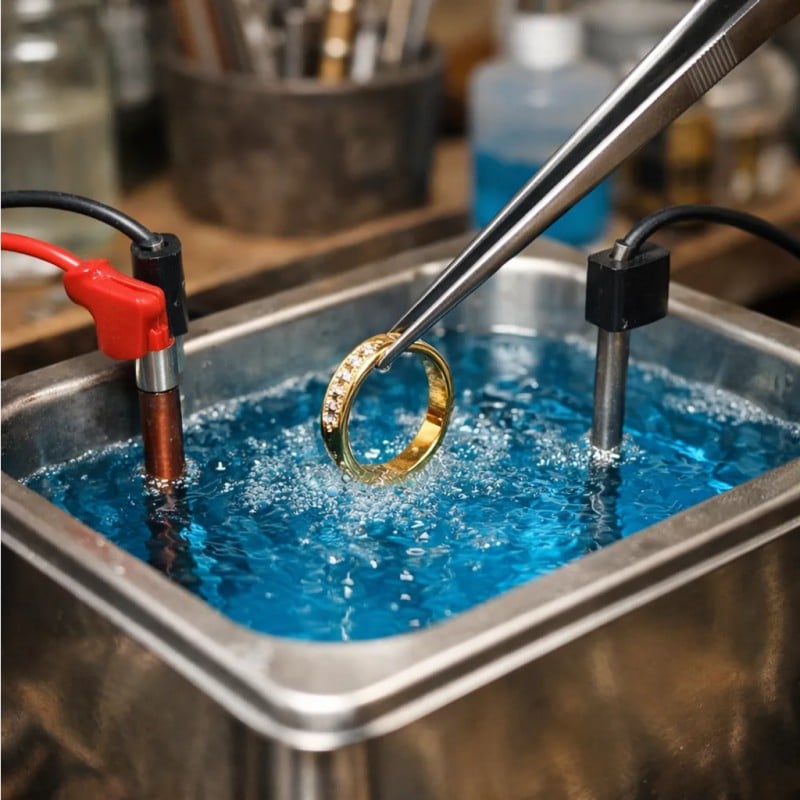
Electroplating is an electrochemical chemical process that has been used for over a century. It involves submerging the jewelry piece into a liquid solution, known as an electrolyte bath, which contains metal ions (such as gold, silver, or rhodium). A direct electric current is then passed through the bath, causing the positively charged metal ions to deposit as a thin metallic layer.
This method is the traditional and often best-suited coating method for softer metals like brass and sterling silver. However, the bond is purely mechanical, not molecular. The metal ions arrive at the surface with low energy, resulting in a softer, more porous layer that is susceptible to “lifting,” flaking, and wear over time. Furthermore, this low-energy deposition often leads to “dog-boning”—a non-uniform coating where sharp edges receive a thicker, but still weak, layer due to current density issues [1].
What is PVD Coating? The High-Tech Vacuum Method
PVD, or Physical Vapor Deposition, is a modern, high-tech coating method developed for industrial applications like aerospace and medical tools. It is a completely different chemical process that takes place in a sealed, high-vacuum chamber.
Inside the chamber, the coating material is vaporized—often into a plasma state—and driven onto the jewelry surface at extremely high energy. This process is preceded by an essential step: Argon Ion Bombardment. This “scrubs” the surface at a molecular level, ensuring zero contamination and maximum adhesion. The high-energy ions then condense and fuse with the base metal at a molecular level, a process known as crystal lattice diffusion.
This high-energy deposition creates an incredibly dense, hard, and non-porous layer that is far superior in durability to electroplating. This is why PVD is the ideal coating method for hard, durable metals like 316L stainless steel.
Durability Showdown: PVD vs Electroplating for Everyday Wear
When a customer asks, “How long will this last?” they are asking about durability. This is where the difference between PVD vs Electroplating becomes most apparent, moving beyond simple thickness to the science of adhesion.
The Bond Strength: Molecular Interlocking vs. Mechanical Adhesion
The single greatest factor in durability is the bond strength.
Electroplating creates a mechanical bond, much like a layer of paint sitting on a surface. Any significant friction, scratch, or chemical exposure can compromise this bond, leading to the coating peeling or flaking off.
PVD, however, creates a molecular bond through crystal lattice diffusion. The high-energy plasma literally integrates into the surface structure of the metal, creating a true molecular interlocking that is physically impossible to separate without destroying the base metal itself. This superior bond strength is the foundation of PVD’s exceptional durability.
The Role of the TiN Layer in PVD Durability
A key technical advantage of high-quality PVD is the use of a Titanium Nitride (TiN) layer. TiN is a ceramic material known for its extreme hardness, often used to coat cutting tools.
In jewelry PVD, the TiN layer acts as a protective “backbone” or intermediate layer. It is applied first to the base metal, providing an incredibly hard, scratch-resistant foundation before the final gold or color layer is applied. This is the secret to PVD’s legendary durability.
This is where HonHo Jewelry sets a new standard. Our PVD coating thickness ranges from 0.03 micron up to 0.1 micron, with a titanium nitride (TiN) protection layer of 0.5 micron, significantly thicker than the industry standard of 0.1–0.3 micron total thickness. This structure ensures longer-lasting color retention and higher wear resistance, helping your products perform better in real markets. For context, the TiN layer provides a Vickers hardness of over 2000 HV, while standard gold plating is typically only 150-200 HV.
Scratch, Abrasion, and Corrosion Resistance
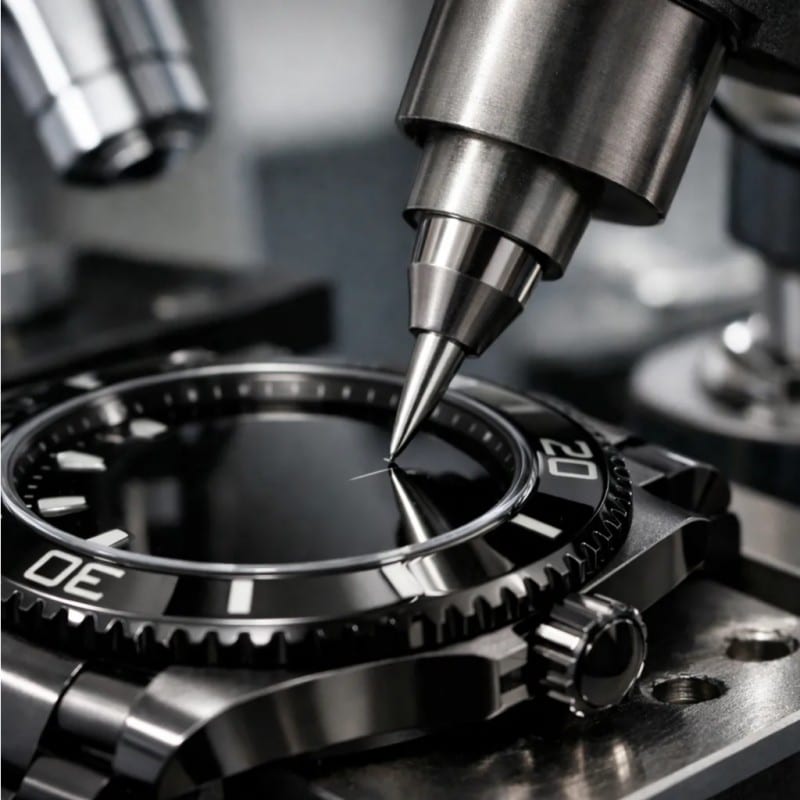
Real-world performance tests consistently show PVD’s superiority in durability. The dense, non-porous nature of the PVD layer acts as a perfect barrier against moisture, sweat, and chemicals, allowing PVD pieces to survive harsh salt spray tests that cause standard electroplating to fail quickly [3].
The Eco-Friendly Factor: Which Coating Method is Truly Sustainable?
In today’s market, eco-friendly practices are not just a trend; they are a necessity for responsible brands. The environmental impact of the chemical process is a major differentiator between PVD vs Electroplating.
PVD: The Zero-Wastewater, Eco-Friendly Coating Method
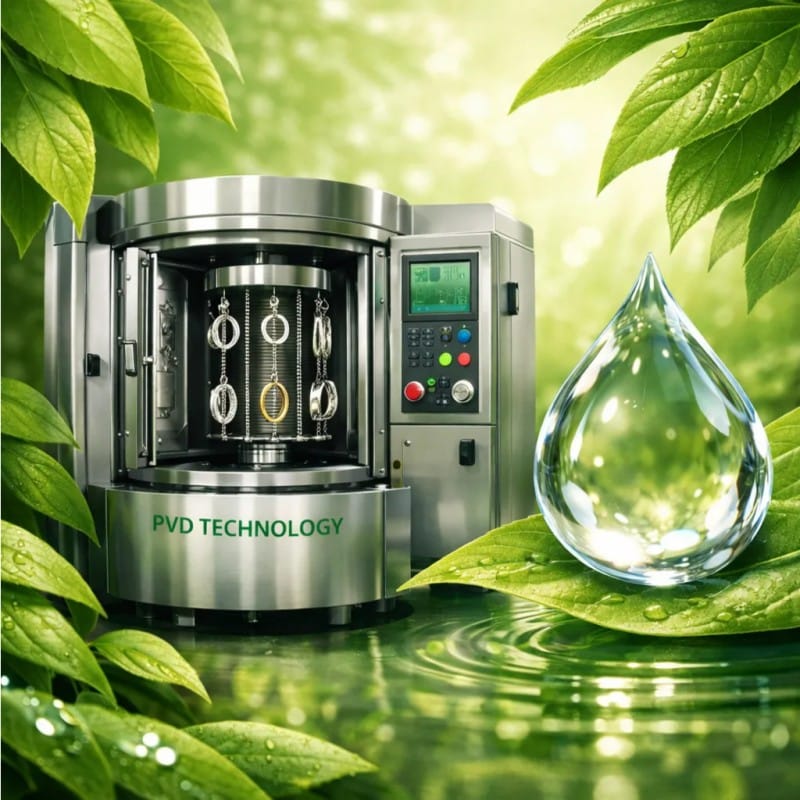
PVD is inherently an eco-friendly coating method. It is a dry process that uses only solid materials (the metal source) and inert gases within a closed vacuum system.
- Zero Hazardous Waste: The process generates virtually no hazardous waste.
- Zero Wastewater: Crucially, PVD produces zero wastewater. There are no liquid chemical baths, no cyanide, and no toxic sludge to treat.
This makes PVD a significantly cleaner and more sustainable coating method, aligning perfectly with the EEAT principle of demonstrating environmental responsibility.
Electroplating’s Environmental Challenge
While modern electroplating facilities have improved, the process still presents environmental challenges due to the nature of the chemical process.
Electroplating baths often contain highly toxic chemicals, including cyanide compounds, strong acids, and heavy metals. The process generates large volumes of wastewater that must undergo complex, multi-stage treatment to neutralize the hazardous chemicals before disposal. This requires significant energy and resources, making it less eco-friendly than PVD.
For brands committed to sustainability, choosing PVD is a clear step toward a more responsible supply chain.
Color, Finish, and Hypoallergenic Properties
Beyond durability and environmental impact, the coating method also affects the aesthetic and safety of the final product.
Color Stability and Consistency
Both methods can achieve stunning gold, rose gold, or black finishes, but their long-term color stability differs greatly.
- PVD: Because the coating is applied in a controlled vacuum and often involves co-deposition of gold with other metals (like Titanium), the color is incredibly consistent and integral to the coating. It resists fading and maintains its hue for years.
- Electroplating: The color is a surface layer of pure gold or gold alloy. While beautiful initially, this soft layer is prone to patchy wear, quickly revealing the underlying base metal. This leads to the dreaded “green skin” effect when copper or brass is exposed and reacts with sweat and oxygen.
Skin Sensitivity and the Nickel Allergy Trap
For consumers with sensitive skin, the hypoallergenic properties of the jewelry are paramount.
The dense, non-porous nature of the PVD layer acts as a superior barrier against nickel or copper from the base metal leaching out and touching the skin. Since PVD is often applied to 316L stainless steel (a medical-grade, low-nickel-release alloy), the combination is highly hypoallergenic.
Crucially, electroplating on stainless steel often requires a “nickel strike” layer to promote adhesion. This hidden nickel layer is the source of many “mystery allergies” in supposedly high-quality jewelry. PVD bonds directly to the steel without this nickel layer, making it the only true hypoallergenic choice [4].
HonHo Jewelry’s Advanced Plating Standards: Beyond the Industry Norm
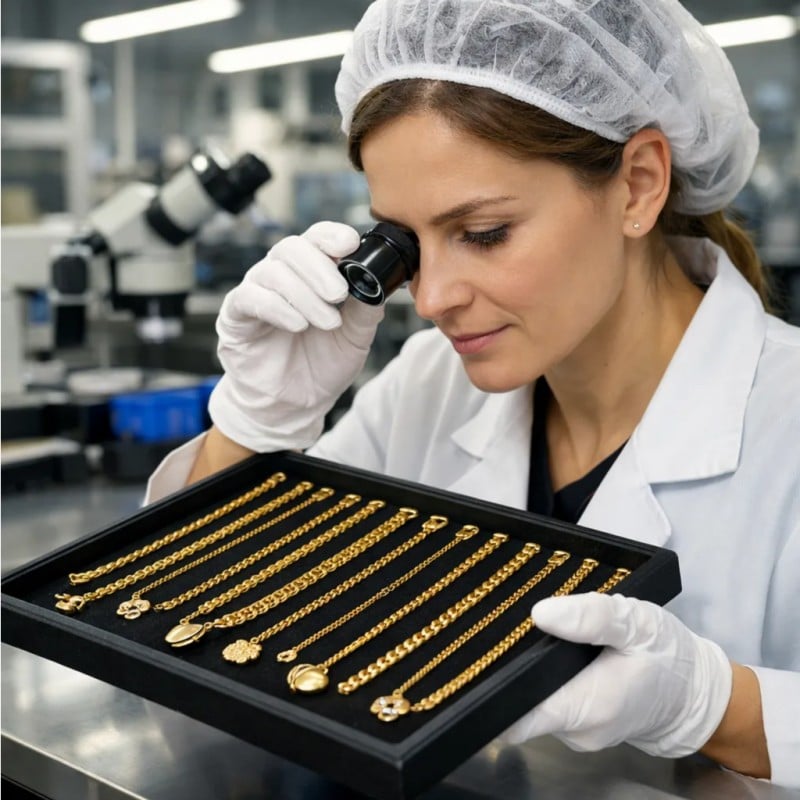
Our commitment to quality means we don’t just use PVD and electroplating; we optimize them. Our in-house facilities allow us to control every aspect of the chemical process and coating method, ensuring our products exceed standard industry benchmarks. This is the core of our EEAT (Expertise, Authoritativeness, Trustworthiness).
Our PVD Coating Thickness Advantage
While many manufacturers cut corners on PVD thickness, we understand that true durability requires a robust structure.
As mentioned, our PVD coating thickness ranges from 0.03 micron up to 0.1 micron, with a titanium nitride (TiN) protection layer of 0.5 micron, significantly thicker than the industry standard of 0.1–0.3 micron total thickness. This structure ensures longer-lasting color retention and higher wear resistance, helping your products perform better in real markets. This advanced PVD coating method is primarily used on our Stainless Steel Jewelry line, guaranteeing a product that is waterproof, tarnish-free, and built to last.
Electroplating for Brass and Sterling Silver
We recognize that PVD is not suitable for all materials. For traditional metals, we apply a high-quality electroplating chemical process that also exceeds industry norms.
For Brass Jewelry and 925 Sterling Silver Jewelry, we support palladium base plating up to 0.1 micron, combined with electroplating thickness from 0.03 micron to 2.5 micron, and up to 5 micron for special requirements. This meets both cost-sensitive and premium-quality demands, offering a much higher durability than standard flash plating.
Cost, Longevity, and Lifetime Value
When evaluating PVD vs Electroplating, brands must look beyond the initial cost per piece and consider the lifetime value.
Initial Cost vs. Long-Term Investment
The initial setup cost for a PVD facility is significantly higher than for an electroplating line. The vacuum chambers and high-energy equipment require a substantial investment. This is why many smaller manufacturers stick to the traditional chemical process.
However, for high-volume production, the per-piece cost of PVD can be competitive, and the long-term value is undeniable. A PVD piece requires less rework, fewer customer complaints, and virtually no re-plating, making it a superior long-term investment.
The True Cost of Re-Plating and Returns
Thinly electroplated jewelry is notorious for high customer return rates due to tarnishing and flaking. These returns erode profit margins and damage brand reputation.
By choosing the PVD coating method, especially with HonHo’s advanced TiN layer, you drastically reduce the risk of product failure. This superior durability translates directly into higher customer satisfaction and lower operational costs, proving that quality is the most economical choice in the long run.
PVD vs Electroplating: A Comparative Table
| Feature | PVD (Physical Vapor Deposition) | Electroplating (Electrochemical Deposition) |
|---|---|---|
| Bond Type | Molecular Interlocking (Crystal Lattice Diffusion) | Mechanical Adhesion (Surface Layer) |
| Durability | Superior (2000+ HV Hardness) | Fair (150-200 HV Hardness) |
| Coating Method | Dry Process (Vacuum Chamber) | Wet Process (Liquid Chemical Bath) |
| Eco-Friendly | Highly eco-friendly (Zero hazardous wastewater) | Less eco-friendly (Requires complex wastewater treatment) |
| Base Metal | Ideal for hard metals (e.g., 316L Stainless Steel) | Ideal for soft metals (e.g., Brass, Sterling Silver) |
| Uniformity | Excellent (Planetary Rotation) | Poor (Prone to “Dog-Boning” on edges) |
| Hypoallergenic | Excellent (No Nickel Strike required) | Fair (Risk of Nickel Strike pre-treatment) |
| Longevity | Years, often a lifetime of wear | Months to a year, depending on thickness |
Final Verdict: Choosing the Right Coating for Your Brand
The debate of PVD vs Electroplating is settled by the application.
If your goal is to create highly durable, waterproof, and non-tarnish jewelry—especially on stainless steel—PVD is the clear winner. Its molecular bond, superior durability, and eco-friendly coating method make it the modern choice for brands prioritizing quality and sustainability.
However, electroplating remains a viable and necessary chemical process for traditional materials. For our Jewelry Manufacturing Services involving brass and sterling silver, we use high-micron electroplating with a palladium base to ensure the best possible durability and finish, demonstrating that the right coating method depends on the base material.
Ultimately, choosing HonHo means you don’t have to compromise. You gain access to both advanced PVD and high-standard electroplating, tailored to your specific material and quality requirements.
Frequently Asked Questions (FAQs)
Is PVD coating real gold?
No, PVD coating is not solid gold. It is a microscopic layer of real gold (or a gold alloy) that is vaporized and fused onto a base metal, typically stainless steel. The purpose is to provide the look and feel of gold with vastly superior durability and wear resistance compared to standard plating.
Does PVD coating scratch easily?
No. PVD coating is highly resistant to scratching. Because the process creates a molecular bond through crystal lattice diffusion and includes an underlying layer of extremely hard material like Titanium Nitride (TiN) with a hardness of over 2000 HV, it is significantly harder and more scratch-resistant than traditional electroplating.
Can PVD jewelry be worn in the shower or pool?
Yes, PVD jewelry, especially when applied to stainless steel, is highly water-resistant and can generally be worn in the shower or pool. The dense, non-porous nature of the PVD layer prevents water and moisture from reaching the base metal, protecting it from corrosion and tarnishing.
Why is PVD considered more eco-friendly than electroplating?
PVD is considered more eco-friendly because it is a dry process that does not use the harsh chemicals or generate the hazardous wastewater associated with the electroplating chemical process. This makes PVD a cleaner, more sustainable choice for manufacturers.
What is the green mark on skin from jewelry?
The green mark is caused by the base metal (usually copper or brass) oxidizing when it reacts with sweat, oils, and oxygen. This happens when the protective outer coating (electroplating) wears off or is too porous, allowing the base metal to leach onto the skin. PVD’s dense barrier prevents this effectively.
What is the typical lifespan of PVD vs electroplated jewelry?
A high-quality PVD coating can last for many years, often 5 to 10 times longer than standard electroplating, and can even last the lifetime of the piece with proper care. Standard electroplating typically lasts from a few months to a year before noticeable wear begins, depending on the thickness and frequency of wear.
Does HonHo Jewelry offer both PVD and electroplating?
Yes, HonHo Jewelry operates both in-house PVD vacuum plating and electroplating plants. This allows us to select the optimal coating method based on the base material (PVD for stainless steel, high-micron electroplating for brass and silver) to ensure maximum durability and quality for every product.
What is the TiN layer in PVD coating?
The TiN (Titanium Nitride) layer is an intermediate layer applied during the PVD chemical process. It is an extremely hard ceramic material that acts as a protective foundation, dramatically increasing the overall hardness, scratch resistance, and durability of the final coating. HonHo uses a 0.5 micron TiN layer to ensure superior longevity.
Ready to Elevate Your Jewelry Line with Superior Coating Technology?
The quality of your jewelry is a direct reflection of your brand. By understanding the profound difference between PVD vs Electroplating, you can make an informed decision that guarantees superior durability, a responsible eco-friendly coating method, and ultimate customer satisfaction.
Don’t settle for coatings that flake and tarnish. Partner with a manufacturer that invests in the most advanced technology and adheres to the highest standards.
Contact us today to discuss how HonHo Jewelry’s advanced PVD and high-micron electroplating standards can transform your product line and help you win in the market.
References
[1] PVD for Decorative Applications: A Review. PMC.
[2] How Does PVD Compare To Electroplating? YouTube.
[3] PVD Coating vs. Electroplating for Stainless Steel Jewelry. Kesheen.
[4] The Environmental Impact of Electroplating. Industry News.
[5] Understanding Gold Jewelry: Plated, Filled, Vermeil, Solid. TikTok.
The Unseen Hero: Why Earring Backings Define Quality Jewelry
Every jewelry brand owner knows the sinking feeling. A customer calls, distraught. They’ve lost one
Choosing the Best Jewelry Stone Setting for Mass Production
Selecting the right jewelry stone setting is one of the most pivotal decisions for any
Best Jewelry Stone Setting for Mass Production | HonHo
Choosing the best jewelry stone setting Choosing the best jewelry stone setting is one of