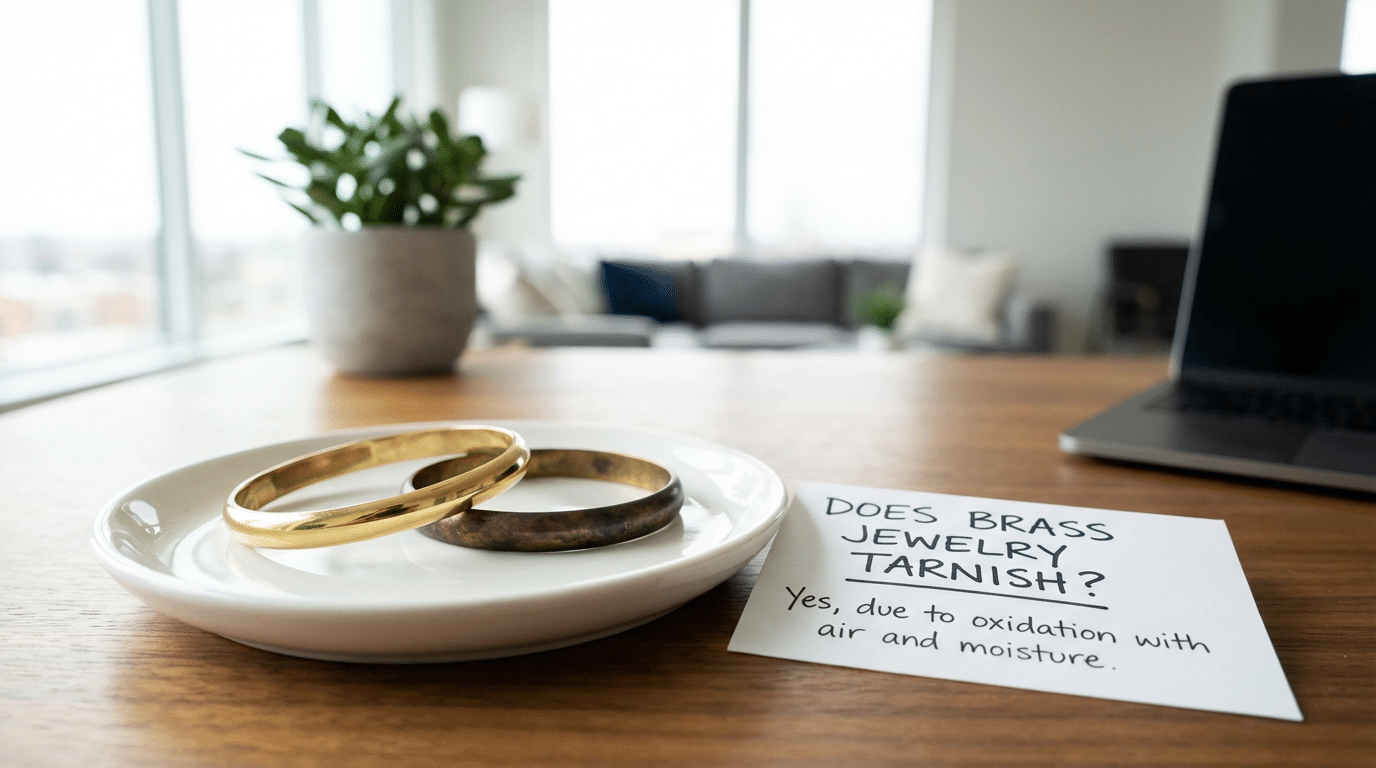
Wondering “Does brass jewelry tarnish?” Or if that gorgeous brass ring will turn your skin green after a few wears?
You’re not alone.
Brass is loved for its gold-like look and affordable price—but it also has a reputation for oxidation, patina, and discoloration that can scare people off. The truth? Yes, brass jewelry does tarnish… but how fast it happens, how it looks, and how long it lasts all depend on care, quality, and your skin chemistry.
In this guide, you’ll learn:
- Why brass tarnishes (and what’s really happening on the metal’s surface)
- How to prevent brass tarnish and avoid green marks on your skin
- Simple ways to clean tarnished brass jewelry at home
- How brass compares to sterling silver, stainless steel, and gold-plated jewelry
- How to choose tarnish-resistant brass from trusted manufacturers like Dongguan HonHo Jewelry
If you love the look of gold but want a budget-friendly, long-lasting alternative, understanding brass jewelry tarnish is the key to making smart, confidence-boosting choices.
Does Brass Jewelry Tarnish?
If you’re wondering, “Does brass jewelry tarnish?” the short answer is yes. Brass is a mix of copper and zinc, and over time it reacts with air, moisture, and your skin. That reaction is called oxidation, and it’s what causes brass jewelry tarnish.
What Tarnish Looks Like on Brass
You’ll know your brass is oxidizing when you see:
- A dull, darker yellow instead of bright gold
- Brown or dark spots around edges, clasps, or inside rings
- A greenish film in creases or on the back of pendants
- Slight green staining on your skin where the piece sits the tightest
Some people call this a natural patina on brass and actually like the vintage look. Others just see it as brass jewelry discoloration they want to clean off.
Why Brass Still Makes Sense
Even though brass jewelry oxidizes, it’s still a smart choice if you:
- Want the gold look without paying gold prices
- Like bold, chunky, or statement designs that would be very expensive in solid gold
- Don’t mind a little maintenance: quick wiping, occasional cleaning, and smart storage
- Appreciate the option to polish it bright or let it age into a warm, antique patina
With basic brass jewelry maintenance and the right storage, you can slow down tarnish, remove brass tarnish when it appears, and keep your pieces looking intentional—not neglected.
Who Brass Jewelry Is Best For (And Who Should Skip It)
Brass jewelry is great for you if:
- You love fashion and statement jewelry and rotate pieces often
- You’re okay with cleaning brass jewelry once in a while
- Your skin isn’t extremely sensitive to copper-based alloys
- You like the idea of aging patina and a slightly lived-in, vintage style
You may want to skip brass if:
- You have very sensitive skin, metal allergies, or react easily to base metals
- You hate any kind of maintenance and want truly low-effort metals
- You can’t stand the idea of skin turning slightly green where jewelry sits snugly
- You want pieces that stay exactly the same color, with no patina, no matter what
As a brand owner, I design brass pieces to be honest about what they are: affordable, stylish, and long-wearing if you treat them right. Brass will tarnish—but it doesn’t have to look cheap, dirty, or “ruined” if you know how to manage it.
What Is Brass Jewelry and Why Is It Popular?
Brass jewelry is made from an alloy of copper and zinc. By tweaking the ratio of these two metals, we can get different shades—from bright yellow “almost gold” to deeper vintage tones. That’s why brass jewelry oxidation can age into a warm, natural patina that a lot of people actually like.
Why Brass Looks Like Gold but Costs Less
Brass has a gold-like color and shine without the gold price tag. You get:
- A similar warm yellow tone to 10K–18K gold
- Enough weight to feel “real,” not cheap or hollow
- A price that works for everyday customers and bulk buyers
That’s exactly why I use brass a lot when developing statement collections: it lets us offer big, bold designs at accessible prices and still keep margins healthy.
Why Fashion Brands Love Brass
Fashion and statement jewelry brands lean on brass because it’s:
- Easy to cast, engrave, and plate (great for complex shapes and custom logos)
- Strong and durable for chunky rings, cuffs, and chains
- Perfect for trendy drops where styles change every season
If you’re building a line, working with a dedicated brass jewelry manufacturer makes it much easier to scale designs, test new finishes, and control quality.
Common Types of Brass Jewelry
You’ll see brass used in:
- Rings – signet rings, stackers, statement bands
- Necklaces – chains, pendants, nameplates, charms
- Cuffs & bangles – adjustable, wide, textured styles
- Earrings – hoops, drops, geometric and sculptural pieces
Because brass is so workable, it’s ideal for custom, personalized, and small-batch designs.
Why Brass Is Huge in Affordable and Trendy Designs
For global customers who want fashion-forward pieces without luxury prices, brass hits the sweet spot:
- Looks premium on camera and in real life
- Works well with gold plating or e-coating for extra protection
- Keeps costs low enough for impulse buys, bundles, and fast-moving trends
That’s why you see brass all over affordable, trendy, and custom jewelry—it balances style, durability, and price better than most other metals in this range.
Why Does Brass Jewelry Tarnish?
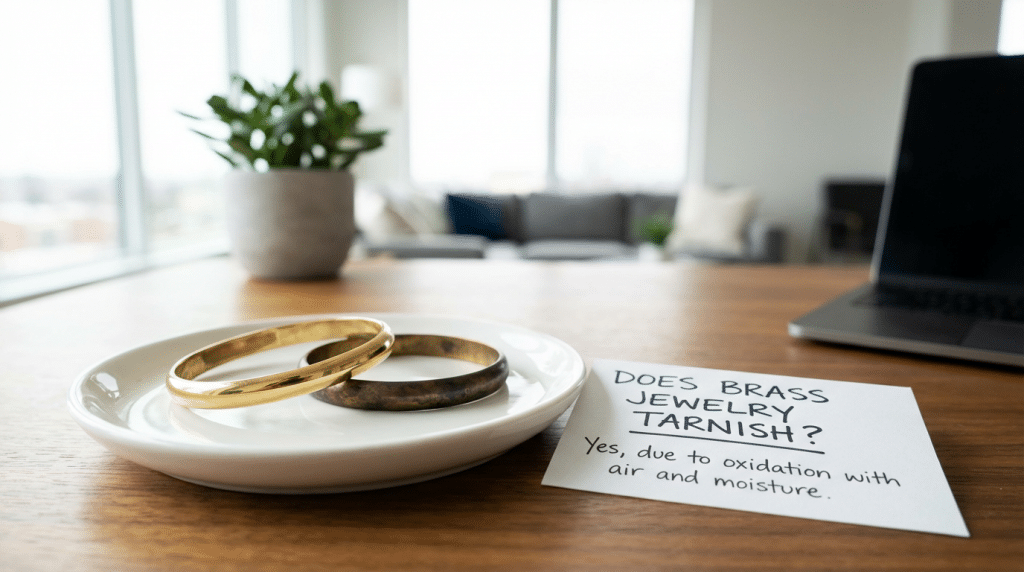
How oxidation causes brass jewelry tarnish
Brass is a mix of copper and zinc. When it hits air and moisture, the metals react with oxygen and sulfur compounds. This oxidation forms a thin, dark layer on the surface – that’s tarnish. It doesn’t mean your piece is “ruined”; it’s just metal reacting to its environment.
Copper content, patina, and discoloration
The higher the copper content in brass, the more likely you’ll see:
- Warm brown or golden patina
- Dark spots or uneven discoloration
- Greenish tones on the surface over time
That green layer (called verdigris) is basically copper salts forming on top of the brass.
Air, moisture, sweat, and pollution
Brass jewelry tarnishes much faster when it’s exposed to:
- Humidity & sweat – daily wear, workouts, hot climates
- Water – showers, swimming, washing hands
- Polluted air – big cities, industrial areas
More moisture + more chemicals in the air = faster brass jewelry oxidation and discoloration.
Natural patina vs ugly tarnish
Not all change is bad:
- Natural patina = soft, even darkening that gives a vintage, lived-in look
- Ugly tarnish = patchy, streaky, almost dirty-looking dark or green areas
You can lean into natural patina brass for a vintage style or polish it back to bright gold-like shine.
Does brass jewelry turn skin green?
Yes, it can. The copper in brass reacts with sweat, skin oils, and products, creating copper salts that:
- Leave a green stain on your skin (like cheap rings do)
- Show up faster in hot, humid weather or on oily skin
This stain isn’t dangerous, and it usually washes off with soap and water.
Common myths about brass tarnish and skin reactions
Let me clear up a few things:
- Myth: Green skin means the jewelry is fake.
Reality: It’s just copper reacting with your skin. Very common with real copper and brass. - Myth: Tarnish = toxic or unsafe.
Reality: Normal tarnish isn’t harmful for most people, but if you have a nickel allergy, always confirm the alloy. - Myth: “Non-tarnish brass” never changes.
Reality: It’s usually sealed or e-coated brass. Once that coating wears, the base metal behaves like normal brass again.
If you’re working with a professional jewelry manufacturer that understands coatings and alloys, you can get tarnish-resistant brass pieces that hold up longer and behave more predictably in daily wear.
Factors That Speed Up Tarnishing in Brass Jewelry
Brass will tarnish no matter what, but some habits and environments make it happen a lot faster. Here’s what really pushes brass jewelry oxidation and discoloration.
Moisture: Humidity, Sweat, Water
Moisture is the main trigger for brass jewelry tarnish.
- High humidity (tropical climates, steamy bathrooms) keeps a thin layer of moisture on the metal, speeding up oxidation.
- Sweat is salty and slightly acidic, so it reacts fast with brass and can cause both dark tarnish and green skin stains.
- Water exposure from showers, swimming, washing dishes, or rain keeps the metal wet and breaks down any protective layer faster.
If you live somewhere humid or you’re active (gym, outdoor sports), you’ll need a tighter brass jewelry maintenance routine.
Cosmetics & Chemicals
Everyday products can quietly damage brass:
- Perfume, body spray, hair spray – alcohol and fragrance ingredients dry on the metal and react with the surface.
- Lotions, sunscreens, body oils – trap moisture and chemicals against the brass.
- Hair products and makeup – can leave residue that speeds up brass jewelry oxidation.
- Household cleaners, bleach, detergents – too harsh; they strip finishes and cause uneven tarnish.
Rule of thumb: jewelry goes on last when you get ready, and comes off first before cleaning or using strong products.
Your Body Chemistry (Skin Oils & pH)
Two people can wear the same brass ring, and one will stay bright while the other darkens in a day. That’s body chemistry.
- More acidic skin pH = faster brass discoloration and more chance of green stains.
- Oily or sweaty skin keeps moisture on the metal longer.
- Medications, diet, hormones can change how your skin reacts with brass over time.
If brass turns dull or green quickly on you, it’s not “bad jewelry” – your chemistry just accelerates brass patina.
How Often and How Long You Wear It
Brass loves being worn, but overuse without breaks or cleaning speeds up tarnish:
- All-day, everyday wear (sleeping, showering, workouts) gives zero “dry time” for the metal.
- Stacked pieces (rings, chains, bangles) rub together, wearing away any protective layer and exposing raw metal.
- No cleaning between wears lets sweat, oils, and product build up and react with the metal.
If you’re a heavy brass wearer, build a rotation: don’t wear the same brass piece 24/7 without rest and quick wipe-downs.
Raw Brass vs Plated or Sealed Brass
Not all brass jewelry behaves the same:
- Raw brass jewelry (uncoated metal) will tarnish the quickest but is also easy to polish back to bright.
- Plated brass (gold-plated over brass) looks luxe at first, but once the plating wears, brass tarnish shows through.
- Sealed or e-coated brass has a clear barrier that slows oxidation and reduces skin reactions.
When I manufacture brass pieces, I usually push sealed or e-coated brass jewelry for global customers who want that gold look with lower maintenance and better tarnish resistance.
Storage Habits: Better or Worse
How you store brass decides whether it slowly darkens or stays wearable for longer:
- Bad storage: open trays, bathrooms, windowsills, or anywhere with air flow, steam, or sunlight = constant contact with air and moisture.
- Good storage:
- Airtight pouches or boxes
- Anti-tarnish strips or papers inside the box
- Keeping pieces separate so brass doesn’t rub against harder metals
If you’re building a small brass collection or styling multiple charm chains and layers, combining proper storage with smart rotation (like you’d plan from a solid fashion jewelry styling guide) makes a huge difference in how long your brass stays bright.
Brass vs Other Jewelry Metals
Brass vs sterling silver
- Tarnish speed: Sterling silver usually tarnishes faster than brass because silver reacts quickly with sulfur in the air. Brass reacts mainly with oxygen and moisture, so it can take a bit longer, but both will darken over time.
- Look: Fresh brass = warm yellow “gold-like” tone. Silver = bright white shine.
- Care: Both need regular cleaning, but silver often needs more frequent polishing.
- Skin: Sterling silver is usually better for sensitive skin. Brass can react more with sweat and body oils, especially if it has higher copper content.
Brass vs stainless steel
- Durability: Stainless steel is tougher and more scratch‑resistant. It’s the “set it and forget it” metal. Brass is durable but softer and will show wear and patina faster.
- Tarnish: Stainless steel barely tarnishes under normal wear. Brass will oxidize and change color unless it’s sealed or e‑coated.
- Skin reactions: Stainless steel is usually more hypoallergenic (especially surgical grades). Brass is more likely to turn skin green or leave marks if worn tight or in humid conditions.
Brass vs gold-plated jewelry
- Look: Good brass can look surprisingly close to gold. Gold‑plated jewelry has a real gold layer on top, so it will start out closer to fine jewelry in color.
- Longevity:
- Brass: Color goes deeper than the surface, so you can polish and refresh it many times.
- Gold‑plated: Once the thin gold layer wears off, it shows the base metal and needs replating.
- Upkeep: Gold‑plated pieces need gentle care (no harsh rubbing) to protect the plating. Brass can handle more frequent cleaning and polishing. For more on plating care, check this guide on how to clean gold-plated jewelry.
Pros and cons of brass for everyday wear
Pros:
- Affordable way to get a bold, gold‑like look
- Great for large, chunky, or custom designs
- Can be polished bright or worn with a vintage patina
Cons:
- Will tarnish and may turn skin green for some people
- Needs regular cleaning and smart storage
- Not ideal for very sensitive or allergy‑prone skin if it’s raw, unsealed brass
When brass makes sense vs other metals
Choose brass jewelry when:
- You want big statement pieces without gold pricing
- You don’t mind occasional polishing and a bit of patina
- You like a warm, vintage, “lived‑in” metal look
Choose sterling silver when:
- You prefer a bright white shine
- Your skin is more sensitive but still ok with silver
Choose stainless steel when:
- You want super low‑maintenance, almost no tarnish
- You’re hard on your jewelry (gym, work, travel)
Choose gold‑plated when:
- You want a closer-to-fine-jewelry look on a budget
- You’re okay with babying the plating and maybe replating later
If you sell or design jewelry and want less customer headache around tarnish, looking into tarnish‑resistant or e‑coated brass from specialized anti-tarnish jewelry manufacturers is usually the sweet spot between cost and longevity.
How to Prevent Brass Jewelry from Tarnishing
Simple daily habits to slow down brass oxidation
If you want brass jewelry to stay bright longer, you have to cut down its contact with air, moisture, and products. Daily basics:
- Last on, first off: Put brass on after skincare, perfume, and hair products; take it off first when you get home.
- Wipe after wear: Quickly wipe pieces with a soft, dry cloth to remove sweat, oil, and moisture.
- Avoid harsh products: Keep brass away from cleaners, sanitizer, and strong chemicals as much as possible.
When to remove brass jewelry
Brass is not a “wear it and forget it” metal. Take it off when:
- Showering or bathing – soap + hot water speeds up brass jewelry oxidation.
- Swimming – chlorine and saltwater will discolor brass fast.
- Working out – sweat is acidic and pushes tarnish and brass jewelry discoloration.
- Sleeping – you’ll reduce friction, scratching, and moisture trapped under jewelry.
Using clear sealants, lacquer, or nail polish
If your brass turns skin green or darkens fast, add a barrier:
- Brush a thin layer of clear nail polish or jewelry-safe lacquer on the inside of rings, bracelet backs, and earring posts.
- Let it dry fully before wearing. Reapply every few weeks as it wears off.
- For bigger collections, ask a jeweler for a professional clear coat instead of DIY every piece.
Anti-tarnish strips, bags, and boxes
Storage is half the battle with brass jewelry care:
- Keep pieces in zip bags or small pouches with most of the air pressed out.
- Add anti-tarnish strips or paper into your jewelry box to absorb sulfur and moisture.
- Store in a cool, dry place (not the bathroom).
If you’re building out a serious collection or planning custom designs, working with a reliable jewellery manufacturer for custom designs lets you spec better finishes and coatings from day one.
E-coating and professional sealing
For low-maintenance brass jewelry:
- Look for pieces that are e-coated (electro-coated) or professionally sealed. This ultra-thin clear layer protects against air, sweat, and everyday wear.
- E-coated brass jewelry usually holds shine longer, needs less polishing, and is better for people who hate constant cleaning.
What to look for in “tarnish-resistant” brass jewelry
“Non tarnish brass jewelry” is mostly about finishing quality, not magic metal:
- Check product details for terms like e-coated, clear lacquered, sealed brass, or PVD-coated.
- Avoid vague claims with no process listed – if they don’t say how it’s protected, it probably isn’t.
- If you’re buying in bulk or developing your own line, ask the maker exactly what coating is used and how long it typically lasts with normal wear.
Best Storage Tips for Brass Jewelry
Why storage matters for brass tarnish control
Brass tarnishes because of air, humidity, and skin oils. Good storage slows brass jewelry oxidation, keeps the shine longer, and cuts down how often you need to clean or polish.
How to store brass jewelry to reduce air and moisture
Use these basics to fight brass jewelry discoloration:
- Keep it dry: Always wipe pieces with a soft cloth before storing.
- Low-humidity spot: Avoid bathrooms and windowsills. A closet or drawer is better.
- Add a moisture absorber: Silica gel packs in your jewelry box help a lot.
Pouches, anti-tarnish paper, and jewelry boxes
Layer your brass jewelry protection:
- Soft fabric pouches (cotton or microfiber) to limit air and scratches.
- Anti-tarnish strips or paper inside boxes or bags to absorb sulfur and moisture.
- Closed jewelry box with separate compartments to keep each piece protected.
If you already use boxes for silver or gold-filled pieces, you can use the same setup for brass and just add extra anti-tarnish storage protection.
Separate brass from other metals
Don’t let brass jewelry pile up with everything else:
- Store brass pieces separately from sterling silver and stainless steel.
- Use individual pouches or compartments to prevent scratching and metal-on-metal reactions.
- Keep chains unclasped and laid flat or hung to avoid tangling and friction.
Travel tips to prevent fast tarnish
When you travel, brass jewelry is hit with sweat, humidity, and rough handling, so protect it:
- Pack brass in small zip bags plus a soft pouch to reduce air and rubbing.
- Add a tiny anti-tarnish strip in your travel case if you’ll be in humid or coastal areas.
- Keep brass in your carry-on, not checked luggage, to avoid extreme temps and impacts.
If you’re designing custom collections or sourcing pieces for retail, build these storage habits into your packaging—include pouches and basic care tips, just like we do with our own lines and with our partners when they develop custom necklace designs.
Simple Ways to Clean Tarnished Brass Jewelry
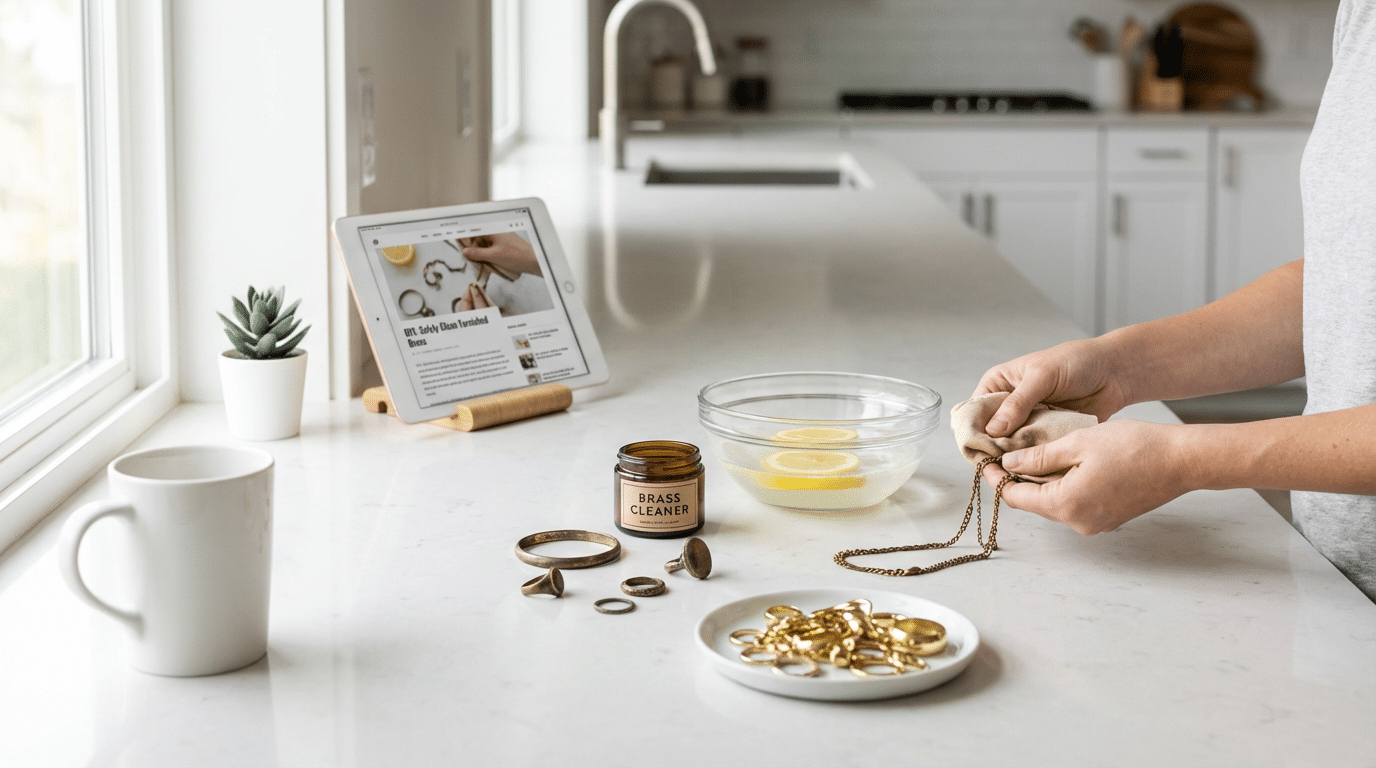
How to Know When Brass Jewelry Needs Cleaning
Your brass jewelry needs a cleanup when you notice:
- A dull, flat look instead of a warm gold tone
- Dark spots, brown/black patches, or uneven discoloration
- Slight green residue on the metal or on your skin
- Pieces that feel sticky, grimy, or oily from lotions and sweat
If you wear brass every day, a quick clean every 1–2 weeks keeps tarnish under control and actually extends the life of the piece.
Gentle Home Cleaning Methods (Step-by-Step)
Basic mild soap clean (good for light tarnish):
- Mix a few drops of mild dish soap in a bowl of lukewarm water.
- Dip a soft cloth or soft toothbrush into the soapy water.
- Gently wipe or brush the brass jewelry, focusing on dirty areas.
- Rinse quickly with clean water (don’t soak for long).
- Dry completely with a soft, lint‑free cloth and let air-dry for a few minutes before storing.
This is the safest “default” method and works well if you want to avoid anything harsh.
Using Lemon and Salt Safely on Brass Jewelry
This works well on raw brass (not plated or sealed). Avoid it on pieces with stones, enamel, or unknown coatings.
- Cut a fresh lemon in half.
- Sprinkle a small amount of fine salt on the cut side.
- Gently rub the lemon over the brass for a few seconds at a time.
- Watch the metal closely—stop as soon as the color brightens.
- Rinse thoroughly with cool water.
- Dry fully with a soft cloth.
Tips:
- Test on a hidden area first.
- Don’t leave lemon juice sitting on the metal; it’s acidic and can over‑etch brass if you walk away.
Using Baking Soda Paste to Remove Brass Tarnish
Baking soda is a mild abrasive, so be gentle:
- Mix baking soda with a little water to make a soft paste.
- Apply a thin layer to the brass with your finger or a soft cloth.
- Rub lightly in small circles—no heavy pressure.
- Rinse off all paste with lukewarm water.
- Dry completely and buff with a clean cloth.
If you want something even softer, dilute the paste more so it’s almost runny.
Ketchup or Vinegar Cleaning (Use the Right Way)
Ketchup method (for light to medium tarnish):
- Ketchup works because of its mild acids (vinegar + tomato).
- Apply a thin layer of ketchup over the brass.
- Let sit for 5–10 minutes—no longer.
- Gently rub with your fingers or a soft cloth.
- Rinse well and dry fully.
Vinegar method (stronger, so be cautious):
- Mix white vinegar with water (start with 1:3 vinegar to water).
- Quickly dip a soft cloth in the mix and wipe the brass.
- Rinse almost immediately and dry.
Never leave jewelry soaking in straight vinegar—too aggressive for most pieces.
Cleaning Brass with Mild Soap and a Soft Cloth
For everyday brass jewelry maintenance, this is enough:
- Use mild, fragrance‑free dish soap and a soft microfiber cloth.
- Wipe pieces after wearing to remove sweat, oils, and product build‑up.
- This habit slows down brass oxidation and keeps polishing sessions rare.
If you also wear silver regularly, you might like the maintenance tips in this guide to wholesale sterling silver bracelets, since the day‑to‑day care is similar.
What to Avoid on Brass Jewelry
Skip anything that can strip, scratch, or pit the metal:
- Harsh chemicals (bleach, ammonia, strong jewelry dips)
- Steel wool, scouring pads, rough sponges
- Toothpaste (too abrasive over time)
- Long soaks in straight vinegar, lemon juice, or commercial cleaners
- Ultrasonic cleaners on pieces with stones, glue, or unknown construction
If you’re not sure how the piece was made, stay on the gentle side.
When to Get Professional Brass Jewelry Cleaning
Get a pro involved when:
- The brass is heavily darkened or almost black
- Your piece has intricate details, stones, crystals, or enamel
- The item is vintage, sentimental, or expensive
- You suspect the brass is plated or sealed and don’t want to strip it
A good jeweler can clean, polish, and even re‑seal brass to help it last longer. The same way we handle stainless steel care in our guide on how long stainless steel jewelry lasts, I treat brass as a long‑term material—if you keep up with light, regular cleaning, it will stay wearable and good‑looking for years.
Fixing Green Skin and Brass Reactions
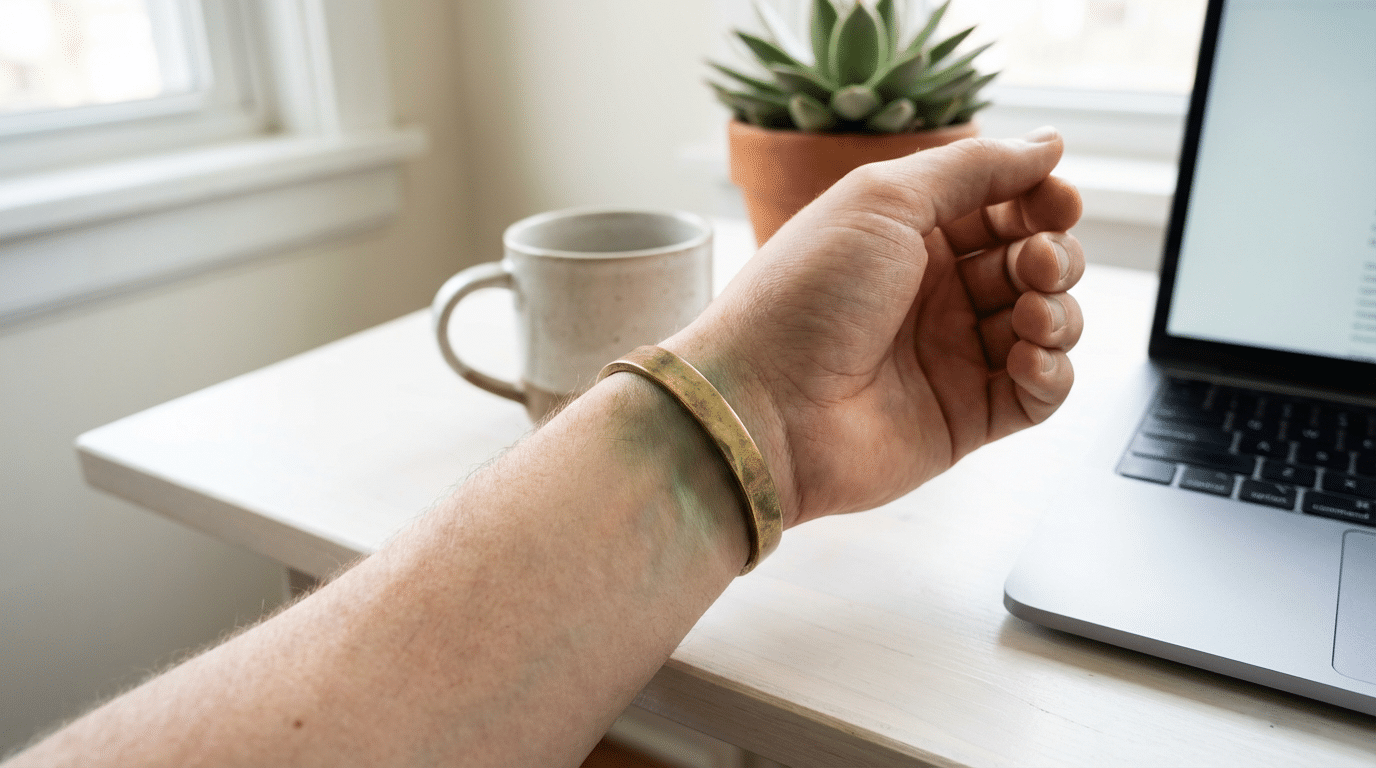
Why Does Brass Jewelry Turn Skin Green?
Brass is a mix of copper and zinc. When copper reacts with sweat, skin oils, and moisture, it can leave a green stain (copper salts) on your skin.
This isn’t usually dangerous – it’s more of a cosmetic issue than a health risk.
Staining vs Irritation vs Allergy
| Reaction type | What it looks like | What it means |
|---|---|---|
| Staining | Green/black color on skin, no discomfort | Normal reaction of copper/brass + sweat |
| Irritation | Redness, slight itch, dryness | Skin is reacting to friction, moisture, or metal |
| Allergy | Itchy rash, bumps, blistering, swelling | Possible nickel or metal allergy – stop use |
- Green stain only = usually harmless.
- Red, itchy, or painful = your skin isn’t happy with that piece.
Quick Fixes If Brass Is Turning Your Skin Green
You don’t have to stop wearing it. Try this:
- Keep skin dry under rings/bracelets as much as possible.
- Remove brass for workouts, hot weather, and long showers.
- Apply a thin layer of barrier:
- Clear nail polish inside rings / on back of earrings.
- Silicone-based barrier cream on skin (let it dry first).
- Clean the jewelry regularly so sweat and oils don’t sit on the metal.
How to Coat Brass Jewelry to Block Skin Contact
If you love a brass piece, just seal it:
- Use clear nail polish on:
- Inner ring bands
- Earring posts and hooks
- Parts that touch skin the most
How Long Does Brass Jewelry Last with Proper Care?
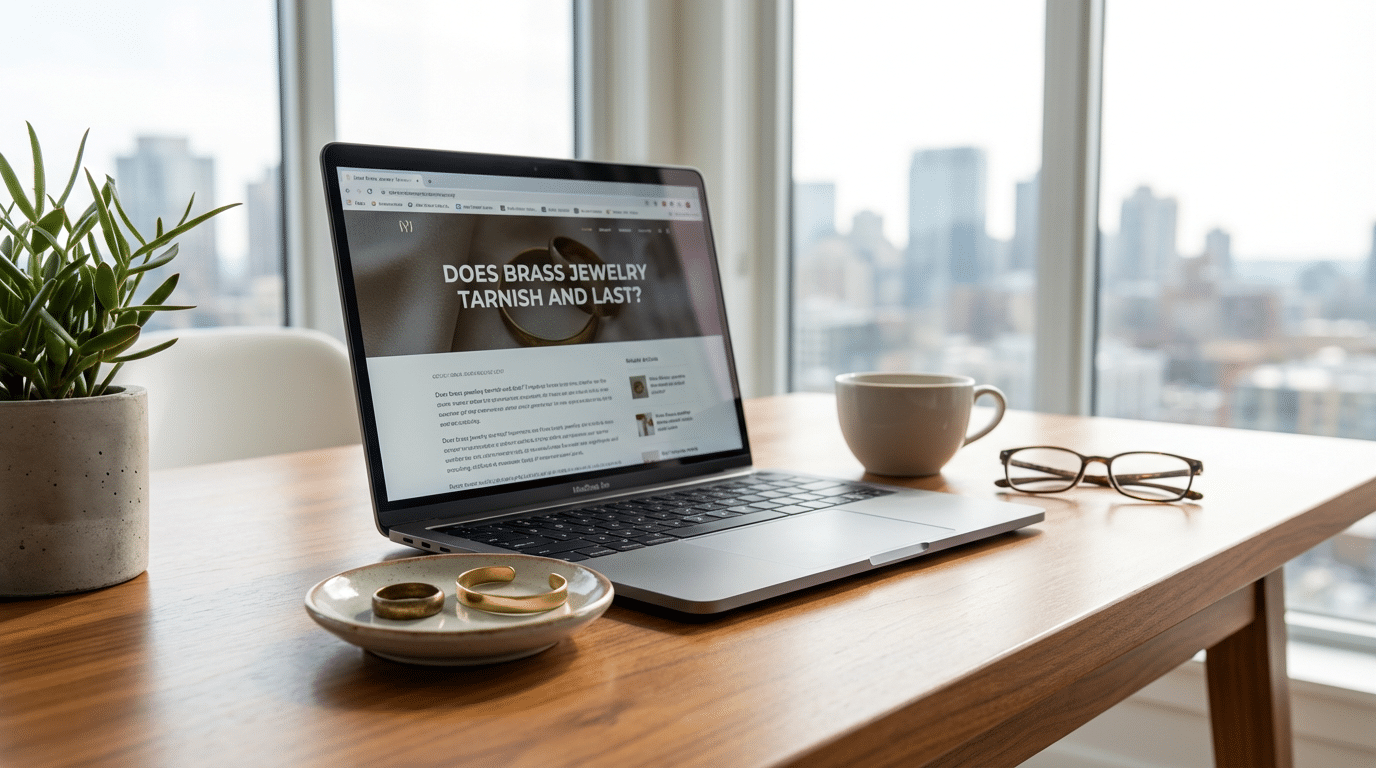
Brass jewelry can last years—often 5–10+—if you treat it right. It won’t stay bright forever on its own, but with a simple routine you can control tarnish, patina, and wear.
Typical Lifespan of Brass Jewelry
For everyday, normal wear:
- Raw brass:
- Daily wear: 2–5 years of “nice” condition before it looks very aged
- Occasional wear: 5–10+ years with basic care
- Sealed / e‑coated brass:
- Often looks good longer because the coating slows oxidation
- Great for people who want the brass look without constant polishing
If you want something that stays bright with less work, you might also look at more durable finishes like gold-filled or higher‑karat gold, which I break down in this guide on 14k vs 24k gold and which to choose.
How Care and Cleaning Change Brass Longevity
How long brass jewelry lasts mostly comes down to habits:
- Wipe after wear (soft cloth, dry) → slows brass oxidation and keeps shine
- Keep it dry (no showers, pools, or sweat sessions) → less tarnish, less pitting
- Gentle cleaning only (mild soap, soft cloth, light polishing) → preserves surface
- Good storage (anti‑tarnish bag/box) → huge difference in how fast brass darkens
Do this and most brass pieces will stay wearable and attractive for many years.
Signs Your Brass Jewelry Needs Restoring or Sealing
Watch for these cues:
- Very dark, patchy tarnish that doesn’t lift with gentle cleaning
- Dull, rough texture instead of a smooth metal feel
- Flaking or worn plating (if it’s brass plated over another metal)
- Persistent green staining even after coating or cleaning
At this point, it might be time for:
- Professional polishing (for detailed or sentimental pieces)
- Re‑sealing or e‑coating to lock in the finish
- Replating if the brass is just a base layer under gold or another metal
If you’re comparing plating options and durability, this breakdown of gold‑filled vs gold‑plated jewelry is a good reference.
When to Repair, Replace, or Retire Brass Pieces
Be practical and honest with each piece:
- Repair or restore if:
- It has sentimental value
- It’s well‑made and you actually wear it
- A simple polish or seal will bring it back
- Replace if:
- The metal is pitted or eaten away
- Clasps, hinges, or posts are weak beyond easy repair
- You’ve outgrown the style and won’t wear it even if restored
- Retire to “costume” use if:
- It’s fun but heavily worn
- You only wear it occasionally and don’t mind the aged look
Leaning Into Patina: Vintage Brass Style
Not all brass tarnish is bad. A lot of people love natural patina:
- Soft, darker gold tone that looks vintage and lived‑in
- Works great with boho, minimalist, or antique‑inspired looks
- Pairs well with linen, denim, earth tones, and layered jewelry stacks
If you like that vibe, you can:
- Clean lightly (soap + water) but skip heavy polishing
- Focus on comfort and stability (no rough edges, no flaking)
- Treat patina as part of the design, not a flaw
Bottom line: with proper care, brass jewelry has strong longevity for its price point. You choose whether to keep it bright and shiny—or let it age into a rich, vintage patina.
Real-Life Care Routine for Brass Jewelry
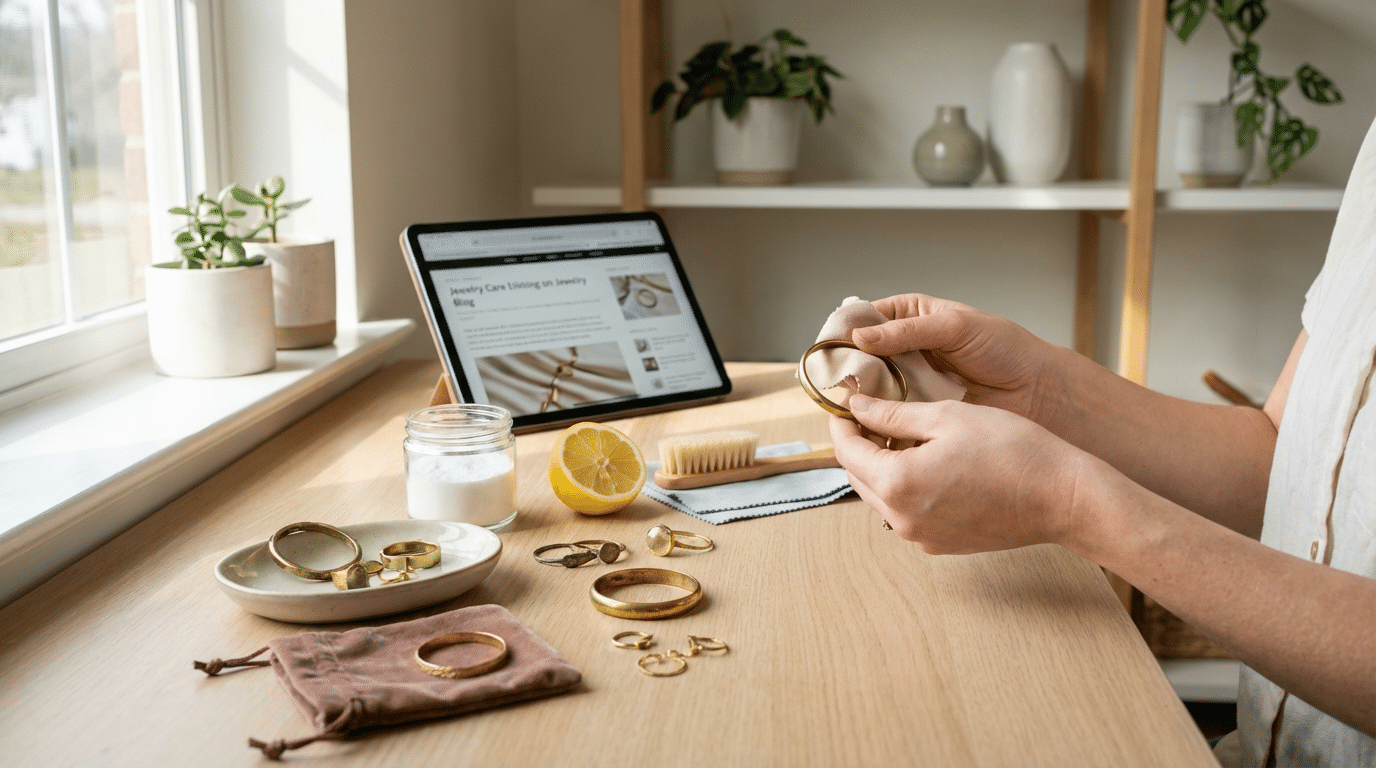
Daily care routine for brass jewelry wearers
If you wear brass rings, cuffs, or chunky necklaces every day, keep it simple:
- Last on, first off: Put brass on after skincare, perfume, and hair products. Take it off before bed.
- Wipe after wear: Quickly wipe pieces with a soft, dry cloth to remove sweat, skin oils, and dust.
- Keep it dry: Take brass off before washing hands, dishwashing, or stepping into hot, humid bathrooms.
These tiny habits slow brass jewelry oxidation and keep that warm gold-look shine longer.
Weekly or monthly brass cleaning routine
How often you clean depends on how much you wear your pieces and your climate:
- Weekly (heavy wear / humid climate):
- Wipe with a cloth dampened with mild soap and water.
- Rinse quickly, dry fully with a soft towel, then air-dry a few minutes.
- Monthly (light wear / cooler climate):
- Use a gentle brass polishing cloth or a tiny bit of brass-safe cleaner.
- Avoid over-polishing if you like a bit of natural patina brass character.
If you mix brass with other metals in your stack (like in mixed-metal looks similar to those in many modern jewelry styling guides), clean brass separately to avoid scratching.
How to build a low‑maintenance brass jewelry lineup
If you want the look of brass without constant polishing, build smarter:
- Choose sealed or e‑coated brass jewelry when possible – it’s more tarnish-resistant and needs less upkeep.
- Pick smoother designs (fewer deep textures and crevices) so dirt and sweat don’t settle.
- Have a “daily set” (one ring, one necklace, one pair of earrings) that you know clean easily and wear well.
- Store right: Use pouches, anti-tarnish paper, or a closed jewelry box so pieces don’t sit in open air.
This kind of lineup is perfect if you want affordable, stylish brass jewelry but don’t want to baby every single piece.
Sample routine for swimmers, gym‑goers, or humid climates
If you sweat a lot, live somewhere humid, or swim often, you need a tighter routine:
Before activity:
- Remove brass before:
- Swimming (chlorine + salt water = fast tarnish)
- Saunas, hot yoga, long runs, or heavy gym sessions
After activity:
- If brass got sweaty:
- Rinse quickly with lukewarm water and mild soap.
- Dry completely with a soft cloth.
Weekly:
- Do a gentle clean and then store in:
- A small airtight bag or box with anti‑tarnish strips
- Separate from sterling silver or stainless steel to avoid rubbing and micro-scratches
Follow this, and your brass jewelry longevity jumps—pieces stay wearable and good-looking instead of turning dull and patchy in a few months.
FAQs About Brass Jewelry Tarnish
Is tarnished brass bad for your skin or health?
No, normal brass tarnish isn’t harmful for most people. It’s mainly oxidation on the surface.
- If you have very sensitive skin or a nickel allergy, irritation can happen with low‑quality alloys.
- If you see redness, itching, or bumps, stop wearing it and switch metals.
Does all brass jewelry eventually tarnish?
Yes. All raw brass will oxidize over time when exposed to air, sweat, and moisture.
- Sealed, e‑coated, or plated brass just tarnishes slower, not never.
- “Non-tarnish” brass usually means it’s coated, not that the metal can’t react.
Can you make brass jewelry fully tarnish-proof?
Not fully. You can only delay tarnish:
- Clear lacquer, resin, or e‑coating
- Regular cleaning + dry storage
If you want almost zero maintenance, stainless steel or solid gold is a better call than brass.
Does brass jewelry always turn skin green?
No. Green skin happens when copper in brass reacts with sweat, lotions, or acids on your skin.
More likely to get green marks if:
- You sweat a lot / live in humid climates
- The piece is tight (rings, bangles)
- You wear it 24/7
Coating the inside with clear nail polish or a sealant usually stops the staining.
Can you shower or swim with brass jewelry on?
You can, but you shouldn’t if you care about the finish. Water, soap, chlorine, and salt all speed up tarnish and discoloration.
- Take brass off for showers, pools, the sea, saunas, and heavy workouts.
- If it does get wet, dry it well with a soft cloth ASAP.
What’s the best way to store brass jewelry long term?
Keep brass dry, separate, and low-oxygen:
- Seal in small zip bags or pouches with anti‑tarnish strips
- Store in a closed jewelry box away from bathrooms and windows
- Keep pieces separated to avoid scratching and metal-on-metal reactions
If you buy in bulk, follow the same rules you’d use for any brass jewelry collection.
How often should I clean my brass jewelry?
Depends how hard you wear it:
- Everyday wear: quick wipe after use + light clean every 1–2 weeks
- Occasional wear: clean when it starts to dull or spot
Always start with mild soap and water before using stronger tarnish removers.
Can I restore badly tarnished or darkened brass pieces?
Usually yes:
- Use gentle home methods (baking soda paste, lemon + salt, or a tiny bit of ketchup), test on a hidden spot first.
- For detailed, antique, or mixed‑stone pieces, professional cleaning is safer so you don’t strip too much metal or damage settings.
For brands or wholesalers, deep restoration can extend the life of your inventory instead of replacing it.
How to tell if brass is sealed, plated, or raw metal?
Quick checks:
- Look: very even, “perfect” color usually means plated or e‑coated; raw brass looks more “metal” and will slowly change tone.
- Feel: sealed or plated brass often feels slightly smoother or “glassy.”
- Tarnish: if it barely changes after months of wear, it’s probably plated or heavily coated.
- Magnet test: brass isn’t magnetic; if it sticks strongly, it’s brass over a base metal core.
If you’re buying or reselling, always confirm in the specs or listing details, just like you would when you buy jewelry wholesale or for your own brand.
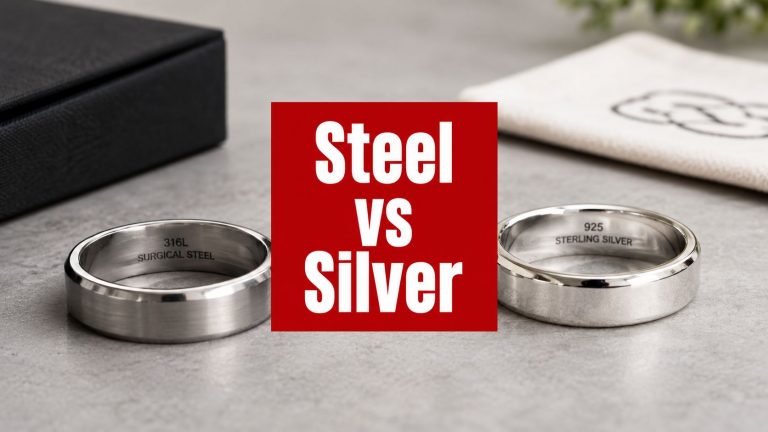
Surgical Steel vs Sterling Silver: Buyer Guide
You’re pricing a new collection, and the sample tray is already split down the middle.
How to Gold Plated Jewelry the Right Way for Lasting Color
You probably have a launch already in motion, a supplier sample on your desk, and
What Is a Shank on a Ring: Guide to Design & Durability
You’re refining a ring design, the stone looks right, the setting is approved, and the