

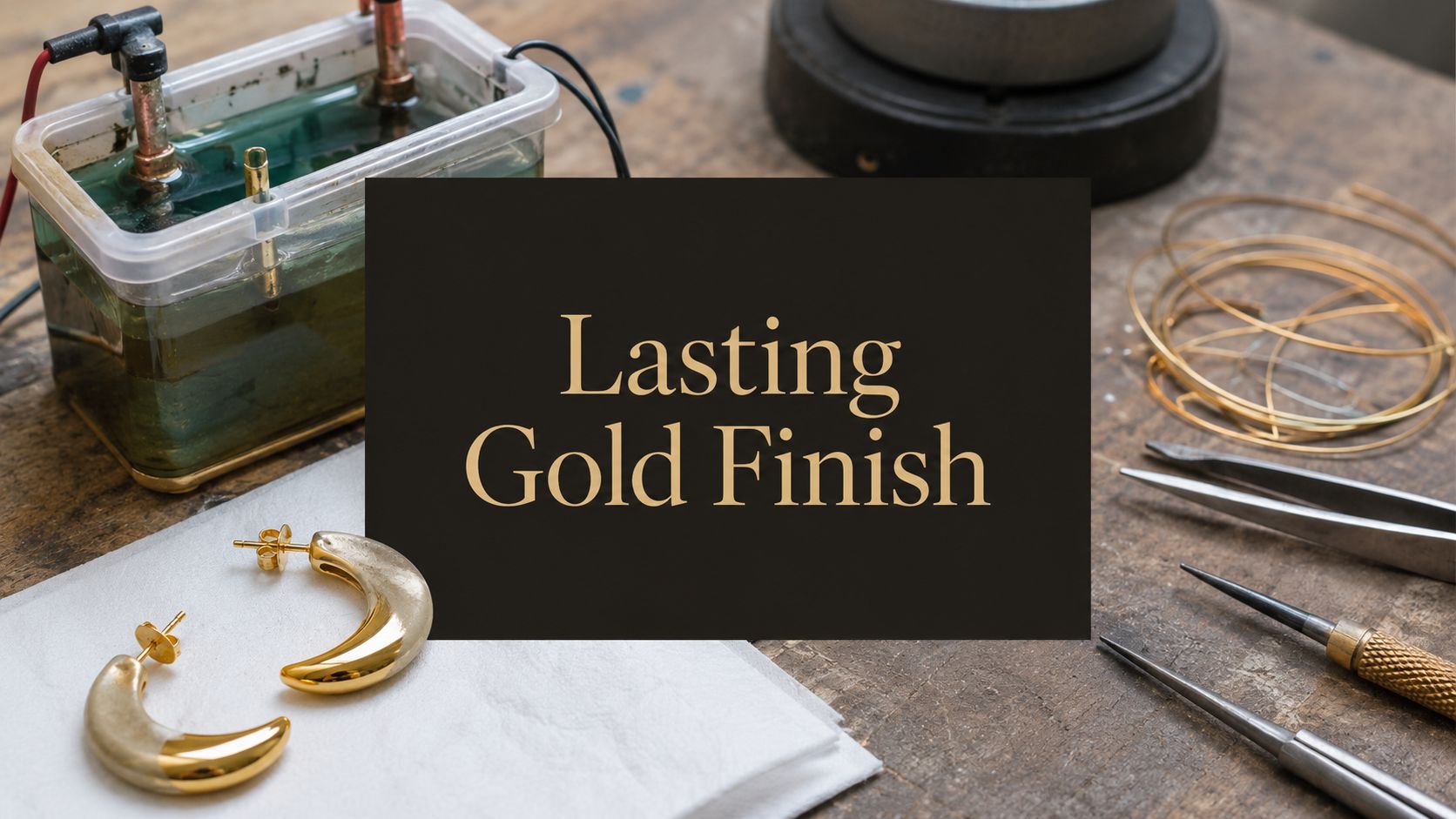
You probably have a launch already in motion, a supplier sample on your desk, and one uncomfortable question underneath it all, will this gold color still look clean after real wear, or will it come back as returns, complaints, and reworks. In jewelry manufacturing, that answer usually isn’t decided by the look of the first sample. It’s decided by thickness, base metal, and process control, because those three choices determine color retention, skin contact risk, and how much of your wholesale program survives daily use.

The practical reason this matters is simple. U.S.-oriented guidance treats 0.5 microns as the minimum threshold for calling a piece gold plated, while vermeil is much stricter at 2.5 microns over sterling silver with at least 10-karat gold content, and many premium pieces aim for 1.0 to 2.5 microns or more to improve wear life (Finematter). European jewelry rules add another layer, because prolonged skin contact must stay at or below 0.5 micrograms per square centimetre per week, and pierced parts must stay at or below 0.2 micrograms per square centimetre per week (EU Verify). That means plating isn’t just a cosmetic finish, it’s a compliance and retention decision.
For product planning, the category matters too. Earrings and rings take more friction than pendants, so the same coating that looks fine on a necklace can fail early on a post or band. Once a buyer understands that difference, the rest of how to gold plated jewelry becomes a controlled manufacturing question instead of a vague styling choice.
A DTC brand can lose a launch quickly when plating is treated as a decorative afterthought. I’ve seen teams approve a good-looking sample, then get hit by scuffing on a clasp, bleed-through at the edges, or skin-contact complaints once the product hits wear tests. The key decision starts before the gold goes on, because the target thickness, base metal, and plating method determine what the piece can truly survive.
There’s a clear line between flash plating and true gold plated jewelry. U.S.-oriented guidance treats 0.5 microns as the practical minimum for calling a piece gold plated, while thinner deposits are generally treated as flash plating (Finematter, UPA). In production terms, that boundary is where buyers stop promising “looks good in the box” and start planning for real wear.
Practical rule: if the piece is meant for daily wear, write the thickness target into the tech pack, not into a verbal note.
The market also uses thicker specifications for better durability. 1.5 to 2.5 microns is commonly treated as heavy plating, and 2.5 microns or more supports vermeil-grade positioning over sterling silver (Harlem Bling). Decorative deposits can be only 2 to 4 microinches in some applications, while higher-wear jewelry finishes may use 7 to 30 microinches. The point is simple. Small changes in thickness change longevity and where the product sits in the market.

The base metal is where many return issues begin. Brass, stainless steel, and 925 sterling silver each behave differently under plating, and the wrong pairing can shorten wear life or trigger complaints once the gold layer thins. For buyers working on stainless designs, 316L stainless steel is a useful starting point because the substrate itself is built for tougher duty than softer fashion alloys.
That shifts plating from a cosmetic decision to a compliance and retention one.
In practical terms, the right choice depends on who will wear the piece and how often. Pendants can tolerate lighter builds than rings, while earrings need special attention because the post sits in prolonged contact with skin. Jewelry that looks identical on a sales sheet can behave very differently in use, so the engineering question has to come first.
Good plating starts with a surface the metal can bond to. If the substrate is oily, uneven in the wrong places, or chemically active at the surface, the gold layer will not spread evenly. That front-end work matters most on clasps, posts, and edge details, where wear shows defects first.
A workable shop flow is straightforward, substrate selection, surface finishing, degreasing, activation, then barrier layer. If one step is skipped or rushed, the coating may look fine at first and then fail where fingers, sweat, and fabric keep rubbing the same spots. A useful sourcing brief asks the factory to name each stage and show the checkpoint for it.
For brass programs, brass jewelry is common because it shapes easily and fits fashion cost targets, but it still needs disciplined prep. Stainless steel can be a stronger wear base, while 925 sterling silver fits premium plated and vermeil programs. Gold filled bases sit in a different category, but the rule is the same, the surface has to be ready before the decorative layer goes on.
A poor underlayer is one of the fastest ways to get edge bleed-through on clasps and posts.
A barrier layer serves two functions, improving adhesion and blocking corrosion. In hypoallergenic lines, nickel-free copper or TiN barriers are often used to reduce risk when the top layer starts to thin. That matters because the gold finish itself cannot fix a bad base metal choice.
On brass, the substrate can be economical and easy to form, but it still needs the right pre-plate treatment to avoid early discoloration and weak adhesion. On stainless steel, the surface is tougher, but the line has to prepare it differently before plating or vacuum deposition can hold properly.
The buyer checklist for this stage should stay direct:
When these steps are fixed, the plating line is building on a surface that can hold the coating instead of trying to compensate for a weak base.
Different product categories need different tools. Electroplating gives you the warm, familiar gold look most buyers expect on brass and silver, while PVD is the harder finish that often makes more sense for stainless steel and high-friction pieces. If your assortment mixes earrings, chains, bangles, and charms, the method choice should track the use case instead of the trend board.
| Variable | Electroplating | PVD (Vacuum) |
|---|---|---|
| Best fit | Brass, sterling silver, fashion and vermeil-style lines | Stainless steel, chains, charms, bangles |
| Thickness range | Adjustable from 0.03 microns up to 5 microns | Adjustable from 0.03 to 0.1 microns plus a 0.5 TiN protective layer |
| Color character | Warm, deep gold tone with more control over softness of finish | Harder surface, cleaner wear resistance |
| Finish flexibility | Strong for color depth and selective plating | Strong for durable color retention on hard substrates |
| Typical use case | Custom jewelry, wholesale jewelry, premium plated fashion | Wear-heavy pieces, branded basics, modern mixed-metal lines |
Electroplating is still the classic choice when a brand wants rich gold color on a silver or brass base. The process also gives a buyer more room to specify thicker builds, which matters when the product needs visible depth rather than just a surface tone. That’s why it remains the common route for plated fashion jewelry and vermeil-oriented production.
PVD is better when the goal is abrasion resistance. HonHo Jewelry’s titanium nitride PVD jewelry line reflects the logic most OEMs use on stainless steel, because a harder build usually stands up better to friction and repeated wear. In-house PVD and electroplating together also give a factory more flexibility than a single-process shop, since some programs benefit from PVD as the base and electroplating on top for added color depth.
That hybrid approach is useful for brands that want more than one look in the same collection. A chain can be built for durability in PVD, while a visible detail can be tuned with electroplating for warmer gold character. The right method isn’t the trendiest one, it’s the one that matches the substrate, the wear pattern, and the customer promise.
Once the substrate is ready, the tank or chamber has to be controlled like a production step, not a guess. Racking, masking, current, dwell, and temperature all affect whether the finish comes out even or blotchy. On cast pieces especially, faster isn’t better if it creates tone variation across raised and recessed areas.
A slower cycle at lower current often gives better color consistency than a rushed high-current pass. That matters on pieces with curved surfaces, prongs, or layered geometry, because gold can build unevenly where the field is strongest. Fixturing also matters, since poor contact points can leave marks or thin zones right where customers look first.
Selective plating is useful on two-tone designs and mixed-metal collections, especially when brands want the polished contrast that’s been popular in layered looks. The masking has to be clean, though, because sloppy boundaries look cheap even when the gold thickness is correct. Good factories treat masking as part of the design, not an afterthought.
Simple production rule: the gold layer should follow the design, not fight it.
A post-plate sealing step can add another layer of protection, and a TiN or barrier layer can be useful when the product category will see more abrasion. That doesn’t replace proper thickness, but it gives the finish a better chance under real wear. In a well-run line, the quality target is documented rather than assumed, and inspection should be built into the release process.
For OEM and ODM buyers, the best tech pack asks the factory to list:
I’ve seen factories like HonHo Jewelry run this kind of control alongside custom jewelry production, which helps when a brand wants matching specs across sample, pilot, and bulk runs. The point isn’t just to make it shiny. It’s to make the finish repeatable.
A lot of plating complaints start the same way. The piece looks fine at launch, then the high-contact points fade first, the edges turn, and base metal starts to show on clasps, rings, and post areas. If you know the deposit thickness and how the item will be worn, you can predict where returns will come from before the first shipment leaves the dock.

The thickness-wear data from Sobling and Harlem Bling make the trade-off plain. Flash plating below 0.2 micron often shows wear in 1 to 3 months, standard plating around 0.5 to 1.0 micron is typically 6 to 12 months, and heavy plating around 1.5 to 2.5 microns can last about 1 to 2 years. That is why thickness has to match the product’s wear pattern. A daily-wear ring needs a different build than a pendant that sees occasional contact.
A 2026 PubMed study of gold-plated earrings found nickel release in 10 of 10 samples, with a median of 2.1 μg/cm² and values sometimes far above the EU limit (PubMed). Gold color alone does not guarantee skin safety. Base metal choice, barrier layers, and coating life matter more than the wording on the tag.
Common failure modes are predictable:
Mixed-metal collections and layered looks add more contact points and more abrasion. Thin plating can look fine in a still photo, then fail early in use. As the thickness-wear data from Sobling and Harlem Bling show, matching thickness to wear pattern reduces complaints more effectively than following trend-driven specs.
A plating line that holds up in the market is controlled before it is inspected. Buyers should ask for thickness readings, adhesion checks, salt spray results, and compliance records before bulk approval. If a supplier cannot explain those items in plain terms, the buyer is carrying the risk.

Thickness verification should come from a film-thickness gauge, not a verbal promise. The report should show where the piece was measured, because a clasp, ring shank, and pendant face do not wear the same way. Salt spray testing belongs in the file as well, since it gives a simple, repeatable check on how the finish handles corrosion and surface breakdown. HonHo Jewelry’s in-house lab uses 48-hour salt spray testing as part of that documentation.
REACH compliance matters for European sales. For jewelry in prolonged skin contact, nickel release must stay at or below 0.5 micrograms per square centimetre per week, and pierced parts must stay at or below 0.2 micrograms per square centimetre per week (EU Verify). If a non-nickel barrier coating is used, it has to hold that limit under normal use, so barrier durability is a production spec, not a label claim (ECHA).
Ask for the test method, the pass criteria, and the version of the report, not just “tested” on a quotation sheet.
The cleanest way to review a supplier is to ask for the exact evidence behind the claim. A batch with measured thickness, adhesion results, and salt spray records is easier to approve than one built on sample-room promises.
A supplier audit should include:
For buyers comparing factories, jewelry manufacturer vetting helps turn those questions into a standard quoting checklist. That keeps plating decisions tied to measurable control, which is how brands reduce returns and avoid guessing from samples alone.
The cleanest way to buy plated jewelry is to match the product category to the finish spec. For daily-wear rings and earrings, thin plating is the fastest path to returns. For pendants or low-contact pieces, a lighter build can work, but only if the base metal and prep steps are controlled.
A practical buyer checklist looks like this:
A two-year plating color retention warranty under normal wear is now a reasonable benchmark at the heavier plating and PVD end of the market when the substrate, layer build, and testing are properly controlled. That doesn’t mean every piece should be sold that way. It means brands can plan around a realistic durability target instead of a hope-based one.
For emerging DTC brands, smaller runs make this easier to test before scaling. Flexible MOQs starting from 30 pieces per style for 925 silver designs give a brand room to validate color, wear, and customer response without overcommitting inventory. That’s the right way to use custom jewelry production, especially when wholesale jewelry programs need consistency across repeat orders.
If you’re building a plated line and want the thickness, base metal, and QC spec aligned from sample to bulk, talk with HonHo Jewelry. We work on OEM and ODM jewelry production with electroplating, PVD, and documented inspection so brands can set the right finish for the right product before the order is released.
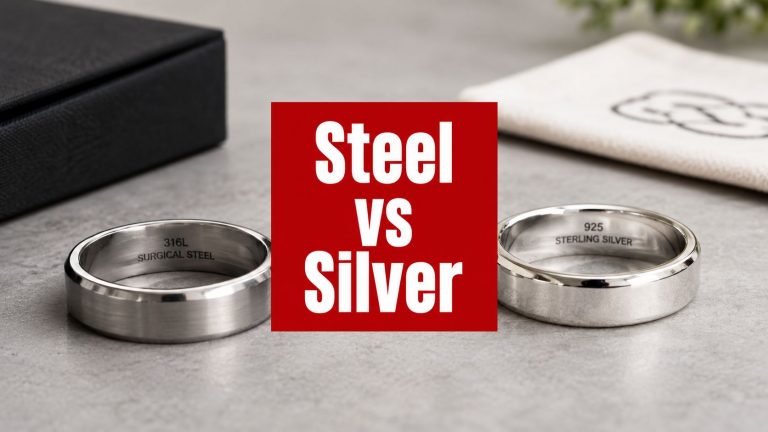
You’re pricing a new collection, and the sample tray is already split down the middle. The 316L surgical steel pieces look cleaner on cost and daily wear, the
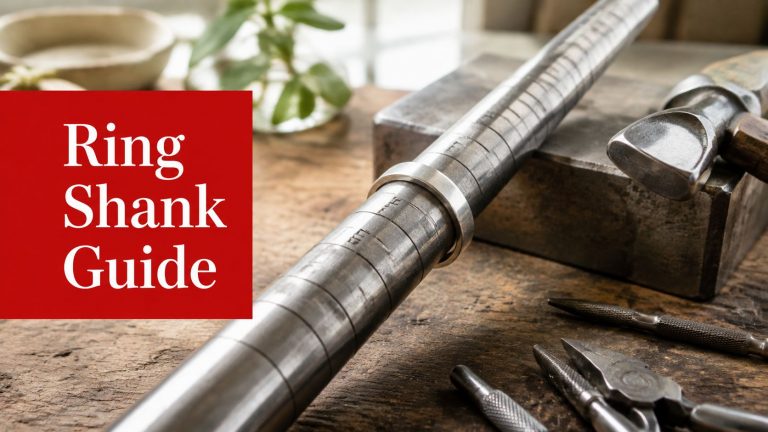
You’re refining a ring design, the stone looks right, the setting is approved, and the band still feels like a detail you can solve later. That’s where many
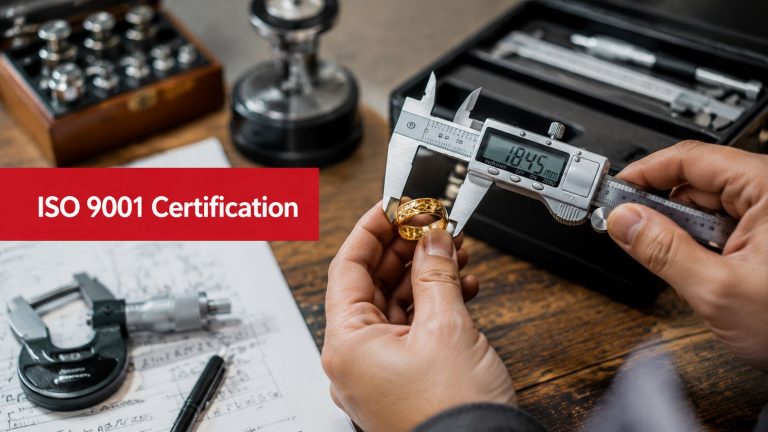
You’re comparing two factories and one sales rep keeps waving an ISO 9001 certificate like it settles everything. It doesn’t. The core question is simpler and more useful: