
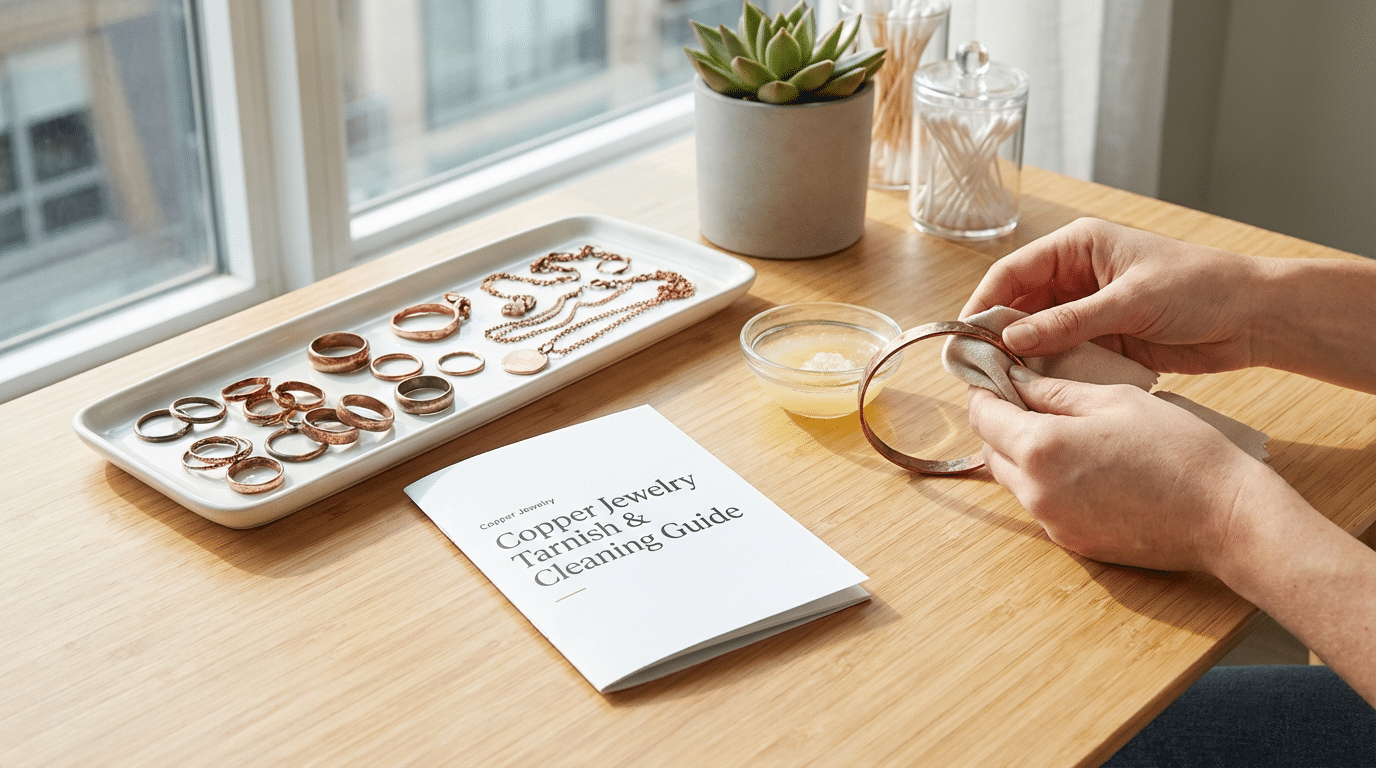
Why Copper Jewelry Tarnishes
Patina vs Real Damage
Copper always reacts with the air around it—that’s normal.
- Patina:
- Thin surface layer that darkens to brown, reddish, or soft green.
- This is oxidation, not “rotting metal.”
- Many people actually love this aged, antique look.
- Real damage:
- Deep pitting, flaking, or rough, crumbly areas.
- Corrosion that keeps eating into the metal, not just changing color.
- Usually caused by harsh chemicals, long-term sweat, or chlorine.
Tarnish itself is just a surface reaction. It’s not your ring “going bad”; it’s copper doing what copper does.
What Actually Causes Tarnish?
The main culprits that make copper turn black or green:
- Oxygen – reacts with copper and slowly darkens it.
- Moisture – water + oxygen = faster oxidation.
- Sweat – contains salt and acids that speed up tarnish and skin discoloration.
- Skin pH – if your skin is more acidic, copper will react quicker and turn darker.
The more often your copper ring touches air, water, and skin, the faster it will change color.
Everyday Products That Speed Up Tarnish
You don’t have to be in a lab to damage copper—your bathroom and kitchen will do it:
- Lotions, body oils, and sunscreen
- Perfume and body spray
- Hair products (spray, gel, mousse)
- Hand soap and dish soap with strong detergents
- Chlorine from pools and hot tubs
- Cleaning products with bleach, ammonia, or acids
If something is strong enough to strip grease or disinfect, it’s strong enough to push copper into overdrive tarnish mode.
Pure Copper vs Alloys vs Plated Copper
Not all “copper” rings behave the same:
- Solid / pure copper
- Will always tarnish and may turn skin green over time.
- Easy to clean and polish back to a mirror shine.
- Copper alloys (like brass or bronze)
- Mixed with other metals (zinc, tin, etc.).
- Still tarnish, but color and speed vary.
- Often a bit harder and more durable than pure copper.
- Copper-plated jewelry
- Thin copper layer over a base metal.
- Looks like copper but is more delicate.
- Aggressive cleaning can strip the copper layer off completely.
Knowing which type you have tells you how gentle you need to be when you clean it.
Why Some People’s Copper Rings Tarnish Faster
If your friend’s copper ring stays rosy and yours goes dark in a week, it’s not your imagination:
- Natural skin pH – more acidic skin = faster tarnish and more green marks.
- Body chemistry – hormones, medications, and diet can subtly change how your sweat reacts with metals.
- Lifestyle – frequent workouts, beach days, and hot climates mean more sweat and moisture.
- Product use – heavy perfume, lotions, or handwashing with the ring on will speed oxidation.
So no, you’re not “ruining” your ring. Your body chemistry and habits just mean your copper needs a bit more care—and the right cleaning method.
Does All Copper Jewelry Tarnish?
Solid Copper vs Copper-Plated Pieces
All copper jewelry tarnishes over time – but how it looks and how fast it happens depends on what you’re actually wearing.
- Solid copper rings
- Will darken, then can shift toward brown or green tones (patina).
- Easy to clean and polish back to a bright shine.
- Safe as long as you keep them clean and dry; they may leave a green mark on skin for some people.
- Copper-plated rings
- A thin layer of copper over another metal.
- Tarnish shows up more patchy once the plating starts to wear.
- Aggressive cleaning can strip the plating, exposing the base metal below.
If you want something that stays bright with less work, you may want to mix copper pieces with more stable metals like stainless steel or gold-plated styles, similar to what we do in our stainless steel jewelry collections.
What Is Lacquered or Coated Copper?
Some copper rings come with a clear protective coating (lacquer, resin, or clear varnish):
- Acts as a barrier between copper, air, and skin.
- Slows tarnish and helps prevent green skin marks.
- Needs gentle cleaning only – harsh scrubbing can cloud or peel the coating.
If your copper ring looks shiny and “glassy” out of the box and doesn’t react quickly to air or lemon/vinegar, it’s probably coated.
How to Tell If Your Ring Is Real Copper
Quick checks you can do at home:
- Color & weight
- Real copper: warm reddish-orange, not too light, not as heavy as gold.
- Magnet test
- Copper is not magnetic. If a magnet sticks strongly, it’s not solid copper.
- Rub test
- Rub the ring with your fingers: real copper can leave a slight metallic smell.
- Tarnish behavior
- Solid copper will slowly darken and may go green in spots if left uncleaned.
For high-value or wholesale orders, I always recommend confirming composition with the supplier or lab testing, especially if you’re branding pieces under your own line.
How HonHo Jewelry Copper & Rose-Gold Plated Pieces Age
For HonHo Jewelry pieces, the goal is beauty with low maintenance, not constant polishing.
- HonHo copper-based rings
- We use quality copper alloys designed for jewelry, then apply protective finishes on select pieces to reduce fast tarnish and skin discoloration.
- With normal care (keeping them dry, wiping after wear), they age into a softer, warmer tone instead of turning patchy.
- Rose-gold plated copper rings
- These have a rose gold plating over a copper or copper-alloy core.
- The rose gold layer is more stable than bare copper and resists tarnish for longer.
- Over time, heavy wear can slowly reveal the warmer copper tone underneath, which actually keeps the color shift looking natural rather than harsh.
- If you’re a rose gold fan, it’s worth checking our dedicated guide on rose gold jewelry for deeper care tips.
In short: yes, all copper will tarnish, but with smart design, coatings, and decent care, you control whether that looks like a stylish soft patina or a ring you’re constantly fighting to keep shiny.
How to Clean a Copper Ring at Home

What to Check Before You Start Cleaning
Before you grab any cleaner, quickly check:
- Metal type: Is it solid copper, copper-plated, or copper mixed with other metals like brass? Plated pieces need gentler methods. (If you also wear brass, my guide on choosing a good brass jewelry manufacturer can help you compare how different metals age.)
- Stones & extras: Look for glued stones, crystals, enamel, or resin. Harsh acids and long soaks can loosen glue or cloud soft stones.
- Coating: If the ring looks extra shiny or “glassy,” it may be lacquered or coated. In that case, stick to mild soap and water only.
- Damage: Skip DIY deep cleaning on cracked, bent, or heavily pitted rings. Those should go to a pro.
Safety Basics (So You Don’t Scratch or Strip the Ring)
To protect the ring and your skin:
- Use only soft cloths (microfiber, old t‑shirt) and soft-bristle brushes. No steel wool, no rough sponges.
- Avoid strong abrasives on plated rings – they can strip the copper or rose-gold plating.
- Don’t soak for too long in acidic mixes (lemon, vinegar, ketchup). Short contact + fast rinse is safer.
- Rinse with lukewarm water, dry completely, and buff gently. Water left in gaps is what starts new tarnish fast.
How Often to Clean Copper Jewelry
How often you clean depends on how you wear it:
- Daily wear (rings that touch sweat and soap): quick wipe after wearing, deeper clean every 2–4 weeks.
- Occasional wear: a light clean and polish every few months is enough.
- Stored long-term: clean, dry, polish lightly, then store in anti-tarnish bags or airtight containers so you’re not re-cleaning every time you want to wear it.
In short: clean copper rings only as often as needed to remove visible tarnish or skin oils. Over-cleaning with harsh methods does more harm than good.
Lemon Juice and Salt Method (How to Clean a Copper Ring)
Why Lemon and Salt Work on Tarnish
Lemon juice is naturally acidic, and salt is a gentle abrasive.
Together they:
- Dissolve copper oxides (the dark/green tarnish)
- Lift surface grime without harsh chemicals
- Give you a fast, natural copper ring cleaning method you can do at home
Step-by-Step: How to Clean a Copper Ring with Lemon and Salt
- Mix your cleaner
- Squeeze fresh lemon juice into a small bowl
- Add regular table salt, about 1:1 ratio (equal parts)
- Stir into a loose paste or thin slurry
- Prep the ring
- Wipe off dust or grit with a soft cloth
- If there are stones or plating, try this on a tiny hidden spot first
- Apply the mixture
- Dip a soft cloth or cotton pad into the lemon–salt mix
- Gently rub over the copper surface in small circles
- Avoid heavy pressure to prevent scratches
How Long to Leave Lemon and Salt On Copper
- For most rings: 30 seconds to 2 minutes is enough
- Watch the metal: once it brightens, stop and rinse
- Don’t walk away and leave it soaking – acid + salt can overdo it
Rinse, Dry, and Buff for a Shine
- Rinse under cool running water until all residue is gone
- Pat dry with a soft, lint-free cloth
- Buff with a microfiber or jewelry polishing cloth to bring out a mirror shine
If you’re into metals and finishes, you’ll notice similar care patterns in pieces like high-quality silver marked “925 Italy,” which we’ve broken down in detail in our guide to what 925 Italy means on silver jewelry.
When You Should NOT Use This Method
Skip or be very cautious with lemon and salt if:
- The ring is copper-plated (you could strip the thin layer)
- The copper has a clear coating, lacquer, or resin you want to keep
- The ring has soft or porous stones (pearls, opals, turquoise, etc.)
- You want to preserve the natural patina and don’t want a bright, shiny finish
In those cases, go for milder options like soap and warm water or a gentle commercial copper cleaner labeled safe for plated or coated jewelry.
Ketchup to Clean a Copper Ring
Ketchup is an easy, natural copper cleaner you already have in your kitchen. It works well when you want to quickly remove tarnish from a copper ring without harsh chemicals.
How ketchup removes tarnish from copper
Ketchup cleans copper because:
- The weak acids in tomatoes and vinegar help dissolve light oxidation.
- A small amount of salt in ketchup boosts the cleaning effect.
- Its thick texture clings to the ring, so it can work on the surface evenly.
It’s basically a gentle, food-based way to lift that dull, dark layer from your copper jewelry.
Best way to apply ketchup to a copper ring
Use ketchup on solid copper or uncoated copper rings with light to moderate tarnish:
- Prep the ring
- Wipe off dust, lotion, or oils with a soft cloth.
- Make sure there are no loose stones or flaking plating.
- Apply the ketchup
- Squeeze a small amount of ketchup into a bowl.
- Use your fingers or a soft cloth to spread a thin, even layer over the copper.
- For grooves and patterns, use a soft toothbrush and very light pressure.
- Cover all tarnished areas
- Focus on the inside of the band, where skin oils and sweat often darken copper faster.
- Avoid rubbing hard—ketchup cleans chemically, not by abrasion.
Timing, rinsing, and drying steps
To avoid residue and stickiness, timing and rinsing matter:
- Leave on time:
- Normal tarnish: 5–10 minutes
- Heavier tarnish: up to 15 minutes, checking every few minutes
- Rinse thoroughly:
- Rinse under lukewarm running water, gently rubbing with your fingers to remove all ketchup.
- Dry completely:
- Pat dry with a soft, lint‑free cloth.
- Buff in small circles to bring back shine.
- Make sure the ring is fully dry before wearing or storing to avoid fresh oxidation.
Pros and cons of using ketchup to clean copper
Pros:
- Easy and cheap – you almost always have ketchup at home.
- Gentle, food-safe ingredients – no harsh chemical smell.
- Works well for light tarnish and quick touch‑ups.
- Good option when you don’t have a commercial copper cleaner or polishing kit handy.
Cons:
- Not ideal for heavy, stubborn tarnish or thick green oxidation.
- Can feel sticky and messy, especially around stones or detailed designs.
- Not recommended for plated copper rings (like thin rose gold plating) because repeated acidic treatments may weaken or dull the plating.
- If ketchup dries on the ring or gets trapped in tiny gaps, it can leave residue and even attract dirt.
If you want a more professional, long‑term shine solution beyond home methods like ketchup, it’s worth looking
Baking Soda and Vinegar Paste: How to Clean a Copper Ring Safely

Using a baking soda and vinegar paste is one of the easiest natural copper cleaner methods when you want control and don’t want to soak your ring.
Mix the Right Paste Consistency
To remove tarnish from copper jewelry without damaging it, I stick to this ratio:
- 2 parts baking soda
- 1 part white vinegar
- Add vinegar slowly into the baking soda until it forms a thick, spreadable paste (like toothpaste, not runny)
If it fizzes a lot, wait a few seconds for the bubbles to calm down, then adjust with a bit more baking soda if needed.
Apply the Paste Without Scratching
You never want to grind the baking soda into the metal:
- Use your fingertip or a very soft cloth (microfiber is best)
- Dot the paste over the ring, then gently rub in small circles
- Avoid scrubbing hard, especially on copper-plated or rose gold plated copper rings, so you don’t cut through the plating
How Long to Let It Sit
For most pieces:
- Leave the paste on for 3–5 minutes for light to moderate tarnish
- For stubborn dark spots, you can carefully extend to up to 10 minutes, checking every few minutes
If your ring is plated or has stones, keep it closer to 3 minutes.
Safe Rinsing and Polishing
Once the tarnish loosens:
- Rinse under lukewarm running water until all paste is gone
- Pat dry with a soft, lint-free cloth (no paper towels)
- Finish by buffing with a clean microfiber or polishing cloth to bring back the shine
Make sure there’s no paste left in crevices—residue can dull the finish.
When This Method Works Best
I use the baking soda and vinegar copper cleaner method when:
- The ring is solid copper or thick copper alloy, not ultra-thin plating
- Tarnish is even, dark, or patchy, but not extreme verdigris buildup
- I want a controlled clean instead of a full soak
- I’m avoiding harsher commercial copper cleaners on more delicate or custom-made designs
For wholesale or custom designs where material and plating thickness matter, I always test cleaning methods on a small area first—the same principle we use when developing finishes as a wholesale custom jewelry manufacturer.
White Vinegar and Salt Soak (How to Clean a Copper Ring Safely)
A white vinegar and salt soak is one of the easiest ways to remove tarnish from a copper ring without harsh chemicals.
Correct vinegar and salt ratio
Keep it simple:
- 1 cup (240 ml) white vinegar
- 1 tablespoon fine salt
Stir until the salt fully dissolves. This mix is strong enough to remove tarnish, but not so strong that it instantly attacks the metal.
How to soak a copper ring safely
- Make sure the ring is plain copper (no soft stones, pearls, or glued crystals).
- Place the ring in a glass or ceramic bowl, not metal.
- Pour in the vinegar–salt mix until the ring is fully covered.
- Soak for 5–15 minutes, checking every few minutes. Don’t walk away for an hour; over‑soaking can dull the finish, especially on thin or plated pieces.
How to scrub gently after soaking
Once the tarnish has loosened:
- Use a soft toothbrush or a soft cloth.
- Gently scrub in small circles, focusing on crevices and under the band.
- If you see red, clean copper showing and the tarnish is gone, stop scrubbing. More pressure just means more scratching.
Rinsing, drying, and polishing tips
- Rinse the ring under cool running water to remove all vinegar and salt.
- Pat dry with a lint‑free cloth; don’t air dry or you’ll get water spots.
- Finish with a microfiber polishing cloth to bring back shine.
- For a stronger mirror finish, you can follow with a dedicated jewelry polishing cloth, like the ones many fashion jewelry manufacturers use for mixed-metal pieces (similar to what we recommend for clients who buy from our wholesale fashion jewelry collections).
Use this soak when you want a quick, even clean on solid copper or durable copper alloys. For coated or rose‑gold plated copper, I’d go with milder methods first to avoid lifting any protective layer.
Tamarind or Worcestershire Sauce: Gentle Natural Copper Cleaners
Tamarind and Worcestershire sauce both clean copper because they’re mildly acidic. The natural acids dissolve light oxidation and tarnish on the surface of the metal without being as harsh as strong chemical cleaners.
How to Use Tamarind Paste on a Copper Ring
Tamarind works well as a natural copper cleaner for light to medium tarnish:
- Mix tamarind paste with a little warm water to make a thick, spreadable paste.
- Apply a thin layer over the ring with your fingers or a soft cloth.
- Gently rub in small circles for 30–60 seconds. Don’t scrub hard.
- Rinse thoroughly with warm water until it’s no longer sticky.
- Dry completely with a soft microfiber cloth, then buff to bring back the shine.
How to Clean Copper with Worcestershire Sauce
Worcestershire sauce has vinegar and tamarind, so it can also remove tarnish from copper jewelry:
- Pour a small amount into a glass bowl.
- Dip the ring in or apply with a soft cloth or cotton pad.
- Let it sit for 2–5 minutes, checking often so it doesn’t over-clean or affect any plating.
- Rinse very well with warm soapy water to remove any residue and smell.
- Dry and buff with a clean, soft cloth.
Best Pieces for This Gentle Method
This method is best for:
- Solid copper rings with light tarnish or dullness
- Non-plated copper where you don’t risk stripping a thin finish
- Pieces where you want a mild, food-based cleaner instead of harsh chemicals
I don’t recommend these food cleaners for delicate plated jewelry or pieces with glued stones, as soaking and acids can loosen adhesives or wear down thin plating. For plated or mixed-metal designs, I rely more on gentle polishing and the same care principles I use across our own lines, similar to how we approach durability in our gold-plated jewelry care and tarnish guide.
Commercial Copper Cleaners for Rings
Sometimes home remedies aren’t enough. That’s when a commercial copper cleaner makes sense.
When to use a store‑bought copper cleaner
Use a branded cleaner (like Brasso, Bar Keepers Friend, etc.) when:
- Tarnish is heavy, dark, or uneven
- You want a fast, mirror‑like shine
- You’re cleaning multiple copper rings or jewelry pieces at once
For bulk or branded jewelry lines, we often recommend commercial cleaners to our wholesale partners, similar to how we standardize finishes in our own OEM jewelry manufacturing projects.
How to use Brasso, Bar Keepers Friend & similar products
Basic steps (always follow the label on your specific product):
- Test first on a tiny hidden spot.
- Put a small amount on a soft cloth, not directly on the ring.
- Rub gently in small circles, focusing on tarnished areas.
- Rinse quickly with lukewarm water if the product requires it.
- Dry completely with a microfiber cloth and lightly buff.
Protecting plated and coated rings
If your ring is copper-plated, rose-gold plated, or lacquered:
- Read the label carefully – if it says “not for plated jewelry,” don’t use it.
- Avoid powders or creams with abrasive grit – they can strip thin plating fast.
- Keep contact short – never soak plated rings in strong cleaners.
Safety tips & aftercare
- Wear gloves if you have sensitive skin.
- Use cleaners in a ventilated area and keep them away from kids and pets.
- Never mix different cleaning products.
- After cleaning, rinse (if directed), dry fully, then:
- Buff with a soft cloth
- Optionally add a protective wax or coating later to slow future tarnish
For brands or retailers working directly with jewelry manufacturers in China, we usually suggest aligning your cleaning guidelines with your finishing process so your customers don’t accidentally damage plated or coated copper rings.
Soap and Warm Water Clean for Copper Rings
When Mild Soap Is All You Need
If your copper ring is only lightly tarnished or has a clear coating/lacquer, start with the gentlest method first:
- Mild dish soap + warm (not hot) water
- Soft cloth or very soft toothbrush
- Clean, lint‑free towel or microfiber cloth
This is usually enough to remove sweat, oils, lotion, and light dirt without touching the metal too aggressively.
How to Clean Lightly Tarnished or Coated Copper Rings
- Mix a tiny amount of mild soap into a bowl of warm water.
- Dip the ring, let it soak for 1–2 minutes (no long soaking for plated or coated rings).
- Use your fingers or a soft brush to gently clean around stones, crevices, and the inner band.
- Don’t scrub hard—especially on plated or lacquered copper—or you’ll speed up wear.
This method is ideal if you wear your ring daily and want easy copper jewelry maintenance without harsh cleaners.
Drying and Buffing Without Water Spots
To avoid water spots and dullness:
- Rinse under clean lukewarm water until all soap is gone.
- Pat dry with a soft towel—never rub aggressively.
- Finish with a clean microfiber or jewelry polishing cloth to buff lightly and bring back shine.
Always dry copper completely; leaving moisture on the metal encourages oxidation and tarnish.
How to Avoid Stripping Protective Coatings
If your ring is lacquered, coated, or rose-gold plated over copper (like many pieces we produce):
- Skip harsh soaps, degreasers, alcohol, and bleach.
- No abrasive cloths (no paper towels, no scrubbing pads).
- Limit soak time to a couple of minutes—quick clean, quick dry.
- For stubborn dirt, clean more often with gentle soap rather than using a stronger product once.
If you’re designing or sourcing coated copper pieces for your own brand, pairing proper cleaning instructions with your product pages (like we do for our clients in our custom jewelry manufacturing services) helps customers keep that finish looking new for longer.
How to Polish a Copper Ring
Polishing with a Soft Microfiber Cloth
If your copper ring is already clean and just looks a bit dull, a simple microfiber cloth is often enough.
- Use a dry, lint‑free microfiber or jewelry cloth
- Wipe in small circles, not back-and-forth scratches
- Focus on the high points and edges – that’s where shine shows the most
This is the safest way to keep a mirror shine copper finish without wearing the metal down.
Flour, Salt, and Vinegar Polishing Paste
For a deeper polish using a natural copper cleaner, you can mix a quick paste:
- 1 part salt
- 1 part flour
- Enough white vinegar to make a smooth, spreadable paste
How to use it:
- Apply a thin layer to the copper ring with your fingers or a soft cloth
- Let it sit for 5–10 minutes (not longer on plated copper)
- Rinse with lukewarm water, then dry fully
- Buff with a clean microfiber cloth until it shines
This homemade copper polish works well on solid copper and lightly tarnished pieces. Avoid scrubbing hard so you don’t scratch or thin plating.
Using a Sunshine Polishing Cloth
A sunshine polishing cloth (impregnated with gentle polishing compounds) is great when you want fast, bright results without liquids.
- Use the yellow side (or treated side) to polish
- Rub in light, even strokes, following the curve of the ring
- Finish with a clean part of the cloth to remove any residue
These cloths are ideal for regular copper jewelry maintenance and for pieces with coatings, as they’re mild but effective.
How Much Pressure to Use
Pressure matters more than most people think. Too much pressure = scratches.
- Start with very light pressure, like wiping glasses
- Let the polish or treated cloth do the work, not your strength
- If you see the shine coming back, you’re using enough pressure
- On plated or lacquered copper, always polish more gently than you think you need
When we design and polish our own copper and copper‑plated collections at HonHo, we follow the same rule: light, controlled pressure, repeated passes, not aggressive scrubbing. For brands or retailers that need consistent finishing on bulk orders, we handle this professionally through our own OEM jewelry production services so every piece keeps its clean, even shine.
How to Keep Copper Rings from Tarnishing
If you want your copper ring to stay bright and not turn your skin green, daily habits matter more than any cleaner.
Daily habits that slow tarnish
Use these simple rules:
- Put your ring on last, take it off first
- Last: after skincare, makeup, lotion, sunscreen, perfume.
- First off: before washing hands, showering, swimming, or working out.
- Avoid long contact with moisture
- Take your copper ring off for:
- Handwashing, dishes, cleaning
- Showers and baths
- Swimming (pools, hot tubs, ocean)
- Dry your hands fully before putting it back on.
- Take your copper ring off for:
- Keep it away from chemicals
- Remove your ring when using:
- Cleaning sprays and bleach
- Chlorine (pools), hair dye, self-tanner
- Strong skincare acids (AHA/BHA, retinol)
- Remove your ring when using:
- Limit sweat exposure
- Take off your copper ring before:
- Gym sessions, running, cycling
- Saunas, hot yoga, or anything that makes you sweat a lot
- Take off your copper ring before:
Products that speed up copper tarnish
Try not to get these on your ring:
- Lotions and hand creams
- Perfume and body sprays
- Sunscreen
- Hair products (spray, gel, dry shampoo)
- Hand sanitizers (alcohol + additives)
If any of these get on your ring, rinse it quickly with lukewarm water, pat dry, and buff with a soft cloth.
How often to wipe down your copper ring
A quick wipe makes a huge difference:
- After every wear (ideal):
- Use a soft, dry microfiber or jewelry cloth
- Gently wipe inside and outside to remove sweat, oil, and product residue
- If you wear it daily:
- Wipe it at least once a day, ideally at night before you store it
- Give it a slightly deeper clean (mild soap and warm water) about once every 1–2 weeks, unless you see heavy tarnish sooner
Regular wiping helps keep that “fresh polish” look longer and slows down oxidation, especially on rose-gold plated copper and PVD-coated pieces—similar to how we protect finishes on fine jewelry basics in general.
Rule of thumb: if your hands got sweaty, sticky, or covered in products, your copper ring needs a quick cloth wipe before bed.
Best Way to Store Copper Jewelry
Storing copper right is half the battle if you want to keep it from tarnishing and turning dull.
Anti-tarnish bags and pouches
Use anti-tarnish bags or soft pouches for all copper rings and bracelets. They:
- Block air and moisture (the main causes of tarnish)
- Reduce scratches from rubbing against other pieces
- Are ideal for everyday storage in a drawer or jewelry box
If you’re building a core jewelry collection, the same storage rules apply as when you’re learning how to buy jewelry that lasts: protect it from air, friction, and chemicals.
Silica gel and airtight containers
For humid climates or bathrooms:
- Store copper jewelry in airtight containers (small plastic boxes or glass jars with lids)
- Add silica gel packets to absorb moisture
- Avoid storing in the open, on trays, or in the bathroom where steam speeds up tarnish
How to store copper rings when you travel
When you’re on the move:
- Use individual soft pouches or a travel jewelry case with separate slots
- Keep copper away from shampoo, perfume, and sunscreen in your bag
- Don’t toss rings loose in a makeup bag or pocket — they’ll scratch and tarnish faster
Separate copper from other metals and stones
Always separate copper from harder metals and gemstones:
- Store each copper ring alone or in its own pouch
- Keep copper away from silver, stainless steel, and sharp-edged stones
- For mixed-metal pieces (like copper with rose gold plate), treat them gently and store them like you would gold-plated jewelry to avoid premature wear — similar to what we recommend in our guide on how to clean gold-plated jewelry.
Done right, simple storage habits will slow down tarnish, protect the finish, and keep your copper rings looking bright much longer.
Coatings to Protect Copper Rings
Clear Nail Polish on Copper Rings
A quick DIY way to protect a copper ring is clear nail polish on the inside of the band.
- Apply a thin, even layer only on the inner surface that touches your skin.
- Let it dry fully before wearing (at least 30–60 minutes).
- Reapply every few weeks as it wears off.
This helps reduce green skin marks and slows tarnish where sweat and skin oils hit hardest.
Pros and Cons of Nail Polish as a Barrier
Pros:
- Cheap and easy to find
- Fast to apply at home
- Good short-term fix to protect skin and copper
Cons:
- Can chip and peel, especially in water
- Needs regular touch-ups
- If applied too thick or on stones, it can look cloudy or messy
I treat nail polish as a temporary hack, not a long-term professional solution.
Renaissance Wax and ProtectaClear
For a longer-lasting barrier, I prefer museum-grade or jewelry-grade coatings:
- Renaissance Wax
- Microcrystalline wax used by museums
- Thin coat buffed on with a soft cloth
- Keeps the warm copper look while reducing tarnish and fingerprints
- Ideal for pieces you still want to age slowly and naturally
- ProtectaClear
- Clear, hard protective coating made for metals
- More durable than nail polish
- Better for pieces worn often, like rings and bracelets
- Needs careful, clean application and good ventilation
Both are safer long-term options than constant aggressive polishing, which can wear down copper or plating.
How HonHo Jewelry Uses Protective Coatings
For HonHo Jewelry designs, I build protection in from the start wherever it makes sense:
- Many copper and rose gold plated pieces get a professional clear coating to slow tarnish and keep the color stable.
- On select styles, especially rings that touch skin all day, we use durable protective layers instead of just raw copper, so they’re more comfortable and lower-maintenance for everyday wear.
If you’re planning a full custom run or a line that needs specific coatings, I usually recommend handling this during production through our custom jewelry manufacturing services so the barrier is even, durable, and made to last.
When to Keep the Natural Patina on a Copper Ring

What patina and verdigris really are
Copper naturally reacts with air, sweat, and moisture, forming a surface layer called patina.
- Brown / warm darkening = normal patina, a protective oxidation layer
- Green / blue patches (verdigris) = stronger oxidation, especially in damp, salty, or sweaty conditions
Patina is mostly cosmetic. Verdigris can rub off on skin and fabrics and may irritate very sensitive skin.
When patina is safe (and when it’s not)
It’s usually safe to keep patina when:
- The ring is evenly darkened, not powdery or flaky
- There’s no strong metallic or musty smell on your skin
- Your skin isn’t itchy, red, or irritated
You should clean more aggressively when:
- The green build‑up is chalky, powdery, or rubs off easily
- The ring leaves heavy green marks even after a light wipe
- You notice any skin irritation where the ring touches
If in doubt, do a quick mild soap-and-water clean and see how your skin reacts.
How to encourage an even aged look
If you like that vintage, aged copper style, you can guide the patina instead of stripping it:
- Wear it regularly – natural oils help create a smooth, even tone
- Avoid harsh chemicals – no bleach, pool water, or strong cleaners
- Wipe it lightly with a soft dry cloth after wearing to remove sweat and oils
- Store it dry and separate so the patina develops on copper, not from other metals rubbing
The goal is slow, even darkening, not patchy green build‑up.
How to clean without removing the patina you love
You don’t need a deep clean every time. To keep your favorite patina:
- Use mild soap and warm water only, no lemon, vinegar, or strong acids
- Gently clean just the inner band and high-contact areas (the parts touching your skin)
- Use a soft cloth, not a brush or rough sponge
- Pat dry, then lightly buff to remove fingerprints without over-polishing
If you’re wearing plated or coated copper from a professional jewelry factory, like the styles we develop alongside our other fashion jewelry lines, stick to the mild methods only. Strong homemade acids can strip both patina and protective coatings in one go.
Copper Ring FAQs
Can you clean copper jewelry with toothpaste?
I don’t recommend it. Most toothpaste is mildly abrasive, so it can:
- Leave tiny scratches on polished copper
- Make shiny finishes look dull over time
- Damage softer stones or coatings near the metal
If you want a “quick grab from the kitchen” option, use lemon and salt, baking soda and vinegar, or a soft cloth with mild soap instead. Those are safer, more predictable ways to clean a copper ring.
Is tarnished copper bad for your skin?
Normal copper tarnish (dark brown or slightly black) is usually not harmful, but it can:
- Rub off and stain your skin green or brown
- Irritate sensitive skin if you already react to metals
- Trap sweat and dirt if you never clean it
Green buildup (verdigris) around crevices can be a mix of copper salts, sweat, lotions, and dirt – that’s what you don’t want sitting against your skin for long. If you have very sensitive skin or allergies, stick to coated copper or hypoallergenic bases and keep the ring clean.
How long does a cleaned copper ring stay shiny?
That depends on how you wear and store it:
- Daily wear + water + sweat: a few days to a week before you see dulling
- Careful wear (remove for shower, gym, cleaning): 1–3 weeks of good shine
- Clean, dry storage in anti-tarnish packaging: several weeks or more
If you want a longer mirror-like shine, clean it, dry it well, then seal it with Renaissance Wax or a clear protective coating like ProtectaClear. That slows down oxidation and keeps the finish bright.
Does rose gold plated copper tarnish?
Yes, but differently from raw copper:
- The rose gold plating itself is more resistant to tarnish than bare copper
- Over time and heavy wear, the plating may thin or wear off, especially on the underside of a ring
- When that happens, the copper base can darken or turn green, and may discolor your skin
With quality plating and a good base (like what we use for our rose gold–plated pieces), plus normal care (no harsh chemicals, no constant water), most customers get long-term, slow, even wear rather than quick, patchy tarnish. If you want a deeper dive into plated options in general, I’ve broken down durability and structure in our guide to gold-filled vs vermeil jewelry.
Can you use Coca‑Cola to clean copper?
Technically yes, but I don’t recommend it as a main method.
- The phosphoric and carbonic acids in Coke can dissolve light tarnish
- It’s messy, sticky, adds sugar residue, and can sneak into crevices
- Long soaks can risk uneven color or affect any adhesives or coatings
If you try it in a pinch:
- Use a short soak (a few minutes only)
- Rinse thoroughly with warm water
- Dry and buff completely
But honestly, white vinegar and salt, lemon and salt, or a proper commercial copper cleaner are cleaner, safer, and more controllable.
Will clear nail polish stop tarnish forever?
No. Clear nail polish is a temporary barrier, not a permanent solution.
Pros:
- Helps reduce skin discoloration (green fingers)
- Slows tarnish on the skin-contact side of a ring
- Cheap and easy to reapply
Cons:
- It chips and wears off, especially on the underside of rings
- Can look cloudy or uneven if layered too much
- Won’t protect outer surfaces that rub against objects
Think of clear nail polish as a short-term fix, not a lifetime coating. For a more durable, professional barrier on copper jewelry, I prefer proper metal sealants (like ProtectaClear) or factory-applied lacquers that we use on select styles.
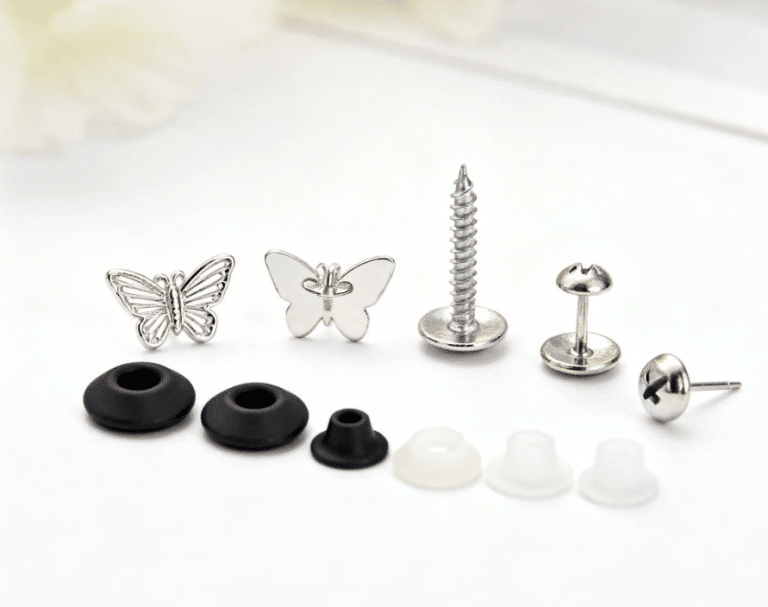
The Unseen Hero: Why Earring Backings Define Quality Jewelry
Every jewelry brand owner knows the sinking feeling. A customer calls, distraught. They’ve lost one
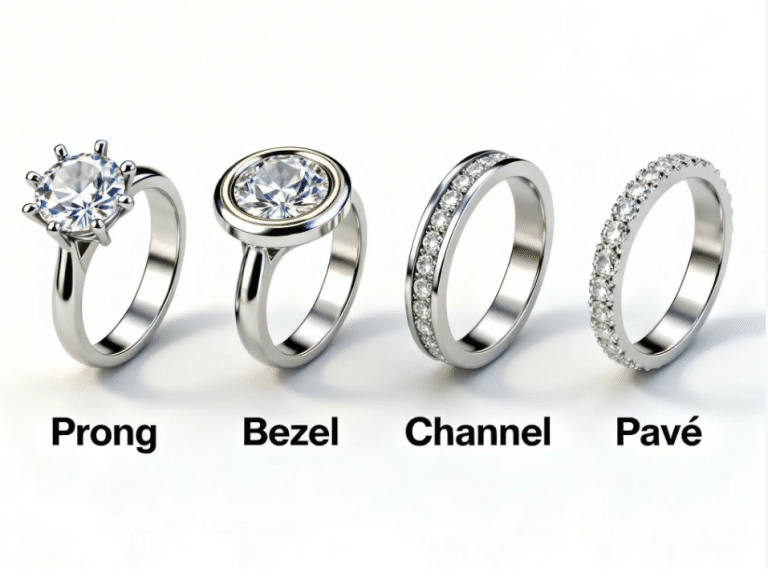
Choosing the Best Jewelry Stone Setting for Mass Production
Selecting the right jewelry stone setting is one of the most pivotal decisions for any
Best Jewelry Stone Setting for Mass Production | HonHo
Choosing the best jewelry stone setting Choosing the best jewelry stone setting is one of