
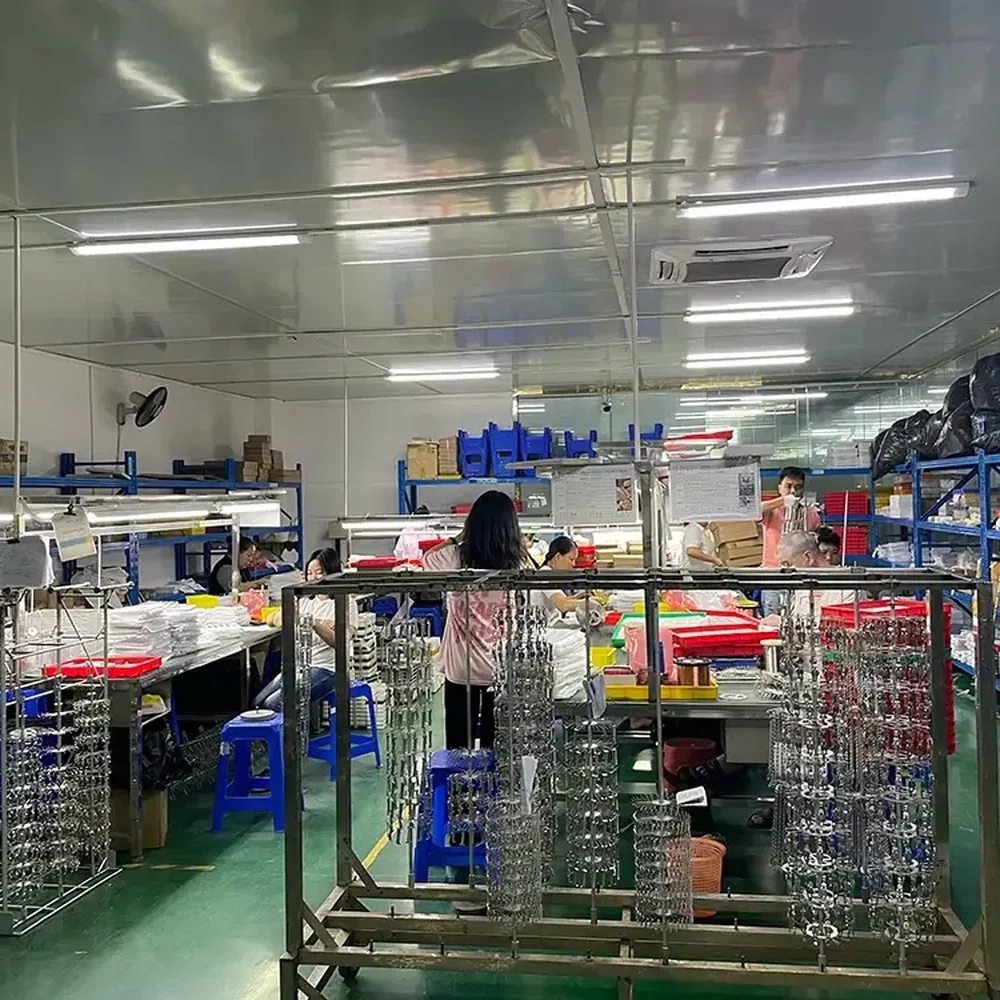
To assess a custom jewelry manufacturer in China, verify the business you will contract with, understand where the work is performed and approve a finished sample against a written specification. A location, factory photograph or polished sales presentation cannot establish those points on its own.
Ask for the supplier’s registered name, business identification, operating address and the entity that will issue the quotation and invoice. Compare those details across the documents. If a trading company contracts the order while another business produces it, ask who controls quality, changes and after-sales decisions.
A business license is an identity record, not a product-quality audit. A manufacturing entry in its scope does not prove that every proposed process is performed on site. Likewise, a trading business can have technical expertise and an effective supplier network. Evaluate the actual responsibilities instead of assuming the business category settles quality.
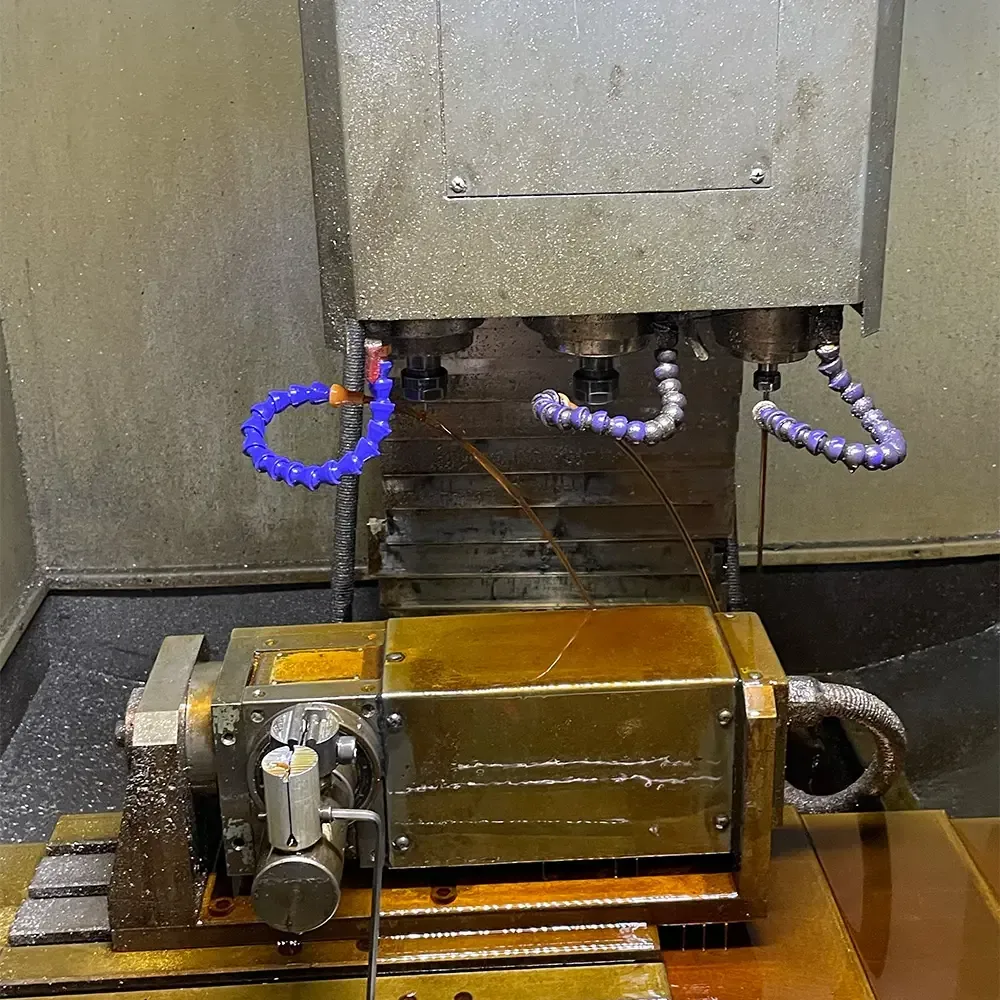
A live walkthrough can help explain a process, but it is not an independent audit. Respect other customers’ confidential work. A refusal to show proprietary designs is different from refusing to explain who will make your order. For higher-assurance projects, agree an appropriate independent assessment rather than drawing a conclusion from a short video.
For a cast design, ask about pattern material, investment compatibility, casting and cleanup. Printed resin and wax workflows can both be appropriate; neither a printer acronym nor a claim of “zero defects” settles the finished result. Formlabs describes a digital pattern-to-casting workflow that can help frame the discussion. Inspect the metal sample for the actual result.
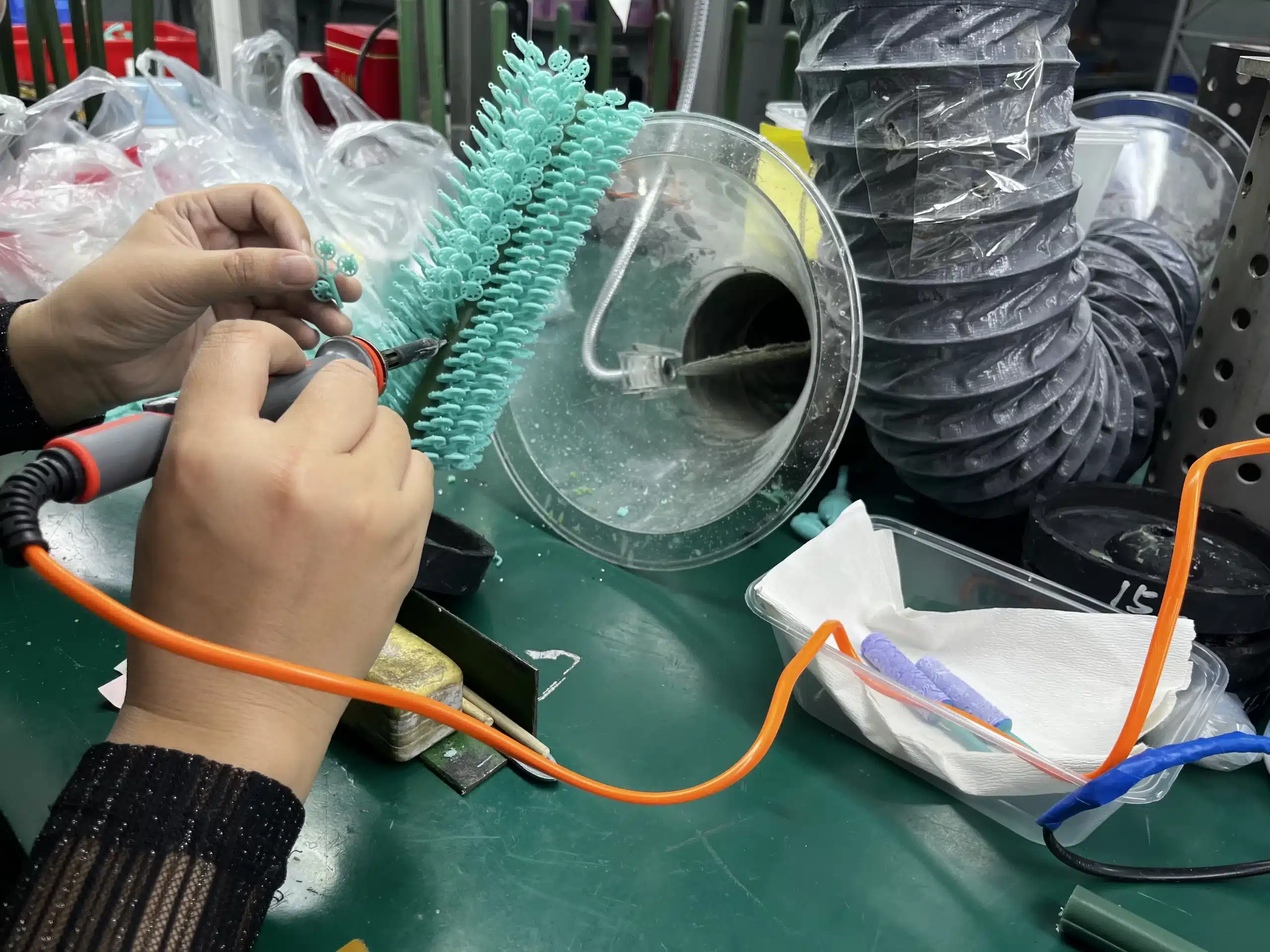
For a fabricated or machined design, ask which dimensions control fit and how joining and finishing affect them. A polished rendering can hide an inaccessible setting or an uncomfortable edge. Use the ring development guide for an example of checking dimensions after the planned finish.
Specify substrate, surface preparation, coating layers, color reference and relevant tests. PVD is not electroplating, and neither process name guarantees superior results for every design. A coating may look consistent on the display face while missing a recess or restricting a moving part. Review the finish and layer checklist with the sample.
Ask for reports that identify the actual sample, method, results and relevant components. Confirm current requirements with an appropriate laboratory for the intended market. A lab logo or report for another design is not evidence that your finished order meets those requirements.
A buyer comparing Guangzhou and Yiwu suppliers received very different prices even though both described the material as 316 stainless steel. The useful question is what each offer contains. A city name cannot establish the grade, workmanship or quality of an individual factory.
Send both suppliers the same drawing revision and ask for finished dimensions, weight, construction, coating, findings, packaging and quantities. Then compare the sample charges, inspection scope and delivery basis. A material grade is only one part of that comparison; it does not identify the amount of metal, the finishing work or the assembly.
Ask each supplier to identify assumptions instead of explaining the difference through regional stereotypes. Where material identity needs verification, agree appropriate evidence for the actual component and grade. A short wear trial can reveal a practical problem, but it cannot authenticate an alloy or prove long-term durability.
HonHo can arrange discussions about production and electroplating workshop visits. Send an agenda tied to your project: the difficult geometry, coating route, component matching, inspection and handover to packing. Confirm the visit arrangements and which operations can be shown before traveling.
Bring the current drawing and sample reference. Ask who approves a changed finding or finish and how that decision reaches the people making the order. If a stage is performed elsewhere, ask how the work is identified and checked when it returns. A useful visit connects the agreed product to its actual production route; it does not replace finished-sample approval or the order’s inspection plan.
Choose one representative design and ask the supplier to explain its route in order. For a cast pendant, follow pattern production, casting, cleanup, joining, coating and packing. For a steel ring, ask which forming or machining operations are proposed and when sizing and finishing are checked. The discussion should reveal who controls each stage and who can resolve a technical question.
| Evidence requested | What to compare | Useful follow-up |
|---|---|---|
| Project-specific process explanation | Drawing features against the proposed operations | How will the difficult detail be made and inspected? |
| Current representative samples | Material, geometry and finish relevant to the project | Which details differ from our proposed design? |
| Applicable report or certificate | Entity, sample, method, scope and validity | Does it address the claim we plan to make? |
| Change-control example | How an altered component reaches approval | Who stops an unapproved substitution? |
| Inspection and defect process | Agreed standard, records and correction responsibility | What happens when a lot fails a named requirement? |
Ask for evidence relevant to your order without requesting another customer’s confidential drawings or private commercial records. A supplier can explain its controls and demonstrate an authorized sample without disclosing someone else’s product development.
A first sample can reveal issues that need correction. Judge the supplier’s response as well as the sample: does it identify the affected dimension, explain the proposed correction and issue a revised version? A precise revision process is more useful than repeated assurances that the next sample will be better.
Keep an issue list with a photograph, location, required change and revision status. Separate cosmetic preferences from functional or specification failures. If a change affects a stone, clasp, material or coating, decide whether the related evidence and schedule need updating before accepting the new sample.
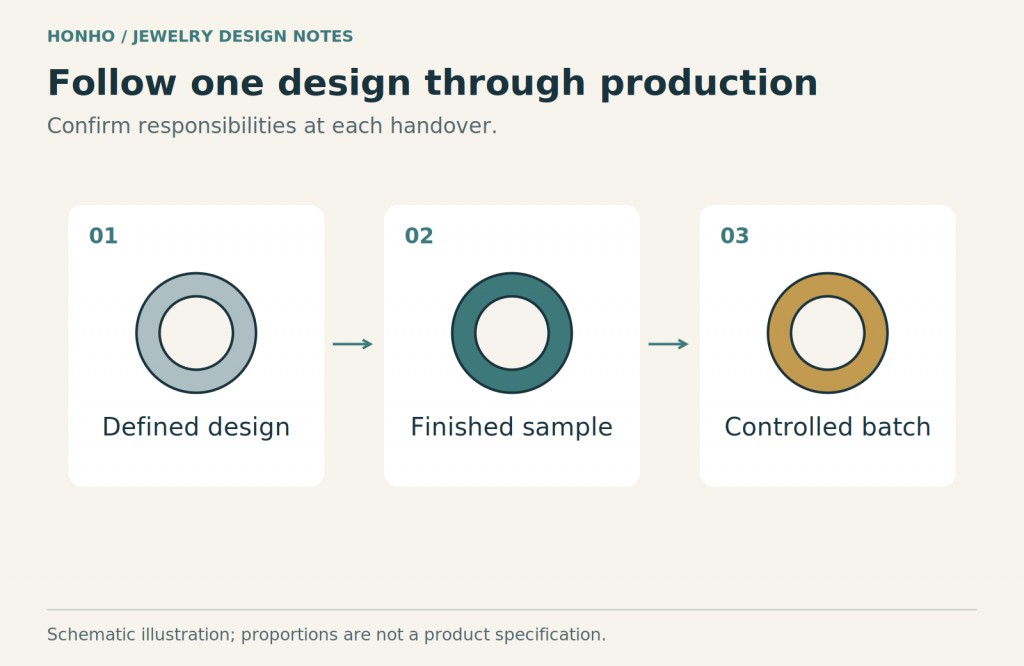
| Record | Include | Why it helps |
|---|---|---|
| Drawing | Revision, critical dimensions and approved changes. | Prevents an older file from driving production. |
| Sample | Sample ID, finish, component list and photographs. | Gives buyer and supplier the same comparison point. |
| Inspection | Appearance criteria, functional checks and any test scope. | Makes acceptance more specific than a general quality promise. |
| Changes | Requested change, responsible person and reapproval. | Separates a controlled revision from an unapproved substitution. |
Confirm the sampling and production schedule in the quotation, including the approval that starts each stage. Ask how holidays, material availability and revisions affect the plan. A short generic lead-time promise is not a substitute for a workable schedule for your design.
HonHo’s manufacturing context includes PVD and wet electroplating capabilities. Use those discussions to resolve the actual product specification: stainless steel and brass or silver designs need appropriate routes, and the finish name must identify the relevant materials and layers. Ask which stages are proposed for your design and what sample or report will demonstrate the agreed result.
If a Thailand production option is relevant, request the site, operations and project scope in writing. Do not infer where an entire order is made from a general company footprint, or assume an origin or duty benefit without the applicable product and shipment evidence. The quotation and production plan should identify the arrangement that applies to your order.
Current HonHo starting quantities are 50 pieces per custom stainless steel style, 30 pieces per size for stainless steel rings, and 30 pieces per 925 sterling silver style. Brass and special constructions need a project-specific quantity confirmation. A stainless steel ring’s stated mold basis is US$100 for the main mold and US$50 for each additional size mold; other development charges should be separated in the quote.
Samples are planned at 15–20 days at the earliest, with an outer planning window of one month; bulk production is planned at 25–35 days. Agree what approval starts each period and the day basis in writing. An initial metal blank may be expedited to as quickly as three days for an accepted project with an extra charge, but it is not the final finished sample.
Before production, reconcile the approved drawing, physical sample, component list, finish and packing instructions. Make sure the purchase order refers to the same versions. List the checks required before shipment and who can approve an exception. A sample kept by the sales team is insufficient if the workshop uses a different revision.
On receipt, compare the order with that record and document any differences before authorizing a reorder. A defect discussion should identify the affected quantity and requirement, supported by clear photographs or the agreed test result. That allows the supplier to propose a correction based on a defined issue.
Send HonHo one representative design, its material and finish, quantity split and target market for an initial review. Ask for the production route, unresolved specifications and sample scope together. Those answers provide a stronger basis for choosing a partner than a factory ranking or a promised universal turnaround.
Agree what the quote includes, the named delivery term and place, inspection arrangements, payment milestones and the procedure for defects. Check payment instructions through a trusted channel, particularly if details change. No payment method automatically makes an unfamiliar supplier safe.
Discuss confidentiality, tooling, CAD-file ownership and permission to display the design before sharing commercially sensitive files. A signed document can define obligations, but it is not a guarantee that all risks disappear. Obtain qualified advice when the legal or financial exposure warrants it.
Proceed when the supplier can explain the production route, resolve specification questions and provide an acceptable finished sample. Pause when essential materials remain unidentified, reports do not match the sample, or responsibilities keep changing. A low quote or low MOQ alone is not evidence of poor quality; investigate what the offer includes.
Send HonHo a written project brief with the design, material, finish, quantities and destination market. For a broader comparison of OEM, ODM and stock purchasing, use the manufacturer selection guide.
Updated October 18, 2026.
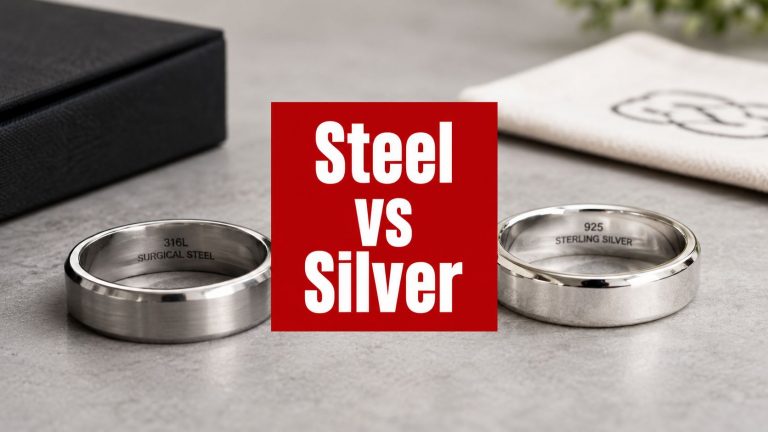
You’re pricing a new collection, and the sample tray is already split down the middle. The 316L surgical steel pieces look cleaner on cost and daily wear, the
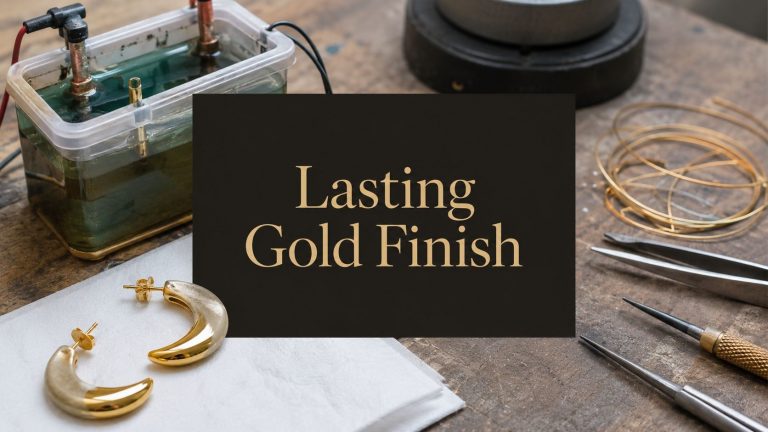
You probably have a launch already in motion, a supplier sample on your desk, and one uncomfortable question underneath it all, will this gold color still look clean
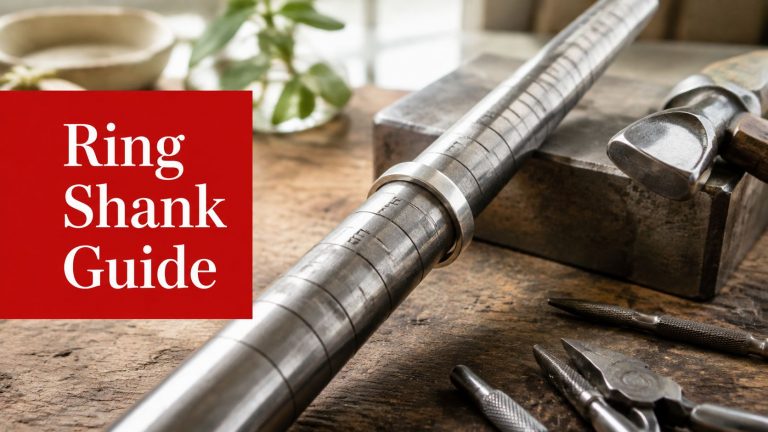
If you are developing the ring itself, compare ring fabrication, casting and CAD methods before approving the shank dimensions and manufacturing route. You’re refining a ring design, the